Best Server Side Tracking Tools in 2026: 7 Tools Compared
WLWPLegible EditorsLast verified 22 Nov 2026How we rank12 min read
★ Short answer
Stape is the best server-side tracking tool for teams comfortable with Google Tag Manager, offering free hosting for 10,000 monthly requests and Pro hosting at $20/month. RedTrack is better for conversion attribution and ad platform integrations, while Littledata simplifies server-side ecommerce tracking without requiring a custom GTM implementation.
How we make this list: we compare pricing pages, product documentation and public user reviews, then re-check every price before each update. No product paid for a place. Disclosure.
Stape provides free server-side GTM hosting for 10,000 monthly requests, while Pro costs $20/month for 500,000 requests.
RedTrack offers a free Relay plan for basic conversion API tracking and a $169/month Solo plan covering 5 million monthly events.
Littledata Flex charges $0.35 per tracked order with no monthly minimum, while Scale starts at $159/month for 1,500 orders.
RudderStack supports 250,000 events per month on its free plan; Growth costs $265/month for 1 million events.
Twilio Segment offers a free plan for 1,000 monthly visitors, while Team starts at $120/month for 10,000 visitors.
Server-side tracking does not eliminate consent requirements, guarantee complete attribution or automatically recover every browser-blocked event.
What matters when choosing server-side tracking software
Traditional browser tracking sends events directly from a visitor's device to analytics and advertising platforms. Server-side tracking routes eligible events through a server or controlled data pipeline, allowing businesses to validate, transform and distribute measurement data with greater control.
Different products solve different problems. Server-side GTM hosting providers manage infrastructure for Google Tag Manager containers. Conversion API platforms forward purchase and lead events to advertising networks. Customer data platforms collect and route events across analytics, marketing and warehouse destinations.
Compare pricing units carefully. Some vendors charge per server request, while others bill by event, tracked order or monthly visitor. These measurements are not interchangeable. One page visit can generate several tracking requests, and a purchase can trigger multiple downstream events.
Check whether the platform supports your analytics destinations, advertising conversion APIs, consent management workflow and first-party identifiers. Also review event deduplication, debugging, error reporting and how the service handles changes to destination APIs.
Server-side tracking is not a way to bypass privacy requirements. Businesses must still obtain appropriate consent, respect opt-outs and limit the collection and sharing of personal information. The most useful platforms make those controls visible and manageable.
For enterprise event governance and server-side data collection
$1,000/mo
No free plan
4.3/5
Price ladder: cheapest paid plan per year
List prices, USD, checked Nov 2026
LittledataFree
Triple WhaleFREECustom
StapeFREE$240
SegmentFREE$1,440
RedTrackFREE$2,028
RudderStackFREE$3,180
Tealium$12,000
The 7 best server side tracking tools
01
Stape
3.7/5on Trustpilot (128 reviews, checked Nov 2026)
Paid from$20/mo
Best for affordable server-side GTM hosting
Free allowance10,000 requests
Pro allowance500,000 requests/mo
HostingServer-side Google Tag Manager
Paid planPro, $20/mo
stape.io
Stape homepage, captured Nov 2026.
Stape is a managed hosting platform for server-side Google Tag Manager containers. Its free plan supports up to 10,000 requests and includes a custom loader, request analytics, consent management tools and a setup wizard. Pro supports 500,000 monthly requests and adds server logs, bot detection, data storage and additional tracking features.
The trade off is that hosting does not automatically configure every tracking event or advertising integration. Pro costs $20 per month at the regular rate, or $17 per month with annual billing. It suits marketers and agencies familiar with Google Tag Manager who want managed infrastructure without maintaining their own tracking servers.
What we like
Free hosting for smaller implementations
Supports server-side Google Tag Manager
Pro includes 500,000 monthly requests
Custom loader and consent management features
Managed hosting with debugging tools
Watch out for
Requires Google Tag Manager configuration knowledge
Request consumption depends on implementation details
Advanced infrastructure features require higher plans
Trustpilot reviews report mixed experiences with setup and billing
Pro adds logs, bot detection, Cookie Keeper and data storage.Visit stape.io
02
RedTrack
4.5/5on G2 (40 reviews, checked Nov 2026)
Paid from$169/mo
Best for conversion tracking and advertising attribution
Free offeringRelay with UTM attribution
Solo events5 million/mo
Conversion trackingServer-to-server and CAPI
Paid planSolo, $169/mo
redtrack.io
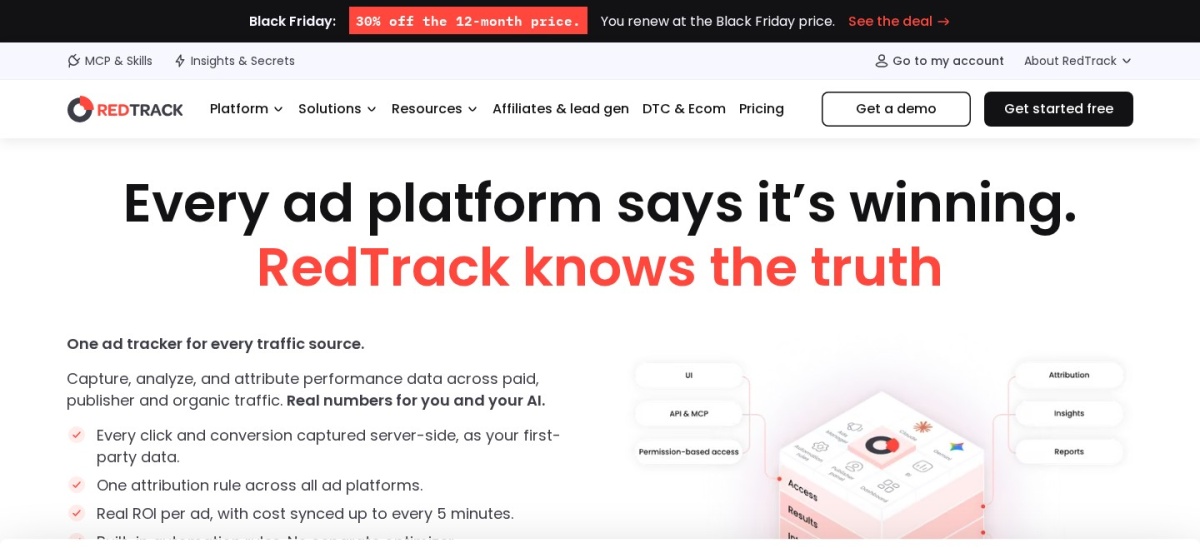
RedTrack homepage, captured Nov 2026.
RedTrack is a performance marketing platform combining server-side conversion tracking, attribution and advertising automation. Its free Relay plan supports one store with UTM-based attribution and conversion API connections. Solo adds 5 million monthly events, campaign reporting, ad spend synchronization, automated rules and 12 months of data retention.
The trade off is that full attribution and reporting require a substantially more expensive subscription than basic server-side hosting. Solo's regular price is $169 per month, while a promotional annual offer was displayed at $118 per month. It suits affiliate marketers, media buyers and agencies that need conversion signals alongside campaign profitability reporting.
What we like
Server-side conversion attribution
Free Relay plan for basic conversion APIs
Advertising spend and conversion reporting
Automated campaign management rules
Supports multiple advertising destinations
Watch out for
Solo costs considerably more than basic GTM hosting
Relay lacks advanced attribution reporting
Campaign tracking configuration requires planning
Solo adds ad-level spend reporting, automation and extended data retention.Visit redtrack.io
03
Littledata
4.7/5on G2 (58 reviews, checked Nov 2026)
PriceFree
Best for ecommerce server-side conversion tracking
Entry pricing$0.35 per order
Monthly minimumNone on Flex
Scale allowance1,500 orders/mo
Scale priceFrom $159/mo
littledata.io
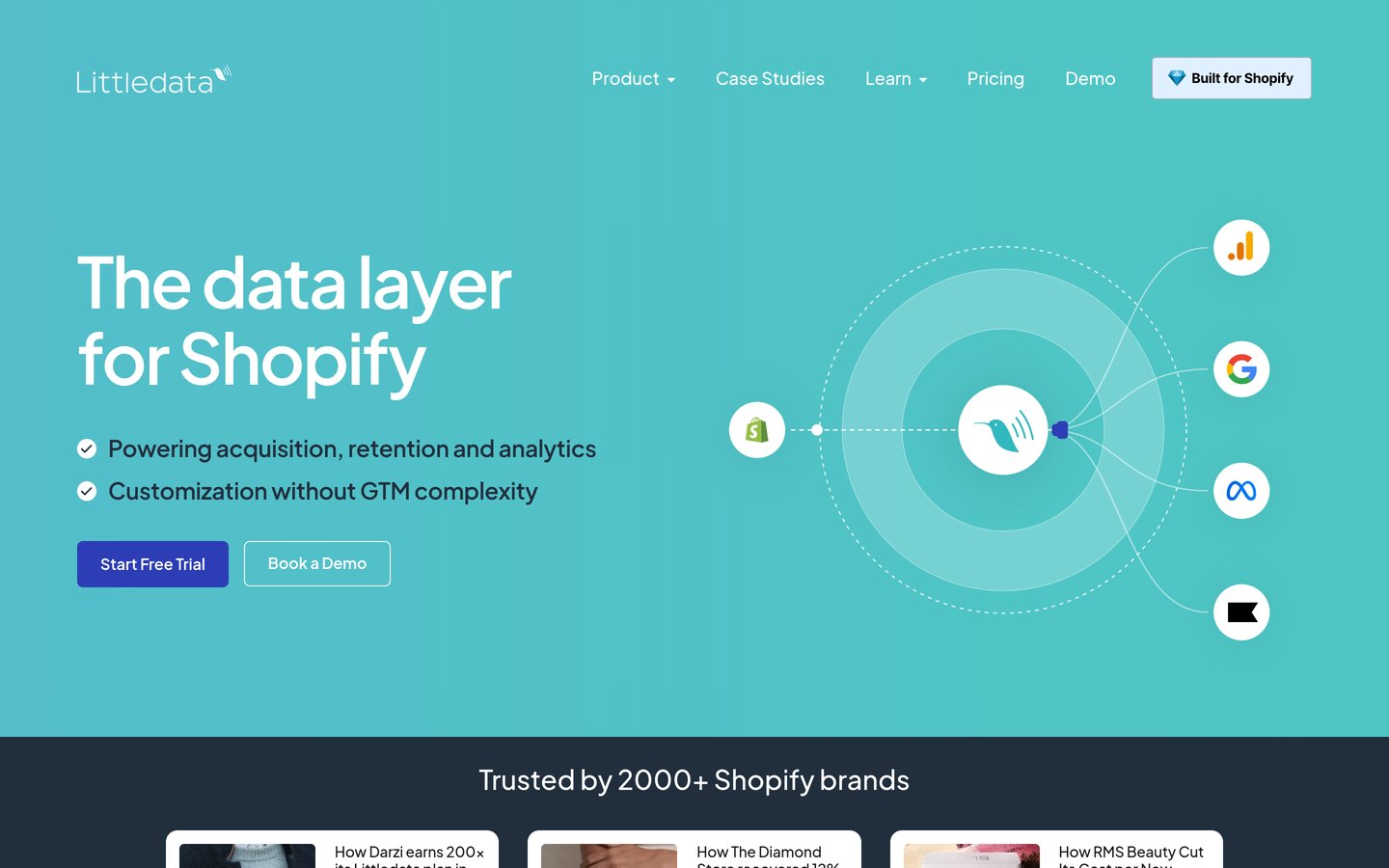
Littledata homepage, captured Nov 2026.
Littledata is a server-side tracking platform designed for Shopify ecommerce stores. Its Flex plan charges $0.35 per order, includes all data destinations and has no monthly minimum. The platform connects purchase and customer events with Google Analytics, Google Ads, Meta, TikTok and other marketing systems without requiring merchants to build a custom server-side GTM setup.
The trade off is that Flex costs increase with order volume, while Scale starts at $159 per month for 1,500 included orders and additional usage charges. There is no single annual price for Flex because billing depends on actual orders. It suits ecommerce brands that want managed conversion tracking and direct marketing integrations.
What we like
Usage-based entry plan without a monthly minimum
Designed specifically for Shopify tracking
Server-side integrations for major advertising platforms
Supports analytics and customer marketing destinations
Trial includes 500 orders
Watch out for
Primarily intended for Shopify merchants
Flex spending varies with sales volume
High-volume stores may need larger plans
Scale adds included order volume and dedicated chat and email support.Visit littledata.io
04
RudderStack
4.7/5on G2 (52 reviews, checked Nov 2026)
Paid from$265/mo
Best for server-side event pipelines and warehouse integration
Free allowance250,000 events/mo
Growth allowance1 million events/mo
Destinations200+ cloud destinations
Paid planGrowth, $265/mo
rudderstack.com
RudderStack homepage, captured Nov 2026.
RudderStack is a customer data infrastructure platform that collects, transforms and routes event data to analytics tools, marketing systems and warehouses. Its free Core plan supports 250,000 monthly events, SDK sources, cloud destinations and reverse ETL. Growth increases capacity to 1 million events and adds expanded governance, workspaces and integration allowances.
The trade off is that RudderStack is a data pipeline rather than a ready-made advertising attribution dashboard. Growth costs $265 per month, with a published annual billing discount. It suits engineering and data teams that need centralized event collection, transformation and delivery across their marketing technology stack.
What we like
Free event collection allowance
More than 200 cloud destinations
Server-side and SDK event collection
Data transformations and warehouse integrations
Supports reverse ETL workflows
Watch out for
Requires technical implementation resources
Growth costs more than lightweight tracking hosts
Not a complete advertising attribution dashboard
Enterprise governance features cost extra
Growth expands monthly events, tracking plans and warehouse synchronization.Visit rudderstack.com
05
Twilio Segment
4.5/5on G2 (568 reviews, checked Nov 2026)
Paid from$120/mo
Best for centralized customer event collection
Free allowance1,000 monthly visitors
Team allowance10,000 monthly visitors
Free sources2
Paid planTeam, $120/mo
segment.com
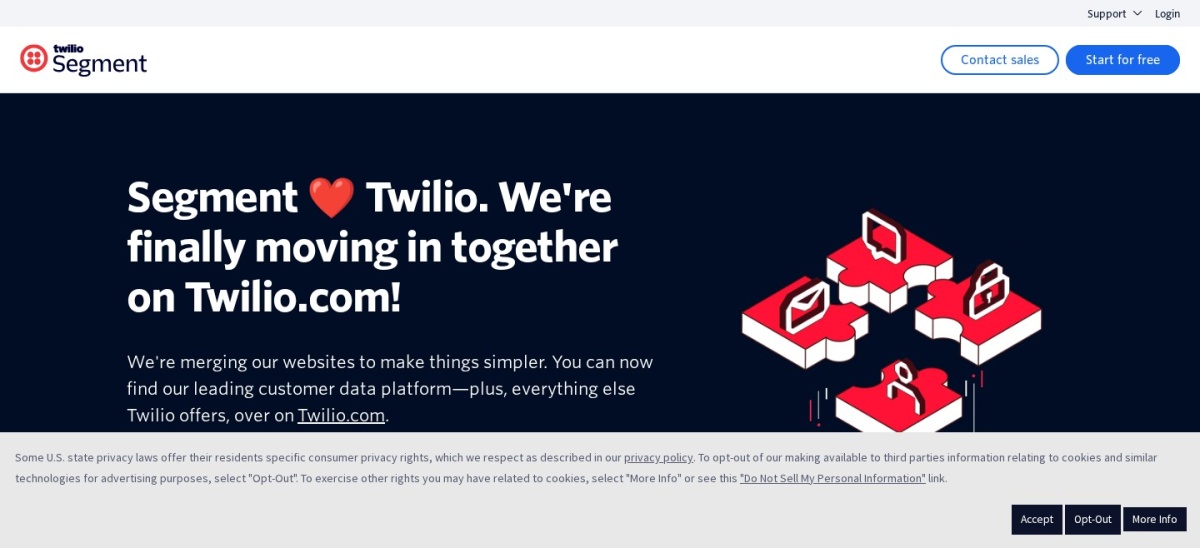
Twilio Segment homepage, captured Nov 2026.
Twilio Segment is a customer data platform that collects behavioral events from websites, applications, servers and cloud services. Its free Connections plan supports 1,000 monthly visitors, two sources and unlimited destinations. Team starts with 10,000 monthly visitors and provides additional data collection capacity for businesses centralizing customer event tracking.
The trade off is that billing depends on tracked visitors rather than event requests, and more advanced identity resolution and customer data functionality may require additional products. Team starts at $120 per month, with annual billing discounts available. It suits organizations that need consistent event collection across several analytics and marketing destinations.
What we like
Free customer data collection tier
Supports server-side event sources
Centralizes customer event definitions
Broad analytics and marketing integrations
Data governance and destination controls
Watch out for
Visitor-based billing increases with audience size
Best for ecommerce attribution and first-party tracking
Free planAvailable
TrackingTriple Pixel
AttributionFirst and last click on Free
Paid planFoundation, quote required
triplewhale.com
Triple Whale homepage, captured Nov 2026.
Triple Whale is an ecommerce analytics and attribution platform combining first-party tracking with business reporting. Its free plan includes Triple Pixel, first-click and last-click attribution, unified business metrics and Moby AI features. Foundation adds multi-touch attribution, custom analytics and first-party data activation for advertising optimization.
The trade off is pricing transparency. Triple Whale does not publish a fixed Foundation subscription price on its current pricing page, so businesses must request a quote. Its broader analytics platform also exceeds what teams need for basic server-side GTM hosting. It suits ecommerce brands focused on attribution, revenue reporting and advertising data activation.
What we like
Free analytics and attribution plan
First-party Triple Pixel tracking
Multi-touch attribution on paid plans
Centralized ecommerce reporting
Supports advertising data activation
Watch out for
Paid Foundation pricing requires a quote
Not a direct substitute for server-side GTM hosting
Advanced measurement features require higher plans
Foundation adds multi-touch attribution, custom reporting and data activation.Visit triplewhale.com
07
Tealium
4.3/5on G2 (486 reviews, checked Nov 2026)
Starts at$1,000/mo
Best for enterprise event governance and server-side data collection
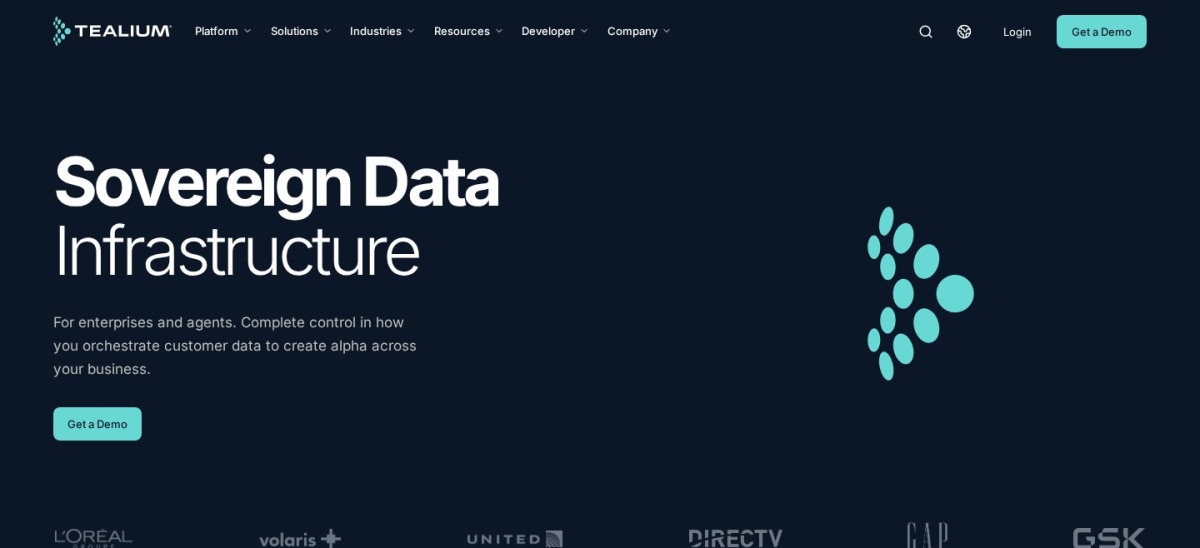
Tealium is an enterprise customer data platform supporting data collection, event transformation, consent enforcement and activation. Its published Data Cloud Activation entry plan costs $1,000 per month billed annually and includes reverse ETL, data transformation and more than 300 connectors. Its separate Data Collection offering adds client-side and server-side event collection.
The trade off is that the published $1,000 monthly entry price covers Data Cloud Activation, not the full server-side Data Collection product, which requires a separate quote. The platform also demands more implementation planning than a managed tracking connector. It suits organizations needing governed event pipelines, consent controls and enterprise data integration.
What we like
Supports client-side and server-side event collection
Consent enforcement and data governance
Real-time event transformation and activation
Broad integration ecosystem
Enterprise security and support options
Watch out for
Server-side Data Collection pricing requires a quote
Published entry plan does not include the full collection product
More complex implementation than smaller tracking platforms
High minimum published subscription cost
Data Collection adds server-side collection, real-time activation and consent controls at quoted pricing.Visit tealium.com
Three common approaches to server-side tracking
Server-side Google Tag Manager routes events through a server container before sending data to analytics or advertising destinations. Hosting providers manage the infrastructure, but teams must still configure tags, clients, triggers, consent handling and event transformations.
Conversion APIs and server-to-server postbacks transfer eligible conversions directly between business systems and advertising platforms. These approaches are useful for purchases, leads and offline conversion events, particularly when server records provide a more reliable source of completed transactions.
Customer data platforms collect behavioral and transactional events from multiple sources, standardize the data and distribute it to downstream systems. They are useful when organizations need consistent event definitions, warehouse integration, identity management and centralized governance.
How to check whether server-side tracking is working
Start by comparing completed transactions or qualified leads in your source system against corresponding analytics events. Inspect the event names, timestamps, identifiers and consent status rather than assuming that every tracked event represents a valid conversion.
When browser and server events are both sent to an advertising platform, configure event deduplication. Otherwise, the same purchase can appear more than once. Check event identifiers and destination diagnostics to find duplicate events, unmatched identifiers and rejected requests.
Review discrepancies over time instead of expecting identical numbers across platforms. Advertising attribution windows, consent choices, time zones, modeled conversions and different counting rules can produce legitimate differences even when the implementation is functioning.
How we chose
We shortlisted established server-side tracking, conversion attribution and customer data platforms with documented event collection or routing capabilities. We considered managed GTM hosting, advertising conversion APIs, ecommerce integrations, data transformation and enterprise event pipelines, using public reviews to compare products with established customer feedback.
Official vendor pricing and public review pages were researched for this November 2026 comparison, with 22 Nov 2026 retained as the requested editorial date. Regular publicly listed prices are distinguished from promotions and annual billing discounts. Usage-based and quote-based products do not receive invented fixed annual prices.
We excluded products with insufficient independent review evidence, unavailable pricing information and unclear server-side capabilities. We also distinguish infrastructure hosting from attribution software and full customer data platforms, because their billing models and features differ. No vendor paid for a place, and we do not claim testing for this list.
How to choose a server-side tracking tool
Identify your data collection requirements and advertising destinations before comparing subscriptions.
Choose the implementation approach. Decide whether you need managed server-side GTM hosting, a direct conversion API connector or a customer data platform. GTM hosting provides flexibility, while managed connectors reduce configuration work. Data platforms support broader event collection and governance.
Calculate realistic tracking volume. Estimate requests, events, orders or visitors using the exact measurement unit each provider bills for. Account for automatic events, multiple destinations and expected growth. Avoid assuming that monthly website sessions equal server requests.
Verify integrations and privacy controls. Confirm that your analytics tools, advertising platforms and ecommerce or CRM systems are supported. Check event deduplication, consent enforcement, identifier handling, data retention and deletion workflows before implementation.
Validate events before switching reporting. Run source-system reconciliation, inspect event logs and compare conversion totals during a controlled transition. Investigate rejected and duplicate events, document remaining discrepancies and monitor performance after deployment.
FAQ
What is the best server-side tracking tool in 2026?
Stape is a strong choice for teams that want managed server-side Google Tag Manager hosting at a relatively low entry price. RedTrack is better for advertising conversion attribution, while Littledata is designed for ecommerce server-side tracking. Businesses with complex data pipelines may prefer RudderStack or Twilio Segment.
Is server-side tracking better than browser-side tracking?
Server-side tracking can improve control over event delivery, data transformations and integrations, but it does not automatically make every measurement more accurate. Browser events may still be useful for collecting interactions. Many implementations combine browser-side collection with server-side processing and deduplication.
What is the cheapest server-side tracking tool?
Stape offers a free tier for up to 10,000 requests and a Pro subscription at $20 per month. Littledata has a usage-based Flex option charging $0.35 per tracked order without a monthly minimum. The cheapest practical choice depends on how much activity the website generates.
Can server-side tracking work without Google Tag Manager?
Yes. Products such as Littledata, RedTrack and customer data platforms can collect or send eligible events without requiring a server-side Google Tag Manager container. However, implementation still requires suitable event sources, integrations, configuration and consent management.
Does server-side tracking bypass ad blockers?
Server-side processing can reduce dependence on browser-based third-party requests, but it does not guarantee that every blocked event will be recovered. Browser restrictions, network controls, tracking configuration and user consent still affect data collection. Server-side tracking should never be used to disregard privacy preferences.
What is the difference between server-side tracking and Meta Conversions API?
Server-side tracking is a broader data collection and delivery approach. Meta Conversions API is a specific interface for sending eligible events to Meta's advertising systems. A server-side implementation can deliver events to several platforms, including conversion APIs, analytics services and data warehouses.
Do I need consent for server-side tracking?
Server-side tracking does not remove consent and privacy obligations. Applicable requirements depend on the data collected, its purpose and the governing privacy rules. Implement consent-aware event forwarding, minimize personal data and honor opt-outs and deletion requests where required.
Can server-side tracking improve conversion attribution?
It can help by combining reliable transaction or lead records with advertising event delivery. However, attribution remains influenced by identity matching, consent, platform reporting windows and attribution models. Better event delivery does not mean that every platform will report identical conversion totals.
How should I measure the success of server-side tracking?
Compare tracked conversions with verified transactions or leads, review rejected events and monitor duplicate counts. Check destination diagnostics, identifier matching and event delivery reliability. Improvements should be measured against a consistent baseline without assuming that higher reported conversion counts necessarily represent additional sales.