SAP Integrated Business Planning is the best SCM software for large enterprises, with demand, supply and inventory planning in one system, rated 4.3/5 on G2. Pick Oracle SCM Cloud for end-to-end operations in one cloud suite, and Odoo if you need a low-cost start with a free plan.
How we make this list: we compare pricing pages, product documentation and public user reviews, then re-check every price before each update. No product paid for a place. Disclosure.
SAP IBP leads on user ratings at 4.3/5 from 310 G2 reviews, and covers demand, supply, inventory and S&OP in one system.
Seven of the nine tools are quote-only, so most buyers need a sales conversation before they can budget.
Odoo is the cheapest paid route here at $31.10 per user a month, with one app free for unlimited users.
Zoho Inventory is the only tool with a free plan for stock and orders, with paid plans from $29 a month.
NetSuite is the only pick that pairs SCM with a full ERP, rated 4.1 out of 5 from 4,912 reviews.
What SCM software should cover
Supply chain management software plans and runs the flow of goods, from forecasting demand to buying, making, storing and shipping products. The best tools join those steps in one system instead of leaving each team on its own spreadsheet.
Planning is the core. Demand forecasting, supply planning, inventory optimisation and sales and operations planning should share one set of numbers, so a change in a forecast updates purchasing and production at once.
Execution matters as much as planning. Our guide on managing stock and inventory in WooCommerce shows how stock levels, orders and warehouses connect in daily work, and the same logic applies at larger scale.
Pricing is the hardest part of this market. Most enterprise SCM vendors quote per customer and publish no list price, so this list shows Custom where no public price exists and names the two tools that do publish prices.
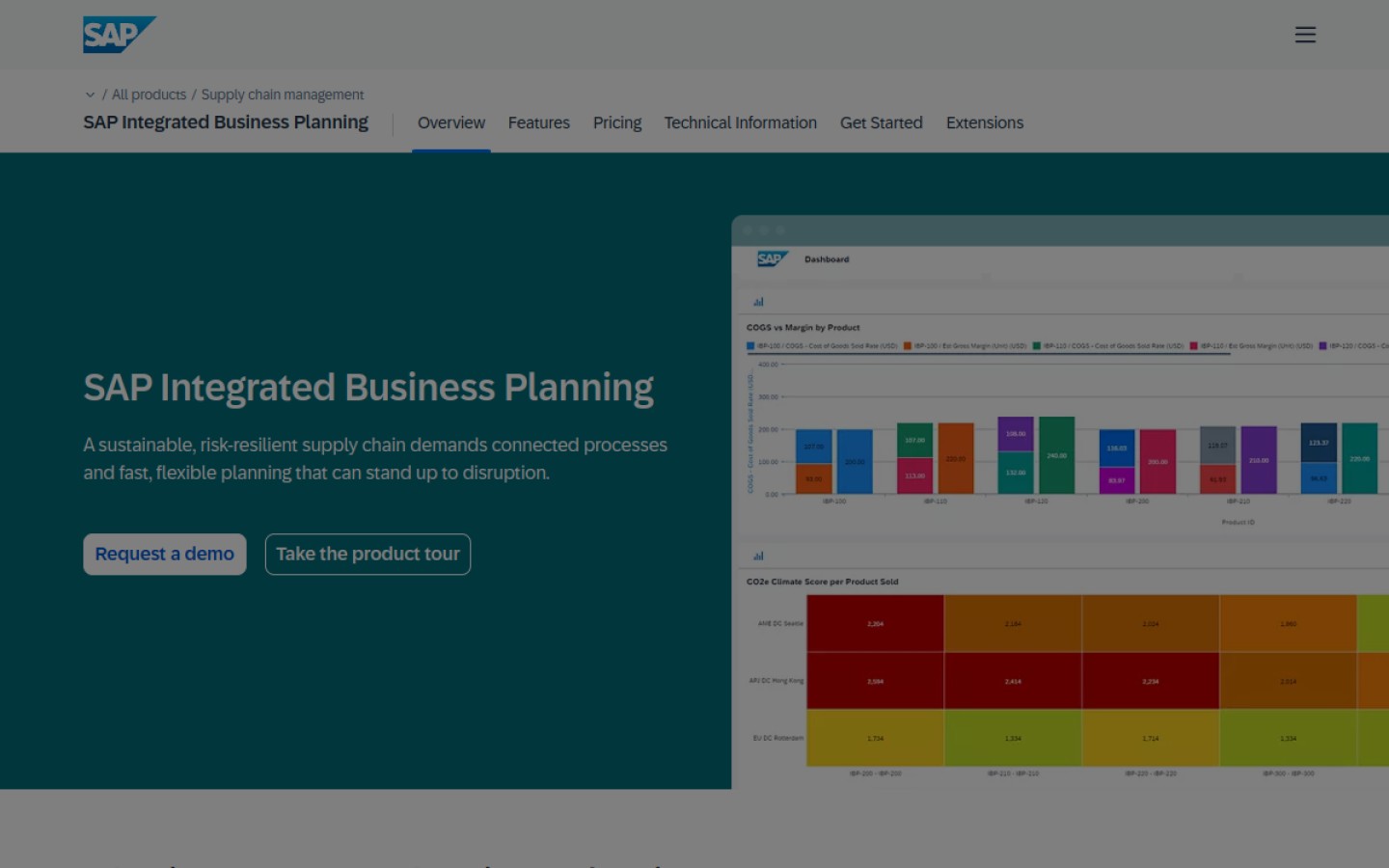
SAP Integrated Business Planning homepage, captured Nov 2026.
SAP Integrated Business Planning is a cloud planning system that joins demand planning, supply planning, inventory optimisation and sales and operations planning in one model. It runs on SAP HANA, so planners can run what-if scenarios and see the effect across the chain in real time. It connects closely with SAP S/4HANA, which suits companies already running SAP.
The trade off is cost and setup. G2 reviewers report an average implementation time of 7 months, and pricing is quoted per customer with no public list price. It suits large enterprises with complex, multi-site supply chains and a team to run it.
What we like
Covers demand, supply, inventory and S&OP in one system
Real-time what-if scenarios on SAP HANA
Highest G2 rating in this list at 4.3/5
Watch out for
Quote-only pricing with no public list price
Long implementation, averaging 7 months on G2
Needs SAP skills to get the most from it
Paid plans are quoted per customer; implementation is a separate projectVisit sap.com
02
Oracle SCM Cloud
4/5on G2 (88 reviews, checked Nov 2026)
PricingCustom/yr
Best end-to-end SCM suite
CoveragePlan, source, make, deliver, return
DeploymentCloud
Free planNo
PricingQuote only
oracle.com
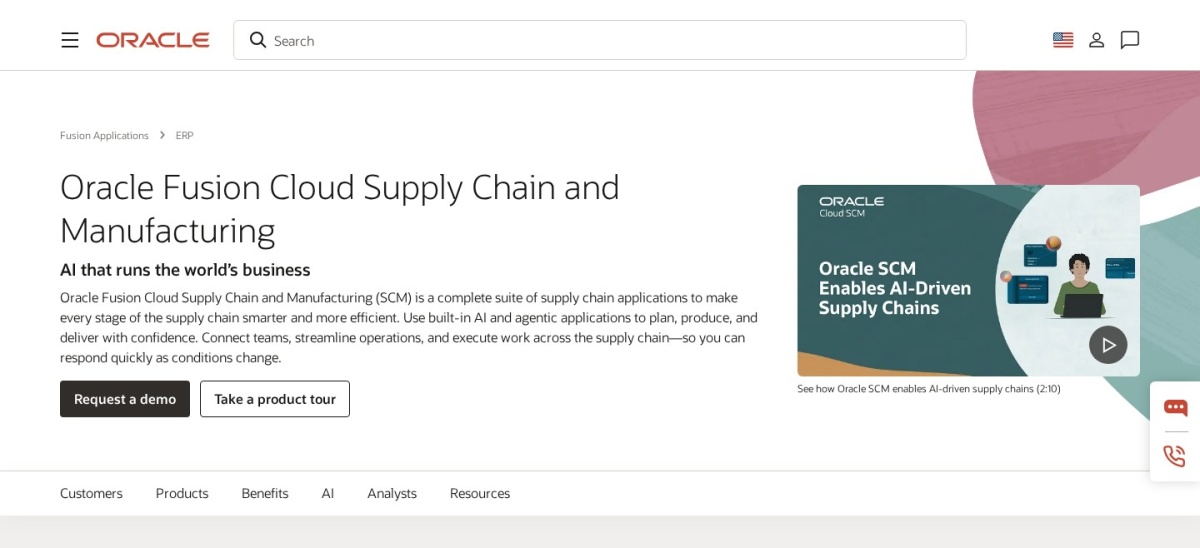
Oracle SCM Cloud homepage, captured Nov 2026.
Oracle SCM Cloud is the supply chain suite inside Oracle Fusion Cloud, covering procurement, inventory, order management, logistics, manufacturing and product lifecycle in one cloud system. It adds built-in AI across planning and execution, and shares data with Oracle finance and HR. It fits companies that already run Oracle Fusion applications.
The trade off is scope and price. The suite is broad, so smaller teams can pay for modules they never use, and pricing is quoted per customer with no public list price. It suits multi-regional companies that want one cloud system for the whole chain.
What we like
Covers the full chain from procurement to logistics
Built-in AI across planning and execution
Shares data with Oracle finance and HR
Watch out for
Quote-only pricing with no public list price
Broad suite can be more than smaller teams need
Implementation is a large project
Paid plans are quoted per customer; modules are licensed separatelyVisit oracle.com
03
Blue Yonder
4.1/5on G2 (55 reviews, checked Nov 2026)
PricingCustom/yr
Best for retail and manufacturing
Planning scopeDemand, supply, replenishment
DeploymentCloud
Free planNo
PricingQuote only
blueyonder.com
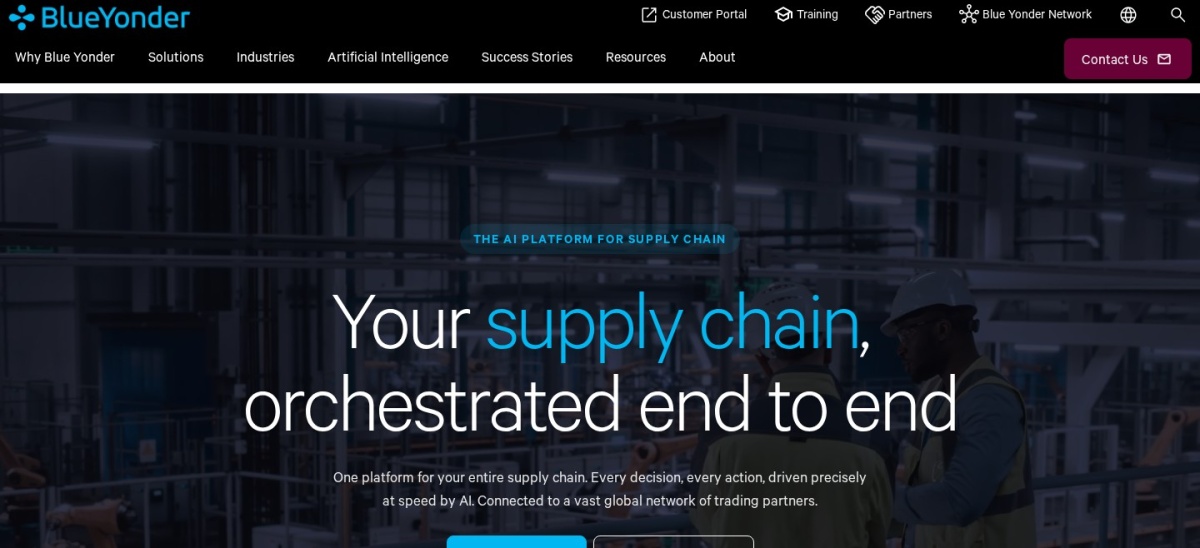
Blue Yonder homepage, captured Nov 2026.
Blue Yonder is a supply chain platform built around AI planning, covering demand, supply, replenishment, warehouse and transport management. It is the only pure-play SCM vendor named a Leader in the 2026 Gartner Magic Quadrant for Supply Chain Management Suites, according to Blue Yonder. It is strongest in retail, consumer goods and manufacturing.
The trade off is complexity. G2 reviewers praise the planning depth but report slow performance at times and uneven support. Pricing is quoted per customer. It suits large retailers and manufacturers with complex, high-volume supply chains.
What we like
Deep demand and replenishment planning for retail
AI planning across the full platform
Named a Leader in the 2026 Gartner SCM Magic Quadrant
Watch out for
Quote-only pricing with no public list price
Reviewers report slow performance at times
Support quality is uneven in G2 reviews
Paid plans are quoted per customer; a demo is the usual first stepVisit blueyonder.com
04
Kinaxis Maestro
4/5on G2 (14 reviews, checked Nov 2026)
PricingCustom/yr
Best for fast disruption response
Planning styleConcurrent planning
DeploymentCloud
Free planNo
PricingQuote only
kinaxis.com
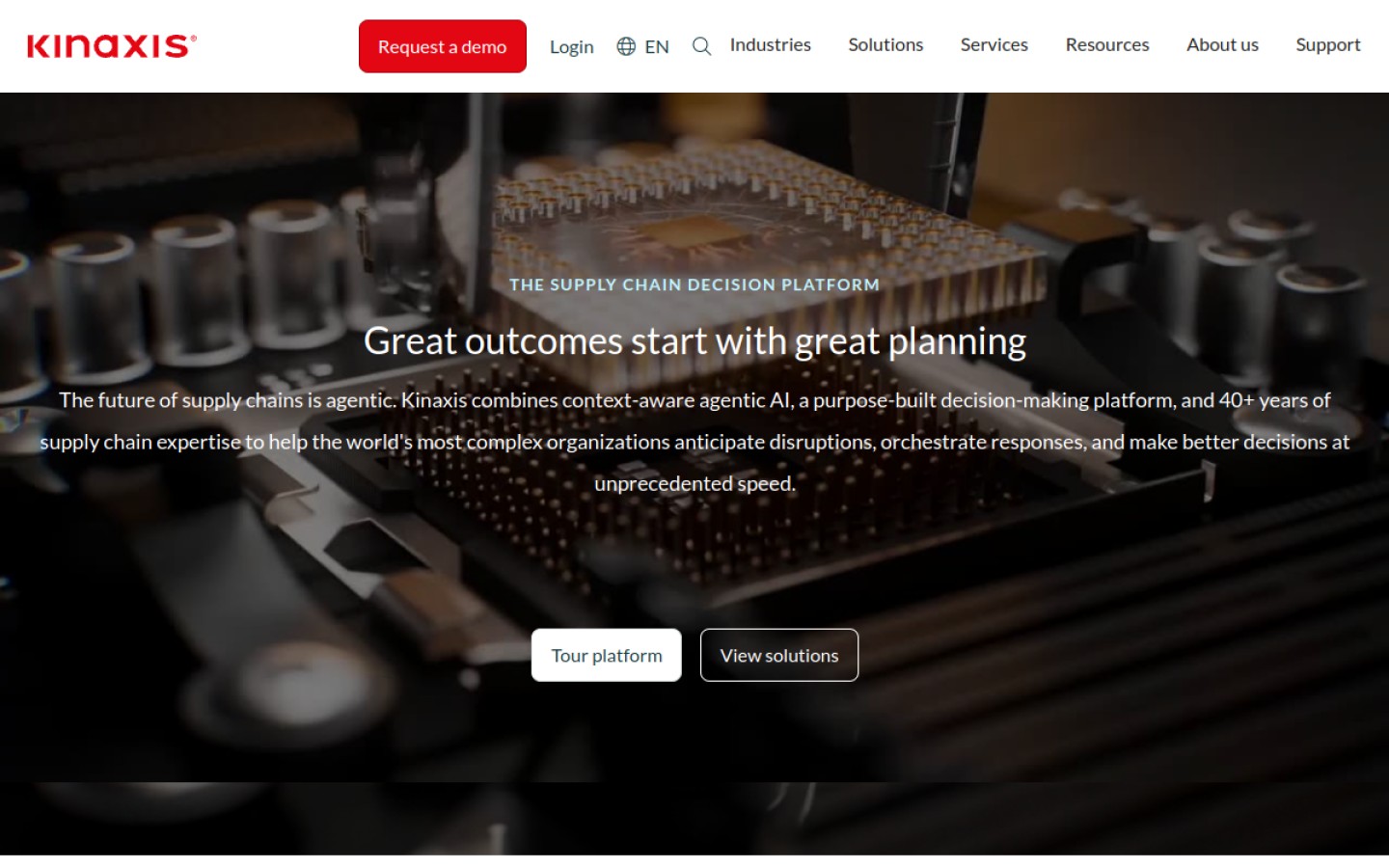
Kinaxis Maestro homepage, captured Nov 2026.
Kinaxis Maestro, formerly RapidResponse, is a cloud planning platform built around concurrent planning, where demand, supply, inventory and capacity are recalculated together instead of in sequence. Planners can run what-if scenarios and see the effect across the whole chain at once. It is built for fast-moving supply chains that face frequent disruption.
The trade off is a thin review base and enterprise pricing. It holds 4.0/5 on G2 from only 14 reviews, and Kinaxis publishes no public price. It suits global companies where reacting to a disruption a day sooner is worth an enterprise contract.
What we like
Concurrent planning recalculates the whole chain at once
Fast what-if scenarios for disruption response
Strong real-time visibility across functions
Watch out for
Only 14 G2 reviews, so the rating is thin
Quote-only pricing with no public list price
Needs clean capacity and lead-time data to work well
Paid plans are quoted per customer; pricing depends on scope and usersVisit kinaxis.com
05
o9 Solutions
4.2/5on G2 (19 reviews, checked Nov 2026)
PricingCustom/yr
Best for integrated business planning
Planning scopeDemand, supply, S&OP, IBP
DeploymentCloud
Free planNo
PricingQuote only
o9solutions.com
o9 Solutions homepage, captured Nov 2026.
o9 Solutions is an AI-powered planning platform that joins demand, supply and sales and operations planning on one data model. It adds forecasting, analytics and collaboration tools, so planners, finance and operations work from the same numbers. Its Digital Brain platform is aimed at large consumer goods, retail and manufacturing companies.
The trade off is setup effort and cost. G2 reviewers cite complex, resource-heavy implementation and a learning curve, and pricing is quoted per customer. It suits large companies with a mature planning team that can own the model after go-live.
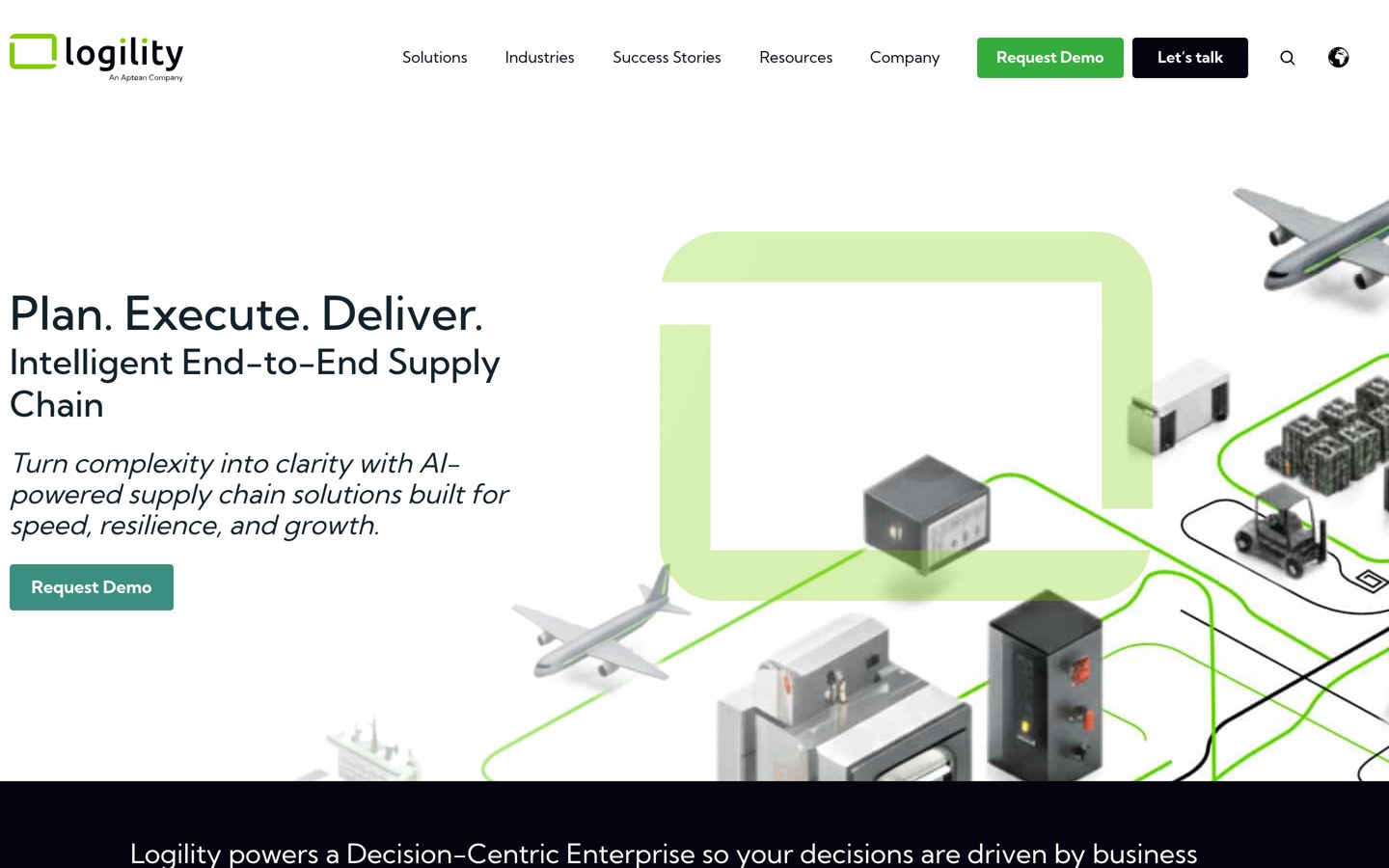
Logility is a planning specialist, not a full ERP. It plugs into an existing ERP and takes over demand forecasting, demand sensing and multi-echelon inventory optimisation, with an AI layer that explains the drivers behind each forecast. It is now part of Aptean. It suits companies that want better forecasts without replacing their ERP.
The trade off is that it is planning only. Warehousing, transport and order execution stay in other systems, and pricing is quoted per customer. It suits manufacturers and distributors that already run an ERP and need stronger demand planning.
What we like
Strong AI demand forecasting and demand sensing
Multi-echelon inventory optimisation
Rated 4.2/5 on G2 from 130 reviews
Watch out for
Planning only, no warehouse or transport execution
Quote-only pricing with no public list price
Interface feels dated in some G2 reviews
Paid plans are quoted per customer; modules are priced by scopeVisit logility.com
07
Oracle NetSuite
4.1/5on G2 (4,912 reviews, checked Nov 2026)
PricingCustom/yr
Best SCM inside a full ERP
ScopeERP with inventory, WMS, orders
Users44,000+ businesses
G2 rating4.1/5 from 4,912 reviews
PricingCustom quote
netsuite.com
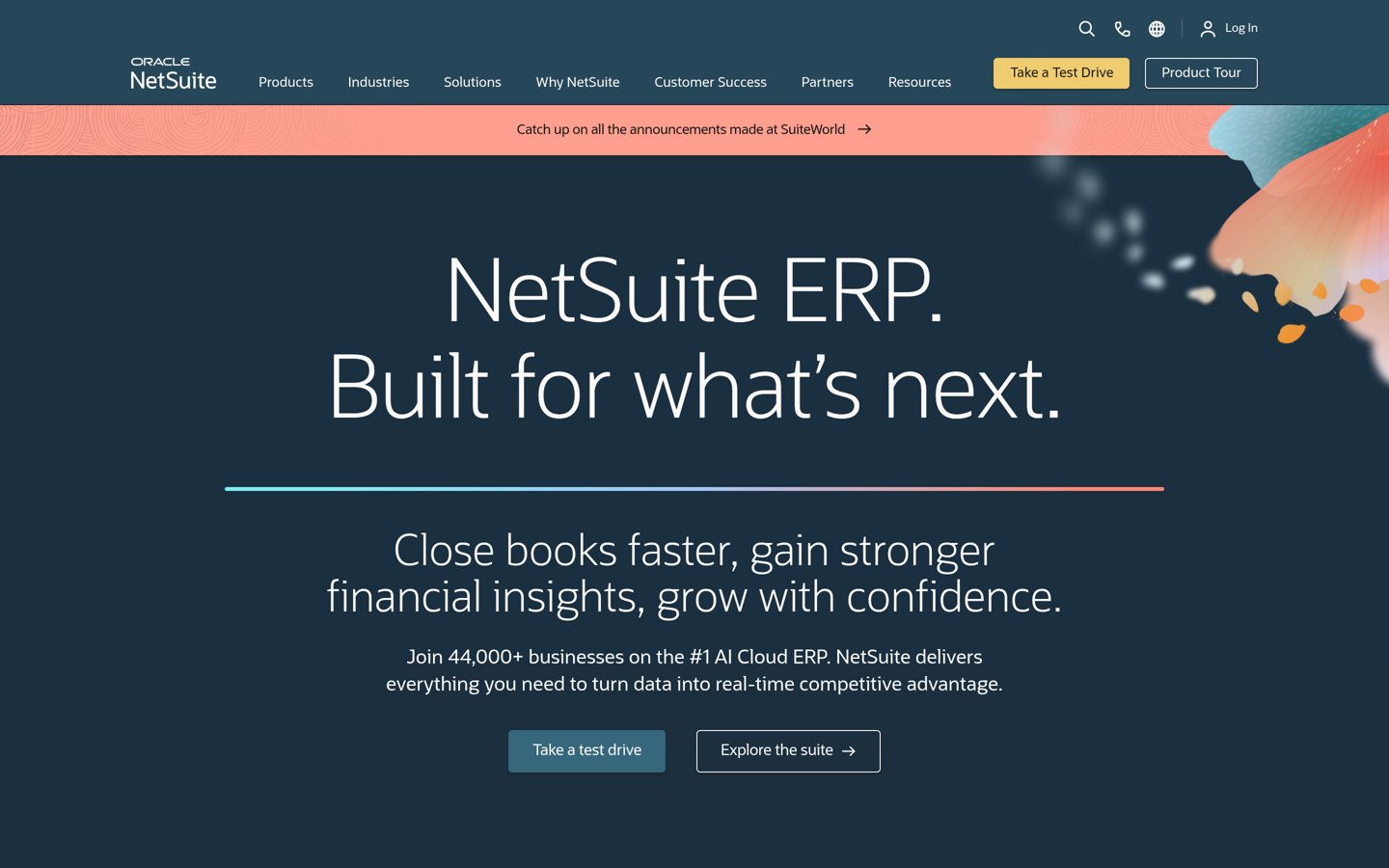
Oracle NetSuite homepage, captured Nov 2026.
Oracle NetSuite is Oracle's cloud ERP, and its supply chain modules cover inventory, order management, procurement, manufacturing and warehouse management in one system. Financials, stock and orders share the same data, so a sale updates inventory and the ledger at once. NetSuite says more than 44,000 businesses run on the platform.
The trade off is cost and effort. NetSuite sells by custom quote, G2 reviewers report an average implementation of 6 months, and many useful features are paid add-on modules. It suits mid-market firms that want ERP and supply chain in one system.
4.2/5on Capterra (1,331 reviews, checked Nov 2026)
Paid from$31.10/user/mo
Best low-cost SCM start
Starting price$31.10/user/mo, Standard
Free planOne App Free
Free trialYes
DeploymentCloud or self-hosted
odoo.com
Odoo homepage, captured Nov 2026.
Odoo is a modular business suite that covers inventory, purchasing, manufacturing, sales and accounting in one system. The One App Free plan gives one app with unlimited users at no cost, so a small team can run stock in Inventory for free. The Standard plan unlocks all apps at $31.10 per user a month, the regular price after a $24.90 first-year offer.
The trade off is setup effort. Odoo is flexible, but configuring inventory, warehouses and manufacturing takes time, and costs rise as you add users. It suits small and mid-sized businesses that want an affordable ERP with real supply chain features.
What we like
One app free with unlimited users
Cheapest paid plan in this list
Covers inventory, purchasing and manufacturing in one suite
Watch out for
Setup can be technical for new users
Costs rise per user as the team grows
Support quality is uneven in Capterra reviews
Standard adds all apps; Custom adds Studio, API access and multi-companyVisit odoo.com
09
Zoho Inventory
4.5/5on Capterra (422 reviews, checked Nov 2026)
Paid from$29/mo
Best for small stock and order teams
Starting price$29/mo, Standard
Free plan50 orders/mo, 1 user
Free trialYes
DeploymentCloud
zoho.com
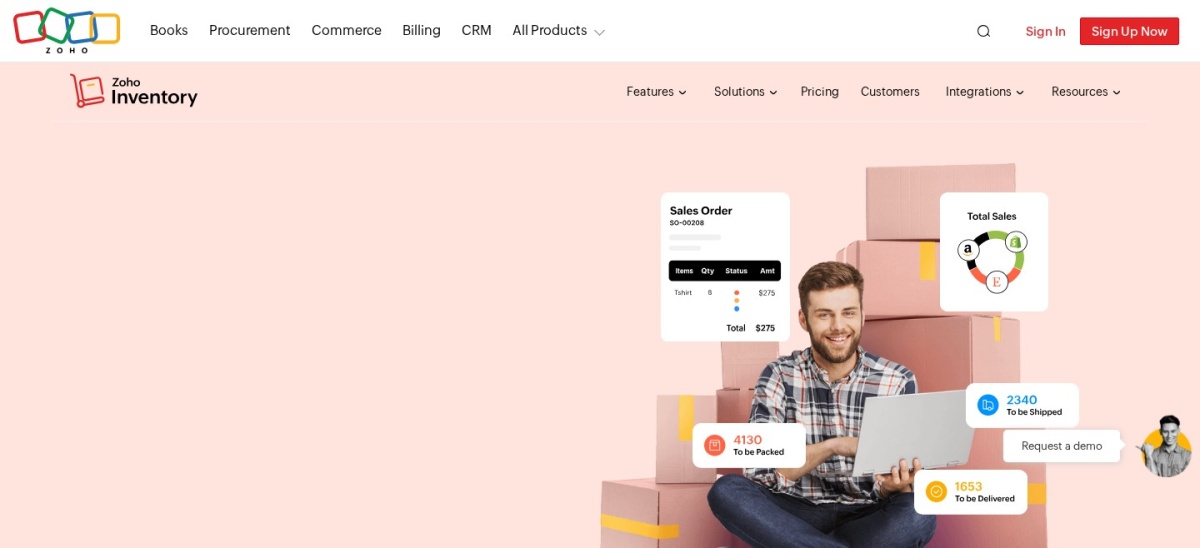
Zoho Inventory homepage, captured Nov 2026.
Zoho Inventory is cloud inventory and order management software that tracks stock, sales orders, purchase orders and warehouses. Its free plan supports 50 orders a month for 1 user, and the Standard plan at $29 a month billed annually allows 500 orders a month for 2 users. It connects with Zoho Books, Shopify and Amazon.
The trade off is scale. It is built for small product businesses, not enterprise planning, and order, user and location caps push growing teams to higher plans. It suits small sellers who want a real order and stock workflow without paying for an ERP.
What we like
Free plan for 50 orders a month
Lowest entry price after Odoo's free app
Links stock, orders and shipping in one place
Watch out for
No demand planning or S&OP features
Order and user caps force upgrades as volume grows
Manufacturing features are thin
Paid plans raise order limits and add users, locations and batch trackingVisit zoho.com
Quote-only pricing: what to ask for
Seven of the nine tools in this list publish no price. That is normal in enterprise SCM, where the licence depends on users, modules and scope.
Ask every vendor for the same four figures in writing: the annual licence, the implementation fee, the yearly support cost and the renewal terms. Renewal increases are a common surprise.
If the first quote is far above budget, ask which modules can wait. Planning-only tools such as Logility can sit on top of an ERP you already own, which avoids a full replacement project.
How we chose
We started from the SCM platforms that appear most often in G2 comparisons and enterprise shortlists, then kept nine with a live product, a public review profile and a clear buyer fit.
Prices come from vendor pricing pages where they are published. Ratings and review counts come from G2 and Capterra, checked on 26 November 2026. Where a vendor shows a first-year discount, the list shows the regular price.
We left out products that are warehouse-only or transport-only tools, and products with no public review profile. No vendor paid for a place, and we do not claim to have used these tools ourselves.
How to choose SCM software
Start with the planning job you need done, then check what your current systems already cover.
Map the chain you actually run. List each step from forecast to delivery and mark which ones still run on spreadsheets. That list is your shortlist test.
Check what your ERP already does. NetSuite and Odoo cover much of the chain inside the ERP. A planning-only tool such as Logility may be enough if your ERP handles execution.
Get the full first-year cost in writing. Licences, implementation, data migration and training are separate lines. Ask for each one as a fixed figure, not a range.
Run a pilot with your own data. A short pilot with real orders and stock levels shows more than any demo script. Test one forecast cycle end to end before signing.
FAQ
What is the best SCM software?
SAP Integrated Business Planning is the best SCM software for large enterprises. It joins demand, supply, inventory and S&OP planning in one system and is rated 4.3 out of 5 on G2 from 310 reviews, the highest rating in this list.
How much does SCM software cost?
Most enterprise SCM software is quote-only, so there is no public price. Only Odoo and Zoho Inventory publish prices here, from $31.10 per user a month and $29 a month. Expect a sales conversation and a scoped contract for the enterprise platforms.
What is the cheapest SCM software?
Odoo is the cheapest route in this list, with one app free for unlimited users and all apps from $31.10 per user a month at the regular price. Zoho Inventory is next, with a free plan for 50 orders a month and paid plans from $29 a month.
Is NetSuite good for supply chain management?
Yes, for growing companies that want SCM inside a full ERP. NetSuite covers inventory, demand planning, procurement and warehouse management, and is rated 4.1 out of 5 from 4,912 G2 reviews. It suits teams that have outgrown entry-level accounting.
Do I need SCM software or just inventory software?
Inventory software is enough if you only track stock and orders. SCM software adds demand forecasting, supply planning and S&OP across sites and suppliers, which matters once you run several warehouses or face long lead times.
Which SCM software is best for small businesses?
Odoo and Zoho Inventory are the best fits for small businesses. Both have free plans and publish their prices, unlike the enterprise tools. Odoo suits teams that also need sales and accounting, while Zoho Inventory suits sellers focused on stock and orders.
SaaS SEO and WordPress specialist with about 8 years of experience. Rakib compares WordPress plugins, themes, hosting and software using public pricing, documentation and user reviews. See how we rank.