HubSpot Sales Hub is the best sales tracking software for most teams, with a free plan for 2 users, deal pipelines and email tracking, and Starter at $20 a seat a month. It holds 4.4 out of 5 from 14,300+ G2 reviews, while Close suits calling-heavy teams and Freshsales is the cheapest paid plan with AI lead scoring.
How we make this list: we compare pricing pages, product documentation and public user reviews, then re-check every price before each update. No product paid for a place. Disclosure.
HubSpot Sales Hub is the top pick: free for 2 users, Starter at $20 a seat a month, and 4.4 out of 5 from 14,300+ G2 reviews.
Close has the highest rating in this list at 4.7 out of 5, and its built-in dialer is the strongest here.
Freshsales and Close both start at $9 a user a month, the lowest paid entry in the list.
Salesforce starts at $25 a seat but climbs to $550, and only Starter can be paid month to month.
Six of the nine tools start under $20 a user a month on annual billing.
What sales tracking software should do
Sales tracking software keeps every deal, call and email in one place so a rep can see what happened last and what comes next. The core of every tool here is a pipeline: a board of deals in stages, from first contact to closed.
Look for three things before price. First, a pipeline your team will actually update, with drag-and-drop stages and reminders. Second, activity logging that captures calls and emails without manual entry. Third, reports that show pipeline value, win rate and forecast by rep.
Price is quoted per user per month almost everywhere, and most vendors charge less on annual billing. HubSpot lists Starter at $20 a seat a month, while Salesforce starts at $25 a seat on Starter Suite. Our WordPress vs HubSpot CMS guide explains how HubSpot fits beside a WordPress site.
Free plans are real in this category but capped. HubSpot, Freshsales and Zoho CRM all offer a free tier for very small teams, while Pipedrive, Close, monday, Nutshell and Insightly offer a 14-day trial instead.
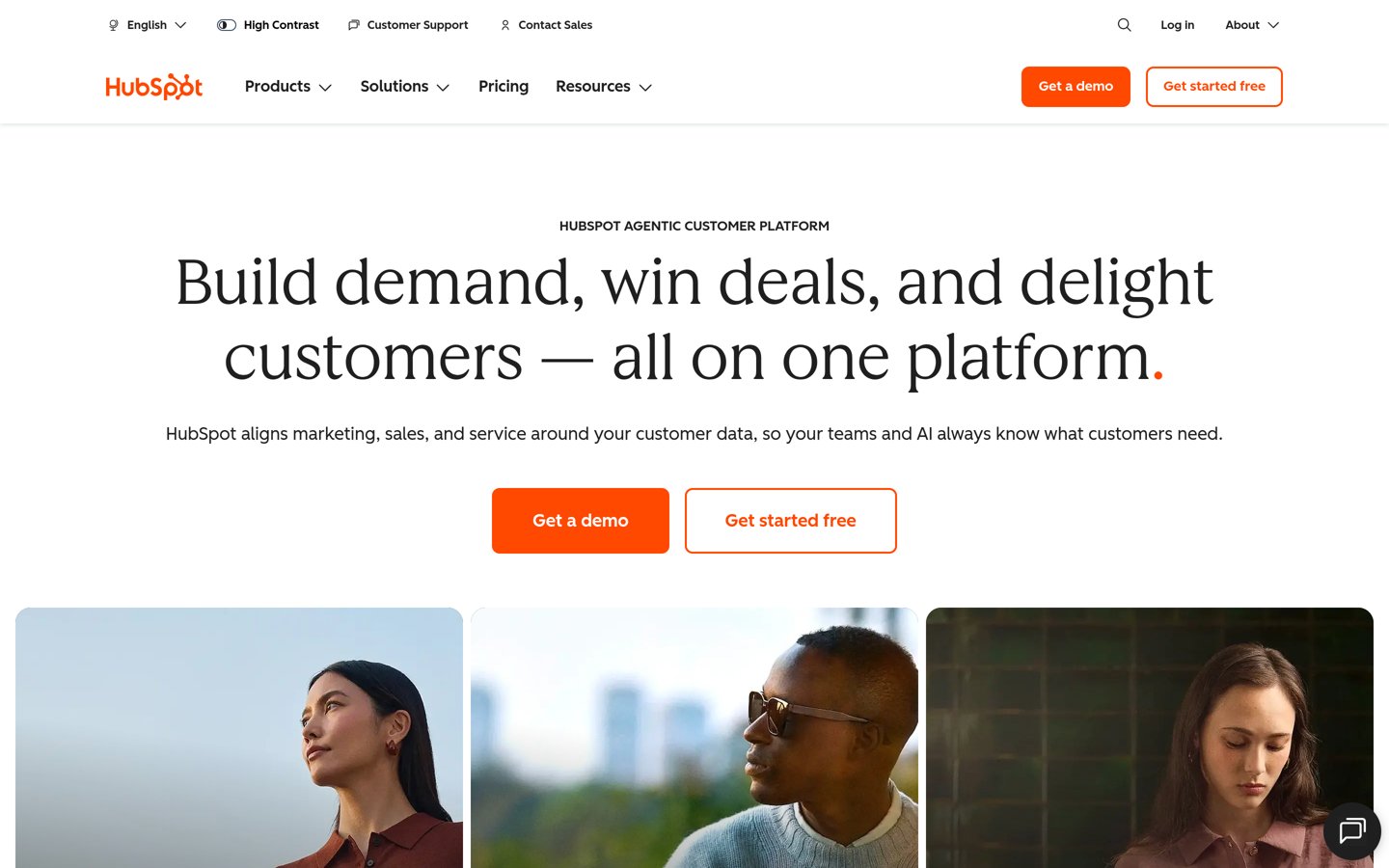
HubSpot Sales Hub is a sales CRM built on HubSpot's free Smart CRM, with deal pipelines, contact records, email tracking and meeting links in the free plan for up to 2 users. Paid Starter seats cost $20 a month and add 500 calling minutes, simple automation and 10 dashboards with 50 reports each.
The trade off is the jump to Professional. Sequences, forecasting and custom reports start at $100 a seat a month plus a required $1,500 onboarding fee, so the plan most teams want costs five times Starter. It suits small and mid-sized teams that want sales, marketing and support on one platform.
What we like
Free plan with pipelines and email tracking
2,000+ integrations with other tools
Ease of use rated 8.7/10 on G2, above Salesforce at 8.0
Clear pricing published for every tier
Watch out for
Professional jumps to $100 a seat plus a $1,500 onboarding fee
Free plan limited to 2 users
New-customer discounts make the list price hard to read at first glance
Professional adds sequences, forecasting and custom reportsVisit hubspot.com
02
Close
4.7/5on G2 (2,056 reviews, checked Nov 2026)
Starts at$9/mo
Best for calling-heavy sales teams
Free planNo, 14-day trial
Cheapest paid planSolo, $9/mo, 1 user
Built-in dialerPower Dialer on Growth
Team plansEssentials, $35/user/mo
close.com
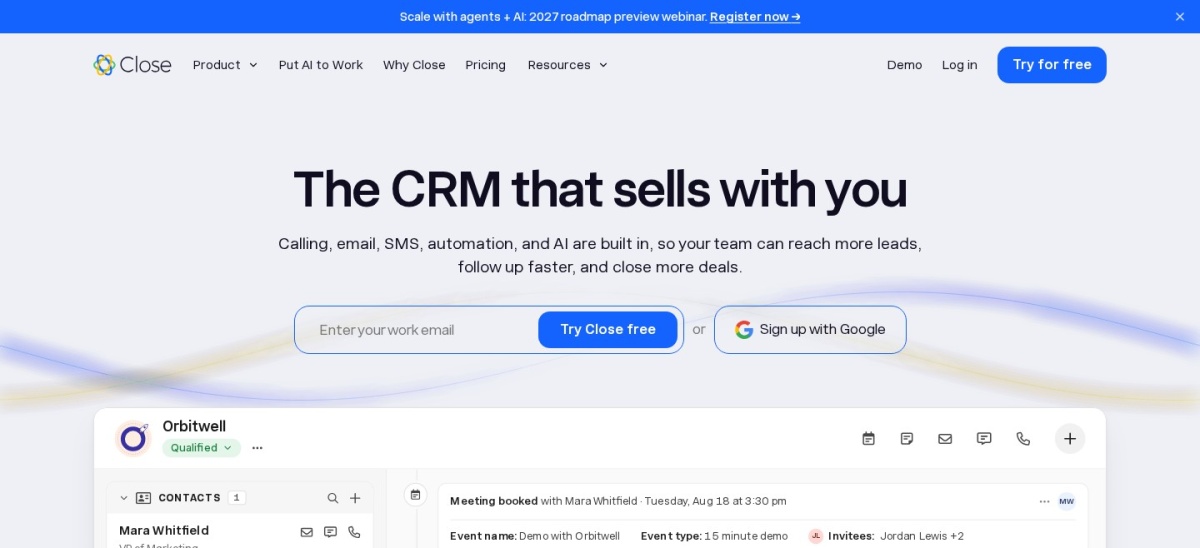
Close homepage, captured Nov 2026.
Close is a sales CRM built around calling, with a dialer, email and SMS on one screen so reps never open a separate phone system. Solo costs $9 a month for one user, and Essentials at $35 a user a month adds team features, a shared inbox and unlimited contacts.
The trade off is the dialer. The Power Dialer starts on Growth at $99 a user a month, and calling minutes are charged on top of the seat price, so a call-heavy team pays far more than $35. It suits small outbound teams that sell by phone and want speed over depth.
What we like
Highest G2 rating in this list at 4.7/5
Calling, email and SMS built in
Fast, simple interface praised in 2,000+ reviews
Watch out for
No free plan
Useful dialer features start at $99 a user a month
Calling minutes cost extra
Growth adds the Power Dialer, workflows and bulk emailVisit close.com
03
Pipedrive
4.3/5on G2 (3,100 reviews, checked Nov 2026)
Starts at$14/mo
Best visual pipeline for deal-led teams
Free planNo, 14-day trial
Cheapest paid planLite, $14/user/mo
Pipelines1 on Lite, more on Growth
Integrations500+
pipedrive.com
Pipedrive homepage, captured Nov 2026.
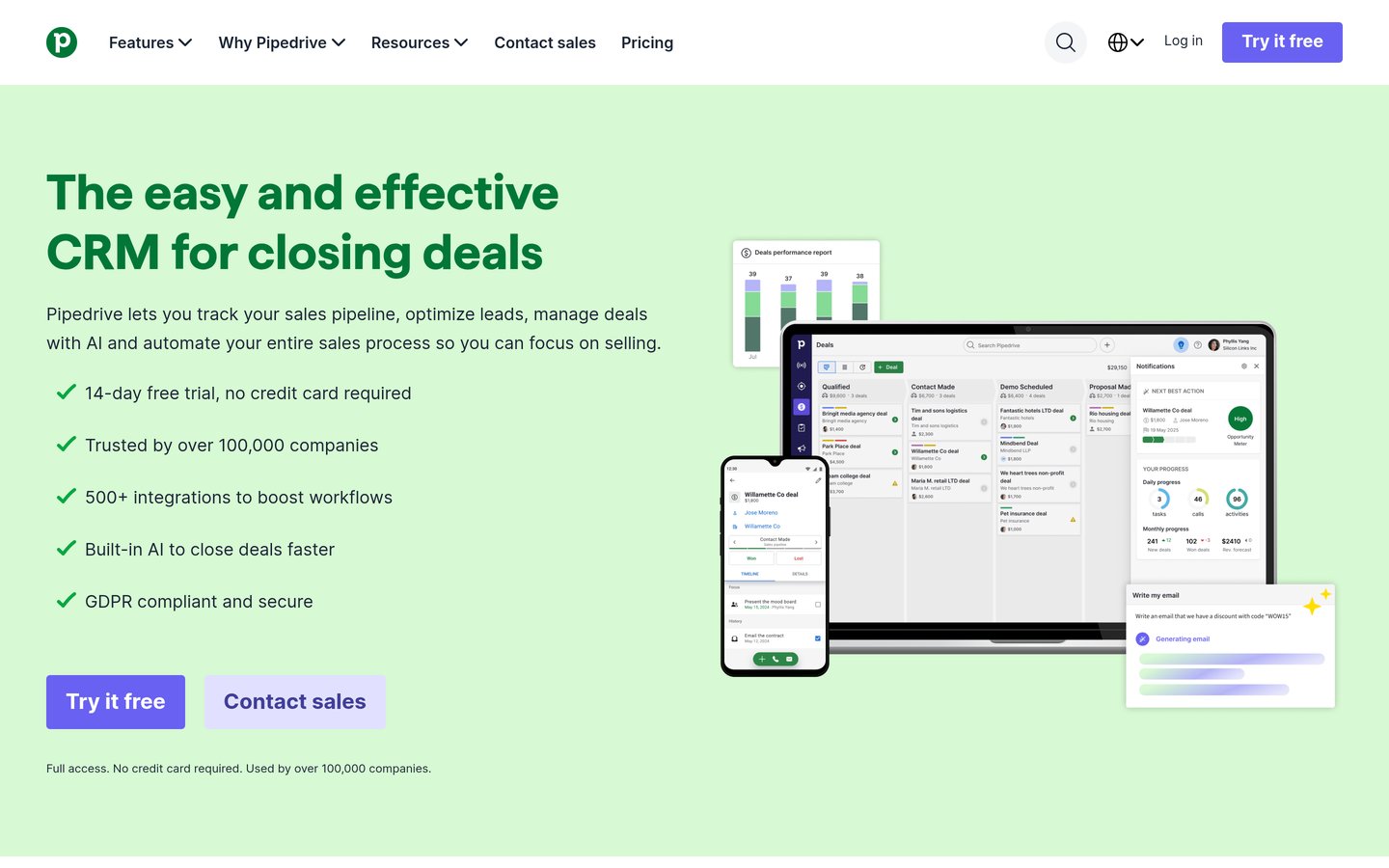
Pipedrive is a visual, deal-led CRM used by more than 100,000 companies, built around a drag-and-drop pipeline. Lite costs $14 a user a month billed annually and covers lead and deal management, 2,500 leads and deals per user and 300+ integrations.
The trade off is email. Lite has no email sync, so reps log email by BCC, and templates, tracking and sequences start on Growth at $39 a user a month. It suits small sales teams that live in the pipeline and want the clearest deal view for the money.
What we like
Clearest visual pipeline in this price range
4.3/5 on G2 from 3,100+ reviews
AI assistant and web-to-mobile calls included from Lite
Watch out for
No free plan
No email sync on Lite
Add-ons such as LeadBooster cost extra on lower plans
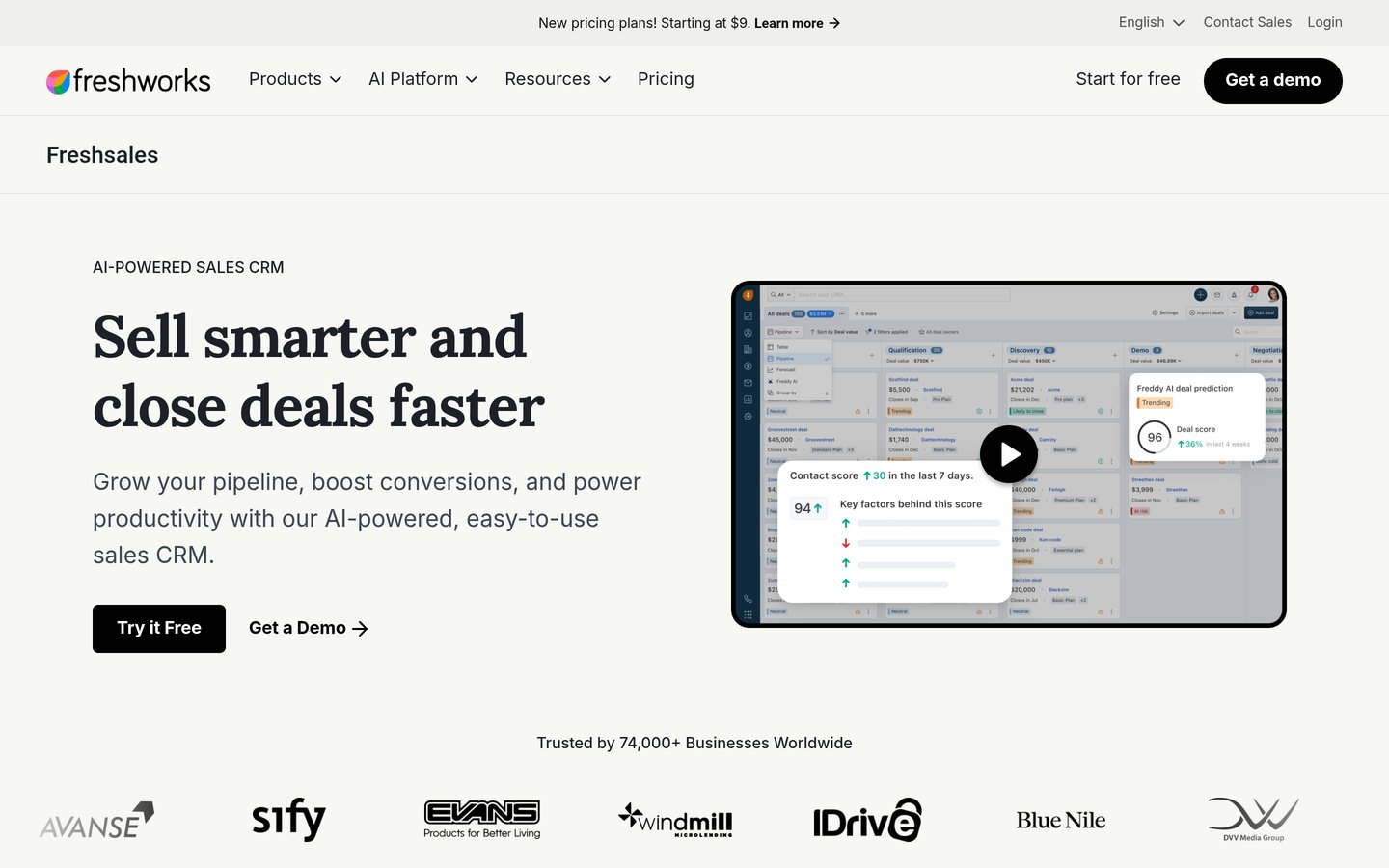
Freshsales is the sales CRM from Freshworks, with built-in phone, email and chat plus AI lead scoring from its Freddy assistant. The free plan covers up to 3 users with one pipeline, and Growth costs $9 a user a month billed annually with kanban pipelines and basic workflows.
The trade off is the tier jump. Sales sequences and Freddy AI scoring start on Pro at $39 a user a month, more than four times Growth, and the free plan has no bulk email. It suits growing teams that want calling and AI scoring without paying HubSpot or Salesforce prices.
What we like
Cheapest paid plan in this list at $9 a user a month
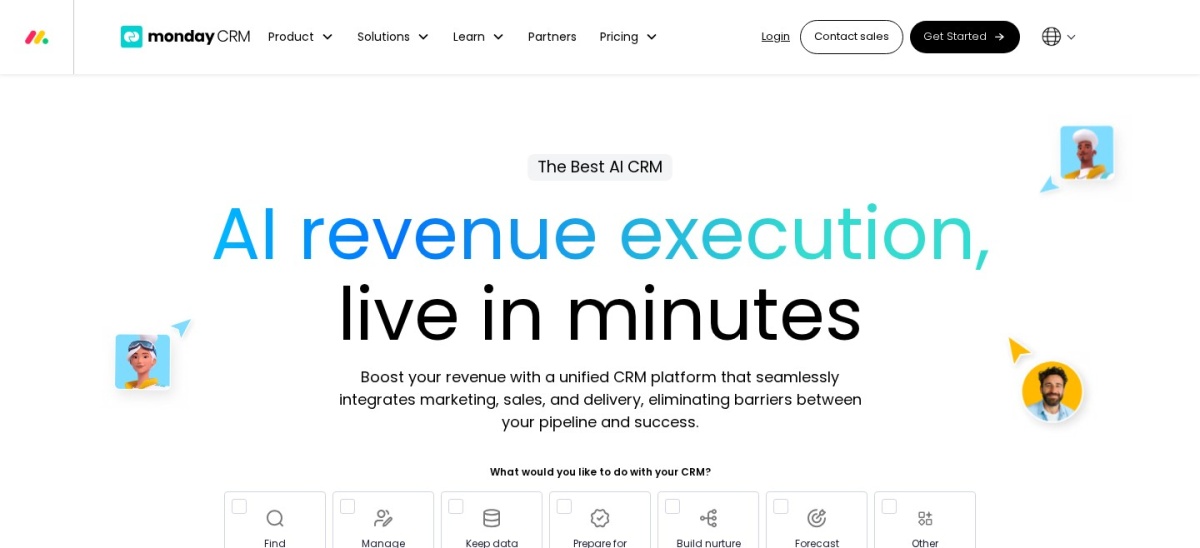
monday Sales CRM is the sales module of the monday.com work platform, with board-based pipelines that teams can reshape without code. Basic costs $12 a seat a month billed annually and covers 1,000 active contacts and deals, one workspace and one dashboard.
The trade off is the seat rules. Paid plans carry a 3-seat minimum and seats are sold in fixed buckets, so a team of four pays for five, and automations and sequences wait for Standard and Pro. It suits teams that already run work on monday and want sales on the same boards.
What we like
4.6/5 on G2, the second-highest rating here
Boards are easy to reshape for unusual pipelines
AI lead scoring and agents on higher plans
Watch out for
No free plan
3-seat minimum and seat buckets raise the floor
No native calling or texting
Pro adds sequences, forecasting and 25,000 automations a monthVisit monday.com
06
Salesforce Sales Cloud
4.4/5on G2 (27,500 reviews, checked Nov 2026)
Paid from$25/mo
Best for large teams with complex sales
Free planFree Suite, capped
Cheapest paid planStarter Suite, $25/user/mo
Trial30 days, up to 10 users
API accessCore, $195/user/mo
salesforce.com
Salesforce Sales Cloud homepage, captured Nov 2026.
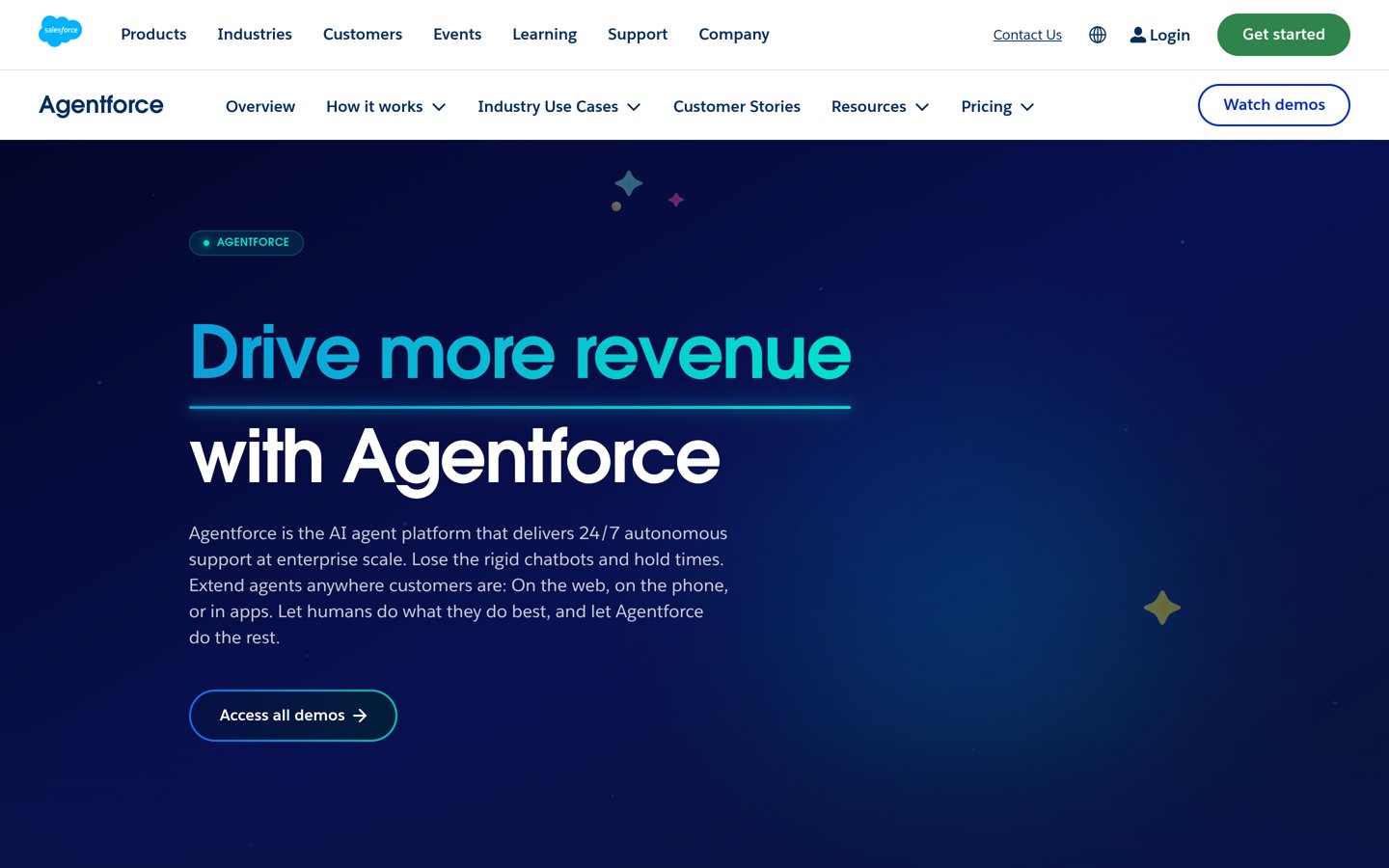
Salesforce Sales Cloud is the largest CRM in this list, with 27,500+ G2 reviews, and it covers leads, accounts, opportunities, sales flows and forecasting in one system. Starter Suite costs $25 a user a month, and a capped Free Suite sits below it.
The trade off is cost and complexity. Only Starter can be paid month to month, every tier above it is an annual commitment, and the full platform climbs to $550 a user a month on Max. It suits larger teams with an admin who need deep customization and reporting.
What we like
Largest review base in this list at 27,500+ G2 reviews
Deepest customization and reporting
30-day trial for up to 10 users
Watch out for
Steep learning curve, the most cited complaint on G2
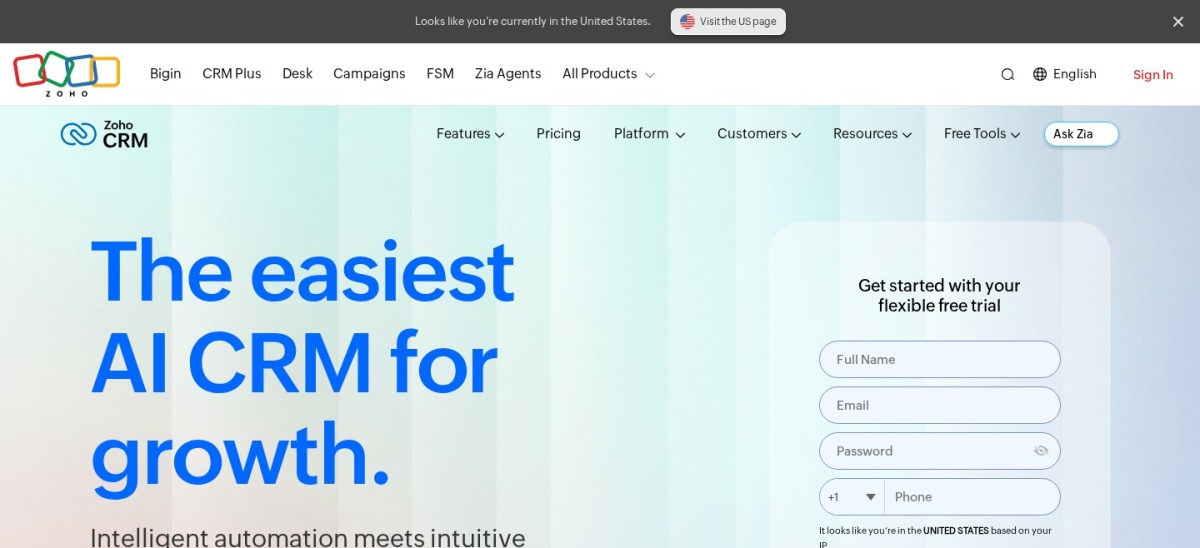
Zoho CRM is a low-cost CRM from Zoho, a company selling more than 55 business apps, with pipelines, forecasting, web forms and workflow rules. The free plan covers up to 3 users and 5,000 records, and Standard costs $14 a user a month billed annually.
The trade off is the learning curve. Settings are crowded and support scores lowest among the big CRMs in this list, and Zia AI waits for Enterprise at $40 a user a month. It suits small businesses that want deep customization at the lowest prices here.
What we like
Lowest prices for a full CRM, from $14 a user a month
Free plan for up to 3 users
4.1/5 on G2 from 2,950 reviews
Watch out for
Crowded settings and a steep learning curve
Support rated 7.7/10 on G2, lowest of the four compared
AI assistant only on Enterprise
Professional adds process management, CPQ and inventoryVisit zoho.com
08
Nutshell
4.3/5on G2 (1,411 reviews, checked Nov 2026)
Starts at$13/mo
Best simple CRM for small B2B teams
Free planNo, 14-day trial
Cheapest paid planFoundation, $13/user/mo
Open lead cap100 on Foundation
SupportFree live support
nutshell.com
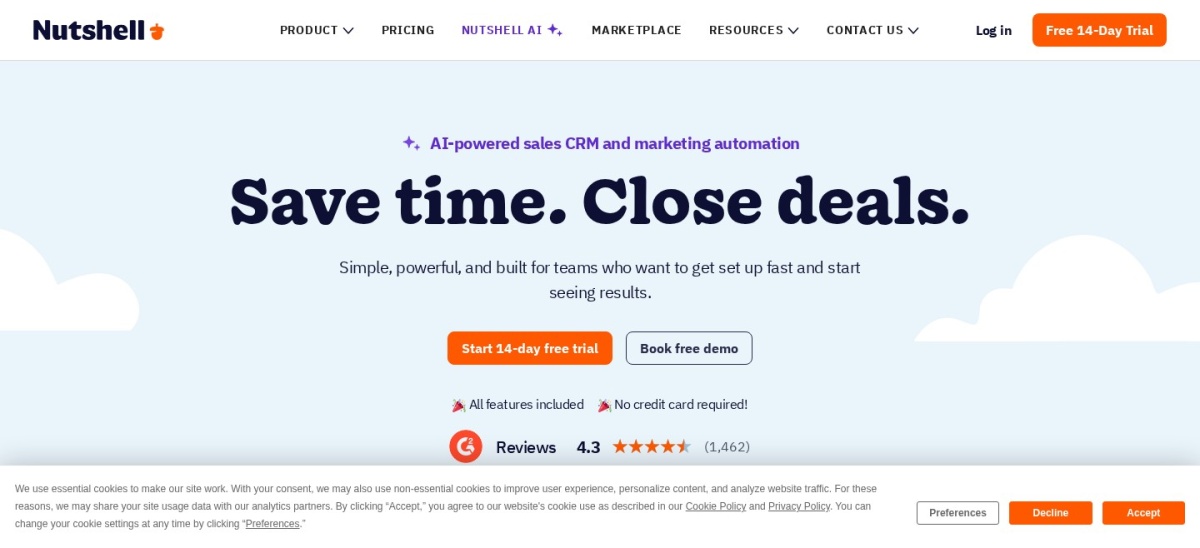
Nutshell homepage, captured Nov 2026.
Nutshell is a cloud CRM for small and mid-sized B2B teams, built around one customizable pipeline with email and calendar sync, forms and basic reporting. Foundation costs $13 a user a month billed annually, with unlimited contacts and storage and free live support.
The trade off is the lead cap. Foundation allows only 100 open leads, and automation, sequences and a second pipeline wait for Pro at $42 a user a month, more than three times Foundation. It suits small teams that want a tidy pipeline and a real person to help with setup.
What we like
4.3/5 on G2 from 1,411 reviews, a Leader every quarter since Fall 2020
Insightly pairs a sales CRM with project tracking, so a deal can turn into a project without moving to another tool. Plus costs $29 a user a month billed annually and covers 100,000 records, 50 custom fields and 2,500 mass emails a day.
The trade off is price for what you get. Workflow automation and lead routing start on Professional at $49 a user a month, and reviewers rate support at 8.0 out of 10 on G2, low for this list. It suits small teams that sell and deliver projects in the same place.
What we like
CRM and project tracking in one tool
4.2/5 on G2 from 945 reviews
Custom objects and sandbox on Enterprise
Watch out for
No free plan
Automation locked behind Professional at $49
Support quality is a recurring complaint
Professional adds workflow automation, lead routing and AI CopilotVisit insightly.com
Sales tracking vs a plain CRM
Sales tracking software and a CRM overlap, but the emphasis differs. A CRM stores contacts and history, while a sales tracker is built around the pipeline: deal stages, values, close dates and next steps.
If you only need contact records, a free CRM tier is enough. If you need to know which deals will close this month, you need pipeline tracking with stage values and a forecast view.
Teams that sell through a WordPress site can pair any of these tools with analytics on their own site. Our guide on tracking WooCommerce sales in GA4 shows how to connect store revenue to the pipeline.
How we chose
We started from the best-known sales tracking tools on G2, keeping only those with a public price, a free plan or trial, and at least 900 G2 reviews.
Prices come from each vendor's pricing page, checked on 26 November 2026. Ratings and review counts come from G2 on the same day. Where a vendor shows a sale price, the list shows the regular price.
We left out tools with no public price and tools aimed only at enterprises. No vendor paid for a place, and we do not claim to have used these tools ourselves.
How to choose sales tracking software
Start with how your team sells today, then match the tool to the deal flow.
Map your pipeline first. Write down your deal stages, from first contact to closed, and check the tool can match them without custom work.
Count the seats you will pay for. Most tools charge per user per month, and some add seat minimums or sell seats in fixed buckets, so price the whole team, not one seat.
Check calling and email capture. If reps sell by phone, a built-in dialer saves a second subscription. If they sell by email, check that opens and replies log to the deal automatically.
Run the trial with real deals. Load ten live deals into the trial, move them through the stages, and check the forecast report before you pay for a year.
FAQ
What is the best sales tracking software?
HubSpot Sales Hub is the best pick for most teams. Its free plan covers 2 users with deal pipelines and email tracking, Starter costs $20 a seat a month, and it holds 4.4 out of 5 from more than 14,000 G2 reviews.
What is the cheapest sales tracking software?
Close and Freshsales both start at $9 a user a month on annual billing. Close Solo is for one user only, so teams start at Essentials for $35, while Freshsales Growth at $9 covers a team and includes a free plan for up to 3 users.
Is there a free sales tracking tool?
Yes. HubSpot, Freshsales and Zoho CRM all offer a free plan for very small teams, and Salesforce lists a capped Free Suite. The free tiers cover pipelines and contacts, but calling, sequences and forecasting usually need a paid plan.
Do I need a CRM to track sales?
A CRM and a sales tracker are usually the same tool in this list. Every product here stores contacts and tracks deals through a pipeline, so a separate CRM is only needed if you want marketing or support features the tracker lacks.
Which sales tracking software has a built-in dialer?
Close has the strongest built-in dialer, with a Power Dialer on Growth at $99 a user a month. Freshsales includes calling on all paid plans, and HubSpot Starter includes 500 calling minutes a seat a month.
How much does sales tracking software cost per user?
Paid plans in this list run from $9 to $29 a user a month for the cheapest tier, billed annually. Most teams land between $14 and $39 a seat, and Salesforce and HubSpot climb past $100 a seat for automation and forecasting.
SaaS SEO and WordPress specialist with about 8 years of experience. Rakib compares WordPress plugins, themes, hosting and software using public pricing, documentation and user reviews. See how we rank.