Contrast Security is the best runtime application security tool for most teams, with an in-process agent that blocks injection and CVE exploitation at runtime and a 4.5/5 G2 rating from 49 reviews. Pick Datadog ASM if you already run Datadog APM, and Waratek for Java estates that cannot be patched quickly.
How we make this list: we compare pricing pages, product documentation and public user reviews, then re-check every price before each update. No product paid for a place. Disclosure.
Contrast Security is the only dedicated RASP platform in this list with agents across Java, .NET, Node.js, Ruby and Python.
Datadog App and API Protection costs $31 per host per month billed annually, and only pays off if Datadog APM is already deployed.
Waratek virtual-patches Java vulnerabilities without code changes, but covers JVM stacks only.
Appdome is the highest rated tool here at 4.8/5 on G2, but it protects mobile apps only.
New Relic is the cheapest entry point, with a free tier and Standard from $10 a month for the first full platform user.
Four of the seven tools publish no list price at all, so most budgets start with a quote.
What runtime application security actually does
A firewall sees requests before they reach your code. Runtime application security watches what the application does with those requests once they arrive, which is how it catches attacks that look harmless at the edge.
The strongest tools run an agent inside the application process. That agent sees database queries, deserialization and library calls, so it can tell a real SQL injection from a string that only looks like one.
Not every tool here works that way. Some protect the browser or the mobile binary instead, and one is a WAF that sits in front of the application. Our guide on what a web application firewall is explains where that edge layer stops.
Pricing is the hardest part of this category. Most vendors quote per host, per agent or per application, and four of the seven tools in this list publish no price at all.
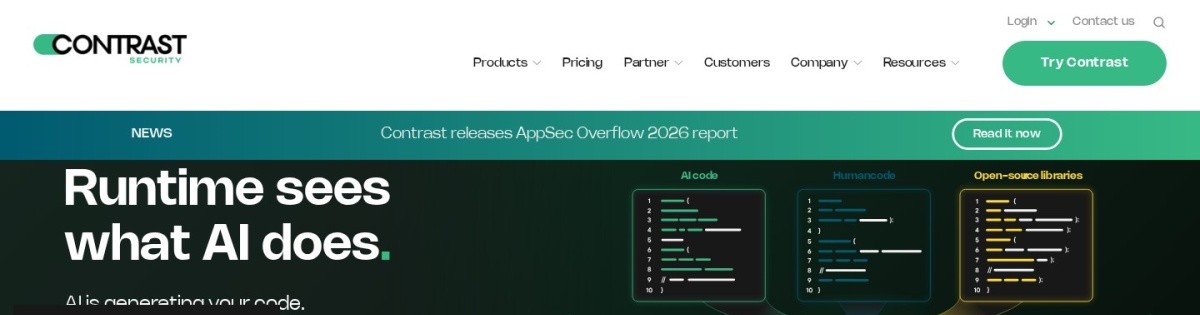
Contrast Security is the leading dedicated runtime application security platform, with an agent that runs inside the application process. It watches data flow at runtime, blocks injection and CVE exploitation attempts, and reports the exact code path behind each finding. The platform covers Java, .NET, Node.js, Ruby and Python, and pairs Protect with Assess and Scan findings.
The trade off is price. Production Protect is quoted per host, with no public list price, so budgeting starts with a sales conversation and a host count. It suits enterprise AppSec teams that want one agent across languages and can run a proof of concept first.
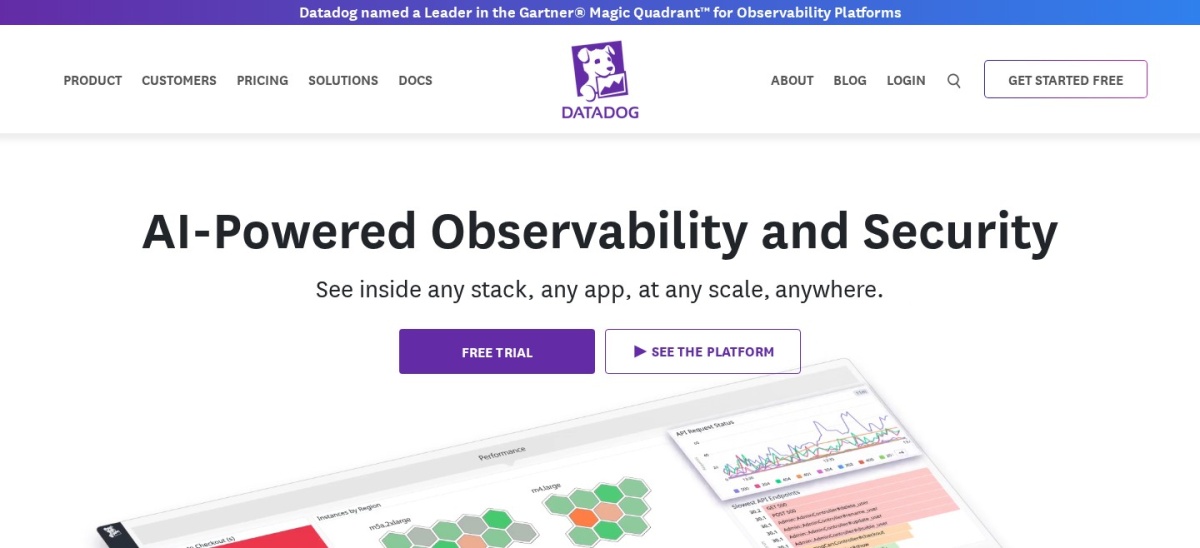
Datadog Application Security homepage, captured Nov 2026.
Datadog Application Security is the runtime protection layer of the Datadog platform, now sold as App and API Protection. It detects OWASP attacks from inside the Datadog agent already running on your hosts, and findings attach to APM traces and service maps. It covers web applications and APIs, with serverless protection priced separately.
The trade off is lock-in. The $31 per host per month annual rate only pays off if Datadog APM is already deployed, and costs climb with host count. It suits DevSecOps teams that live in Datadog and want runtime blocking without a second agent.
What we like
Security findings sit beside APM traces
Published per-host pricing, rare in this list
No extra agent if Datadog is already deployed
Large review base on G2
Watch out for
Little value without existing Datadog APM
Costs scale steeply with host count
G2 rating covers the whole Datadog platform
App and API Protection is $31 per host per month billed annuallyVisit datadoghq.com
03
Waratek
4.7/5on G2 (11 reviews, checked Nov 2026)
PricingCustom/yr
Best for Java virtual patching
Runtime protectionJVM-level, compiler-based
Virtual patchingYes, no restarts
LanguagesJava and JVM only
PricingQuoted per agent
waratek.com
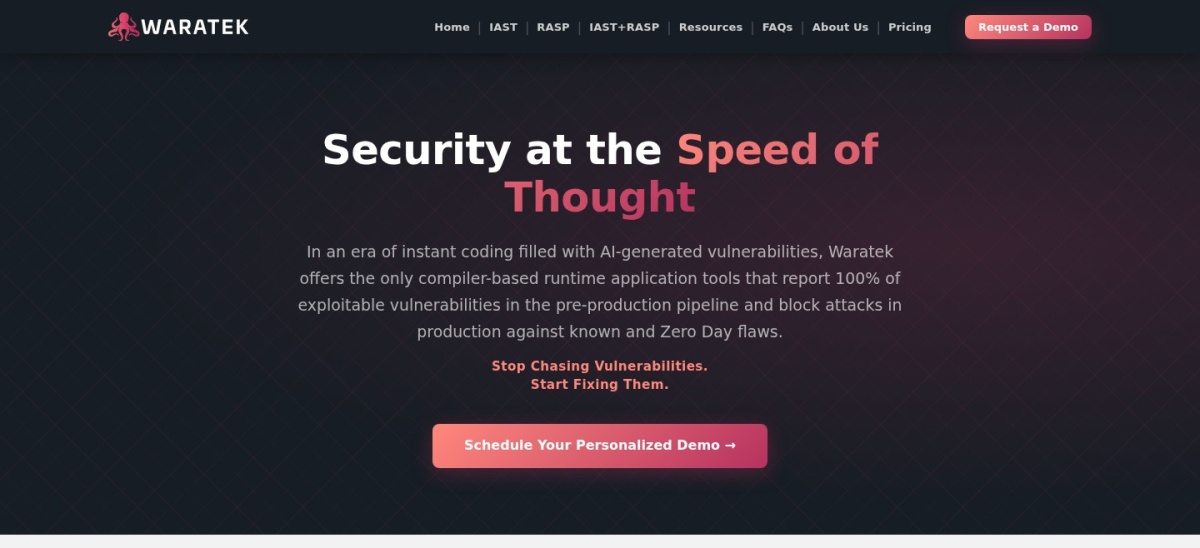
Waratek homepage, captured Nov 2026.
Waratek is a compiler-based runtime security platform for Java applications, combining IAST reporting with RASP blocking in one product. Its virtual patching shields known vulnerabilities without source code changes or restarts, which helps estates running old Spring, Tomcat or WebLogic versions. Rules use ARMR, a declarative policy language.
The trade off is scope. Waratek covers Java and JVM stacks only, so mixed-language estates need a second tool, and pricing is quoted per agent with a free trial offered. It suits teams protecting legacy Java applications that cannot be patched or redeployed quickly.
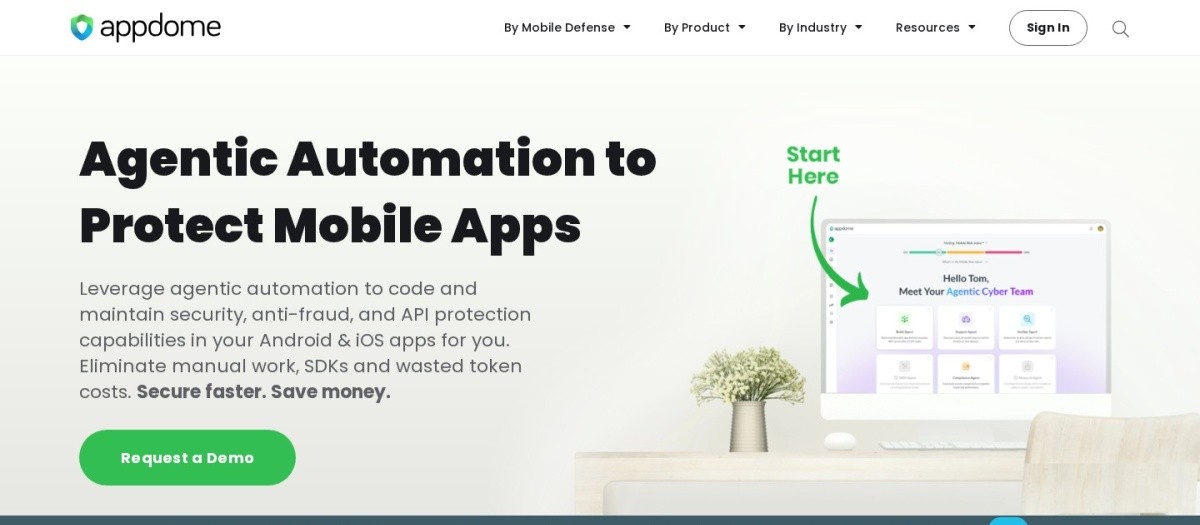
Appdome is a mobile runtime protection platform that builds shielding into Android and iOS apps through CI/CD automation, with no SDK to embed and no source changes. It covers mobile RASP, app shielding, obfuscation, root and jailbreak detection, and man-in-the-middle prevention. ThreatScope monitoring reports attacks after release.
The trade off is focus. Appdome protects mobile binaries only, so server-side applications need a separate runtime tool, and pricing is quote-only with a free trial. It suits fintech, banking, health and retail teams shipping mobile apps on a fast release cycle.
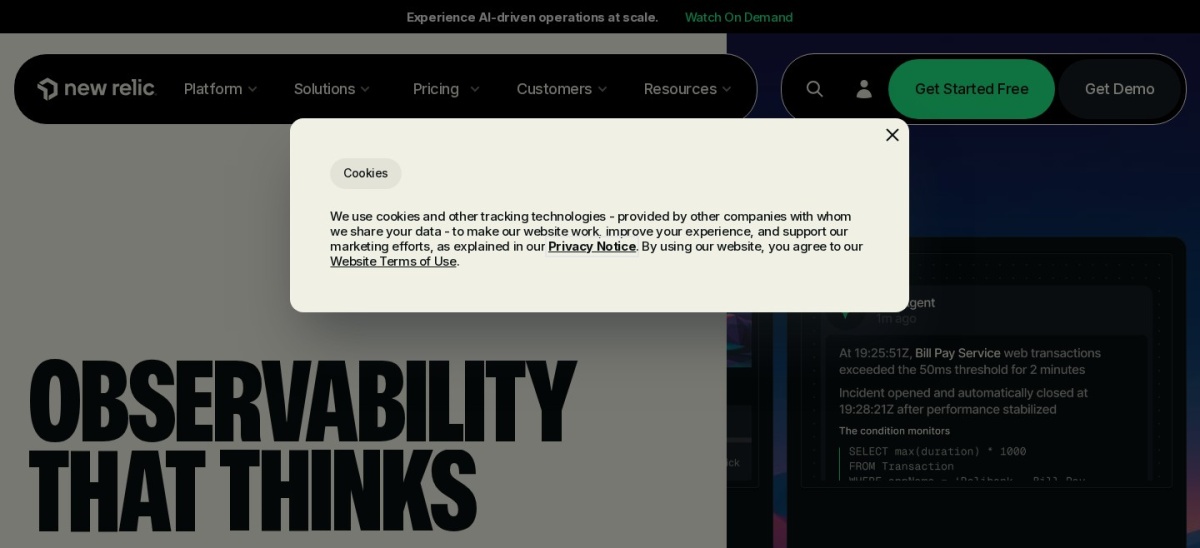
New Relic is an observability platform whose agents surface application security findings beside APM traces, infrastructure metrics and logs. A free tier includes 100 GB of data ingest a month and one full platform user, with Standard starting at $10 a month for that first user. Security signals route to the team that owns each service.
The trade off is depth. New Relic gives vulnerability visibility rather than dedicated RASP blocking policies, so teams needing active injection prevention should pair it with a purpose-built runtime tool. It suits engineering-led teams already on New Relic that want security findings without a second agent.
What we like
Only tool here with a usable free tier
Lowest published entry price in this list
Security findings beside performance data
Large G2 review base
Watch out for
No dedicated RASP blocking policies
Extra full platform users cost $99 a month each
G2 rating covers the whole New Relic platform
Standard starts at $10 a month for the first full platform userVisit newrelic.com
06
Jscrambler
4.4/5on G2 (31 reviews, checked Nov 2026)
PricingCustom/yr
Best for browser-side protection
Client-side protectionYes, browser runtime
ObfuscationPolymorphic
Third-party scriptsMonitored and governed
PCI DSSWorkflows for payment pages
jscrambler.com
Jscrambler homepage, captured Nov 2026.
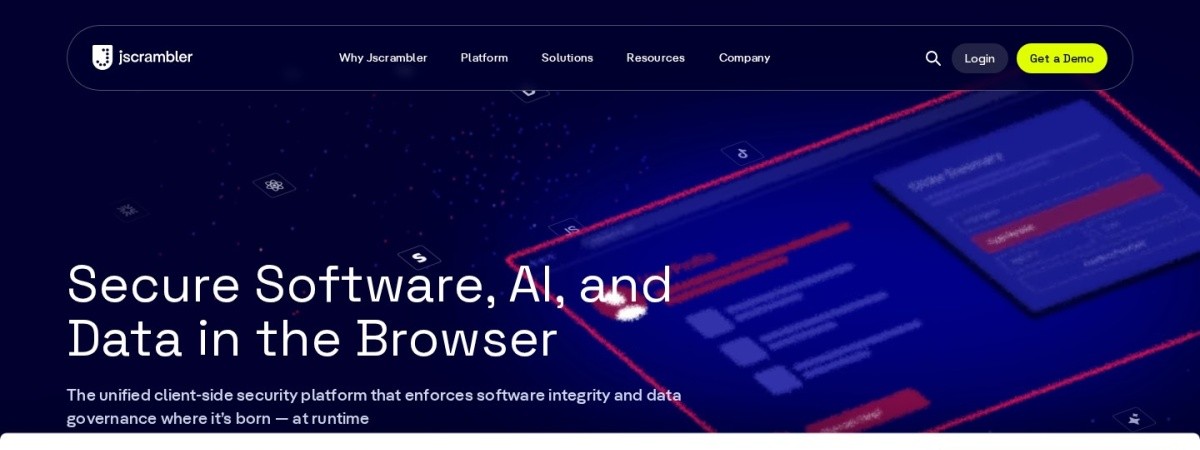
Jscrambler is a client-side security platform that protects JavaScript code, third-party scripts and payment page data in the browser. It combines polymorphic obfuscation with runtime anti-tampering, anti-debugging and data fencing to stop Magecart-style skimming and script supply chain attacks. PCI DSS workflows cover payment pages.
The trade off is placement. Jscrambler guards the browser, not the server, so it complements rather than replaces server-side runtime protection, and pricing comes from the vendor on request. It suits teams whose payment pages or JavaScript-heavy apps face client-side attacks.
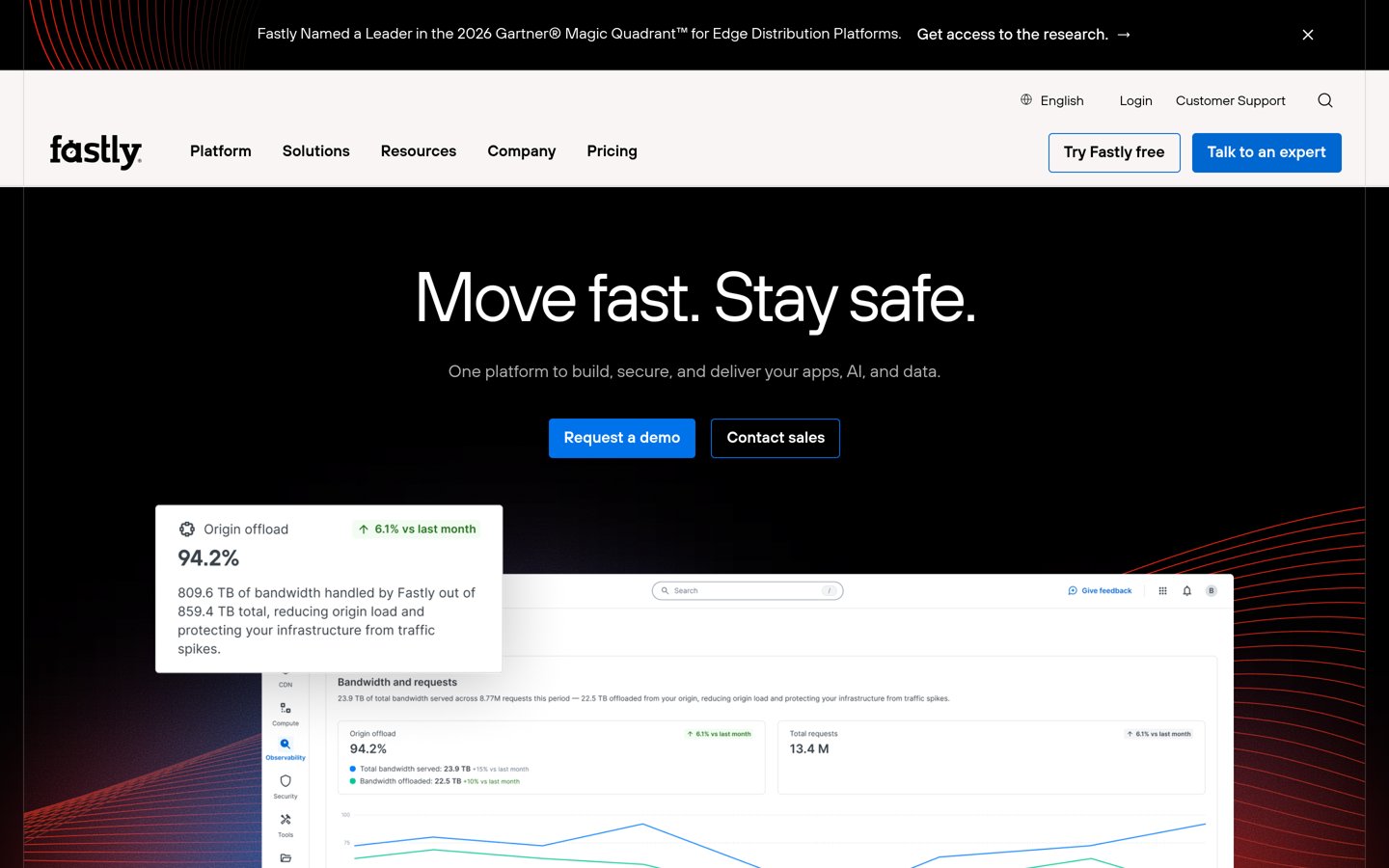
Fastly Next-Gen WAF is a web application and API firewall built on the Signal Sciences engine Fastly acquired in 2020. It protects web applications and APIs from the edge to the origin, blocking account takeover, bot abuse, API attacks and OWASP threats. It deploys across edge, cloud, on-premises and container environments, with CVE virtual patches and rate limiting.
The trade off is architecture. Fastly is a WAF and API firewall, not an in-process RASP agent, so it cannot see what happens inside application code. It suits teams that want strong application protection without embedding an agent in every runtime.
What we like
Flexible edge-to-origin deployment
Strong application attack visibility
CVE virtual patches included
Built on the proven Signal Sciences engine
Watch out for
Not an in-process RASP agent
Contact-sales pricing only
Advanced rules need specialist knowledge
Security Core, Core Plus and Total tiers are contact-salesVisit fastly.com
RASP vs WAF: what each one sees
A WAF judges requests on their contents and on reputation signals, before the request reaches your code. That makes it fast at volume, but blind to anything that happens after the request is accepted.
RASP watches the request inside the runtime, so it can block an injection only when it actually reaches a query, and ignore a suspicious string that never executes. That context is what cuts false positives.
Most mature programs run both. The WAF handles high-volume filtering at the edge, and RASP adds depth where application context decides whether behavior is actually malicious.
How we chose
We started from the established RASP and runtime protection vendors with a live product and a public review profile, then kept those with a G2 rating and a review count we could verify on 25 November 2026.
Prices come from each vendor's published pricing or, where no price is published, the vendor's own statement that pricing is by quote. Ratings and review counts come from G2 on the same day; where a G2 score covers a whole platform rather than the security module, the text says so.
We left out Imperva RASP, which reached end of support on 31 October 2026, and Hdiv, which is sold inside Datadog rather than standalone. No vendor paid for a place, and we do not claim to have used these tools ourselves.
How to choose a runtime application security tool
Start with the runtime you need to protect, then match the tool to that surface.
Name the runtime first. Server-side agents, browser JavaScript, mobile binaries and edge WAFs protect different surfaces. A tool that is best in one lane may not cover yours at all.
Check language and framework support. RASP agents instrument language runtimes, so ask for current documentation on Java, .NET, Node.js, Python and Go before shortlisting.
Run monitor mode before blocking. Start in observe mode, measure false positives and latency, then enable blocking for high-confidence attack classes first.
Model the pricing unit. Some tools charge per host, some per agent and some per application. Count your footprint in that unit before requesting a quote.
FAQ
What is the best runtime application security tool?
Contrast Security is the best dedicated option for most teams. Its in-process agent blocks injection and CVE exploitation at runtime across Java, .NET, Node.js, Ruby and Python, and it is rated 4.5 out of 5 on G2 from 49 reviews.
What is the difference between RASP and a WAF?
A WAF inspects requests before they reach application code, while RASP watches what the application does with a request once it arrives. RASP can tell a real injection from a suspicious string that never executes, which is why many teams run both together.
Is Imperva RASP still a good choice?
No, not for new buyers. Imperva RASP reached end of support on 31 October 2026 under Thales ownership. Existing users should plan a migration, and new buyers should shortlist Contrast, Waratek or Datadog instead.
How much does runtime application security cost?
Most tools are quote-only, priced per host, per agent or per application. The published prices in this list are Datadog at $31 per host per month billed annually and New Relic from $10 a month for the first full platform user.
Do I still need a WAF if I have RASP?
Yes, in most cases. A WAF filters high-volume attacks at the edge before they reach your servers, while RASP adds depth inside the application. They cover different layers and work best together.
Which runtime security tool is best for Java applications?
Waratek is the strongest pick for Java-heavy estates. Its compiler-based virtual patching shields known vulnerabilities without code changes or restarts, and it is rated 4.7 out of 5 on G2, though the score rests on only 11 reviews.
SaaS SEO and WordPress specialist with about 8 years of experience. Rakib compares WordPress plugins, themes, hosting and software using public pricing, documentation and user reviews. See how we rank.