Loopio is the best RFP management software for most teams, rated 4.6 out of 5 on G2 from 812 reviews for its content library and support. Pick Responsive for large enterprise programs, or PandaDoc from $19 a month when the deliverable is a polished, signable proposal.
How we make this list: we compare pricing pages, product documentation and public user reviews, then re-check every price before each update. No product paid for a place. Disclosure.
Loopio leads the list at 4.6 out of 5 on G2 from 812 reviews, with support rated 9.4 out of 10.
Responsive starts at $10,000 a year for its Emerging Edition; Loopio, Qvidian, SiftHub and Xait publish no prices at all.
PandaDoc is the cheapest paid entry here at $19 per user a month, and the only tool with a free plan.
RocketDocs starts at $18,500 a year and runs a private AI, built for banks, insurers and health plans.
Proposify and Qwilr build beautiful proposals but do not automate long questionnaires, so pick them for the document, not the DDQ.
What RFP management software should do
An RFP reply is a team job. The buyer sends a long questionnaire, subject matter experts hold the answers, and the deadline is usually tight.
Good RFP software keeps every approved answer in one library, drafts first replies from it, and routes questions to the right people with reminders.
The split that matters most is scope. Dedicated RFP tools automate questionnaires and DDQs, while proposal builders polish the final document. For smaller teams that only collect a few structured replies, a simple form can be enough. See how to create a contact form in WordPress.
Pricing is the other split. Most dedicated RFP platforms are quote-only and start in five figures a year, while proposal tools publish per-user prices from $19 a month.
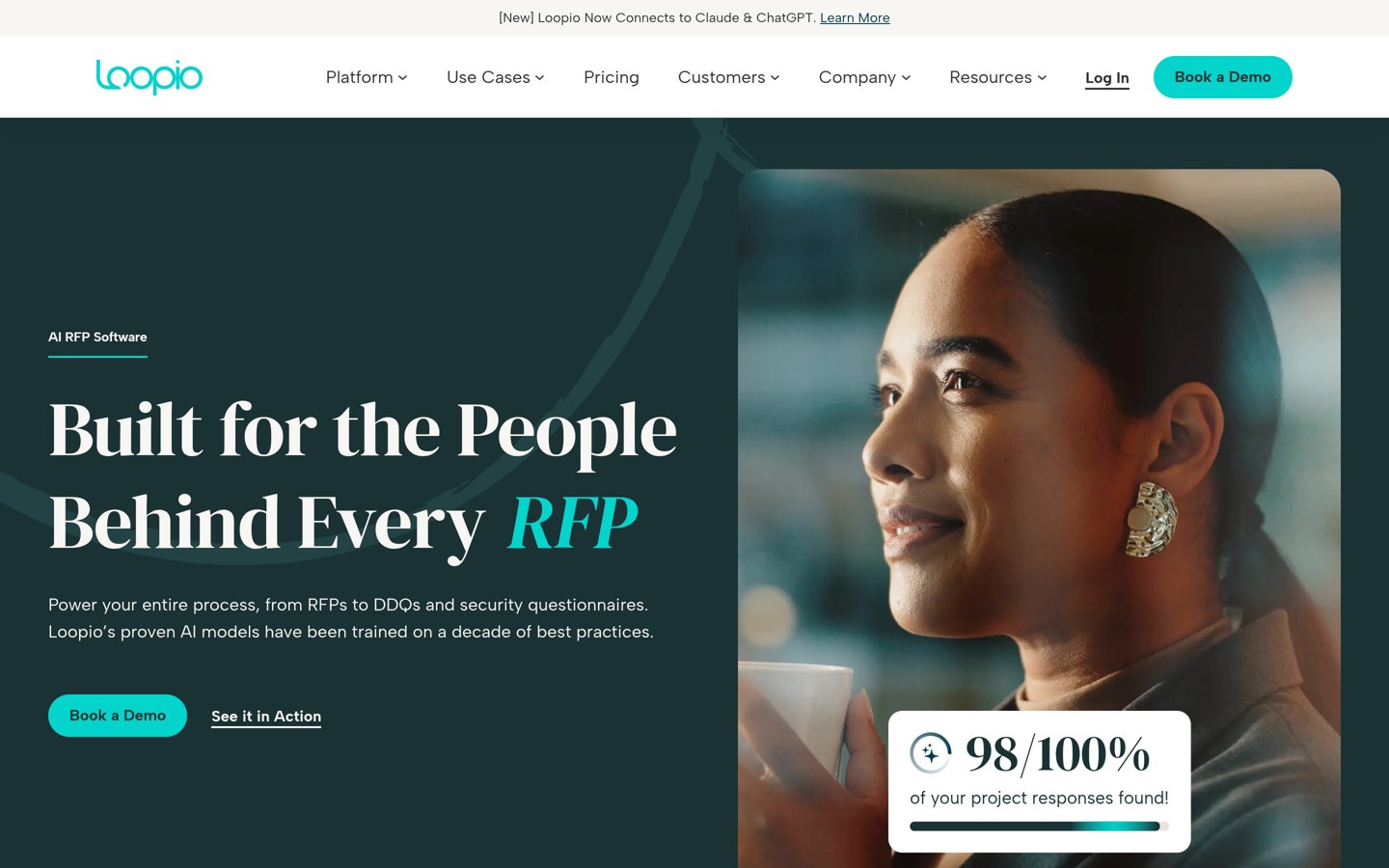
Loopio is a response management platform built around a central library of approved answers. Teams respond to RFPs, RFIs, DDQs and security questionnaires from one workspace, with AI drafting first replies from the library and smart assignments routing questions to subject matter experts.
The trade off is price and upkeep. Loopio publishes no prices, and every plan is a custom quote, while the library needs regular curation or stale answers creep in. It suits mid-market and enterprise teams that answer RFPs every week and want the best-rated support in this list.
What we like
Highest G2 rating among dedicated RFP tools
Support rated 9.4 out of 10 on G2
AI drafts from the library in minutes
Integrations with Salesforce, Slack and Microsoft 365
Watch out for
No published price; every plan is a custom quote
Library needs ongoing curation
AI drafts still need review on technical questions
Paid plans add multi-language libraries and premium supportVisit loopio.com
02
Responsive
4.5/5on G2 (1,313 reviews, checked Nov 2026)
Starts at$10,000/yr
Best for large enterprise programs
Free planNo
Entry priceFrom $10,000/yr
Content libraryYes, with TRACE Score
Customers2,000+ companies
responsive.io
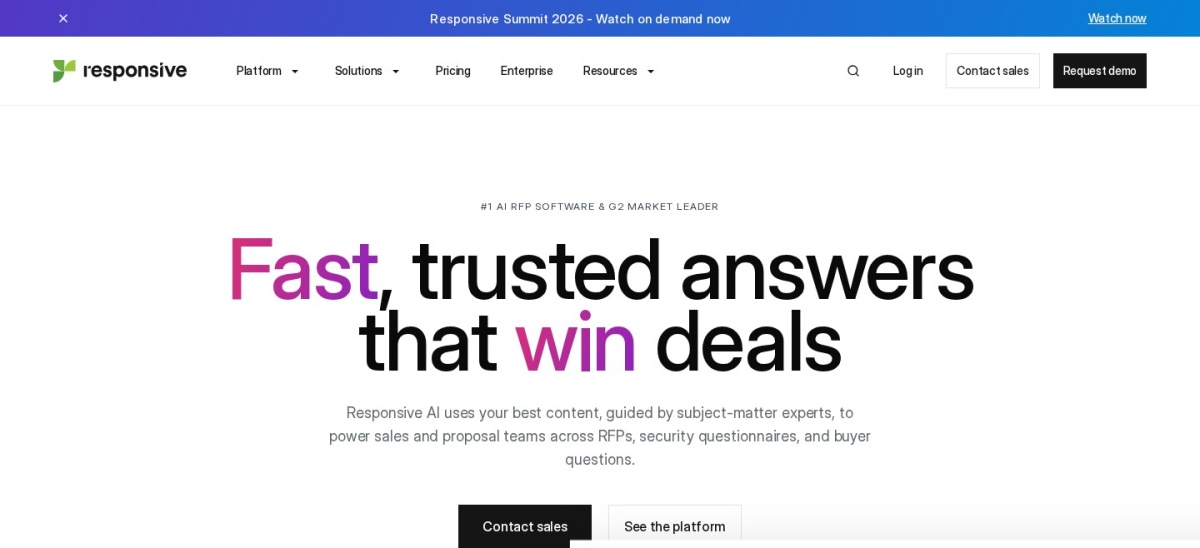
Responsive homepage, captured Nov 2026.
Responsive, formerly RFPIO, is the largest dedicated RFP platform in this list, used by more than 2,000 companies. It covers the full response cycle from intake and go/no-go decisions to authoring, approvals and analytics, with AI agents drafting from a governed content library.
The trade off is cost and commitment. The Emerging Edition starts at $10,000 a year, Growth and Enterprise are quote-only, and rolling out a governed library across departments is a real project. It suits large teams running high volumes of RFPs and security questionnaires.
What we like
Largest review base in this list at 1,313 G2 reviews
TRACE Score checks answers cover every part of a question
Covers intake, approvals and analytics, not just drafting
Unlimited projects on every edition
Watch out for
Entry price of $10,000 a year rules out small teams
AI, translation and SSO are paid add-ons on some editions
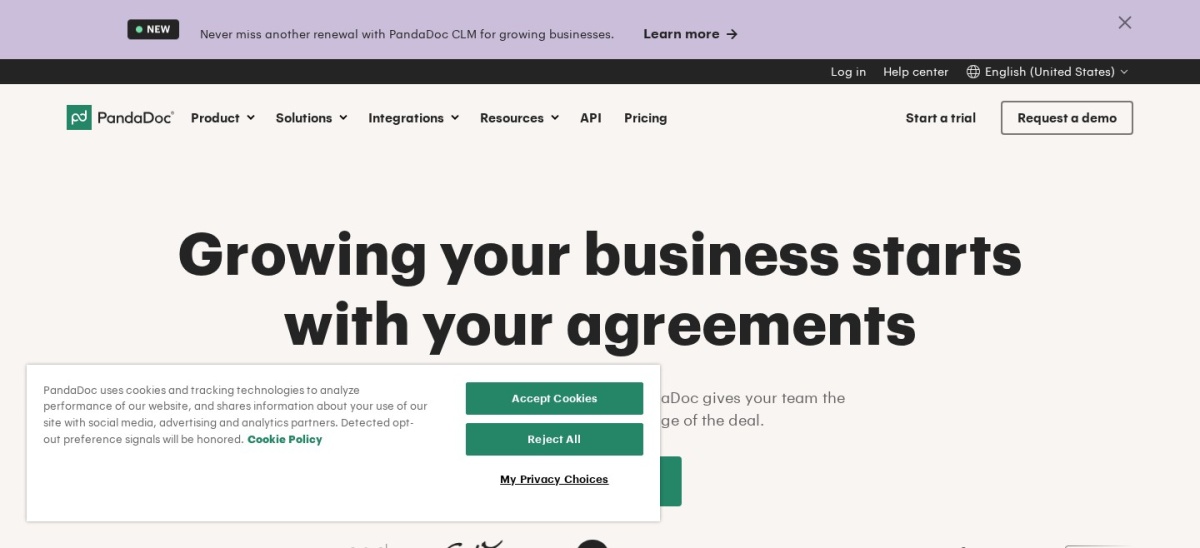
PandaDoc is a document platform that takes a proposal from creation to signature and payment in one tool. The Starter plan at $19 per user a month includes unlimited documents, e-signatures and tracking, and a free plan covers 5 documents a month.
The trade off is scope. PandaDoc manages documents well but does not offer the RFP content libraries or SME workflows that Loopio, Responsive and Qvidian do. It suits sales teams whose RFP process ends in a polished, signable document.
What we like
Highest G2 rating in this list at 4.7 out of 5
Only tool here with a free plan
E-signatures, payments and tracking in one place
Deep HubSpot and Salesforce integrations
Watch out for
No RFP answer library or questionnaire automation
CRM sync and content library need the $49 Business plan
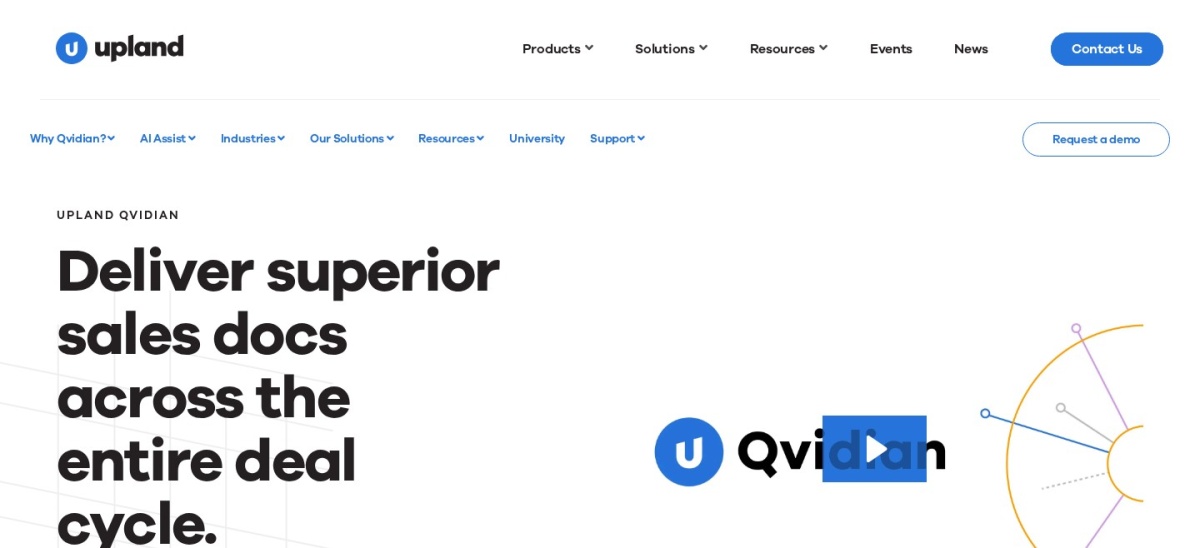
Qvidian, part of Upland Software, brings nearly 50 years of proposal industry experience to RFP management. Its content library supports expiration dates, permissions and more than 70 built-in reports, with generative AI that drafts, revises and personalises responses.
The trade off is weight. Qvidian publishes no prices, and its depth suits established proposal operations more than small teams answering the occasional RFP. It suits regulated industries and enterprises where content control matters as much as speed.
What we like
Deepest content governance in this list
Strong Microsoft Office integration
70+ out-of-the-box reports
Longest industry pedigree, nearly 50 years
Watch out for
No published pricing; quote-only
Lowest G2 rating among the dedicated RFP tools here
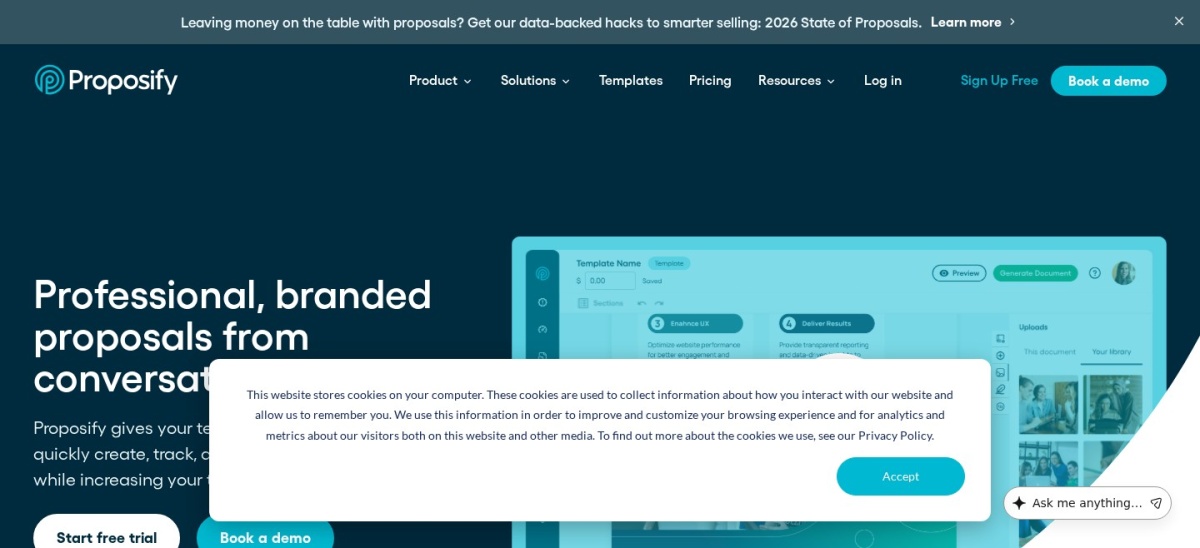
Proposify is a proposal builder with a drag-and-drop editor that produces branded proposals in about 17 minutes on average. The Build plan at $39 per user a month includes unlimited documents and signatures, a content library, AI drafting and CRM integrations.
The trade off is scope. Proposify is proposal software, not RFP questionnaire automation, so it will not auto-answer a 200-question security DDQ. It suits sales-led teams where the deliverable is the proposal itself.
What we like
Polished templates with prospect engagement analytics
Rated 4.6 out of 5 from 1,148 G2 reviews
CRM data pulls into documents automatically
Win-rate tracking per proposal
Watch out for
No questionnaire or DDQ automation
Per-user pricing adds up fast for large teams
Editing and customisation draw the most complaints
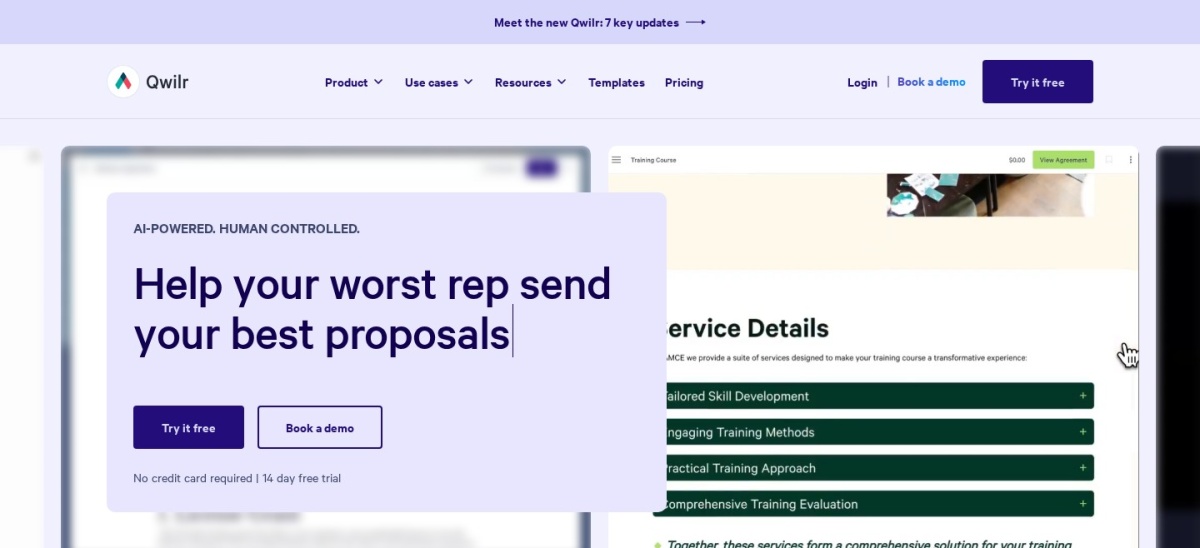
Qwilr turns proposals into interactive web pages that buyers can read, sign and pay for in one session. The Business plan at $35 per user a month includes the editor, e-signatures, QwilrPay, page analytics and HubSpot integration, with a 14-day free trial.
The trade off is scope and gating. Qwilr is a proposal tool, not a questionnaire platform, and Salesforce integration and custom fonts sit behind the Enterprise plan at $59 per user a month with a 10-user minimum. It suits small sales teams that want proposals to look impressive.
What we like
Interactive web proposals, not static PDFs
Built-in payments through QwilrPay
Rated 4.6 out of 5 from 917 G2 reviews
Buyer engagement analytics per page
Watch out for
No RFP questionnaire automation
Salesforce integration needs the Enterprise plan
Limited customisation draws reviewer complaints
Enterprise at $59 adds Salesforce, SSO and white labellingVisit qwilr.com
07
RocketDocs
4.2/5on G2 (104 reviews, checked Nov 2026)
Starts at$18,500/yr
Best for regulated industries
Free planNo
Entry priceFrom $18,500/yr
Private AIYes, in-house only
CertificationsSOC 2 Type II, ISO 27001
rocketdocs.com
RocketDocs homepage, captured Nov 2026.
RocketDocs is an RFP platform built for regulated industries, with a private AI that never sends customer data to public models. Plans start at $18,500 a year, and the platform covers RFPs, RFIs and questionnaires with a full audit trail.
The trade off is price and focus. The entry price is the highest published figure in this list, and the compliance-first design offers less breadth for general sales proposals. It suits banks, insurers and health plans answering DDQs with sensitive figures.
What we like
Private AI with a dedicated document store per customer
SOC 2 Type II and ISO 27001 certified
Full audit trail by default
Trusted since 1994 in financial services
Watch out for
Highest published entry price in this list
Custom pricing beyond the published starting point
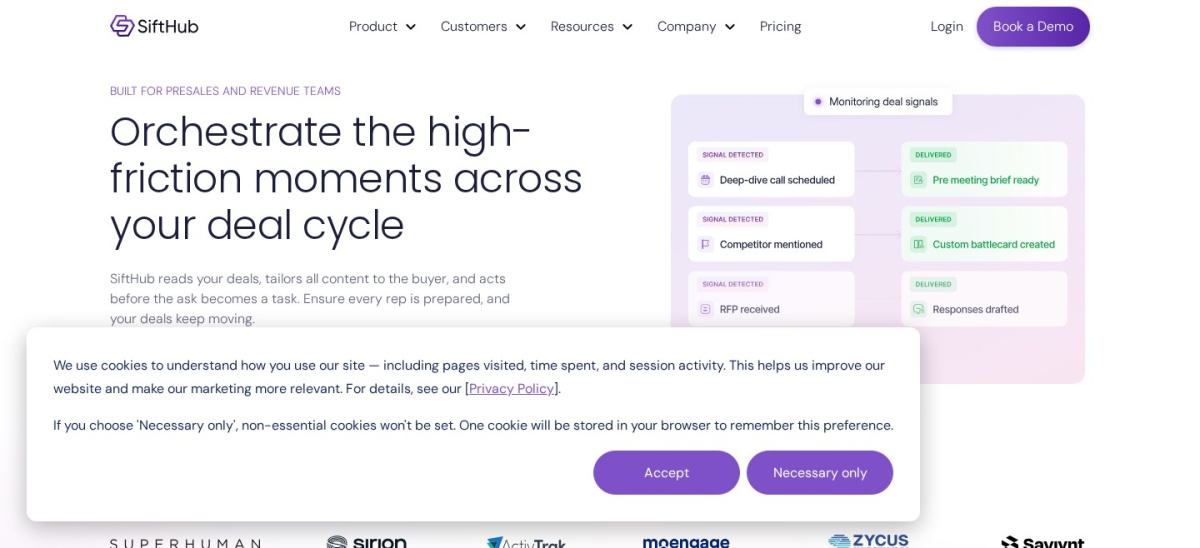
SiftHub is an AI-first response platform that drafts RFP answers from live CRM and call context, not just a static library. It covers RFPs, DDQs and security questionnaires, with automated checks for expired or conflicting content.
The trade off is maturity. SiftHub has a small review base of 66 G2 reviews, and pricing is a custom quote with no published starting point. It suits enterprise teams that want governance tied to live deal data.
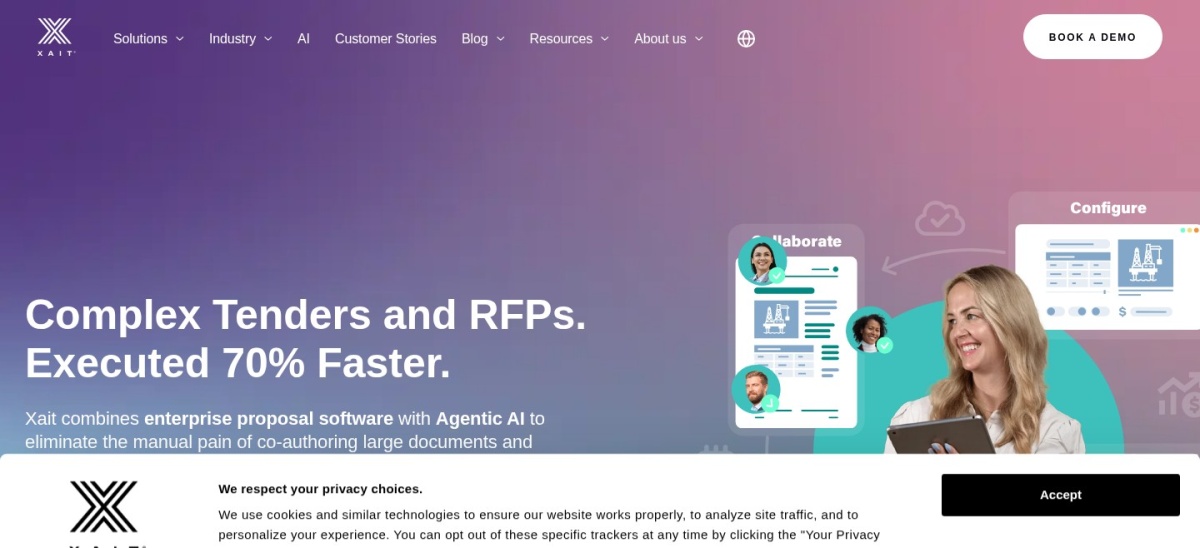
Xait has spent more than 25 years on complex tenders co-authored by dozens of people, mostly in energy, renewables, manufacturing and construction. Its XaitPorter platform lets large teams collaborate on a single document without the version chaos of email attachments.
The trade off is specialisation. Xait is built for hundred-page tenders in heavy industry, not for SaaS teams answering security questionnaires, and pricing is enterprise and quote-based. It suits bid teams producing large tenders under tight deadlines.
Five of the nine tools in this list publish no prices. Expect a sales call, a scoping conversation and a quote based on seats, content volume and modules.
Published starting points help anchor the budget. Responsive starts at $10,000 a year and RocketDocs at $18,500, while Vendr procurement data puts the median Loopio contract near $24,000 a year.
Ask what the quote leaves out. Onboarding, library migration, translations and premium support are often paid add-ons, so get them in writing before signing.
How we chose
We started from the dedicated RFP platforms and proposal tools with the largest G2 review bases, then kept nine that cover the main ways teams answer RFPs.
Prices come from each vendor's pricing page, checked on 25 November 2026. Ratings and review counts come from G2 on the same day. Where a vendor shows a sale, the list shows the regular price.
We left out tools with no public G2 rating. No vendor paid for a place, and we do not claim to have used these tools ourselves.
How to choose RFP management software
Start with how many questionnaires you answer, then match the tool to that volume.
Count your questionnaires per quarter. A team answering a few RFPs a year does not need a five-figure platform. A proposal tool at $19 to $39 a user a month may cover it.
Decide whether you need a library or a document. Long questionnaires and DDQs need a governed answer library. If the deliverable is a polished proposal, a builder such as PandaDoc or Proposify fits better.
Ask for a demo with your own RFP. Bring a real questionnaire to the demo and watch the tool draft answers from your content. That shows more than any feature list.
Get the full quote in writing. Ask what onboarding, migration and premium support cost, since those are often add-ons on quote-only platforms.
FAQ
What is the best RFP management software?
Loopio is the best pick for most teams. It is rated 4.6 out of 5 on G2 from 812 reviews, with the best-rated support in this list, and its content library drafts first replies to RFPs, RFIs, DDQs and security questionnaires in minutes.
How much does RFP management software cost?
Dedicated RFP platforms usually start in five figures a year. Responsive publishes a $10,000 starting price and RocketDocs $18,500, while Loopio, Qvidian, SiftHub and Xait are quote-only. Proposal tools are cheaper: PandaDoc starts at $19 per user a month.
Is there free RFP management software?
There is no free dedicated RFP platform in this list. PandaDoc is the only tool here with a free plan, covering 5 documents a month, and Qwilr and Proposify offer free trials. The dedicated RFP tools all require a paid subscription.
What is the difference between RFP software and proposal software?
RFP software automates questionnaires: it stores approved answers, drafts replies and routes questions to experts. Proposal software builds the final document with templates, e-signatures and tracking. Many teams use one of each.
Do I need RFP software for a small team?
Probably not if you answer only a few RFPs a year. A proposal tool such as PandaDoc or Proposify at $19 to $39 per user a month covers the document, and a shared answer document can handle the rest until volume grows.
Which RFP tool is best for regulated industries?
RocketDocs is built for banks, insurers and health plans. Its private AI never sends data to public models, it holds SOC 2 Type II and ISO 27001 certification, and every response carries a full audit trail. Plans start at $18,500 a year.
SaaS SEO and WordPress specialist with about 8 years of experience. Rakib compares WordPress plugins, themes, hosting and software using public pricing, documentation and user reviews. See how we rank.