Particle is the best remote IoT management software for most teams, with a 4.5/5 G2 rating from 195 reviews and a free plan for 100 devices. Pick AWS IoT Device Management for huge fleets on AWS, Azure IoT Hub for Microsoft shops, and ThingsBoard if you want to self-host.
How we make this list: we compare pricing pages, product documentation and public user reviews, then re-check every price before each update. No product paid for a place. Disclosure.
Particle leads with a 4.5/5 G2 rating from 195 reviews and a free plan covering 100 devices.
AWS bills by use from $0.10 per 1,000 devices registered, with 50 free remote actions a month.
Azure IoT Hub starts at $10 a month per unit, but device management needs Standard S1 at $25.
ThingsBoard and Mender both offer a free open-source edition you can self-host.
Losant no longer publishes prices after joining SUSE, so every deal is now a custom quote.
What remote IoT management software should cover
A remote IoT management platform keeps a fleet of connected devices working after they leave the factory. It handles provisioning, configuration, monitoring, remote access and over-the-air updates from one place.
The platforms here differ most in how they charge. Some bill per device, some per message or payload, and the two big clouds bill by use, so the cheapest entry price is rarely the cheapest bill at scale.
Protocols and updates matter as much as price. Check that the platform speaks the protocols your devices use, that updates can roll back if a release fails, and that it exposes an API for custom integrations, the same idea as a custom REST API endpoint in WordPress.
Self-hosted options suit teams that want control of their data, while cloud platforms suit teams that want to skip server work. The list below covers both, with the free tier of each platform noted.
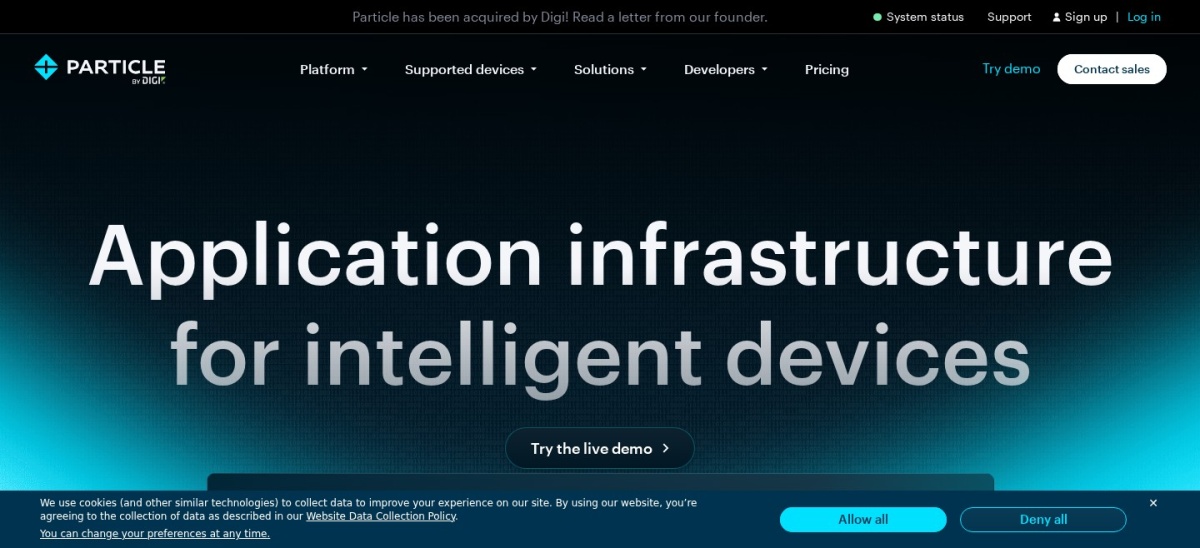
Particle is the full stack for connected products: hardware modules, a device OS, cloud connectivity and fleet management in one place. The free plan covers 100 devices and 100,000 Data Operations a month, and Basic costs $299 a month per block of 100 devices and 720,000 Data Operations.
The trade off is the block. A fleet of 101 devices pays for two blocks, so costs jump in steps rather than smoothly, and the platform works best with Particle hardware. It suits product teams shipping a connected device who want one vendor from prototype to production.
What we like
Hardware, OS, cloud and fleet in one stack
Free plan covers 100 devices
OTA updates included on every plan
Watch out for
Block pricing jumps at 101 devices
Works best with Particle hardware
Data Operations caps need watching on chatty devices
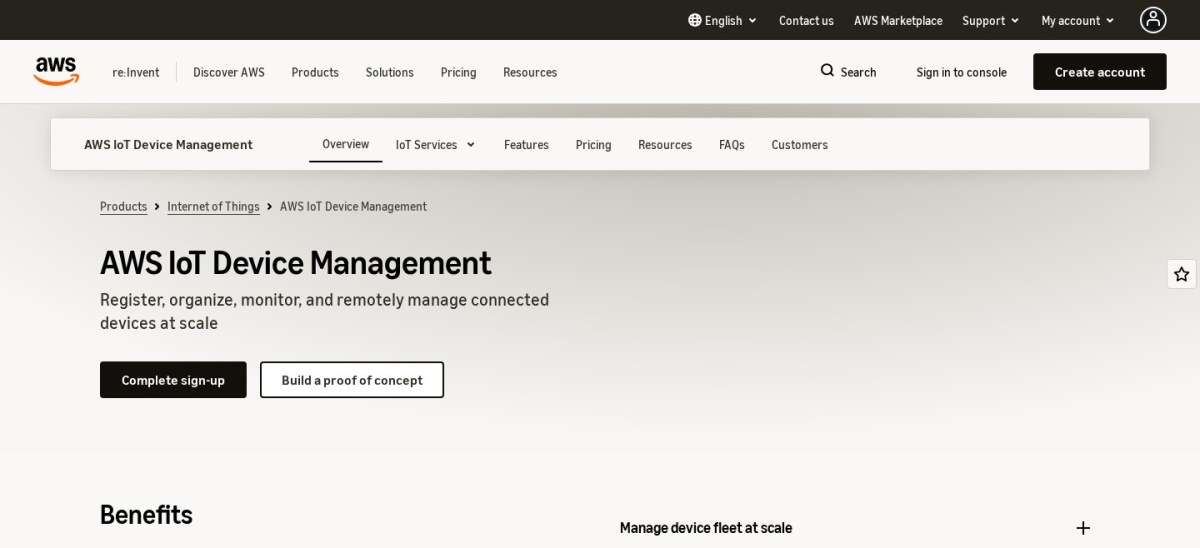
AWS IoT Device Management homepage, captured Nov 2026.
AWS IoT Device Management is the fleet service for teams already running on AWS. It covers bulk registration, fleet indexing, remote actions through Device Jobs, secure tunneling and managed integrations for Zigbee, Z-Wave and Wi-Fi devices. The free tier includes 50 remote actions a month for 12 months.
The trade off is billing. Each part is metered separately, from $0.10 per 1,000 devices registered to $0.003 per remote action and $1.00 per tunnel, so a monthly bill is hard to predict before you run it. It suits AWS teams that need fleet tools beside IoT Core, Lambda and analytics.
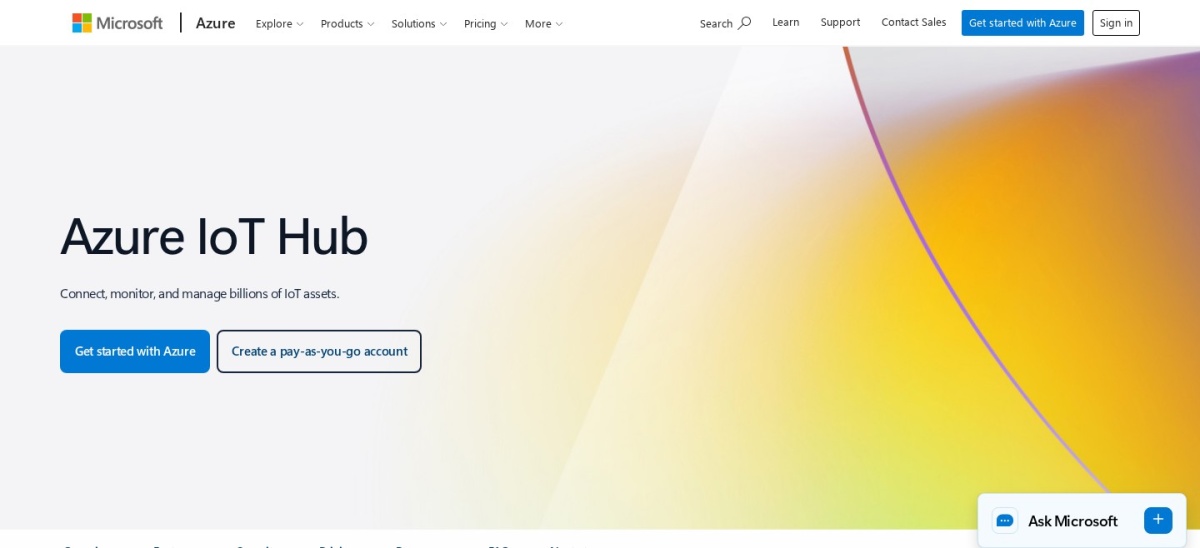
Azure IoT Hub is the managed messaging backbone for device fleets on Azure, with Device Provisioning Service handling zero-touch enrollment and per-device authentication. The free tier allows 8,000 messages a day and up to 500 device identities, and Basic B1 costs $10 a month per unit for 400,000 messages a day.
The trade off is the Basic tier. B1 has no cloud-to-device messaging, device twins or device management, so a production fleet that needs remote configuration should start on Standard S1 at $25 a month per unit. It suits Microsoft shops that already run on Azure.
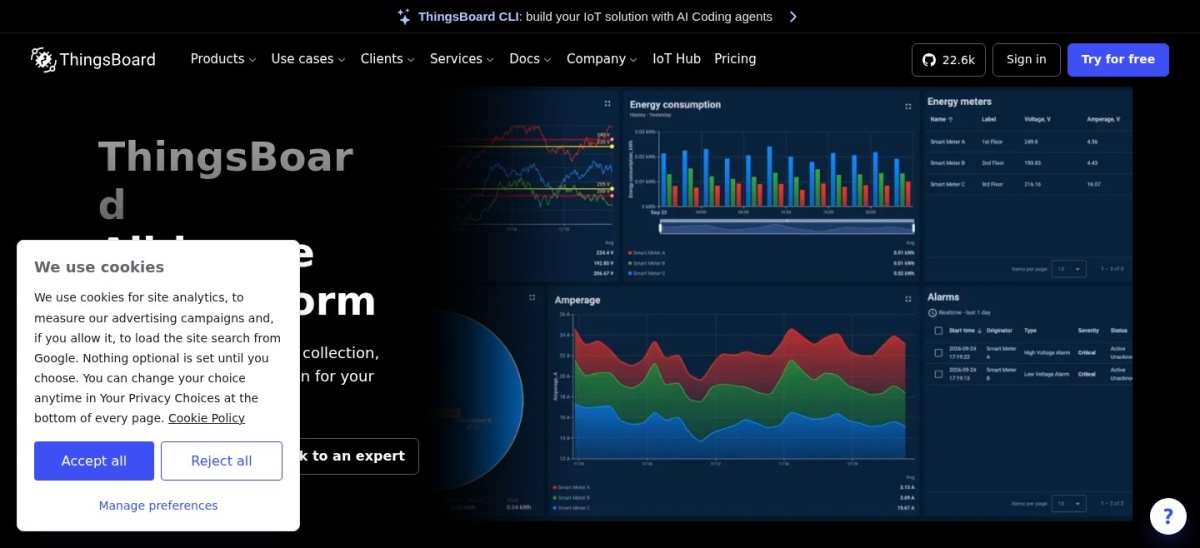
ThingsBoard is an open-source IoT platform for device connectivity, telemetry, dashboards and a rule engine for automation, and it runs in the cloud or on your own servers. The Community Edition is free to self-host, the Cloud free plan covers 5 devices and 1 million data points a month, and Prototype costs $49 a month for 50 devices and 10 million data points.
The trade off is effort. Self-hosting needs ops skill, and the rule chains and widgets take time to learn, while white labeling and help-desk support need paid plans. It suits teams that want full control of their IoT data and the skills to run the platform.
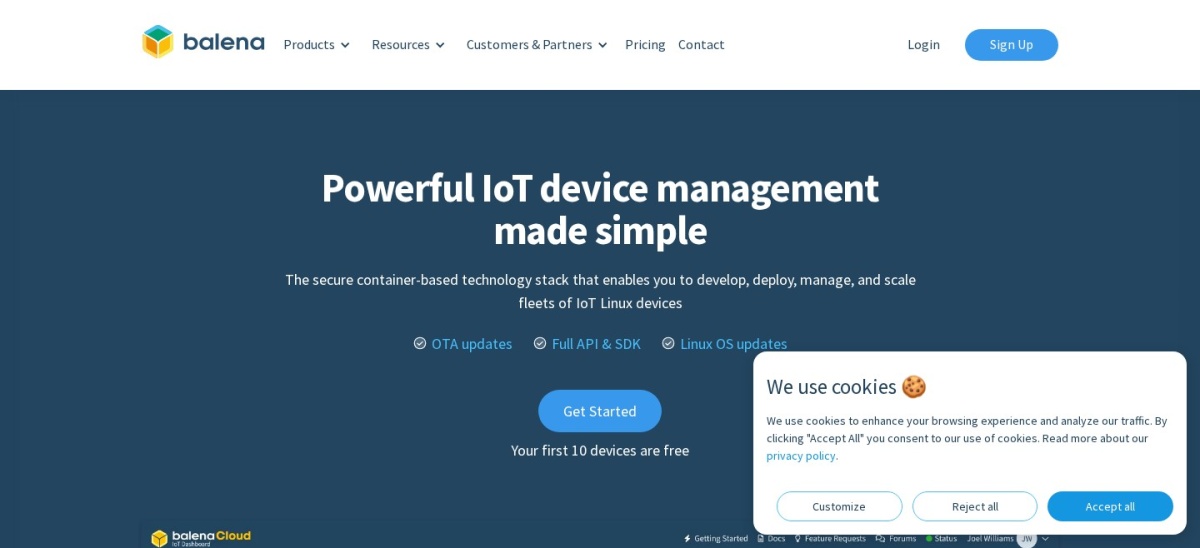
Balena is a container platform that brings modern DevOps to IoT fleets through balenaCloud, balenaOS and a command line interface. Teams deploy Docker containers to Linux devices with atomic updates and rollbacks, using familiar tooling instead of bespoke firmware processes. The first 10 devices are free, and Prototype costs $159 a month for 30 devices, with extra devices at $3 a month.
The trade off is price and scope. Costs climb per device past prototyping, the Prototype plan allows only 1 user, and the platform needs Linux-capable devices rather than small microcontrollers. It suits gateways, kiosks and edge computers managed as a container fleet.
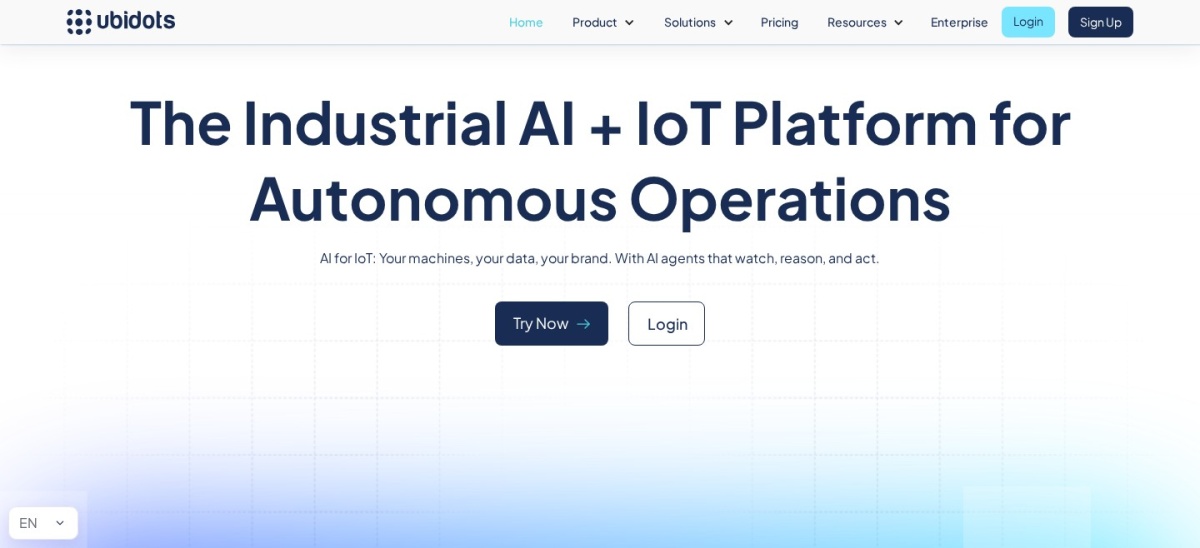
Ubidots is a platform that turns device data into dashboards, alerts and automated workflows without custom software, and its current platform adds AI agents that watch and act on sensor data. Professional costs $99 a month for 50 devices, 10 million dots a month, 6 months of retention and 5 end users, with extra devices at $2 each.
The trade off is depth and pricing above the entry plan. Advanced logic can need custom functions, and Industrial and Enterprise plans are custom-quoted, so large fleets lose the transparent pricing. It suits integrators and industrial teams monitoring hundreds of sensors.
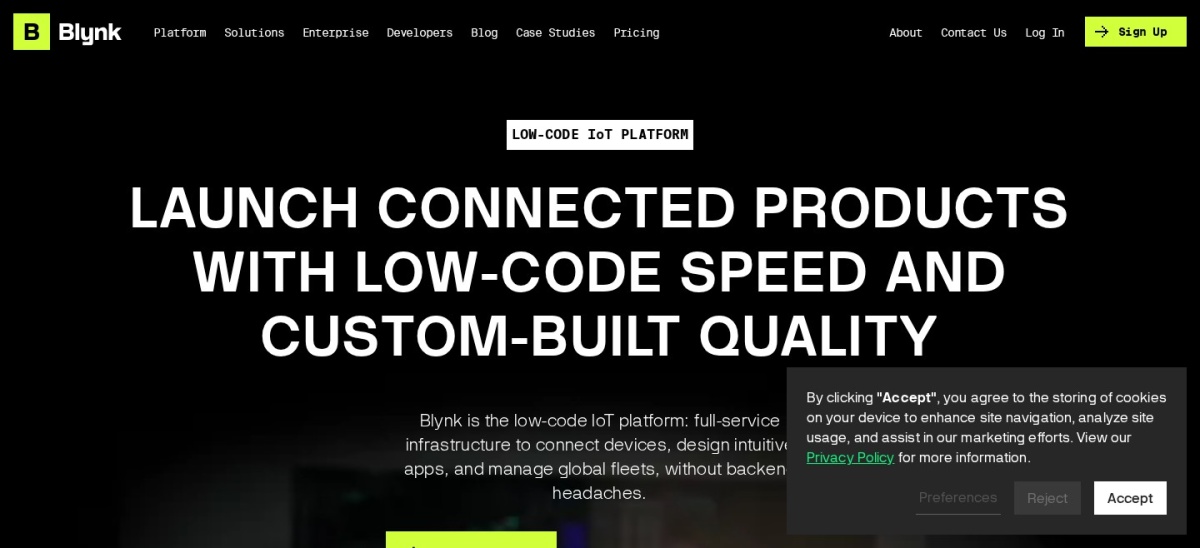
Blynk is a low-code IoT platform for building the apps around connected devices: drag-and-drop mobile interfaces, web dashboards and device management that take prototypes to products fast. The free plan covers 5 devices, 100,000 messages and 1 week of data retention, and Starter costs $29 a month for 10 devices, 10 million messages and 1 month of retention.
The trade off is depth. Enterprise fleets with complex requirements will want more than Blynk offers, pricing scales per device, and white-label apps and a private server need the custom Enterprise plan. It suits makers, startups and product teams shipping an app with their device.
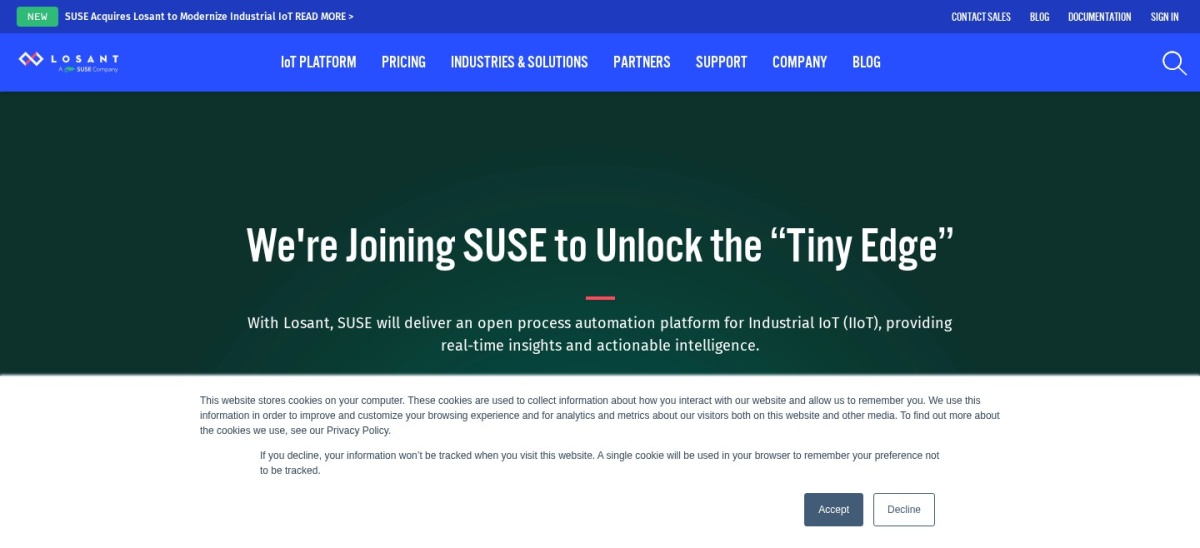
Losant is an enterprise IoT platform built around a visual workflow engine: connect devices, process telemetry, trigger actions and build dashboards and digital twins without heavy coding. The free Developer Sandbox covers 10 devices with 30 days of data storage and no credit card, and Losant joined SUSE in February 2026.
The trade off is price. Losant removed its public self-service prices, so the $250-a-month Launch plan listed in older comparisons is gone and every deal is now a custom quote. It suits enterprises building IoT applications where business users and engineers work together.
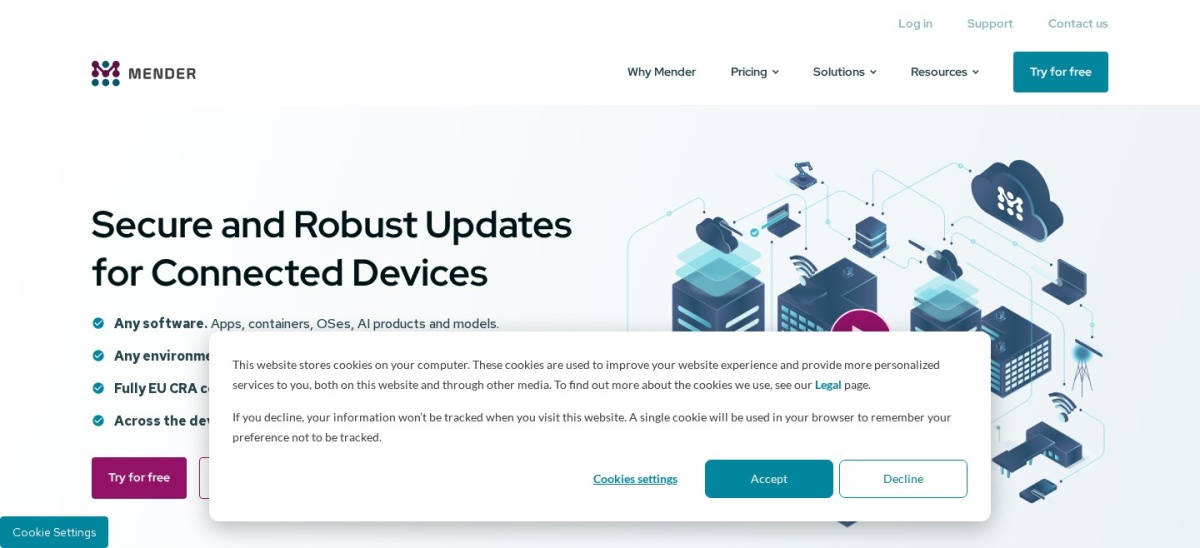
Mender is an open-source platform for secure over-the-air updates and device lifecycle management on embedded Linux. It uses dual A/B root filesystem updates that roll back automatically if a release fails, with phased rollouts and device grouping. Hosted Basic costs $34 a month for up to 50 devices, and the open-source server is free to self-host.
The trade off is scope. Mender is focused on updates, not dashboards or analytics, and delta updates and scheduled deployments need Professional at $291 a month for 250 devices. It suits Linux fleets where a failed update must roll back on its own.
Per-device pricing is the easiest to budget. Blynk, Mender, ThingsBoard and Balena all publish a monthly price for a set number of devices.
Per-message and per-block pricing can grow fast. AWS bills each remote action and index update separately, Azure bills per unit of messages, and Particle bills per block of devices and Data Operations, so a chatty fleet costs far more than a quiet one.
Start on a free tier and measure a real week of traffic before you commit. Particle, ThingsBoard, Blynk, Mender, Balena and Losant all offer a free start, and AWS and Azure both have free tiers.
How we chose
We started from the best-known remote IoT management platforms, including the two big clouds and the leading open-source and specialist tools, then kept nine with a live product and a public rating.
Prices come from each vendor's pricing page, checked on 26 November 2026. Ratings come from G2 or Capterra on the same day. Where a vendor shows a sale, the list shows the regular price.
We left out Google Cloud IoT Core, which shut down in August 2023, and Datacake, which has no public rating on any review site we checked. Cumulocity publishes its Starter price in euros only. No vendor paid for a place, and we do not claim to have used these tools ourselves.
How to choose remote IoT management software
Start with your fleet size and protocols, then match the billing model to your traffic.
Count your devices and messages first. A 50-device pilot and a 50,000-device fleet need different platforms. Measure a week of real traffic before you pick a billing model.
Match the platform to your protocols. Check MQTT, HTTP, CoAP, LoRaWAN or Modbus support against your hardware. A platform that cannot speak your device's protocol is a non-starter.
Test updates on a small group. Push a release to five devices, confirm it installs and rolls back cleanly, then widen the rollout. A platform without rollback turns one bad release into a field visit.
Check the free tier limits. Free plans cap devices, messages or retention. Confirm the cap fits your pilot, or the trial ends before you learn anything.
FAQ
What is the best remote IoT management software?
Particle is the best pick for most teams. It combines hardware, a device OS, cloud connectivity and fleet management in one stack, with a 4.5 out of 5 G2 rating from 195 reviews and a free plan for 100 devices.
How much does remote IoT management software cost?
Entry prices run from $10 a month for Azure IoT Hub B1 to $299 a month for Particle Basic, while AWS bills by use from $0.10 per 1,000 devices registered. Most platforms offer a free tier or trial, so start there and measure real traffic first.
What is the cheapest way to manage IoT devices remotely?
ThingsBoard Cloud starts at $49 a month for 50 devices, and its Community Edition is free to self-host. Blynk starts at $29 a month for 10 devices, and Mender Basic costs $34 a month for 50 devices.
Is AWS or Azure better for IoT device management?
AWS IoT Device Management fits teams already running on AWS, with fleet indexing and Device Jobs beside IoT Core and Lambda. Azure IoT Hub fits Microsoft shops, with zero-touch provisioning and deep ties to Azure analytics. Both hold a 4.3 out of 5 G2 rating.
Can I manage IoT devices without the cloud?
Yes. ThingsBoard Community Edition and Mender both run on your own servers at no licence cost, and Balena runs containers on Linux devices at the edge. Self-hosting gives you data control but leaves scaling, backups and updates to your team.
Do these platforms handle over-the-air updates?
Yes, all nine cover updates in some form. Mender is the most focused, with A/B updates and automatic rollback, while Particle, Balena and ThingsBoard include OTA updates in their standard plans. Check rollback support before you commit.
SaaS SEO and WordPress specialist with about 8 years of experience. Rakib compares WordPress plugins, themes, hosting and software using public pricing, documentation and user reviews. See how we rank.