ReferralCandy is the best referral tracking software for most stores, with its $39-a-month Basic plan covering unlimited referrals across Shopify, WooCommerce and BigCommerce and a 4.5 out of 5 Capterra rating. Pick Referral Factory for no-code campaigns at $200 a month, or FirstPromoter for Stripe-based SaaS tracking at $49 a month.
How we make this list: we compare pricing pages, product documentation and public user reviews, then re-check every price before each update. No product paid for a place. Disclosure.
ReferralCandy starts at $39 a month plus a 10.5% success fee on each new customer's first three orders, and it is the fastest launch for Shopify and WooCommerce stores.
Referral Factory has the highest rating here at 4.8 out of 5 from 193 G2 reviews, with flat $200-a-month pricing and no revenue share.
FirstPromoter and Rewardful both start at $49 a month and track referrals tied to Stripe or Paddle subscriptions, and Rewardful charges no transaction fees.
Smile.io is the only tool here with a free plan, covering up to 200 monthly orders, and its cheapest paid plan is $15 a month.
Flat-fee tools suit high volume: Referral Rock charges $250 a month with unlimited referrals, while GrowSurf charges $179 a month for up to 2,500 participants.
What referral tracking software should cover
Referral tracking software gives every customer a unique link or code, then records who clicked, who bought, and what reward is owed. Without it, word of mouth stays invisible and rewards turn into manual work.
The tools split into three groups. Ecommerce apps such as ReferralCandy and Smile.io are built for Shopify and WooCommerce stores, SaaS tools such as FirstPromoter and GrowSurf track subscriptions, and no-code platforms such as Referral Factory suit service businesses.
The pricing model matters more than the feature list. Some tools charge a flat monthly fee, while others add a percentage of referred sales, so the cheapest headline price is not always the cheapest bill. Our guide on starting affiliate marketing on WordPress explains the same revenue-share math for partner programs.
Fraud checks and payout options are the other deciding factors. Look for self-referral detection, coupon-code tracking for offline sales, and payouts in cash, gift cards or store credit.
ReferralCandy is referral and affiliate software built for online stores, running since 2010. The $39-a-month Basic plan includes unlimited referrals, post-purchase invites, custom landing pages, fraud checks and automated rewards paid as cash, gift cards or store credit, across Shopify, WooCommerce and BigCommerce.
The trade off is the success fee. Basic adds 10.5% of each new customer's first three orders on top of the $39 base, so a busy month costs far more than the headline price. It suits stores that want a fast launch and accept paying more as referred sales grow.
Referral Factory is a no-code referral platform for teams that want to build and control their own campaigns. The $200-a-month Basic plan covers up to 20,000 users with unlimited referral programs, referral analytics, rewards and payouts, plus integrations with HubSpot and Salesforce.
The trade off is price. At $200 a month it costs five times the cheapest tools here, and white labelling, a custom domain and single sign-on need the $400-a-month Pro plan. It suits marketing teams that run campaigns themselves and need CRM data to flow both ways.
FirstPromoter is affiliate and referral software built for SaaS and subscription businesses. The $49-a-month Starter plan tracks referrals through links and coupon codes, connects commissions to Stripe billing events, and covers up to 1,000 affiliates and $5,000 a month in affiliate revenue.
The trade off is the revenue cap. Starter stops at $5,000 a month in affiliate revenue, so a growing program moves to Business at $99 a month, and the tool is built for subscriptions rather than one-off store orders. It suits SaaS teams that bill through Stripe and want recurring commissions tracked.
Rewardful is referral and affiliate software for SaaS companies that bill through Stripe or Paddle. The $49-a-month Starter plan covers up to $7,500 a month in affiliate-attributed revenue, with link and coupon tracking, automatic payouts and no transaction fees on any plan.
The trade off is scope. Rewardful is built around Stripe and Paddle billing, so stores on other checkouts get less from it, and Starter allows only two team members. It suits small SaaS teams that want the simplest Stripe referral setup with flat pricing.
Smile.io is a loyalty platform for Shopify stores that includes referrals alongside points and VIP tiers. The free plan covers up to 200 monthly orders with points, referrals and discount rewards, and the $15-a-month Essential plan raises that to 500 orders with a dedicated loyalty page.
The trade off is that referrals are one part of a loyalty suite, not the whole product. Referral-only tracking is thinner than the specialists here, and order limits push growing stores up the price ladder fast. It suits small Shopify stores that want loyalty and referrals in one place.
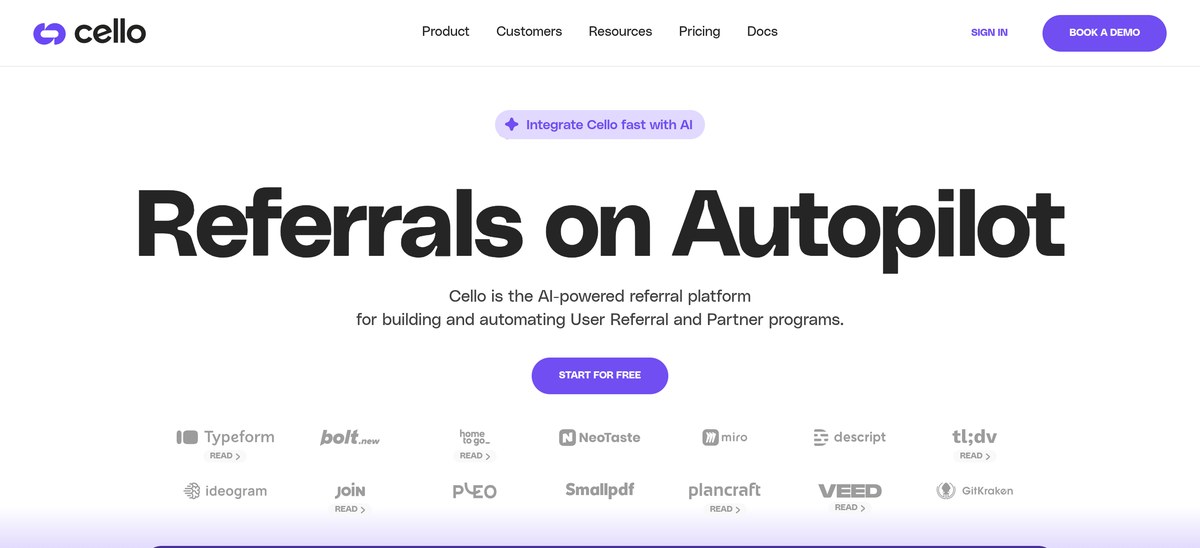
Cello puts the referral flow inside your product, so users share while they are logged in instead of visiting a separate portal. The Start plan is listed at $65 a month billed yearly, covers up to $10,000 in referral ARR with one campaign and unlimited referrals, and charges no transaction costs.
The trade off is the cap. Start allows a single campaign and $10,000 in referral ARR, so growing programs move to Grow at $200 a month, and the tool is built for B2B SaaS rather than stores. It suits product teams that want referrals where users already spend their time.
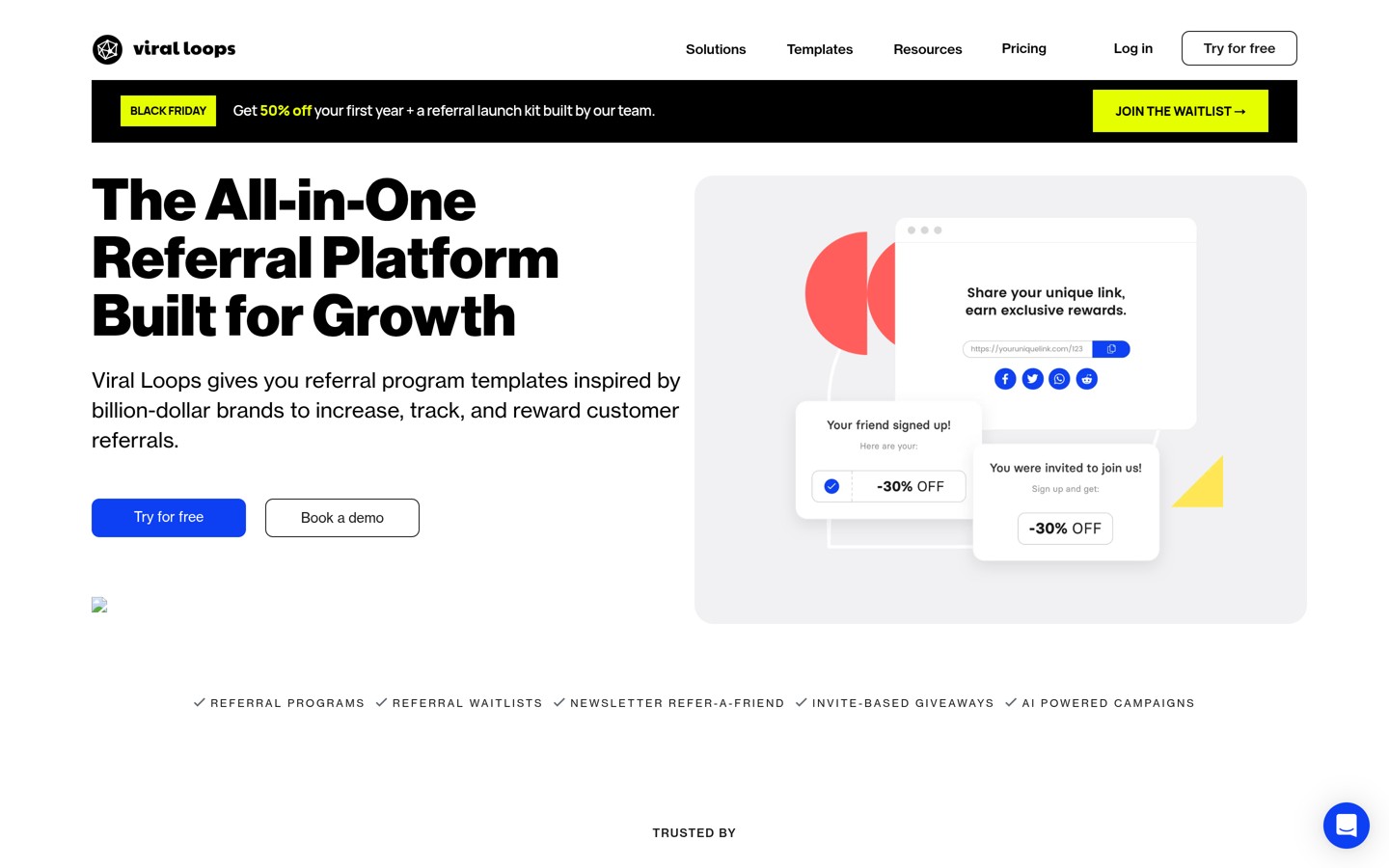
Viral Loops is a referral and viral marketing platform built around ready-made campaign templates. The $49-a-month Start-up plan covers up to 1,000 participants with giveaway, prelaunch waitlist and newsletter referral templates, plus basic fraud checks and a Shopify integration.
The trade off is the participant meter. Costs rise with audience size rather than sales, so a campaign that takes off pushes you to the $139-a-month Plus plan, and the site is running a 50% off first-year sale at the time of writing. It suits launches, waitlists and newsletter referrals.
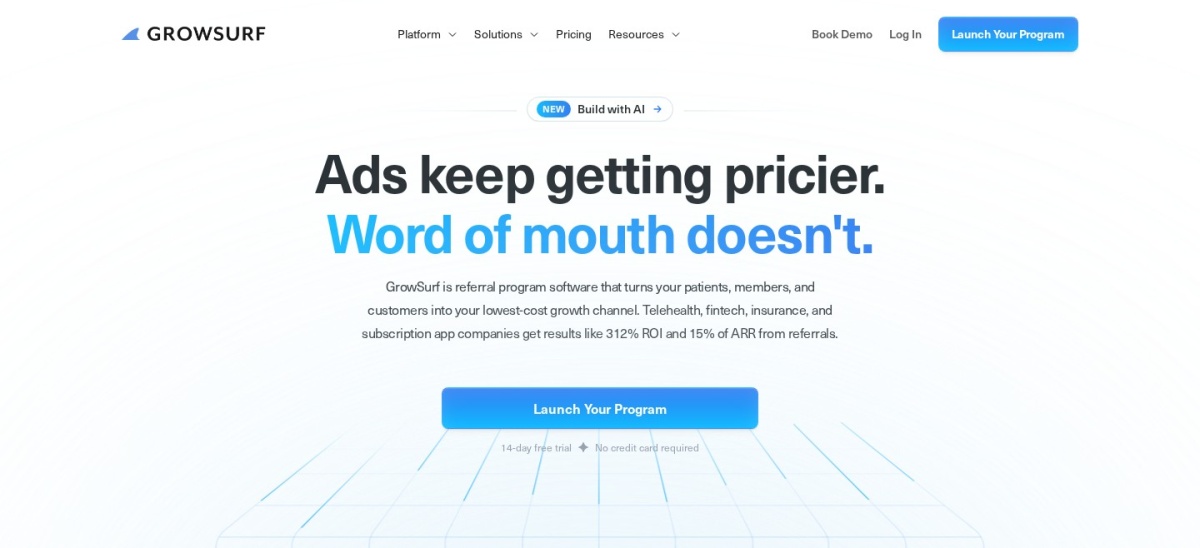
GrowSurf is referral software for SaaS, fintech and subscription companies that want referrals inside the product. The $179-a-month Startup plan covers up to 2,500 participants and two programs, with automatic referral links for every user, fraud protection, an API and webhooks.
The trade off is the participant meter. The bill grows with audience size, not just conversions, and the affiliate path is a separate free tier with a 3% success fee. It suits product-led teams that can paste in one code snippet and launch within a day.
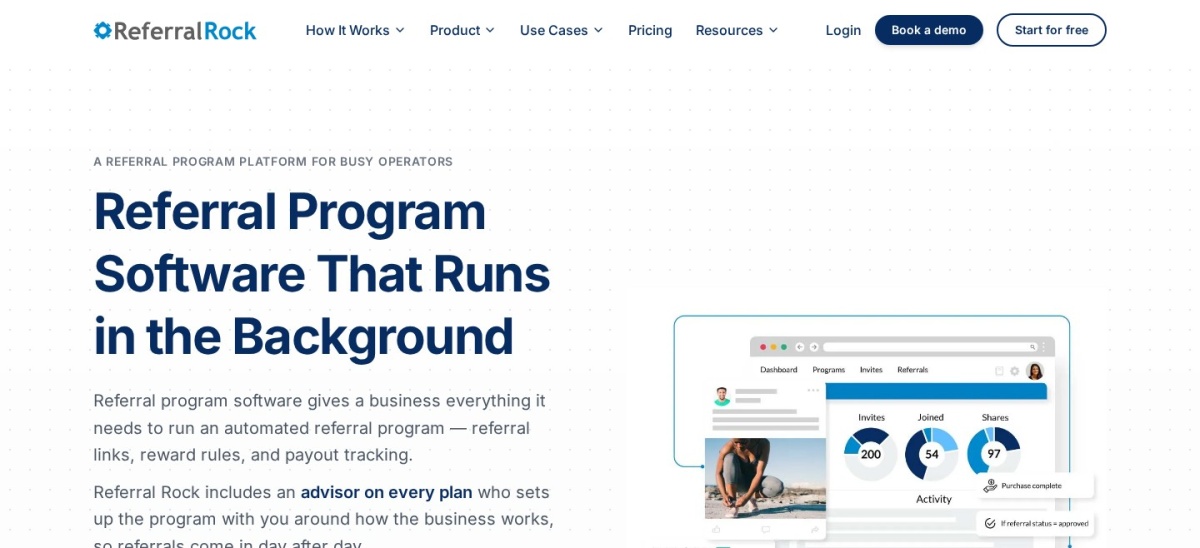
Referral Rock is referral software for service businesses, franchises and B2B teams where referrals close offline or through a sales team. The $250-a-month Operator plan includes unlimited referrals, a hosted member portal, landing pages and email invites, plus a program advisor on every plan.
The trade off is the entry price. At $250 a month it is the dearest starting price here, and the 10,000-member base grows by 1,000 rolling members a month, so very large programs pay for add-ons. It suits teams that hate success fees and want setup help included.
A success fee looks cheap at launch and expensive at scale. ReferralCandy Basic at $39 a month plus 10.5% costs $144 on $1,000 of referred sales in a month, while Referral Rock at $250 flat costs the same whatever you sell.
Work out your expected referred revenue before you pick. If you expect under $1,000 a month in referred sales, a low base fee with a success fee wins. Above that, flat pricing usually wins, and the gap grows with every sale.
Reward type changes the math too. Coupon and store-credit rewards cost less to fulfil than cash, so pair a success-fee tool with cheap rewards. Our guide on setting up coupons in WooCommerce shows how coupon rewards work in practice.
How we chose
We started from the referral tools that appear across G2, Capterra and current 2026 referral roundups, then kept the nine with published pricing and a public rating.
Prices come from each vendor's pricing page, checked on 26 November 2026. Ratings and review counts come from G2 or Capterra on the same day. Where a vendor shows a sale, the list shows the regular price.
We left out quote-only enterprise tools such as Friendbuy, Talkable and Extole, and InviteReferrals, whose pricing is no longer published after its rebrand. No vendor paid for a place, and we do not claim to have used these tools ourselves.
How to choose referral tracking software
Start with your business model, then run the pricing math before you sign up.
Match the tool to your business model. Stores on Shopify or WooCommerce start with ReferralCandy or Smile.io. SaaS teams pick FirstPromoter, Rewardful, Cello or GrowSurf. Service businesses pick Referral Rock or Referral Factory.
Run the pricing math at your expected volume. Multiply your expected monthly referred sales by the success fee and add the base fee. Compare that total with the flat-fee tools before you commit.
Check what counts as a referral. Some tools count signups, others count first purchases. Make sure the trigger matches how your customers buy, and confirm the tracking in your analytics. See how to track WooCommerce sales in GA4.
Trial the reward flow end to end. Send yourself a referral link, complete a purchase and claim the reward. If any step is confusing, your customers will drop out at the same point.
FAQ
What is the best referral tracking software?
ReferralCandy is the best pick for most stores. Its $39-a-month Basic plan covers unlimited referrals across Shopify, WooCommerce and BigCommerce, and it is rated 4.5 out of 5 on Capterra. SaaS teams should look at FirstPromoter or Cello instead.
How much does referral tracking software cost?
Entry prices in this list run from $15 a month for Smile.io Essential to $250 a month for Referral Rock Operator. Three tools start at $49 a month, and ReferralCandy adds a 10.5% success fee on top of its $39 base.
What is the difference between flat-fee and success-fee pricing?
Flat-fee tools charge the same each month whatever you sell, so Referral Rock costs $250 whether referrals bring $1,000 or $100,000. Success-fee tools such as ReferralCandy charge a low base plus a percentage of referred sales, so the bill grows with your wins.
Do I need referral software if I use Shopify?
Shopify has no built-in referral tracking, so you need an app to issue links, track purchases and pay rewards. ReferralCandy installs in one click on Shopify, and Smile.io adds referrals to its loyalty program for stores up to 200 orders a month free.
Can referral software track offline referrals?
Yes, if it supports coupon codes or name-based sharing. FirstPromoter and Rewardful track coupon codes, so a customer can share a code in person and the sale still counts. Most tools here also track links, QR codes and email invites.
Which referral tool is best for SaaS?
FirstPromoter at $49 a month is the best value for Stripe-based SaaS, with recurring commissions tracked against billing events. Cello at $65 a month suits teams that want referrals inside the product, and GrowSurf at $179 a month suits larger SaaS apps.
SaaS SEO and WordPress specialist with about 8 years of experience. Rakib compares WordPress plugins, themes, hosting and software using public pricing, documentation and user reviews. See how we rank.