Workable is the best recruiting automation tool for most teams. Its $299-a-month Standard plan pairs an ATS with AI sourcing from 400 million profiles, screening agents and 200+ free job boards, while Ashby suits analytics-led hiring, Gem suits outbound sourcing automation, and Manatal has the lowest per-user price.
How we make this list: we compare pricing pages, product documentation and public user reviews, then re-check every price before each update. No product paid for a place. Disclosure.
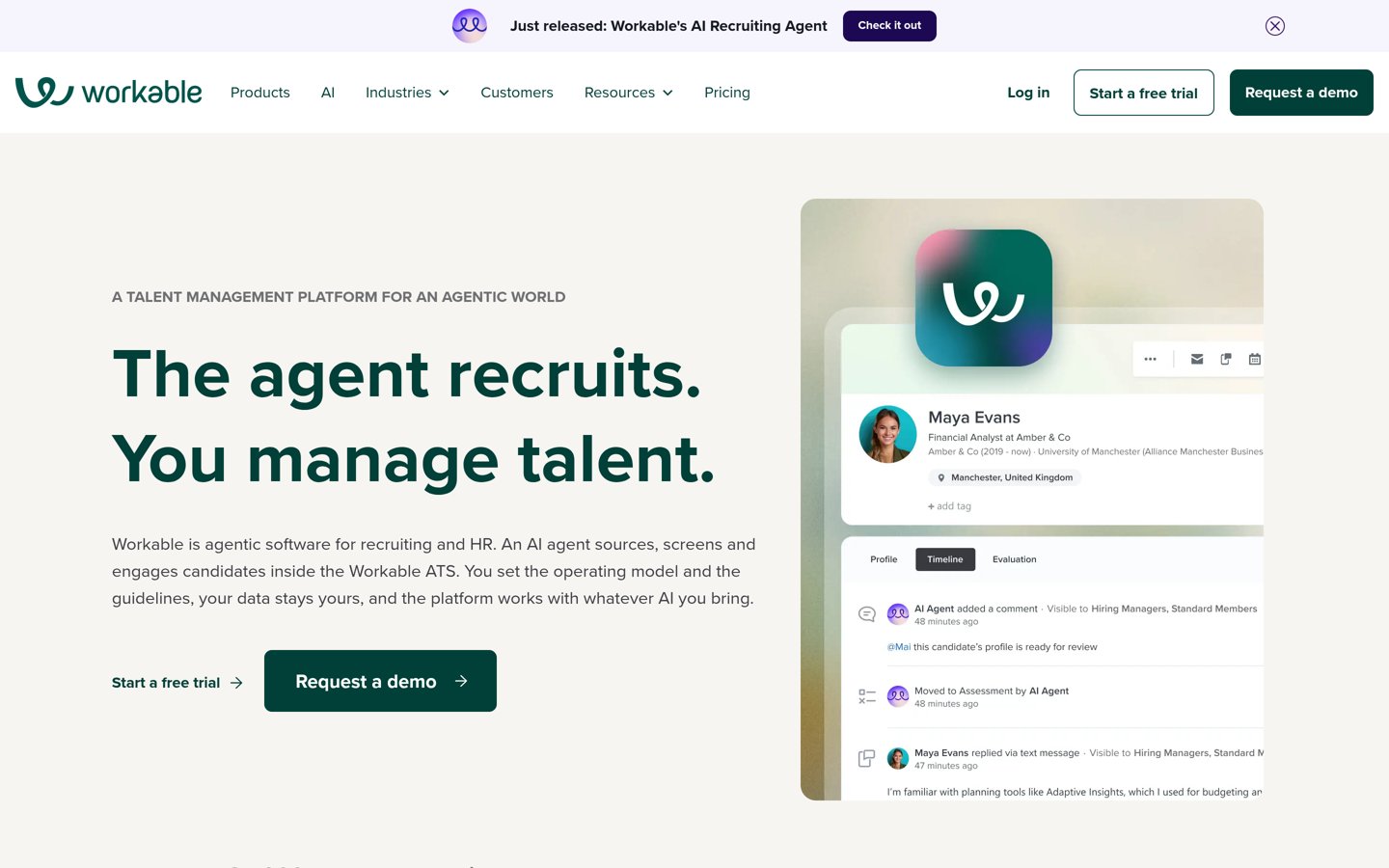
Workable leads for most teams: published pricing from $299 a month, AI sourcing, screening and engagement agents, and a 15-day free trial.
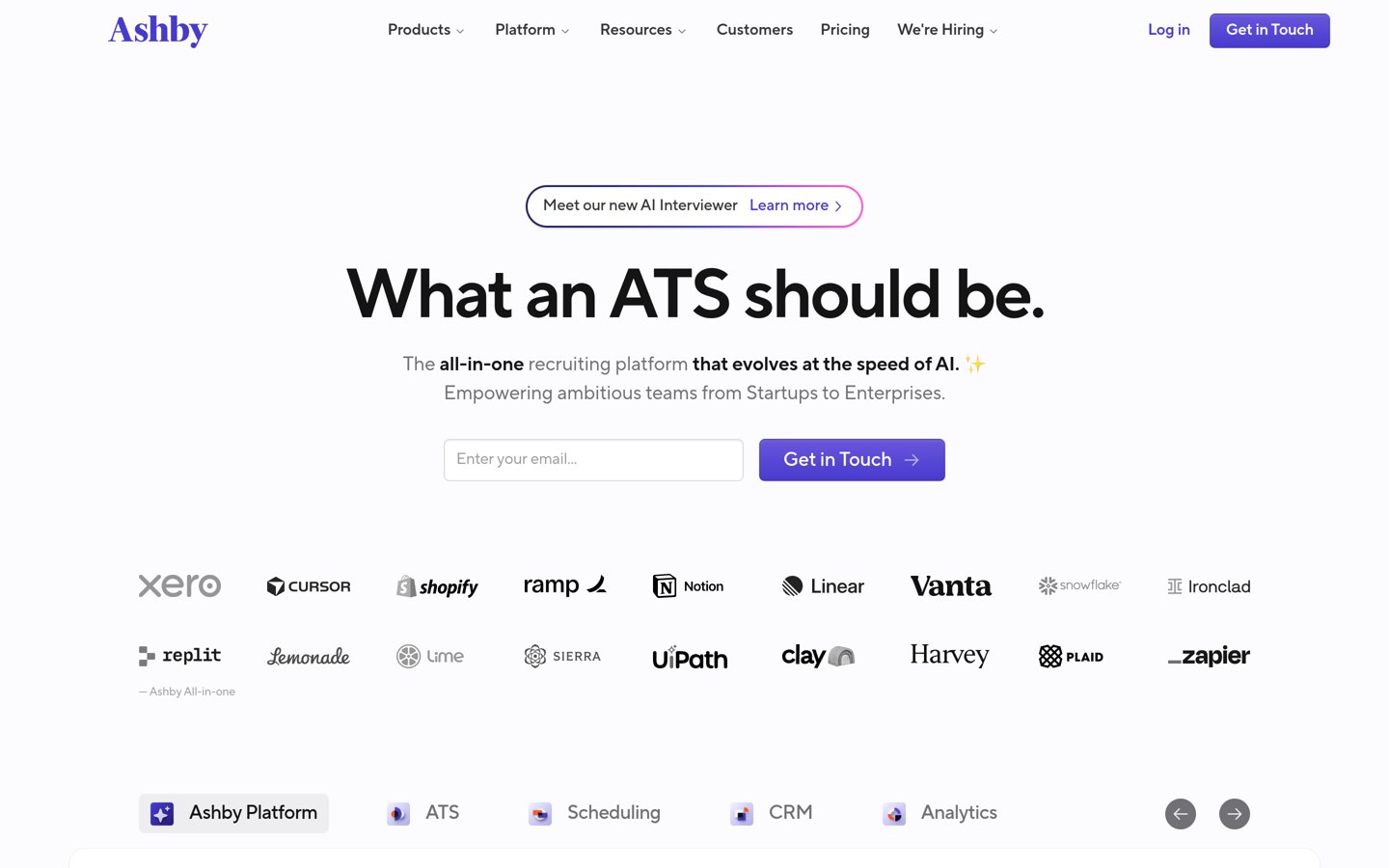
Ashby has the joint-highest rating here at 4.7 out of 5 on G2, with scheduling automation and analytics as its main strengths.
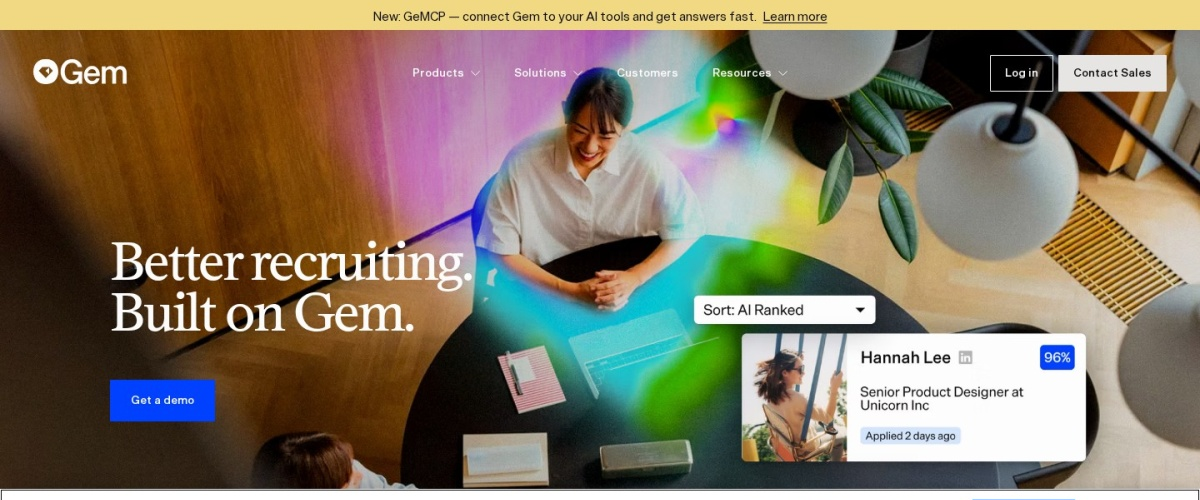
Gem automates outbound sourcing and follow-up sequences from an 800-million-profile index, starting at $130 a month on its Startup Program.
Manatal is the cheapest paid entry at $15 per user a month, with AI matching included on the entry plan.
Paradox and Beamery are quote-only and built for large employers: Paradox suits high-volume hourly hiring, Beamery suits enterprise talent pools.
Only Zoho Recruit has a free plan, for one active job; every other tool in this list needs a paid plan or a trial.
What recruiting automation should do for you
Recruiting automation takes the repeatable steps out of hiring: posting a job to many boards at once, screening CVs against set criteria, sending follow-ups, and booking interviews without back-and-forth emails.
The tools in this list differ in where they automate. Some cover the whole pipeline from sourcing to offer, while others focus on one stage, such as outbound outreach or text-based screening and scheduling.
Start with the stage that eats the most time. If sourcing is the bottleneck, a tool with a large candidate index and outreach sequences matters most. If scheduling is the drag, look for self-scheduling and text-based screening, like the conversational approach in our guide on adding an AI chatbot to WordPress.
Price is hard to compare directly. Some tools charge per month, some per user, and the enterprise tools in this list publish no price at all, so the price ladder below uses each vendor's cheapest published plan.
Ratings come from G2, checked on 26 November 2026. A high rating from a small review base, such as Ashby's 114 reviews, is less settled than one from thousands.
Workable is an applicant tracking system with AI sourcing, screening and engagement agents built in. Every paid plan starts with 3,000 complimentary AI credits, and the sourcing suite searches more than 400 million candidate profiles. Standard costs $299 a month and includes unlimited active jobs, interview kits and scorecards.
The trade off is add-ons. Texting, video interviews and assessments cost $89, $109 and $59 a month extra on Standard, so the bill climbs fast. It suits small and mid-size teams that want published pricing and AI help across sourcing and screening.
What we like
Published pricing, rare among ATS vendors
AI sourcing, screening and engagement agents
200+ free job boards and unlimited active jobs
15-day free trial with no card needed
Watch out for
Texting, video interviews and assessments cost extra
Ashby is an all-in-one recruiting platform that combines an ATS, a talent CRM, sourcing tools and interview scheduling on one data model. Foundations costs $400 a month for companies up to 100 employees and includes 1,500 AI credits, 1,000 texts and 200 email lookups a month. Its reports answer pipeline and source questions without exporting to a spreadsheet.
The trade off is the entry price and the lack of a self-serve trial. Plus and Enterprise are quote-only, and the AI Notetaker is a paid add-on. It suits fast-growing tech teams that want hiring run on data rather than on gut feel.
What we like
Strongest analytics in this list
Scheduling automation is a buying reason for many teams
Gem is an AI-first recruiting platform that combines a talent CRM, sourcing, outreach sequences, scheduling and analytics. Its sourcing index covers more than 800 million profiles, and automated sequences handle follow-ups that recruiters used to send by hand. The Startup Program starts at $130 a month billed yearly for a 1 to 10 employee company.
The trade off is that the main corporate plans are custom quotes based on headcount, so the $130 figure only applies to small startups. AI features need an AI-powered seat on some plans. It suits in-house teams with high inbound volume that want sourcing and outreach in one system.
What we like
Strongest sourcing automation in this list
Outreach sequences and talent rediscovery built in
Full-funnel analytics included
Startup program with published pricing
Watch out for
Corporate pricing is quote-only
AI features need a paid seat upgrade
Built for in-house teams, not agencies
Growth and Enterprise are priced by headcountVisit gem.com
04
Greenhouse
4.4/5on G2 (3,900+ reviews, checked Nov 2026)
PricingCustom/yr
Best for structured enterprise hiring
Cheapest paid planQuote only
Free trialNo, demo only
Integrations450+
Structured hiringScorecards and kits
greenhouse.com
Greenhouse homepage, captured Nov 2026.
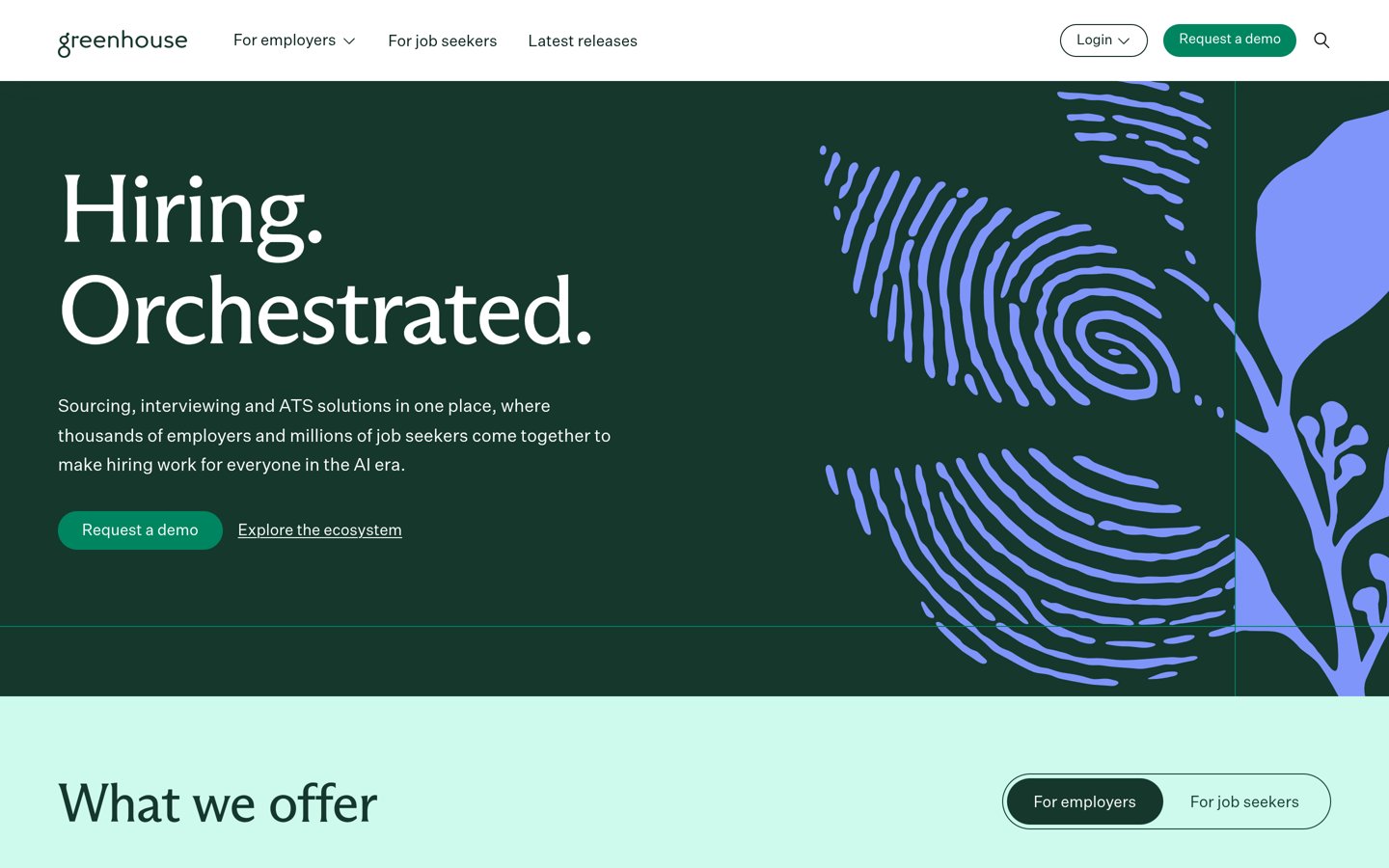
Greenhouse is a hiring platform built around structured interviews, with scorecards, interview kits and a sourcing CRM. More than 7,000 companies use it, and it connects to over 450 tools in its marketplace. Core covers sourcing, scheduling and structured hiring, with onboarding and surveys as add-ons.
The trade off is price transparency. Greenhouse publishes no prices, so every plan needs a sales quote, and implementation takes about two months according to G2 reviewers. It suits mid-market and enterprise teams that need a consistent, defensible hiring process.
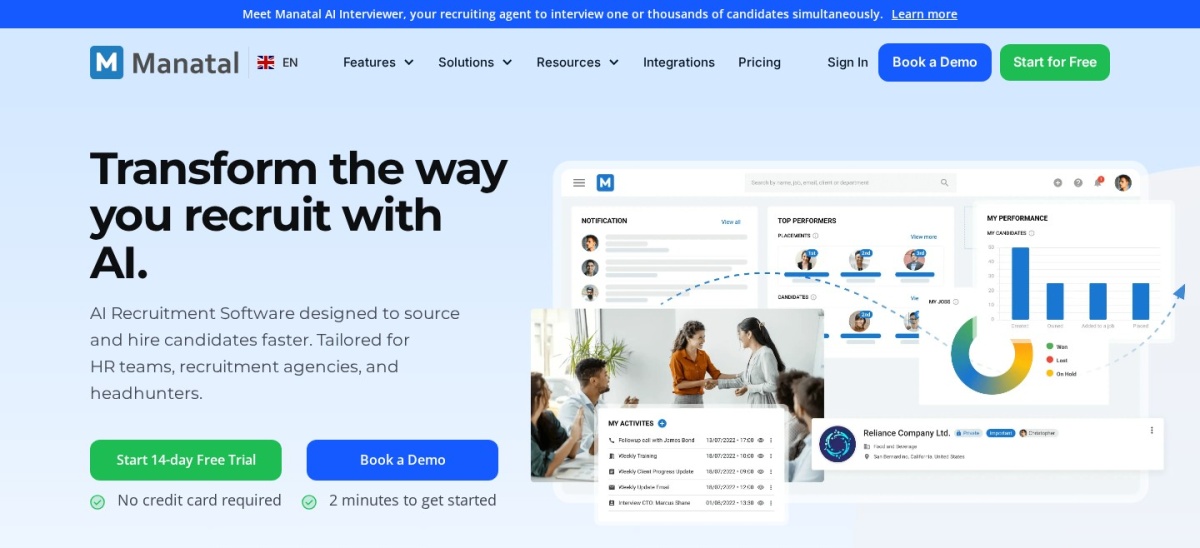
Manatal is a recruiting platform for small teams and staffing agencies with AI candidate matching on its entry plan. Professional costs $15 per user a month billed yearly and covers 15 open jobs and 10,000 candidates, with resume parsing, job distribution to more than 2,500 channels and a Chrome extension. A 14-day free trial needs no credit card.
The trade off is caps. The job and candidate limits on Professional are low for busy agencies, and the open API and single sign-on need the top Enterprise Plus plan. It suits lean teams that want AI sourcing at the lowest per-user price in this list.
What we like
Lowest per-user price here
AI matching included on the entry plan
14-day free trial, no card needed
Job distribution to 2,500+ channels
Watch out for
Professional caps at 15 jobs and 10,000 candidates
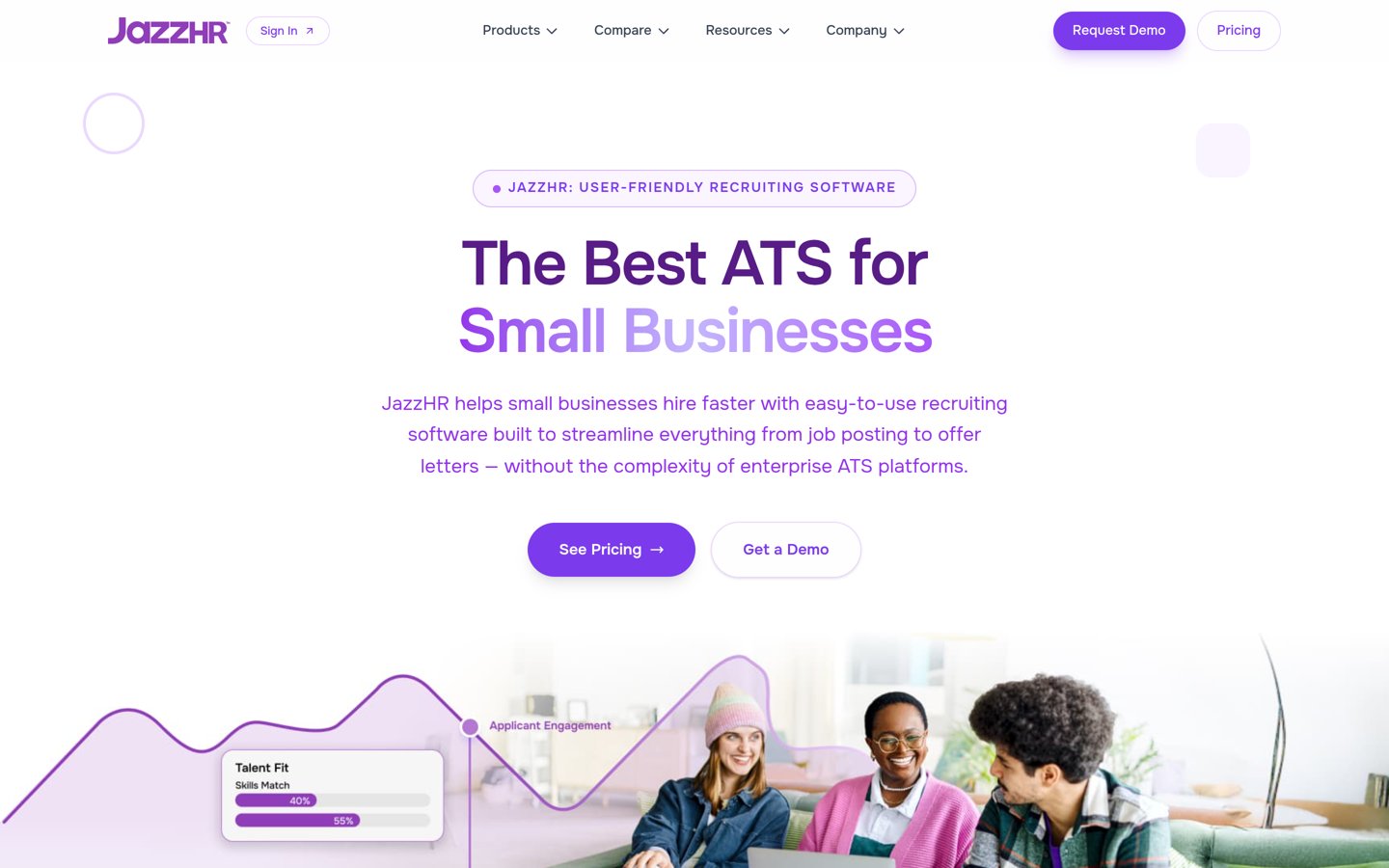
JazzHR is a simple applicant tracking system for small and mid-size employers, with job posting, screening, scheduling and offers in one place. Hero costs $1,000 a year and includes email templates, custom workflow stages, resume parsing and a LinkedIn Recruiter link. Every plan has unlimited users, so the price does not grow with headcount.
The trade off is limits. Hero covers only 3 job postings a month, and candidate texting, eSignatures and advanced reporting cost extra or need a higher plan. It suits small employers that want a low-cost first hiring system they can run without a recruiter.
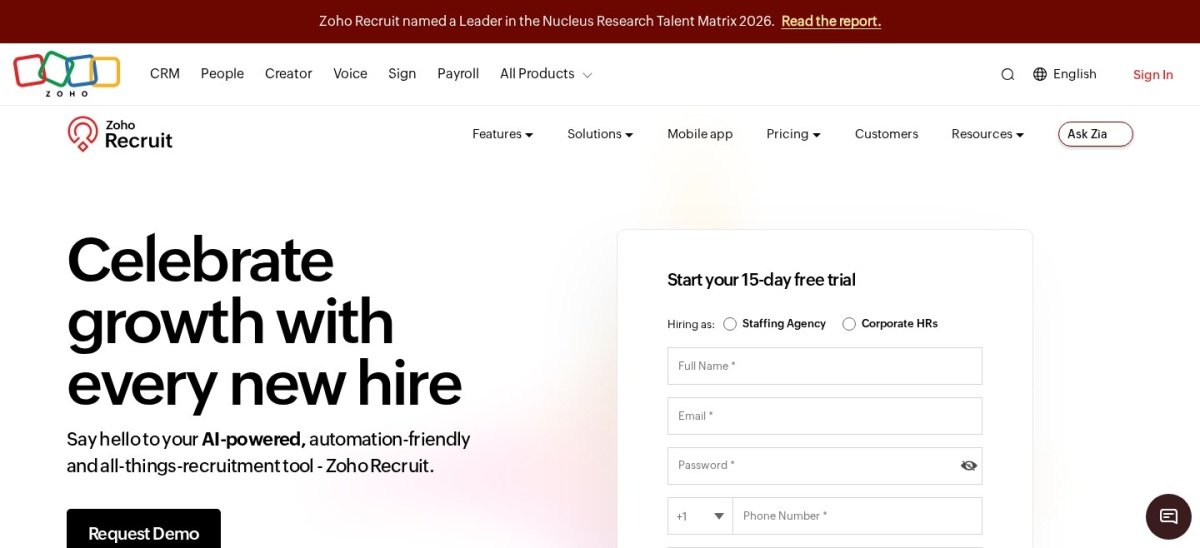
Zoho Recruit is a recruiting platform with a free plan for one active job, which makes it the only free start in this list. Standard costs $25 per user a month and adds workflow automation, Blueprint rules that move candidates through stages, resume parsing and a 15-day free trial. It posts jobs to job boards and pulls candidates into one pipeline.
The trade off is depth. The free plan is limited to one job, and the strongest automation and AI features sit on higher tiers. It suits tiny teams and Zoho users who want automation without paying for a full ATS suite.
What we like
Only free plan in this list
Workflow automation and Blueprint rules
Low per-user price after Manatal
Large review base at 1,867 G2 reviews
Watch out for
Free plan covers one active job only
Best automation needs higher tiers
Interface feels dated next to newer tools
Professional adds AI matching and advanced automationVisit zoho.com
08
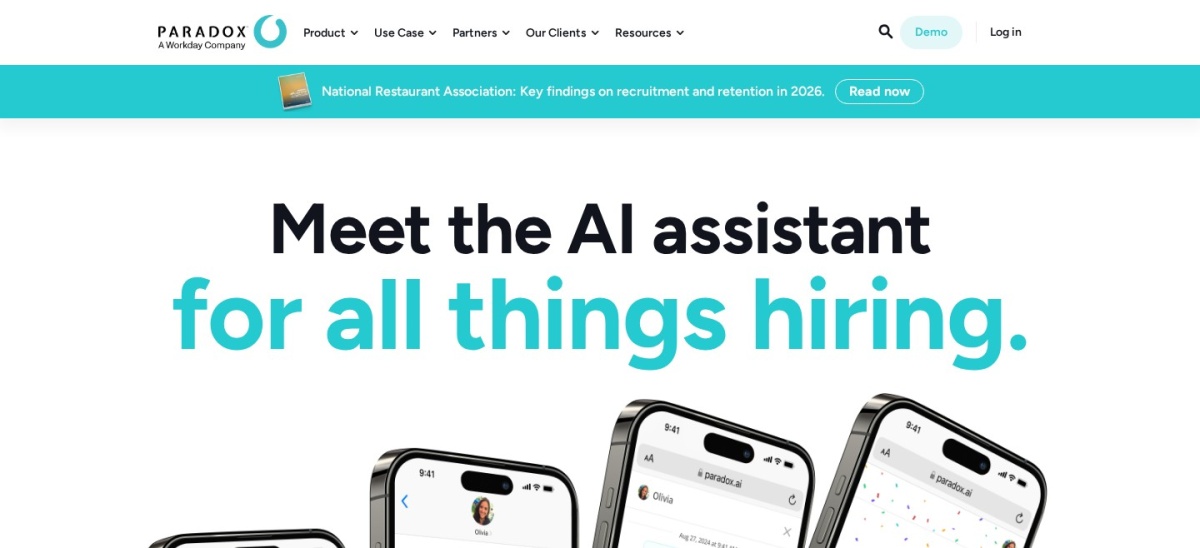
Paradox
4.5/5on G2 (94 reviews, checked Nov 2026)
PricingCustom/yr
Best for high-volume hourly hiring
Cheapest paid planQuote only
Free trialNo, demo only
AssistantOlivia, by text and chat
Interviews scheduled32M in 2025
paradox.ai
Paradox homepage, captured Nov 2026.
Paradox is a conversational recruiting platform built around Olivia, an AI assistant that talks to candidates by text, WhatsApp, web chat or email. Olivia screens candidates, answers questions and books interviews without a recruiter touching the calendar. Workday, which bought Paradox in October 2025, says Olivia scheduled about 32 million interviews in 2025.
The trade off is price and fit. Paradox publishes no prices, and third-party reports put starting prices near $1,000 a month, with larger contracts far higher. It suits large employers hiring hourly workers at volume, such as restaurants, retail and healthcare.
What we like
Text-first screening and scheduling at huge scale
Built for hourly and frontline hiring
4.5 out of 5 on G2
Now sold through Workday as well
Watch out for
No published pricing
No free trial, demo only
Implementation takes about two months per G2 reviewers
Beamery is a talent lifecycle platform that combines a talent CRM, recruitment marketing and skills data, with an AI assistant called Ray. It automates candidate campaigns, talent-pool building and outreach so recruiters can re-engage past applicants instead of starting each search from scratch. G2 reviewers rate it 4.1 out of 5 across 158 reviews.
The trade off is cost and setup. Beamery publishes no prices, and buyer data puts median contracts near $76,800 a year, while G2 reviewers report implementation taking about four months. It suits medium-to-large enterprises that hire from talent pools over time.
What we like
Strong talent-pool and campaign automation
Skills data across the workforce
LinkedIn CRM Connect integration
Reviewers praise its reporting depth
Watch out for
No published pricing
Long implementation, about four months
Mostly enterprise customers, so small teams get little from it
Sourcing automation finds and contacts candidates: searching large profile indexes, sending outreach sequences and following up automatically.
Screening automation reads CVs against set criteria, asks knock-out questions by text or chat, and ranks applicants before a human looks at them.
Scheduling automation ends the email chain: candidates pick a slot, the calendar fills, and reminders go out on their own.
No tool in this list automates the final decision. A person still interviews, compares and hires; the software only clears the repetitive work before that point.
How we chose
We started from the recruiting automation tools with published G2 ratings and a clear automation story, then kept nine that cover the whole hiring pipeline, from sourcing to scheduling.
Prices come from each vendor's pricing page or, where the vendor publishes no price, from the vendor's own statement that pricing is by quote. Ratings and review counts come from G2, checked on 26 November 2026. Where a vendor shows a sale, the list shows the regular price.
We left out tools with no public rating and tools that only do one narrow job, such as resume parsing alone. No vendor paid for a place, and we do not claim to have used these tools ourselves.
How to choose a recruiting automation tool
Start with the hiring stage that costs your team the most time, then match the tool to that stage.
Name the bottleneck first. If sourcing eats the week, pick a tool with a large candidate index and outreach sequences. If scheduling does, pick text-based screening and self-scheduling.
Check the price basis before you compare. Per-user, per-month and quote-only prices do not compare directly. Work out the yearly cost for your team size on each shortlisted tool.
Test the trial on a live role. Run one real vacancy through the trial, from posting to interview booking, and count the hours the automation saves.
Ask what the AI cannot do. Check which steps still need a person, such as final interviews and offers, and make sure the tool hands those steps over cleanly.
FAQ
What is the best recruiting automation tool?
Workable is the best pick for most teams. Its $299-a-month Standard plan combines an ATS with AI sourcing from more than 400 million profiles, screening agents and 200+ free job boards, and it is rated 4.4 out of 5 on G2 from 715 reviews.
What is the cheapest recruiting automation tool?
Manatal is the cheapest paid option here at $15 per user a month billed yearly, with AI candidate matching on the entry plan. Zoho Recruit is cheaper still for tiny teams, since its free plan covers one active job at no cost.
Do recruiting automation tools replace recruiters?
No. They take over repeatable steps such as posting jobs, screening CVs, sending follow-ups and booking interviews. A person still interviews candidates, judges fit and makes the hire; the tools only clear the admin before that point.
Which tool is best for high-volume hourly hiring?
Paradox is built for it. Its Olivia assistant screens candidates and books interviews by text, and Workday says it scheduled about 32 million interviews in 2025. Pricing is by quote, with third-party reports putting the start near $1,000 a month.
Can I try these tools before paying?
Most of them, yes. Workable, Manatal, JazzHR and Zoho Recruit all offer free trials of 14 or 15 days, and Zoho Recruit also has a free plan for one job. Ashby, Greenhouse, Paradox and Beamery are demo-only, so ask for a guided walkthrough.
What should I check before buying?
Work out the yearly cost for your team size, since per-user, flat-rate and quote-only prices do not compare directly. Check the caps on jobs, candidates and AI credits, and confirm which features, such as texting or AI screening, cost extra.
SaaS SEO and WordPress specialist with about 8 years of experience. Rakib compares WordPress plugins, themes, hosting and software using public pricing, documentation and user reviews. See how we rank.