PostgreSQL is the best RDBMS software for most teams: free, open source, and rated 4.4 out of 5 by 682 G2 reviewers. Pick MySQL for web apps on the LAMP stack, SQL Server for Microsoft shops, and Amazon Aurora when you want a managed cloud database.
How we make this list: we compare pricing pages, product documentation and public user reviews, then re-check every price before each update. No product paid for a place. Disclosure.
PostgreSQL is free and rated 4.4/5 by 682 G2 reviewers, with the widest extension library of any open source database.
MySQL is the web's workhorse: free Community Server, with Standard Edition support from $2,140 a server a year.
SQL Server Standard lists at $3,945 per 2-core pack, and Express is free for small databases up to 10 GB.
Oracle Database is the priciest pick: Standard Edition 2 lists at $17,500 per socket, before 22% annual support.
Five of the nine tools have a free edition or free tier, so most teams can start without paying a license fee.
What to look for in an RDBMS
A relational database stores data in tables with rows and columns, and you query it with SQL. The engine matters less than fit: how much data you hold, how many people connect at once, and where the database runs.
Licensing is where the real cost hides. Open source engines such as PostgreSQL, MySQL and MariaDB are free to run, while Oracle and SQL Server charge per processor or per core, and cloud databases bill by the hour.
Support is the second cost. Free engines rely on community help unless you pay for support, while commercial editions bundle support into the license or subscription. Our guide on how to create a database for WordPress shows the setup most small sites start with.
Cloud-managed options remove patching and backups from your list, but the meter never stops. A small Aurora instance costs about $0.26 an hour, which adds up to roughly $2,278 a year if it runs non-stop.
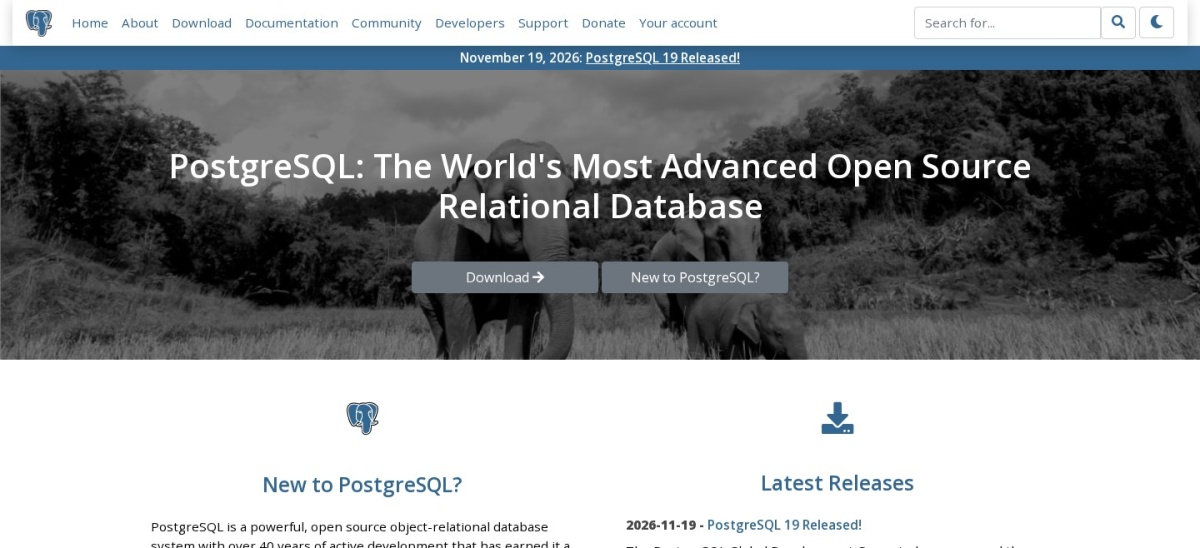
PostgreSQL is a free, open source relational database that runs on Windows, Linux and macOS, and it is the default choice for new applications. The latest release, PostgreSQL 19, adds JSONB, arrays, ranges and full-text search, plus an extension library that covers vectors, time series and geographic data.
The trade off is that there is no vendor to call by default. Support, managed hosting and high-availability setup come from third-party vendors or cloud providers, each with its own price. It suits teams that want a capable database with no license fee and are happy to manage it themselves or pay a host.
What we like
Free with no license fee or core limits
Widest extension library of any open source database
Runs on every major operating system and cloud
Rated 4.4 out of 5 by 682 G2 reviewers
Watch out for
No vendor support included; you arrange it yourself
High-availability setup takes more work than a managed service
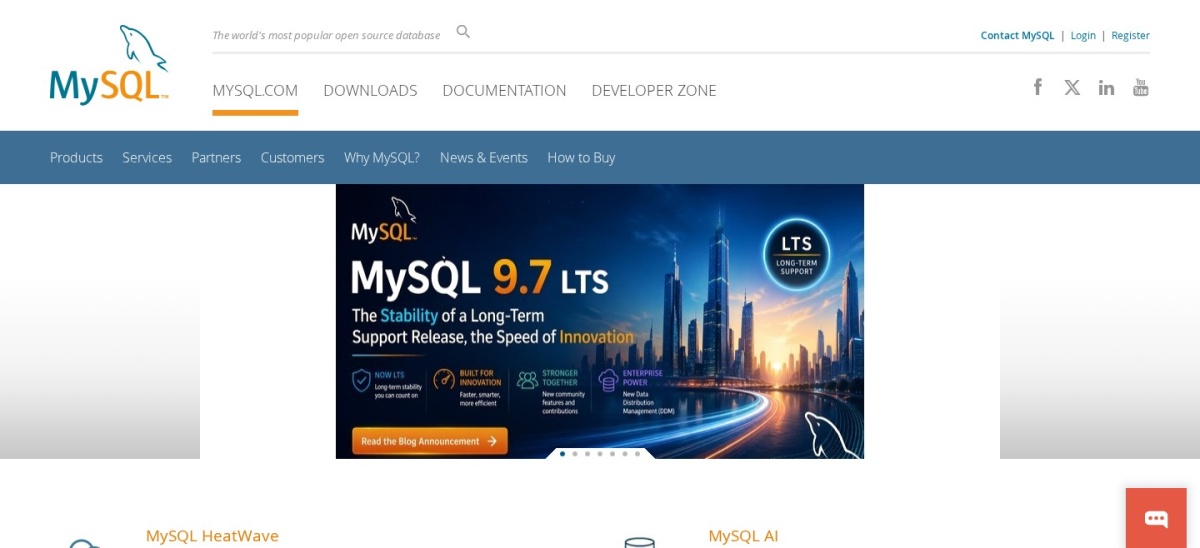
MySQL is the database behind most of the web, including WordPress, and its Community Server is free under the GPL. The current long-term release, MySQL 9.7 LTS, covers transactional workloads, replication and HeatWave analytics on Oracle Cloud, and it runs on every major platform.
The trade off is that the useful extras sit behind the paid editions. Enterprise Backup, the firewall, transparent data encryption and the audit log need at least Standard Edition at $2,140 a server a year. It suits web teams that already run MySQL and want Oracle support without a big bill.
What we like
Free Community Server with no license fee
Powers WordPress and most PHP apps
Long-term 9.7 LTS release for stable deployments
Rated 4.4 out of 5 by 1,682 G2 reviewers
Watch out for
Backup, firewall and encryption need a paid edition
Oracle's commercial pricing is per server, not per user
Standard Edition adds backup and support at $2,140 a server a yearVisit mysql.com
03
Microsoft SQL Server
4.4/5on G2 (2,287 reviews, checked Nov 2026)
Paid from$3,945/2-core pack
Best for Microsoft environments
LicensePer core, 2-core packs
Free editionExpress, up to 10 GB
Paid planStandard, $3,945/2-core pack
ToolsSSMS, Azure Data Studio
microsoft.com
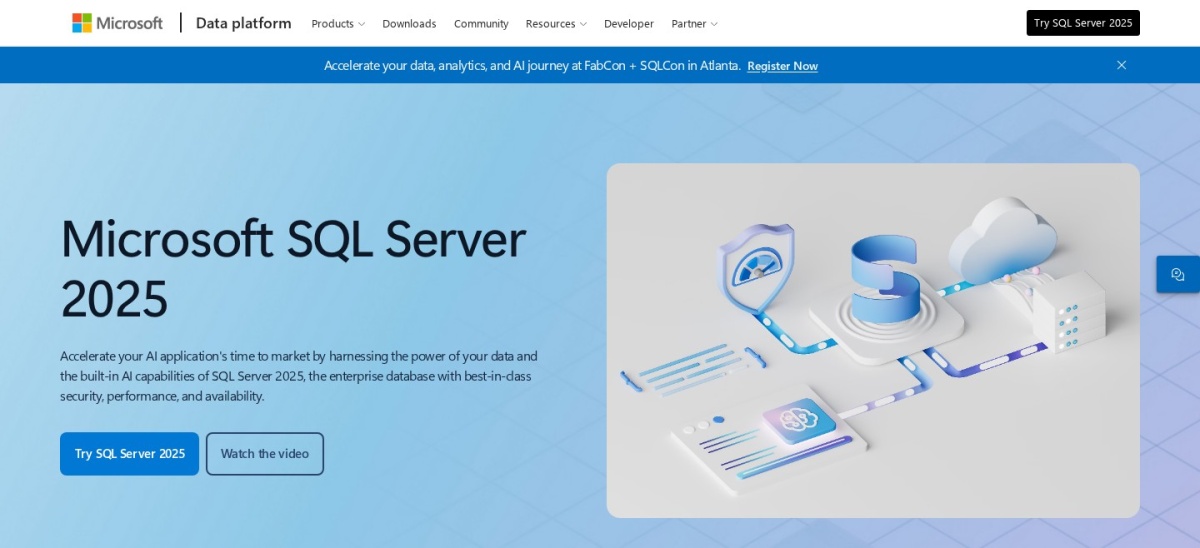
Microsoft SQL Server homepage, captured Nov 2026.
Microsoft SQL Server is the enterprise database of the Microsoft world, with deep ties to .NET, Azure, Power BI and Active Directory. The free Express edition covers small databases up to 10 GB, while Standard adds more memory and Always On availability groups for production workloads.
The trade off is licensing cost and complexity. Standard lists at $3,945 per 2-core pack as a one-time license, and Enterprise features such as online indexing and advanced security cost far more. It suits organisations already invested in Microsoft software and Windows Server.
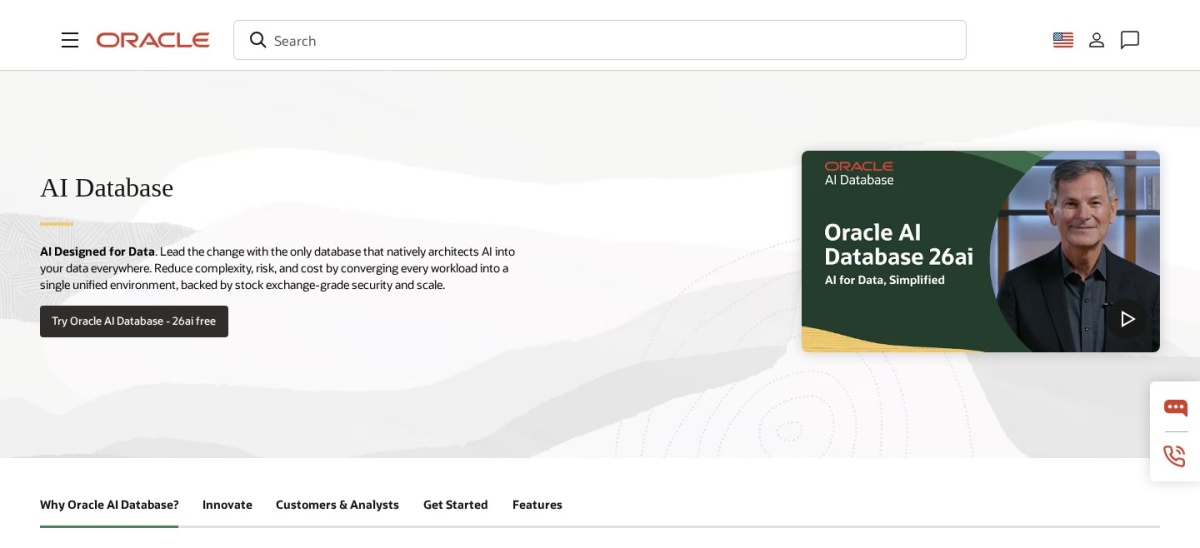
Oracle Database is the system that runs banks, telecoms and governments, with the deepest feature set in this list: partitioning, Real Application Clusters, advanced security and in-database machine learning. The free Oracle Database Free edition covers development and small deployments, and Autonomous Database runs the same engine as a managed cloud service.
The trade off is price. Standard Edition 2 lists at $17,500 per occupied socket as a one-time license, plus 22% annual support, and Enterprise Edition lists at $47,500 per processor before options. It suits large organisations that already run Oracle and need its full feature set.
What we like
Deepest feature set of any RDBMS in this list
Free edition for development and small use
Autonomous Database removes admin work
Rated 4.3 out of 5 by 1,020 G2 reviewers
Watch out for
Highest license prices in this list
Licensing rules are complex and easy to get wrong
Paid editions add partitioning, RAC and advanced securityVisit oracle.com
05
MariaDB
4.4/5on G2 (226 reviews, checked Nov 2026)
Paid from$0.16/hr
Best MySQL-compatible open source
LicenseFree Community, paid Platform
MySQL compatibleYes, drop-in replacement
Paid planCloud Power from $0.16/hr
ClusteringGalera and MaxScale
mariadb.com
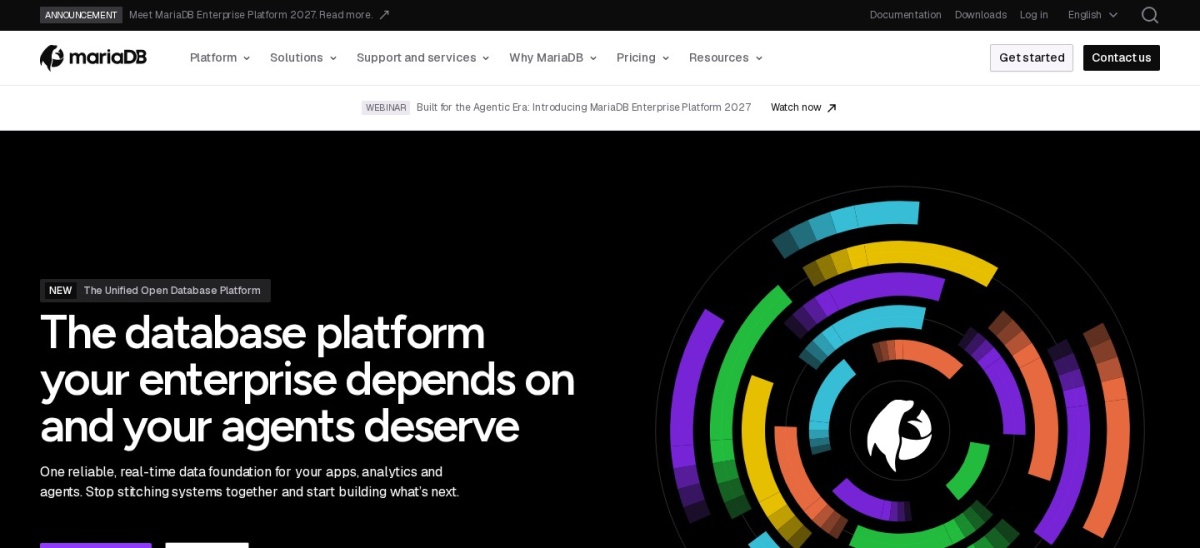
MariaDB homepage, captured Nov 2026.
MariaDB is a community-developed fork of MySQL that stays compatible with MySQL applications, so most MySQL code runs on it unchanged. The free Community Server covers transactional workloads, and the paid Enterprise Platform adds MaxScale routing, Galera clustering and enterprise support.
The trade off is that the self-managed Enterprise Platform has no public price. MariaDB sells it by quote, while the managed Cloud Power tier starts at $0.16 an hour, about $1,402 a year for a small instance running non-stop. It suits teams that want MySQL compatibility with an open governance model.
What we like
Free and MySQL-compatible
Galera clustering built into the platform
Managed cloud tier from $0.16 an hour
Rated 4.4 out of 5 by 226 G2 reviewers
Watch out for
Enterprise Platform pricing is quote-only
Smaller ecosystem than MySQL or PostgreSQL
Cloud Power adds managed hosting and enterprise featuresVisit mariadb.com
06
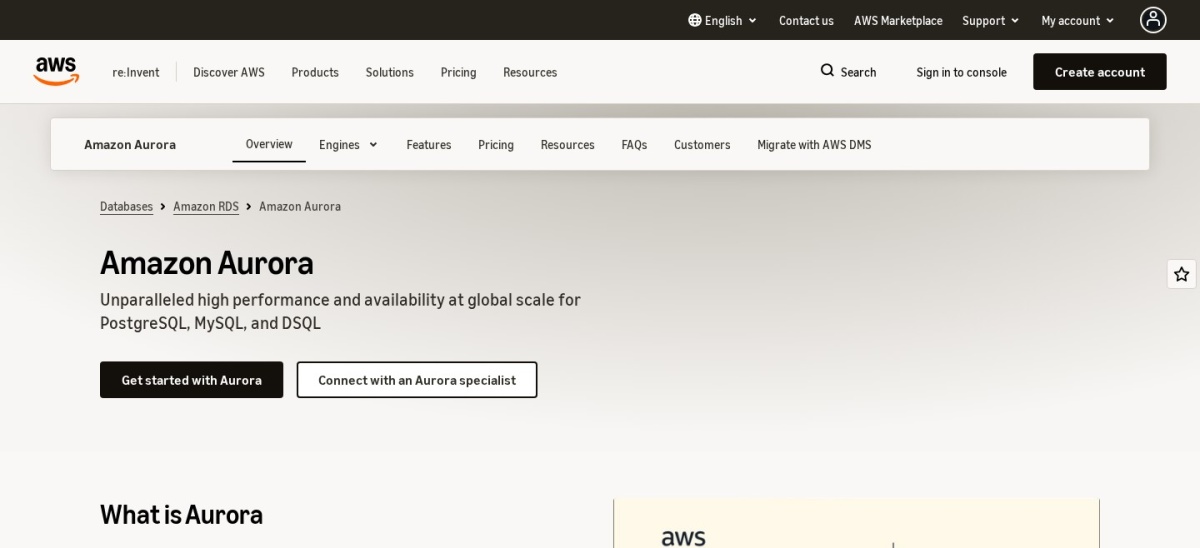
Amazon Aurora
4.5/5on G2 (458 reviews, checked Nov 2026)
Starts at$0.26/hr
Best managed cloud RDBMS
EnginesMySQL and PostgreSQL compatible
ServerlessFrom $0.12 per ACU-hour
Paid plandb.r6g.large, $0.26/hr
Storage$0.10 per GB-month, usage-based
aws.amazon.com
Amazon Aurora homepage, captured Nov 2026.
Amazon Aurora is a cloud-native relational database that runs MySQL- and PostgreSQL-compatible engines on AWS infrastructure. Storage grows automatically and bills at $0.10 per GB-month on actual usage, replicas share one storage volume, and Serverless v2 scales capacity from $0.12 per ACU-hour.
The trade off is that you live inside AWS. A db.r6g.large instance costs about $0.26 an hour, roughly $2,278 a year before storage and I/O charges, and moving away means migrating the data out. It suits teams already on AWS that want managed MySQL or PostgreSQL without running servers.
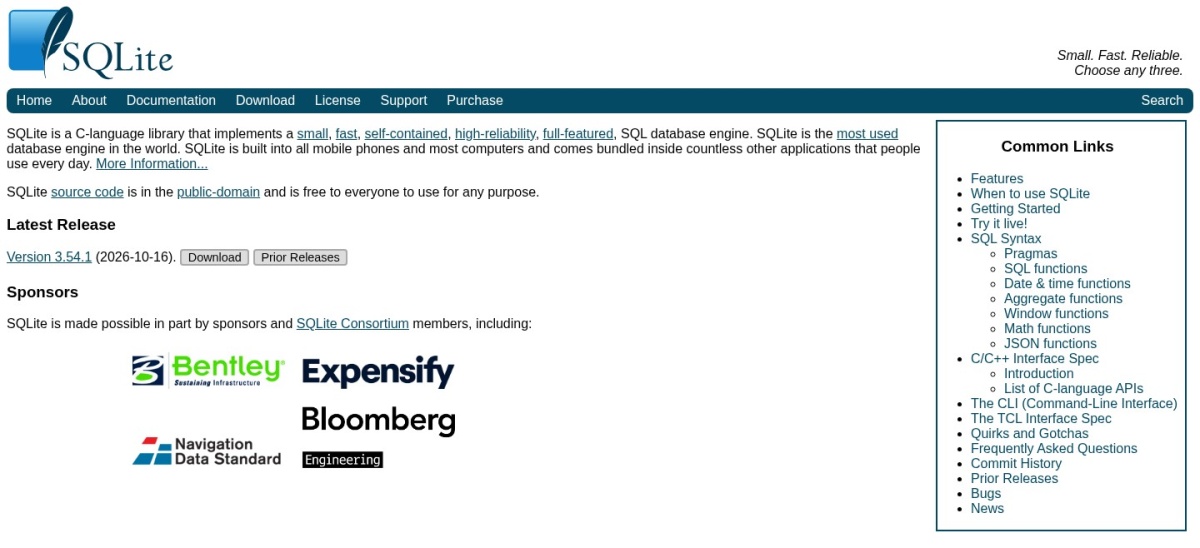
SQLite is a C-language library that implements a full SQL database engine in a single file, with no server to install or configure. It is built into every mobile phone and most computers, and the latest release, version 3.54.1, covers transactions, JSON functions and window functions.
The trade off is that SQLite is not a client-server database. It suits one application at a time, so it cannot serve many users over a network the way PostgreSQL or MySQL can. It suits mobile apps, desktop software and small sites that need a database with no server at all.
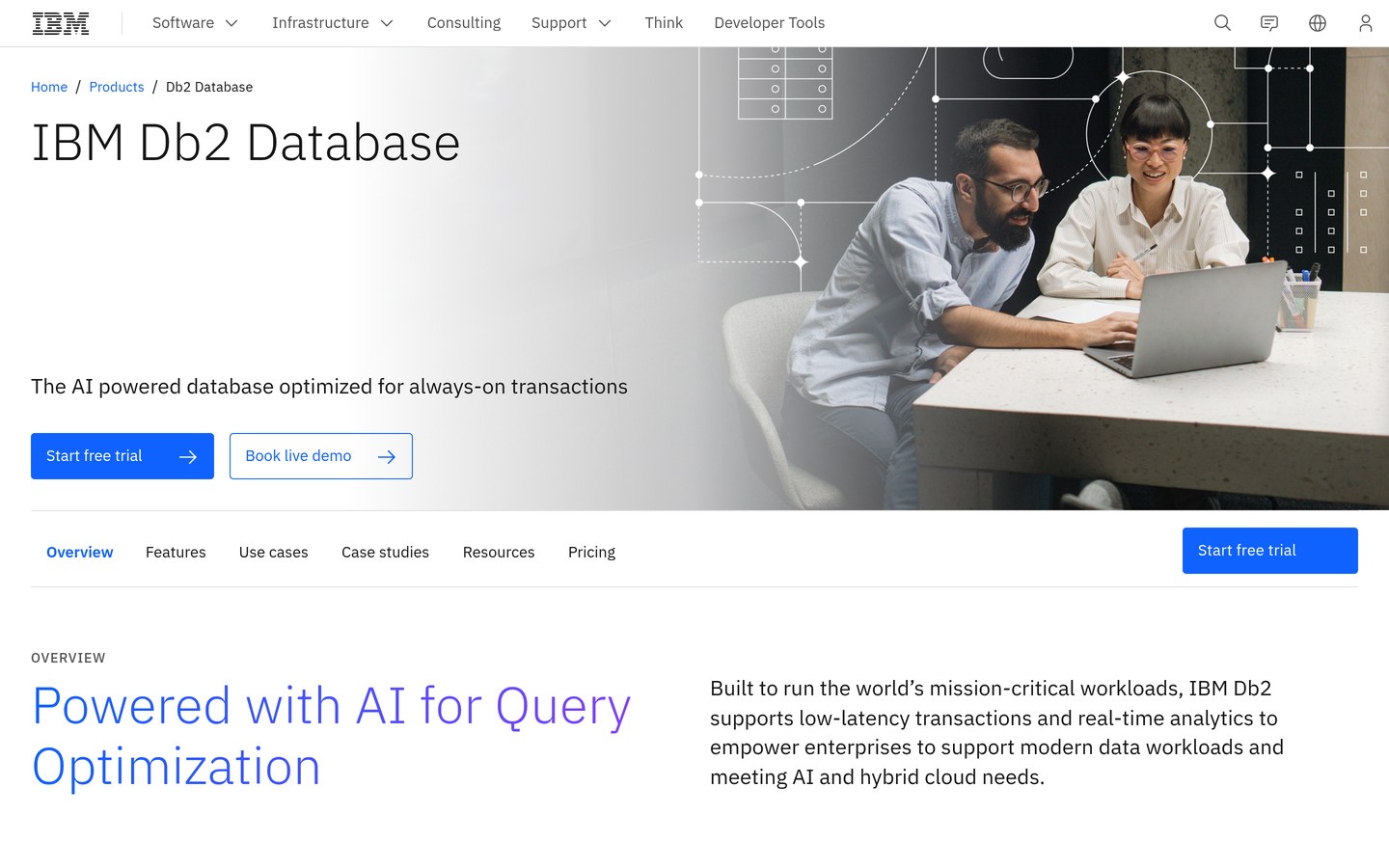
IBM Db2 is a relational database built for high-volume transactions, with AI-assisted query tuning and support for low-latency workloads. The free Community edition covers development and small use, while Db2 on Cloud Standard starts at $99 a month with shared infrastructure for production.
The trade off is licensing. On-premises Db2 is priced per virtual processor core or per PVU under Passport Advantage, and the Standard edition is capped at 16 cores and 128 GB of memory per server. It suits organisations already running IBM software and hardware.
What we like
Built for high-volume transactional workloads
AI-assisted query tuning included
Free Community edition for development
Rated 4.1 out of 5 by 683 G2 reviewers
Watch out for
Lowest rating in this list at 4.1 out of 5
On-premises licensing is complex and quote-based
Advanced Edition adds compression and partitioningVisit ibm.com
09
TiDB
4.6/5on G2 (67 reviews, checked Nov 2026)
Paid from$1,376/mo
Best for distributed SQL at scale
LicenseOpen source, Apache 2.0
MySQL compatibleYes, MySQL protocol
Paid planDedicated from $1,376/mo
ArchitectureDistributed, HTAP
pingcap.com
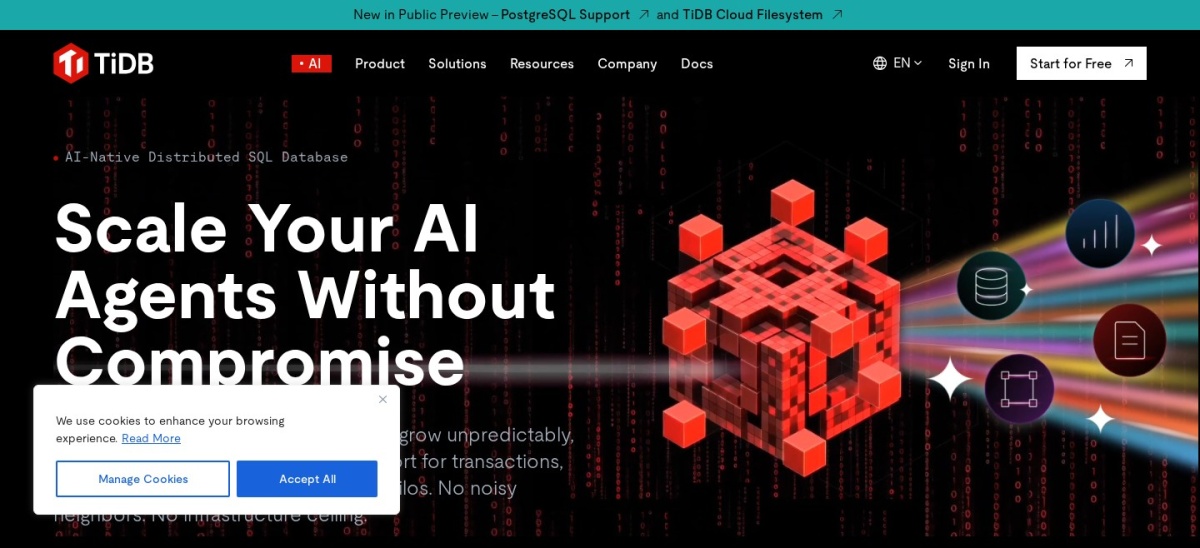
TiDB homepage, captured Nov 2026.
TiDB is an open source distributed SQL database from PingCAP that speaks the MySQL protocol, so MySQL tools and drivers work with it. It splits data across nodes for horizontal scaling and handles transactions and analytics in one system, and TiDB Cloud Starter includes a free quota for small workloads.
The trade off is cost at production scale. Dedicated clusters start at $1,376 a month, and the per-node rate starts at $0.22 an hour, so a small cluster costs far more than a single MySQL server. It suits teams whose data outgrows one server and who need MySQL compatibility at scale.
What we like
Scales sideways across many nodes
MySQL-compatible protocol and tooling
Handles transactions and analytics together
Highest rating in this list at 4.6 out of 5
Watch out for
Only 67 G2 reviews, the thinnest base in this list
Five of the nine tools in this list cost nothing to run: PostgreSQL, MySQL Community, MariaDB Community, SQLite and Oracle Database Free. That covers most small and medium projects.
Paid plans mostly add support, backups and extras. You get a vendor to call, managed hosting, and features such as enterprise backup, auditing and encryption.
Cloud databases flip the model: there is no license at all, but the meter runs every hour. Our guide to backing up a WordPress database shows the backup habits that matter whatever the engine.
For a business system that earns money every day, a paid edition or a managed service often costs less than one outage. Start free, and pay when the database becomes critical.
How we chose
We started from the relational databases in production use today, ranked by G2 ratings and review counts, then kept the nine with the clearest pricing and the widest adoption.
Prices come from each vendor's pricing page or published price list, checked on 26 November 2026. Ratings and review counts come from G2 on the same day. Where a vendor shows a sale, the list shows the regular price.
We left out analytics-only warehouses and NoSQL systems, since they are not relational databases. No vendor paid for a place, and we do not claim to have used these tools ourselves.
How to choose an RDBMS
Start with where the database will run, then match the engine to your team.
Decide where it runs. A server you manage suits PostgreSQL, MySQL or MariaDB. A managed cloud service suits Aurora, TiDB Cloud or Db2 on Cloud.
Check what your team already knows. A team that knows MySQL will be faster on MySQL or MariaDB. A Microsoft shop will be faster on SQL Server.
Price the paid edition, not the free one. Free engines still cost money in hosting, backups and support. Compare the paid edition or managed price before you commit.
Test with your real workload. Load a copy of your data and run your slowest queries. See how to query a WordPress database for a simple way to start.
FAQ
What is the best RDBMS software?
PostgreSQL is the best RDBMS for most teams. It is free, open source, runs anywhere, and is rated 4.4 out of 5 by 682 G2 reviewers, with the widest extension library of any open source database.
Is PostgreSQL really free?
Yes. PostgreSQL is open source under the PostgreSQL Licence, with no license fee, no core limits and no paid edition. You pay only for hosting, support or a managed service if you choose one.
What is the difference between MySQL and MariaDB?
MariaDB is a fork of MySQL that stays compatible with MySQL applications, so most MySQL code runs on it unchanged. MySQL is owned by Oracle and its paid editions add backup, firewall and encryption, while MariaDB is community-governed with its own enterprise platform.
How much does Oracle Database cost?
Oracle Database Standard Edition 2 lists at $17,500 per occupied socket as a one-time license, plus 22% annual support. Enterprise Edition lists at $47,500 per processor before options, so most teams start with the free Oracle Database Free edition.
Should I use a managed cloud database?
Use one if you want backups, patching and failover handled for you. Aurora, TiDB Cloud and Db2 on Cloud all manage the server, but they bill by the hour, so an always-on instance costs more over a year than a self-managed server.
What is SQLite used for?
SQLite is an embedded database library used inside mobile apps, browsers, desktop software and small sites. It stores the whole database in one file with no server, which makes it ideal for local storage but a poor fit for many users at once.
SaaS SEO and WordPress specialist with about 8 years of experience. Rakib compares WordPress plugins, themes, hosting and software using public pricing, documentation and user reviews. See how we rank.