WLWPLegible EditorsLast verified 23 Nov 2026How we rank10 min read
★ Short answer
TestRail is the best QA software for most teams. Its Essentials plan costs $22 per user a month on annual billing and covers test plans, runs and coverage reporting, rated 4.4/5 on G2. Pick Qase for a free plan with AI test design and Testmo for a modern cloud alternative.
How we make this list: we compare pricing pages, product documentation and public user reviews, then re-check every price before each update. No product paid for a place. Disclosure.
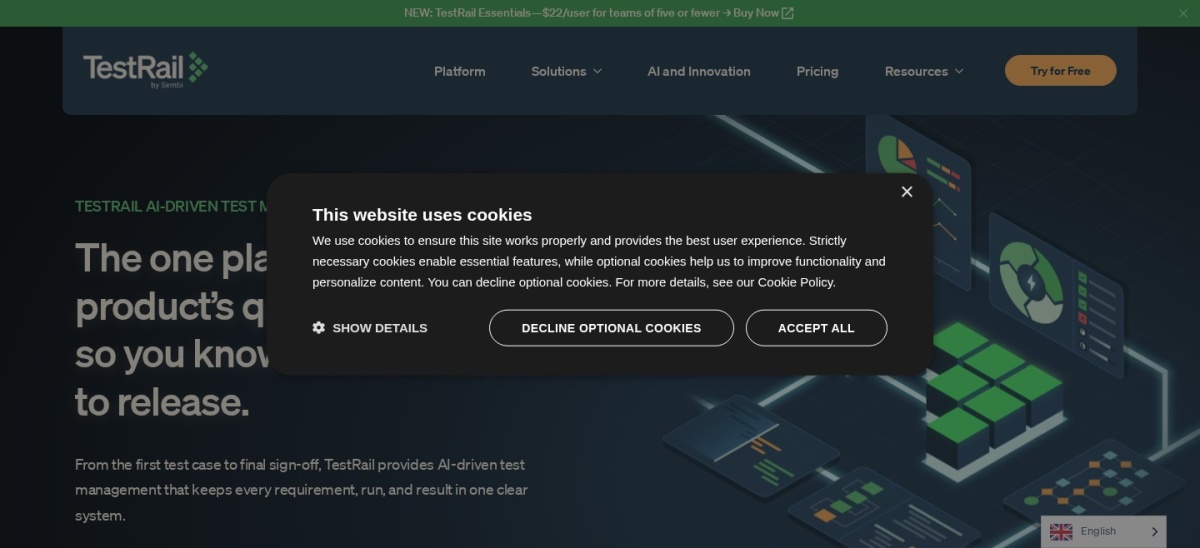
TestRail is the reference test case manager, with Essentials at $22 per user a month on annual billing and a 30-day trial.
Qase pairs the highest rating here, 4.7/5 on G2, with a free plan for 4 users and Teams at $35 per user a month billed yearly.
Testmo charges a flat $59 a month for 5 users, which undercuts per-seat pricing for small QA teams.
qTest is the enterprise pick at $1,000 per user a year, with a 4.3/5 G2 rating from 104 reviews and the deepest Jira integration here.
BrowserStack and TestMu AI cover the execution side: real browsers and devices in the cloud, from $15 a month.
What QA software should cover
QA software splits into three jobs. Test management tools plan cases, runs and results. Execution clouds provide the browsers and devices the tests run on. Automation tools write and run the checks themselves.
Most teams need one tool from the first group and one from the second. A test manager without a device cloud still needs somewhere to run the tests, and a device cloud without a manager leaves results scattered across spreadsheets.
Per-user pricing is the cost to watch. A $22 per user plan looks cheap for a team of three and expensive for a team of thirty, while flat plans such as Testmo at $59 a month for 5 users scale differently.
Jira integration matters more than it first appears. If test cases live outside Jira, testers and developers argue about status in two places. Our guide on testing WordPress plugins with PHPUnit shows how automated results feed into the same workflow.
TestRail is the long-standing standard for test case management. QA teams plan suites, assign runs, track results and report coverage in a system built for that job rather than adapted from a project tracker. Reporting covers requirements, defect density by area and tester throughput, and integrations cover Jira, GitHub and Jenkins.
The trade off is price structure. Essentials costs $22 per user a month on annual billing and caps at 5 users, while Professional at $39 and Enterprise at $78 add reporting depth, on-premise deployment and audit logs. It suits teams that want the most proven test manager and can live with per-seat billing.
What we like
Mature test planning and reporting
Broad integrations with Jira, GitHub and Jenkins
AI test generation included on every plan
Watch out for
Essentials caps at 5 users
Per-user pricing adds up for large teams
Interface is functional rather than modern
Professional adds advanced reporting and on-premise deploymentVisit testrail.com
02
Qase
4.7/5on G2 (335 reviews, checked Nov 2026)
Paid from$35/user/mo
Best free plan with AI test design
Entry planTeams, $35/user/mo
Free planYes, 4 users
Jira integrationYes, plus GitHub
AI featuresAI Test Designer, monthly credits
qase.io
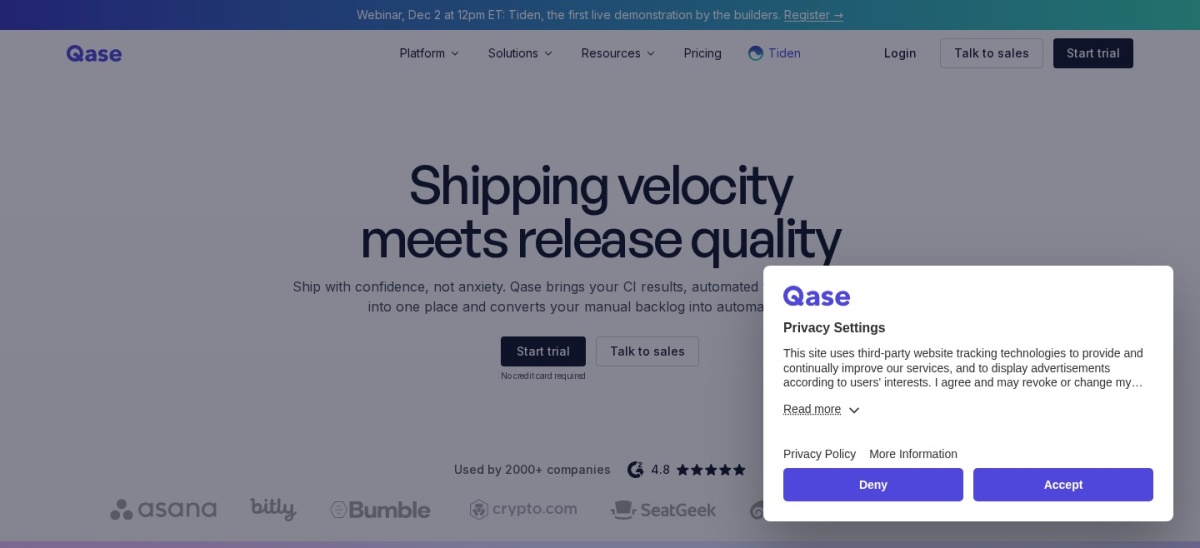
Qase homepage, captured Nov 2026.
Qase is a cloud platform that brings manual and automated testing into one place, with an AI Test Designer that drafts test cases from requirements. The free plan covers 4 users with 500 MB of storage, and the Teams plan adds unlimited storage, SSO and an MCP server for AI coding assistants.
The trade off is the seat minimum. Teams costs $35 per user a month billed yearly, or $42 month to month, and needs at least 5 paid users, so a team of two pays for five. It suits small QA teams moving away from spreadsheets that want AI help drafting cases.
What we like
Highest G2 rating in this list at 4.7/5
Free plan for 4 users
AI test generation and MCP server included
Watch out for
Teams plan needs at least 5 paid users
AI features use monthly credits
Free plan storage caps at 500 MB
Teams adds SSO, unlimited storage and the MCP serverVisit qase.io
03
Testmo
4.6/5on G2 (27 reviews, checked Nov 2026)
Starts at$59/mo
Best modern cloud test manager
Entry planTeam, $59/mo for 5 users
Free plan21-day trial
Jira integrationYes, free Jira Cloud add-on
AI featuresTestmo AI on all plans
testmo.com
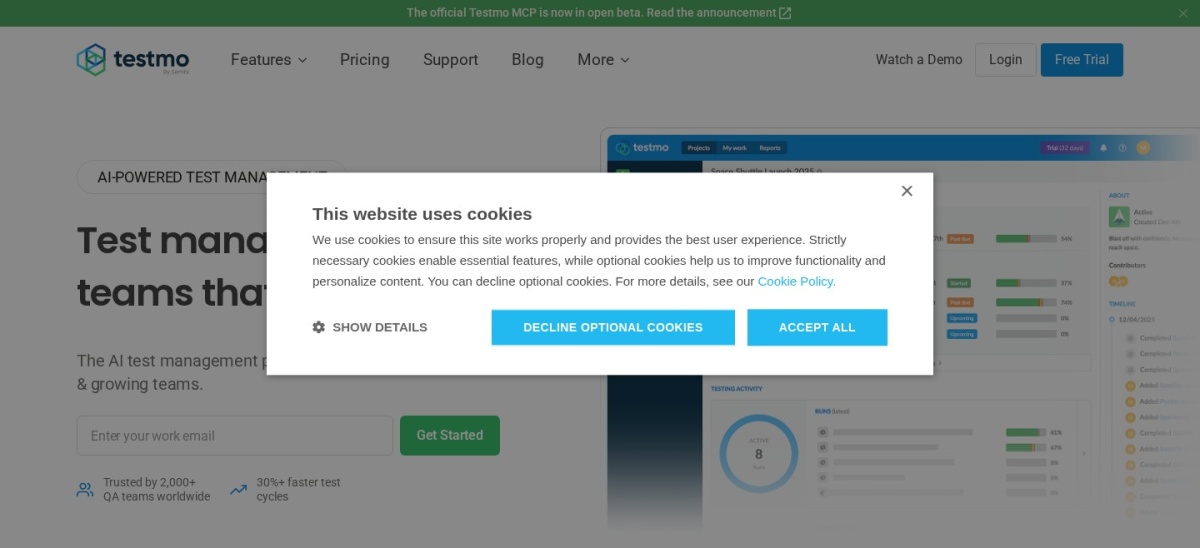
Testmo homepage, captured Nov 2026.
Testmo is the modern answer to TestRail: a cloud test manager covering manual cases, exploratory sessions and automated results in one place, with unlimited projects, cases, plans and runs on every plan. The Team plan costs $59 a month for 5 users, and annual billing saves 15%.
The trade off is ecosystem depth. Some niche integrations that TestRail has had for a decade are newer here, and the G2 rating rests on only 27 reviews. It suits teams choosing test management fresh in 2026 that want a clean interface and flat pricing.
What we like
Flat monthly price, not per-seat billing
Clean modern interface
Unlimited projects and cases on every plan
Watch out for
No permanent free plan
Smaller integration catalog than TestRail
Rating based on only 27 G2 reviews
Business adds the Reporting Center and role-based accessVisit testmo.com
04
PractiTest
4.3/5on G2 (237 reviews, checked Nov 2026)
Starts at$54/user/mo
Best for teams with varied methodologies
Entry planTeam, $54/user/mo
Free planTrial only
Jira integrationYes, two-way sync
AI featuresSmartFox AI assistant
practitest.com
PractiTest homepage, captured Nov 2026.
PractiTest is a flexible test management tool that gives QA teams a framework and lets their methodology shape the tool. Agile, waterfall, exploratory and session-based work all fit, with custom fields, filters and dashboards plus requirements traceability and an API for automation.
The trade off is setup time. Out of the box it is less opinionated than TestRail, so teams need to design their own process, and the Team plan needs at least 5 tester licenses at $54 per user a month. It suits organizations with a defined QA methodology they like.
Kualitee is a test management tool that also runs tests with its Hootie AI, which generates test cases from requirements and screenshots. The free plan covers 3 users, 500 test cases and 200 defects, and the Hypergrowth plan costs $12 per user a month, or $108 per user a year.
The trade off is customization. G2 reviewers cite limited custom fields and a learning curve, and the Jira Cloud app has few installs so far. It suits small and mid-size QA teams that want AI-generated cases without paying enterprise prices.
Jira integrationYes, deep, with requirements traceability
AutomationTosca, Selenium and Jenkins integrations
tricentis.com
Tricentis qTest homepage, captured Nov 2026.
Tricentis qTest is an enterprise test management platform that centralizes test cases, requirements, defects and execution in one place, with Jira integration reviewers cite more than any other strength. It holds 4.3 out of 5 on G2 from 104 reviews, and Basic starts at $1,000 per user per year.
The trade off is cost and setup: $1,000 a user a year prices out small teams, reviewers call the initial setup a significant investment, and there is no permanent free plan. It suits mid-market and enterprise QA teams that need centralized, scalable test management.
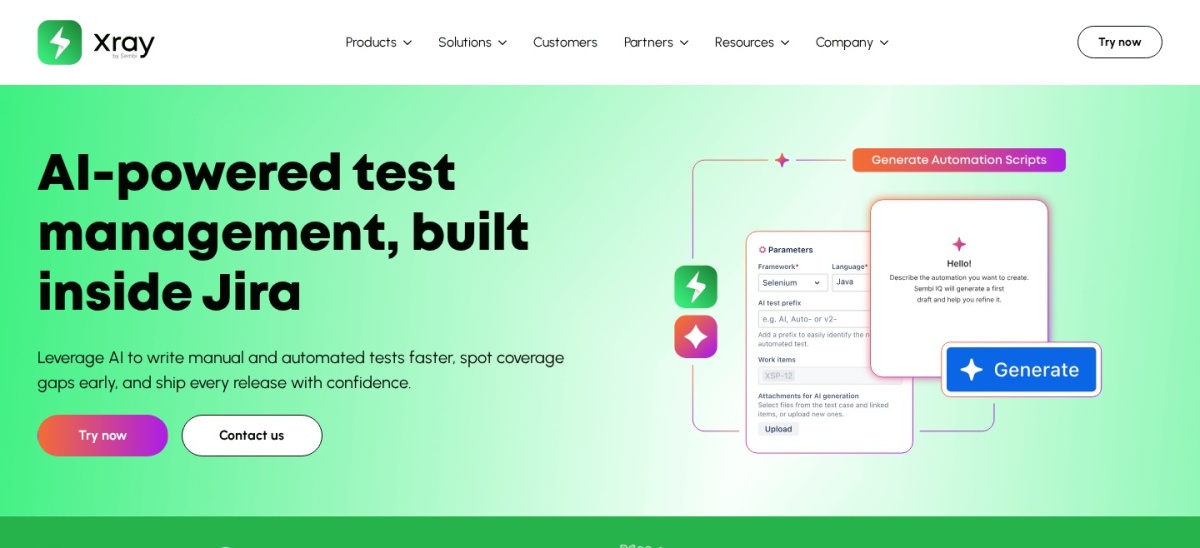
Xray is a Jira-native test management app: test cases, plans and executions sit inside Jira projects, so developers and testers share one view of what is being tested and what is broken. It supports Cucumber and BDD workflows, and pricing starts at $10 a month for up to 10 Jira users.
The trade off is scope. Xray only makes sense inside Jira, and its G2 rating rests on only 19 reviews, the smallest sample in this list. It suits Jira-centric Agile teams that want testing and development in the same tool.
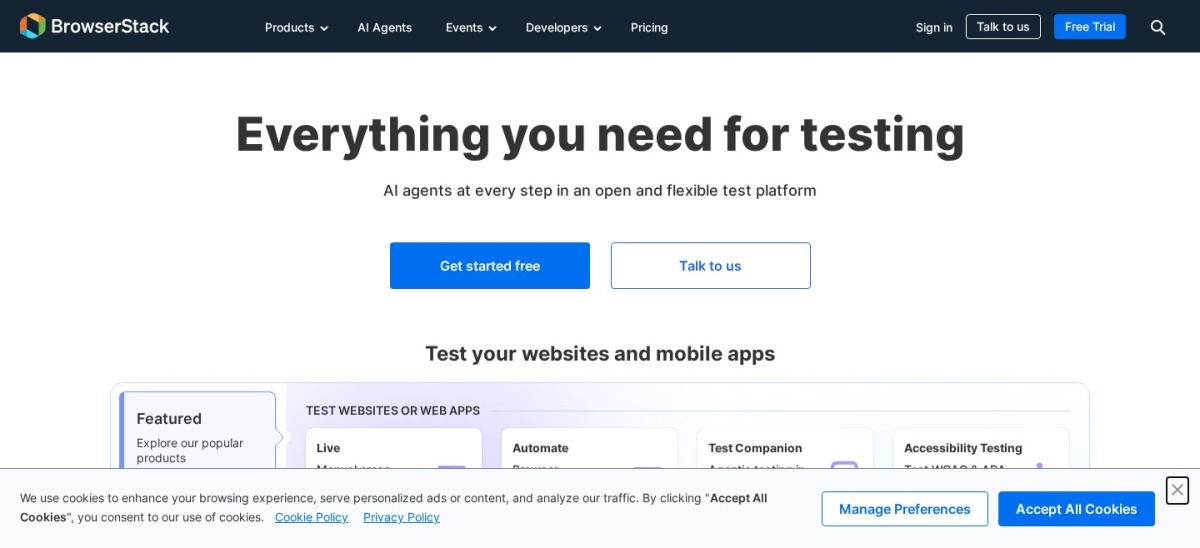
BrowserStack is a cloud platform that provides the infrastructure for web and mobile testing at scale: thousands of real browsers and devices in the cloud, available on demand. Manual testers get instant access to the device matrix, and automation teams run Selenium, Cypress, Playwright and Appium suites in parallel without maintaining a device lab.
The trade off is cost. The Test Management Team plan starts at $175 a month for 5 users, and automation pricing scales with parallel sessions. It suits teams that already run BrowserStack for execution and want test management in the same account.
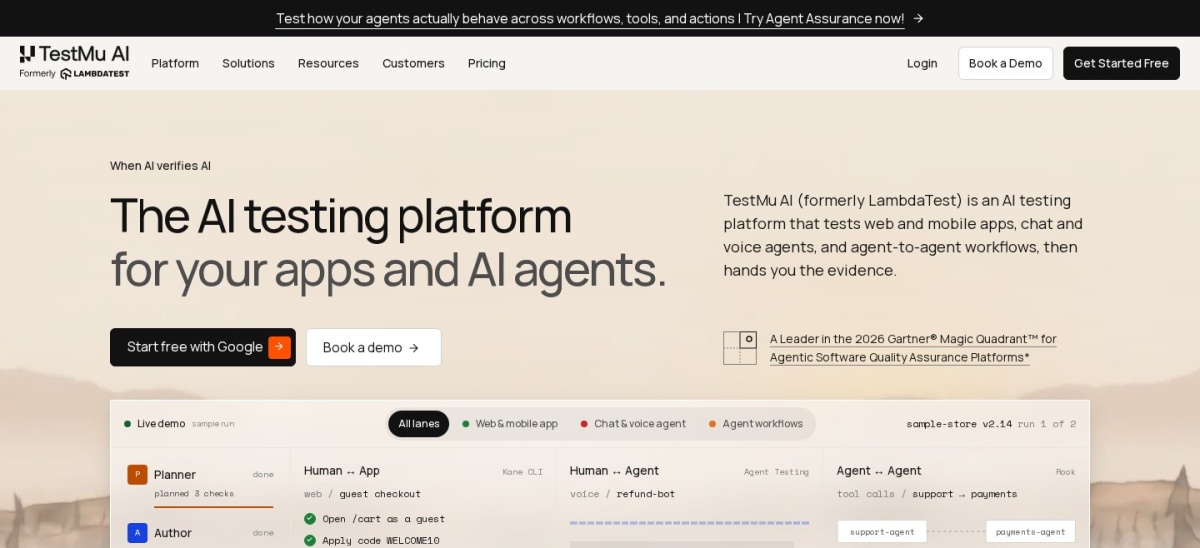
TestMu AI is the new name for LambdaTest, rebranded in January 2026 to reflect its shift toward AI-native testing. The foundation is the familiar one: cross-browser testing, a real device cloud and automation support with over a hundred integrations. The new layer adds GenAI testing agents and autonomous test orchestration.
The trade off is the rebrand itself. Some community content and documentation still reference the old LambdaTest name, which can confuse evaluations. It suits teams that want a device cloud with AI agents layered on top, at a low entry price of $15 a month.
Most teams need two or three tools from this list, not one. A common stack is a test manager such as TestRail, Qase or Testmo, an execution cloud such as BrowserStack or TestMu AI, and an automation approach for the tests themselves.
Match the stack to your release cadence. Teams shipping daily need automation and fast feedback, so a light manager plus a device cloud works. Teams shipping quarterly in regulated industries need traceability and audit trails, so invest in the management layer.
Our guide on load testing a WordPress site covers the performance side of the same stack, which these tools do not handle.
How we chose
We started from the QA tools QA teams name most often in 2026 comparisons, then kept those with a published price, a free plan or a trial and a public G2 or Capterra rating.
Prices come from each vendor's pricing page or a comparison that read it, checked on 23 November 2026. TestRail Essentials is $22 per user a month on annual billing on its own pricing page, Qase Teams is $35 and Testmo Team is $59 a month. Ratings come from G2 or Capterra on the same day.
We left out quote-only enterprise tools and discontinued products. No vendor paid for a place, and this list is based on pricing, docs and reviews, not on using the tools ourselves.
How to choose QA software
Start with the job you do most often, then check the price at your real team size.
Name the main job first. If manual test cases are the bulk of the work, pick a test manager. If running tests across browsers is the pain, pick an execution cloud first.
Price it at your real headcount. Multiply per-user prices by every tester, not just the QA lead. Flat plans such as Testmo win once a team passes about five people.
Check the Jira fit. If your team lives in Jira, a native option such as Xray or a deep integration such as TestRail saves daily context switching.
Use the trial on a real release. Import a real test suite and run one release cycle before paying. A trial on toy data hides the reporting gaps that matter.
FAQ
What is the best QA software?
TestRail is the best pick for most teams. Its Essentials plan costs $22 per user a month on annual billing, covers test plans, runs and coverage reporting, and is rated 4.4 out of 5 on G2 from 665 reviews.
Is there free QA software?
Yes. Qase has a free plan for 4 users, Kualitee for 3 users and TestMu AI has a free tier. TestRail, Testmo and PractiTest offer trials instead of free plans.
How much does TestRail cost?
TestRail Essentials costs $22 per user a month on annual billing, for up to 5 users. Professional costs $39 and Enterprise $78 per user a month, with a 30-day free trial on every plan.
What is the cheapest QA software?
Kualitee is the cheapest paid option here at $12 per user a month, with a free plan for 3 users. TestMu AI follows at $15 a month, and qTest is the enterprise pick at $1,000 per user per year.
Do I need Jira to use QA software?
No. Only Xray needs Jira, since it runs inside it. TestRail, Qase, Testmo and PractiTest all work on their own and integrate with Jira if you use it.
What is the difference between test management and test automation?
Test management organizes manual cases, runs and results. Test automation writes and executes checks without a human. Most teams need both, plus a device cloud to run the checks on.