Best Programmatic Advertising Platforms in 2026: 8 Platforms Compared
WLWPLegible EditorsLast verified 23 Nov 2026How we rank12 min read
★ Short answer
StackAdapt is the best programmatic advertising platform for most buyers, rated 4.7/5 on G2, with self-serve buying across display, native, video, connected TV, audio and digital out-of-home, and no minimum spend. Pick The Trade Desk for enterprise omnichannel buying at scale, and Choozle for the cheapest published entry at $99 a month.
How we make this list: we compare pricing pages, product documentation and public user reviews, then re-check every price before each update. No product paid for a place. Disclosure.
StackAdapt is the most accessible full DSP, rated 4.7/5 on G2 from 905 reviews, with no minimum spend.
The Trade Desk is the enterprise standard for independent omnichannel buying, rated 4.4/5 on G2, with fees reported around 12 to 15 percent of media.
Choozle is the cheapest published entry at $99 a month, and AdRoll is free to start with no fixed minimum.
DV360 is the only DSP that buys YouTube programmatically.
Most DSPs publish no price, so budget for a platform fee of roughly 10 to 20 percent of media spend on top of media costs.
What a programmatic advertising platform actually does
Programmatic advertising now handles the large majority of US digital display ad spend. The buying happens through demand-side platforms (DSPs): software that bids on ad impressions in real time across exchanges, apps and connected TV.
DSP pricing is almost never a list price. Expect platform fees of roughly 10 to 20 percent of media spend, plus media costs that vary by channel, plus data and verification fees on top. Eight of the nine tools in the wider market are custom quote, so the price is the negotiation, not a number on a page.
Budget decides the platform more than features do. Under $2,000 a month, Choozle and AdRoll are the realistic choices. Above $10,000 a month, the DSPs open up. Above $25,000 a month, The Trade Desk and DV360 become practical.
There are three kinds of platform here. Independent DSPs such as The Trade Desk and StackAdapt buy the open internet. Walled-garden DSPs such as DV360 and Amazon DSP buy inside their owner's world. Agency systems such as Basis add planning, buying and billing in one place.
StackAdapt is where most mid-market programmatic happens. It opened self-serve signup broadly, publishes no official minimum spend, and reviewer after reviewer describes it as more accessible than The Trade Desk. Native advertising is its historic strength, and video, CTV, audio and display have filled out around it. Its own plans page says most teams hit their stride around $5,000 a month in media.
The trade off is pricing opacity. StackAdapt discloses no percentage, no minimum and no rate card, so you cannot benchmark your CPMs against a list price, and self-serve accounts go through an application and approval process. It suits mid-market teams and agencies that want self-serve programmatic without a contract.
What we like
Highest G2 rating here at 4.7/5 from 905 reviews
No minimum spend, self-serve signup
Seven channels including CTV, native and audio
Watch out for
No published rate card, so CPMs cannot be benchmarked
Self-serve accounts need application and approval
Managed offerings run around $15,000 a month and up
PricingQuote-based, fees about 12 to 15 percent of media
ChannelsDisplay, video, audio, CTV, out-of-home
Minimum spendAbout $25,000 a month reported
thetradedesk.com
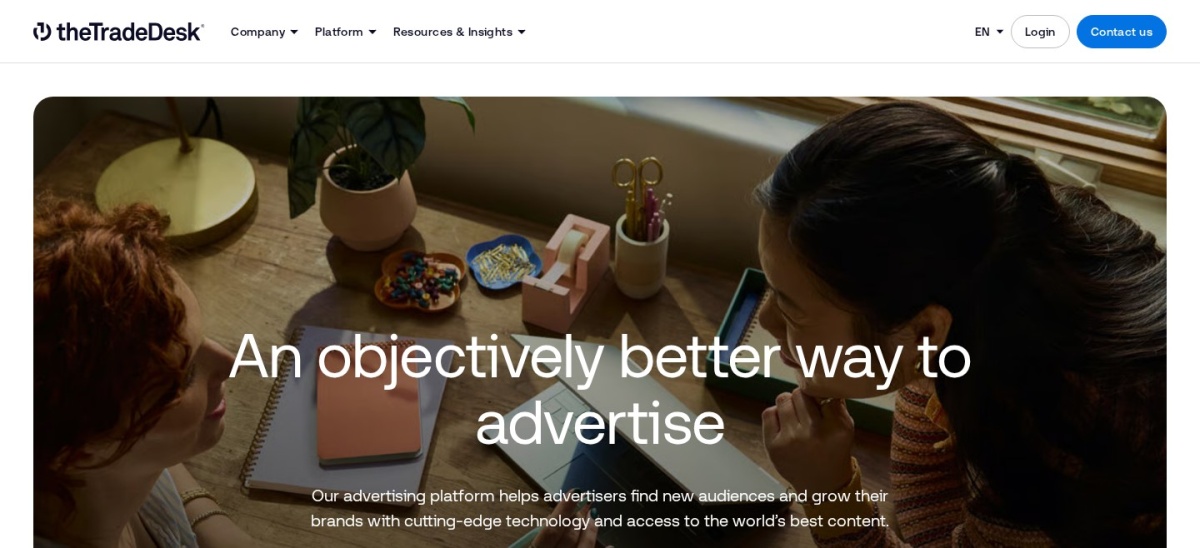
The Trade Desk homepage, captured Nov 2026.
The Trade Desk is the largest independent demand-side platform, and independence is the pitch: because it owns no media, it has no reason to favor its own inventory in an auction. It buys across display, video, audio, connected TV and digital out-of-home from one seat, with Kokai AI optimization and UID2 and EUID identity tools for targeting as third-party cookies fade. Reviewers rate it 4.4 out of 5 on G2.
The trade off is access. The Trade Desk publishes no price and no minimum spend, so every term is negotiated, with fees reported around 12 to 15 percent of media and practical minimums reported from $25,000 a month upward, often through an agency. Smaller advertisers reach it through an agency seat rather than directly. It suits agencies and brands buying open-internet programmatic at scale.
What we like
Largest independent DSP, no house inventory to favor
Deepest CTV footprint among independent platforms
Kokai AI optimization and UID2 identity tools
Watch out for
No published price or minimum, every term negotiated
Practical minimums reported from $25,000 a month
Platform, data and verification fees stack on top of media
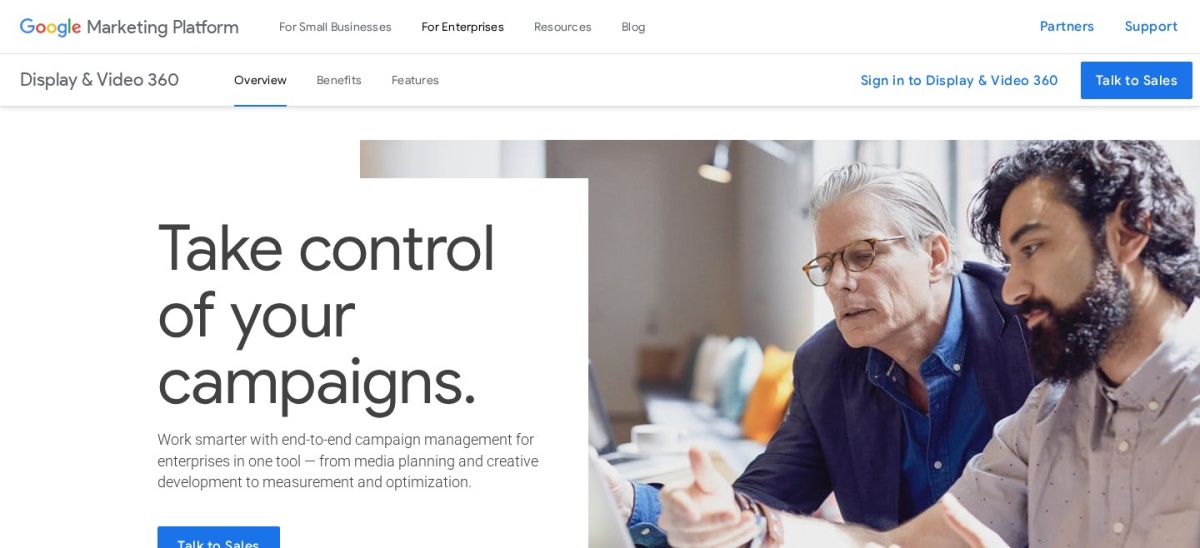
Google Display & Video 360 homepage, captured Nov 2026.
Google Display & Video 360 is Google's enterprise DSP, and its decisive advantage is inventory no other DSP can sell: YouTube, bought programmatically, next to dozens of open-web exchanges. It organizes buying into five modules, campaigns, audiences, creatives, inventory and insights, and ties into Campaign Manager 360, Analytics 360 and Google Ads data. Automated bidding and custom bidding algorithms run on Floodlight conversions, and private-marketplace and programmatic-guaranteed deals open premium publisher inventory.
The trade off is contractual. Google publishes no DV360 price; the platform fee is a percentage of media spend written into your contract or your sales partner's agreement, with practical floors reported around $25,000 a month. DV360 has no G2 profile of its own, so the rating shown covers Google Marketing Platform. It suits teams already on the Google Marketing Platform that want YouTube and open-web buying in one seat.
What we like
Only DSP with full programmatic YouTube access
Tight integration with GA4 and BigQuery
Private-marketplace and programmatic-guaranteed deals
Watch out for
No published price, fee is a percentage of media
Access runs through a Google contract or a certified partner
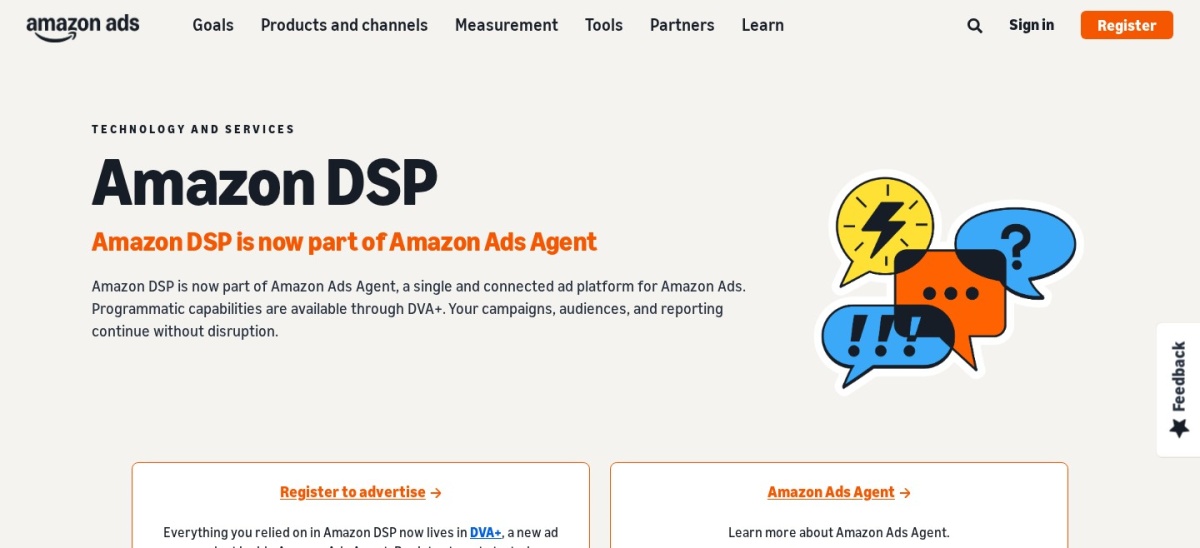
Amazon DSP runs on logged-in purchase data, which is rare and valuable. It targets shoppers with Amazon purchase signals, and buys Prime Video, Netflix and Roku connected TV alongside display and video. In 2026 Amazon folded its DSP into an AI agent, with DVA+ defaults that run full-funnel campaigns, and self-service has no management fee while managed service starts from $50,000.
The trade off is the walled garden. Its strongest data and measurement stay inside Amazon, and the 2026 shift to AI-led DVA+ defaults can reduce manual control unless buyers opt into advanced settings. Its G2 rating of 4.2/5 comes from only 18 reviews. It suits brands selling on Amazon, or any brand that wants Amazon's shopping signals behind its prospecting.
What we like
Purchase data no other DSP can copy
Prime Video, Netflix and Roku CTV inventory
Closed-loop shopping measurement
Watch out for
Strongest data stays inside Amazon's walled garden
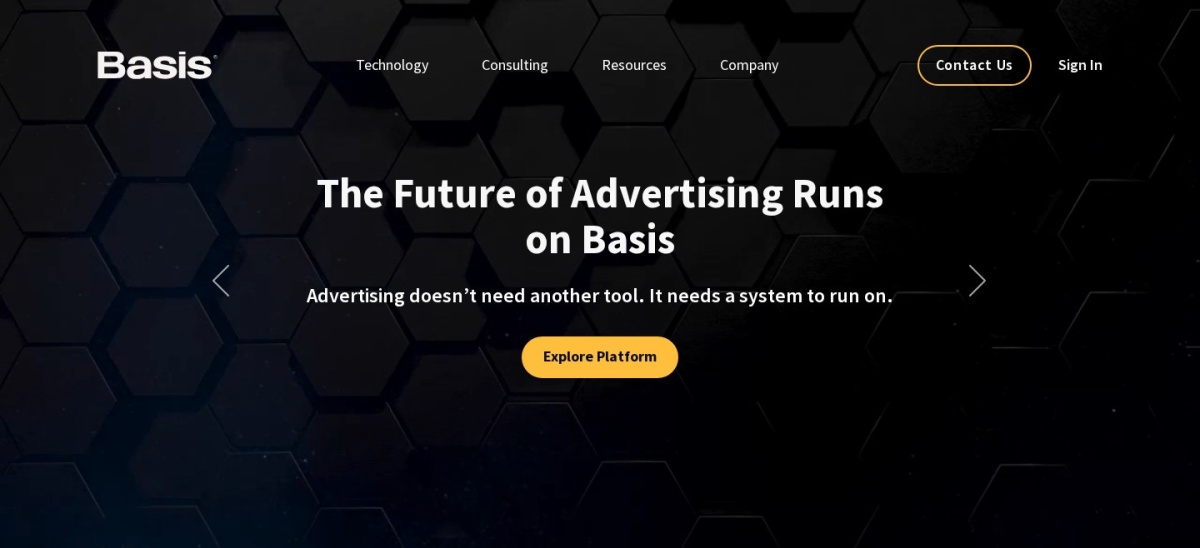
Basis is the agency system in this list rather than a pure DSP: programmatic, search, social and site-direct buying sit in one interface, and the billing automation reconciles delivery numbers and creates client invoices, the workflow other DSPs leave to spreadsheets. Compass AI allocates spend across channels and audiences, and Market Trends benchmarks your campaigns against 250,000-plus line items.
The trade off is price and complexity. Pricing is entirely quote-based, a platform license plus media fees, which makes Basis costlier than a pure DSP, and reviewers note a learning curve and an interface that can feel dated. It suits agencies that plan, buy and bill connected TV, search and social for many clients in one system.
What we like
Planning, buying and billing in one system
Billing automation creates client invoices
Compass AI allocates spend across channels
Watch out for
Entirely quote-based, platform license plus media fees
Learning curve and an interface that can feel dated
Costlier than a pure DSP
Quote-based pricing, platform license plus media feesVisit basis.com
06
Choozle
4.2/5on G2 (211 reviews, checked Nov 2026)
Starts at$99/mo
Best for small-budget programmatic
Free planNo
PricingChoozle Go $99 a month
Minimum budgetNone published
BillingFlat monthly fee
choozle.com
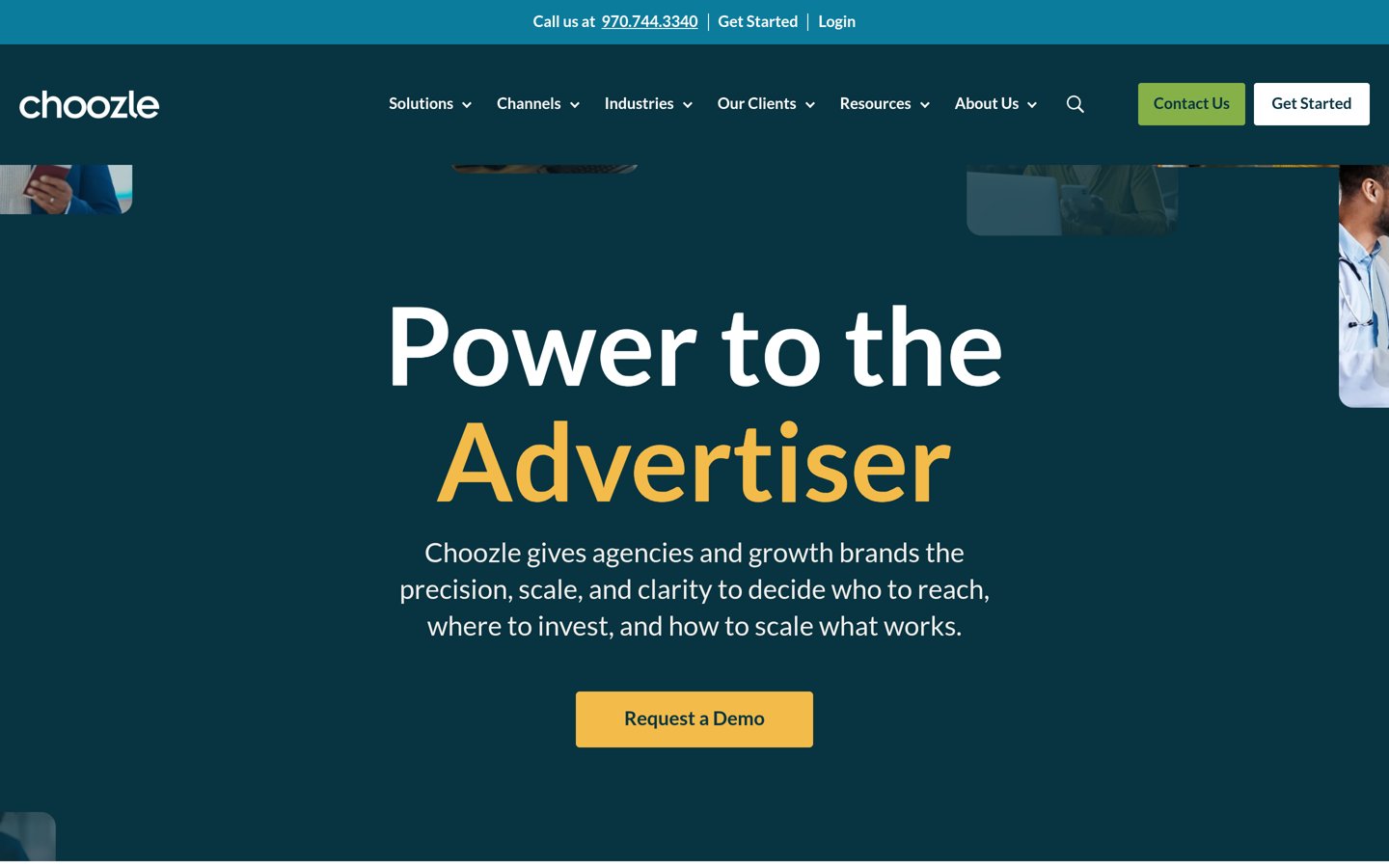
Choozle homepage, captured Nov 2026.
Choozle is built for the buyers the big DSPs ignore: freelancers, small businesses and small agencies. Choozle Go costs $99 a month and puts a genuine self-serve programmatic platform in your hands, with real-time reporting at the campaign, ad group and creative level and budget pacing tools that keep small budgets from burning through in a day.
The trade off is scale. Choozle is the cheapest published entry point into programmatic, but fees can add up and certain features incur additional costs, and it is not built for enterprise budgets. It suits small agencies and in-house teams starting programmatic on a modest budget.
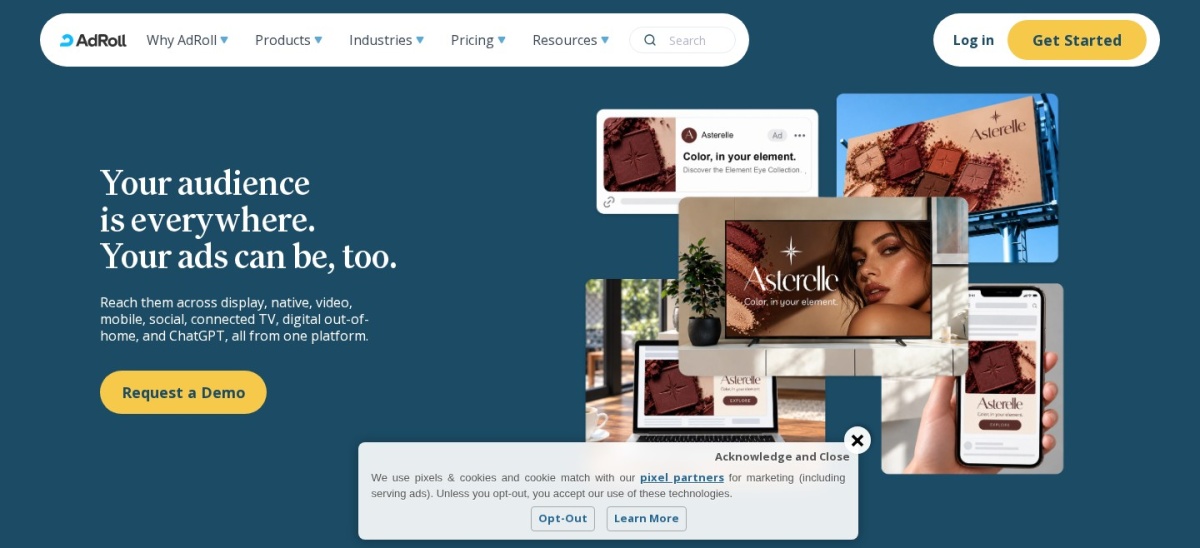
AdRoll is the simplest on-ramp to programmatic for an ecommerce brand. There is no fixed minimum and no contract: you fund the account and run display and social retargeting from the self-serve platform. The self-service Ads plan has no platform fee, and you pay only for the media you buy, with a Plus plan at $36 a month for more features.
The trade off is that AdRoll is retargeting-first, not a full DSP, and its Trustpilot score is low at 1.6 out of 5 across 186 reviews, with advertisers reporting support tickets sitting unanswered and campaigns force-relaunched. It suits ecommerce brands that want retargeting running quickly with no minimum spend.
What we like
Free to start, pay only for media
No fixed minimum and no contract
Fastest on-ramp for ecommerce retargeting
Watch out for
Retargeting-first, not a full DSP
Low Trustpilot score at 1.6/5 across 186 reviews
Support and forced campaign relaunches reported by users
Yahoo DSP is an omnichannel platform with its own identity graph, Yahoo ConnectID, which scales reach across roughly 232 million authenticated users. It buys display, video, audio and connected TV, and its Agent Network with 23 partners lets buyers bring their own AI agents to the platform.
The trade off is sentiment. User sentiment trails the leaders at 3.6/5 on G2 from about 180 reviews, with reviewers citing a complicated interface, and Apollo has reportedly explored selling the DSP. Pricing is contract through sales with no published price. It suits buyers who want identity-based targeting without third-party cookies.
Why DSP pricing is a percentage, not a subscription
Most DSPs charge a platform fee of roughly 10 to 20 percent of media spend, not a monthly subscription. The Trade Desk's fee is reported around 12 to 15 percent of media, and DV360's fee is a percentage written into your contract or your sales partner's agreement.
The exceptions are Choozle at a flat $99 a month and AdRoll, which is free to start and charges only for media. StackAdapt states plainly on its plans page that there is no minimum spend, and its fees are built into the CPM rather than charged as a separate platform fee.
Because most platforms publish no price, the ladder below shows the practical minimum monthly media spend reported by buyers where that is the only figure available, and the text says so. Treat those as entry bars, not software prices.
How we chose
We started from the programmatic platforms that appear most often in 2026 comparisons, then kept those with a public G2 rating.
Prices come from vendor pages and independent comparisons, checked on 23 November 2026. Most DSPs publish no price, so the ladder shows the practical minimum monthly media spend reported by buyers where that is the only figure available, and the text says so. Ratings and review counts come from G2 on the same day. DV360 has no G2 profile of its own, so its score covers Google Marketing Platform, and the text says so.
We left out tools with no public rating, including Microsoft Invest, which shut down in February 2026, and MediaMath, which now runs under Infillion after its 2023 bankruptcy. No vendor paid for a place, and we do not claim hands-on testing for this list. This list is based on pricing, docs and reviews, not on using the tools ourselves.
How to choose a programmatic advertising platform
Start from your monthly media budget, then match the platform to the inventory you need.
Add up your monthly media budget. Under $2,000 a month, Choozle and AdRoll are the realistic choices. Above $25,000, The Trade Desk and DV360 open up.
Decide which inventory matters. YouTube points to DV360. Amazon purchase data points to Amazon DSP. Open-internet CTV points to The Trade Desk or StackAdapt.
Ask for the platform fee in writing. DSP fees are roughly 10 to 20 percent of media spend, and data and verification fees stack on top. Get the full fee stack before signing.
Check whether you need an agency seat. The Trade Desk and DV360 are sales-led, and smaller advertisers usually reach them through an agency seat rather than directly.
FAQ
What is the best programmatic advertising platform?
StackAdapt is the best programmatic advertising platform for most buyers, rated 4.7/5 on G2, with self-serve buying across seven channels and no minimum spend. The Trade Desk is the enterprise standard for omnichannel buying at scale.
How much does programmatic advertising cost?
Platform fees run roughly 10 to 20 percent of media spend. Choozle is the cheapest published entry at $99 a month, AdRoll is free to start, and StackAdapt has no minimum spend. The Trade Desk and DV360 need practical minimums around $25,000 a month in media.
What is the difference between a DSP and an ad network?
A DSP is software that bids on ad impressions in real time across many exchanges and publishers. An ad network sells inventory from its own pool of publishers. A DSP gives you control over where your ads run and what you pay.
Which DSP is best for small budgets?
Choozle at $99 a month is the cheapest published entry into programmatic, and AdRoll is free to start with no fixed minimum. StackAdapt has no official minimum and works well below $5,000 a month in media.
Is Amazon DSP only for Amazon sellers?
No. Amazon DSP can target shoppers with Amazon purchase signals even if you do not sell on Amazon, and it buys Prime Video, Netflix and Roku connected TV. Its strongest data and measurement stay inside Amazon's walled garden.
What is the difference between The Trade Desk and DV360?
The Trade Desk is independent, so it owns no media and has no reason to favor its own inventory. DV360 is Google's DSP, and its decisive advantage is YouTube inventory, which no other DSP can buy programmatically.