Square is the best POS software for most small retail businesses: its free plan takes cards at 2.6% plus 15 cents with no monthly fee, and it is rated 4.6 out of 5 by more than 1,200 reviewers on G2. Pick Shopify POS if you also sell online, or Lightspeed Retail for deeper inventory control.
How we make this list: we compare pricing pages, product documentation and public user reviews, then re-check every price before each update. No product paid for a place. Disclosure.
Square starts free and charges 2.6% plus 15 cents per in-person sale, with Plus at $49 a month per location.
Shopify POS is the pick for shops that also sell online, with stock synced between store and website.
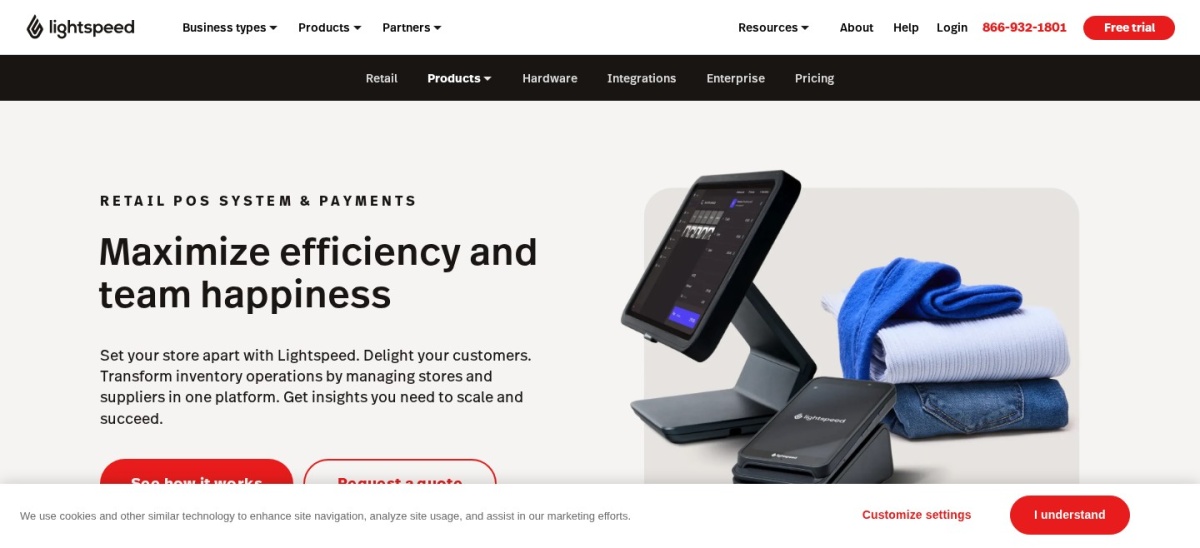
Lightspeed Retail has the deepest inventory tools here, but Basic starts at $89 a month billed yearly.
Zettle charges the lowest in-person card rate in this list at 2.29% plus 9 cents, with no monthly fee.
Four of the seven tools start at $0 a month, so a new shop can open without a software bill.
What a small retail shop needs from a POS
A small retail POS has two jobs: take payment fast at the counter, and keep track of what is on the shelves. Everything else is a bonus until the shop grows.
Card rates matter more than the monthly fee for most small shops. A shop taking $5,000 a month in cards pays about $130 in percentage fees at 2.6%, plus 15 cents per sale, before any software cost. A payment gateway is the service behind each card sale, and its fee is part of the same bill.
Inventory is where cheap tools split from dear ones. Free plans usually track stock in a basic list, while paid plans add purchase orders, variants and low-stock alerts.
Hardware is the other cost to watch. A card reader starts near $29, while a full counter kit with cash drawer and printer can pass $1,000, so start with a reader and add hardware only when the queue demands it.
Square POS is a free point-of-sale app from Square that takes in-person, online and invoice payments from one account. The free plan includes the POS app, an item library, sales reports, a basic online store and invoicing, with in-person cards at 2.6% plus 15 cents. Hardware starts with a $59 contactless and chip reader.
The trade off is that the free plan keeps inventory basic and charges the highest in-person rate in this list. Plus at $49 a month per location adds inventory management, purchase orders, loyalty and staff tools, and cuts the rate to 2.5% plus 15 cents. It suits a single-location shop that wants to start free and pay only when sales grow.
Shopify POS is the in-person selling tool for Shopify stores, so stock, orders and customer records stay in one place across the shop and the website. Basic at $39 a month includes POS Lite, which covers checkout, cash tracking, gift cards and refunds, with in-person cards at 2.6% plus 10 cents. A Tap & Chip reader costs $49.
The trade off is the add-on. POS Pro costs $89 a month per location and holds the retail features a busy shop needs, such as smart inventory, staff roles and low-stock reports. It suits a shop that already sells, or plans to sell, online through Shopify.
Lightspeed Retail is a cloud POS built for shops where stock control takes the most time, such as clothing, footwear and gift stores. Basic at $89 a month billed yearly includes one register, inventory management, basic eCommerce and integrated payments at 2.6% plus 10 cents per sale. A 14-day free trial is included.
The trade off is price. Basic is the dearest starting point in this list, and extra registers cost $59 a month each, so a second till adds up fast. It suits a shop with many variants, sizes or colours that needs stock, ordering and reporting in one system.
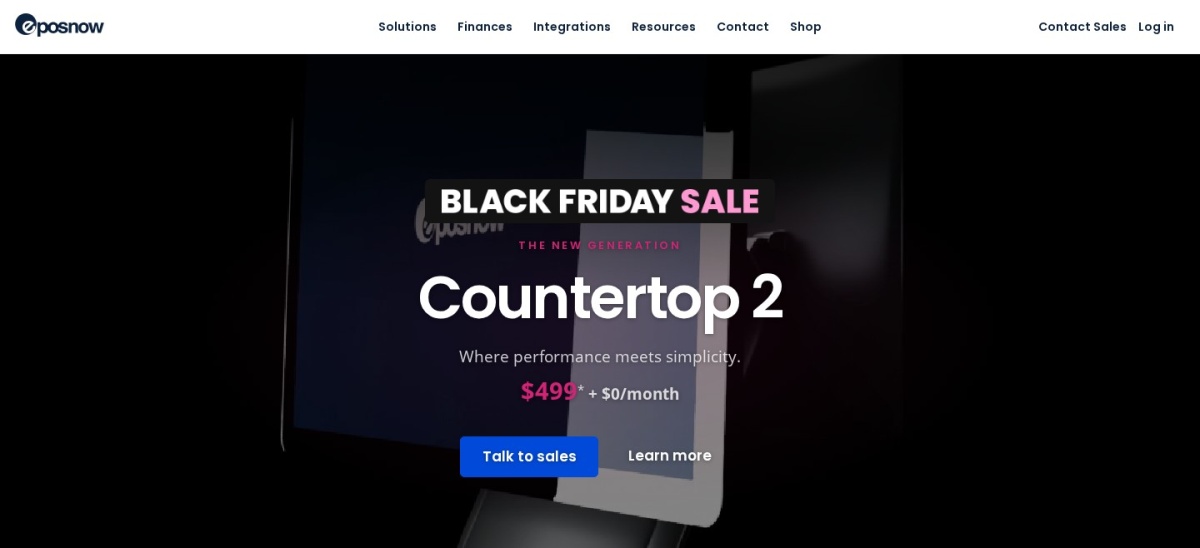
Epos Now is a cloud POS for retail and hospitality that sells software and hardware as one package. The software-only plan costs $39 a month for the first register, with extra registers at $24 each, and covers stock control, reporting and more than 100 app integrations. Card payments through Epos Now Payments cost 2.6% plus 10 cents.
The trade off is the upfront cost. The Complete Solution bundle carries a $349 upfront fee on top of the $39 monthly fee, and the US pricing page is a quote form rather than a price list. It suits a shop that wants one vendor for till, printer and software.
Clover is a POS system from Fiserv that pairs its own hardware with retail, restaurant and services software. Retail Basic costs $0 a month and covers checkout and basic sales reports, with in-person cards at 2.6% plus 10 cents. The Go card reader costs $199, and the Flex handheld costs $749.
The trade off is that useful retail features sit in paid plans. Retail Standard at $84.95 a month adds inventory, loyalty and discounts, and cuts the in-person rate to 2.3% plus 10 cents. It suits a shop that wants Clover hardware and is happy to pay for the fuller retail plan.
Zettle by PayPal, now sold as PayPal Point of Sale, is the simplest POS economics in this list. The app is free with no monthly fee, no contract and no setup cost, and in-person sales cost 2.29% plus 9 cents each. The first card reader costs $29, and Tap to Pay on a phone needs no reader at all.
The trade off is the flat rate. At 2.29% plus 9 cents with no volume discount, a shop with steady sales pays more per sale than on a paid plan elsewhere, and there is no offline mode. It suits market stalls, pop-ups and new shops that take few card sales.
SumUp is a no-contract POS aimed at small retailers, cafes and market sellers, with card readers, a handheld Terminal and a countertop Register. POS Lite is free, with in-person cards at 2.6% plus 10 cents and no monthly fee or minimum. Payouts and reporting run through the SumUp Business app.
The trade off is that the free tier is basic. Floor plans, cash drawer support and profit tracking need POS Plus at $49 a month, and the full SumUp POS starts at $99 a month. It suits a solo seller or market stall that wants to take cards with no contract.
Free plans cover the till well. Most include checkout, card payments, basic stock lists and sales reports.
Paid plans mostly add stock and staff tools. You get purchase orders, variants, low-stock alerts and staff roles.
Card rates are the quiet cost. A free plan can charge more per sale than a paid plan, so a busy shop can pay more in fees than it saves on the monthly bill.
If the shop takes more than a few card sales a day, compare the monthly fee against the rate saving before choosing free. Our WooCommerce payment gateway fees guide shows how those fees stack up.
How we chose
We started from POS tools aimed at small retailers, then kept those with a published card rate and a public review rating on G2 or Capterra.
Prices and card rates come from each vendor's pricing page or a pricing summary checked on 26 November 2026. Ratings come from G2 on the same day. Where a vendor shows a sale, the list shows the regular price.
We left out restaurant-only systems and tools with no published price or rating. No vendor paid for a place, and we do not claim to have used these tools ourselves.
How to choose a POS for a small retail shop
Start with how you sell today, then match the tool to the counter, not the other way round.
Count your card sales first. A shop taking a few card sales a week loses little to a higher rate, so a free plan wins. A busy shop should weigh the monthly fee against the rate saving.
List the stock you must track. A shop with sizes, colours or variants needs real inventory tools. A shop with a short shelf list can manage with a free plan.
Price the hardware before the software. A reader costs from $29, while a full counter kit can pass $1,000. Start with a reader and add a drawer and printer only when the queue demands it.
Check the exit cost. Ask whether the hardware works with another processor, and whether the contract locks you in. Month-to-month plans let a small shop switch if the fit is wrong.
FAQ
What is the best POS software for a small retail business?
Square is the best pick for most small retail shops. Its free plan takes cards at 2.6% plus 15 cents with no monthly fee, it is rated 4.6 out of 5 by more than 1,200 reviewers on G2, and the $59 reader keeps the start-up cost low.
How much does POS software cost for a small shop?
Four tools in this list start at $0 a month, so a new shop pays only card fees. Paid plans start at $39 a month for Shopify POS and Epos Now, $49 for Square Plus, and $89 for Lightspeed Retail Basic.
Do I need to buy POS hardware?
No. You can take contactless payments on a phone with Tap to Pay, or buy a card reader from $29. A full counter kit with cash drawer, printer and scanner costs far more, so add it only when the shop needs it.
What card rate should a small retailer expect?
Most tools in this list charge 2.3% to 2.6% plus 9 to 15 cents per in-person sale. Zettle is lowest at 2.29% plus 9 cents, while Square charges 2.6% plus 15 cents on its free plan.
Is Shopify POS good for a shop without a website?
It works, but it is poor value without one. POS Lite comes with a Shopify plan from $39 a month, and its strength is stock synced between the shop and the website. A shop with no online plans should look at Square or Epos Now first.
Can I switch POS systems later?
Yes, but hardware can lock you in. Card readers and terminals from one vendor often work only with that vendor, so check compatibility before buying. Export your product list and customer records before switching, and run the new till beside the old one for a week.
SaaS SEO and WordPress specialist with about 8 years of experience. Rakib compares WordPress plugins, themes, hosting and software using public pricing, documentation and user reviews. See how we rank.