Best Platform for SEO for Education in 2026: 7 Tools Compared
WLWPLegible EditorsLast verified 22 Nov 2026How we rank6 min read
★ Short answer
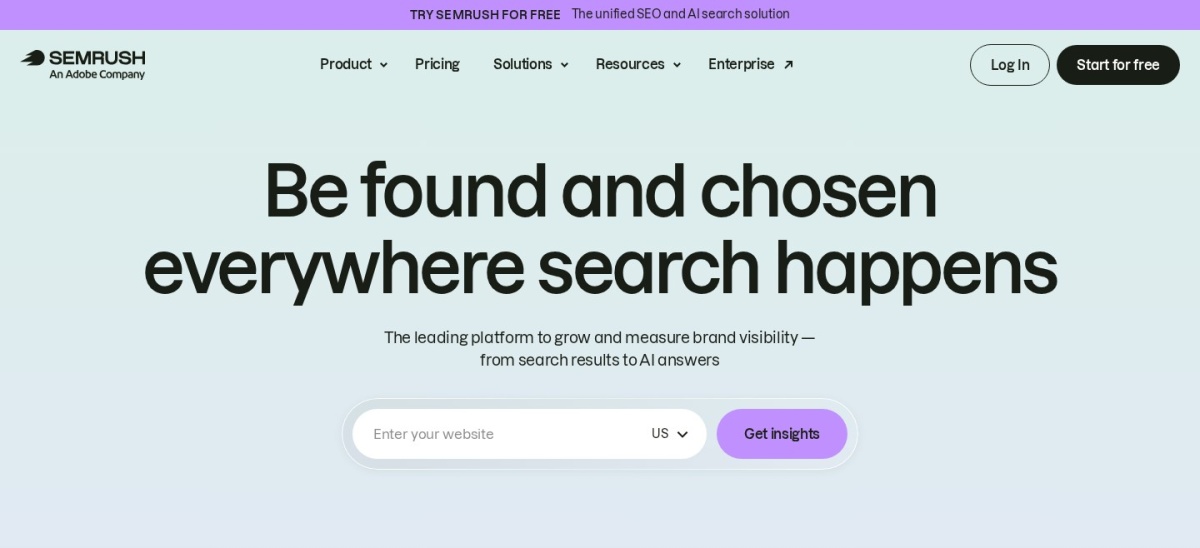
Semrush leads for SEO for education by combining daily rank tracking, site audits, and AI search visibility in one workspace starting at $139/month. For backlink depth, Ahrefs starts at $29/month on Starter, while Google Search Console gives verified search data at no cost.
How we make this list: we compare pricing pages, product documentation and public user reviews, then re-check every price before each update. No product paid for a place. Disclosure.
Semrush starts at $139/month ($117.33/month billed annually) with 500 tracked keywords and 5 websites to monitor.
Ahrefs offers a Starter plan at $29/month with 50 tracked keywords, while Lite at $129/month raises tracking to 750 keywords.
SE Ranking starts at $129/month ($103.20/month billed annually) with 2,000 daily tracked keywords and 10 projects.
Google Search Console provides first-party index and search performance reports free of charge.
Sitebulb starts at $18/month for desktop technical auditing with JavaScript crawling and visual reports.
What to look for in an SEO platform for education
Education websites—including colleges, universities, school districts, and EdTech platforms—rarely behave like small brochure sites. A single institutional domain can host course catalogs, program pages, faculty directories, campus news, and subdomains that accumulate broken links, duplicate templates, and slow pages.
Enrollment and course discovery also follow seasonal cycles. Marketing teams need reliable rank tracking across program and admissions queries, clear site health diagnostics before open houses or registration windows, and visibility into how AI answer engines summarize courses and institutions.
Many education marketing teams also split work between central digital teams, faculty editors, and external writers. A platform that fits lean staff, exports clear reports, and pairs smoothly with first-party analytics saves time without locking budgets into unused enterprise modules.
Semrush is a broad search marketing suite offering keyword research, competitor analysis, site audits, and AI search tools, with a free account and a paid SEO plan at $139/month ($117.33/month billed annually) covering 5 websites and 500 daily tracked keywords. Education teams use it to spot program keyword gaps, audit sprawling domains, and monitor brand visibility.
The trade off is that base plans include one user seat, extra users start at $45/month, and prompt tracking sits on higher or AI-focused tiers compared to the entry SEO plan at $139/month. It suits education marketing teams that want one primary suite for daily rank tracking and site audits.
What we like
Combines keyword research, rank tracking, and site auditing in one platform
Lower monthly rate when billed annually
Free tier available to test core tools
Supports multi-location and device tracking on higher tiers
Watch out for
Additional user seats cost extra per month
Large feature set can feel busy for occasional users
Entry SEO plan caps tracking at 5 websites and 500 keywords
Paid plans expand tracked keywords, monitored websites, historical data, and AI visibility tracking.Visit semrush.com
02
Ahrefs
4.5/5on G2 (725 reviews, checked Nov 2026)
Paid from$29/mo
Best for backlink research and competitor gaps
Entry planStarter ($29/mo)
Lite plan$129/mo
Starter keywords50 tracked
Lite AI checks150/mo
ahrefs.com
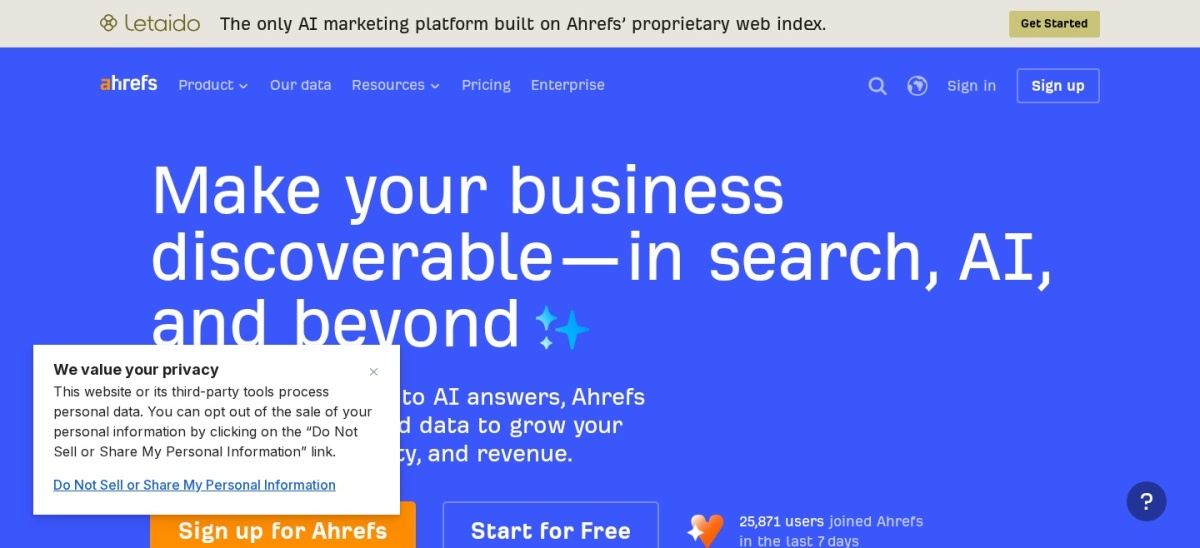
Ahrefs homepage, captured Nov 2026.
Ahrefs is a search research and site audit platform known for backlink and keyword discovery, offering a free account for verified sites and a Starter plan at $29/month with 50 tracked keywords and 100 monthly credits. Education teams use it to research academic programs, examine competitor traffic, and review inbound links.
The trade off is that Starter uses monthly credits, limits report rows, and lacks annual billing, while Lite jumps to $129/month to unlock 750 keywords and 150 AI prompt checks. It suits lean teams and researchers prioritizing backlink and topic discovery.
What we like
Low $29/month entry price on the Starter tier
Strong backlink and keyword research workflows
Free tier available for verified website owners
AI prompt tracking available starting on Lite
Watch out for
Credit-based usage limits on lower plans
Starter plan is billed monthly only with tight limits
Jump from Starter to Lite is $100/month
Upgrading to Lite and higher plans increases crawl credits, tracked keywords, historical data, and AI checks.Visit ahrefs.com
03
SE Ranking
4.8/5on G2 (1,495 reviews, checked Nov 2026)
Starts at$129/mo
Best for high-volume daily rank tracking
Entry planCore ($129/mo)
Annual billing$103.20/mo
Tracked keywords2,000 daily
Audit capacity250k pages/mo
seranking.com
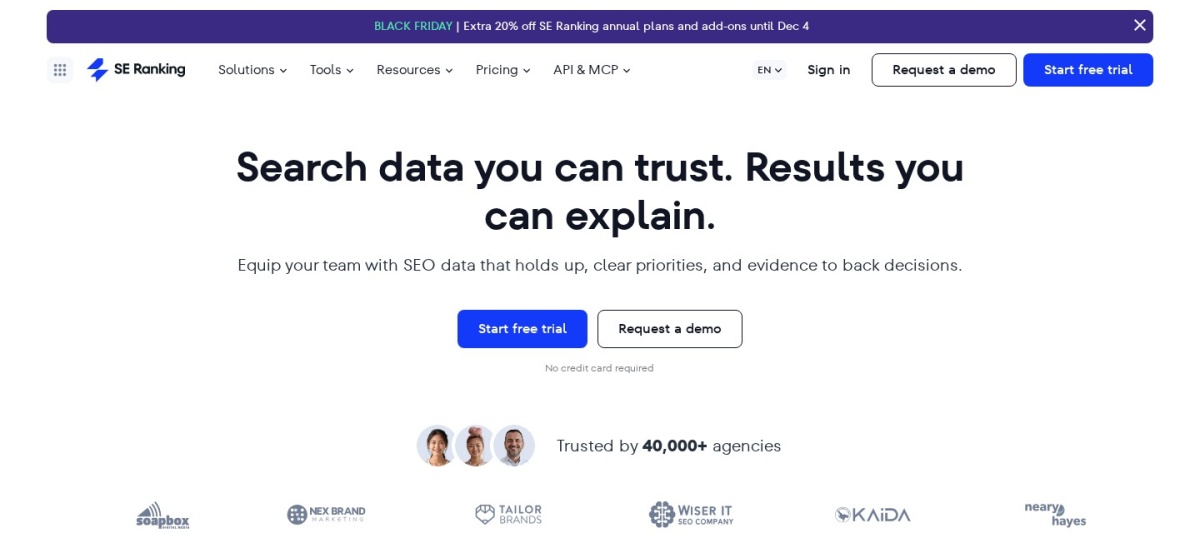
SE Ranking homepage, captured Nov 2026.
SE Ranking is an SEO platform focused on rank tracking, site audits, and reporting, starting with Core at $129/month ($103.20/month billed annually) for 10 projects, 2,000 daily tracked keywords, and 250,000 monthly audited pages. Education teams use it to monitor course keywords and share clear performance reports.
The trade off is that Core includes one manager seat and six months of historical data, requiring Growth at $279/month for three seats and lifetime history. It suits education teams that want high keyword-tracking allowances without high entry pricing.
What we like
2,000 daily tracked keywords on the Core plan
20% discount when billed annually
Integrates with Google Search Console, GA4, and Looker Studio
Optional AI visibility tracking add-on available
Watch out for
No permanent free plan (14-day trial offered)
Core includes only one manager seat
Historical data is capped at six months on Core
Higher plans and add-ons expand projects, manager seats, crawl limits, and daily AI prompt tracking.Visit seranking.com
04
Moz Pro
4.3/5on G2 (608 reviews, checked Nov 2026)
Starts at$49/mo
Best for smaller teams wanting guided SEO
Entry planStarter ($49/mo)
Standard plan$99/mo
Standard keywords300 tracked
Annual savings20% on plans
moz.com
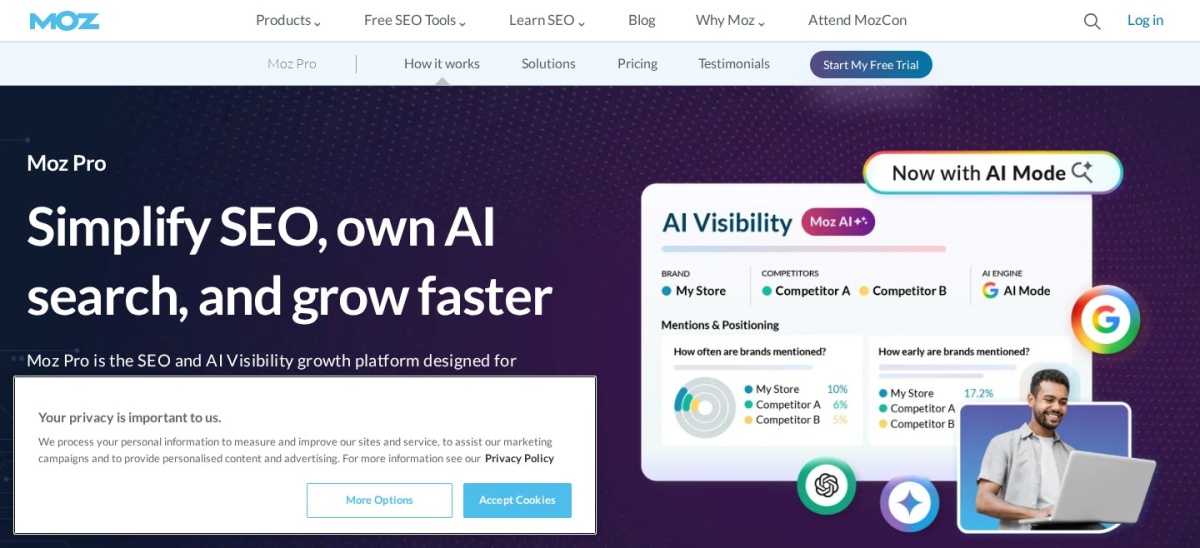
Moz Pro homepage, captured Nov 2026.
Moz Pro is an SEO toolkit covering keyword research, site crawls, link metrics, and AI visibility tracking, with an entry Starter plan at $49/month for a single website alongside Standard at $99/month ($79/month billed yearly). Education staff use it for straightforward rank monitoring and keyword planning.
The trade off is that Standard caps campaigns at three and tracked keywords at 300, while Starter is built for a single site. It suits small school or campus marketing teams that prefer approachable workflows over heavy data volume.
What we like
Starter option at $49/month for single-site management
20% annual discount on Standard, Medium, and Large plans
Clean interface and accessible SEO metrics
AI visibility dashboards and prompt tracking on higher tiers
Watch out for
Lower keyword and campaign limits on entry tiers
No permanent free tier
Less suited to large multi-catalog keyword research on base plans
Standard and higher plans add more campaigns, tracked keywords, crawl volume, and AI visibility features.Visit moz.com
05
Surfer SEO
4.8/5on G2 (547 reviews, checked Nov 2026)
Starts at$59/mo
Best for optimizing course and admissions content
Entry planDiscovery ($59/mo)
Annual billing$49/mo
Discovery docs120/yr pool
Standard seats3 team seats
surferseo.com
Surfer SEO homepage, captured Nov 2026.
Surfer SEO is a content optimization platform that scores drafts against search results and tracks AI visibility, starting with Discovery at $59/month ($49/month billed annually) for 120 annual document credits and 1 seat. Education writers use it to structure program, admissions, and guide pages.
The trade off is that Discovery includes one seat and no AI visibility tracking, while moving to Standard at $119/month ($99/month yearly) adds three seats and weekly AI prompt checks. It suits content teams focused on drafting and refining landing pages.
What we like
Guided content editor for writers and editors
Annual billing lowers Discovery to $49/month
Integrates with popular writing and browser workflows
AI prompt tracking available on Standard and above
Watch out for
No free plan
Discovery restricts access to one seat and lacks AI tracking
Not a full technical crawler or backlink suite on its own
Standard and Pro plans expand document allowances, team seats, brand workspaces, and AI prompt tracking.Visit surferseo.com
06
Sitebulb
4.5/5on G2 (13 reviews, checked Nov 2026)
Starts at$18/mo
Best for visual technical audits of large sites
Entry planLite ($18/mo)
Pro plan$42/mo
Annual discount15% off
DeploymentDesktop app
sitebulb.com
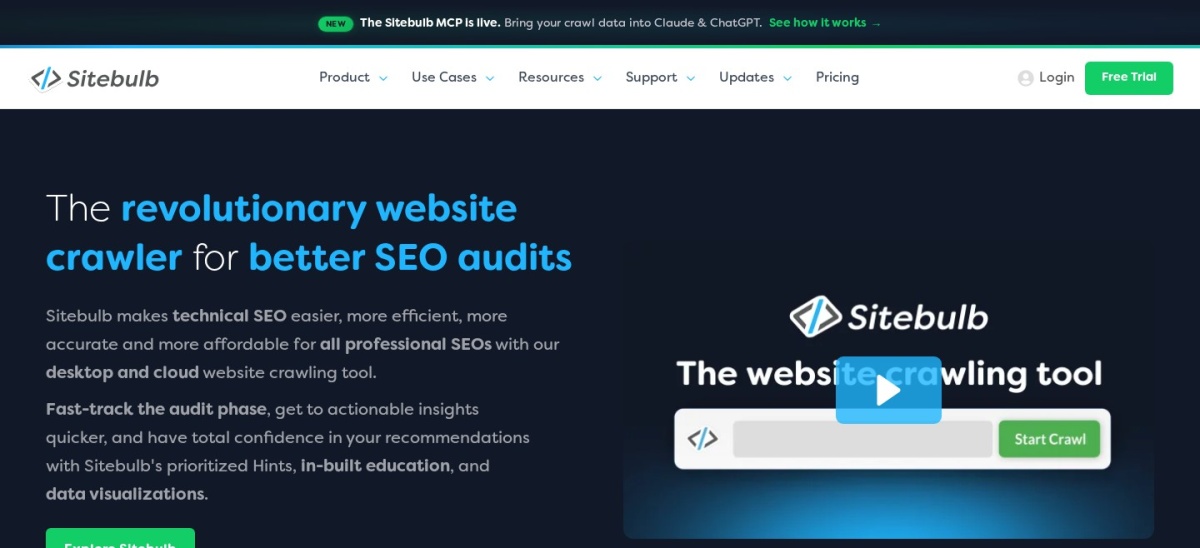
Sitebulb homepage, captured Nov 2026.
Sitebulb is a desktop website crawler that diagnoses technical SEO issues and presents visual reports, starting with Lite at $18/month for one user and Pro at $42/month with a 15% annual discount. Education teams use it to uncover broken links, redirect chains, and crawl bottlenecks across large directories.
The trade off is that desktop crawls depend on local computer resources and Lite covers a smaller hint set than Pro at $42/month. It suits technical marketers who want clear visual audit reports without enterprise software costs.
What we like
Low entry pricing starting at $18/month
Visual crawl maps and prioritized issue hints
Supports JavaScript rendering and GSC/GA integrations
15% savings on yearly plans
Watch out for
Runs on desktop hardware rather than cloud servers
No keyword research or backlink database
Lite includes fewer audit hints than Pro
Pro expands audit hints to 315 and adds deeper technical checks and reporting options.Visit sitebulb.com
07
Google Search Console
4.7/5on G2 (520 reviews, checked Nov 2026)
PriceFree
Best for free first-party Google search data
PriceFree
Data sourceGoogle Search
History window16 months
Key reportsIndexing & CWV
search.google.com
Google Search Console homepage, captured Nov 2026.
Google Search Console is a free service from Google that shows how verified websites perform in Google Search, including queries, clicks, impressions, indexing status, and Core Web Vitals. Every school, college, or education publisher can verify properties at zero cost.
The trade off is that it only covers Google Search, caps historical data at 16 months, and omits third-party keyword discovery or competitor backlink analysis. It suits every education site as a baseline alongside a research or auditing tool.
What we like
Free with no paid tier or seat limits
Direct indexing, sitemap, and Core Web Vitals diagnostics
Shows real search queries and click-through rates for your site
Connects with analytics and reporting dashboards
Watch out for
Limited to Google Search data
16-month search performance history limit
No competitor research or keyword volume estimates
All core reporting and API features are free for verified website properties with no paid upgrade.Visit search.google.com
Matching SEO tools to education teams
Small school or college teams often start with Google Search Console for free index and query monitoring, then add an affordable crawler like Sitebulb or a content optimizer like Surfer SEO when course pages or site health need attention.
Larger institutions tracking hundreds of degrees, regional campuses, and competing programs usually pair an all-round suite such as Semrush, Ahrefs, or SE Ranking with regular technical crawls.
How we chose
We selected established SEO and search visibility platforms commonly used by schools, universities, training providers, and EdTech sites, focusing on tools with current public pricing and active software maintenance.
All prices, plan limits, and review ratings were checked on 22 Nov 2026 from vendor pricing pages and public G2 review listings, using regular monthly rates before promotional discounts where applicable.
We excluded enterprise platforms that only quote custom pricing and skipped agencies or single-purpose plugins that do not match a standalone SEO platform comparison. No vendor paid for a place, and we do not claim testing for this list.
How to choose an SEO platform for education
Follow four practical steps before committing budget to an education SEO subscription.
Start with verified first-party data in Google Search Console. Confirm which program, admissions, and course URLs are indexed and check Core Web Vitals before buying extra software.
Match keyword and project limits to your institution's catalog. Count how many domains, subdomains, and course or program terms you need to track each week so you do not outgrow entry caps.
Check user seats and reporting needs for your team. Verify how many editors or marketers need access and whether you need scheduled exports or shared dashboards.
Decide whether you need content scoring or technical crawling. Pick a content optimizer if program copy is the bottleneck, or a site crawler if redirects, broken links, and large templates cause errors.
FAQ
What is the best overall platform for SEO for education?
Semrush is a strong all-round choice starting at $139/month on its SEO plan, covering keyword research, rank tracking, and site audits. Teams focused heavily on backlinks or content optimization often pair it with Ahrefs or Surfer SEO.
Can an education website run SEO for free?
Yes. Google Search Console is free for verified sites and provides query, indexing, and page experience data directly from Google. Semrush and Ahrefs also offer free tiers with restricted features.
Why do education websites need technical site audits?
Colleges, universities, and learning portals often manage large page counts, legacy redirects, PDFs, and subdomains. Technical crawlers help spot broken links, crawl blocks, and duplicate pages before admissions or enrollment peaks.
Should schools track AI search visibility alongside traditional rankings?
Yes, many students and prospective learners now ask AI tools and search engines summary questions about courses and institutions. Several platforms now include AI prompt or brand visibility tracking on paid tiers or add-ons.
Are annual plans worth it for education marketing budgets?
Annual billing can lower recurring costs—for example, Semrush reduces its SEO plan to $117.33/month and SE Ranking discounts Core by 20%. Only commit annually if your team will use the seats and tracking limits all year.
Do education teams need an all-in-one suite or specialized tools?
Small teams often prefer one suite to keep workflows simple, while larger teams may combine a keyword or rank tracker with a dedicated crawler or content editor. Start with your main bottleneck—research, site health, or content drafting.