Best Platform for Content for Manufacturing in 2026: 9 Tools Compared
WLWPLegible EditorsLast verified 23 Nov 2026How we rank12 min read
★ Short answer
Storyblok is the best platform for content for manufacturing for most teams, with a visual editor that lets marketers update product pages without developer help and Growth at $99 a month for 5 seats. Pick Sanity for the lowest paid entry at $15 a seat, or Contentful for many brands and locales.
How we make this list: we compare pricing pages, product documentation and public user reviews, then re-check every price before each update. No product paid for a place. Disclosure.
Storyblok is the top pick: a visual editor marketers can use, Growth at $99 a month for 5 seats, rated 4.5 out of 5 on G2.
Sanity is the cheapest paid entry at $15 a seat a month, and it holds the highest G2 rating here at 4.7 out of 5.
Contentful is the enterprise standard at $300 a month, but the free plan is for non-commercial use only.
HubSpot Content Hub suits teams already on HubSpot CRM, but Starter caps the site at 30 website pages.
Bynder and Adobe Experience Manager publish no prices; both are custom quotes, so budget for a sales conversation.
What a manufacturing content platform should cover
Manufacturing content is two jobs at once. Marketing content wins orders: product pages, spec sheets, landing pages and dealer portals. Technical content keeps products legal and usable: manuals, service guides and safety sheets. Most teams need a platform for the first job and a specialist tool for the second.
A headless CMS suits manufacturers because product content is structured data: names, specs, prices, certifications and translations. One content model can feed the website, the dealer portal, the app and the printed catalogue without copying text between systems.
Price shapes the choice more than features do. Paid entry in this list runs from $15 a seat a month for Sanity to a $300 a month flat fee for Contentful, while Bynder and Adobe Experience Manager quote every deal. Our guide on headless WordPress vs traditional WordPress explains when going headless pays off.
Check the free plan limits before you build on one. Contentful bans commercial use on its free plan, Strapi Cloud has no free plan at all, and Hygraph caps its free plan at 1,000 entries.
The 9 best platforms for content for manufacturing
01
Storyblok
4.5/5on G2 (597 reviews, checked Nov 2026)
Paid from$99/mo
Best for marketers editing product pages
Visual editorYes, in context
Free planStarter, 1 space
Growth seats5 seats included
Paid planGrowth, $99/mo
storyblok.com
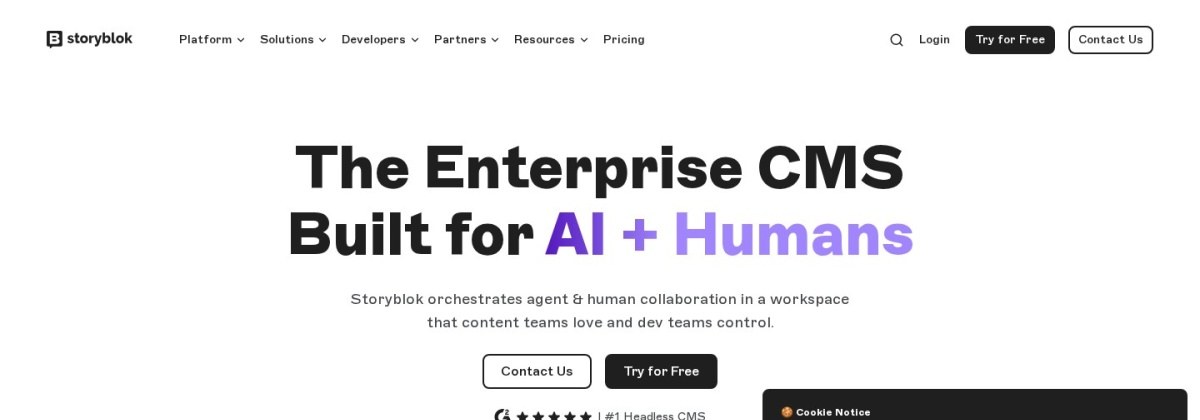
Storyblok homepage, captured Nov 2026.
Storyblok is a headless content platform with a visual editor that shows the page as it is built. Marketers can change a product page, a spec sheet or a landing page without waiting on a developer, and content lives in structured blocks that keep product names, images and copy consistent across the website, the dealer portal and the app.
The trade off is the step up in price. Growth at $99 a month covers 5 seats, 1 million API requests and 400 GB of traffic, while a sixth seat costs $15 a month and extra locales cost $20 each. It suits manufacturing marketing teams where marketers, not developers, will do the daily editing.
What we like
Visual editor lets marketers change product pages without a developer
Structured blocks keep product data consistent across channels
Free Starter plan with 1 space, 100,000 API requests and 100 GB of traffic
AI credits come with every plan for drafting and translation
Watch out for
A sixth seat costs $15 a month on top of Growth
Single sign-on sits on the custom-priced Premium plan
Priced per space, so each site is a separate space
Growth Plus adds scheduling and an uptime SLA at $349 a monthVisit storyblok.com
02
Sanity
4.7/5on G2 (967 reviews, checked Nov 2026)
Paid from$15/seat/mo
Best for developer-led teams on a budget
Free planUp to 20 seats
Growth$15/seat/mo
Real-time editingYes, with live cursors
Datasets2, public on Free
sanity.io
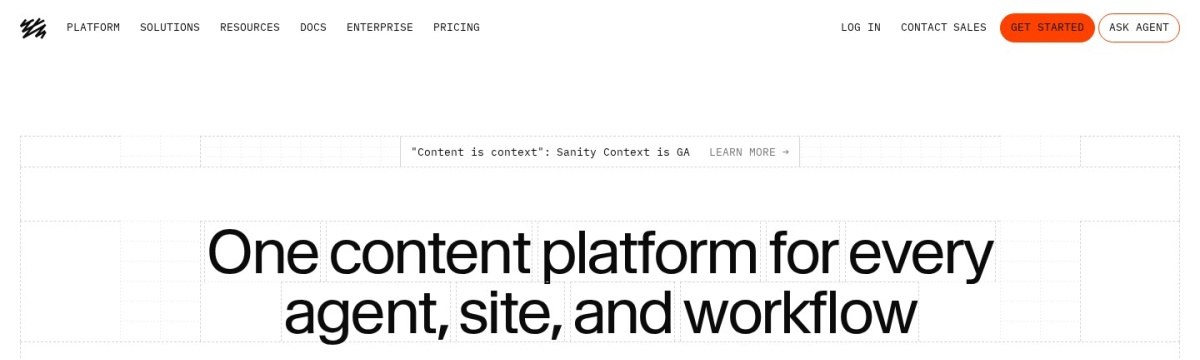
Sanity homepage, captured Nov 2026.
Sanity is a structured content platform where the editing studio is built in code and content is stored as queryable data. The free plan covers up to 20 seats and 10,000 documents with public datasets, and Growth at $15 a seat a month adds private datasets, more roles and pay-as-you-go usage instead of hard caps. Viewers are always free.
The trade off is that the bill follows headcount. Five paid seats cost $75 a month and 20 cost $300, before API, bandwidth and asset overages, and the code-shaped editor means a team without developers moves slower than on Storyblok. It suits manufacturers where developers lead the content work and the team wants the lowest paid entry price.
What we like
Cheapest paid entry in this list at $15 a seat a month
Highest G2 rating here at 4.7 out of 5
Real-time collaboration with visible cursors
Viewers are always free, so the whole plant can read content
Watch out for
Per-seat billing grows with the team
API, bandwidth and asset overages sit on top of the seat price
Needs developers to shape the editing studio
Enterprise adds custom roles and API-level permissions by quoteVisit sanity.io
03
Contentful
4.3/5on G2 (399 reviews, checked Nov 2026)
Paid from$300/mo
Best for many brands and locales
Free planNon-commercial only
Lite users20 users
Lite locales3 locales
Lite API calls1M a month
contentful.com
Contentful homepage, captured Nov 2026.
Contentful is the most established headless platform in this list, with the broadest app marketplace and the cleanest model for running many brands, sites and languages from one hub. Lite at $300 a month covers 20 users, 3 locales, 1 million API calls and 100 GB of CDN bandwidth, with scheduled publishing, comments and tasks for editorial teams.
The trade off is the jump from free to paid. There is no plan between Free and the $300 Lite, Lite still ships with only a Starter Space of 10,000 records, and a larger Lite Space costs another $850 a month. It suits larger manufacturers running several brands or a dozen locales from one content hub.
What we like
Most mature headless platform in this list
Broadest app marketplace, with 200+ apps for commerce, PIM and translation
Scheduled publishing, comments and tasks come with Lite
Content models, roles and locales scale across many brands
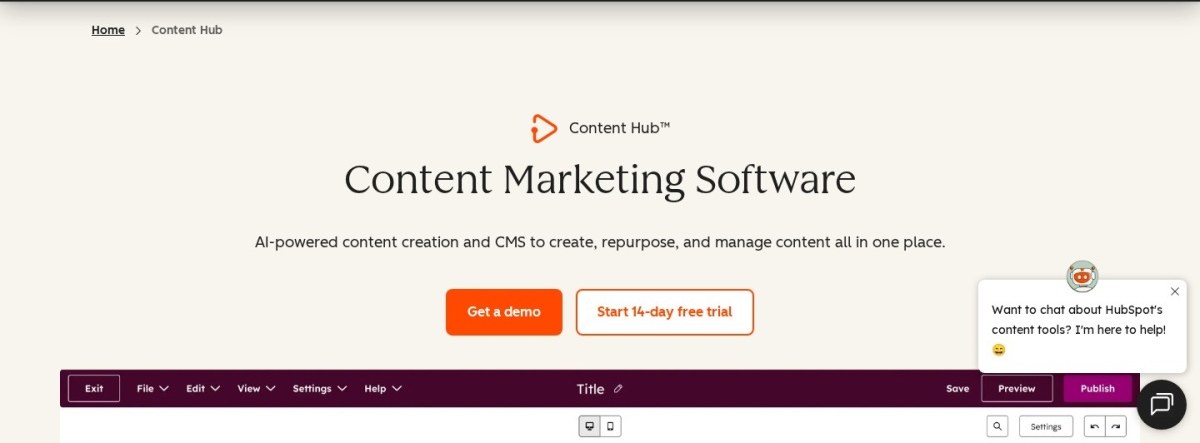
HubSpot Content Hub is the content platform for manufacturers already running HubSpot CRM. The website, blog and landing pages live in the same system as contacts, deals and quotes, so every page can be traced back to revenue. Starter at $20 a seat a month includes AI content tools that draft and remix posts from one brief.
The trade off is page count. Starter allows 30 website pages and 30 landing pages, so a manufacturer with a large product catalogue outgrows it and faces Professional from $500 a month. The $7 a month annual figure on the pricing page is a new-customer offer, not the standard price. It suits teams where the CRM already runs the business and the site is small.
What we like
CRM-native analytics tie every page back to contacts and revenue
AI content tools draft and remix posts from one brief
Free tools let a team start without paying
No onboarding fee on Content Hub
Watch out for
Starter caps the site at 30 website pages
Smart content and A/B testing need Professional at $500 a month
Priced per seat, so more editors raise the bill
Professional adds smart content, A/B testing and memberships at $500 a monthVisit hubspot.com
05
WordPress.com
4.4/5on G2 (2,717 reviews, checked Nov 2026)
Paid from$40/mo
Best low-cost workhorse for a company website
Free planYes
Business storage50 GB
Business$40/mo, $25 annual
BackupsReal-time, one-click restore
wordpress.com
WordPress.com homepage, captured Nov 2026.
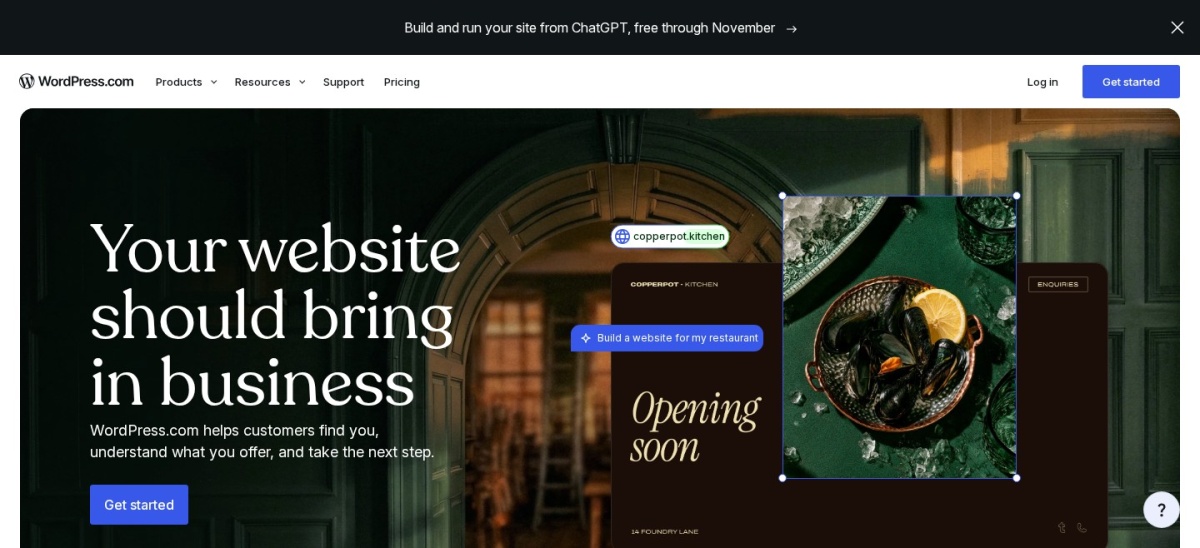
WordPress.com is the familiar workhorse in this list: a hosted WordPress site where hosting, security, updates and the CDN come with the plan. Business at $40 a month billed monthly adds staging, real-time backups, SFTP, WP-CLI and 24/7 priority support, and more than 60,000 plugins cover product catalogues, quote forms and dealer locators.
The trade off is renewal pricing. The $25 a month annual figure is a first-year price and Business renews at $28 a month on annual billing, and every site needs its own plan, so a second brand site doubles the bill. It suits a manufacturer that wants a proven website fast and cheap.
What we like
Hosting, security, updates and CDN included in the plan
More than 60,000 plugins for catalogues, forms and locators
Staging and real-time backups on Business
Free plan to start, with paid plans from $9 a month
Watch out for
Renewal price is higher than the first-year price
Each site needs its own plan
Deep custom development still needs a developer
Personal starts at $9 a month and can now install plugins tooVisit wordpress.com
06
Strapi
4.5/5on G2 (206 reviews, checked Nov 2026)
Paid from$35/mo
Best open-source control without a big contract
Community EditionFree, self-hosted
Cloud Starter$35/project/mo
Cloud API requests100K a month
APIsREST and GraphQL
strapi.io
Strapi homepage, captured Nov 2026.
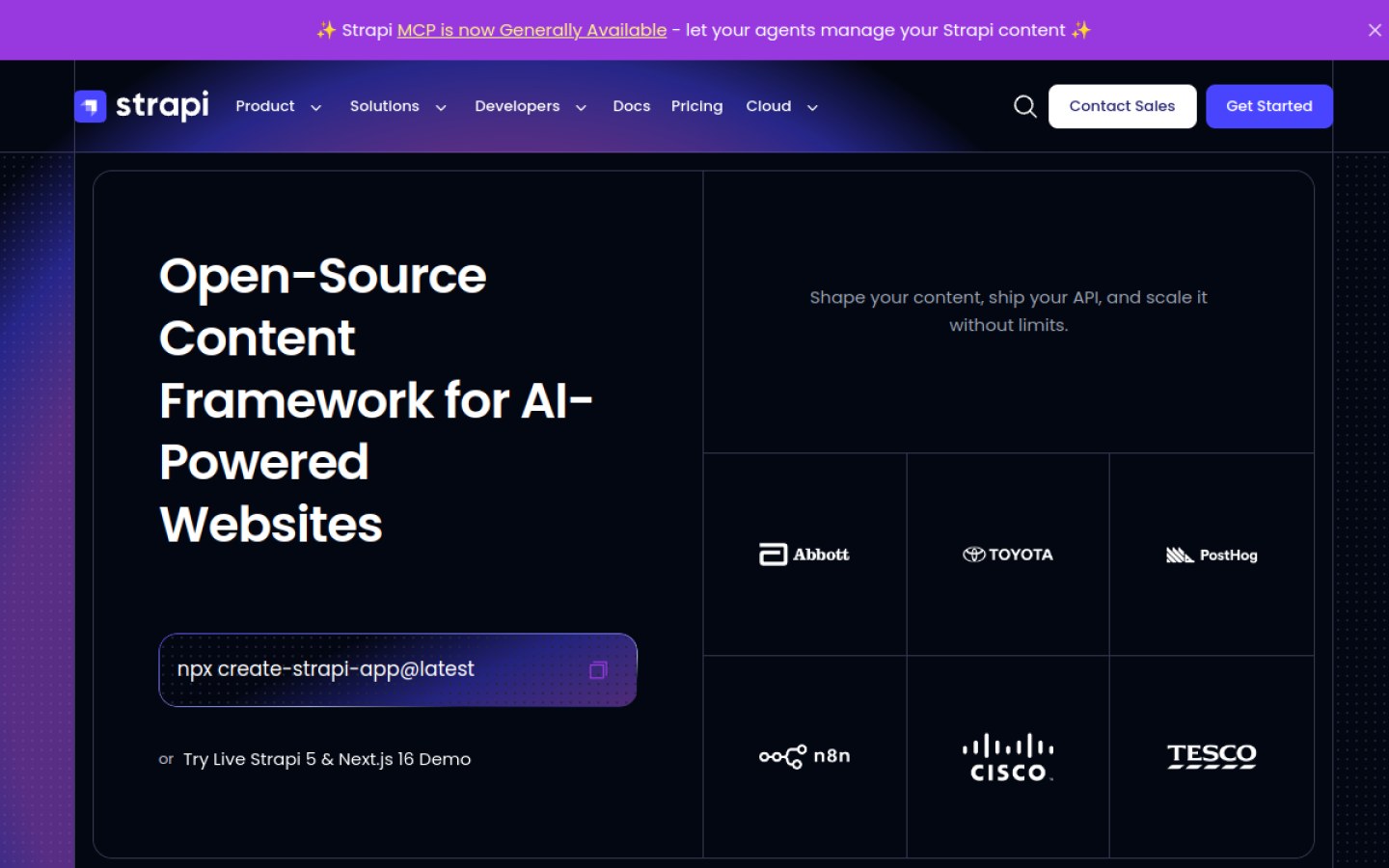
Strapi is the open-source option in this list. The Community Edition is free to self-host with no seat or content limits, and Cloud Starter at $35 a project a month covers hosting, database, storage, CDN and SSL. Pricing is per project, not per seat, so the whole team can edit without the bill moving.
The trade off is ownership. Self-hosting means a developer runs hosting, backups and upgrades, and major-version upgrades can carry breaking changes. Strapi Cloud also dropped its free plan in August 2026, so managed hosting starts at $35. It suits teams with developers that want control without an enterprise contract.
What we like
Free self-hosted edition with no seat or content limits
Per-project pricing, so adding editors never raises the Cloud bill
REST and GraphQL APIs come out of the box
Admin panel builds itself from your content types
Watch out for
Self-hosting means you run hosting, backups and upgrades
Breaking changes between major versions make upgrades a real project
No free plan on Strapi Cloud
Cloud Pro adds always-on runtime at $90 a project a monthVisit strapi.io
07
Hygraph
4.4/5on G2 (734 reviews, checked Nov 2026)
Paid from$199/mo
Best for product data from ERP and PIM systems
Free planHobby, 3 seats
Growth$199/mo
Growth seats10 seats
Remote sources1 on Growth
hygraph.com
Hygraph homepage, captured Nov 2026.
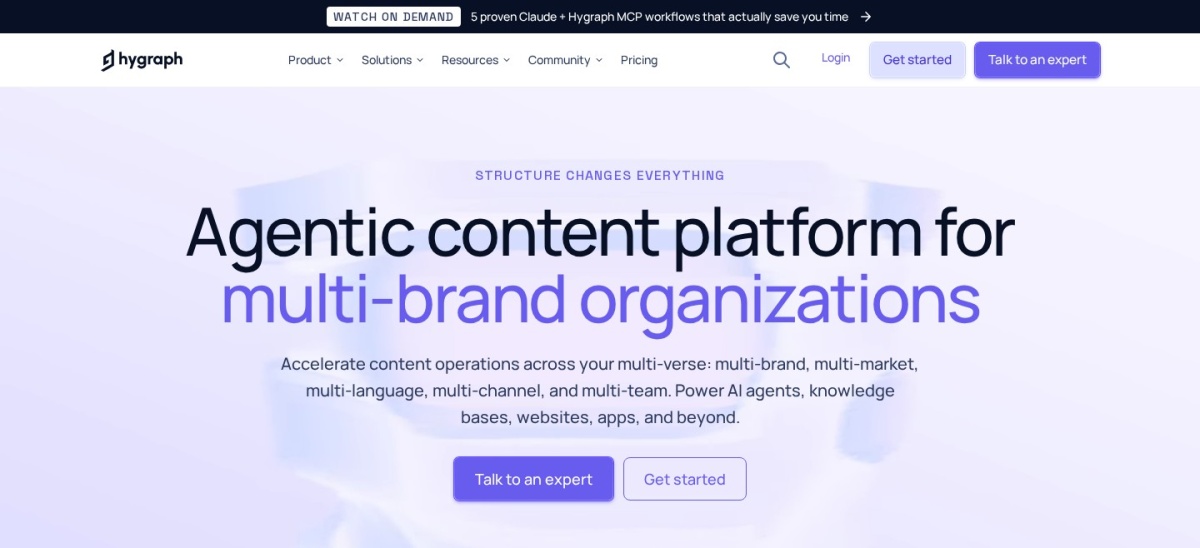
Hygraph is the GraphQL-native headless CMS, and its Content Federation is the feature that matters most to manufacturers. It pulls product data from ERP, PIM and other systems into one API, so the website shows live stock, prices and specs without copying data into a second system. Growth at $199 a month covers 10 seats, 3 locales, 10,000 entries and 1 million API operations.
The trade off is that federation is gated. Growth includes only one remote source, and real multi-system federation needs custom-priced Enterprise, while $199 a month costs more than Sanity or Storyblok for the same team. It suits manufacturers whose product data already lives in several systems.
What we like
Content Federation pulls ERP and PIM data into one GraphQL API
GraphQL-native from the start, so queries fetch only the fields needed
Free Hobby plan covers 3 seats, 1,000 entries and 500,000 API calls a month
Transparent overage rates at $0.20 per 10,000 API operations
Watch out for
Only one remote source on Growth
Costs more than Sanity or Storyblok for the same team
Single sign-on, custom roles and an uptime SLA sit on Enterprise
Enterprise adds SSO, audit logs and uptime SLAs by quoteVisit hygraph.com
08
Bynder
4.5/5on G2 (1,292 reviews, checked Nov 2026)
PricingCustom/yr
Best for large photo, video and CAD libraries
Free planNo, demo only
PricingCustom quote
G2 rating4.5 from 1,292 reviews
ModulesDAM, workflow, portals
bynder.com
Bynder homepage, captured Nov 2026.
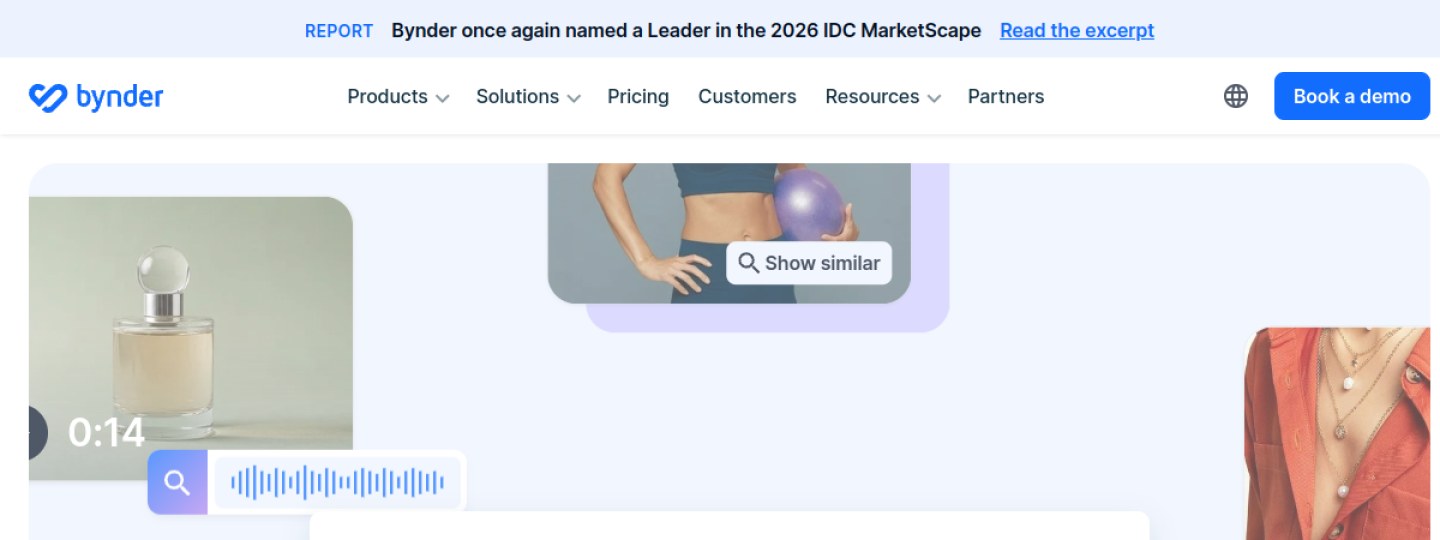
Bynder is the digital asset manager in this list, and it solves a different problem from the CMS tools: where the product photos, videos, CAD files and brand assets live, and who is allowed to use them. AI search and auto-tagging find the right file fast, and taxonomy, permissions and rights management keep dealers and distributors on approved assets only.
The trade off is price and scope. Bynder publishes no price list, so every deal is a custom quote, and the core DAM is the base while Content Workflow, Creative Workflow and Analytics are separate add-ons. It suits manufacturers with large asset libraries that need brand control across dealers and distributors.
What we like
AI search and auto-tagging find the right file fast
Permissions and rights management keep dealers on approved assets
Brand guidelines, templates and portals sit in the same system
Rated 4.5 out of 5 on G2 from 1,292 reviews
Watch out for
No published price; every deal is a custom quote
Modules add up fast on top of the core DAM
No free plan, only a demo on request
Ask for the full module list in writing before signingVisit bynder.com
09
Adobe Experience Manager
4.2/5on G2 (691 reviews, checked Nov 2026)
PricingCustom/yr
Best enterprise suite for Adobe shops
Free planNo
PricingCustom quote
SuiteSites, Assets, forms
ImplementationAbout 6 months (G2)
adobe.com
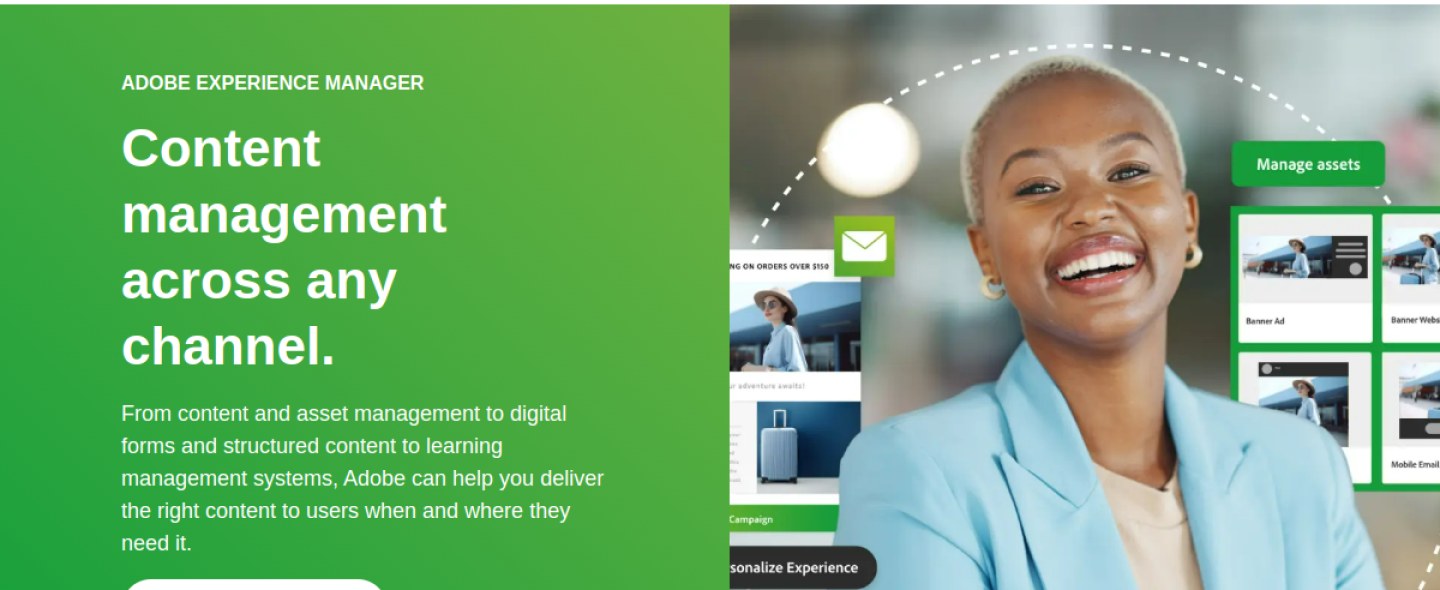
Adobe Experience Manager homepage, captured Nov 2026.
Adobe Experience Manager is the enterprise suite in this list: Sites for content, Assets for digital asset management, plus forms and personalisation, all in one platform with Adobe-managed cloud hosting. It fits manufacturers already on Adobe tools that need multi-site, multi-language delivery from one system.
The trade off is cost and weight. Pricing is a custom enterprise contract with no self-serve plan, reviewers report implementation taking about 6 months, and smaller teams find the cost hard to justify without dedicated developers. It suits large manufacturers already invested in the Adobe ecosystem.
What we like
Sites and Assets in one suite with forms and personalisation
Multi-site and multi-language delivery from one system
Deep workflow and approval controls for regulated content
Adobe-managed cloud hosting
Watch out for
Custom quote only, with no self-serve plan
Implementation takes about 6 months
Needs dedicated developers to run well
Get implementation and licence costs quoted togetherVisit adobe.com
Marketing content vs technical content: pick for the job you publish most
A marketing CMS will mangle a 400-page manual, and a documentation system will bore your prospects. Pick the platform for the content type you publish most.
If manuals dominate, look at structured documentation tools such as MadCap Flare or Paligo instead of this list. They reuse one component across hundreds of publications and cut translation work.
Most manufacturers need both. Run the website on one of the nine tools above and keep manuals in a documentation system, linked from the product pages.
How we chose
We started from the content platforms manufacturers actually buy: headless CMS tools, hosted website platforms and digital asset managers with a track record in industrial marketing.
Prices come from each vendor's pricing page, checked on 23 November 2026. Ratings and review counts come from G2 on the same day. Where a vendor shows a sale or a new-customer offer, the list shows the regular list price.
We left out tools with no published price history we could check and tools built only for technical documentation. No vendor paid for a place, and we do not claim hands-on testing for this list.
How to choose a content platform for manufacturing
Match the platform to who edits content every day, then to where your product data lives.
Count your editors and sites. Per-seat pricing like Sanity suits small teams, while flat pricing like Storyblok suits a marketing team of five or more.
Decide who edits daily. If marketers edit product pages, pick a visual editor such as Storyblok or HubSpot. If developers lead, Sanity or Strapi give more control.
Map where product data lives. If specs and stock sit in ERP or PIM systems, Hygraph federation keeps one source of truth. If data lives in the CMS, any headless tool works.
Price the second year, not the first. Check renewal prices and add-on modules before you sign, and ask Bynder and Adobe Experience Manager for implementation costs in the same quote.
FAQ
What is the best platform for content for manufacturing?
Storyblok is the best pick for most manufacturing marketing teams. Its visual editor lets marketers update product pages without developer help, Growth costs $99 a month for 5 seats, and it holds a 4.5 out of 5 rating on G2 from 597 reviews.
What is the cheapest content platform for manufacturers?
Sanity is the cheapest paid entry here at $15 a seat a month on Growth, with a free plan covering up to 20 seats. Strapi Community Edition is free to self-host, but you run the hosting, backups and upgrades yourself.
Do any of these tools handle technical manuals?
Not well. These nine cover marketing content such as product pages and landing pages. For manuals and service guides, use a structured documentation tool that reuses components across publications.
Is HubSpot Content Hub good for manufacturers?
Yes, if the business already runs HubSpot CRM, because pages, contacts and deals live in one system. Starter caps the site at 30 website pages, so a large product catalogue needs Professional from $500 a month.
Why do Bynder and Adobe Experience Manager show no price?
Both sell custom enterprise contracts with no published price list. Expect a sales conversation, and ask for implementation, training and add-on module costs in the same quote.
Can I start free and upgrade later?
Yes for seven of the nine tools. Storyblok, Sanity, Contentful, HubSpot, WordPress.com, Strapi and Hygraph all offer a free plan or free edition, though Contentful bans commercial use on its free plan.