Sectigo Certificate Manager is the best PKI management software for most teams, rated 4.5 out of 5 from 199 G2 reviews. Keyfactor Command suits the largest estates, while EJBCA is the best free private CA and ZeroSSL is the cheapest paid start at $9.99 a month.
How we make this list: we compare pricing pages, product documentation and public user reviews, then re-check every price before each update. No product paid for a place. Disclosure.
Sectigo leads with 199 G2 reviews at 4.5 out of 5, the most in this list.
Four of the 9 tools publish no price at all: Sectigo, Keyfactor Command, AppViewX and Venafi.
DigiCert is the only enterprise vendor with a published starting price: $40 per seat, 25-seat minimum.
EJBCA and Smallstep are free to self-host, and ZeroSSL is the cheapest paid start at $9.99 a month.
AWS Private CA costs $400 per CA per month, or $50 in short-lived mode, plus per-certificate fees.
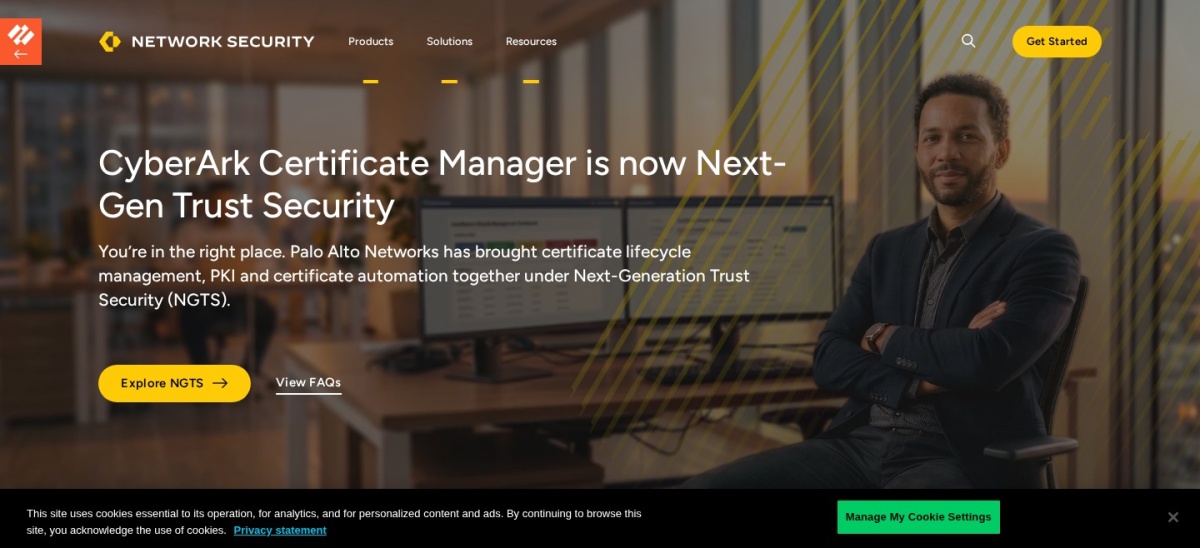
Venafi is now Palo Alto Networks Next-Generation Trust Security, with a 2,000-instance minimum.
What PKI management software should cover
PKI management software tracks every certificate in an estate: what it covers, when it expires, and who issued it. Without it, teams find expired certificates only when a site or service stops working.
The main split is public versus private certificates. Public certificates come from authorities such as Sectigo and DigiCert and are trusted by browsers, while private certificates from tools such as EJBCA, Smallstep and AWS Private CA are only trusted inside your own systems.
Automation matters more than dashboards. Look for discovery that finds certificates you forgot about, ACME support for renewals, and policy controls on key types and validity periods. Our guide on how much an SSL certificate costs shows what the certificates themselves cost.
Most enterprise tools in this list publish no price. Expect a quote based on certificate count, and ask for the minimum commitment in writing before you compare totals.
Short certificate lifetimes are coming. Public TLS validity drops to 200 days in March 2026 and 47 days by March 2029, so manual renewal will not keep up.
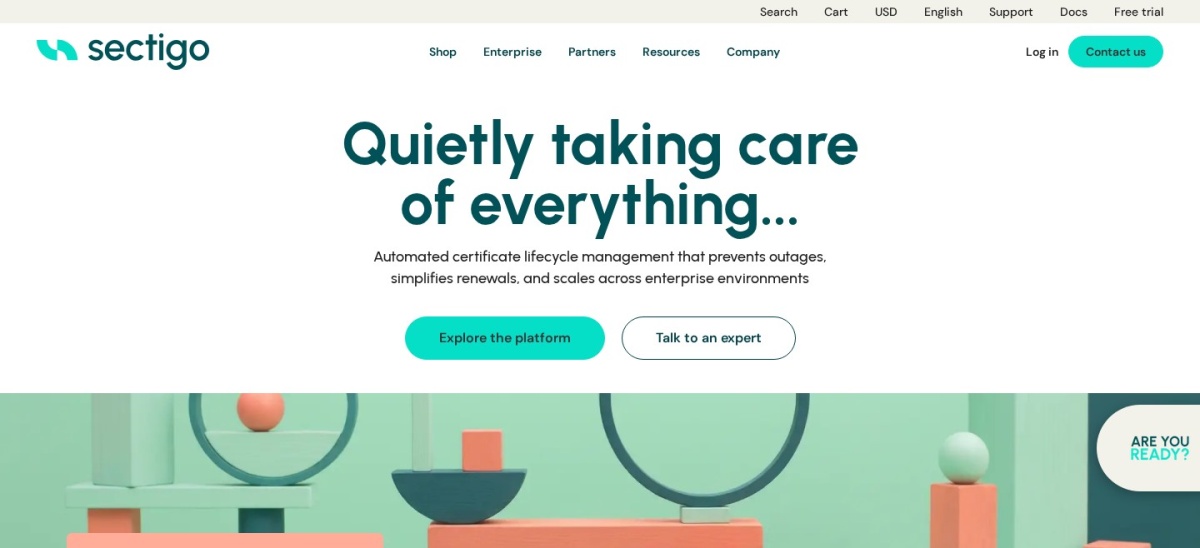
Sectigo Certificate Manager homepage, captured Nov 2026.
Sectigo Certificate Manager is the highest-rated enterprise CLM platform in this list, with a 4.5 out of 5 G2 rating from 199 reviews. It combines certificate discovery, issuance, automated renewal and revocation in one console, and it is backed by Sectigo's own public CA, so public certificates and lifecycle management come from one vendor.
The trade off is price. The platform fee is quote only, so you cannot budget without a sales conversation, although Sectigo lists single-domain DV certificates from $120 a year. It suits teams that already buy Sectigo certificates and want lifecycle automation on top.
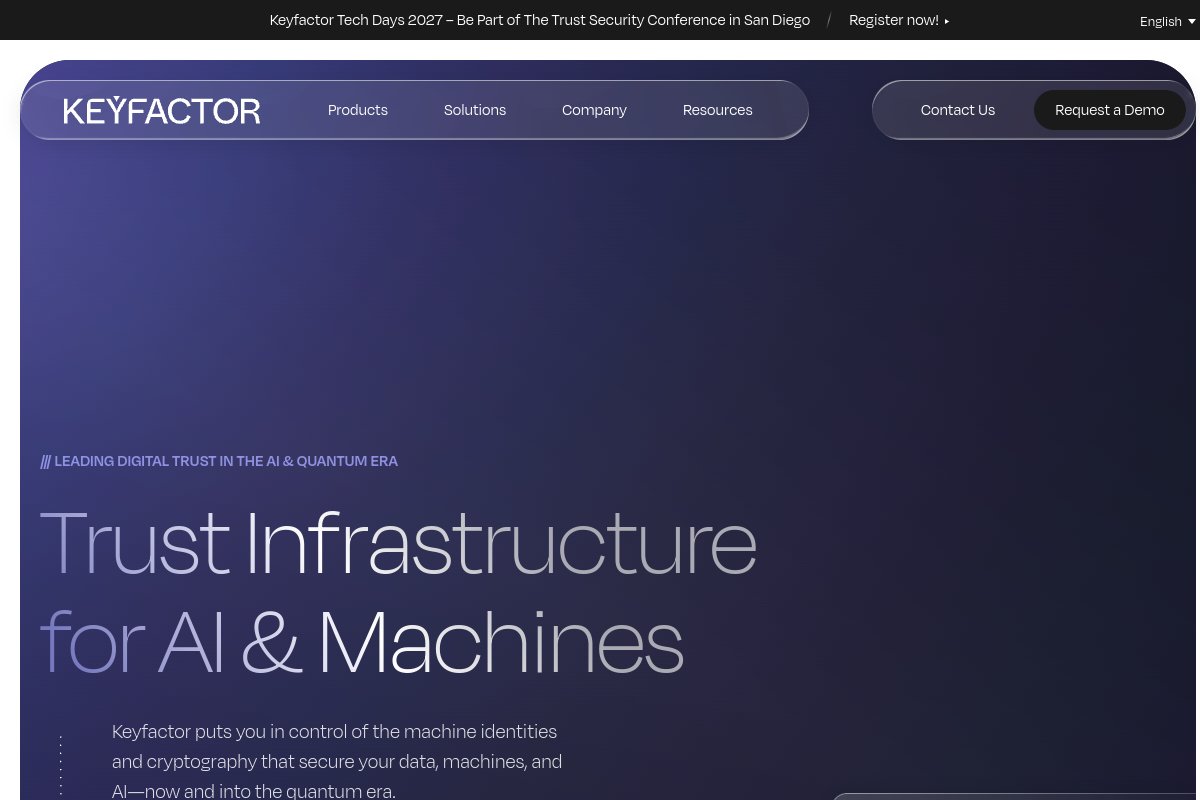
Keyfactor Command is the enterprise standard for certificate lifecycle management, rated 4.5 out of 5 from 87 G2 reviews. It discovers certificates across networks, cloud services and endpoints, tracks expiry, automates renewal and enforces policy on which certificates can be issued and by whom.
The trade off is price and effort. Command is quote only with no published figures, and G2 reviewers note that deployment and customisation can need extra work and support. It suits large teams with thousands of certificates and the staff to run it.
DigiCert ONE is the platform behind DigiCert's certificate management, rated 4.3 out of 5 from 91 G2 reviews. It covers public certificates, private PKI through Trust Lifecycle Manager, and IoT device certificates, with fast issuance and a central dashboard that reviewers praise for ease of use.
The trade off is price. DigiCert lists Trust Lifecycle Manager Essentials at $40 per seat with a 25-seat minimum, while Advanced and Premium tiers are quote only, and reviewers call it one of the most expensive options. It suits teams that issue DigiCert certificates and want one vendor for the whole estate.
AppViewX AVX ONE CLM, formerly CERT+, manages certificates across SaaS, PKI as a service and on-premises deployments, rated 4.5 out of 5 from 44 G2 reviews. It discovers certificates, automates the full lifecycle without locking you to one CA, and enforces policy on crypto standards across hybrid environments.
The trade off is price and setup time. All three deployment options are quote only, and G2 reports an average implementation time of about 4 months. It suits enterprises that run certificates in several clouds and data centres and need one policy everywhere.
Keyfactor EJBCA is the most widely used open-source certificate authority, rated 4.5 out of 5 from 39 G2 reviews. Community Edition is free under an open-source licence, and it issues and manages certificates for servers, devices and IoT hardware with broad support for enrolment protocols such as ACME and SCEP.
The trade off is expertise. EJBCA is powerful but complex, reviewers note a steep learning curve and a dense interface, and production deployments need the quote-only Enterprise edition with support. It suits teams with PKI skills that want full control of their own CA.
AWS Certificate Manager homepage, captured Nov 2026.
AWS Certificate Manager issues and auto-renews free public certificates for AWS services, and it is rated 4.5 out of 5 from 58 G2 reviews. AWS Private CA adds a fully managed private CA at $400 per CA per month in general-purpose mode, or $50 in short-lived mode, plus per-certificate fees from $0.75 each.
The trade off is lock-in. Private CA only makes sense if your workloads run on AWS, private certificates are not publicly trusted, and a root plus an intermediate counts as two CAs, so the bill doubles. It suits AWS teams that need internal certificates without running CA hardware.
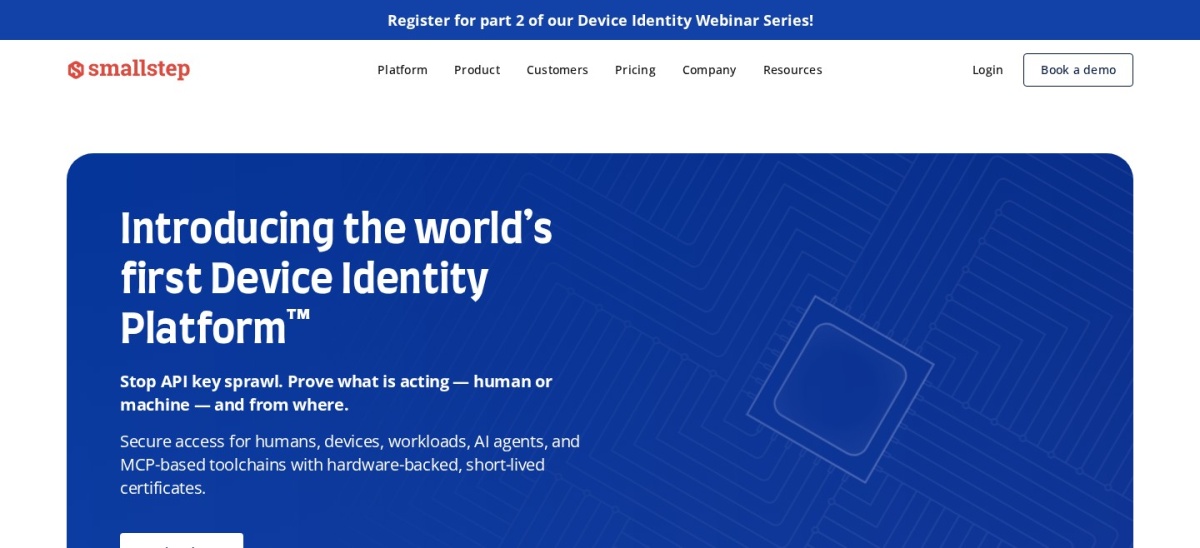
Smallstep is the modern choice for teams that want a private certificate authority without enterprise complexity, rated 4.2 out of 5 from 10 G2 reviews. step-ca is free open-source software that runs a private CA, and the hosted Certificate Manager adds device identity, SSH certificates and ACME automation with a free tier for small teams.
The trade off is price clarity. The hosted Certificate Manager is quote only and billed per endpoint-month, and G2 reviewers call the price concerning for larger deployments. It suits developers and small teams that need internal certificates and mutual TLS without a sales process to start.
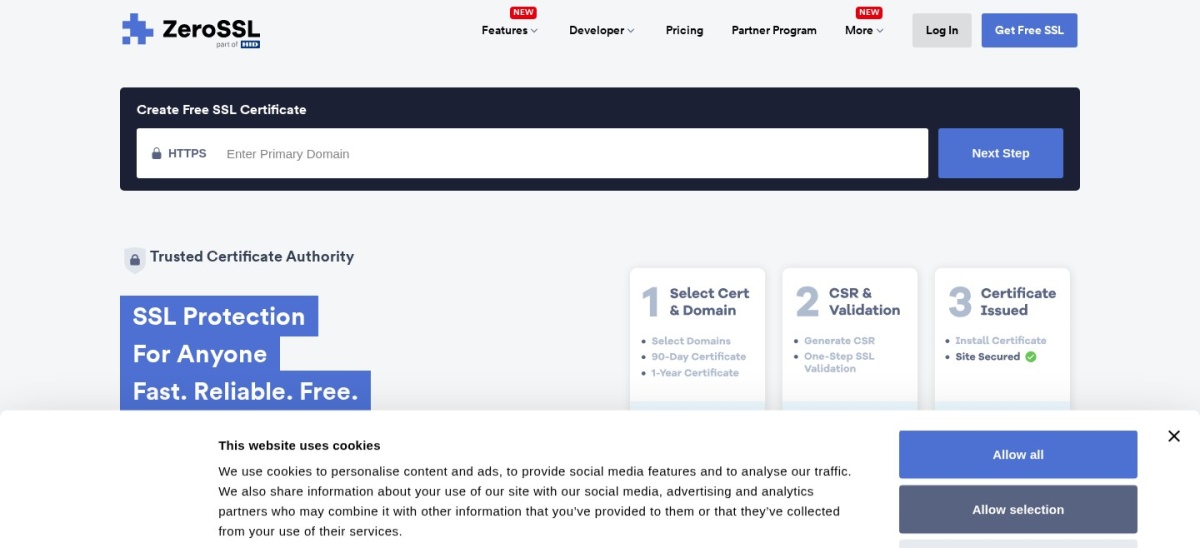
ZeroSSL is the cheapest paid start in this list, rated 4.4 out of 5 from 83 G2 reviews. The free tier issues three 90-day certificates, and Basic at $9.99 a month adds 1-year certificates, ACME automation, a REST API and a management console for tracking certificates across sites.
The trade off is depth. ZeroSSL issues and renews certificates, but it is not a full enterprise CLM platform, free certificates last only 90 days, and wildcard certificates need a paid plan. It suits small sites and developers that need cheap, automated certificates without an enterprise contract.
Venafi Trust Protection Platform homepage, captured Nov 2026.
Venafi Trust Protection Platform is the long-time reference for enterprise machine identity management, rated 4.4 out of 5 from 4 G2 reviews. It governs TLS certificates, code-signing keys and SSH credentials across large estates, and it is now sold by Palo Alto Networks as Next-Generation Trust Security.
The trade off is scale and churn. Pricing is quote only with a minimum of 2,000 certificate instances, the product has changed hands twice in two years, and the G2 rating rests on only 4 reviews. It suits very large enterprises, especially those already running Palo Alto Networks gear.
Most enterprise tools in this list publish no list price, and the rest charge by seats, certificates or devices, so headline prices rarely compare directly.
Ask every vendor the same three questions: the minimum purchase, what counts as a billable unit, and what renewal costs after year one.
Free and open-source tools cover the software, not the work. Budget staff time for setup, upgrades and key ceremonies, or pay for the hosted version.
How we chose
We started from the G2 Certificate Lifecycle Management category and the best-known PKI vendors, then kept tools with a public G2 rating and a live product page.
Prices come from each vendor's pricing page, checked on 25 November 2026. Ratings and review counts come from G2 on the same day. Where a vendor shows no price, the list shows Quote instead of an estimate.
We left out tools with no public rating and tools that only sell certificates without managing them. No vendor paid for a place, and we do not claim to have used these tools ourselves.
How to choose PKI management software
Start by counting your certificates, then match the tool to where they live.
Count certificates and where they live. Discovery only helps if it finds the forgotten ones. List public website certificates, internal services, devices and IoT hardware before you shortlist.
Decide public, private, or both. Public certificates need a public CA such as Sectigo or DigiCert. Internal services need a private CA such as EJBCA, Smallstep or AWS Private CA.
Check automation before the dashboard. The tool should renew certificates without manual work, support ACME, and plug into your cloud, Kubernetes and DevOps tools.
Get the minimum in writing. Ask for the minimum purchase, the billable unit and the renewal price. Quote-only tools can look cheap until the first invoice arrives.
FAQ
What is the best PKI management software?
Sectigo Certificate Manager is the best pick for most teams. It is rated 4.5 out of 5 from 199 G2 reviews, the most in this list, and it pairs a public CA with lifecycle automation in one console.
How much does PKI management software cost?
Most enterprise platforms are quote only, with third-party estimates in the tens of thousands of dollars a year. Published prices start at $9.99 a month for ZeroSSL, $40 per seat for DigiCert Essentials, and $400 per CA per month for AWS Private CA.
What is the difference between a public CA and a private CA?
A public CA issues certificates that browsers and devices trust by default, which is what public websites need. A private CA issues certificates that only your own systems trust, which is what internal services, devices and machine identities need.
Is there free PKI management software?
Yes. EJBCA Community Edition and Smallstep step-ca are free open-source certificate authorities, and ZeroSSL issues three free 90-day certificates. AWS Certificate Manager issues free public certificates for integrated AWS services, while its Private CA is paid.
Do I still need PKI software if I use free certificates?
Yes, if you have more than a handful. Free certificates expire every 90 days, and the work is tracking, renewing and deploying them before they lapse. A PKI tool automates that cycle and finds certificates issued by other teams.
What happened to Venafi?
CyberArk acquired Venafi in October 2024, and Palo Alto Networks completed its acquisition of CyberArk in February 2026. The product is now sold as Palo Alto Networks Next-Generation Trust Security, and venafi.com redirects to the Palo Alto Networks site.
SaaS SEO and WordPress specialist with about 8 years of experience. Rakib compares WordPress plugins, themes, hosting and software using public pricing, documentation and user reviews. See how we rank.