Quicken is the best personal finance software for most people, covering budgeting, bills, investments and tax reports from $53.88 a year with a 4.3 out of 5 G2 rating. Pick Monarch for the cleanest household dashboard at $99.99 a year, or YNAB at $109 a year if a strict budgeting method is what finally works for you.
How we make this list: we compare pricing pages, product documentation and public user reviews, then re-check every price before each update. No product paid for a place. Disclosure.
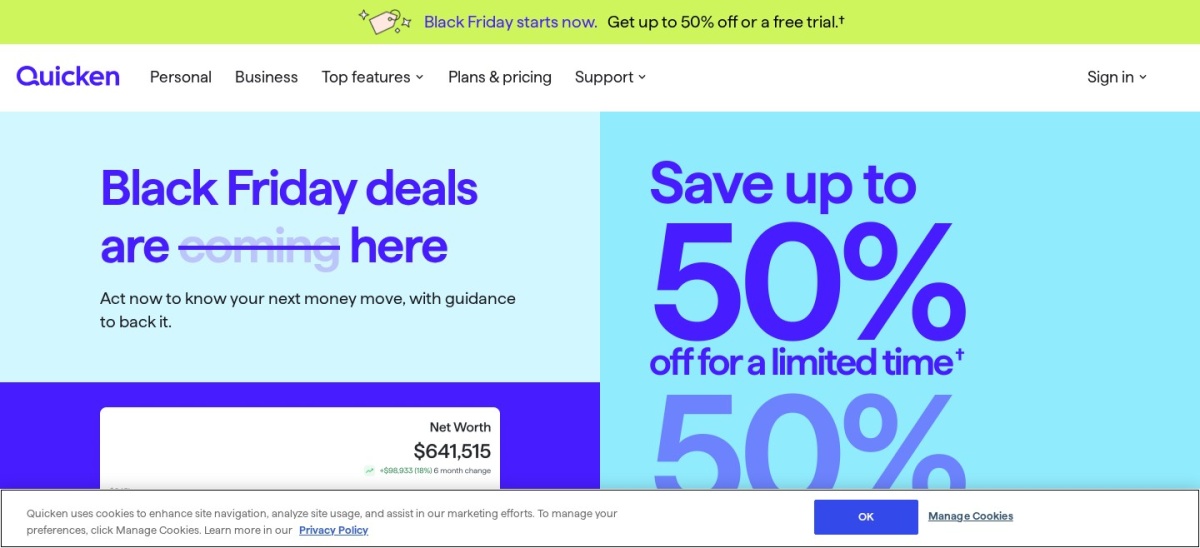
Quicken covers the most ground: budgets, bills, investments, tax reports and rental tools, from $53.88 a year for Starter.
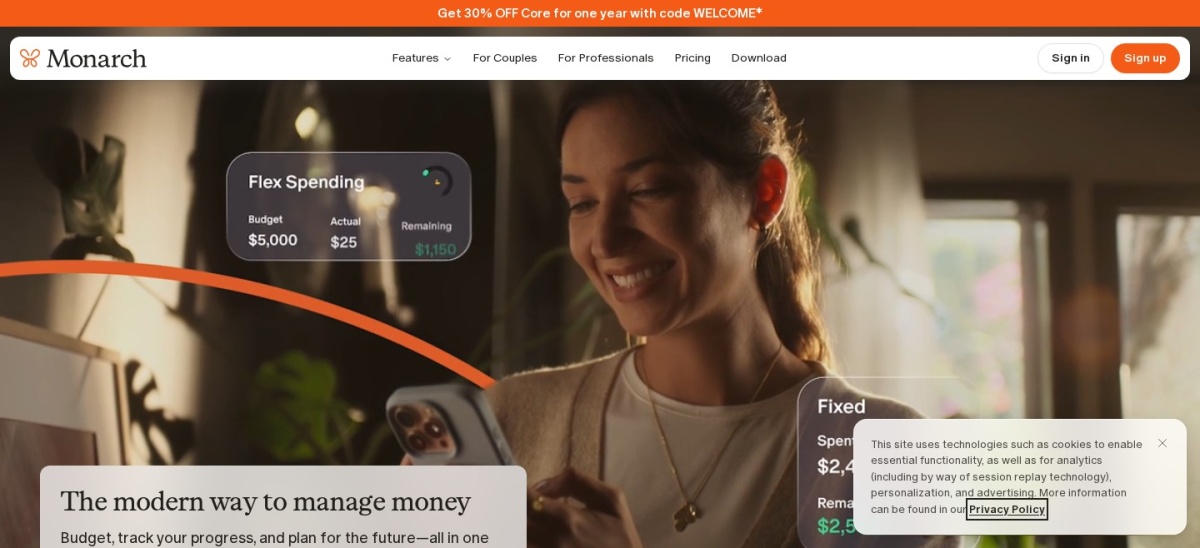
Monarch is the cleanest household dashboard, with partner sharing included at $99.99 a year for Core.
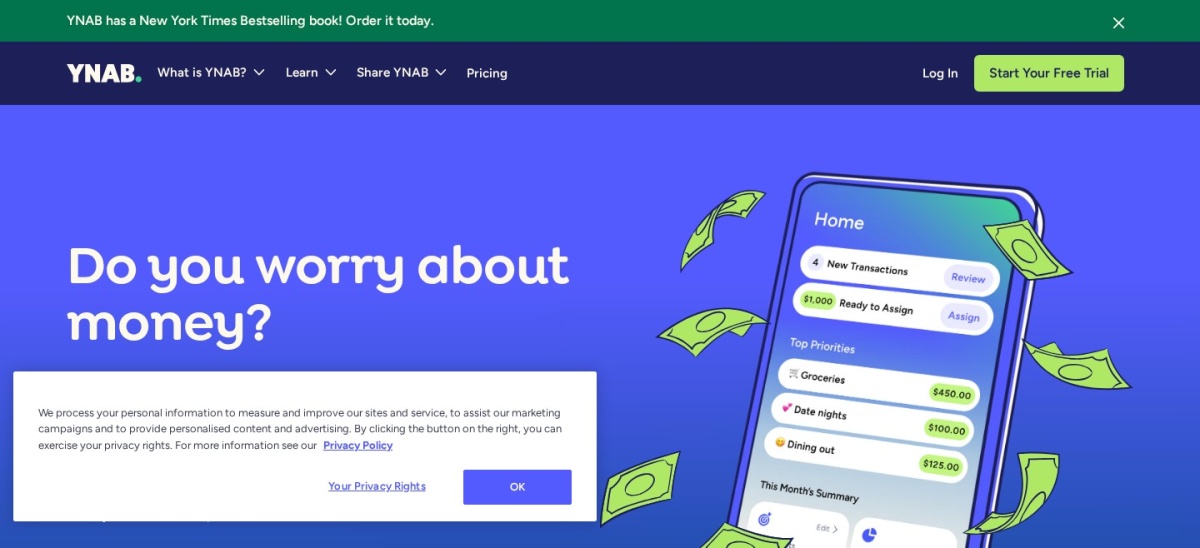
YNAB is the strictest method: every dollar gets a job, at $109 a year after a 34-day free trial.
Empower is the only free dashboard here, with net worth, retirement planning and a fee analyzer at $0.
Three ratings rest on very few reviews: Monarch (3), Tiller (2) and Goodbudget (2), so treat those scores as thin evidence.
Paid plans run from $53.88 to $119.88 a year; Rocket Money Premium starts at $7 a month on a sliding scale.
What personal finance software should cover
Personal finance software pulls bank, card, loan and investment accounts into one place, then turns that feed into budgets, bills and a net worth figure.
The tools here split into two kinds: dashboards that track what already happened, and planners that tell money where to go before the month starts. Most people need one of each job done, not two apps.
Bank sync is the feature that decides whether you keep using the app. Free plans that need manual entry work, but only if you enter transactions every few days.
Budgeting for a household works the same way as budgeting for any project: list the fixed costs first, then give the rest a job. Our WordPress website budgeting guide shows the same fixed-first method applied to a site.
Quicken is the longest-running personal finance software in this list, a desktop program for Windows and Mac that keeps your data file on your own computer. Starter at $53.88 a year covers bank sync, budgets, bills and spending reports across more than 14,000 institutions.
The trade off is the subscription. There is no free plan, and investment tracking needs Deluxe at $83.88 a year, while Premier adds tax reports and bill pay. It suits people who want one program for budgets, investments and tax, and who prefer desktop software to a phone app.
Monarch is a household dashboard that pulls checking, savings, cards, loans and investments into one view, with flexible budgets, goals and a net worth tracker on top. Core costs $99.99 a year and includes a partner login at no extra cost.
The trade off is price and the short trial. There is no free plan, the 7-day trial needs a payment method, and the Plus tier at $199.99 a year holds the forecasting tools. It suits couples and households that want one shared view of budgets, bills and net worth.
YNAB is a zero-based budgeting app, short for You Need A Budget, that asks you to give every dollar a job before you spend it. Bank sync, spending targets and loan payoff planning are included, and one subscription can be shared with up to six people.
The trade off is the effort. The method needs a weekly check-in and has a learning curve, and there is no free plan after the 34-day trial. It suits people who want budgeting to change what they spend, not just report it.
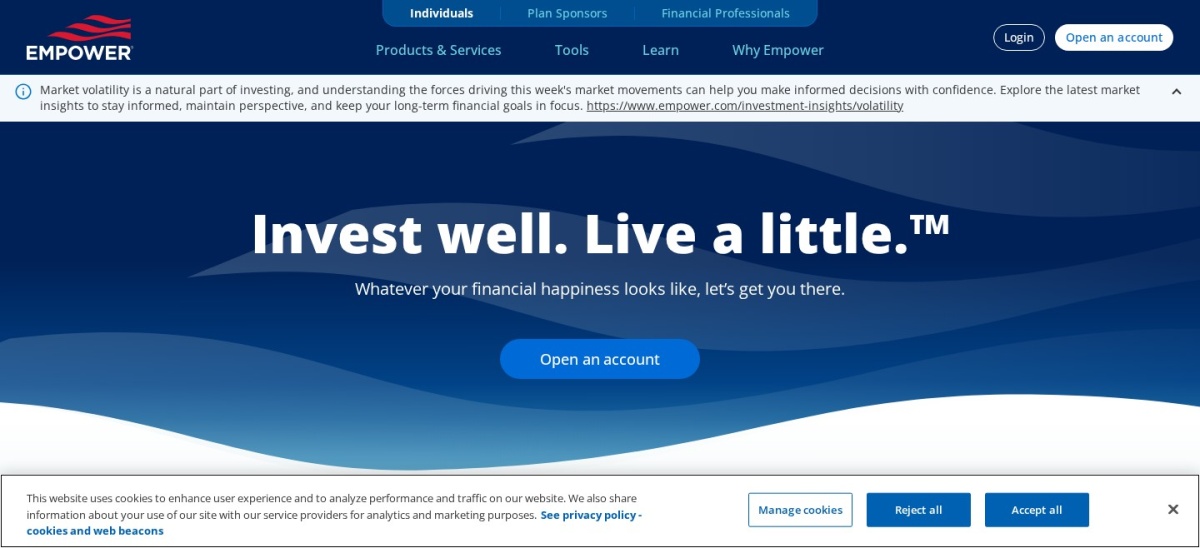
Empower is a free dashboard, formerly Personal Capital, that links bank, brokerage, retirement and loan accounts in one view. It tracks net worth over time and adds a retirement planner and a fee analyzer for investment accounts.
The trade off is the upsell. The dashboard is free, but Empower will offer its paid wealth service, which charges 0.89% a year with a $100,000 minimum. It suits people who want investment and net worth tracking without paying for a budget.
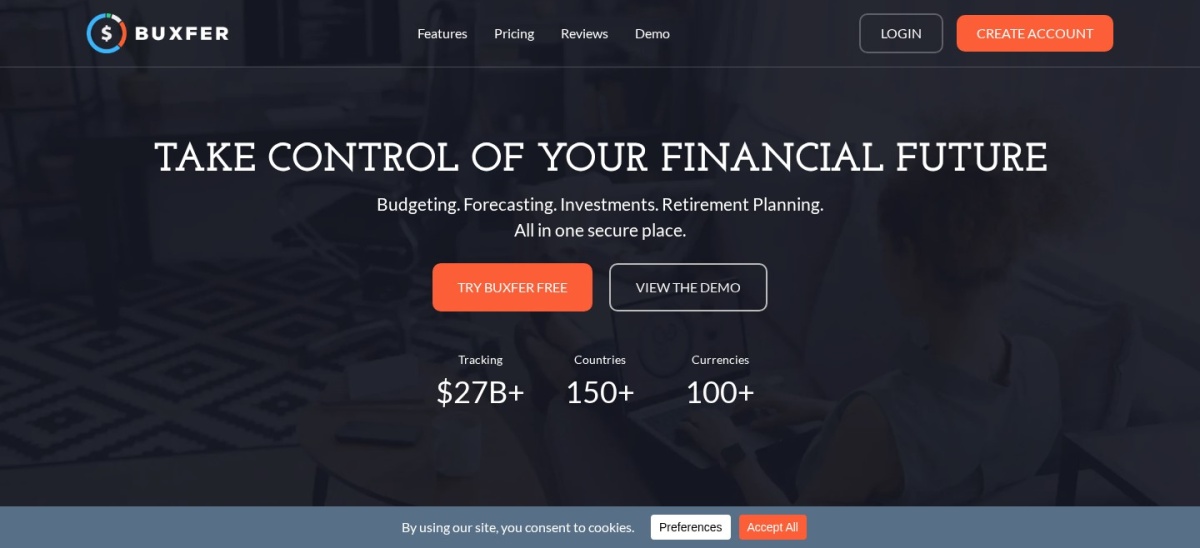
Buxfer is a web-based money manager that covers budgets, bill reminders, investments and retirement planning in one place. Plus costs $7.99 a month billed annually and adds automatic bank sync, automatic tagging and multi-currency accounts.
The trade off is the price rise. Buxfer dropped its free tier and raised Plus from $3.99 a month, so older reviews quote lower prices. It suits people who want forecasting and multi-currency tracking without paying over $100 a year.
4/5on Trustpilot (4,249 reviews, checked Nov 2026)
Paid from$7/mo
Best for finding forgotten subscriptions
Cheapest planPremium from $7/mo
Free planYes
Subscription cancelPremium
Bill negotiationPremium+ $15/mo
rocketmoney.com
Rocket Money homepage, captured Nov 2026.
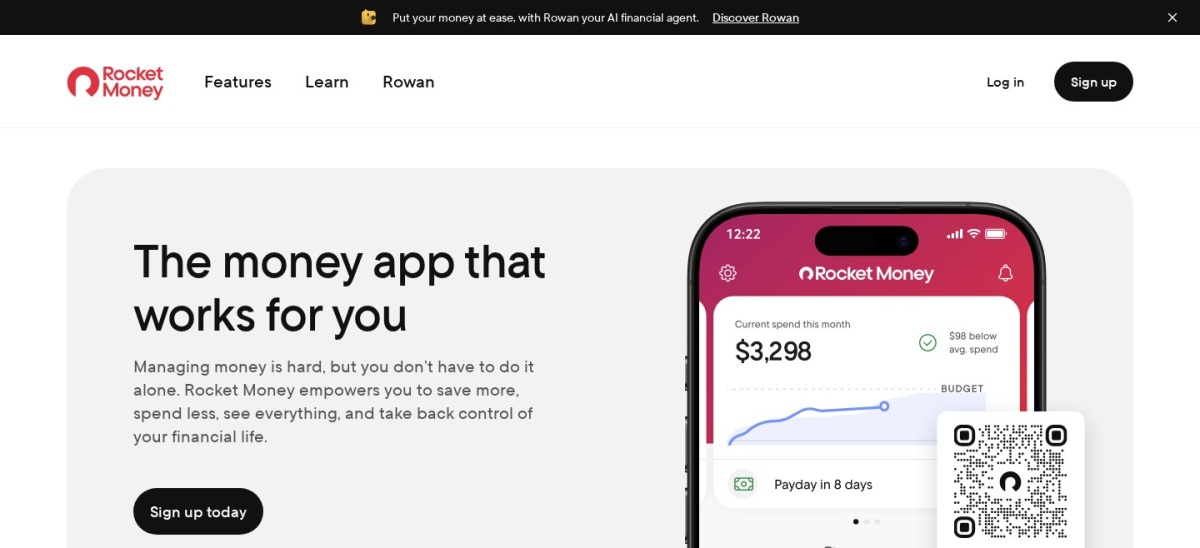
Rocket Money is a money app that links your accounts, lists every recurring bill and subscription, and cancels the ones you no longer want. The free tier tracks subscriptions and sends bill alerts, while Premium typically costs $7 to $14 a month.
The trade off is the sliding price. Premium has no single list price, and bill negotiation moved to Premium+ at $15 a month on 2 November 2026, with no success fee. It suits people whose main leak is subscriptions they forgot they pay for.
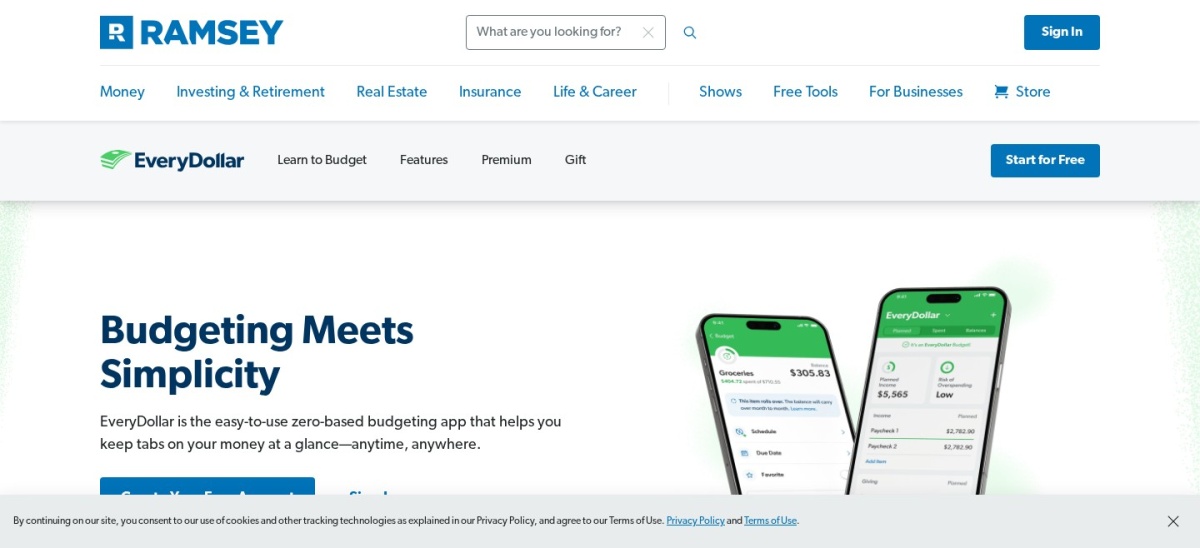
EveryDollar is a zero-based budgeting app from Ramsey Solutions, built around the Baby Steps debt plan. The free plan covers manual budgeting with unlimited categories, sinking funds and bill due dates, while Premium at $79.99 a year adds bank connections and reports.
The trade off is the free plan. Bank sync is paid, so free users enter transactions by hand, and the app follows one money philosophy throughout. It suits people who want a free zero-based budget and like the Ramsey method.
Tiller is a data feed, not a budgeting app in the usual sense: it writes your bank transactions and balances into a Google Sheets or Excel file every day. The $99-a-year plan includes the Foundation Template, rule-based categorizing and a daily email of new activity.
The trade off is the format. There is no phone app of its own, so you budget in a spreadsheet, and Excel needs a Microsoft 365 subscription. It suits people who already run their money in a sheet and want to own their data.
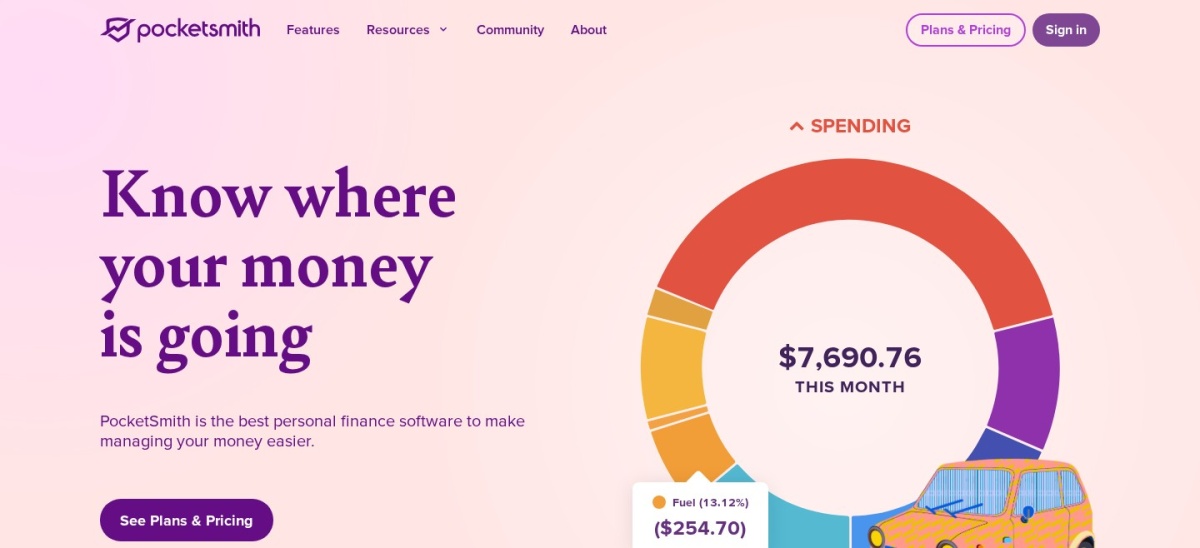
PocketSmith is a forecasting-first budget tool that projects your bank balance into the future on a calendar, instead of only reporting what you spent. The free plan covers 2 accounts and a 6-month forecast, and Foundation at $9.99 a month billed annually extends it to 10 years.
The trade off is the low Trustpilot score and the price. Foundation covers banks in one country only, and the full 60-year forecast needs Fortune at $26.66 a month. It suits planners who want to see future balances, not just past spending.
Goodbudget is the envelope method on your phone and the web: you fill an envelope for each category, then stop spending when it is empty. The free plan covers 10 regular envelopes and 10 annual or goal envelopes, and Premium at $80 a year adds bank sync.
The trade off is the manual work. Bank sync is a Premium feature for US banks only, and synced purchases still need confirming by hand. It suits households that like deciding spending before it happens and sharing one budget.
Free plans here are real but limited. Empower is the only full dashboard that costs nothing, while EveryDollar, Goodbudget, PocketSmith and Rocket Money keep bank sync or the best views behind a paid plan.
Paid plans mostly buy automation: bank sync, automatic categorizing and forecasts. If you enter transactions by hand anyway, the free tier of EveryDollar or Goodbudget may be enough.
Check the renewal price, not the first-year offer. Quicken and Monarch both run first-year discounts, and the regular price is what you pay from year two.
A $0 plan that you stop using saves nothing. Pick the tool whose weekly routine you will keep, then pay for the tier that removes the chore you hate most.
How we chose
We started from the tools most often named in 2026 comparisons for personal finance software, then kept 10 established products with published prices and a public review footprint.
Prices come from each vendor's pricing page, checked on 26 November 2026, with the top 3 read on their official pages. Ratings are G2, Capterra or Trustpilot scores from the same week. Where a vendor shows a sale, the list shows the regular price.
We left out tools whose only public ratings are app-store scores, including Simplifi, Copilot Money and PocketGuard, until the rating-source ruling is settled. No vendor paid for a place, and we do not claim to have used these tools ourselves.
How to choose personal finance software
Start with the job you actually need done, then pay only for the tier that does it.
Decide whether you need a dashboard or a method. A dashboard such as Monarch or Empower shows where money went. A method such as YNAB or EveryDollar plans where it goes next. Pick the job first, then the tool.
Check bank sync before you pay. Free plans often need manual entry, and sync is what most people pay for. Start a trial, link every account on day one, and watch for drops in the first week.
Count the household, not just yourself. Monarch includes a partner free, YNAB covers up to six people, and Tiller shares with a partner. One subscription should cover everyone who spends from it.
Compare the renewal price, not the first year. First-year discounts are common on Quicken and Monarch, and the regular price is what you pay from year two. Multiply the monthly figure by 12 before you decide.
FAQ
What is the best personal finance software?
Quicken is the best overall pick for most people, covering budgets, bills, investments and tax reports from $53.88 a year. Monarch is the cleanest household dashboard at $99.99 a year, and YNAB is the best choice if a strict budgeting method is what finally works for you.
Is there a good free personal finance app?
Yes. Empower is the best free dashboard, with net worth tracking, a retirement planner and a fee analyzer at no cost. EveryDollar and Goodbudget also have genuinely usable free plans, but both keep bank sync behind a paid tier.
What is the cheapest paid plan in this list?
Quicken Starter is the cheapest at $53.88 a year, covering budgets, bills and spending reports. Rocket Money Premium can cost less per month at $7, but its price slides up to $14, and EveryDollar Premium is $79.99 a year.
Do I need to link my bank accounts?
No, but sync is what most people pay for. EveryDollar, Goodbudget and PocketSmith all work with manual entry on their free plans, while Tiller writes synced transactions into a spreadsheet you own. Manual entry only works if you update it every few days.
Why do some ratings rest on so few reviews?
Personal finance apps are consumer products, so most reviewers rate them in app stores rather than on G2 or Trustpilot. Monarch has only 3 G2 reviews, Tiller 2 and Goodbudget 2 on Trustpilot, so treat those scores as thin evidence and weigh the feature lists more.
Which tool is best for couples or households?
Monarch is the best household pick, because a partner gets their own login free on the $99.99 Core plan. YNAB covers up to six people on one subscription, and Goodbudget syncs one shared budget across phones.
SaaS SEO and WordPress specialist with about 8 years of experience. Rakib compares WordPress plugins, themes, hosting and software using public pricing, documentation and user reviews. See how we rank.