Quicken is the best personal and business finance software for most households, because it is the only tool here with business and rental reports beside personal budgets, rated 4.3/5 on G2. Pick QuickBooks Online for full cloud books with an accountant, or Wave if you want free business accounting.
How we make this list: we compare pricing pages, product documentation and public user reviews, then re-check every price before each update. No product paid for a place. Disclosure.
Quicken is the only tool with business and rental reports beside personal budgets, from $53.88 a year.
QuickBooks Online Simple Start costs $38 a month, the dearest entry plan here, but it has the widest accountant support.
Wave and Zoho Books both have real free plans: Wave for any revenue, Zoho Books under $50,000 a year.
Xero Early caps invoices at 20 a month, so growing firms move to Growing at $59 a month.
YNAB costs $109 a year and has no business books, so pair it with a ledger such as Wave or Zoho Books.
Empower's dashboard is free, but paid advice starts at 0.89% a year from $100,000 in assets.
What personal and business finance software should cover
Personal finance apps track spending and budgets. Business accounting tools send invoices, track bills and produce tax-ready reports. Few tools do both well, so most households need one tool for each side and a clear line between them.
The strongest single-tool answer is Quicken, because its Business & Personal tier keeps household budgets and business books in one file. Cloud tools such as QuickBooks Online and Xero are business ledgers first, and personal budgeting apps such as YNAB and PocketSmith have no invoicing at all.
Price is the second split. Entry plans run from free at Wave and Empower to $38 a month at QuickBooks Online, and annual billing cuts most monthly prices. Our guide on integrating WooCommerce with QuickBooks shows how a store can feed sales into its books.
Check the caps before you pay. Xero Early allows 20 invoices a month, FreshBooks Lite allows 5 billable clients, and Zoho Books' free plan ends above $50,000 in revenue. A plan that fits today can cost twice as much after one good month.
The 9 best personal and business finance software tools
01
Quicken
4.3/5on G2 (76 reviews, checked Nov 2026)
Starts at$53.88/yr
Best for personal and business in one place
Cheapest paid planStarter, $53.88/yr
Business tierBusiness & Personal, $149.88/yr
Bank connections14,000+ institutions
PlatformWindows and Mac desktop
quicken.com
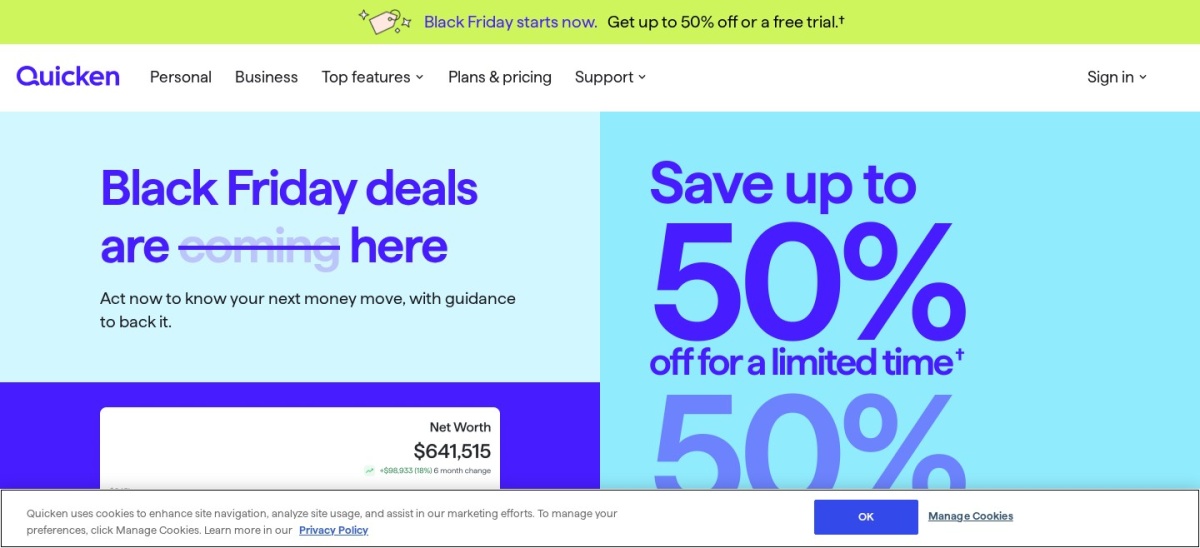
Quicken homepage, captured Nov 2026.
Quicken is a desktop personal finance program that also handles small-business books, which makes it the only tool in this list built for both sides in one subscription. The Starter plan costs $53.88 a year, billed annually, and covers budgeting, bills and investment tracking, while the Business & Personal tier adds rental and business reports at $149.88 a year.
The trade off is the desktop. Quicken Classic runs on Windows or Mac and stores your data file on your own computer, so there is no shared web login for a team and the interface feels dated. It suits sole traders and landlords who want one file for home and business and do not need multi-user access.
What we like
Only tool here with business reports beside personal budgets
Connects to more than 14,000 banks and institutions
Strong investment and tax reports
30-day money-back guarantee
Watch out for
Desktop only, with no multi-user access
Annual subscription, with no free plan
Interface feels dated next to cloud apps
Business & Personal adds business and rental reports at $149.88/yr, billed annuallyVisit quicken.com
02
QuickBooks Online
4/5on G2 (3,871 reviews, checked Nov 2026)
Paid from$38/mo
Best cloud accounting for small business
Cheapest paid planSimple Start, $38/mo
Free planYes, 2 invoices a month
Users on Simple Start1 plus 2 accountants
PayrollAdd-on, extra cost
quickbooks.intuit.com
QuickBooks Online homepage, captured Nov 2026.
QuickBooks Online is Intuit's cloud accounting software for small businesses, covering invoicing, bank feeds, bills and reports. Simple Start costs $38 a month for one user plus two accountants, and a free plan covers two invoices a month. It is the easiest of these tools to hand to an accountant, since most bookkeepers already use it.
The trade off is price and the personal side. Simple Start is business-only, so personal budgeting needs a separate tool or the Solopreneur line, and the price has risen twice since 2023, with Essentials now $85 a month. It suits small businesses that want full books and accountant access and can live with the monthly cost.
What we like
Widest accountant support of any tool here
Strong invoicing and bank feeds
Free plan for very small setups
30-day free trial on paid plans
Watch out for
Simple Start is business-only, with no personal budgeting
Xero is a cloud accounting platform from New Zealand that covers invoicing, bills, bank reconciliation and reports. The Early plan costs $27 a month and allows 20 invoices and 5 bills a month, with unlimited users on every plan. It is a business ledger first, so personal spending is best kept in a separate organisation or a budgeting app.
The trade off is the cap. Early fills up fast once a business sends more than 20 invoices a month, and the next plan, Growing, costs $59 a month. It suits small teams that want everyone in the books without paying per seat.
Zoho Books is a cloud accounting tool from Zoho that covers invoicing, expenses, bank feeds and reports. The free plan stays free for businesses with revenue under $50,000 a year, and Standard costs $20 a month for 3 users and 5,000 invoices a year. It is business accounting, so personal money still needs its own budget.
The trade off is depth. Zoho Books is lighter than QuickBooks Online on payroll and advanced reporting, and the free plan drops away once revenue passes $50,000. It suits small businesses that want low cost and a real free plan to start on.
What we like
Generous free plan under $50,000 revenue
Low paid price at $20 a month
Per-organisation pricing, not per seat
Extra users cost $3 a month each
Watch out for
Weaker payroll and reporting than QuickBooks
Free plan ends above $50,000 revenue
Fewer accountants know it
Professional adds inventory and projects at $50/moVisit zoho.com
05
FreshBooks
4.5/5on G2 (981 reviews, checked Nov 2026)
Starts at$23/mo
Best for service businesses that bill by time
Cheapest paid planLite, $23/mo
Billable clients on Lite5
Team members$11 a month each
Free trial30 days
freshbooks.com
FreshBooks homepage, captured Nov 2026.
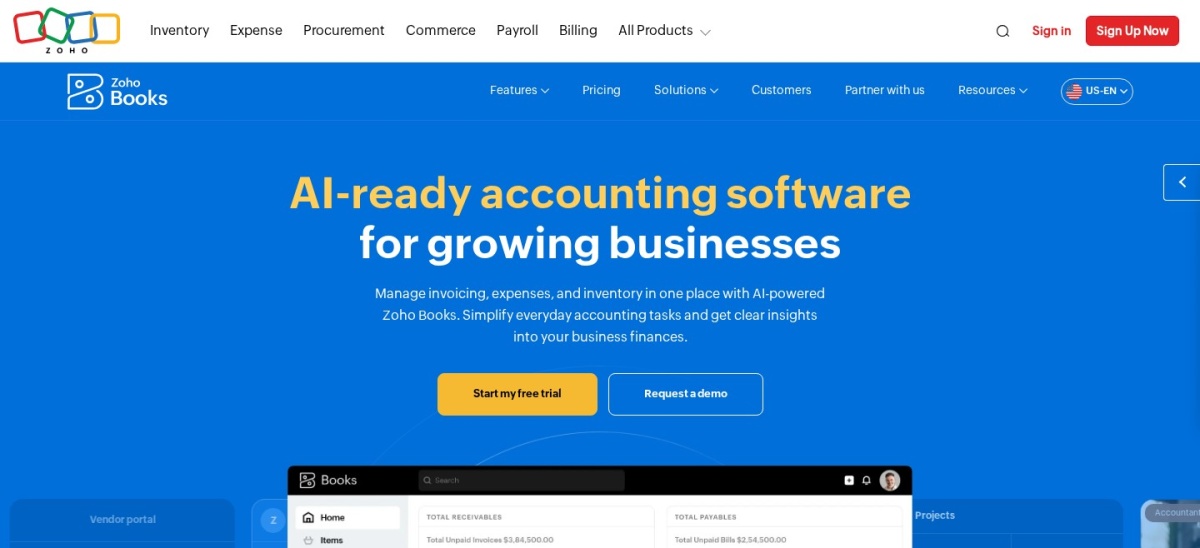
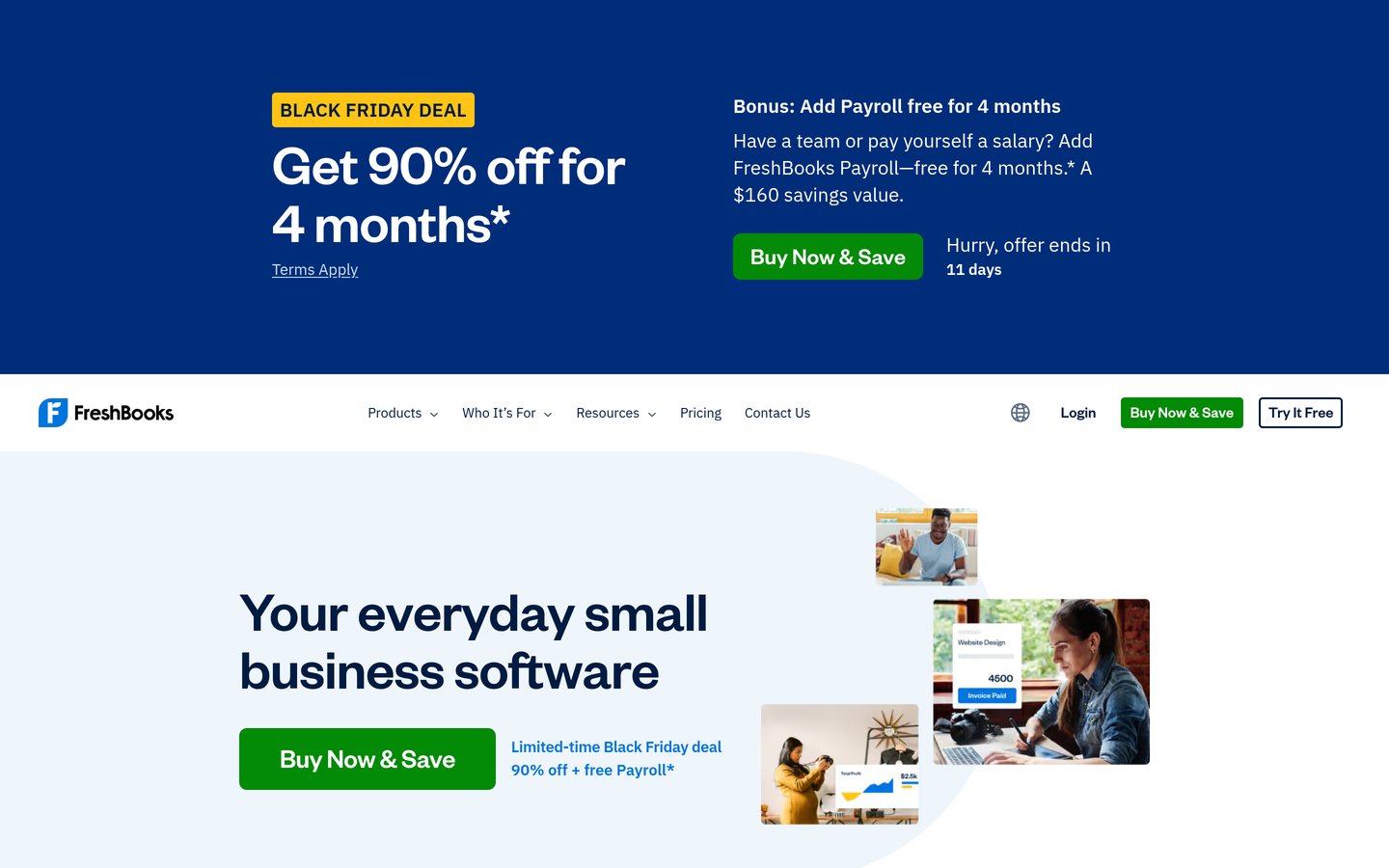
FreshBooks is an invoicing and accounting tool built for freelancers and service businesses. Lite costs $23 a month for 5 billable clients and covers unlimited invoices, expenses, time tracking and mileage. It handles the business side well, while personal budgeting needs a separate app.
The trade off is the client cap. A sixth billable client pushes you to Plus at $43 a month, and each extra team member costs $11 a month. It suits solo service businesses that bill by the hour and want invoices to look polished.
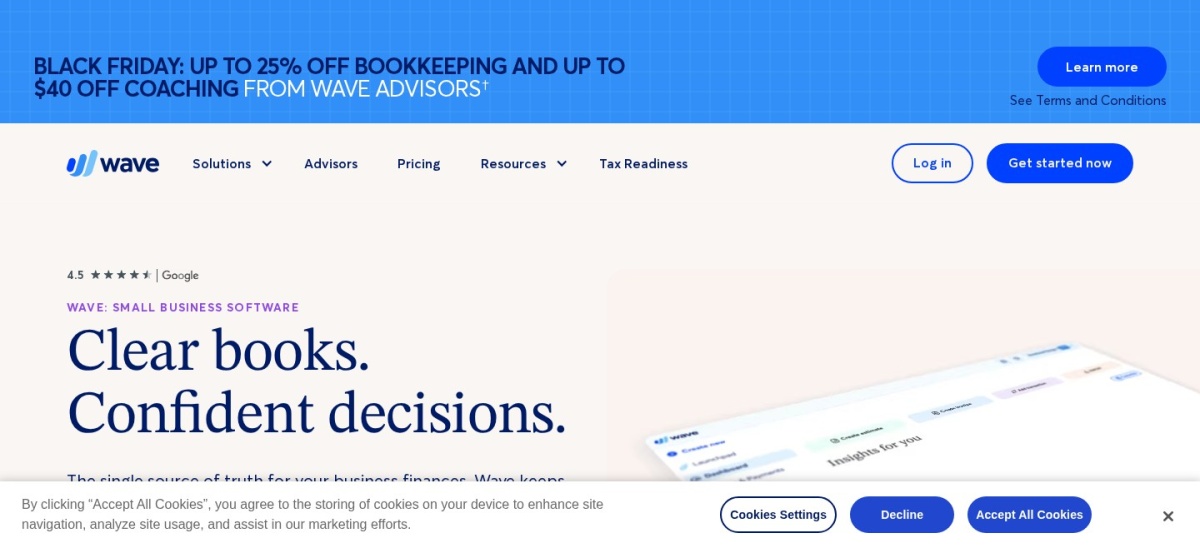
Wave is a free cloud accounting tool for freelancers and micro-businesses, with unlimited invoices, estimates and bookkeeping records on the free Starter plan. Pro costs $19 a month and adds automatic bank imports, receipt capture and reminders. It is a business ledger, so personal budgets sit outside it.
The trade off is automation on the free plan. Starter needs manual imports, and Wave has no inventory or project tracking, so growing firms outgrow it. It suits solo owners who want real double-entry books at no monthly cost.
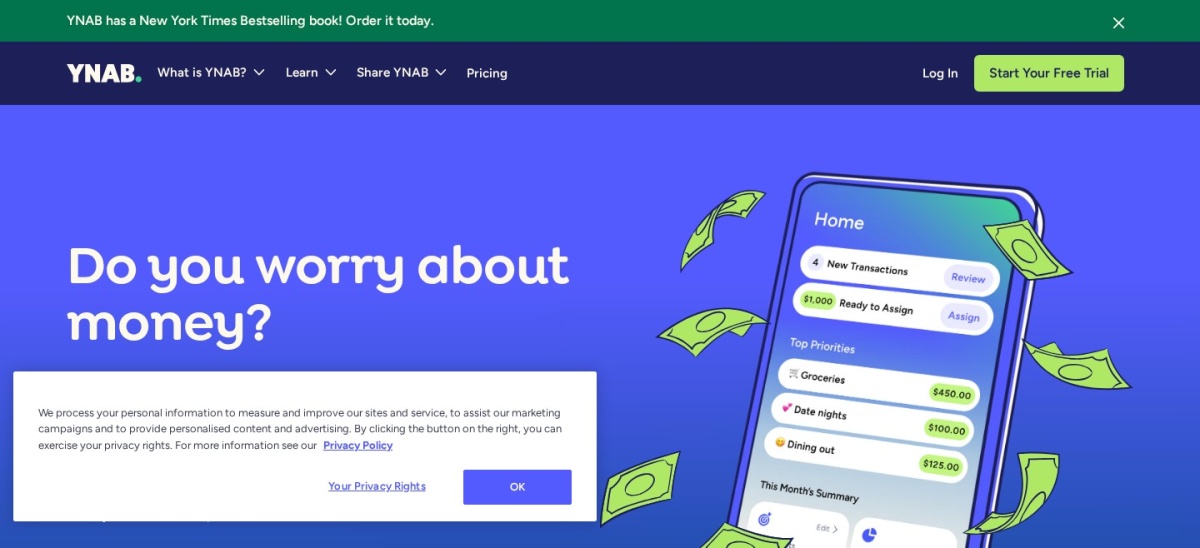
YNAB is a budgeting app built on zero-based budgeting, where every dollar gets a job before it is spent. It costs $14.99 a month or $109 a year, with a 34-day free trial, and one plan covers up to 6 people. It is personal budgeting first, so business books need a separate ledger.
The trade off is scope. YNAB has no invoicing, no tax reports and no business accounts, and the method takes a few weeks to learn. It suits freelancers with uneven income who want tight control of personal spending beside a business ledger.
4.8/5on App Store (426K reviews, checked Nov 2026)
PriceFree
Best free net worth and retirement view
PriceFree dashboard
Paid advice0.89% a year from $100,000
Retirement plannerYes
BudgetingYes, basic cash flow
empower.com
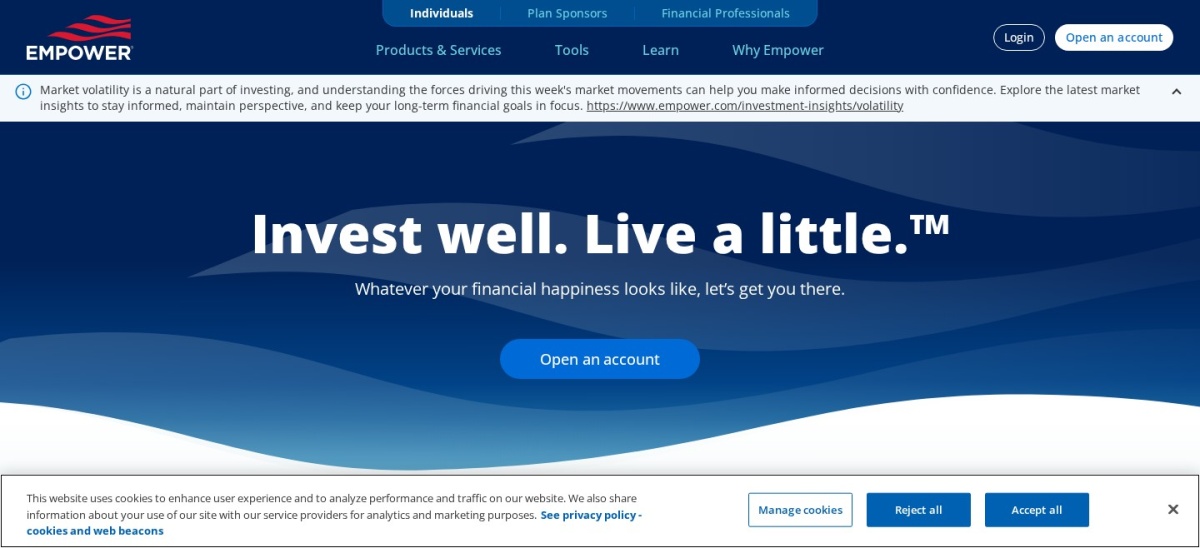
Empower Personal Dashboard homepage, captured Nov 2026.
Empower Personal Dashboard is a free tool that pulls bank, card, loan and investment accounts into one view of net worth, spending and retirement readiness. The dashboard costs nothing, and the paid advice service starts at 0.89% a year for balances from $100,000. It tracks personal wealth well but has no business invoicing or books.
The trade off is the sales funnel. The dashboard is free because Empower wants to sell advice to users with $100,000 or more, so expect calls from advisers. It suits households that want one free view of investments and retirement beside a separate business ledger.
What we like
Free net worth and retirement tools
Strong investment and fee analysis
No paywall on the dashboard
Rated 4.8 out of 5 on the App Store
Watch out for
No business accounting
Advisers call users with large balances
US-only service
Personal Strategy advice costs 0.89% a year from $100,000Visit empower.com
09
PocketSmith
3.4/5on App Store (179 reviews, checked Nov 2026)
Paid from$14.95/mo
Best for long-range cash flow forecasts
Cheapest paid planFoundation, $14.95/mo
Free planYes, 2 accounts
Bank feeds6 banks, 1 country
Forecast10 years on Foundation
pocketsmith.com
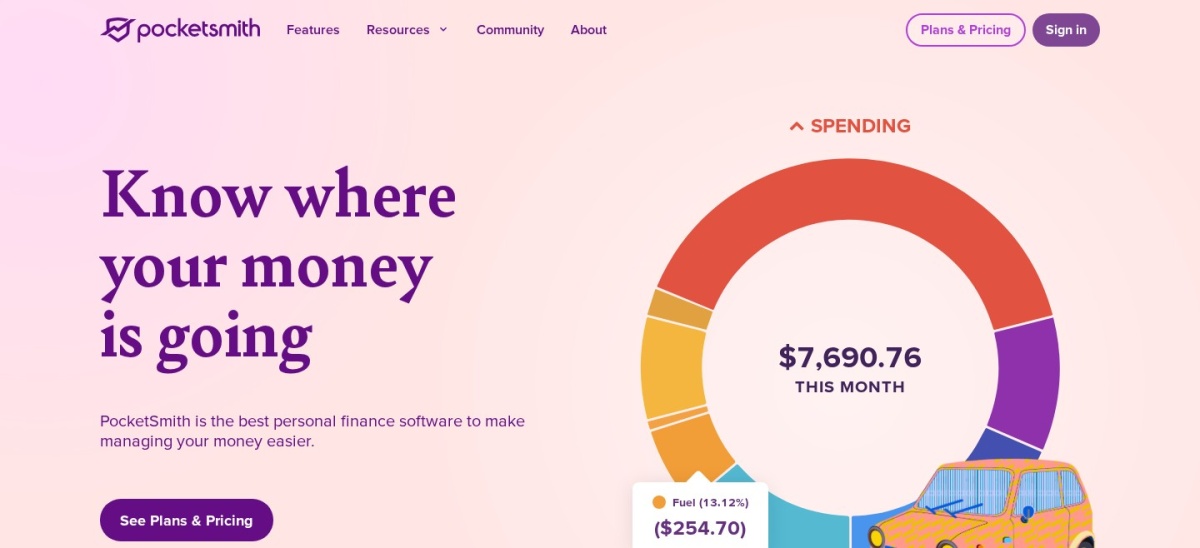
PocketSmith homepage, captured Nov 2026.
PocketSmith is a personal finance tool built around a calendar, showing future balances on dates so you can see what is coming. Foundation costs $14.95 a month, or $9.99 a month billed yearly, and adds bank feeds for 6 banks with 10-year forecasts. It is personal planning first, with no invoicing or business books.
The trade off is the rating base. PocketSmith has only 179 App Store ratings at 3.4 out of 5, and bank feeds are capped by plan. It suits planners and freelancers who think in paydays and want to see cash flow months ahead.
Only Quicken tries to cover both sides in one subscription, and it does so on the desktop. Every other tool in this list is either a business ledger or a personal budget app.
Two tools cost more but fit better. A common pair is Wave or Zoho Books for the business and YNAB or Empower for personal money, with the business kept in its own bank account.
Whatever you pick, keep the money separate. Mixing personal spending into business books makes tax time harder, and most accountants will ask you to split them anyway.
How we chose
We started from the tools most often named in 2026 comparisons for personal and business finance, then kept 9 established products with published prices and a public review footprint.
Prices come from each vendor's pricing page, checked on 26 November 2026. Ratings and review counts come from G2 or the App Store on the same day. Where a vendor shows a sale, the list shows the regular price.
We left out Mint, which shut down, and tools with no published price. No vendor paid for a place, and we do not claim to have used these tools ourselves.
How to choose personal and business finance software
Decide which side matters more, then pick the tool that covers it without paying for the other.
Work out whether you need books or a budget. If you send invoices and file business taxes, start with a ledger such as QuickBooks Online, Xero or Wave. If you only need to control household spending, start with YNAB or Empower.
Count your invoices and clients. Xero Early allows 20 invoices a month and FreshBooks Lite allows 5 billable clients, so check your last three months before you pick an entry plan.
Check who else needs access. Xero includes unlimited users on every plan, while QuickBooks Online Simple Start allows one user and Zoho Books Standard allows 3.
Keep personal and business money apart. Use a separate bank account for the business, even with Quicken, so tax time does not mean untangling a year of mixed spending. See how to set up taxes in WooCommerce if you sell online.
FAQ
What is the best personal and business finance software?
Quicken is the best single tool for both sides, because its Business & Personal tier adds business and rental reports to personal budgeting, rated 4.3 out of 5 on G2. It costs $53.88 a year for Starter, or $149.88 a year for the business tier.
Can one tool handle personal and business finances?
Only Quicken tries to cover both in one subscription, and it runs on the desktop. Every other tool here is either a business ledger or a personal budget app, so most households pair one of each, such as Wave for the business and YNAB for personal money.
Is there a free option for personal and business finance?
Yes, in two parts. Wave's Starter plan is free business accounting with unlimited invoices, and Empower's Personal Dashboard is a free net worth and budgeting view. Neither covers both sides alone, so pair them and keep the bank accounts separate.
How much does QuickBooks Online cost?
QuickBooks Online Simple Start costs $38 a month at the regular price, for one user plus two accountants. Essentials costs $85 a month for 3 users, and new customers often get a discount for the first 3 months, so check the regular price before you budget.
Is Mint still available?
No. Intuit shut down Mint in March 2024, so it is not in this list. Former Mint users who want a free dashboard often move to Empower, while YNAB and PocketSmith suit people who want a paid budgeting method instead.
Do I need separate accounts for personal and business money?
Yes. Keep a separate bank account for the business even when one tool holds both sides, as Quicken does. Mixing the two makes tax time harder and can cause problems with deductions, so split the money first and pick the software second.
SaaS SEO and WordPress specialist with about 8 years of experience. Rakib compares WordPress plugins, themes, hosting and software using public pricing, documentation and user reviews. See how we rank.