Best Payment Orchestration Platforms in 2026: 9 Platforms Compared
WLWPLegible EditorsLast verified 23 Nov 2026How we rank10 min read
★ Short answer
Gr4vy is the best payment orchestration platform for most merchants, with a published $248 a month starting price and no per-transaction fees. Pick Solidgate for subscriptions and billing, or Spreedly if you want an independent card vault you own.
How we make this list: we compare pricing pages, product documentation and public user reviews, then re-check every price before each update. No product paid for a place. Disclosure.
Gr4vy leads with the only published orchestration price under $300 a month and a 5.0/5 G2 rating, though that rating rests on a single review.
Solidgate has the highest rating with real volume at 4.8/5 from 15 reviews, and it covers subscriptions and billing in the same integration.
Spreedly's $750 a month buys the vault only; routing, retries and network tokens sit in a separate quoted tier.
Primer, Yuno, APEXX and CellPoint Digital were left out because none has a verifiable G2, Capterra or Trustpilot rating under its own name.
Most platforms in this category are quote-based, so expect a sales call and ask for the full first-year cost, not just the monthly figure.
What payment orchestration does, and what it costs
Payment orchestration sits between your checkout and your payment providers. It routes each transaction to the best provider, retries failed payments and keeps card data in one vault, so you are not locked into a single processor.
Most platforms in this category hide their prices behind sales calls. Only three of the nine here publish a starting price, and two of them sell the vault separately from routing, so read the plan details before you compare monthly costs.
Routing is the feature that pays for itself. A failed payment that gets retried through a second provider is revenue you would have lost, and a vault that lets you move tokens between providers keeps your options open if a provider raises prices.
Match the platform to your volume and your team. A small merchant with one gateway needs a vault and a simple setup, while a large merchant with several providers needs routing rules, fallbacks and reporting that a payments team can run without code.
List prices in each vendor's currency, checked Nov 2026
SolidgateQuote
checkout.comQuote
NuveiCustom
AdyenQuote
RapydQuote
Gr4vy$2,976
Spreedly$9,000
IXOPAY$12,000
Corefy€28,800
The 9 best payment orchestration platforms
01
Gr4vy
5/5on G2 (1 reviews, checked Nov 2026)
Starts at$248/mo
Best payment orchestration platform overall
Starting price$248/mo
Connectors400+
VaultPCI-certified
HostingSingle-tenant instance
gr4vy.com
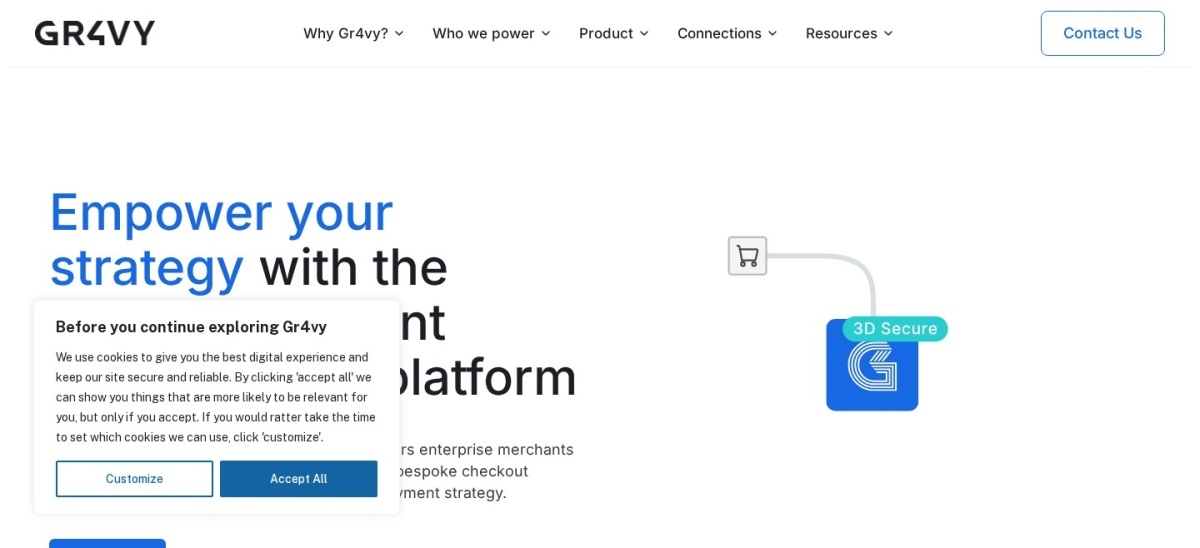
Gr4vy homepage, captured Nov 2026.
Gr4vy is a cloud-native payment orchestration platform that runs each customer on a dedicated single-tenant instance. The entry plan starts at $248 a month with no per-transaction fees, and includes a universal API, a no-code admin and workflow engine, Gr4vy Embed checkout and a PCI-certified vault.
The trade off is transparency at scale. Only the entry price is published, so larger deployments with more instances or connectors need a quote, and the pricing page does not detail routing rules or connector counts. It suits merchants that want orchestration with a published starting price.
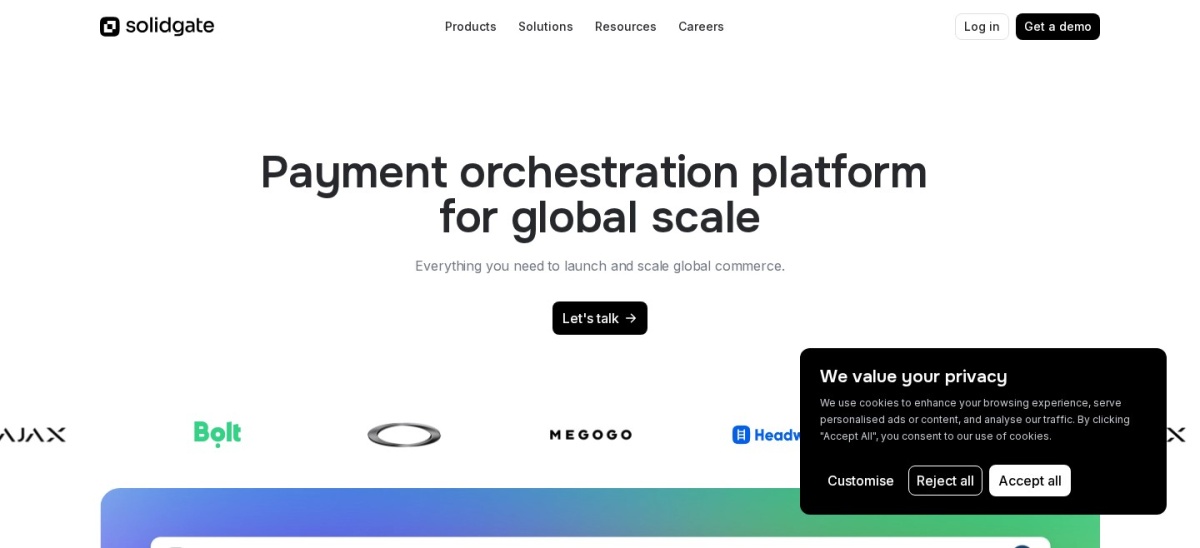
Solidgate is a payment platform that combines orchestration with subscription billing, a vault and fraud tools in one integration. It connects to 100+ acquiring banks with local acquiring across the EU, US and other markets, plus 50+ local payment methods and smart routing with cascading.
The trade off is price opacity. Solidgate publishes no starting price, so every deal is a quote tied to volume, and the admin panel's reporting is a common complaint in reviews. It suits SaaS and e-commerce merchants that want billing and orchestration from one vendor.
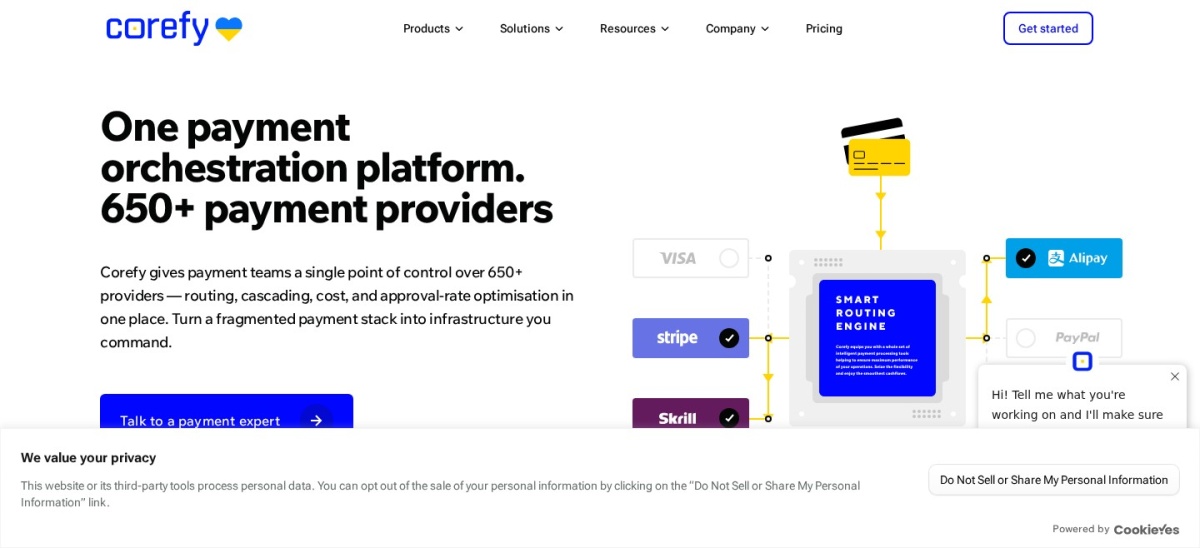
Corefy is a control-layer orchestration platform built around deep routing ownership, cascading and payouts. The Standard plan starts at €2,400 a month, with a Professional plan at €6,000 a month, and the platform is white-label, so it can run under your own brand.
The trade off is the entry cost and the learning curve. €2,400 a month is a steep floor, and reviewers note that advanced routing takes time to learn and built-in analytics are thin. It suits merchants that want to own their routing logic rather than rent it.
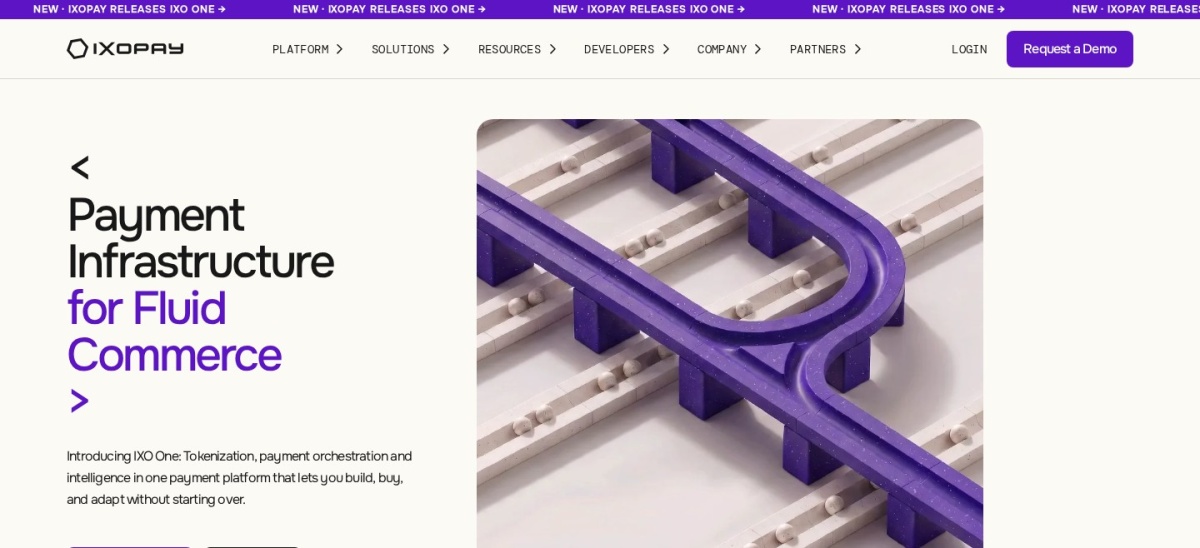
IXOPAY is an enterprise payment orchestration platform built on tokenization, with universal tokens that work across processors. It connects to 200+ providers and 300+ payment methods, and G2 reviewers praise its support and ease of integration.
The trade off is age and price. Most G2 reviews date from the TokenEx era, and plans start from $1,000 a month with exact pricing on a quote. It suits enterprises that want to remove card data from their own systems across many processors.
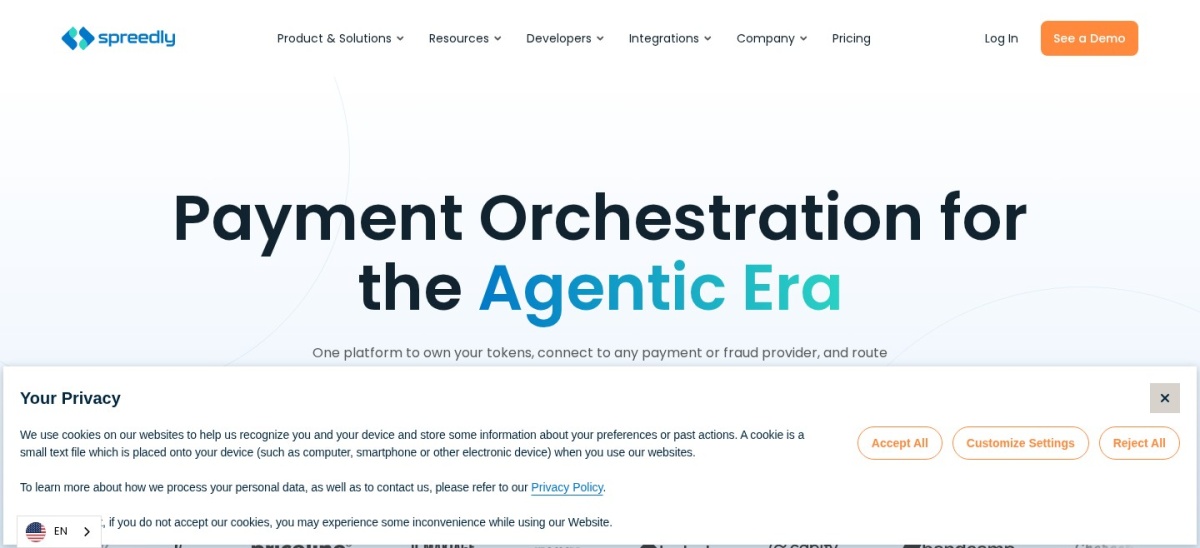
Spreedly is payment infrastructure built around an independent vault: cards stored there work with any of its 150+ gateway connections, so you are never locked into one processor. The Independent Vault starts at $750 a month with unlimited storage, PCI Level 1 compliance and vault health insights.
The trade off is that the vault is only the first layer. Routing, smart retries, network tokens and 3DS sit in the Performance Optimization tier, which is priced through sales, and one long-term reviewer reports a steep price rise after ten years. It suits merchants that want to own their tokens first and add routing later.
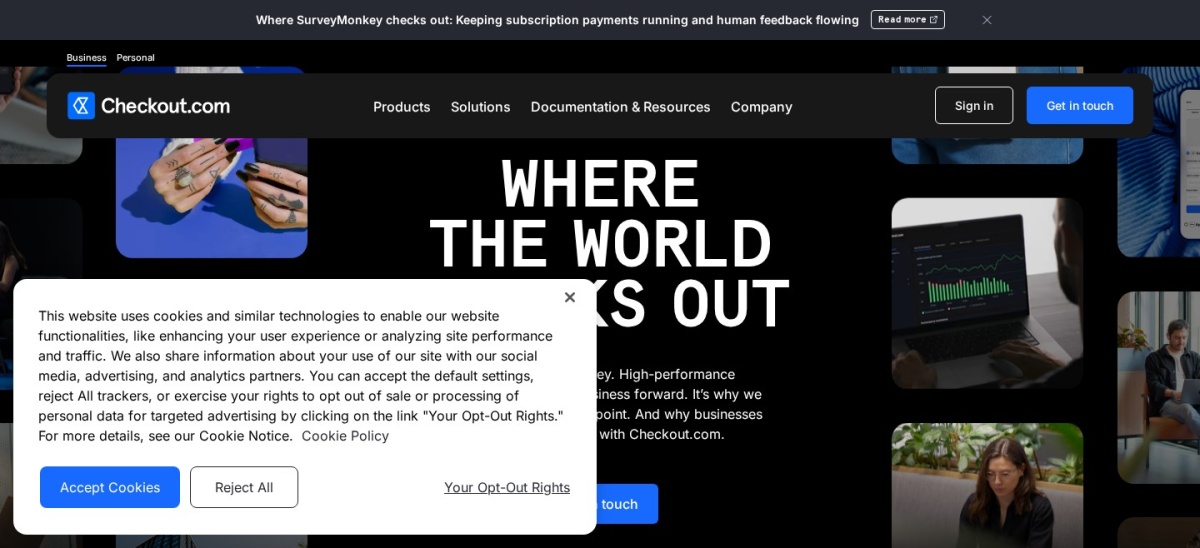
checkout.com is a global payment processor with routing tools, fraud protection and payment insights built in. Reviewers rate it 4.6/5 on G2 from 70+ reviews, praising its customer support, ease of use and clear API documentation.
The trade off is that it is a processor first, not a pure orchestration layer. Pricing is custom and volume-based, and reviewers note that advanced features and reporting can take time to learn. It suits mid-market merchants that want one global processor with strong support rather than a separate orchestration layer.
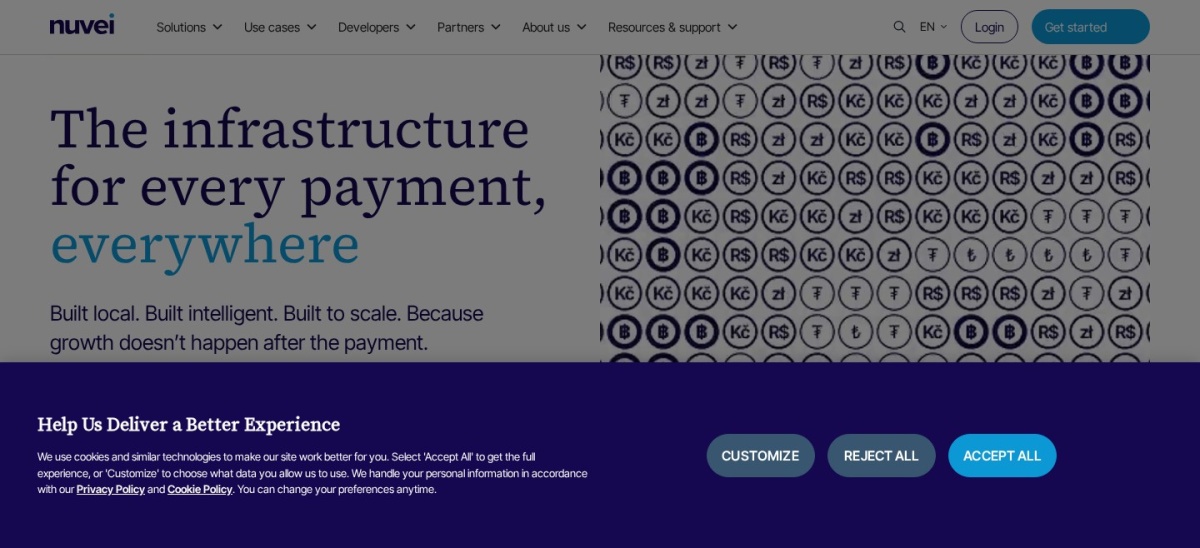
Nuvei is a global payment platform that covers cards, wallets, bank transfers, buy now pay later and crypto through one integration, with 720 payment methods across 200 markets and 150 currencies. Local acquiring in 50 markets helps approval rates for cross-border sales, and the platform adds payouts, risk tools and reporting in the same contract.
The trade off is that Nuvei publishes no price, so every cost needs a sales conversation, and reviewers flag higher fees on some transaction types plus slower support replies at peak times. It suits merchants selling across borders that want one provider for methods, currencies and payouts.
Adyen is a global payment company that covers e-commerce, mobile and point-of-sale payments through one platform, with local payment methods worldwide and built-in fraud protection. Reviewers rate it 4.0/5 on G2 from 44 reviews, praising its ease of use and reliable processing.
The trade off is complexity and price opacity. Pricing is custom and reviewers describe the structure as hard to follow, and the platform can feel oversized for low-volume merchants. It suits enterprises that want one processor for online and in-store payments.
Rapyd is a global payments platform that covers pay-ins, payouts and local payment methods across many countries through one API. Reviewers value the ability to accept payments in local currencies, though the G2 base is thin at 3.5/5 from just 2 reviews.
The trade off is fee clarity. Reviewers report unclear foreign exchange fees and occasional delays in settlement, and pricing is custom with no published starting price. It suits businesses that need payouts and local methods in markets other platforms cover poorly.
A payment processor moves the money. An orchestration platform decides which processor should move it, and what happens when the first one fails.
You can use both. Many merchants keep Stripe, Adyen or checkout.com as processors and add an orchestration layer on top to route between them, or they use a processor that already includes routing and skip the extra layer.
If you run a single processor and your approval rates are fine, orchestration adds cost without much gain. It earns its place once you run two or more providers, sell in several countries, or lose real revenue to failed payments.
How we chose
We started from the payment orchestration platforms that appear most often in 2026 comparisons, then kept the nine with a public G2 rating and a working product. Ratings and review counts come from G2 pages opened on 23 November 2026.
Prices come from vendor pricing pages and vendor-provided G2 listings checked the same day. Only Gr4vy, Spreedly, Corefy and IXOPAY publish a starting price; the rest are quote-based.
We left out Primer, Yuno, APEXX and CellPoint Digital because none of them has a verifiable rating on G2, Capterra or Trustpilot under its own name. No vendor paid for a place, and this list is based on pricing, docs and reviews, not on using the tools ourselves.
How to choose a payment orchestration platform
Start with how many providers you run, then check the price model and who owns the tokens.
Count your providers first. One gateway needs a vault, not orchestration. Two or more providers, or sales in several countries, is where routing and retries start to pay.
Ask who owns the tokens. A vault you own means you can move providers without re-collecting card details. Ask whether tokens export before you sign, not after.
Check what the published price buys. Spreedly's $750 a month covers the vault only; routing costs extra. Gr4vy's $248 a month covers the platform, with larger deployments quoted.
Run a demo on your own failure cases. Bring your real decline patterns and your top three markets. A demo that only shows the happy path tells you nothing about routing.
FAQ
What is the best payment orchestration platform?
Gr4vy is the best payment orchestration platform for most merchants, with a published $248 a month starting price, no per-transaction fees and a 5.0/5 G2 rating. Solidgate leads on subscriptions and billing, and Spreedly is the best choice for an independent card vault.
How much does payment orchestration cost?
Published prices start at $248 a month for Gr4vy and $750 a month for Spreedly's Independent Vault. Most platforms, including Solidgate, Adyen and checkout.com, are quote-based, and Corefy starts at €2,400 a month.
What is the difference between Spreedly and Gr4vy?
Spreedly sells an independent PCI Level 1 vault from $750 a month, with routing in a separate quoted tier. Gr4vy sells a full orchestration platform from $248 a month with a vault included, and larger deployments are quoted.
Do I need payment orchestration for one gateway?
Usually not. Orchestration pays off when you run two or more payment providers, sell across several countries, or lose revenue to failed payments. With one gateway and good approval rates, a vault alone may be enough.
Is Primer a good payment orchestration platform?
Primer is a capable platform with a free plan and a no-code workflow builder, but it has no verifiable rating on G2, Capterra or Trustpilot under its own name, so it is not in this list. Ask for customer references before you buy.
Which platform is best for subscriptions?
Solidgate is the strongest here for subscriptions, with billing, dunning and smart retries in the same integration as payments, and a 4.8/5 G2 rating from 15 reviews. Nuvei covers the same ground as a global payment platform, rated 4.3/5 on G2 from 20 reviews.