Best Mobile Advertising Platforms in 2026: 9 Tools Compared
WLWPLegible EditorsLast verified 23 Nov 2026How we rank13 min read
★ Short answer
Google Ads is the best mobile advertising platform for most advertisers, with App campaigns across Search, YouTube and Play and a 4.3/5 G2 rating from 2,041 reviews. Pick Meta Ads for paid social reach and Unity Ads for ads inside mobile games.
How we make this list: we compare pricing pages, product documentation and public user reviews, then re-check every price before each update. No product paid for a place. Disclosure.
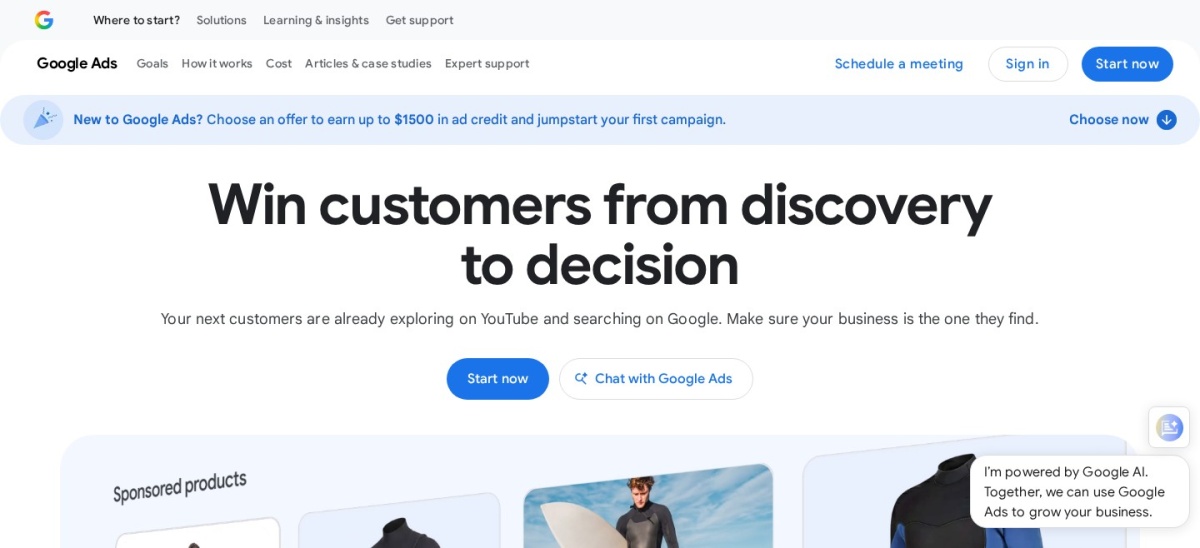
Google Ads leads on reach: App campaigns run across Search, YouTube, Play and Display from one campaign.
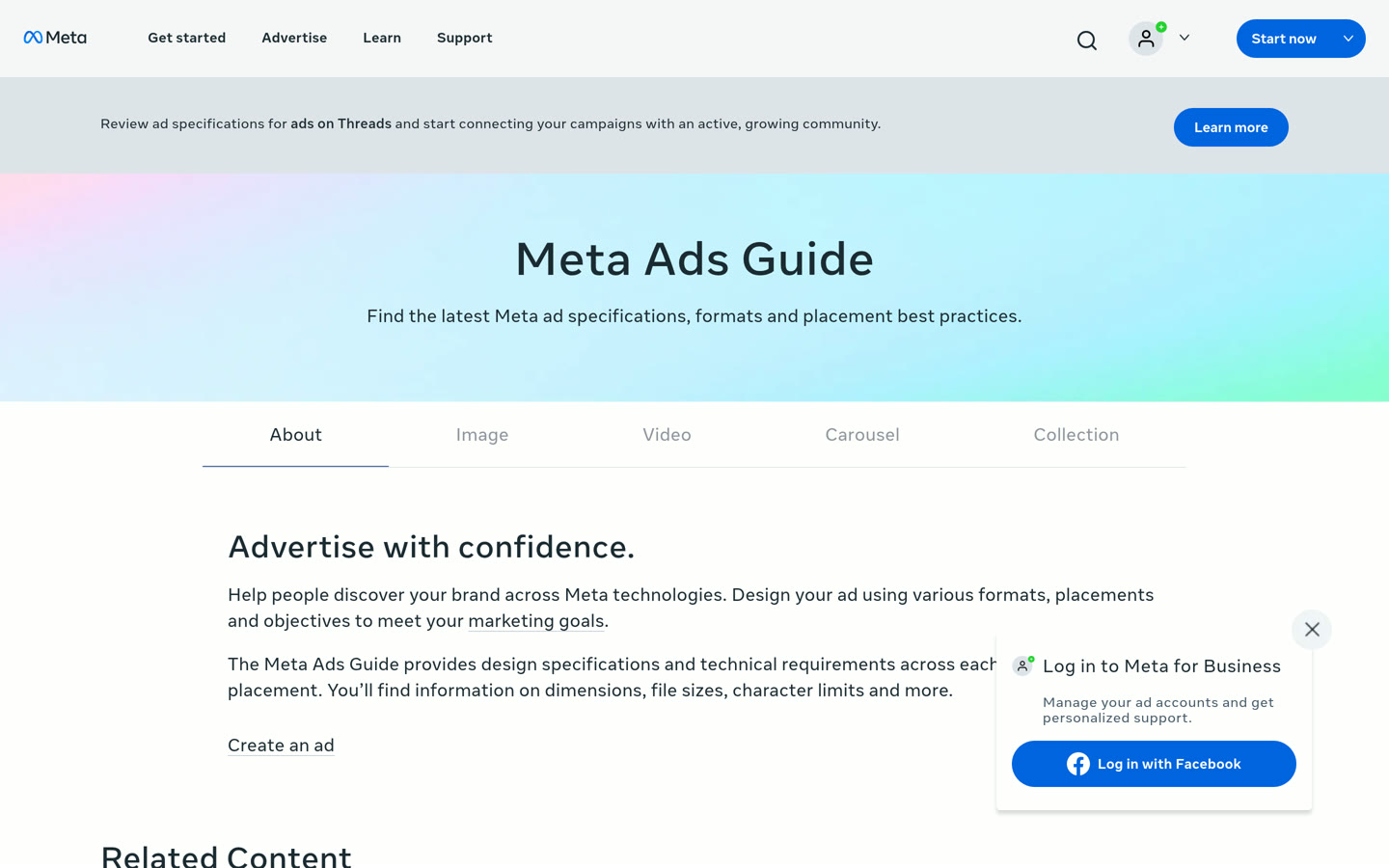
Meta Ads has the lowest entry floor in this list at $1 a day for impression-based ad sets.
TikTok Ads needs the highest floor: $50 a day per campaign and $20 a day per ad group.
Unity Ads and AdMob are the two main ways to reach players inside mobile games and apps.
Every platform here charges for media, not a subscription: all 9 list a $0 platform fee.
What to look for in a mobile advertising platform
Mobile advertising splits into two jobs: buying installs and sales, and earning money from ads inside an app. Some platforms do both, but most are stronger at one of them.
The big three for buying are Google Ads, Meta Ads and TikTok Ads. They own the inventory, so you buy reach directly instead of through a middleman network.
Game and app networks such as Unity Ads, AdMob, AppLovin, Liftoff, Moloco and InMobi add in-app inventory that the big three do not sell. Our guide on how to add ads to WordPress covers the publisher side of the same trade.
Pricing is auction-based almost everywhere. There is no fixed rate card: you set a budget and a bid, and the platform charges per click, per 1,000 impressions, per install or per action.
Google Ads is the largest mobile advertising platform, and its App campaigns promote an app across Search, YouTube, Google Play and Display from a single campaign. There is no platform fee and no published minimum spend: you set a daily budget and pay only when ads run.
The trade off is complexity. App campaigns automate placements and bids, so you give up fine control over where each ad appears, and competitive keywords can get expensive fast. It suits almost any app or business that wants the widest mobile reach from one account.
Meta Ads is the advertising platform for Facebook, Instagram, Messenger and the Meta Audience Network, run through one Ads Manager account. There is no platform fee, and the minimum daily budget is $1 for impression-based ad sets, the lowest entry floor in this list.
The trade off is the learning phase. Meta needs about 50 conversion events a week per ad set before it optimises properly, so a $1-a-day test stays in learning and tells you little. It suits consumer brands and ecommerce stores that sell with visual, mobile-first creative.
What we like
Lowest entry floor in this list at $1 a day
Deep interest and lookalike targeting
One buy covers Facebook, Instagram and Messenger
Watch out for
Learning phase needs about 50 conversions a week
$1 a day is too little for conversion campaigns
Ad account reviews can pause campaigns without warning
Paid spend is media only; Advantage+ automation is includedVisit facebook.com
03
TikTok Ads
4.2/5on G2 (144 reviews, checked Nov 2026)
PriceFree
Best for short-form video reach
Pricing modelAuction, pay per click or impression
Platform fee$0, pay for media only
Minimum budget$50/day per campaign
Minimum ad group$20/day per ad group
ads.tiktok.com
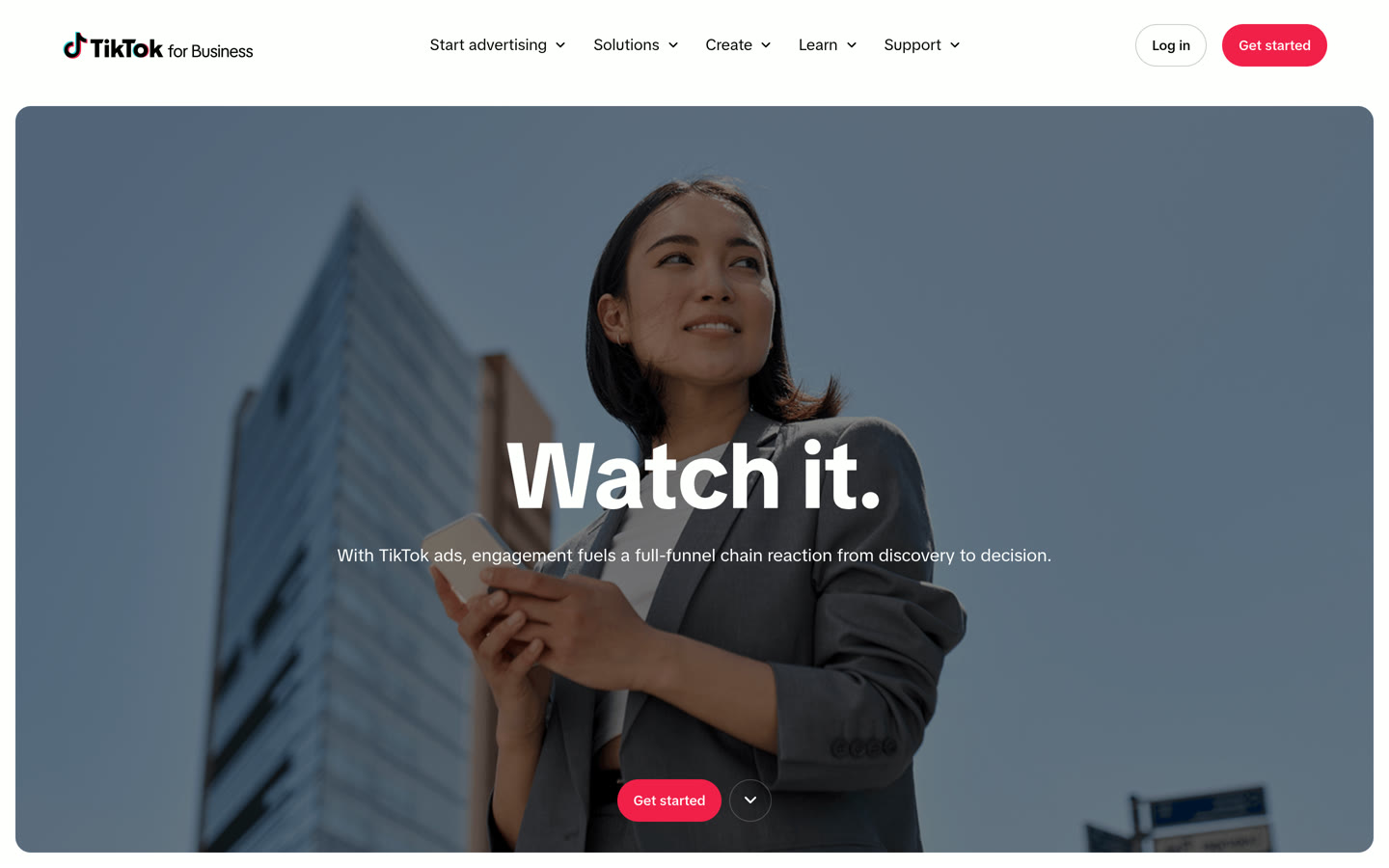
TikTok Ads homepage, captured Nov 2026.
TikTok Ads is the self-serve platform for short vertical video ads on TikTok, with Spark Ads that boost organic posts and TikTok Shop closing the loop from video to purchase. There is no platform fee, and advertisers pay only for delivery on a cost-per-click or cost-per-impression auction.
The trade off is the budget floor. TikTok needs $50 a day at campaign level and $20 a day per ad group, the highest floor in this list, so a meaningful first test costs more. It suits mobile-first brands with a visual product and an audience that discovers through short video.
What we like
Low reported CPMs for short video reach
Spark Ads turn working organic posts into ads
TikTok Shop links video views to purchases
Watch out for
Highest budget floor in this list at $50 a day
Creative needs frequent refreshes to avoid fatigue
Pricing modelAuction, pay per install or impression
Platform fee$0, pay for media only
Main formatRewarded video
AudiencePlayers in Unity-built games
unity.com
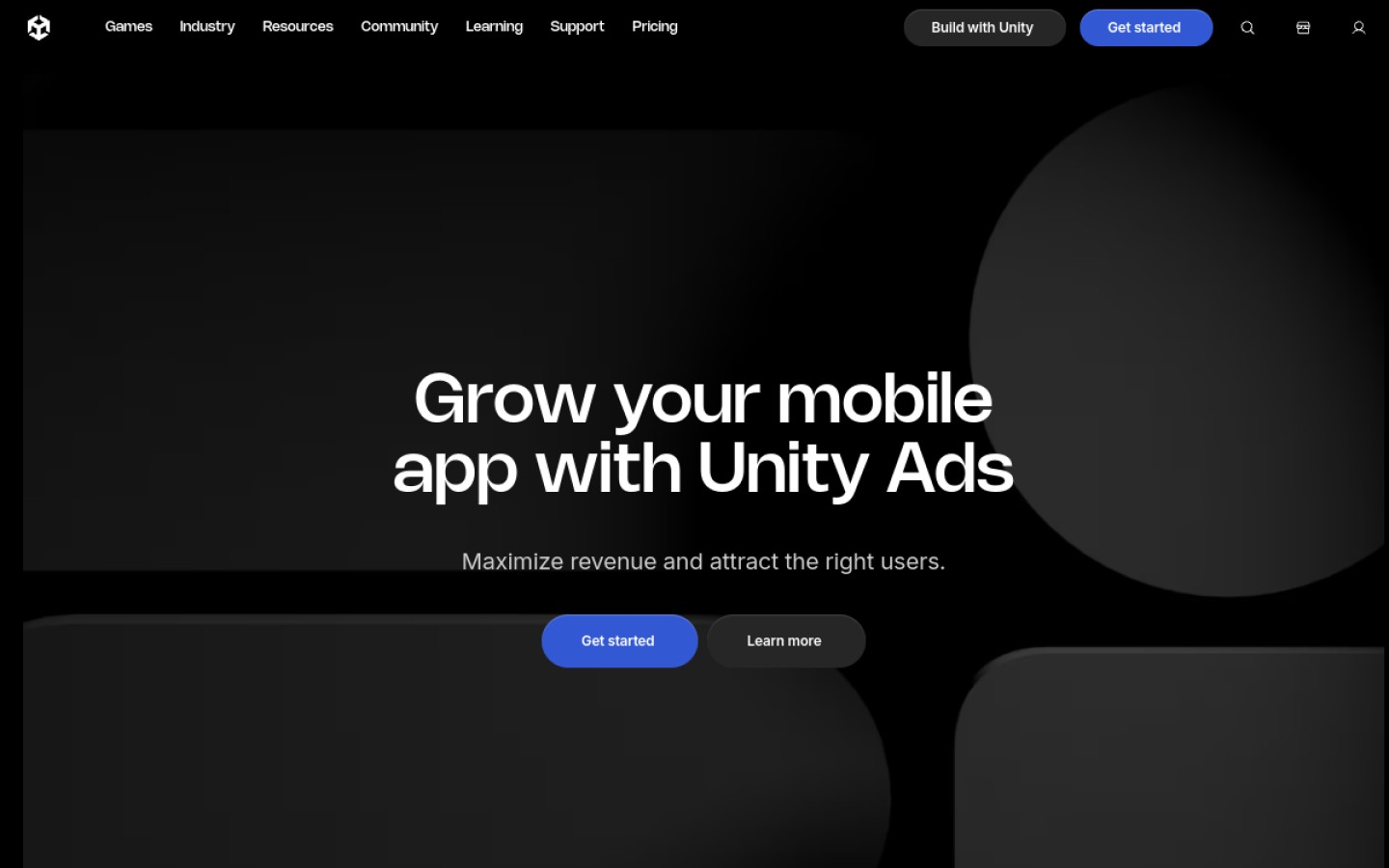
Unity Ads homepage, captured Nov 2026.
Unity Ads is the ad network for games built with the Unity engine, which covers a large share of mobile gaming. Its best-known format is rewarded video, where players watch an ad for in-game currency, and advertisers buy installs from players already in a game.
The trade off is audience fit. The inventory is almost entirely gamers, so non-gaming brands find the audience less relevant, and reported eCPM is lower outside the largest markets. It suits game studios buying installs from players in other games.
What we like
Huge gaming inventory inside Unity-built games
Rewarded video earns high engagement
Rated 4.3 out of 5, with strong support scores on G2
Watch out for
Audience is almost entirely gamers
Lower eCPM outside the largest markets
Payouts to publishers take about 60 days
Paid spend is media only; publishers earn a revenue shareVisit unity.com
05
Google AdMob
4.3/5on G2 (70 reviews, checked Nov 2026)
PriceFree
Best for monetising an app with ads
Pricing modelAuction, pay per click or impression
Platform fee$0 for publishers
MediationBuilt in, combines networks
Main formatsBanner, interstitial, rewarded
admob.google.com
Google AdMob homepage, captured Nov 2026.
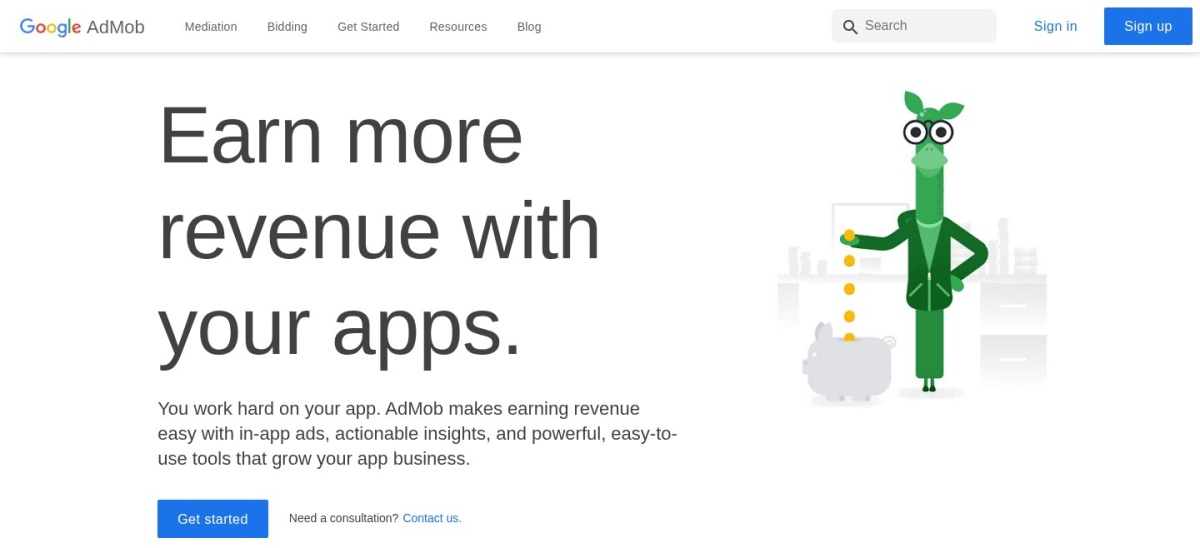
Google AdMob is Google's mobile advertising network for app publishers, serving ads inside millions of apps with Google's targeting behind them. It is free for publishers, and built-in mediation lets a publisher combine AdMob with other networks to raise revenue.
The trade off is dependence on Google. Policy enforcement can feel strict, and the revenue split favours Google, while advertisers get less control than in a direct buy. It suits app publishers of any size who want Google demand plus mediation in one free account.
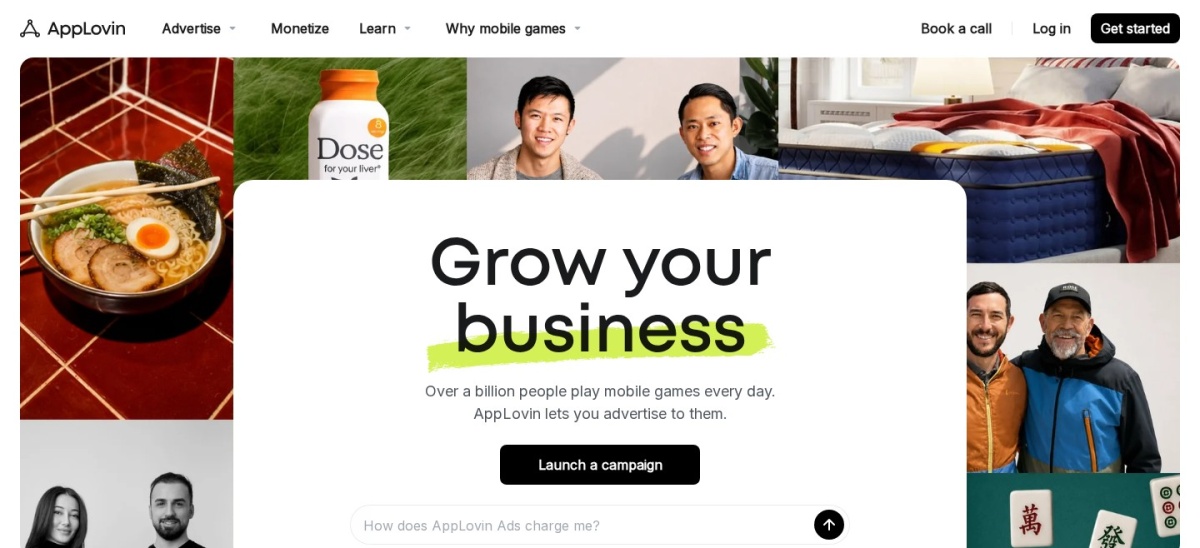
AppLovin is a performance network for mobile game user acquisition, powered by its AXON machine-learning engine, which bids for users likely to bring high value. It also runs MAX, a mediation platform for publishers, and owns an app portfolio that adds premium supply.
The trade off is who it serves best. AppLovin suits studios spending seriously on user acquisition, and smaller advertisers and non-gaming apps get less attention, with no published minimum to plan around. It suits game studios with real acquisition budgets and clear return targets.
What we like
Strong machine-learning optimisation for installs
Large owned app inventory plus network supply
MAX mediation is a second product for publishers
Watch out for
No published price list or minimum spend
Gaming focus limits audience diversity
Rating rests on only 21 G2 reviews
Paid spend is performance-based; no subscription is publishedVisit applovin.com
07
Liftoff
4.5/5on G2 (11 reviews, checked Nov 2026)
PriceFree
Best for performance mobile campaigns
Pricing modelPerformance-based, pay per install or action
Platform fee$0, pay for media only
OptimisationPost-install actions, not just installs
Also offersMonetize SDK and creative services
liftoff.ai
Liftoff homepage, captured Nov 2026.
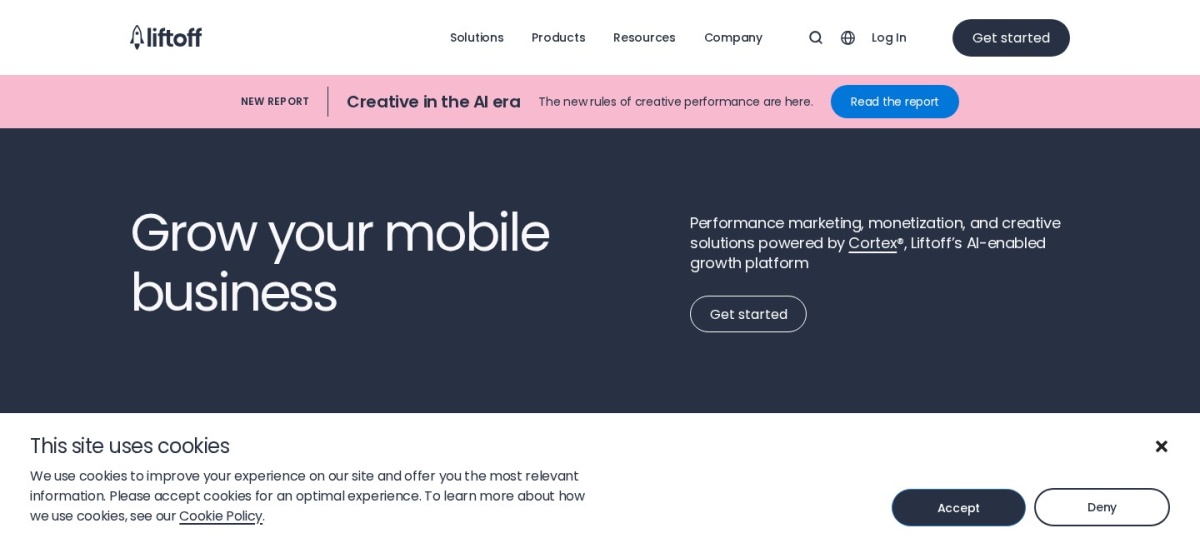
Liftoff is a mobile growth platform for user acquisition, re-engagement and in-app monetisation, built from the Liftoff and Vungle merger and now at liftoff.ai. Its campaigns optimise for post-install actions, not just installs, so spend follows users who do something valuable inside the app.
The trade off is scale and evidence. Like all machine-learning platforms, Liftoff performs best with budgets large enough for the models to learn, and its 4.5 rating rests on only 11 G2 reviews. It suits app businesses with scale that want post-install return, not cheap installs.
What we like
Optimises for post-install actions and return
Covers acquisition, re-engagement and monetisation
Pricing modelProgrammatic, pay per install or action
Platform fee$0, pay for media only
OptimisationMachine learning on first-party data
BuyingReal-time bidding across exchanges
moloco.com
Moloco homepage, captured Nov 2026.
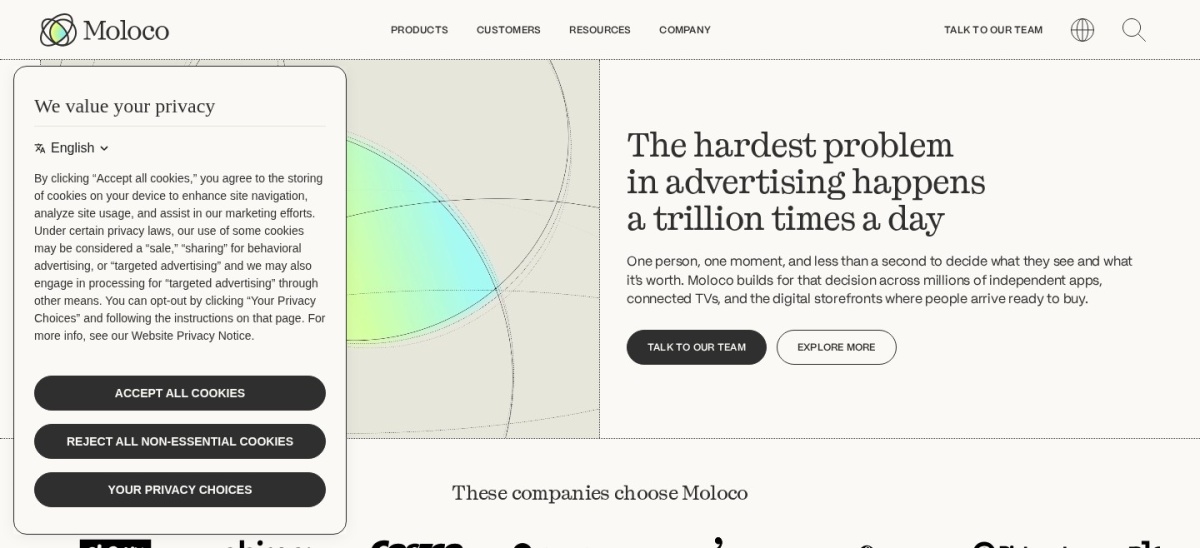
Moloco is a machine-learning demand-side platform for mobile user acquisition, bidding in real time across exchanges to find users likely to take valuable actions. Advertisers praise its transparency: you see where ads ran and what they cost, unlike black-box networks.
The trade off is that it is not a beginner platform. Moloco rewards advertisers who understand programmatic, feed it good first-party data and spend enough for the models to learn. It suits retail, fintech and gaming advertisers with serious budgets and clear post-install value events.
What we like
Transparent programmatic buying and reporting
Machine learning trained on your first-party data
Strong return reports from sophisticated advertisers
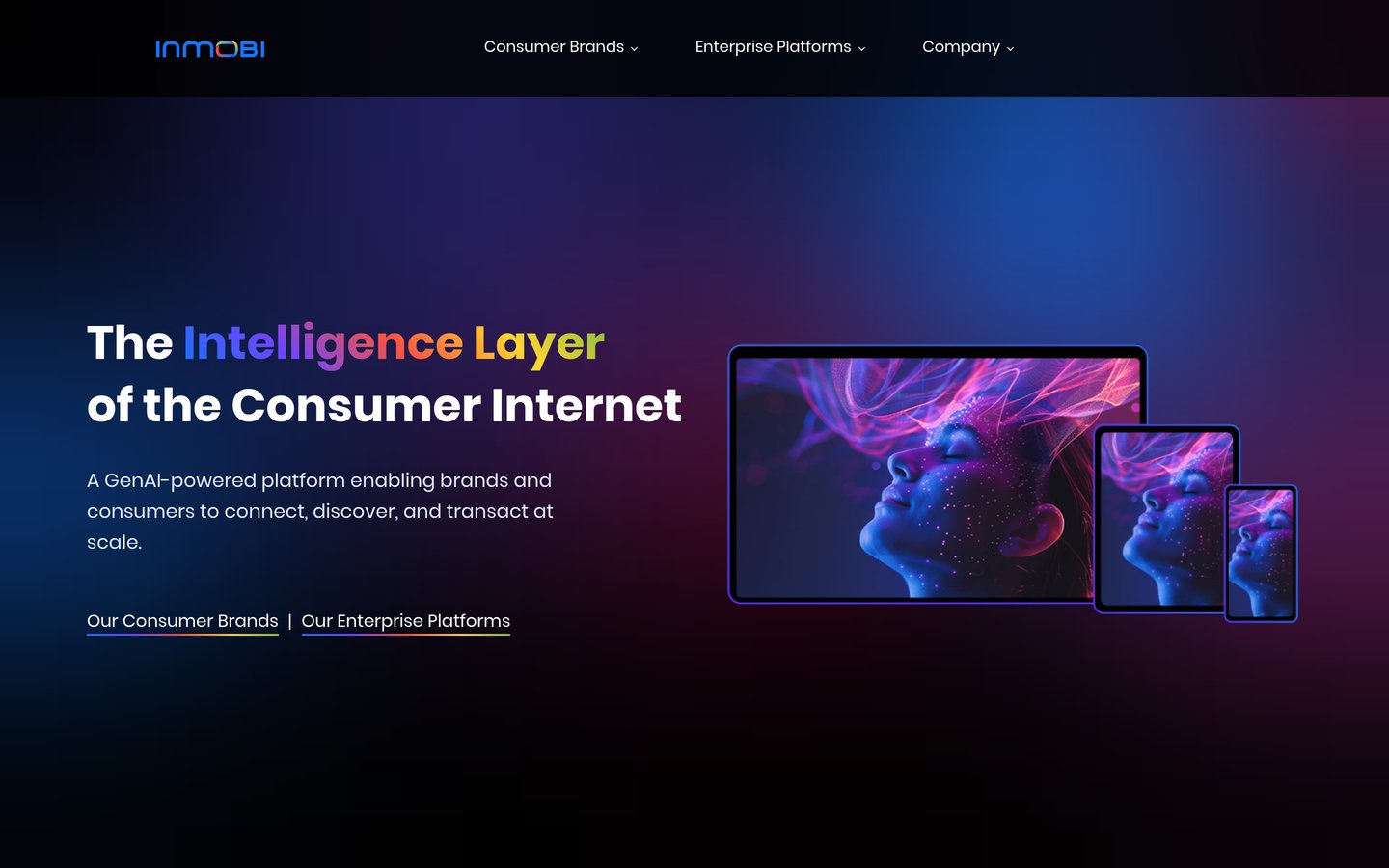
InMobi is one of the largest independent mobile ad platforms, with an exchange and a direct network that reach users across Asia, the Middle East and other growth markets where Western networks are thinner. Brand campaigns get verified, brand-safe supply, and performance buyers get programmatic access to that inventory.
The trade off is its rating and complexity. InMobi has the lowest G2 rating in this list at 3.6 out of 5 from 14 reviews, and its product lineup takes effort to navigate. It suits global advertisers whose campaigns need to work across continents, not just one home market.
What we like
Strong reach in growth markets
Exchange plus direct network in one platform
Verified, brand-safe supply for brand campaigns
Watch out for
Lowest G2 rating in this list at 3.6 out of 5
Less dominant for advertisers focused on one market
Buying ads vs monetising an app: pick the right side
Advertisers buy installs, sales or sign-ups. Google Ads, Meta Ads, TikTok Ads, AppLovin, Liftoff and Moloco are built for that job, and you pay for media.
Publishers earn money by showing ads inside an app. AdMob, Unity Ads and AppLovin MAX are built for that job, and you earn a revenue share instead of paying a fee.
Some platforms do both, but check which side the reviews describe. A high publisher rating does not prove the same platform buys installs well.
If you run both sides, keep the budgets separate. Buying installs with the same account that monetises the app makes it hard to tell which side is working.
How we chose
We started from the platforms that dominate mobile ad spend and in-app supply, then kept nine that cover buying, monetising, gaming and global reach.
Prices and minimum budgets come from each vendor's own pages and help centres, checked on 23 November 2026. Ratings and review counts come from G2 on the same day. Every platform here charges for media rather than a subscription, so the list shows a $0 platform fee.
We left out ironSource Ads, which Unity shut down in April 2026, and Chartboost, whose G2 figures conflict and rest on very few reviews. No vendor paid for a place, and we do not claim to have used these tools ourselves.
How to choose a mobile advertising platform
Start with the job you are hiring the platform for, then match the inventory to your audience.
Decide whether you are buying or monetising. Buyers need installs or sales; publishers need demand and mediation. Pick the side first, then the platform.
Match the inventory to your audience. Gamers live in Unity Ads and AppLovin, shoppers scroll Meta and TikTok, and global audiences need InMobi or Moloco as well.
Budget for the learning phase, not the floor. A $1 or $50 floor only opens the account. Plan a few thousand dollars over two to three weeks so the models can learn.
Judge on post-install value, not cheap installs. A cheap install that never opens the app again is expensive. Track sign-ups, purchases or subscriptions, as in our WooCommerce analytics guide.
FAQ
What is the best mobile advertising platform?
Google Ads is the best pick for most advertisers, with App campaigns across Search, YouTube and Play and a 4.3 out of 5 G2 rating from 2,041 reviews. Meta Ads suits paid social, and Unity Ads suits ads inside mobile games.
How much does mobile advertising cost?
Every platform here charges for media, not a subscription, and prices are set by auction. Entry floors range from $1 a day on Meta Ads to $50 a day per campaign on TikTok Ads, and a useful test usually costs a few thousand dollars.
What is the difference between CPI and CPA pricing?
CPI, cost per install, charges when someone installs your app. CPA, cost per action, charges when they do something valuable inside it, like registering or purchasing. CPA aligns cost with value but needs enough volume for the platform to optimise.
Do I need a mobile measurement partner?
Yes, for most app campaigns. A measurement partner such as AppsFlyer or Adjust aggregates attribution across networks, which matters now that platform tracking is modelled and aggregated rather than exact.
Can I monetise my app and buy installs on the same platform?
Some platforms do both, including Google through Ads and AdMob, and AppLovin through ads and MAX mediation. Keep the buying and earning budgets separate so you can tell which side is working.
Why is TikTok Ads more expensive to start than Meta Ads?
TikTok needs $50 a day per campaign and $20 a day per ad group, while Meta Ads starts at $1 a day for impression-based ad sets. The higher floor means a first TikTok test costs more, even though reported CPMs are often lower.