Best Meeting Room Booking Software in 2026: 9 Tools Compared
WLWPLegible EditorsLast verified 23 Nov 2026How we rank13 min read
★ Short answer
Skedda is the best meeting room booking software for most offices, with a 4.8/5 G2 rating and per-space pricing from $249 a month for 35 spaces. Pick Robin for large multi-site estates, and Officely if you want the lowest per-space price at $2 a month.
How we make this list: we compare pricing pages, product documentation and public user reviews, then re-check every price before each update. No product paid for a place. Disclosure.
Skedda leads on G2 at 4.8/5 from 284 reviews, with per-space pricing from $249 a month in the US.
Robin is the enterprise pick but publishes no price; its pricing page is a quote form and billing is annual.
OfficeRnD Start costs $99 a month for up to 150 users, charging per desk and room instead of per head.
Joan is the only pick with its own e-paper door displays, but panels cost from $399 each on top of the $51 monthly plan.
Officely is the cheapest entry at $2 per bookable space a month, though Slack booking is still coming soon.
Envoy adds a platform fee it does not publish on top of $5 per room a month, so get the full quote before you compare.
What to look for in meeting room booking software
A meeting room tool has one job: keep the room calendar honest. People should see what is free right now, book it in seconds, and give it back when nobody shows up.
Calendar sync decides most of it. If a booking made in Outlook or Google Calendar does not show in the tool, and the other way round, people stop trusting it and double bookings return.
Check-in and auto-release decide the rest. Rooms booked but never used are the most common waste in offices, and the best tools release a room a few minutes after the start time when nobody checks in.
Price models differ more than features. Some tools charge per user, some per room or space, and some only quote. Work out the cost for your room count and headcount before you compare headline prices.
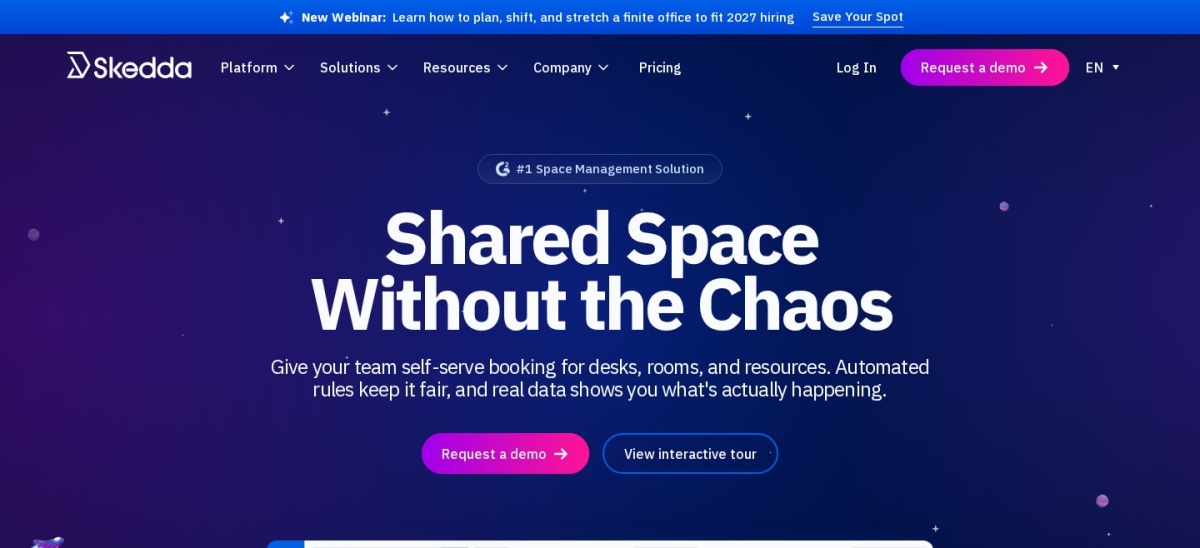
Skedda is a space booking platform for desks, meeting rooms and other shared spaces, priced per space rather than per user. The Plus plan costs $249 a month in the United States and Canada and includes 35 spaces, unlimited users and unlimited bookings. It syncs two ways with Microsoft 365 and Google Workspace, and a 14-day trial needs no payment method.
The trade off is check-in. Bookings without a check-in are only deleted automatically on Plus and Premier, so the cheaper Starter plan cannot release no-show rooms. Starter costs $99 a month with 15 spaces but is sold in EMEA and APAC only. It suits offices with far more people than rooms that want predictable per-space pricing.
What we like
Highest G2 rating in this list, 4.8/5 from 284 reviews
Per-space pricing with unlimited users and bookings
Deep booking rules with quotas, buffers and approvals
Two-way sync with Microsoft 365 and Google Workspace
Watch out for
US pricing starts at $249 a month, higher than EMEA
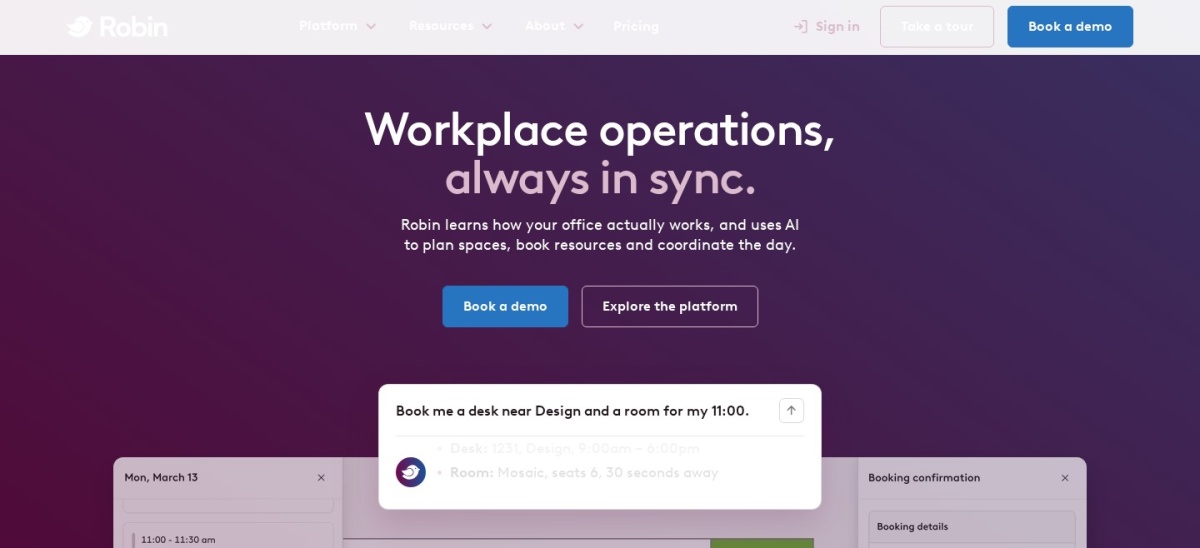
Robin is a workplace platform that covers room booking, desk booking, visitor management, deliveries and analytics in one place. Its Outlook add-in recommends rooms and desks inside the calendar, and its AI Scheduling Agent resolves meeting conflicts. The platform is built for companies with 500 or more employees and bills annually.
The trade off is price. Robin publishes no price and quotes each organization after a form, so you cannot compare it to rivals without a sales call. Hardware is sold separately, and auto-release needs room displays. It suits large multi-site estates with a dedicated workplace team.
What we like
Rooms, desks, visitors and analytics on one platform
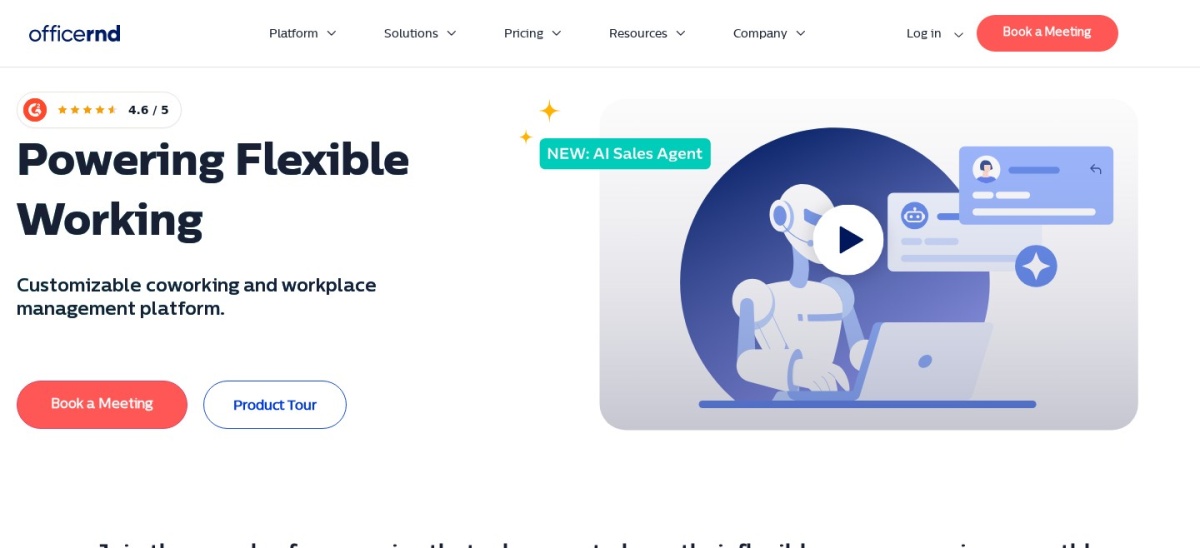
OfficeRnD is a booking platform for desks, meeting rooms and parking that charges for the spaces you run, not the people you hire. The Start plan costs $99 a month on annual billing for up to 150 users, working out to roughly $2 a desk and about $8 a room. Booking happens inside Teams, Outlook, Google and Slack.
The trade off is visitors. Visitor management is an add-on at $99 a month, so front-desk teams pay more than the headline price. The Professional plan starts at $399 a month and adds SSO, SCIM, multi-site support and signage. It suits coworking spaces and hybrid offices that bill by resource.
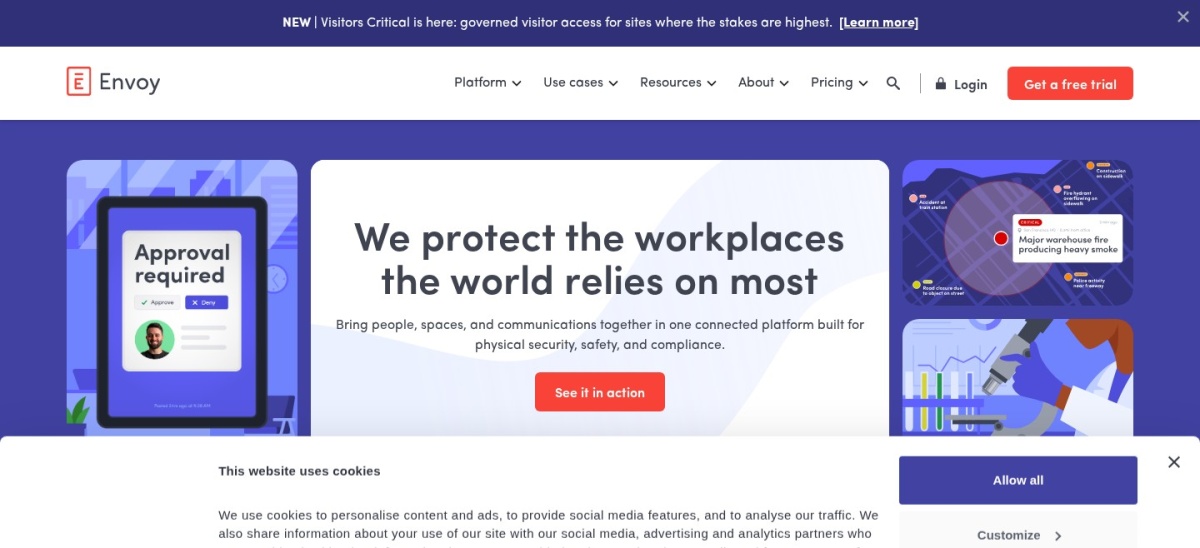
Envoy is a workplace platform that started at the front desk with visitor sign-in and added room and desk booking on top. Its Reservations module costs $5 per bookable resource a month, and rooms connect to Microsoft 365 and Google calendars instead of replacing them. People check in from five minutes before to five minutes after the start.
The trade off is the platform fee. Envoy charges a platform fee it does not publish, plus $5 per resource, and Visitors Premium costs $362 per location a month on top. Modules stack as you add desks, rooms, parking and deliveries. It suits offices where visitor management and security come first.
What we like
Strongest visitor management in this list
Visitors Basic tier is free for 100 entries a month
Rooms analytics show held, canceled and ended-early meetings
60-day free trial
Watch out for
Platform fee is not published
Room booking is a module, not the headline product
Joan is a meeting room booking system built around e-paper displays mounted outside each room door. The battery-powered panels need no cabling and run for up to three months between charges, and they sync two ways with Google Workspace and Microsoft 365. Plans start at $51 a month billed annually, with a 30-day free trial.
The trade off is hardware. Every room needs its own panel, bought separately from $399 for the Joan 6 RE to $899 for the Joan 13 Pro, and extra device licenses cost $10.99 a month. Touchscreens can feel slow when loading floor plans. It suits offices that want live room status visible in the hallway.
What we like
Own e-paper displays with no cabling
Every plan includes rooms, desks, visitors and analytics
People who book from Outlook or Google are not billed
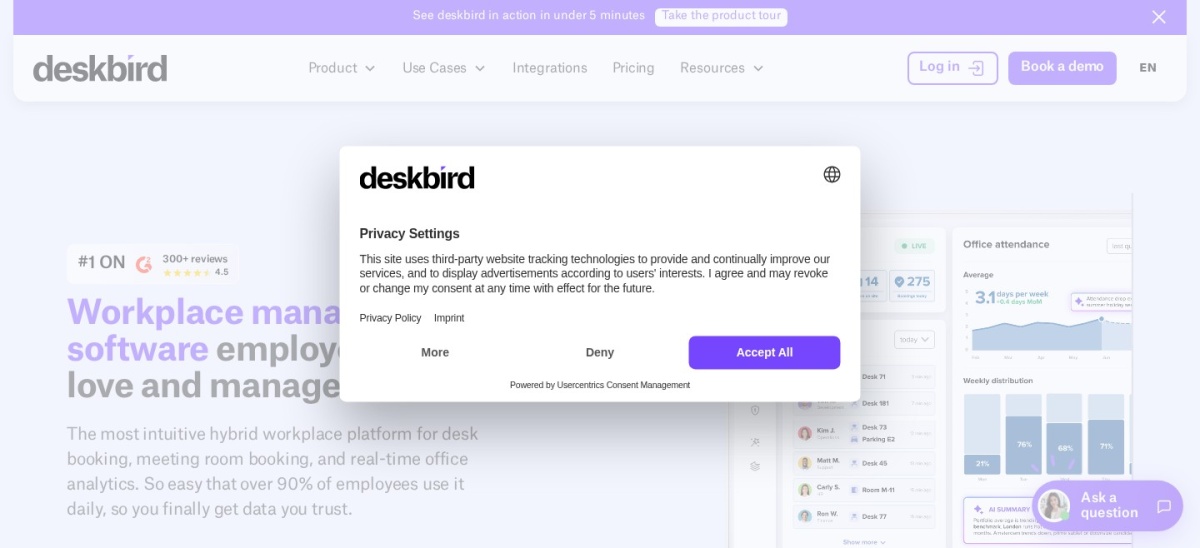
Deskbird is a hybrid workplace platform where people book meeting rooms in the apps they already open: Outlook, Google Calendar and Teams. Rooms sync two ways with Outlook and Google, and check-in by app, QR code or panel releases unused rooms automatically. More than 250,000 users work in 10,000-plus workplace teams on deskbird.
The trade off is per-user pricing. The Business plan costs $3.75 per active user a month billed annually, so the bill grows with every hire. Only one room kiosk is included per plan, and visitor management is a separate add-on. It suits hybrid teams that book rooms, desks and parking together.
What we like
Two-way sync with Outlook and Google Calendar
Check-in by app, QR code or panel with auto-release
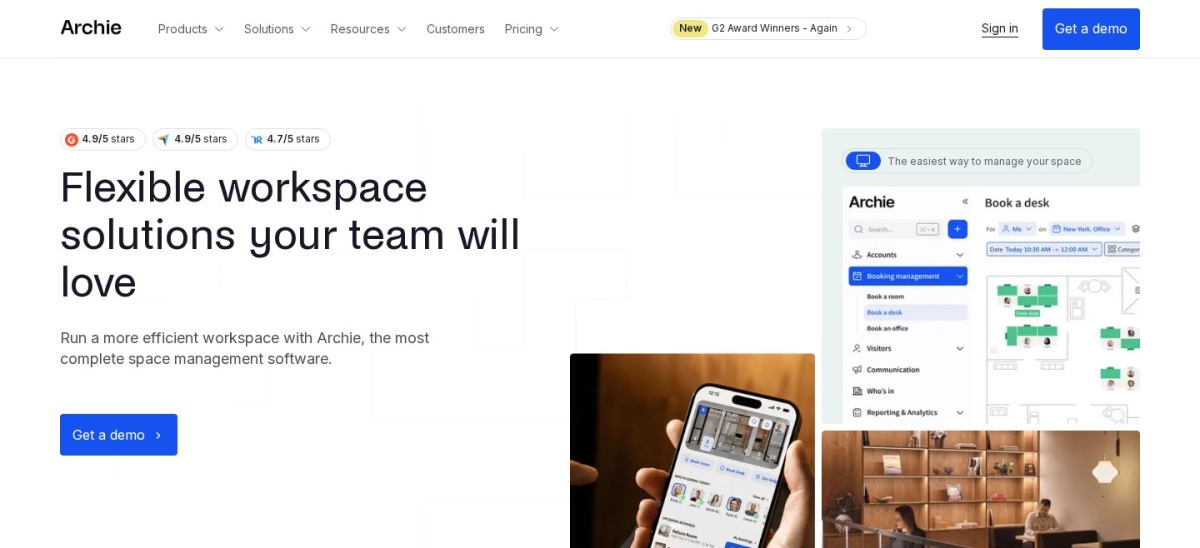
Archie is a workplace platform that charges per room instead of per user, with plans starting at $159 a month. Room pricing runs at $8 per room a month with a minimum monthly fee, and any Android or iOS tablet becomes a room display. It syncs with Outlook, Google Calendar and Microsoft Teams.
The trade off is the plan split. Booking from Teams and Outlook appears only in the $249 plan, not the $159 plan, and desks, rooms and visitors are sold as separate products. The minimum monthly fee also lifts the cost for very small offices. It suits teams that want per-room pricing and to add displays as they grow.
Kadence is a workplace operations platform that covers desk booking, room booking and space planning in one place. It syncs two ways with Outlook and Google Calendar, and check-in by display, mobile or sensor releases rooms nobody uses. G2 lists its Standard plan at $4 per user a month.
The trade off is pricing clarity. Kadence's own pricing page is quote only, and contracts run for at least one year, so the $4 figure comes from G2's vendor-provided pricing. Room displays and the visitor kiosk need the WorkOps Pro tier. It suits mid-market teams that want booking plus portfolio planning.
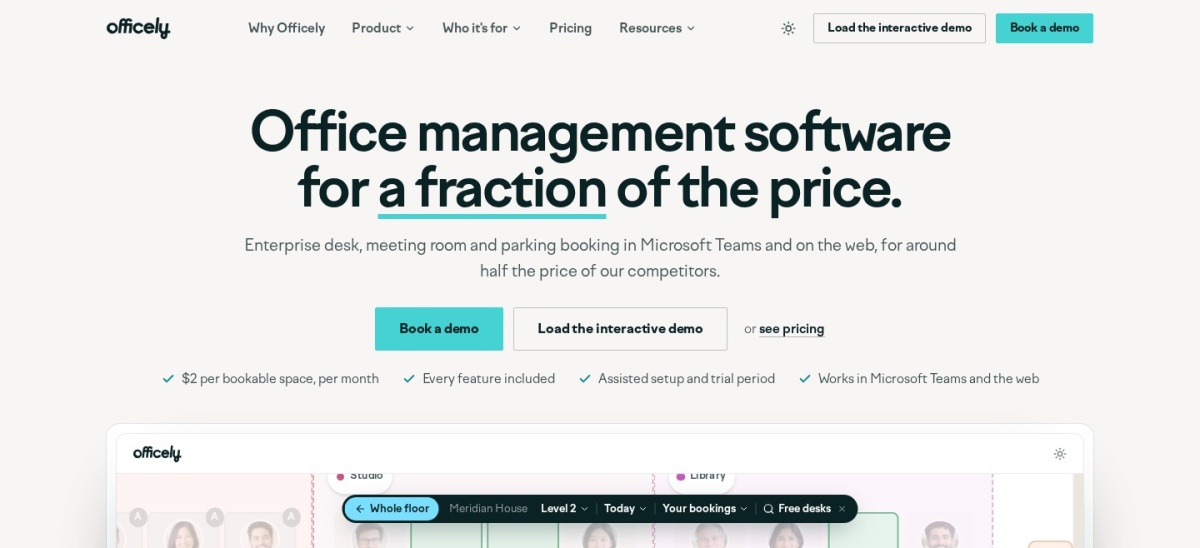
Officely is a workplace booking tool that charges $2 per bookable space a month on annual billing, or $2.50 billed monthly, with every feature included. People book desks, meeting rooms and parking in Microsoft Teams or on the web, with assisted setup and a trial period. It is the cheapest entry price in this list.
The trade off is Slack. The new Officely for Slack is coming soon, so today people book in Microsoft Teams or on the web, and there are no native mobile apps. Reporting is thinner than the bigger platforms, and navigation can take a while to learn. It suits small teams that live in Teams and want the lowest per-space price.
What we like
Lowest entry price in this list at $2 a space a month
A display outside the room shows live availability and lets anyone book on the spot without opening an app. Joan builds its own e-paper panels for this, while Skedda, Archie and Kadence run on tablets you already own.
Displays add cost and work. Joan panels start at $399 each, and every display needs mounting, power or charging, and a license in some plans.
If your team books from calendars all day, displays add little. Start with software only, then add panels to the rooms that get double-booked most.
How we chose
We started from the meeting room booking tools that appear most in buyer shortlists, then kept nine with a published product, a public price or a clear quote route, and a G2 rating.
Prices come from each vendor's pricing page, checked on 23 November 2026, with ratings from G2 on the same day. Kadence is the exception: its price comes from G2's vendor-provided pricing because its own page is quote only. Where a vendor shows a sale, the list shows the regular price. Robin publishes no price, so it is listed as quote only.
We left out tools with no room booking product of their own and tools whose sites we could not open. No vendor paid for a place, and we do not claim to have used these tools ourselves.
How to choose meeting room booking software
Count your rooms and your people first, then match the pricing model to those numbers.
Count rooms, people and locations. Per-user pricing grows with headcount, per-space pricing grows with rooms. A 10-room office with 150 people pays very different amounts on each model.
Check calendar sync on the plan you would buy. Two-way sync with Outlook or Google Calendar is sometimes a higher plan. Confirm it is in your tier before you sign up.
Test check-in and auto-release. Ask how people check in, app, QR code or panel, and how many minutes after the start an unused room goes back into the pool.
Price the extras before you compare. Add platform fees, display hardware, per-device licenses and visitor modules. Envoy and Joan both carry costs beyond the headline price.
FAQ
What is the best meeting room booking software?
Skedda is the best pick for most offices. It holds a 4.8/5 G2 rating from 284 reviews, charges per space instead of per user, and its Plus plan costs $249 a month in the US for 35 spaces with unlimited users and bookings.
How much does meeting room booking software cost?
Published entry prices run from $2 a space a month with Officely to $249 a month with Skedda Plus in the US. OfficeRnD starts at $99 a month, Joan at $51, and Envoy charges $5 per room plus a platform fee. Robin quotes only, and Kadence's page is quote only too, though G2 lists a $4 Standard plan.
Do I need room displays?
No. Most teams book fine from Outlook, Google Calendar or Teams, and displays add hardware cost. A display helps in offices where rooms get double-booked by walk-ins, since it shows live availability at the door. Joan sells its own e-paper panels, while Skedda, Archie and Kadence run on tablets.
What is the difference between per-user and per-space pricing?
Per-user pricing charges for every employee who books, so the bill grows with headcount. Per-space pricing charges for each room or desk, so a large team sharing few rooms pays less. Skedda, OfficeRnD and Officely charge per space or room, while deskbird and Kadence charge per user.
Can I book a meeting room from Outlook or Google Calendar?
Yes, with most tools here. Skedda, OfficeRnD, Joan, deskbird and Kadence sync two ways with Outlook and Google Calendar, so a booking made in either place shows in the other. Check that two-way sync is in the plan you buy, since some tools reserve it for higher tiers.
How do these tools stop ghost meetings?
They ask people to check in, then release the room if nobody does. Check-in works by app, QR code or door panel, and the release window is often 5 to 10 minutes after the start time. Skedda only offers auto-release on its Plus plan and up, so check the plan before you buy.
Is there a free meeting room booking tool?
None of the nine tools in this list has a free plan. Several offer trials instead: Skedda has a 14-day trial that needs no payment method, Joan 30 days and Envoy 60 days. Officely also includes a trial period with assisted setup.