HubSpot Marketing Hub is the best marketing automation platform for most startups, with a free plan and Starter at $20 a seat a month for 1,000 marketing contacts. Pick Brevo if budget comes first at $9 a month, and ActiveCampaign if you need the deepest automation.
How we make this list: we compare pricing pages, product documentation and public user reviews, then re-check every price before each update. No product paid for a place. Disclosure.
HubSpot is the top pick: a free plan, Starter at $20 a seat a month, and a 4.4 out of 5 G2 rating from 16,091 reviews.
Brevo is the cheapest real automation at $9 a month, with unlimited contacts and a free plan.
ActiveCampaign has the deepest automation, but Starter caps each automation at 5 actions and costs $19 a month.
MailerLite, Omnisend and Sender all have free plans; Sender's free plan covers 2,500 subscribers.
Moosend and GetResponse have no free plan, only a trial, so budget for $9 and $19 a month from day one.
What a startup should look for in marketing automation
A startup needs automation that starts cheap and grows with the list. The tools in this list all send email, build simple workflows and track opens and clicks without an enterprise contract.
Price is the first filter. Most of these tools charge by contacts, so a list that doubles can double the bill. Brevo is the exception: it charges by emails sent and keeps contacts unlimited.
Automation depth is the second filter. Simple welcome emails and abandoned-cart flows work on every plan here, but branching logic and lead scoring often need a higher tier. Our guide on how much email marketing costs for a WordPress site shows how list size drives the bill.
Free plans are a real starting point for five of these tools, but check the limits. Sender covers 2,500 subscribers free, while MailerLite stops at 250.
The 8 best marketing automation platforms for startups
01
HubSpot Marketing Hub
4.4/5on G2 (16,091 reviews, checked Nov 2026)
Paid from$20/mo
Best marketing automation platform overall
Free planYes, up to 2 users
Starter contacts1,000 marketing contacts
Automation on StarterSimple automation
Paid planStarter, $20/seat/mo
hubspot.com
HubSpot Marketing Hub homepage, captured Nov 2026.
HubSpot Marketing Hub is a CRM with marketing built in, so contacts, email and automation share one record. The free plan covers up to 2 users, and Starter at $20 a seat a month adds 1,000 marketing contacts, simple automation and no HubSpot branding.
The trade off is price as you grow. Real automation with branching, A/B testing and lead scoring needs Professional at $890 a month, and extra contacts cost more on top. It suits startups that want one system for marketing and sales from the start.
What we like
CRM, email and automation in one account
Free plan is usable for a small team
Highest review count in this list by far
Watch out for
Branching automation needs the $890 Professional plan
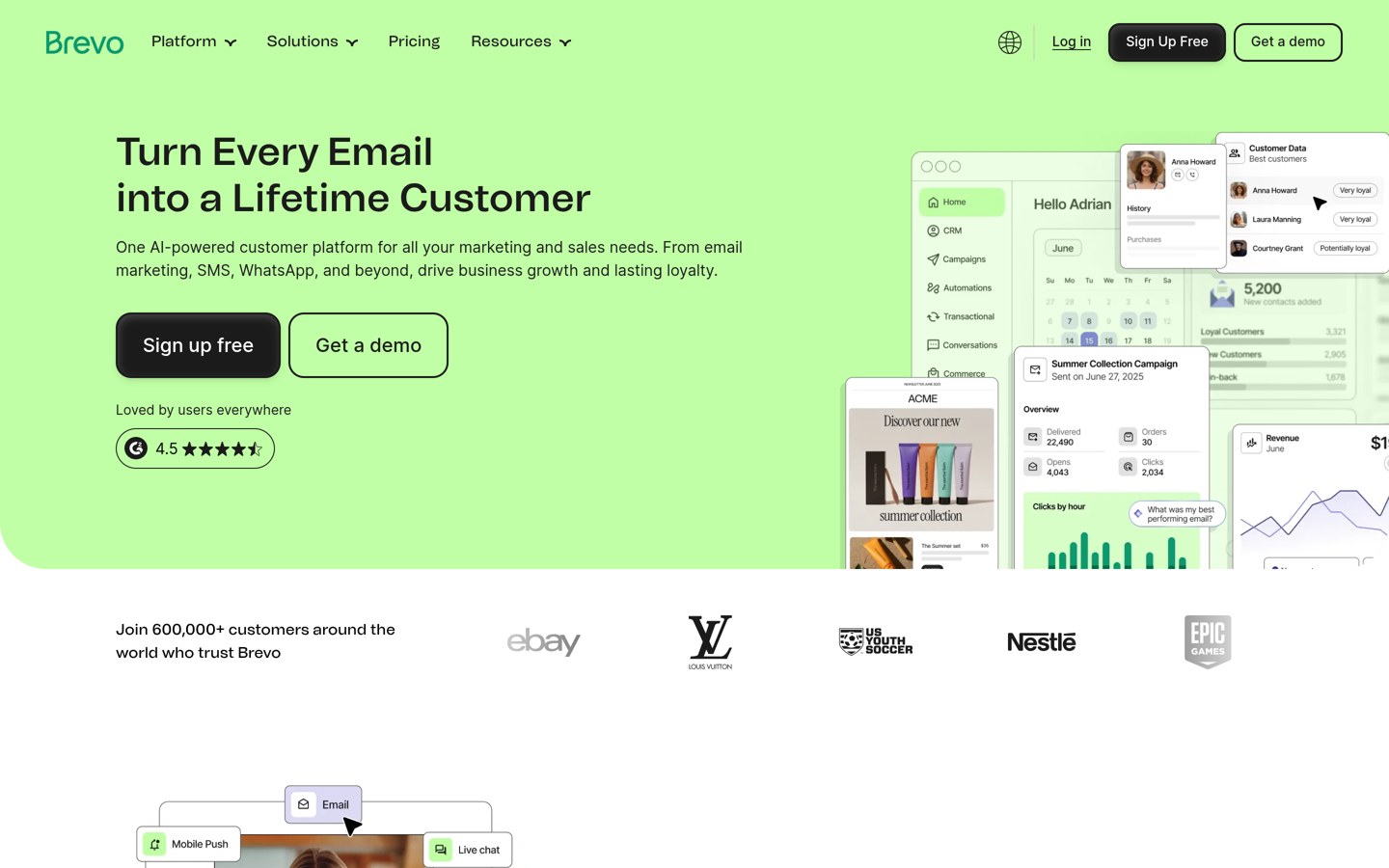
Brevo is an email, SMS and WhatsApp platform that charges by emails sent, not by contacts, so a growing list does not raise the bill. The free plan covers a small daily send limit, and Starter at $9 a month raises the limit and removes Brevo branding.
The trade off is depth. Brevo covers welcome series, abandoned-cart flows and basic segmentation, but its CRM and reporting are lighter than HubSpot or ActiveCampaign. It suits startups that want cheap, solid automation and pay only for what they send.
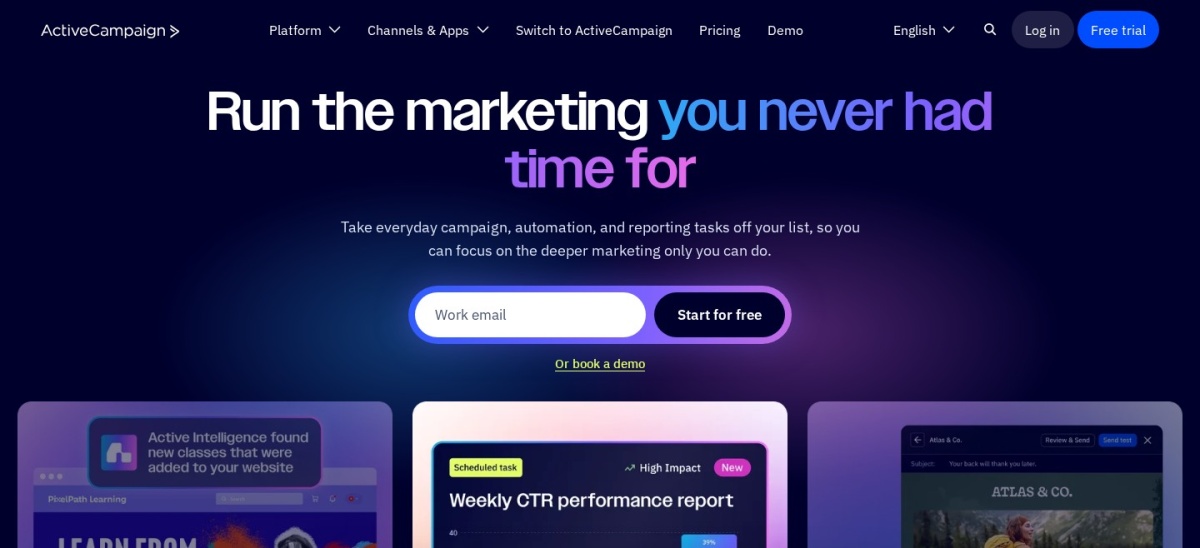
ActiveCampaign is a marketing automation platform built around multi-step workflows and a built-in CRM. Starter costs $15 a month billed yearly, or $19 month to month, for 1,000 contacts, with 950-plus automation recipes and 10,000 email sends a month.
The trade off is the Starter limits. Each automation allows only 5 actions, there is 1 user seat, and SMS, landing pages and lead scoring cost extra or need a higher plan. It suits startups that live in automation and will outgrow simple welcome flows fast.
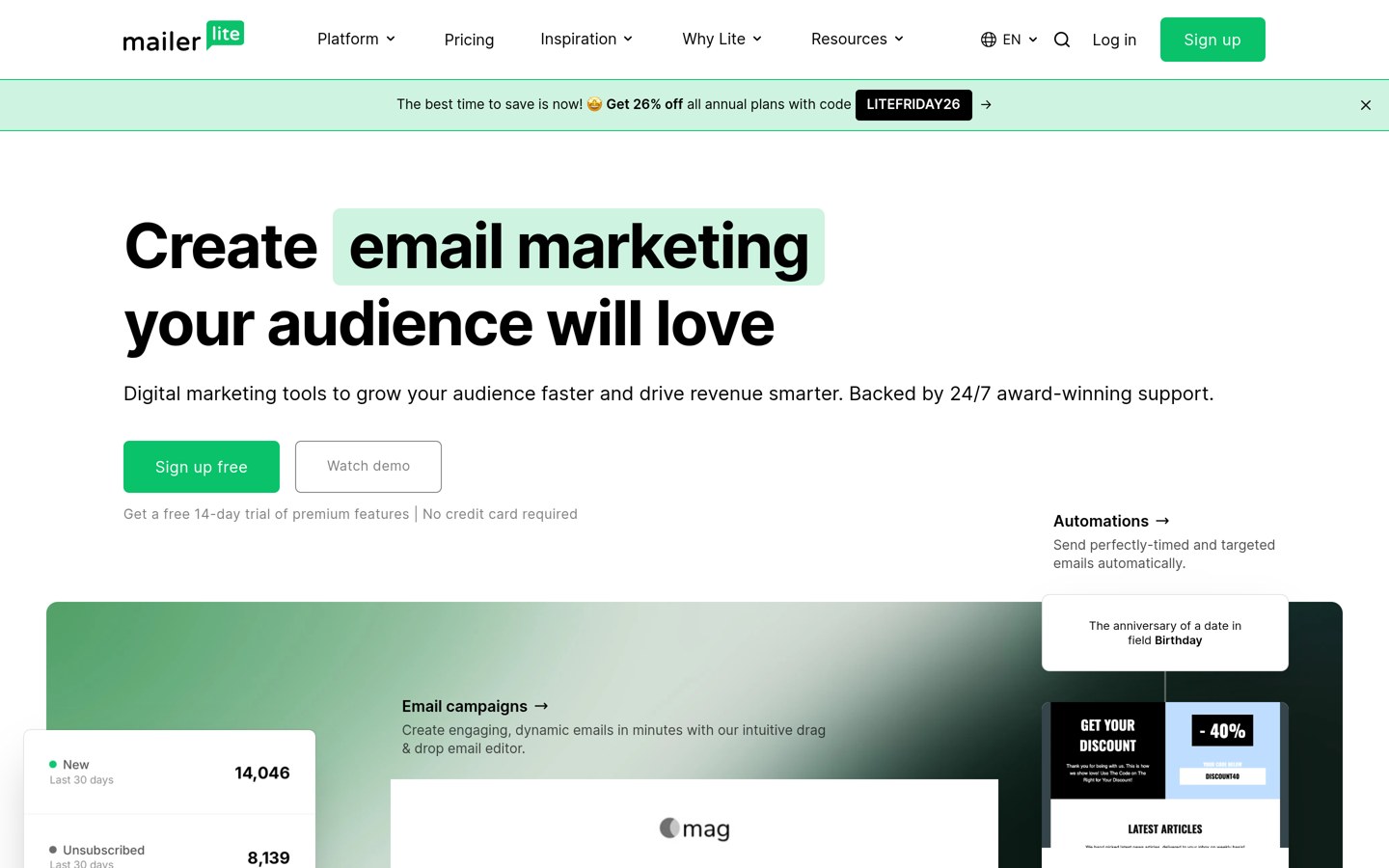
MailerLite is a simple email platform with automation, landing pages and signup forms in one place. The free plan covers 250 subscribers and 2,500 emails a month, and Comfort at $12 a month for 500 subscribers adds 50 automations and unlimited monthly emails.
The trade off is automation depth. MailerLite handles welcome series and simple triggers well, but it has no built-in CRM and its reporting is basic. It suits small teams that want a clean editor and a low bill.
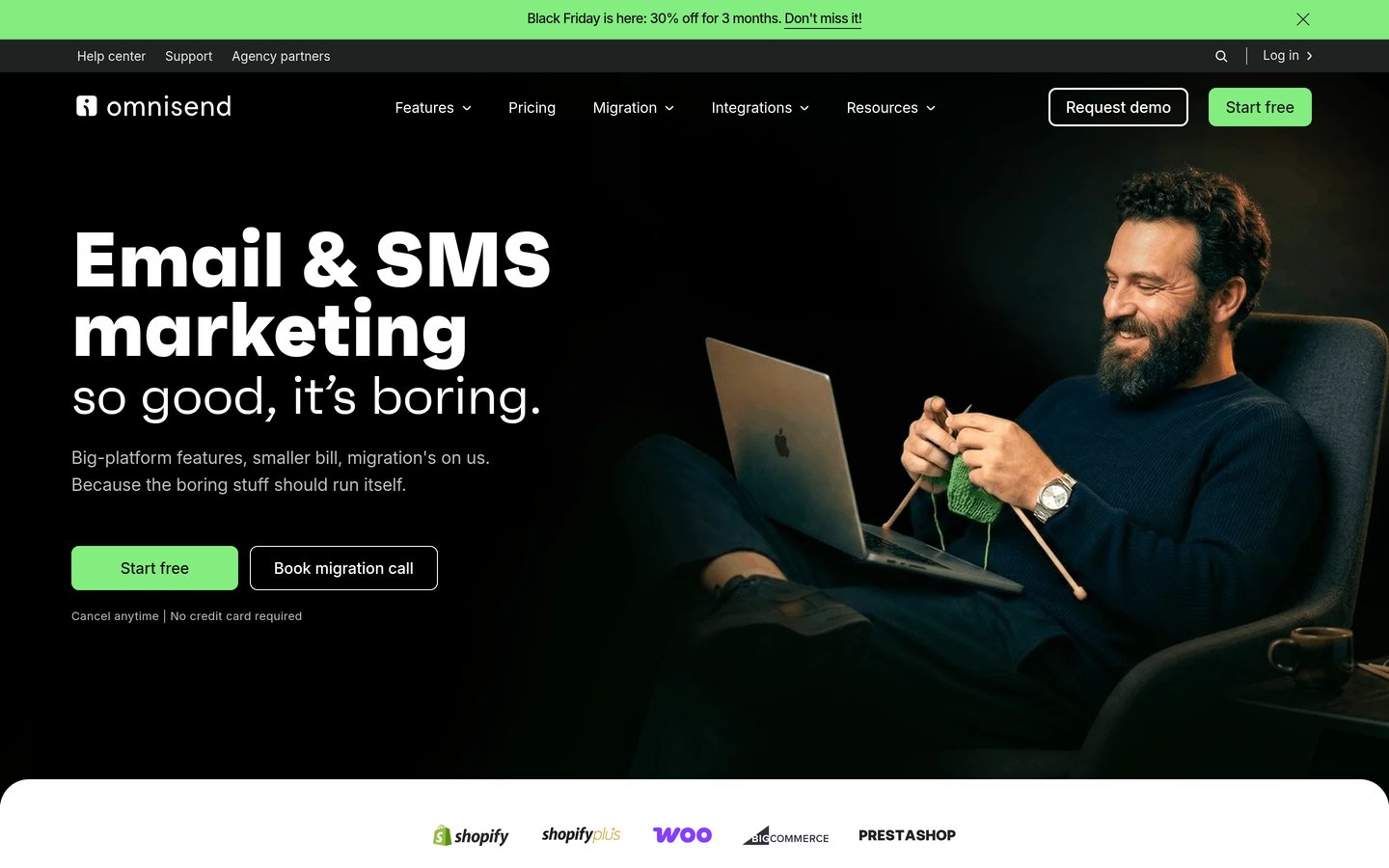
Omnisend is an email and SMS platform built for online stores, with prebuilt welcome, abandoned-cart and post-purchase flows. The free plan covers a small contact list, and Standard at $16 a month adds more contacts and SMS campaigns.
The trade off is focus. Omnisend is built around stores, so its CRM and B2B features are thin, and costs rise with list size. It suits startups that sell online and want email and SMS in one place.
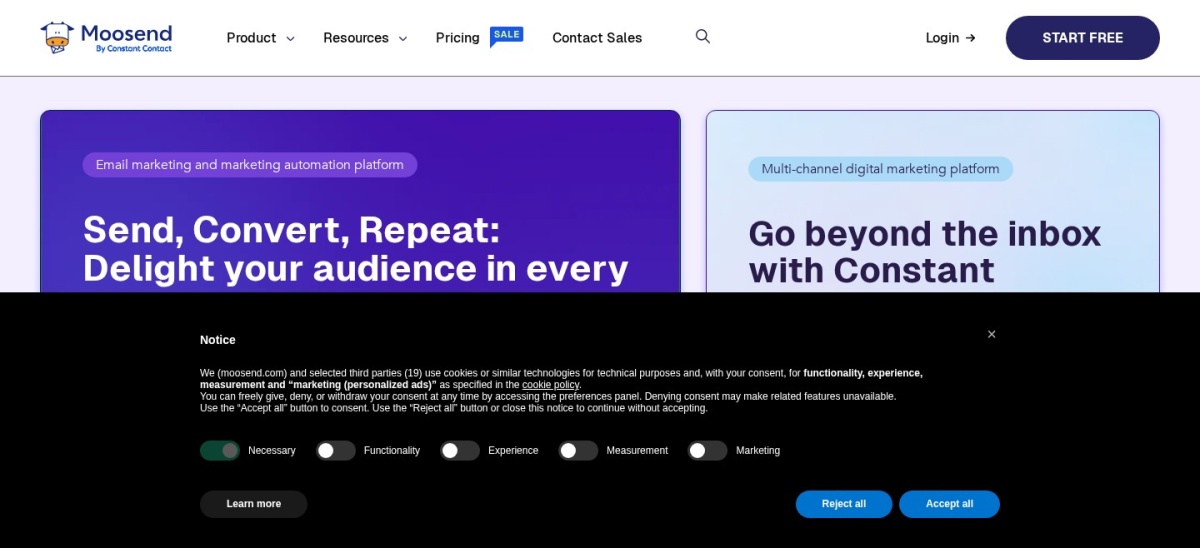
Moosend is an email platform with unlimited sends, a visual automation builder and landing pages on every paid plan. Pro starts at $9 a month for 500 contacts, and a 30-day trial covers all Pro features with no card required.
The trade off is ownership and scale. Moosend has changed hands twice since 2021, has no free plan, and offers only 42 integrations. It suits budget-first startups that send a lot of email to a small list.
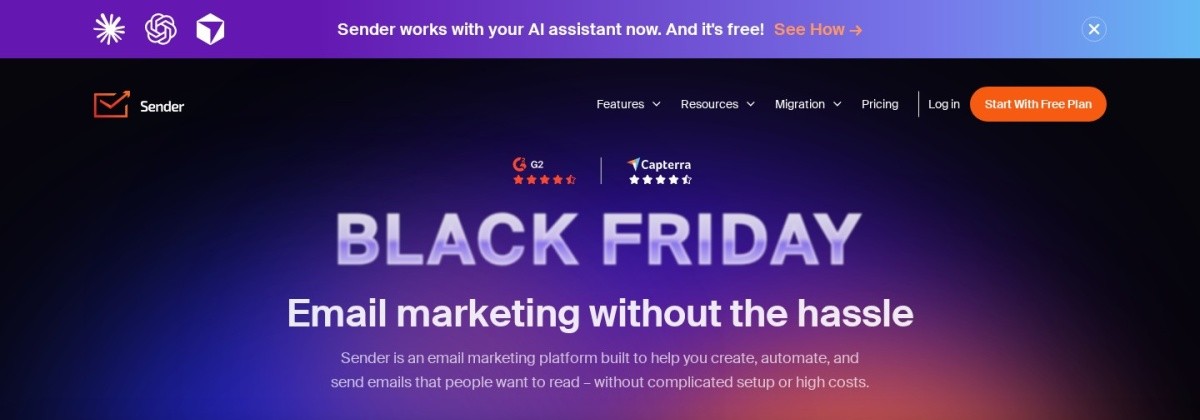
Sender is an email platform with automation, landing pages and signup forms, priced by subscribers. The free plan covers 2,500 subscribers and 15,000 emails a month, and Standard at $9 a month removes Sender branding and adds SMS messaging.
The trade off is polish. Sender has fewer templates than Mailchimp or Brevo, and some reviewers report slow support replies. It suits startups that want the most generous free plan in this list.
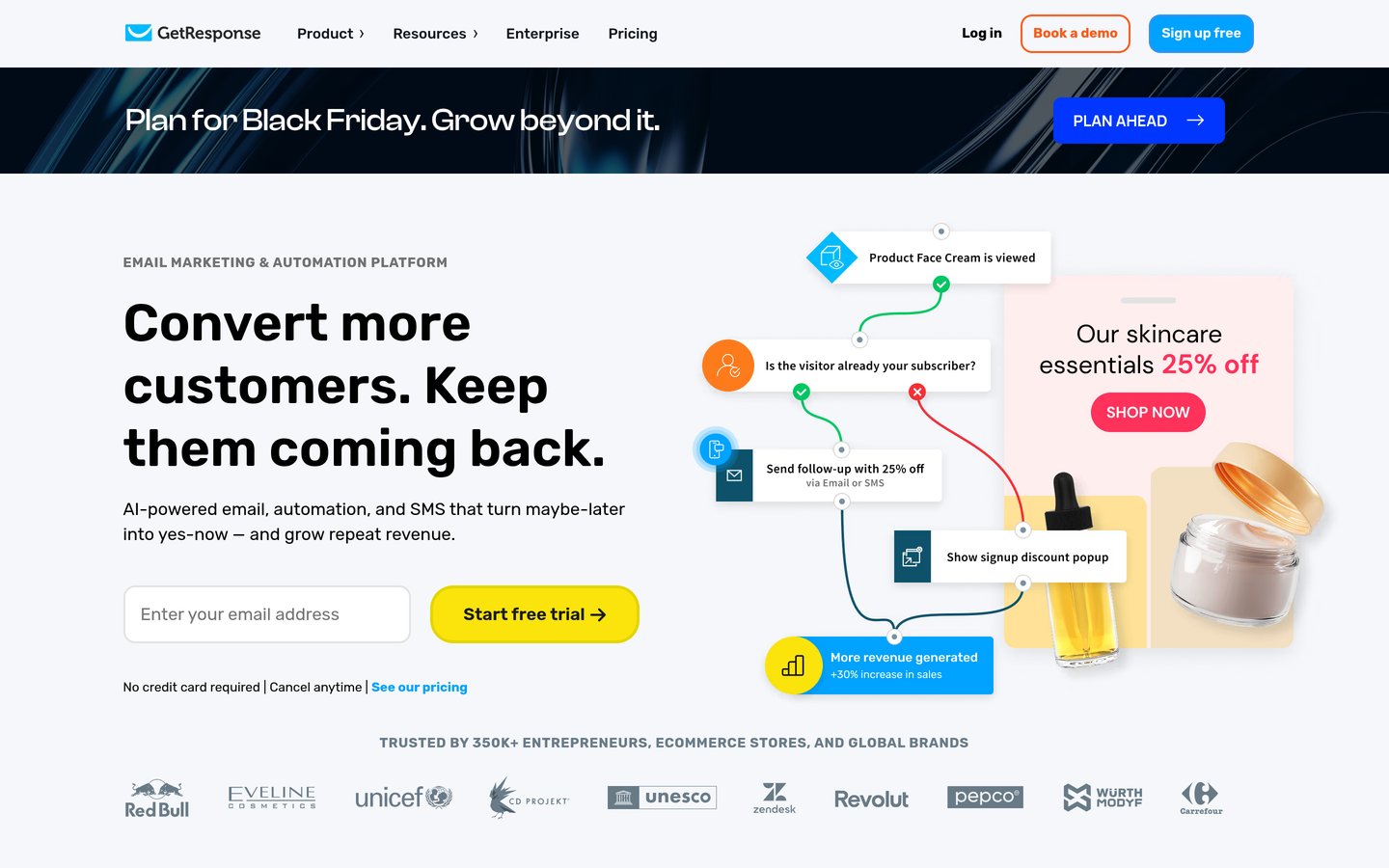
GetResponse is an all-in-one platform with email, automation, landing pages, webinars and a website builder. The free plan covers 500 contacts, and Starter at $19 a month for 1,000 contacts adds unlimited newsletters, autoresponders and landing pages.
The trade off is the Starter automation cap. Starter allows only 1 custom automation workflow, so real branching needs the $59 Marketer plan. It suits startups that also want webinars and courses in the same tool.
Free plans cover the basics well. Most include a welcome series, signup forms and basic reports, and Sender covers 2,500 subscribers without paying.
Paid plans mostly add room and depth. You get more contacts, more emails, more automations and, on most tools, SMS and A/B testing.
The jump that hurts is the second one. Starter plans are cheap, but branching automation, lead scoring and advanced reports often sit two tiers up, where prices triple.
If email earns money for the startup, the first paid year often costs less than one lost campaign. Build your list first with our newsletter signup guide, then pay for the plan that fits it.
How we chose
We started from the marketing automation tools most often recommended for startups, then kept the eight with a public G2 rating and a published entry price.
Prices come from each vendor's pricing page, checked on 25 November 2026. Ratings and review counts come from G2 on the same day. Where a vendor shows a sale or a first-year discount, the list shows the regular price.
We left out tools with no public entry price and tools built only for large enterprises. No vendor paid for a place, and we do not claim to have used these tools ourselves.
How to choose a marketing automation platform for your startup
Start with your list size and the one workflow you need first, then check the price at that size.
Count your contacts. Prices rise with list size on most of these tools, so check the price at 1,000 and at 5,000 contacts before you commit.
List the automations you need now. A welcome series and an abandoned-cart flow run on every tool here. Branching logic and lead scoring need a higher plan on most of them.
Try the free plan or trial first. Five tools here have a free plan. Use it to send a real campaign and check deliverability before you pay.
Check what the next tier costs. Starter plans are cheap, but the jump to the next tier can triple the price. Build your signup form first with our guide on creating a landing page in WordPress, then pick the tool that fits the list you collect.
FAQ
What is the best marketing automation platform for startups?
HubSpot Marketing Hub is the best pick for most startups. Its free plan covers up to 2 users, Starter costs $20 a seat a month, and it is rated 4.4 out of 5 by more than 16,000 G2 reviewers.
What is the cheapest marketing automation platform for startups?
Brevo, Moosend and Sender all start at $9 a month. Brevo is the best of the three for most startups, because it charges by emails sent and keeps contacts unlimited.
Is there a free marketing automation platform for startups?
Yes. HubSpot, Brevo, MailerLite, Omnisend and Sender all have free plans. Sender is the most generous, covering 2,500 subscribers and 15,000 emails a month free.
Does HubSpot have a free marketing automation plan?
HubSpot has a free plan for up to 2 users with basic email and forms. Simple automation starts on Starter at $20 a seat a month, while branching workflows need Professional at $890 a month.
What should a startup automate first?
Start with a welcome series for new subscribers, then an abandoned-cart flow if you sell online. Both run on every tool in this list, including the free plans.
When should a startup switch from a free plan to paid?
Switch when your list outgrows the free limits or when you need features the free plan blocks, such as branching automation, A/B testing or removing the vendor branding.
SaaS SEO and WordPress specialist with about 8 years of experience. Rakib compares WordPress plugins, themes, hosting and software using public pricing, documentation and user reviews. See how we rank.