HubSpot is the best lead generation tool for most small businesses, with a free CRM, forms and email, rated 4.4 out of 5 on G2 from 15,278 reviews. Pick Apollo for outbound prospecting and Brevo if you want the cheapest paid plan at $9 a month.
How we make this list: we compare pricing pages, product documentation and public user reviews, then re-check every price before each update. No product paid for a place. Disclosure.
HubSpot is the only tool here that covers CRM, forms, landing pages, email and live chat in one free plan.
Apollo is the highest rated tool in this list at 4.7 out of 5 on G2, and the only one built for outbound prospecting.
Brevo has the cheapest paid plan at $9 a month, and it charges by emails sent, not contacts stored.
Mailchimp, Zoho CRM and Hunter all have free plans, but their paid prices rise fast as lists and teams grow.
Leadpages is the only dedicated landing page builder here, starting at $37 a month with no free plan.
What a lead generation tool should do for a small business
Lead generation covers three jobs: capture a visitor's details, store them somewhere useful, and follow up before they go cold. A tool that only does one of those leaves the other two to chance.
For a small business the capture step matters most. Forms, landing pages, pop-ups and live chat turn traffic into contacts, and a CRM keeps those contacts in one place with a record of every follow-up.
Price is the second filter. Most tools in this list charge by contacts, seats or emails sent, so the starting price is rarely the price you pay after a year of growth.
The 9 best lead generation tools for small businesses
01
HubSpot
4.4/5on G2 (15,278 reviews, checked Nov 2026)
Paid from$20/mo
Best lead generation tool overall
Free planYes, CRM and forms
Landing pagesYes, on Starter
Built-in CRMYes
Paid planMarketing Hub Starter
hubspot.com
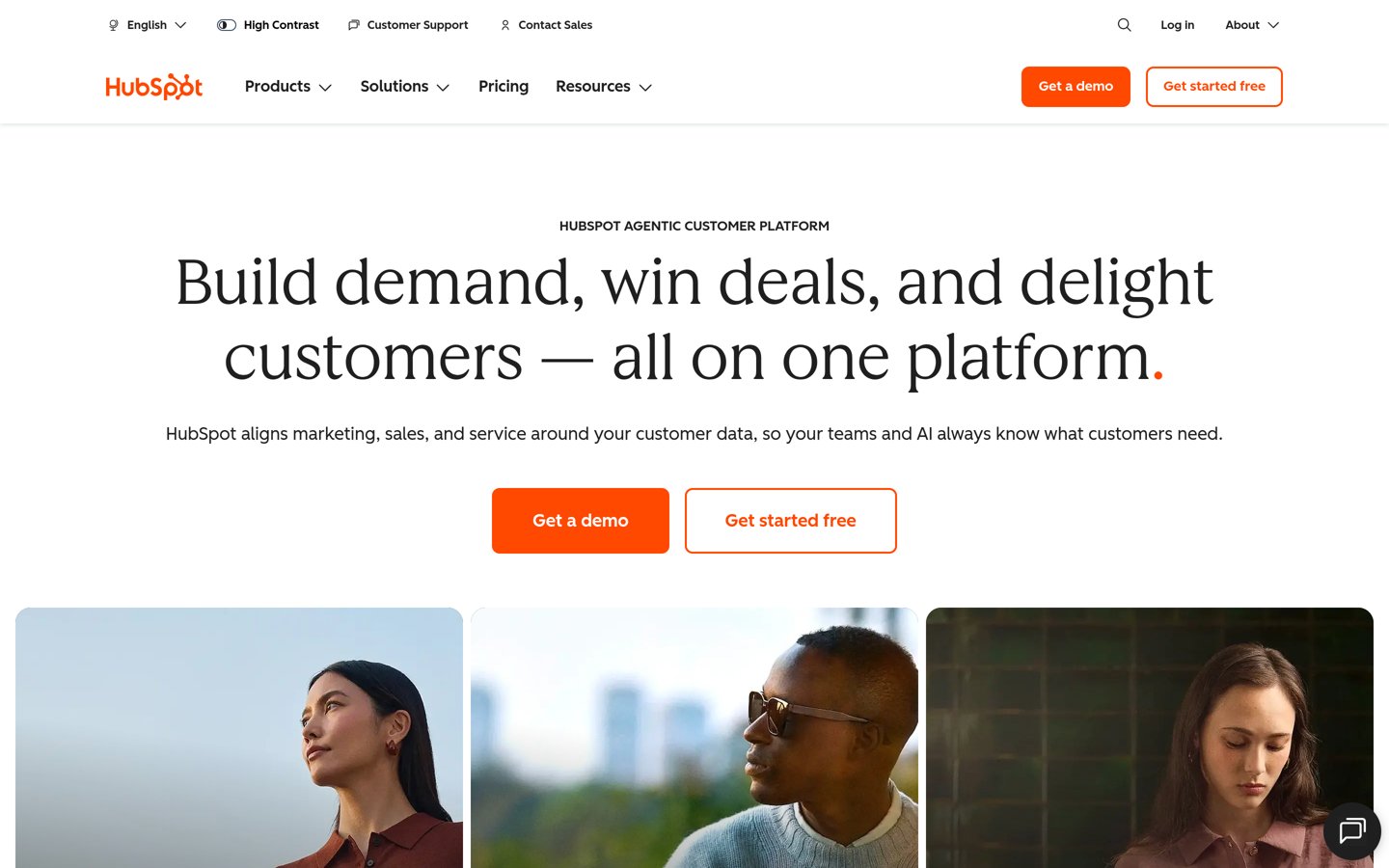
HubSpot homepage, captured Nov 2026.
HubSpot is an all-in-one CRM and marketing platform that covers forms, landing pages, live chat, email and contact management in one place. The free plan includes the CRM, forms, email marketing and live chat, so a small business can start capturing leads without paying. Starter adds branding removal and more automation.
The trade off is the price jump. Starter costs $20 per seat a month, and the automation, A/B testing and reporting most growing teams want sit in Professional at $890 a month. It suits small businesses that want one system for marketing and sales and expect to grow into it.
What we like
Free plan covers CRM, forms, email and live chat
Largest review base in this list
One record for every lead, from first form to sale
Watch out for
Big jump from Starter at $20 to Professional at $890 a month
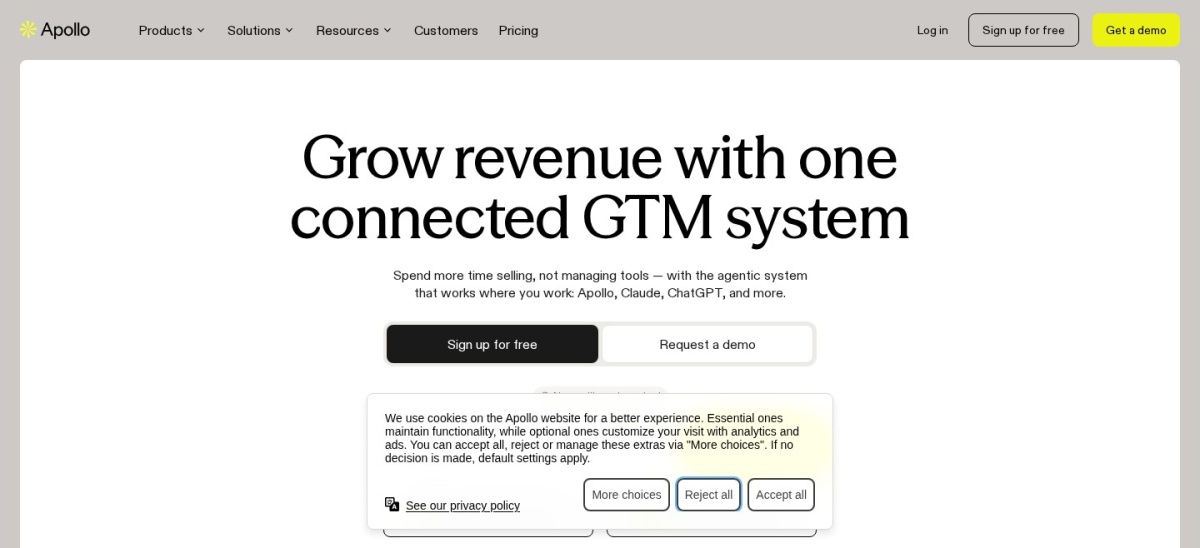
Apollo.io is a sales platform that combines a B2B contact database with email sequences, a dialer and basic deal tracking in one login. The free plan includes 900 credits a year, two sequences and basic filters, enough to test outbound prospecting before paying. Basic adds 30,000 credits per seat a year and unlimited sequences.
The trade off is data accuracy. Reviewers praise the filters and the all-in-one workflow, but outdated phone numbers and job titles are a common complaint. It suits small B2B teams that do their own outbound and want prospecting data and outreach in one tool.
What we like
Highest G2 rating in this list at 4.7 out of 5
Prospecting data, sequences and dialer in one tool
Free plan is usable for testing outbound
Watch out for
Contact data can be outdated, mainly phone numbers
Credit limits can feel tight on lower plans
Basic adds 30,000 credits a year and unlimited sequencesVisit apollo.io
03
ActiveCampaign
4.4/5on G2 (14,877 reviews, checked Nov 2026)
Starts at$15/mo
Best for email automation
Free planNo, 14-day trial
AutomationYes, multi-step
Built-in CRMYes, on Plus
Paid planStarter, 1,000 contacts
activecampaign.com
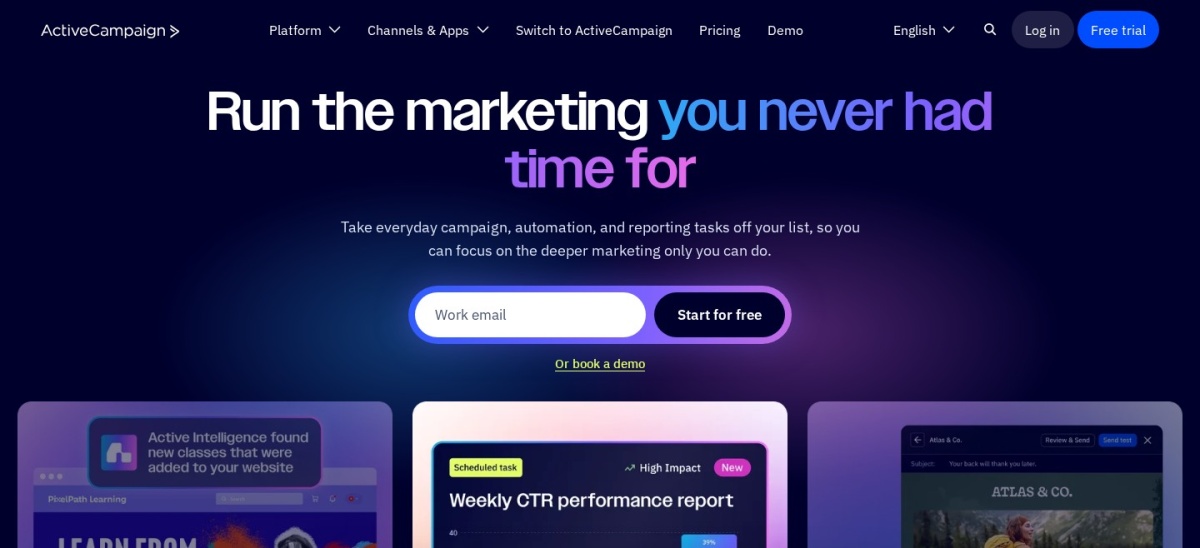
ActiveCampaign homepage, captured Nov 2026.
ActiveCampaign is an email marketing and automation platform built around behaviour-based workflows. Starter, at $15 a month billed yearly for 1,000 contacts, includes multi-step automation, segmentation and email campaigns. Its automation builder lets a small team send the right follow-up when a lead opens, clicks or buys.
The trade off is cost and complexity. The built-in CRM, lead scoring, SMS and WhatsApp are paid add-ons or higher plans, and the price rises with the contact list. It suits businesses whose revenue depends on email follow-up and who will use automation every week.
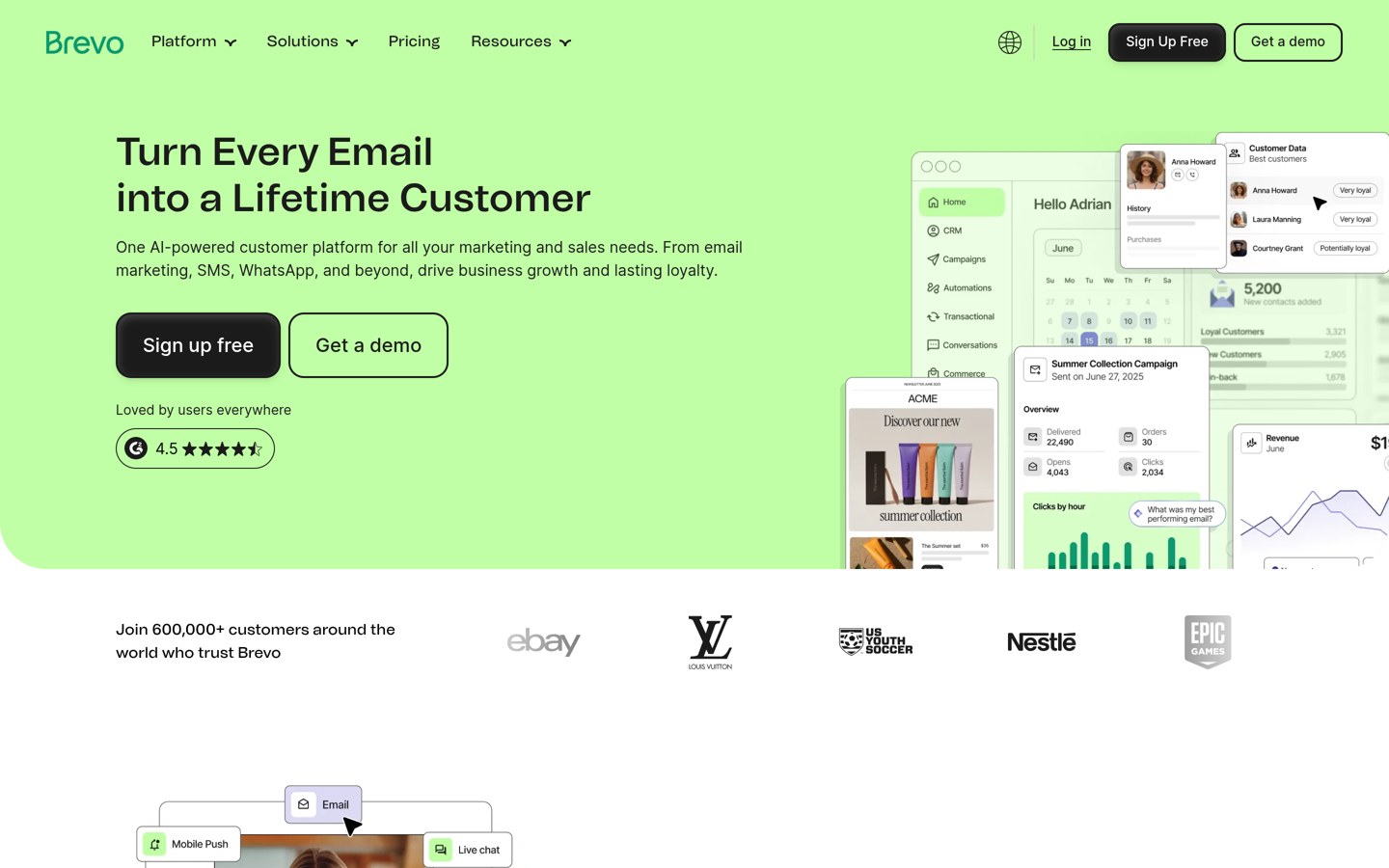
Brevo is an email marketing platform with a built-in CRM, SMS and WhatsApp messaging. The free plan covers 300 emails a day, unlimited contacts stored and basic automation, which is generous for a small list. Starter, from $9 a month, removes the daily sending cap for 5,000 emails a month.
The trade off is automation. Starter has no marketing automation; that starts with Standard at $18 a month, and removing the Brevo logo costs extra. It suits small businesses with a large list they email rarely, since Brevo charges by emails sent, not contacts stored.
Mailchimp is an email marketing platform for small businesses, with campaigns, automation flows, landing pages and signup forms. The free plan covers 250 contacts and 500 emails a month. Essentials, from $13 a month for 500 contacts, adds A/B testing, automated journeys and removal of Mailchimp branding.
The trade off is the bill. Pricing rises with the contact count, so a growing list can cost far more than the $13 starting price suggests. It suits small businesses that want an easy editor, many integrations and a familiar tool for newsletters and simple automation.
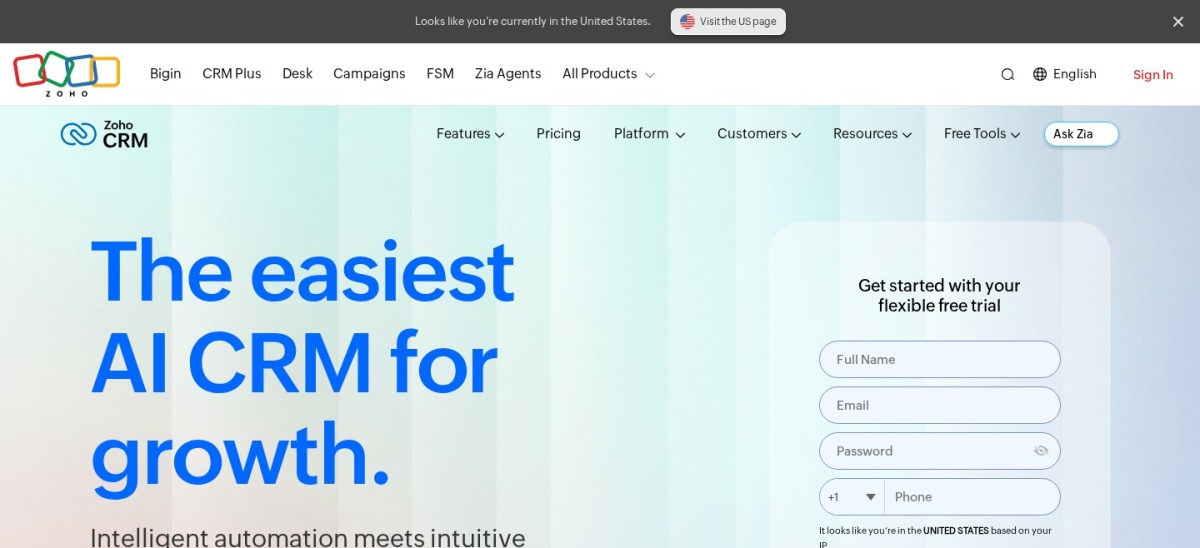
Zoho CRM is a low-cost customer platform for capturing, scoring and following up leads. The free edition covers up to 3 users and 5,000 records with leads, contacts and tasks. Standard, at $14 per user a month billed yearly, adds workflows, sales forecasting, custom reports and 100,000 records.
The trade off is the learning curve. Settings are deep and the interface can feel crowded, so setup takes longer than with simpler CRMs. It suits small teams that want strong customisation and a low per-seat price and are willing to spend time configuring it.
What we like
Free edition for teams of up to 3 users
Low per-seat price with deep customisation
Scoring rules and workflows on Standard
Watch out for
Crowded settings and a steep learning curve
Support quality is a common complaint
Professional adds more automation, from $23 a user a monthVisit zoho.com
07
Pipedrive
4.3/5on G2 (2,156 reviews, checked Nov 2026)
Starts at$14/mo
Best for visual pipelines
Free planNo, 14-day trial
Pipeline viewYes, drag-and-drop
Email syncNo, on Essential
Paid planEssential, per user
pipedrive.com
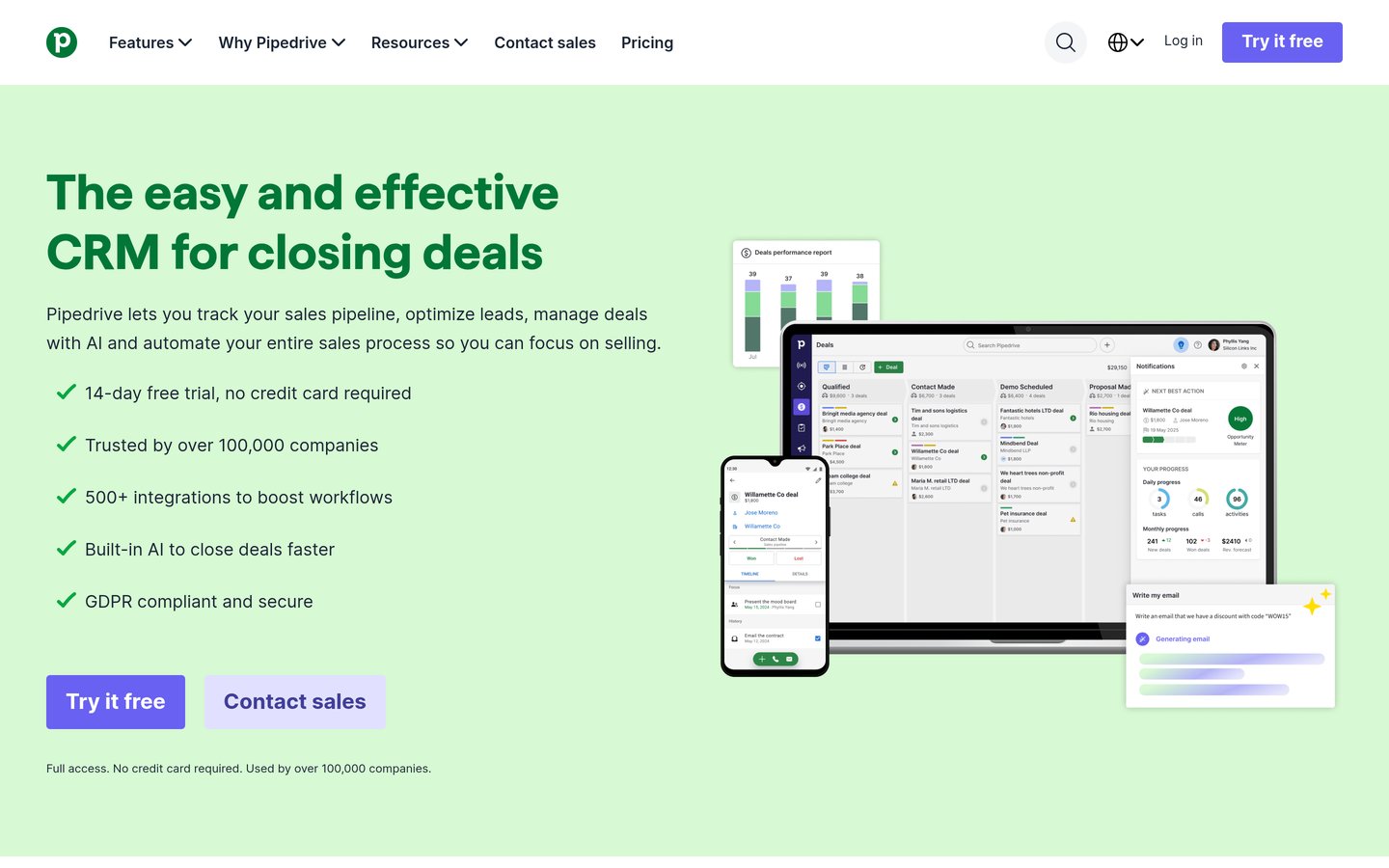
Pipedrive homepage, captured Nov 2026.
Pipedrive is a sales CRM built around a visual drag-and-drop pipeline. Essential, at $14 per user a month billed yearly, covers pipeline management, deal tracking and basic reporting for small sales teams. Its clear deal board and activity reminders keep follow-ups visible without extra setup.
The trade off is email. Essential has no two-way email sync, so emails must be logged by BCC, and templates and tracking start at Growth for $39 a month. It suits deal-led small teams that live in the pipeline and want the simplest CRM that still tracks every opportunity.
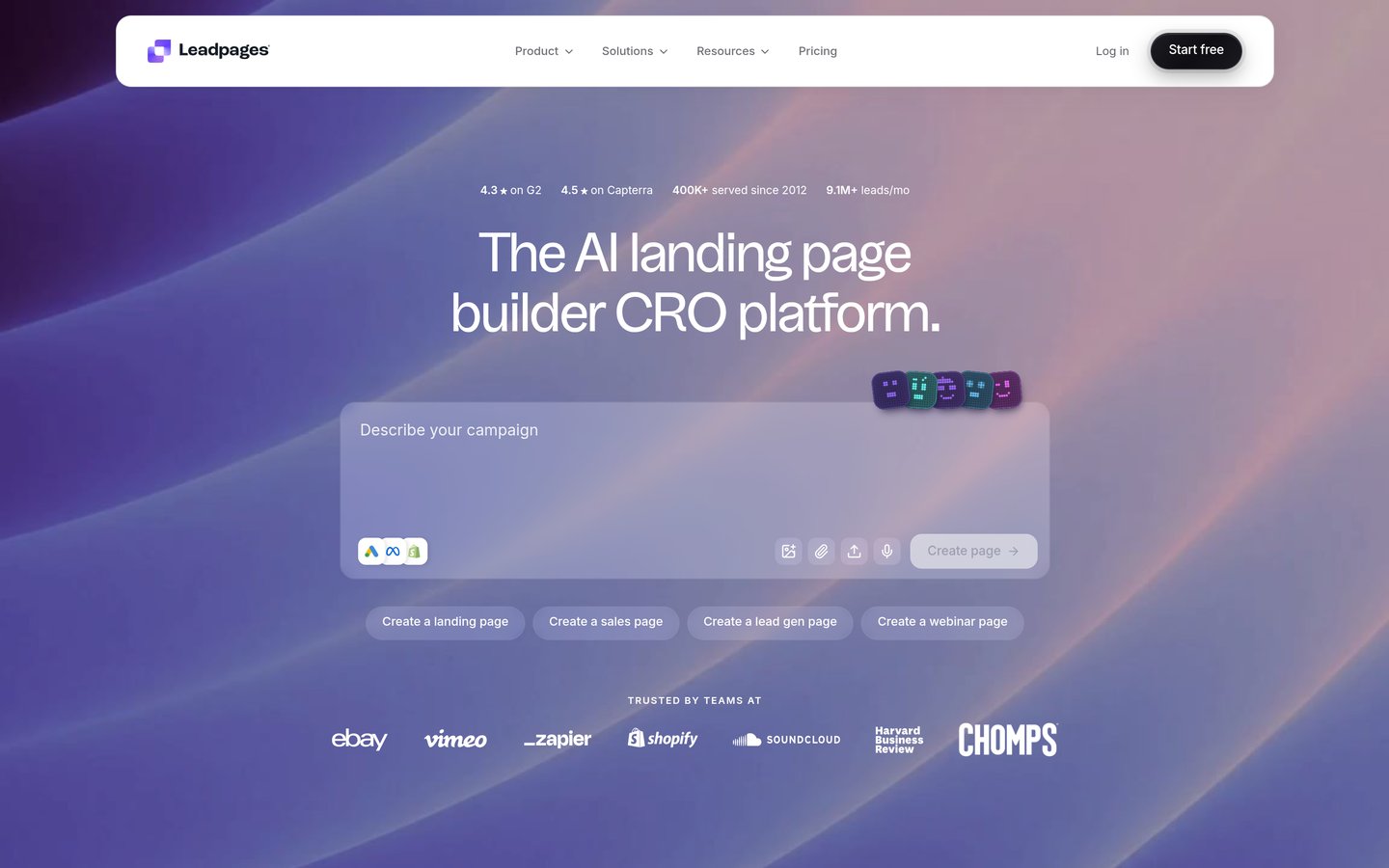
Leadpages is a landing page builder for small businesses that need pages, pop-ups and alert bars without a developer. Standard, at $37 a month billed yearly, includes unlimited landing pages and pop-ups, free hosting and conversion-focused templates for one site. Pages publish fast and connect to most email platforms.
The trade off is scope. There is no free plan, and Leadpages is a page builder, not a CRM or email platform, so leads must go somewhere else. It suits businesses running ads or campaigns that need a dedicated page for every offer.
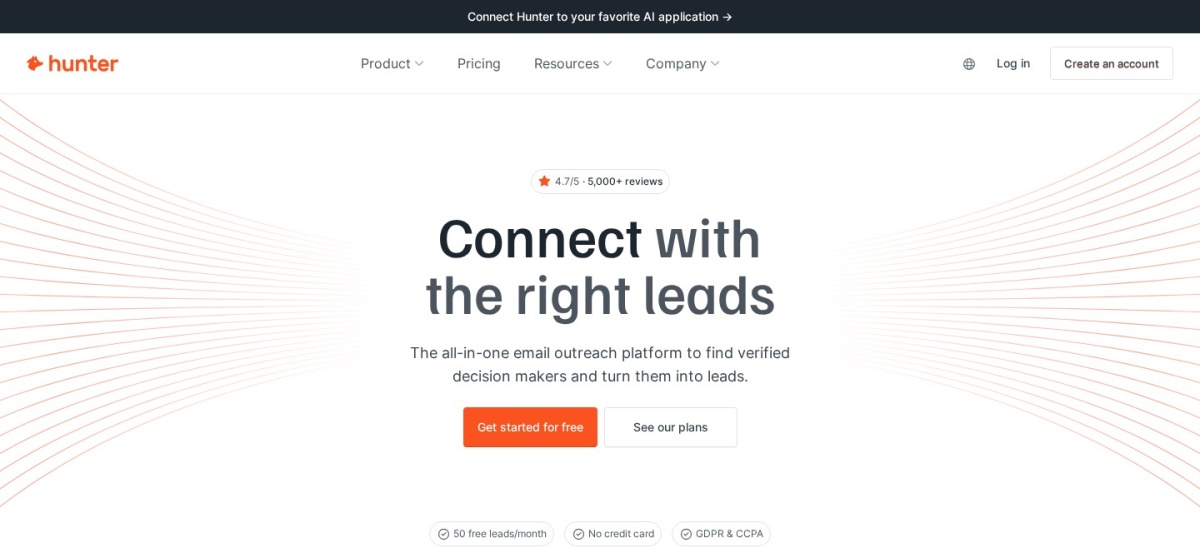
Hunter is an email-finding tool that finds and verifies professional email addresses from public web sources. The free plan includes 50 credits a month for searches and verifications. Starter, at $49 a month, or $34 a month billed yearly, raises that to 2,000 credits a month and adds campaigns and more connected inboxes.
The trade off is price per credit. Verifications are limited even on Starter, and heavy prospecting burns credits fast. It suits small teams that need to find a decision maker's email and check it is valid before sending a first message.
Capture tools win the first click. Landing pages, forms and pop-ups turn a visitor into a named contact, and that is where Leadpages and Hunter earn their place.
Nurture tools win the weeks after. Email automation, CRM follow-up and lead scoring turn that contact into a customer, and that is where HubSpot, ActiveCampaign and Brevo do the heavy work.
Most small businesses need one of each. A common pair is Leadpages for pages plus HubSpot or Brevo for the follow-up, or Apollo for finding contacts plus Pipedrive for tracking them.
How we chose
We started from the lead generation tools most often recommended for small businesses, then kept those with a published price, a free plan or trial, and a public G2 rating.
Prices come from each vendor's pricing page and G2 pricing listings, checked on 25 November 2026. Ratings and review counts come from G2 on the same day. Where a vendor shows a sale or an annual discount, the list shows the regular monthly price.
We left out enterprise-only platforms and tools with no published price. No vendor paid for a place, and we do not claim to have used these tools ourselves for this list.
How to choose a lead generation tool
Start with where your leads come from today, then pick the tool that fixes the weakest step.
Map how leads reach you now. List every source: website forms, ads, referrals, cold outreach. The tool should cover your biggest source first.
Decide if you need capture, CRM or both. A landing page builder alone will not follow up leads, and a CRM alone will not create them. Most small teams need both.
Check the price at your real volume. Work out what the plan costs at your contact count or seat count in a year, not at the starting tier. See our guide on email marketing costs for how list size moves the bill.
Start on the free plan or trial. Run one real campaign end to end before paying. If the free plan cannot do that, the tool is not the right fit.
FAQ
What is the best lead generation tool for a small business?
HubSpot is the best all-round pick for most small businesses. Its free plan covers a CRM, forms, email and live chat, and it is rated 4.4 out of 5 on G2 from more than 15,000 reviews.
What is the cheapest lead generation tool?
Brevo has the cheapest paid plan in this list at $9 a month for Starter. Its free plan covers 300 emails a day, and it charges by emails sent rather than contacts stored.
Do I need a CRM to generate leads?
Not at first, but a CRM helps once leads arrive faster than you can track them by hand. HubSpot, Zoho CRM and Pipedrive all store leads and follow-ups in one place.
Are landing pages better than forms for lead generation?
Landing pages usually convert better for paid traffic because they focus on one offer with no distractions. Forms work well on pages visitors already trust, such as a contact or pricing page.
Can I generate leads for free?
Yes, up to a point. HubSpot, Brevo, Mailchimp, Zoho CRM, Apollo and Hunter all have free plans, but each caps contacts, emails or credits, so growing teams will need a paid plan.
What is the difference between lead capture and lead nurturing?
Lead capture collects a visitor's details through a form, landing page or pop-up. Lead nurturing follows up with emails, calls and content until that person is ready to buy.
SaaS SEO and WordPress specialist with about 8 years of experience. Rakib compares WordPress plugins, themes, hosting and software using public pricing, documentation and user reviews. See how we rank.