LabWare LIMS is the best laboratory software for most labs, combining LIMS, ELN and laboratory execution tools in one platform rated 4.5 out of 5 on G2 from 102 reviews. Pick QBench for published pricing from $16,500 a year, or SciNote for a free electronic lab notebook.
How we make this list: we compare pricing pages, product documentation and public user reviews, then re-check every price before each update. No product paid for a place. Disclosure.
LabWare is the top pick for large regulated labs: LIMS, ELN and LES in one platform, rated 4.5/5 on G2 from 102 reviews.
STARLIMS is the enterprise alternative, rated 4.5/5 from 159 reviews, the largest review base among the enterprise tools.
QBench and CloudLIMS are the only tools with published prices: QBench from $16,500 a year for 5 users, CloudLIMS from $310 per user a month for 3 users.
Benchling and SciNote are the R&D picks; SciNote has a free version for individual users and the largest review base at 303 G2 reviews.
Scispot has the highest rating at 4.9/5, but from only 15 reviews, so treat it as a promising newcomer rather than a proven standard.
What laboratory software has to cover
Laboratory software replaces paper notebooks and spreadsheets with structured, searchable records. When a result is questioned months later, the lab needs to show what sample came in, what test ran, who signed off and what changed.
The category splits two ways. A LIMS tracks samples, tests and results through the lab, while an electronic lab notebook (ELN) records how experiments were done. Some tools do one well, some do both, and the right pick depends on whether the lab runs routine testing or discovery research.
Compliance decides more than features. Labs under GLP, GMP or 21 CFR Part 11 need audit trails, e-signatures and version control, and those features often sit on higher tiers. Records also need safe keeping, and our guide to the 3-2-1 backup rule for websites explains the same three-copy thinking that protects lab data.
Price is the hardest part to compare. Only QBench and CloudLIMS publish prices here; the rest quote per lab, so budget a demo and a sales process for each of them.
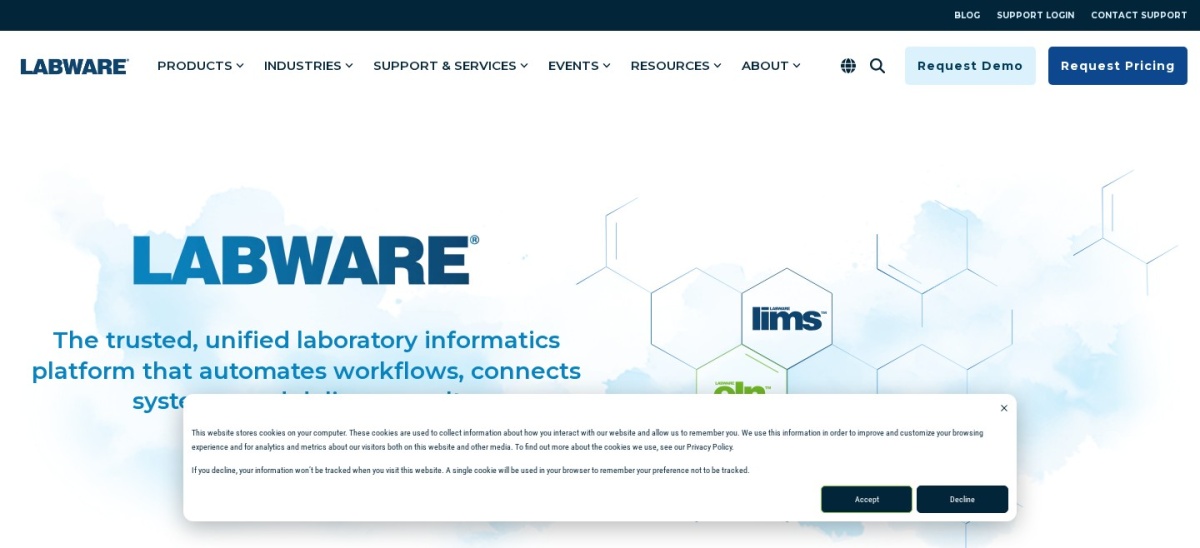
LabWare LIMS is the enterprise standard for laboratory informatics, combining LIMS, electronic lab notebook and laboratory execution system functions on one platform. It covers sample management, instrument interfacing, audit trails and 21 CFR Part 11 electronic signatures, and it is rated 4.5 out of 5 on G2 from 102 reviews.
The trade off is scale and cost. Pricing is quoted only, implementations run through the vendor's services team and take months, and smaller labs will find the depth more than they need. It suits large regulated labs that want one system to last a decade.
What we like
One platform for LIMS, ELN and LES
Deep configurability for complex workflows
Rated 4.5/5 on G2 from 102 reviews
Strong support scores from reviewers
Watch out for
Quote-only pricing with no public numbers
Implementations take months and need vendor services
Dated interface noted by some reviewers
Quoted pricing; implementation and validation are scoped separatelyVisit labware.com
02
STARLIMS
4.5/5on G2 (159 reviews, checked Nov 2026)
PricingCustom/yr
Best for high-throughput regulated labs
DeploymentCloud or on-premises
ELN includedYes
IndustriesPharma, food, clinical
Entry priceQuote only
starlims.com
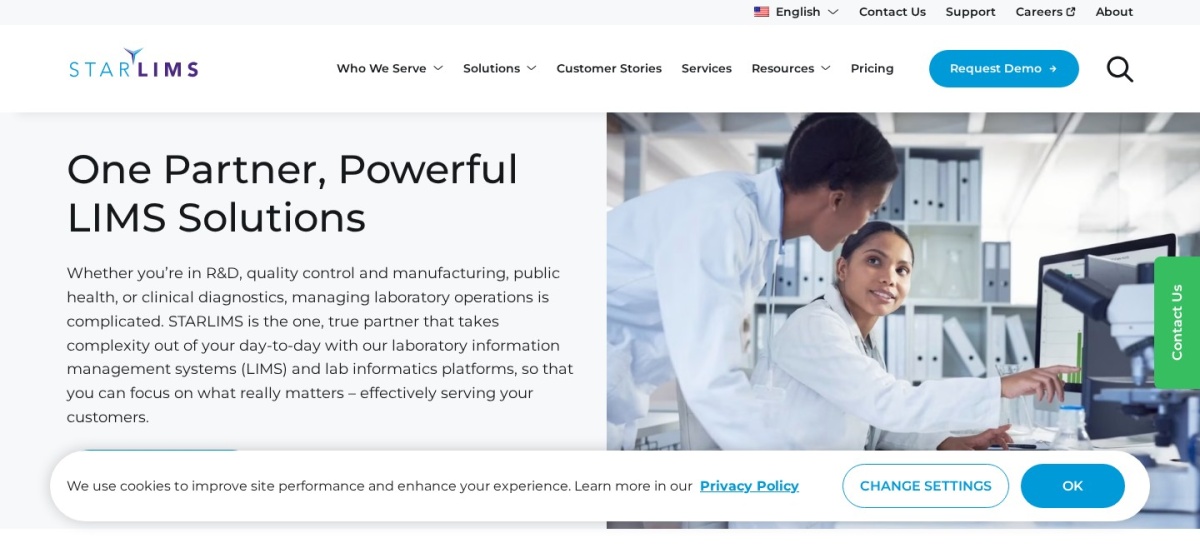
STARLIMS homepage, captured Nov 2026.
STARLIMS is a laboratory informatics suite that has served regulated labs since the 1980s, covering LIMS, ELN, scientific data management and analytics. It handles quality control, manufacturing, public health and clinical diagnostics labs, and it is rated 4.5 out of 5 on G2 from 159 reviews.
The trade off is buying and learning it. Pricing is quoted only, and reviewers note an outdated interface and multi-step screens for common lookups. It suits high-throughput labs that need deep compliance and instrument integration.
What we like
Rated 4.5/5 on G2 from 159 reviews
Covers LIMS, ELN, SDMS and analytics in one suite
Strong compliance and data-integrity controls
Serves many industries, from pharma to food
Watch out for
Quote-only pricing
Reviewers note a dated, less intuitive interface
Implementation is a large project
Quoted pricing; cloud subscription or on-premises deploymentVisit starlims.com
03
QBench
4.6/5on G2 (149 reviews, checked Nov 2026)
Starts at$16,500/yr
Best published pricing for small labs
Cheapest planFoundation, $16,500/yr
Users included5
Free trialNo
QMSAdvanced plan
qbench.com
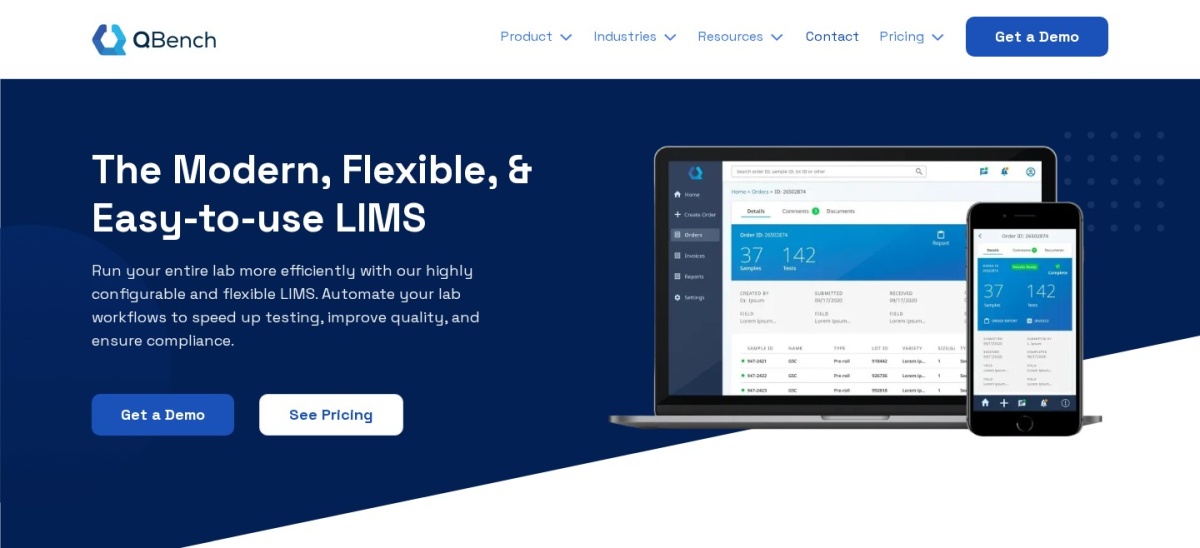
QBench homepage, captured Nov 2026.
QBench is a cloud LIMS with no-code configuration and the clearest pricing in this list: Foundation costs $16,500 a year and includes 5 users. It covers orders, samples, tests, batches, results, approvals and e-signatures, and it is rated 4.6 out of 5 on G2 from 149 reviews.
The trade off is the add-ons. Training costs $5,000 to $10,000 extra, managed integrations start at $1,500 a year, and quality management only arrives in Advanced at $25,500 a year. It suits testing labs that want a modern LIMS with a price they can budget.
What we like
Published pricing from $16,500 a year for 5 users
No-code configuration and templates
Rated 4.6/5 on G2 from 149 reviews
Customer portal and API in Growth
Watch out for
Training costs $5,000 to $10,000 extra
QMS and billing only in the Advanced plan
Reviewers note slow performance at times
Growth adds the customer portal and inventory at $19,500 a yearVisit qbench.com
04
Labguru
4.6/5on G2 (165 reviews, checked Nov 2026)
PricingCustom/yr
Best ELN plus LIMS for research teams
DeploymentCloud
ELN includedYes
InventoryYes, with barcodes
Entry priceQuote only
labguru.com
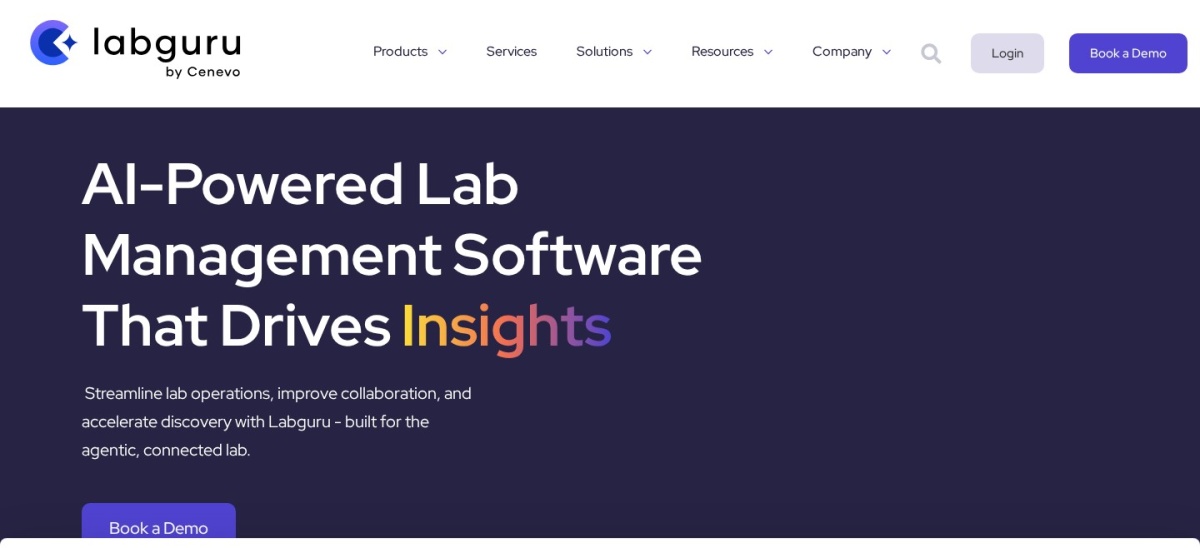
Labguru homepage, captured Nov 2026.
Labguru is a cloud platform that combines an electronic lab notebook, LIMS and inventory management, so experiments link directly to the samples and reagents they used. It adds dashboards, workflows and audit trails, and it is rated 4.6 out of 5 on G2 from 165 reviews.
The trade off is price transparency. There is no published price, so budgeting needs a demo and a quote, and some reviewers note limited functionality and slow performance. It suits research teams that want notebook, inventory and sample tracking together.
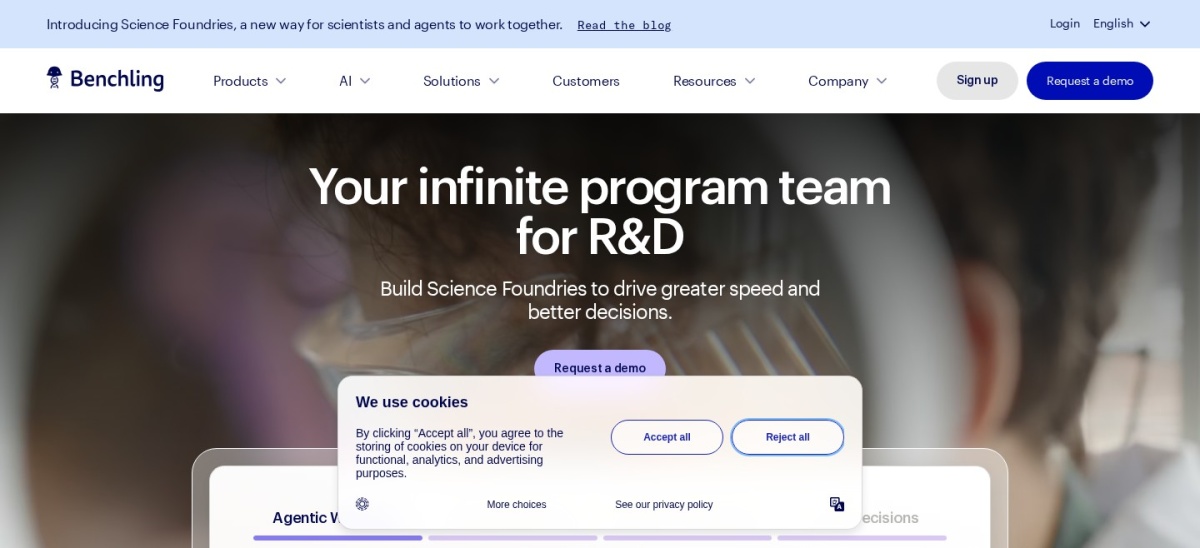
Benchling is the R&D platform for biotech, built around a cloud notebook, registry and inventory for biomolecules, cell lines and reagents. It adds molecular biology tools, workflow automation and AI features, and it is rated 4.5 out of 5 on G2 from 65 reviews.
The trade off is cost and reach. Commercial pricing is quoted only, reviewers call advanced modules pricey, and some note navigation and a learning curve. It suits funded biotech and pharma R&D teams; academics get a free tier.
What we like
Purpose-built molecular biology and registry tools
Free tier for academic labs
Rated 4.5/5 on G2 from 65 reviews
Strong data model for computational science
Watch out for
Commercial pricing is quoted only
Reviewers call advanced modules pricey
Navigation and learning curve noted by reviewers
Paid plans are quoted; Registry and Inventory are commercial featuresVisit benchling.com
06
CloudLIMS
4.5/5on G2 (62 reviews, checked Nov 2026)
Starts at$310/user/mo
Best transparent pricing for testing labs
Cheapest rate$310/user/mo, 3 users
BillingAnnual
Free planNo
EditionsStandard, Enterprise
cloudlims.com
CloudLIMS homepage, captured Nov 2026.
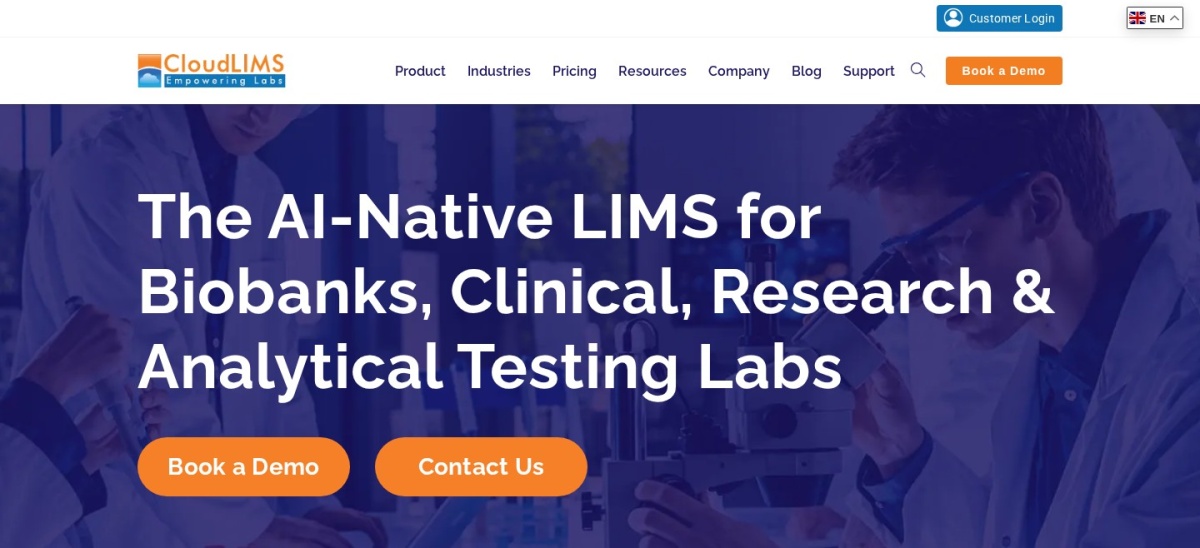
CloudLIMS is a cloud LIMS with a published per-user rate card: $310 per user a month for 3 users on annual billing, falling to $42 at 100 users. It covers sample tracking, chain of custody, CoA reporting and compliance, and it is rated 4.5 out of 5 on G2 from 62 reviews.
The trade off is the minimums. A lab with one or two people still buys at least 3 seats, and the per-user rate is steep under 10 users. It suits small and mid-size testing labs, clinical diagnostics labs and biobanks that want a price in writing.
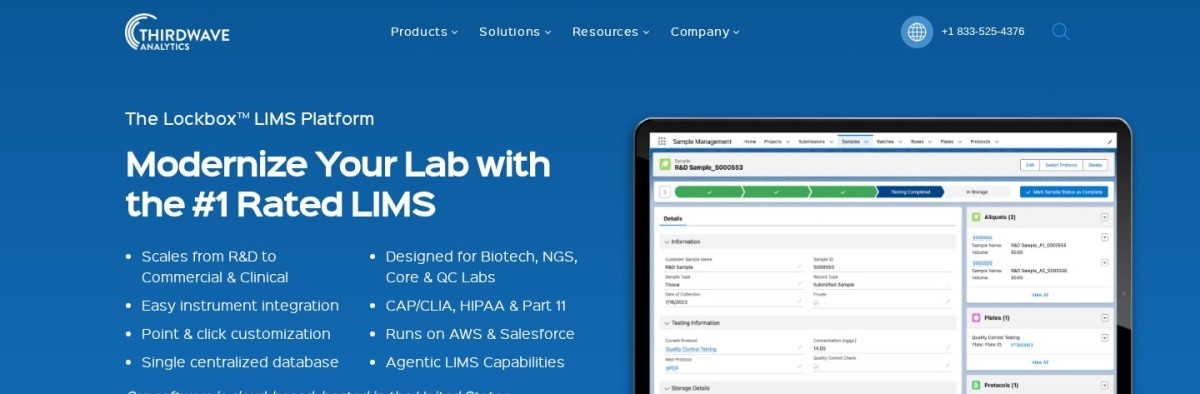
Lockbox LIMS is a cloud LIMS from Third Wave Analytics that runs on Salesforce, built for labs whose protocols do not fit off-the-shelf templates. It covers sample tracking, protocol execution, storage down to the box position and inventory, and it is rated 4.8 out of 5 on G2 from 46 reviews.
The trade off is size and setup. Pricing is quoted after a demo, reviewers say the initial setup is a lot of work, and the vendor is smaller than the enterprise names here. It suits specialty labs that need deep configuration without an enterprise project.
What we like
Rated 4.8/5 on G2 from 46 reviews
Support rated 10.0/10 by G2 reviewers
Point-and-click configuration for unique protocols
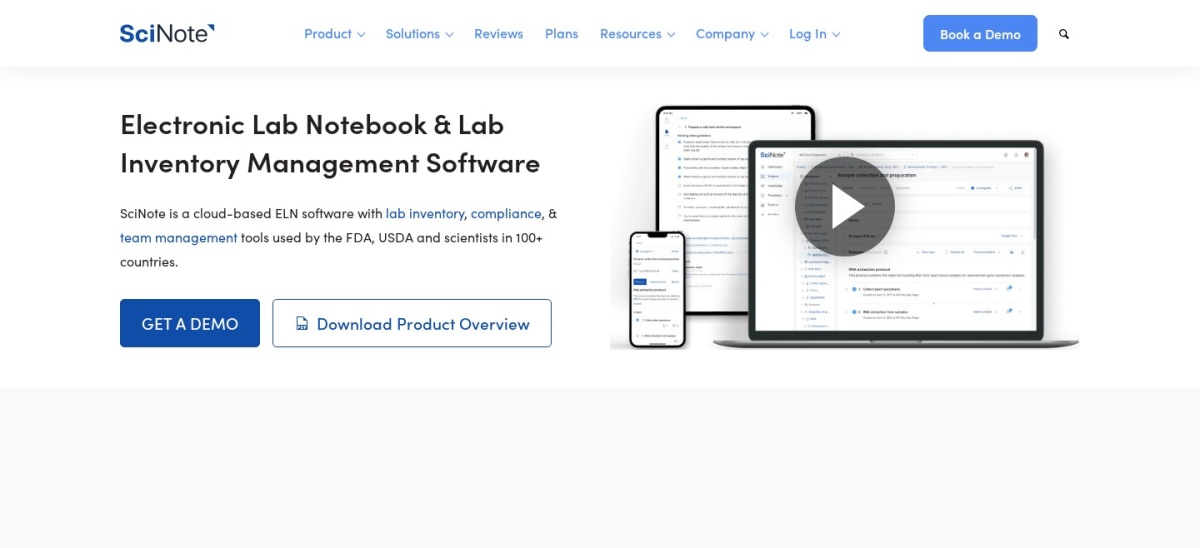
SciNote is a cloud electronic lab notebook with inventory management, protocol templates and team tools, used by the FDA and USDA and scientists in more than 100 countries. It has a free version for individual users, and it is rated 4.2 out of 5 on G2 from 303 reviews.
The trade off is pricing opacity. Paid tiers (Essential, Validated, Platinum) publish no prices, and e-signatures sit only on the Validated and Platinum plans. It suits academic and small commercial labs that want a clean notebook with a compliance path.
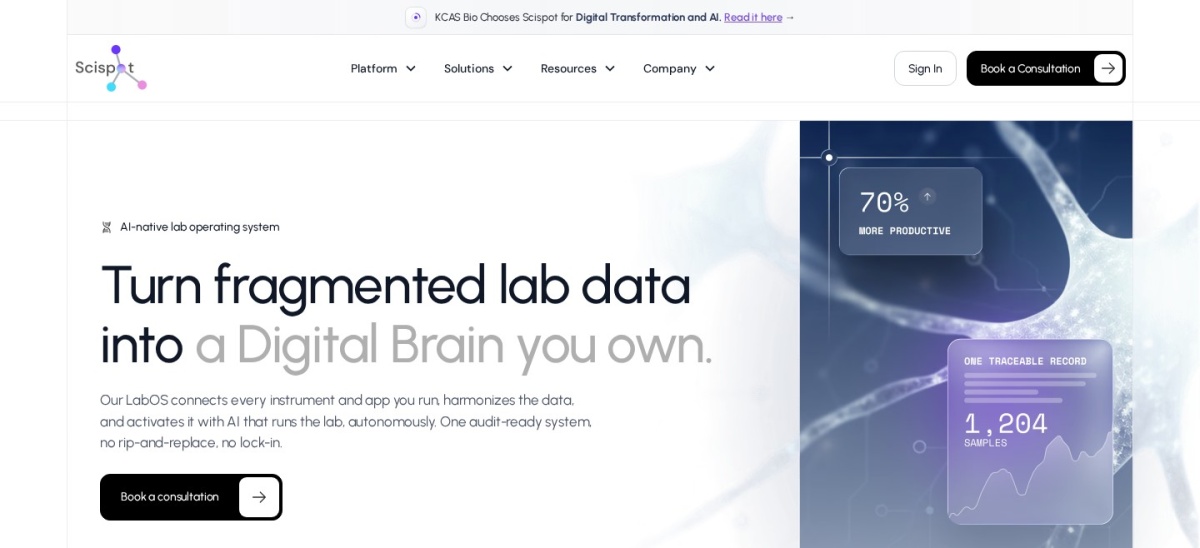
Scispot is an AI-native lab operating system, called a LabOS, rather than a traditional LIMS: it connects instruments, ELNs, spreadsheets and apps, standardises the data into one model and applies AI to automate intake, QC and reporting. The vendor reports more than 200 life-science labs, and it is rated 4.9 out of 5 on G2 from 15 reviews.
The trade off is youth. Fifteen reviews is a thin base, the AI claims are bold, and pricing is quoted only, so a demo should show your instruments and data. It suits growing biotech labs whose real problem is fragmented data across many systems.
What we like
Highest G2 rating here: 4.9/5
Unifies ELN, LIMS, QMS and AI in one system
GLUE instrument integrations and open APIs
Support rated 10.0/10 by G2 reviewers
Watch out for
Only 15 G2 reviews so far
Quote-only pricing
Newer vendor with a shorter track record
Quoted pricing; plans are Essential, Enterprise and ScaleupsVisit scispot.com
LIMS vs ELN: which one do you need
A LIMS follows the sample. It logs intake, tracks tests and results, manages storage and produces certificates of analysis.
An ELN follows the experiment. It records methods, observations and conclusions, and links them to the samples and data used.
Testing and QC labs should start with a LIMS such as QBench or CloudLIMS. Research labs should start with an ELN such as SciNote or Benchling, and add LIMS features only when sample volume demands it.
How we chose
We started from the laboratory software with the largest G2 review bases and the longest market presence, covering enterprise LIMS, cloud LIMS and electronic lab notebooks.
Prices come from each vendor's pricing page, checked on 25 November 2026. Ratings and review counts come from G2 on the same day. Where a vendor publishes no price, the list shows a custom quote; only QBench and CloudLIMS publish prices.
We left out tools with no public rating and enterprise tools with the lowest scores, including LabVantage at 3.8 out of 5. No vendor paid for a place, and we do not claim hands-on testing for this list.
How to choose laboratory software
Start with the work your lab actually does, then match the tool to it.
Decide LIMS, ELN or both. Testing labs need sample tracking first; research labs need experiment records first. Buying both in one platform only helps if the team will use both.
List the compliance rules that apply. GLP, GMP and 21 CFR Part 11 need audit trails and e-signatures, which often sit on higher tiers. Confirm the tier before you budget.
Ask for the full first-year cost in writing. Most vendors quote, and training, migration, validation and integrations are often extra. QBench lists training at $5,000 to $10,000.
Run a pilot with your own samples. A demo with vendor data hides workflow gaps. Load real samples, run a real batch and check the reports before you sign.
FAQ
What is the best laboratory software?
LabWare LIMS is the best pick for most labs. It combines LIMS, ELN and laboratory execution tools in one platform, is rated 4.5 out of 5 on G2 from 102 reviews, and suits large regulated labs that need one system for the long term.
What is a LIMS?
A laboratory information management system tracks samples from intake through testing to results and reporting. It manages storage locations, instruments, quality control and certificates of analysis, replacing paper logs and spreadsheets in testing and QC labs.
How much does laboratory software cost?
Only two tools here publish prices: QBench from $16,500 a year for 5 users and CloudLIMS from $310 per user a month for 3 users. The rest quote per lab, and enterprise deployments often run into five figures a year before training and validation.
What is the difference between a LIMS and an ELN?
A LIMS follows the sample through testing, results and reporting, while an ELN records how an experiment was done. Testing labs usually need a LIMS first, research labs usually need an ELN first, and some tools such as Labguru combine both.
Is there free laboratory software?
SciNote has a free version for individual users that covers core notebook work, and Benchling has a free tier for academic labs. Both charge for team and compliance features, so a lab that needs e-signatures or shared inventory will need a paid plan.
Which laboratory software is best for a small lab?
QBench and CloudLIMS fit small labs best because they publish prices and go live without an enterprise project. QBench starts at $16,500 a year for 5 users, while CloudLIMS starts at $310 per user a month for 3 users on annual billing.
Do I need 21 CFR Part 11 compliance?
Only if the lab works under FDA rules for electronic records and signatures. LabWare, STARLIMS, SciNote and Lockbox all support it, but the e-signature features often sit on higher tiers, so confirm the tier and the validation support before buying.
SaaS SEO and WordPress specialist with about 8 years of experience. Rakib compares WordPress plugins, themes, hosting and software using public pricing, documentation and user reviews. See how we rank.