Benchling is the best lab notebook software for most biotech teams, with a free academic plan covering the notebook and molecular biology tools and a 4.5/5 rating on G2. Pick Labguru for ELN plus LIMS in one system, and LabArchives for the clearest published pricing.
How we make this list: we compare pricing pages, product documentation and public user reviews, then re-check every price before each update. No product paid for a place. Disclosure.
Benchling is the top pick for biotech R&D: a free academic plan, molecular biology tools built in, and a 4.5 out of 5 G2 rating from 65 reviews.
Labguru is the strongest all-in-one, with ELN, LIMS and inventory in one system and the highest G2 rating here at 4.6 out of 5.
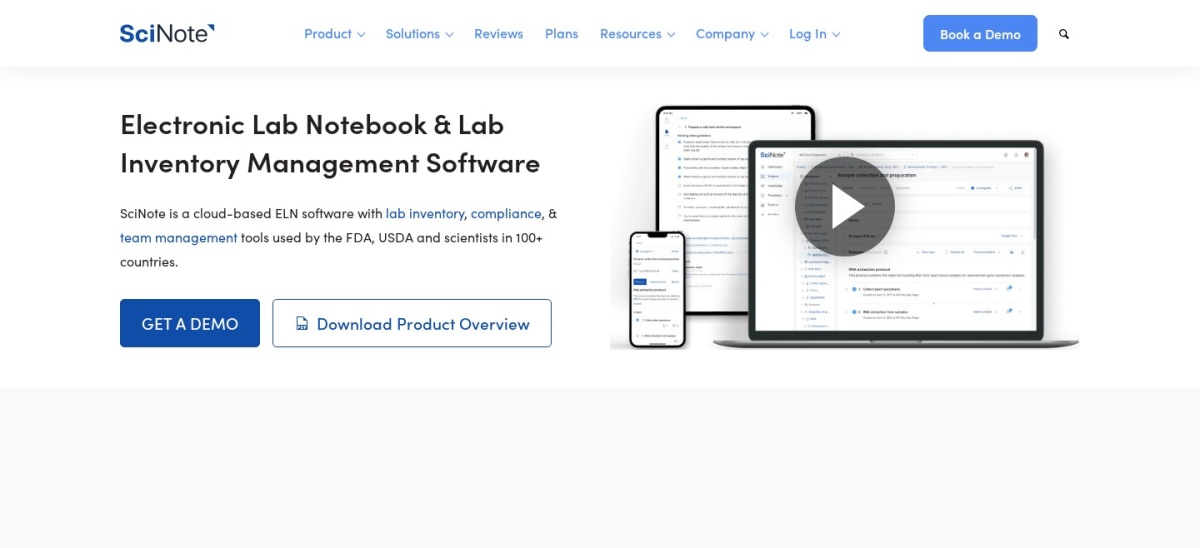
SciNote gives the best value for regulated labs: a free plan, built-in inventory and a 4.2 out of 5 G2 rating from 303 reviews.
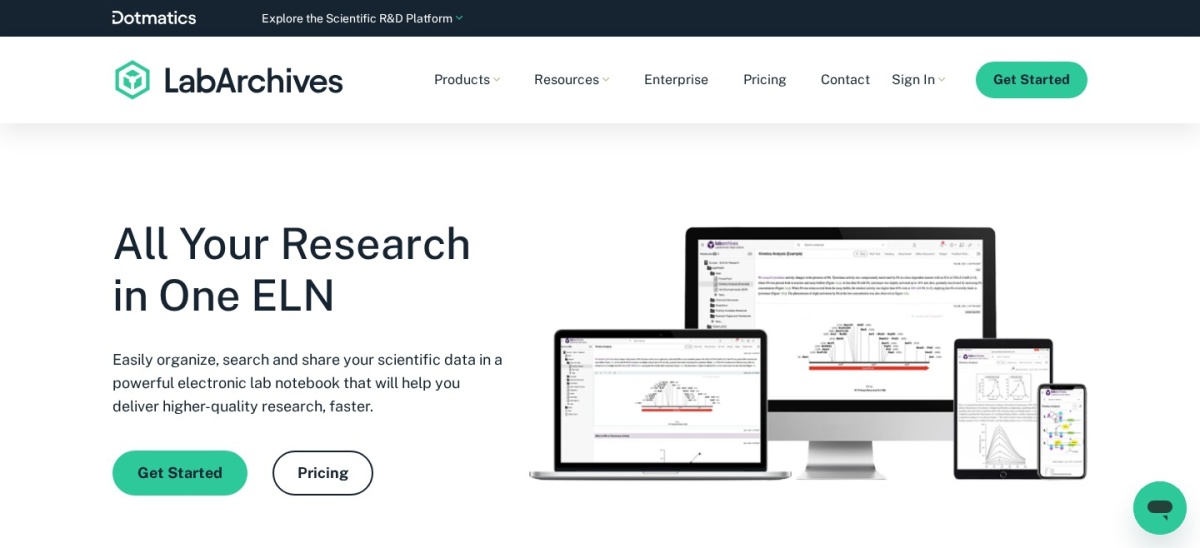
LabArchives publishes the clearest prices: Professional is $330 per academic user per year or $575 for corporate labs.
Six of the nine tools are quote-only, so ask for a written quote and check export options before you commit.
What to look for in lab notebook software
A lab notebook holds a lab's intellectual property, so the choice matters more than most software buys. Paper notebooks get lost, damaged or locked in one person's drawer, while a shared electronic notebook keeps every experiment searchable.
Start with compliance. If your work falls under FDA, GLP or GMP rules, you need electronic signatures, audit trails and 21 CFR Part 11 support in the tier you actually buy, not just on the vendor's feature page.
Backups are the second check. A notebook that holds years of results needs its own backup plan, and the 3-2-1 backup rule is a good baseline for keeping copies in more than one place.
Third, check what is actually included. Several tools in this list sell the notebook, inventory and compliance features as separate packs or tiers, so the entry price can hide the real cost. Ask which features sit behind the paid tier before you sign.
Finally, mind the academic split. The same product is often free or cheap for universities and several times more expensive for companies, so confirm which price applies to your lab.
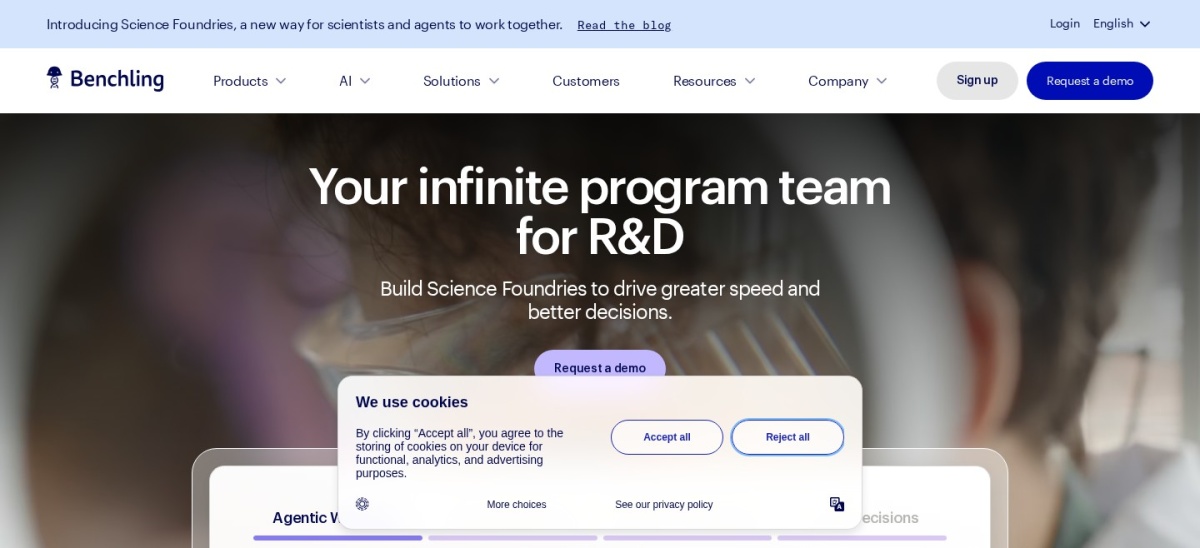
Benchling is a cloud R&D platform built around life-science research, with the notebook, molecular biology tools, registry and inventory in one place. The free academic plan includes Notebook and Molecular Biology, with CRISPR design, cloning, alignments and primer design, and it serves more than 200,000 scientists at 7,500+ universities.
The trade off is the price wall between academia and industry. Commercial plans are quote-only with no published price, and the Registry and Inventory modules are not part of the free academic plan. It suits biotech and pharma R&D teams that want molecular biology and notebook records in one system.
What we like
Free academic plan covers the notebook and molecular biology tools
CRISPR, cloning and primer design built into the notebook
Used by more than 200,000 scientists at 7,500+ universities
Real-time collaboration with shared projects and permissions
Watch out for
Commercial pricing is quote-only with no published price
Registry and Inventory are not in the free academic plan
Adapting it to non-standard workflows takes admin effort
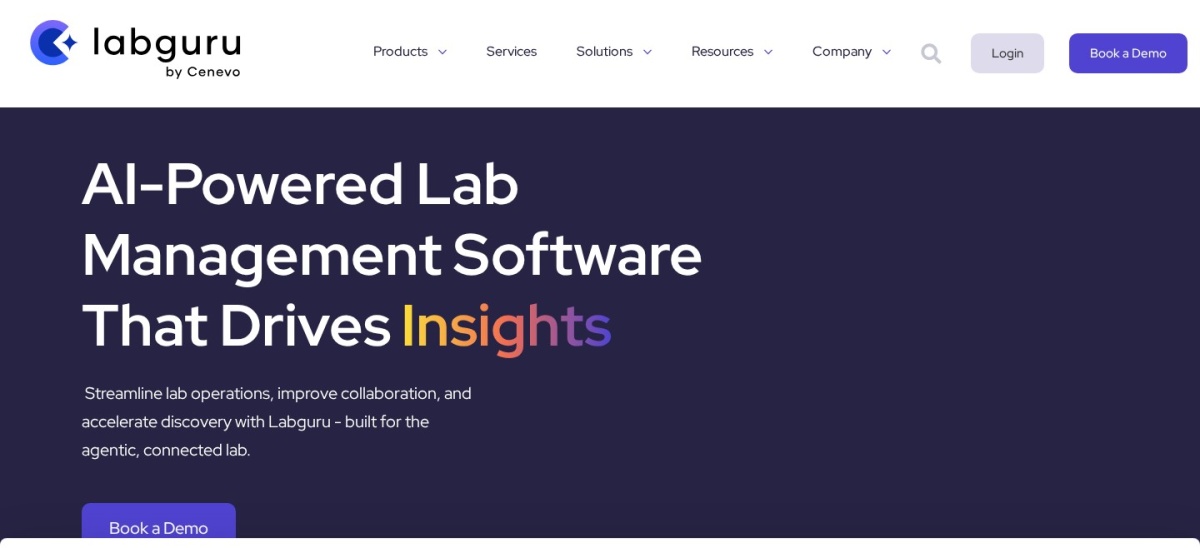
Labguru is a lab management platform that combines an electronic lab notebook, LIMS and inventory in one system. Scientists plan experiments on a calendar, track samples and reagents with barcodes, schedule shared equipment and automate routine work with triggers and rules. It serves more than 800 companies across academia, pharma and biotech.
The trade off is that pricing is entirely quote-based, so you cannot budget without talking to sales. Implementation for a lab with complex inventory also takes planning and a proper pilot. It suits labs that want one system for experiments, samples and equipment instead of three separate tools.
What we like
ELN, LIMS and inventory in one system
Highest G2 rating in this list at 4.6 out of 5
21 CFR Part 11 electronic signatures and audit trails
SciNote is a cloud electronic lab notebook with built-in inventory, protocol templates and team management, used by the FDA and USDA and by scientists in more than 100 countries. Its projects, experiments and tasks structure mirrors how research happens, and the free plan covers the core notebook. Mobile apps let scientists record results at the bench.
The trade off is pricing opacity. Paid plans are quote-only with no published tiers, so budgeting needs a sales conversation, and some users find the nested layout takes too many clicks to reach results. It suits small regulated labs that need compliance features without enterprise cost.
What we like
Free plan with real functionality
Most G2 reviews in this list at 303
Electronic signatures, audit trails and timestamps built in
Inventory and protocols.io integration included
Watch out for
Paid pricing is quote-only with no published tiers
LabArchives is a cloud electronic lab notebook that has run since 2009 and is now part of Dotmatics. The free plan gives two owned notebooks and 1GB of storage per user, while Professional costs $330 per academic user per year or $575 for corporate labs, with unlimited notebooks and 100GB per user. It integrates with SnapGene and GraphPad Prism.
The trade off is scope and age. Inventory costs extra through the ELN plus Inventory bundle at $360 academic or $675 corporate per user per year, and the interface looks dated next to newer rivals. It suits academic and government labs that want published pricing and a long track record.
What we like
Clearest published pricing in this list
Free plan with two notebooks and 1GB per user
21 CFR Part 11 compliance features included
Holds an NIH agency licence covering thousands of users
SciSure is the new name for eLabJournal, the long-running ELN from the Dutch company formerly known as Bio-ITech, now eLabNext. It combines the notebook with LIMS, sample management and safety tools in one Digital Lab Platform, with 21 CFR Part 11 compliance, electronic signatures and audit trails. Deployment runs on cloud, private cloud or on-premises.
The trade off is the rebrand. Older reviews and documentation still use the eLabJournal name, which can confuse buyers, and pricing is quote-only with no published tiers. It suits labs that want one compliant platform for experiments, samples and safety records.
What we like
ELN plus LIMS plus safety in one platform
21 CFR Part 11 and GxP compliance built in
Cloud, private cloud or on-premises deployment
Marketplace adds integrations and workflow extensions
Watch out for
Recent rebrand from eLabJournal can confuse buyers
Best for modular labs that buy only what they need
Free planStartup Pack, 3 users
ELN Pack$900/user/yr
G2 rating4.2/5, 11 reviews
Paid planPacks from $550/yr
labcollector.com
LabCollector homepage, captured Nov 2026.
LabCollector is a modular lab platform from AgileBio where you buy packs instead of one big licence. The ELN Pack starts at $900 per user per year, the Inventory Pack at $550 and the LIMS/LIS Pack at $1,300, and a free Startup Pack covers three users. Every module accepts custom fields, and a large add-on catalog covers equipment, workflows and service management.
The trade off is complexity in buying and setup. Pack-based pricing takes work to map to your actual needs, and add-ons can push the total well past the entry price. It suits labs that know exactly which modules they need and want to pay for nothing else.
What we like
Modular packs let you buy ELN, LIMS or inventory separately
Free Startup Pack for 3 users
Highly customizable with custom fields and add-ons
Chemical structure search for chemistry-heavy labs
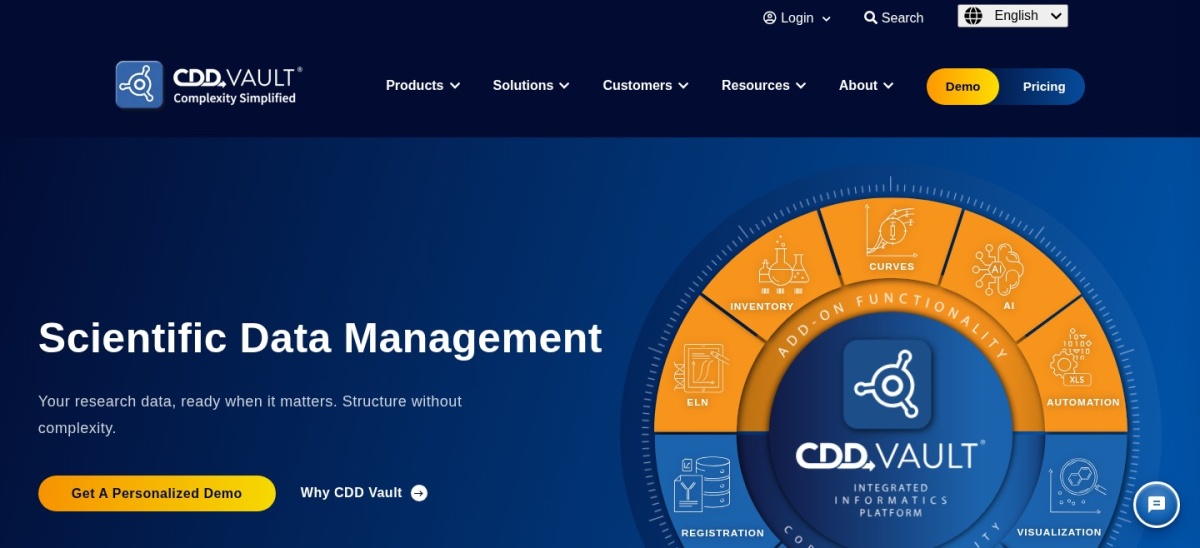
CDD Vault is a hosted drug-discovery platform from Collaborative Drug Discovery that pairs an electronic lab notebook with chemical registration, assay data and inventory. Experiments link straight to compound properties and assay results, and the web interface supports version control, approvals and audit trails. It is rated 4.9 out of 5 on Capterra from 23 reviews.
The trade off is that it is built for chemistry-led drug discovery first. Pricing is quote-only with no free plan, only a free trial, so budgeting needs a sales conversation. It suits biotech and pharma teams that manage compounds, assays and notebook records together.
What we like
Highest rating in this list at 4.9 out of 5 on Capterra
ELN links directly to compounds and assay results
Version control, approvals and audit trails included
Documented API for integrations
Watch out for
No free plan, only a free trial
Pricing is quote-only
Built for chemistry-led discovery, less general than rivals
Best for configurable LIMS and ELN in one platform
Free planTrial only
ELN + LIMSYes, plus SDMS
G2 rating4.3/5, 39 reviews
Paid planGold, Silver, Bronze
sapiosciences.com
Sapio Sciences homepage, captured Nov 2026.
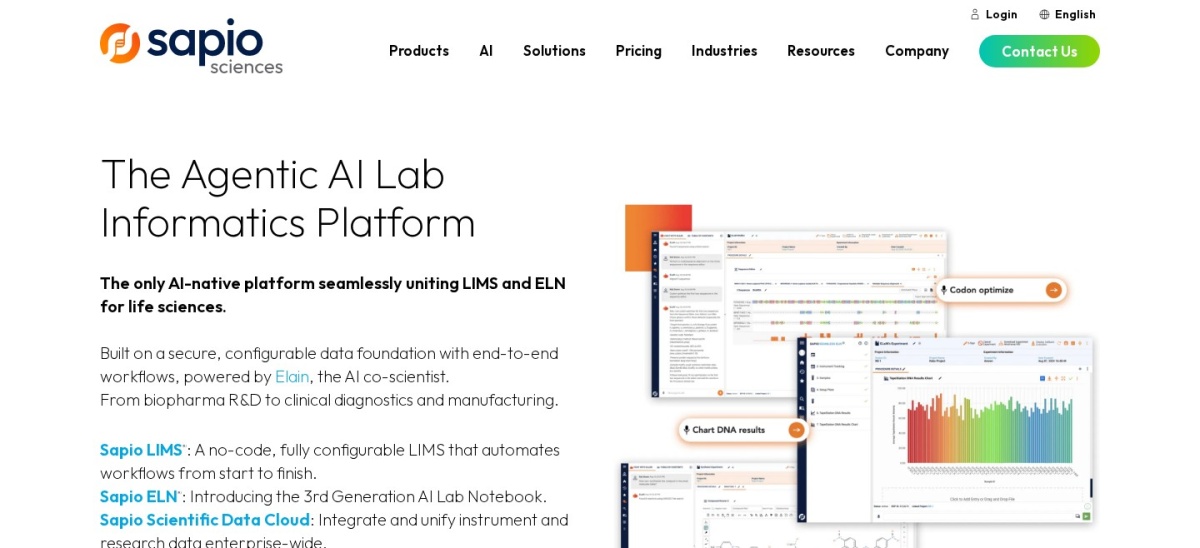
Sapio Sciences is a configurable lab informatics platform that unites LIMS, ELN and scientific data management in one system. Its no-code workflow builder lets labs shape processes without programmers, and the Elain AI assistant answers questions about experiments in plain language. G2 reviewers rate it 4.3 out of 5 from 39 reviews.
The trade off is scale and setup. Pricing is quote-only across Gold, Silver and Bronze editions, and G2 reports a typical implementation time of about six months. It suits mid-size and larger labs that want one configurable platform rather than several point tools.
What we like
No-code configuration for LIMS and ELN workflows
Built-in Elain AI assistant for experiment questions
Unifies LIMS, ELN and scientific data management
Strong reviewer praise for flexibility and support
Labfolder is a cloud electronic lab notebook built for individual researchers and small teams that want simple, compliant documentation. The free Basic edition covers up to three users with 3GB of storage, and paid Advanced adds electronic signatures, review workflows and Labregister inventory. It is rated 4.5 out of 5 on Capterra from 8 reviews.
The trade off is that paid pricing is now quote-only. Since SciSure acquired Labfolder in September 2025, the old published Advanced rates no longer appear on the site, so buyers must confirm current pricing. It suits small academic and biotech labs that want a free start with a clear upgrade path.
What we like
Free Basic edition for up to 3 users with 3GB storage
Simple to learn, with protocol templates built in
Electronic signatures and audit trails on Advanced
Links to Labregister inventory
Watch out for
Paid Advanced pricing is now quote-only
Free plan storage caps at 3GB
Tables and advanced layout tools draw some criticism
Free plans in this list are real starting points, not demos. Benchling's academic plan, SciNote's free tier, LabArchives' free plan and Labfolder's Basic edition all cover the core notebook.
Paid plans mostly add compliance depth, storage and support. LabArchives Professional adds unlimited notebooks and 100GB per user, while SciNote's Validated and Platinum tiers add the compliance and QA tooling regulated labs need.
Quote-only pricing is the norm here, not the exception. Six of the nine tools publish no price, so get the quote in writing and ask what implementation, training and storage cost on top.
How we chose
We started from the established electronic lab notebook tools used by academic, biotech and pharma labs, then kept the nine with a public rating on G2 or Capterra and a current product page.
Prices come from each vendor's pricing page or sales page, checked on 25 November 2026. Ratings and review counts come from G2 or Capterra on the same day. Where a vendor publishes no price, the list shows quote-only instead of a guess.
We left out tools with no public rating, including RSpace, even though it offers a free plan. No vendor paid for a place, and we do not claim hands-on testing for this list.
How to choose lab notebook software
Start with your compliance needs, then check the total cost of the tier you would actually buy.
Check which rules apply to your lab. If you work under FDA, GLP or GMP rules, confirm electronic signatures, audit trails and 21 CFR Part 11 support are in the tier you buy.
Test export before you commit. During the trial, export a full test project with experiments, attachments and audit history, and check the formats. A notebook you cannot leave is a liability, not an asset.
Count the total cost, not the entry price. Add inventory, compliance tiers, implementation and training to the licence fee. Six tools here are quote-only, so get the full quote in writing.
Start on a free plan where you can. Benchling, SciNote, LabArchives, LabCollector and Labfolder all offer a free start. Run a real project on one before you pay for a platform.
FAQ
What is the best lab notebook software?
Benchling is the best pick for most biotech teams. Its free academic plan covers the notebook and molecular biology tools, and it is rated 4.5 out of 5 on G2. Labguru is the best all-in-one, and LabArchives has the clearest published pricing.
Is there a free electronic lab notebook?
Yes. Benchling is free for academic labs, SciNote and LabArchives both offer free plans, LabCollector has a free Startup Pack for three users, and Labfolder is free for up to three users with 3GB of storage.
How much does lab notebook software cost?
It varies widely. LabArchives publishes Professional at $330 per academic user per year or $575 for companies, and LabCollector's ELN Pack starts at $900 per user per year. Six of the nine tools here are quote-only.
Do lab notebooks support 21 CFR Part 11?
Most tools in this list do, including Labguru, SciNote, LabArchives, SciSure, CDD Vault and Sapio. Confirm that electronic signatures and audit trails are included in the tier you buy, since some vendors gate compliance features behind higher plans.
What happened to eLabJournal?
eLabJournal was rebranded as SciSure when its parent company became eLabNext. The product continues at elabjournal.com as part of the SciSure Digital Lab Platform, combining the ELN with LIMS and safety tools. Older reviews still use the eLabJournal name.
Can I switch lab notebook software later?
Usually, but it takes work. Ask for a full export of a test project during the trial, including experiments, files and audit history, and check the formats. Confirm the export covers everything before you move years of records.
SaaS SEO and WordPress specialist with about 8 years of experience. Rakib compares WordPress plugins, themes, hosting and software using public pricing, documentation and user reviews. See how we rank.