Redpanda is the best Kafka management software for most teams, with a 4.6 out of 5 G2 rating from 66 reviews and a free Serverless tier with no base cost. Pick Confluent Cloud for the widest connector and stream-processing ecosystem, or Aiven for managed Kafka across several clouds from $200 a month.
How we make this list: we compare pricing pages, product documentation and public user reviews, then re-check every price before each update. No product paid for a place. Disclosure.
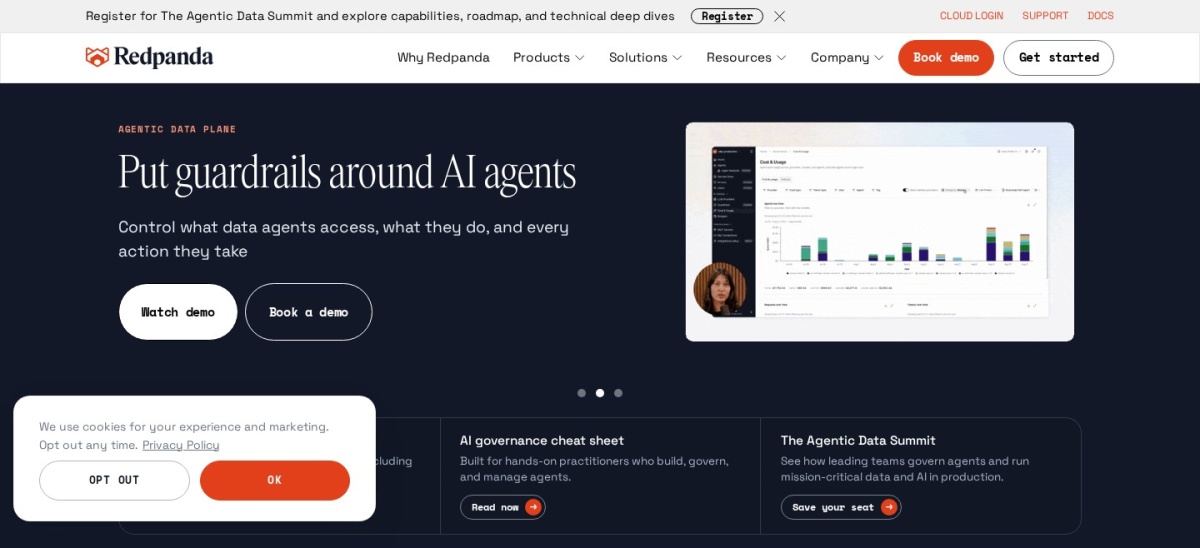
Redpanda leads with a 4.6 out of 5 G2 rating from 66 reviews and a free Serverless tier with no base cost.
Confluent Cloud Standard starts at about $385 a month, with the widest set of managed connectors and Flink built in.
Aiven is the clearest fixed-price managed option, with Startup plans from $200 a month across several clouds.
Lenses is the only self-hosted UI here with a published price: Enterprise from $4,000 a year, with a free Community edition.
Instaclustr and IBM Event Streams publish no list price, so get a quote before comparing them on cost.
Azure Event Hubs only speaks Kafka on Standard and above, at $0.03 per throughput-unit hour.
What Kafka management software should cover
Kafka management covers two different jobs: running the cluster, and working with the data inside it. Some tools do both, while others do only one.
Managed services such as Confluent Cloud, Aiven, Amazon MSK, Azure Event Hubs, IBM Event Streams and Instaclustr run the brokers, patching and backups for you. Lenses is different: it is a web UI that sits on top of clusters you already run.
Redpanda takes a third route. It replaces the Kafka broker engine with a single binary that speaks the Kafka API, so existing producers and consumers connect unchanged. Our guide on creating a custom REST API endpoint in WordPress shows the same API-first pattern: clients talk to a stable interface while the engine underneath can change.
Judge any option on the same points: a multi-cluster view, topic and consumer-group control, Schema Registry and Kafka Connect support, access control, and how the bill grows as throughput grows.
Redpanda is a Kafka-compatible streaming platform written in C++, so it runs as a single binary with no JVM and no ZooKeeper or KRaft quorum to manage. The Cloud Serverless tier has no base cost, and the platform includes a web console, more than 300 managed connectors and tiered storage.
The trade off is price transparency. Serverless is pay-as-you-go with no published unit rates, and Dedicated and BYOC clusters are quote-based. It suits teams that want Kafka clients to work unchanged with less infrastructure to run.
What we like
Highest G2 rating in this list at 4.6 out of 5
Single binary with no JVM to tune
Free Serverless tier with no base cost
More than 300 managed connectors
Watch out for
No published price for paid cloud clusters
Core is source-available under BSL, not open source
Some reviewers note the console is thin for advanced setup
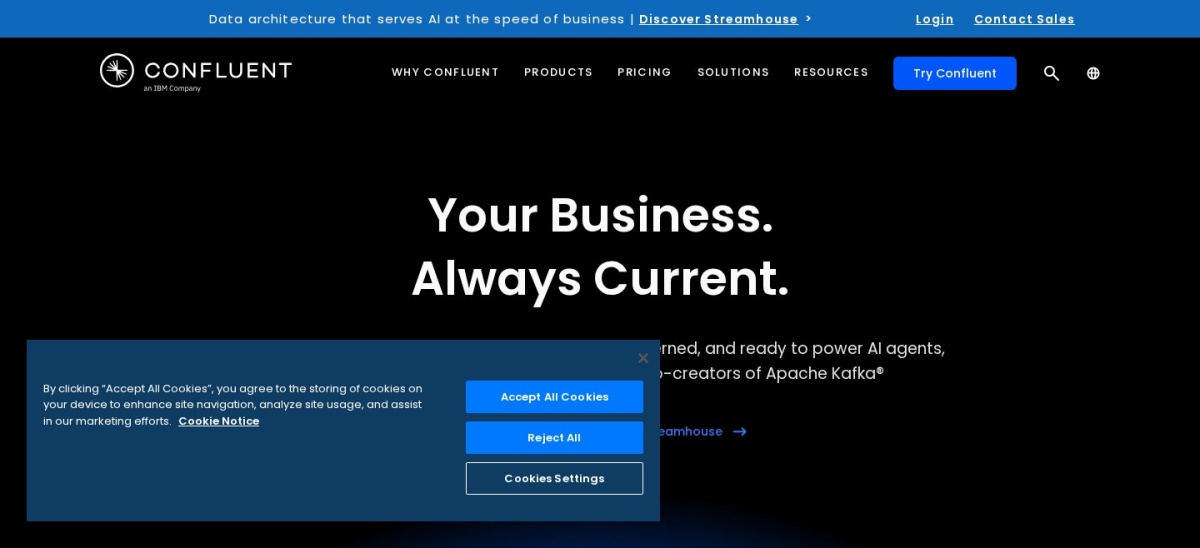
Confluent Cloud is the managed Kafka service from the company founded by Kafka's creators, built on Apache Kafka with a serverless model. The Basic cluster starts at $0, and Standard starts at about $385 a month with managed connectors, Schema Registry, stream governance and Flink for stream processing.
The trade off is the bill. Pricing is usage-based in eCKUs, so a Standard cluster running all month costs more than the $385 starting estimate, which assumes about 70% use. It suits teams that want the fullest streaming platform and can watch usage.
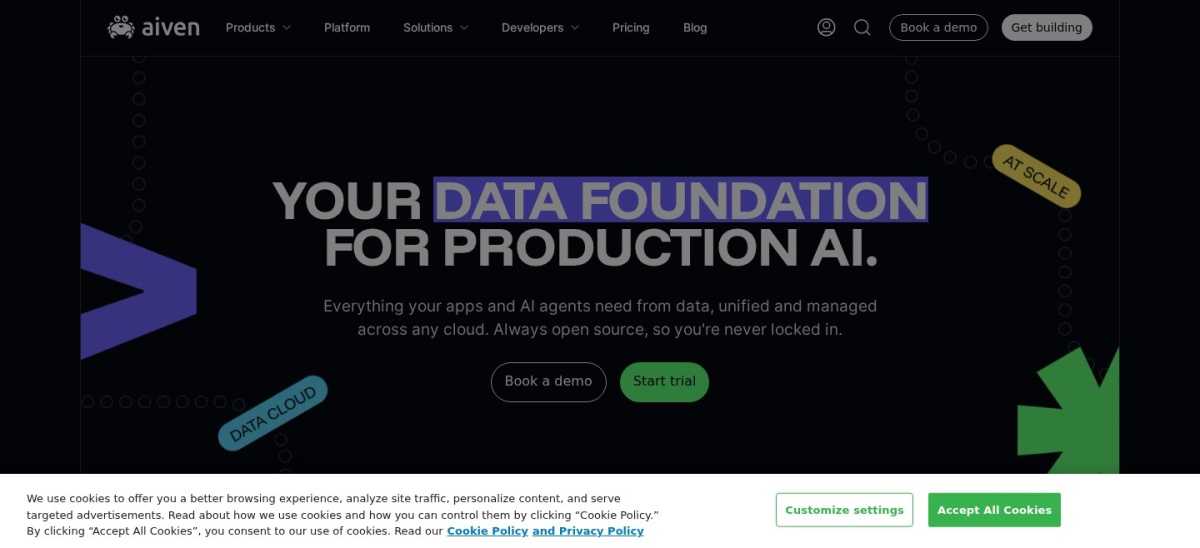
Aiven for Apache Kafka homepage, captured Nov 2026.
Aiven for Apache Kafka is a fully managed Kafka service that runs on AWS, Google Cloud and Azure, with built-in Schema Registry, Kafka Connect and multi-cloud VPC peering. The Startup plan starts at $200 a month with 3 dedicated VMs and 90 GB of storage, and reviewers praise its setup ease.
The trade off is that Kafka Connect in the same cluster is limited to Business plans from $500 a month and Premium plans from $1,900 a month. It suits teams that want a predictable monthly price and no broker operations.
IBM Event Streams is a managed Apache Kafka service on IBM Cloud, with a web UI for topics, consumer groups and schemas. The Lite plan is free for proof-of-concept work with 1 partition, while the Standard plan supports up to 100 partitions and Kafka Connect, and Enterprise is single-tenant.
The trade off is price clarity. Standard and Enterprise pricing is pay-as-you-go through the IBM Cloud catalog, with no simple list price to compare. It suits teams already on IBM Cloud or OpenShift that want Kafka without running brokers.
What we like
Free Lite plan for trying it out
Simple web UI, praised in G2 reviews
Runs on OpenShift as well as IBM Cloud
Enterprise plan is single-tenant
Watch out for
No published list price for paid plans
Review base of only 13 G2 reviews
Lite plan is limited to 1 partition
Paid plans add partitions, Kafka Connect and isolationVisit ibm.com
05
Instaclustr Managed Kafka
4.3/5on G2 (11 reviews, checked Nov 2026)
PricingCustom/yr
Best for unmodified open-source Kafka, managed
DeploymentManaged, bring your own cloud
Kafka versionOpen source, unmodified
Free tierFree trial only
Paid planQuote, priced per node
instaclustr.com
Instaclustr Managed Kafka homepage, captured Nov 2026.
Instaclustr Managed Kafka is a managed service from NetApp that runs unmodified open-source Apache Kafka in your own cloud account, with monitoring, backups, patching and 24/7 operations included. It also manages Kafka Connect, so teams keep the plain Kafka they know without hiring Kafka specialists.
The trade off is that pricing is only available through a configurator or a sales conversation, priced per node size, cloud and region. It suits teams that want portable open-source Kafka with someone else on call.
Lenses is a self-hosted web UI for Kafka clusters you already run, with a SQL Studio for searching topic data, topology views, a data catalog and Kafka Connect management. The free Community edition covers 2 clusters and 5 users, while the paid Enterprise edition starts at $4,000 a year.
The trade off is that single sign-on, role-based access and SAML need the paid edition, and reviewers report upgrade friction and a heavy deployment. It suits teams that want non-specialists to browse Kafka data without writing consumer code.
Azure Event Hubs is a managed real-time ingestion service on Azure, and its Standard tier exposes an Apache Kafka endpoint so existing Kafka clients connect without code changes. One throughput unit gives 1 MB/s of ingress and 2 MB/s of egress, and Standard costs $0.03 per throughput-unit hour, about $21.90 a month per unit.
The trade off is that it is not Kafka itself. The Basic tier at $0.015 per throughput-unit hour has no Kafka endpoint, retention is 7 days on Standard, and ingress events cost $0.028 per million on top. It suits Azure teams that mainly ingest events.
Amazon MSK is the managed Apache Kafka service on AWS, running open-source Kafka so existing applications work without code changes. A Standard broker of type kafka.m5.large costs $0.21 per hour in US East, about $153.30 a month per broker, plus storage, and MSK Connect and Express brokers are available for heavier loads.
The trade off is cost control. The bill is per broker-hour plus storage and data transfer, so small workloads can cost more than expected, and there is no free tier. It suits AWS teams that want plain Kafka with AWS networking and security.
What we like
Plain open-source Kafka, no lock-in to a fork
Deep AWS integration and IAM security
Express brokers scale faster with quicker recovery
A managed service runs the brokers for you. That is the right choice when nobody on the team wants to patch Kafka, watch disk use or handle broker failures at 3 a.m.
A management UI such as Lenses assumes the cluster already exists and makes it easier to use. It is the right choice when the platform team already runs Kafka well and other teams need safe access to topics and data.
Redpanda sits between the two: it is a managed cloud service, but it also replaces the broker engine, so the decision is about the engine as well as the operations.
How we chose
We started from the Kafka tools that appear most often on real shortlists, then kept only those with a public rating on G2, so every tool here carries a rating and a review count.
Prices come from each vendor's pricing page, checked on 25 November 2026. Ratings and review counts come from G2 on the same day. Where a vendor shows a usage-based estimate, the list shows the published starting rate and says so.
We left out Kpow, Conduktor, AKHQ, Kafbat UI and Kafdrop because none of them has a public G2, Capterra or Trustpilot rating to report. No vendor paid for a place, and we do not claim to have used these tools ourselves for this list.
How to choose Kafka management software
Start with where your clusters live today, then match the tool to that reality.
Decide who runs the brokers. If nobody wants broker duty, pick a managed service such as Confluent Cloud, Aiven or Amazon MSK. If your platform team already runs Kafka, a UI such as Lenses may be enough.
Check the Kafka features you need. Confirm Schema Registry, Kafka Connect, consumer-group control and multi-cluster support before you commit, since some tools charge extra or lack them.
Work out the real monthly cost. Usage-based tools such as Confluent Cloud and Amazon MSK bill on throughput and hours, so model a busy month, not a quiet one.
Plan backups and access control early. Decide who can create topics and read message data before opening the UI to the whole team, and keep backups of topic and schema configuration as you would a database. See how to back up a WordPress database for the same backup-first habit.
FAQ
What is the best Kafka management software?
Redpanda is the best pick for most teams. It is rated 4.6 out of 5 on G2 from 66 reviews, speaks the Kafka API so existing clients work unchanged, and its Cloud Serverless tier has no base cost.
Is there a free Kafka management tool?
Yes. Redpanda Cloud Serverless has no base cost, Confluent Cloud Basic starts at $0, Lenses has a free Community edition for 2 clusters, and IBM Event Streams has a free Lite plan. All four limit what the free tier can do.
What is the cheapest managed Kafka service?
Azure Event Hubs has the cheapest paid entry here, at about $21.90 a month per throughput unit on Standard, though it is not real Kafka. Aiven Startup at $200 a month is the cheapest fixed-price managed Kafka service in this list.
Do I still need Kafka if I use Confluent Cloud?
Confluent Cloud is managed Kafka, so you do not run brokers yourself. Your producers and consumers still use the Kafka protocol, and Confluent adds managed connectors, Schema Registry and Flink on top.
What is the difference between Lenses and Confluent Cloud?
Lenses is a self-hosted web UI for clusters you already run, with SQL search over topic data. Confluent Cloud is a fully managed service that runs the Kafka clusters themselves, so there is nothing to host.
Can I manage Kafka without a paid tool?
Yes, with limits. Free tiers from Redpanda, Confluent, Lenses and IBM cover small workloads, and open-source UIs exist. Paid plans mainly add access control, support, higher limits and managed operations.
SaaS SEO and WordPress specialist with about 8 years of experience. Rakib compares WordPress plugins, themes, hosting and software using public pricing, documentation and user reviews. See how we rank.