Microsoft Defender for Identity is the best ITDR tool for most teams, rated 4.3/5 on G2 from 99 reviews and priced at $5.50 per user a month standalone. Pick Huntress for managed 24/7 response at $4.80 per identity a month, or Silverfort when legacy systems need MFA they cannot run themselves.
How we make this list: we compare pricing pages, product documentation and public user reviews, then re-check every price before each update. No product paid for a place. Disclosure.
Microsoft Defender for Identity is the top pick: 4.3/5 on G2 from 99 reviews, at $5.50 per user a month standalone or inside Microsoft 365 E5.
CrowdStrike and SentinelOne tie identity to the endpoint, but both charge for it: CrowdStrike quotes the identity module, and SentinelOne needs the $229.99 Commercial tier.
Silverfort is the only pick that adds MFA to legacy systems and service accounts without agents, rated 4.8/5 on G2.
Huntress is the cheapest managed option at $4.80 per identity a month, with a 24/7 SOC included and 166 G2 reviews at 4.8/5.
Six of the nine tools publish no price at all, so shortlist on coverage first and get quotes before comparing costs.
What an ITDR tool should cover
Identity is now the way most attackers get in. Stolen passwords, hijacked sessions and abused service accounts let an intruder log in with real credentials instead of breaking through a firewall.
ITDR tools watch identity systems such as Active Directory, Entra ID and Okta for that abuse. They flag impossible travel, credential theft, privilege escalation and lateral movement, then help contain the account before the attacker spreads.
Coverage is the first thing to check. Some tools only watch Microsoft directories, others cover Okta or legacy systems, and a few add managed response. Our guide on limiting login attempts in WordPress shows the same idea at a smaller scale: stop bad logins early.
Pricing is the second thing to check. Most enterprise ITDR is quoted, so the published prices in this list are entry points or standalone rates, not the full cost of the identity tier.
Microsoft Defender for Identity homepage, captured Nov 2026.
Microsoft Defender for Identity is a sensor-based service that watches on-premises Active Directory and Entra ID for credential theft, lateral movement and privilege escalation. It profiles normal sign-in behaviour, flags risky sessions, and feeds detections into Defender XDR, with a standalone price of $5.50 per user a month.
The trade off is the Microsoft centre of gravity. It is strongest where accounts live in Active Directory or Entra ID, and it is included in Microsoft 365 E5 at $60 per user a month, so teams outside that stack pay the add-on price for narrower coverage. It suits teams that already run Microsoft 365 and want identity detection without a second console.
What we like
Deepest native coverage of Active Directory and Entra ID
Standalone price is published at $5.50 per user a month
Strong review base, with 99 G2 reviews
Watch out for
Weakest outside the Microsoft stack
Managed response costs extra through Defender Experts
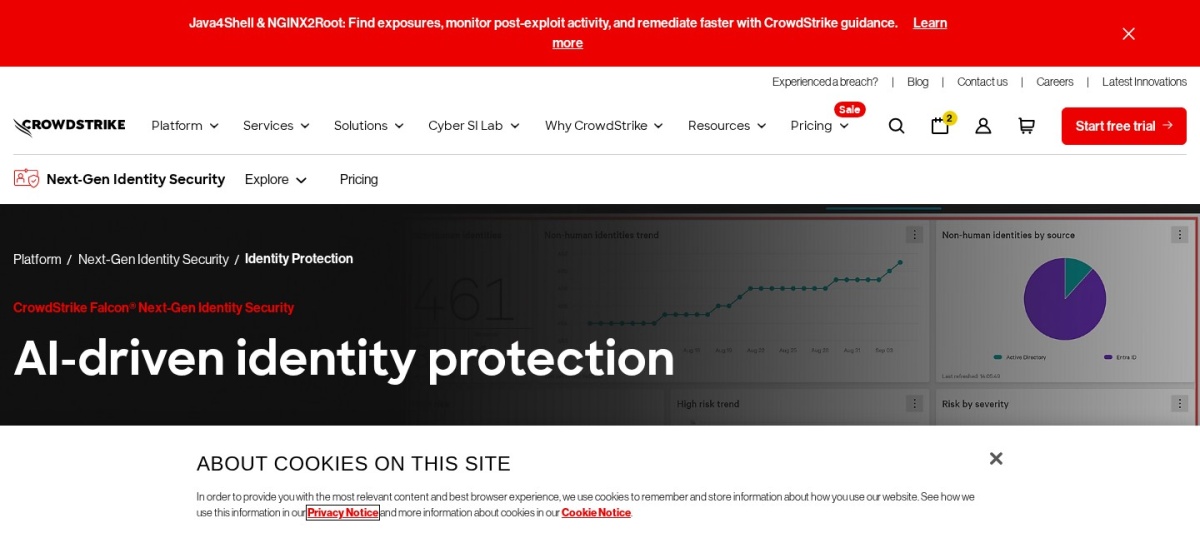
CrowdStrike Falcon Identity Protection homepage, captured Nov 2026.
CrowdStrike Falcon Identity Protection is the identity module of the Falcon platform, correlating identity activity with endpoint telemetry to catch credential theft, privilege escalation and lateral movement. It watches Active Directory, Entra ID and Okta from the same console as Falcon endpoint protection, using the lightweight Falcon sensor already on protected devices.
The trade off is price and packaging. Identity protection is a quoted module on top of Falcon bundles, which start at $59.99 per device a year for Falcon Go, so the total depends on the bundle and the module quote. It suits enterprises already running Falcon that want identity and endpoint signals in one place.
What we like
Identity and endpoint signals in one console
Covers Active Directory, Entra ID and Okta
Lightweight sensor already deployed on endpoints
Watch out for
Identity module is quoted, with no published price
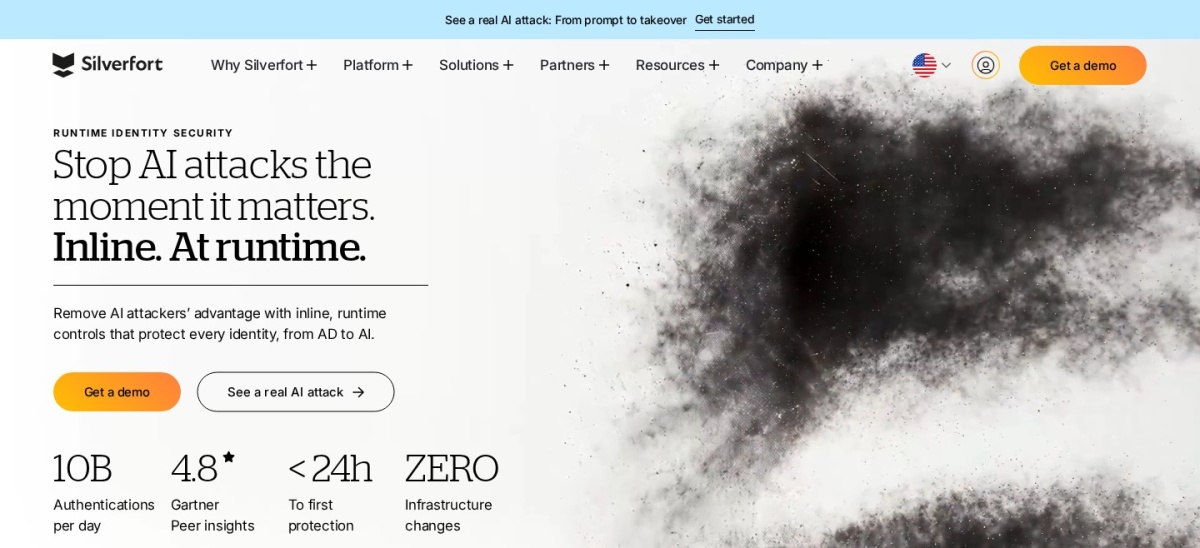
Silverfort is a unified identity protection platform that enforces MFA and access policies without agents, covering cloud apps, on-premises systems and legacy tools that cannot run MFA themselves. It also protects service accounts and command-line access, which most identity tools leave uncovered, and it watches authentication traffic in line rather than from logs alone.
The trade off is enterprise pricing. Silverfort publishes no prices, so every deployment is quoted, and reviewers note the cost runs higher than expected even though value scores stay strong. It suits hybrid estates with legacy systems and service accounts that need MFA where none is built in.
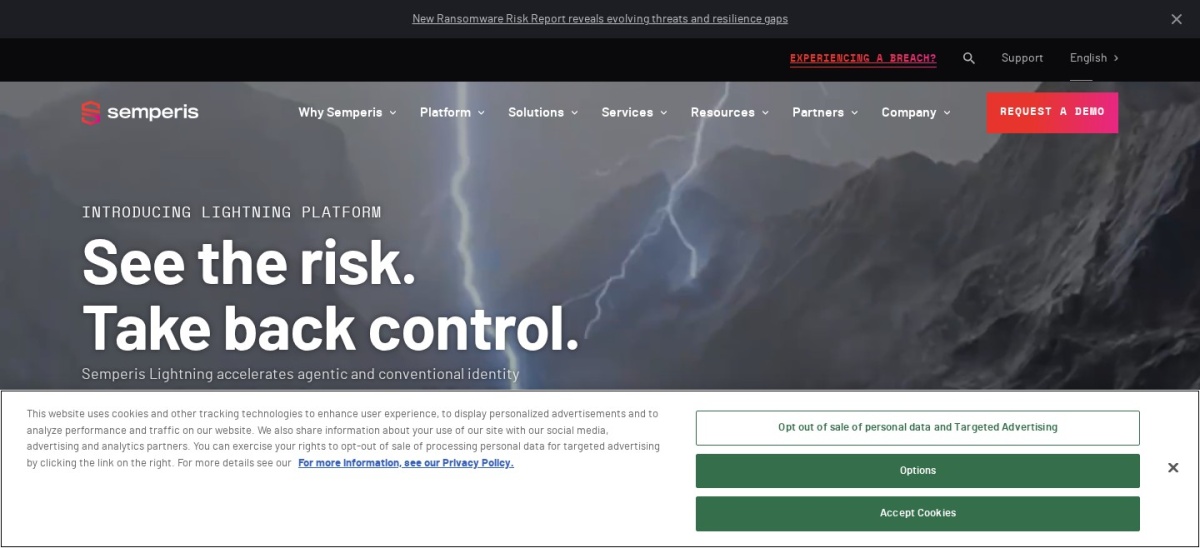
Semperis Directory Services Protector homepage, captured Nov 2026.
Semperis Directory Services Protector is an identity security platform built around Active Directory, watching for risky changes, credential exposure and attack paths, and pairing detection with forest recovery. Its free Purple Knight tool scans an AD environment for security gaps, which makes it easy to see the exposure before buying the paid platform.
The trade off is scope and price. It is an AD-first product, so cloud-only teams get less from it, and pricing is quoted per deployment with no published list. It suits teams whose core risk sits in on-premises Active Directory and who want recovery, not just alerts, when an attack lands.
What we like
Detection plus full Active Directory forest recovery
Huntress Managed ITDR homepage, captured Nov 2026.
Huntress Managed ITDR is a managed service for Microsoft 365 and Google Workspace identities, with a 24/7 human security operations centre that investigates alerts and disables compromised accounts. It watches for session hijacking, token theft, rogue inbox rules and privilege changes, and it lists at $4.80 per identity a month on a 12-month term.
The trade off is control. Huntress analysts manage most detection rules, so teams cannot write their own, and direct buyers face a 50-seat minimum per product. It suits small businesses and MSPs without an in-house security team that want identity alerts handled for them.
What we like
24/7 human SOC included in the list price
Lowest published per-identity price in this list
Simple setup through a Microsoft 365 admin account
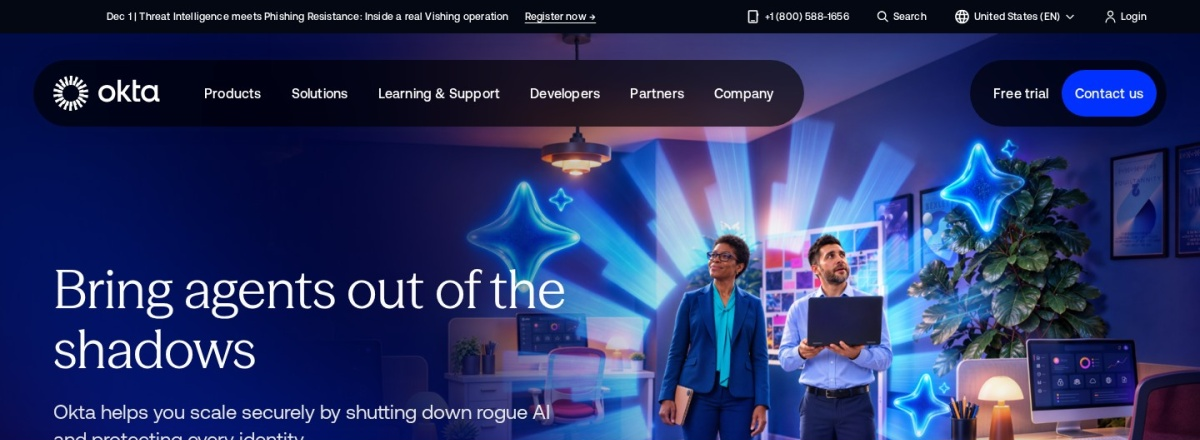
Okta Identity Threat Protection homepage, captured Nov 2026.
Okta Identity Threat Protection is the post-login security layer inside Okta, checking session risk continuously after sign-in using device health, user behaviour and signals from connected security tools. When it spots session hijacking or token theft, it can end the user's sessions across supported apps with Universal Logout.
The trade off is packaging. Identity Threat Protection sits in the Professional suite, which is quoted, while Okta suites start at $6 per user a month for Starter, so the identity threat features cost more than the entry price suggests. It suits workforces already centred on Okta for sign-on and MFA.
What we like
Catches session hijacking after login, not just at sign-in
Universal Logout ends sessions across apps at once
Largest review base in this list on G2
Watch out for
Identity Threat Protection needs the quoted Professional suite
Only helps teams already running Okta
Identity Threat Protection is in the quoted Professional suiteVisit okta.com
07
CyberArk Workforce Identity
4.5/5on G2 (130 reviews, checked Nov 2026)
PricingQuote/yr
Best for privileged access plus workforce
CoverageWorkforce SSO, MFA and lifecycle
Privileged accessYes, PAM platform
Free trialYes
List priceQuote only
cyberark.com
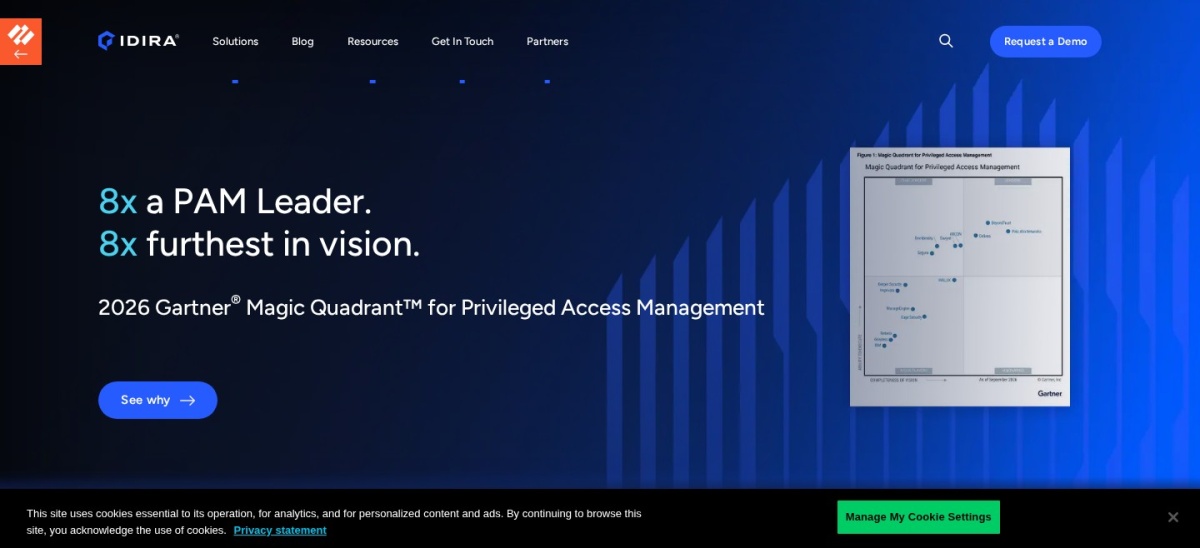
CyberArk Workforce Identity homepage, captured Nov 2026.
CyberArk Workforce Identity is the workforce side of CyberArk's identity security platform, covering single sign-on, adaptive MFA and lifecycle management for everyday employees. It sits beside CyberArk's privileged access management, which vaults and monitors admin and service accounts, so one vendor covers both regular and privileged identities.
The trade off is commercial opacity. CyberArk publishes no list price, so every deal is quoted, and Palo Alto Networks completed its acquisition of CyberArk in February 2026, with the products now sold inside a larger portfolio. It suits enterprises that want privileged access and workforce identity from one vendor.
What we like
One vendor for workforce and privileged identities
Strong vaulting and session monitoring for admin accounts
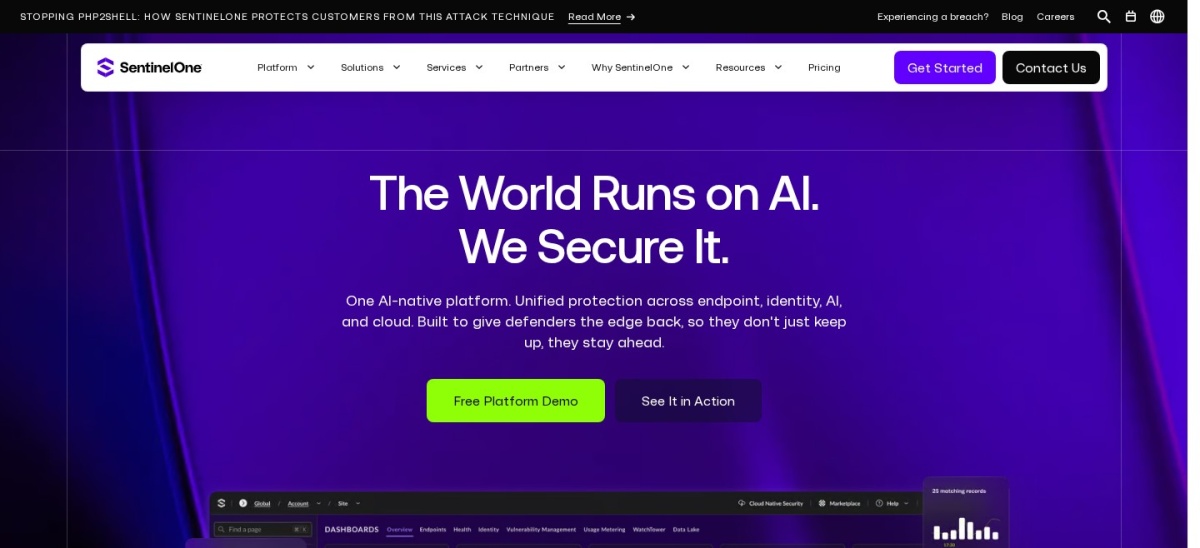
SentinelOne Singularity Identity homepage, captured Nov 2026.
SentinelOne Singularity Identity is the identity module of the Singularity platform, using deception to plant decoy credentials and lure attackers away from real accounts. It correlates identity signals with endpoint telemetry in one console, and the identity features arrive in the Commercial tier at $229.99 per endpoint a year.
The trade off is the thin public review base. Its dedicated G2 product page shows 5.0 out of 5 from only 2 reviews, so the score says little, and the identity tier costs more than three times the $69.99 Core entry tier. It suits teams already on SentinelOne that want deception added to endpoint protection.
What we like
Deception with decoy credentials catches attackers early
Identity and endpoint signals in one console
One-click ransomware rollback on the platform
Watch out for
Only 2 reviews on its dedicated G2 page
Identity tier costs over three times the entry tier
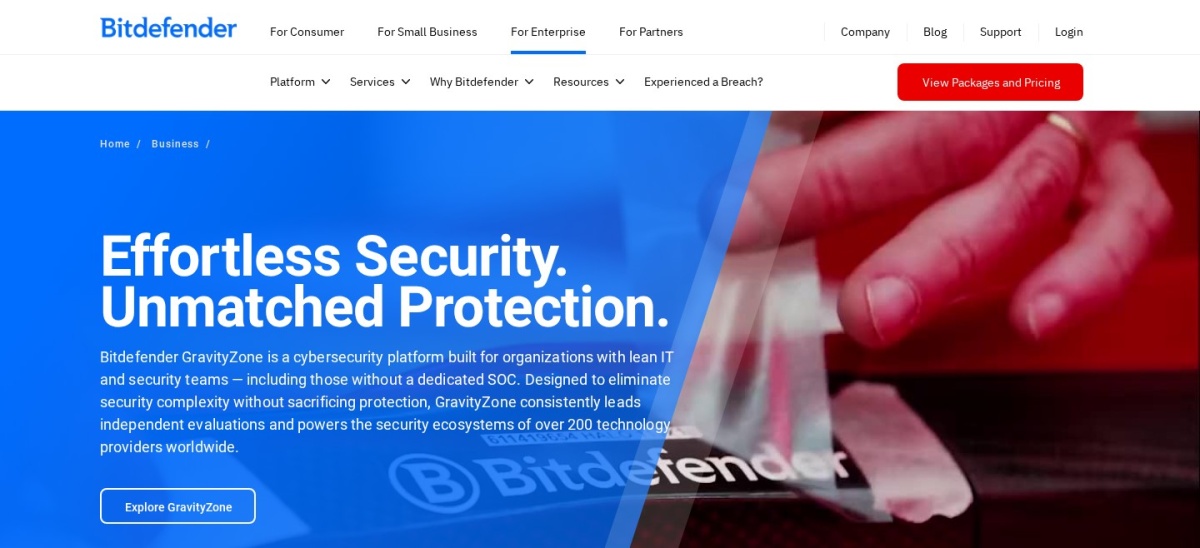
Bitdefender GravityZone XDR homepage, captured Nov 2026.
Bitdefender GravityZone XDR is a cloud-managed endpoint security platform whose XDR tier adds detection and response across endpoints, cloud workloads and identity signals. Business Security lists at $38.50 per device a year for 10 devices, which is the lowest published entry price in this list, and a 30-day free trial is available.
The trade off is that the entry price buys endpoint protection, not detection and response. EDR and XDR sit in the Enterprise tier, which is sold through partners with no published price, so the identity features cost more than the headline figure. It suits small teams that want low-cost endpoint cover with an XDR upgrade path.
What we like
Lowest published entry price in this list
Strong detection scores in independent endpoint tests
Six of the nine tools in this list publish no price, and the other three publish entry prices that do not always include the identity tier.
Ask every vendor for the per-identity or per-user annual figure, the minimum seat count, and whether managed response is included or an add-on.
Confirm renewal pricing in writing. First-term discounts are common, and the renewal figure is the one that repeats every year.
How we chose
We started from the ITDR tools named in 2026 roundups and vendor lists, then kept nine established products with a public review record on G2.
Prices and ratings were checked on 25 November 2026. Ratings and review counts come from G2 on the same day; prices come from vendor pricing pages or vendor-provided listings on G2 where the vendor publishes no list price. Where a vendor shows a sale, the list shows the regular price.
We left out tools with no public rating we could verify, including Proofpoint Identity Threat Defense and Sophos ITDR. No vendor paid for a place, and we do not claim hands-on testing for this list.
How to choose an ITDR tool
Start with the directories you actually run, then match the tool to them.
List every directory and IdP you run. Active Directory, Entra ID, Okta, Google Workspace and legacy systems each narrow the shortlist fast.
Decide who answers the alert at 2 a.m. A managed service such as Huntress suits teams without a SOC; a platform tool suits teams with analysts on call.
Check the identity tier, not the entry price. Entry tiers often exclude identity features, so confirm the tier that includes detection and response before budgeting.
Ask for the quote in writing. Get the per-identity annual figure, the seat minimum and the renewal price, then compare like with like.
FAQ
What is the best ITDR tool?
Microsoft Defender for Identity is the best pick for most teams. It watches Active Directory and Entra ID, is rated 4.3 out of 5 on G2 from 99 reviews, and costs $5.50 per user a month standalone or comes inside Microsoft 365 E5.
What does ITDR stand for?
ITDR stands for identity threat detection and response. It monitors identity systems for stolen credentials, hijacked sessions, privilege escalation and lateral movement, then helps contain compromised accounts before attackers spread further.
How much does ITDR software cost?
Prices range from $4.80 per identity a month for Huntress Managed ITDR to $229.99 per endpoint a year for SentinelOne Commercial. Six of the nine tools here publish no price, so enterprise buyers should expect a quoted annual figure per identity or user.
Is Microsoft Defender for Identity enough on its own?
For teams whose accounts live in Active Directory and Entra ID, it covers the core detections well. Teams with Okta, Google Workspace or legacy systems should add a tool that covers those directories, or pick a platform that spans them.
Do I need a SOC to use ITDR?
No. Managed options such as Huntress include a 24/7 security operations centre that investigates alerts and disables compromised accounts. Platform tools such as CrowdStrike and SentinelOne expect your own team to triage alerts, or a managed add-on.
What is the difference between ITDR and IAM?
IAM controls who can sign in and what they can access, with single sign-on, MFA and provisioning. ITDR watches those identities for abuse after sign-in, such as stolen sessions and privilege escalation, and responds when an account turns hostile.
SaaS SEO and WordPress specialist with about 8 years of experience. Rakib compares WordPress plugins, themes, hosting and software using public pricing, documentation and user reviews. See how we rank.