Particle is the best IoT management platform for most teams, with a 4.5/5 G2 rating from 195 reviews and a free plan covering 100 devices. Pick AWS IoT Core for AWS-based fleets at scale, or Azure IoT Central for the fastest no-code start on Azure.
How we make this list: we compare pricing pages, product documentation and public user reviews, then re-check every price before each update. No product paid for a place. Disclosure.
Particle leads with 195 G2 reviews and a free plan for 100 devices; paid plans start at $299 a month per block.
AWS IoT Core has the highest G2 rating here at 4.7, but billing is usage-based at $1 per million messages.
Azure IoT Central starts at $0.08 per device a month with the first two devices free, the cheapest paid entry in this list.
ThingsBoard and Blynk both offer free plans, while Ubidots has a 30-day trial and Losant and ThingWorx publish no prices.
Blynk carries the most reviews in this list with 1,062 Capterra ratings at 4.8 out of 5.
Losant is joining SUSE, so confirm its roadmap and support plans before committing.
What an IoT management platform should cover
An IoT management platform registers devices, watches their health, pushes updates and routes their data. Without one, every device becomes a manual job: a firmware fix means touching hardware, and a dead sensor stays silent until a customer complains.
The platforms in this list split three ways. Cloud suites from AWS and Microsoft fit fleets already on those clouds. Open and low-code tools such as ThingsBoard, Blynk and Ubidots suit teams that want dashboards fast. Industrial platforms such as Losant and ThingWorx target factories and large fleets.
Pricing is the hardest part to compare. Some tools charge per device, some per message and some only by quote, so the cheapest headline price is rarely the cheapest bill. Our guide on what the WordPress REST API is explains the API model many of these platforms use to move device data.
Start with your hardware and your cloud. A team on AWS or Azure should shortlist that cloud's tools first, while a team shipping its own hardware should look at Particle or Blynk before anything else.
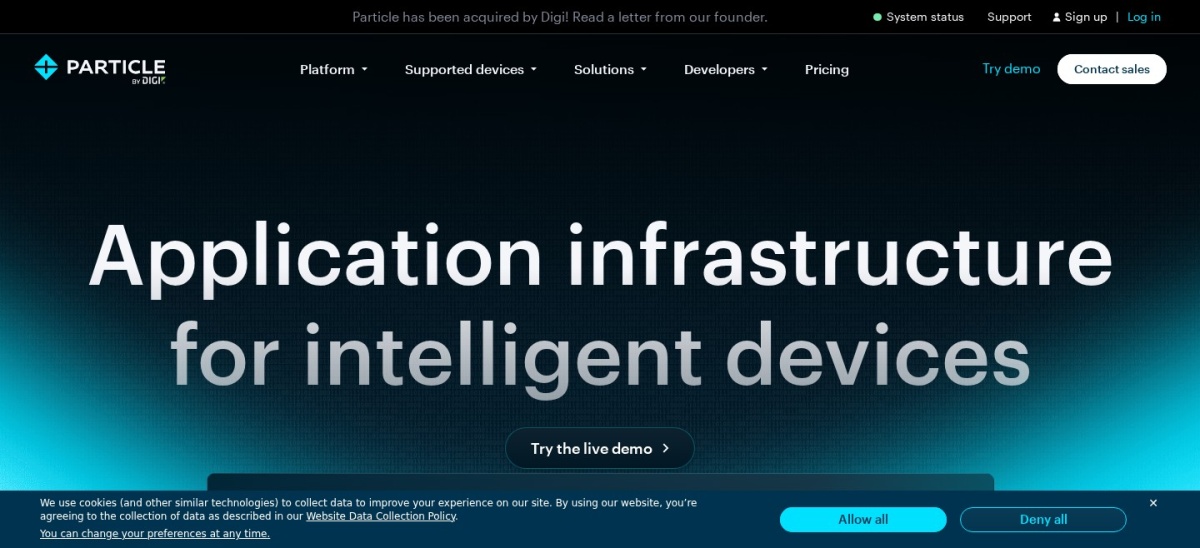
Particle is an integrated IoT platform that covers hardware, connectivity and cloud in one package. The free plan supports 100 devices with 100,000 Data Operations a month, and every plan includes over-the-air updates, device vitals and edge-to-cloud encryption. Its console tracks each device, its software version and its health in one place.
The trade off is price and hardware fit. Paid plans start at $299 a month per block of 100 devices, and the platform works best with Particle hardware and its EtherSIM connectivity. It suits teams shipping connected products who want one vendor for the device, the connection and the cloud.
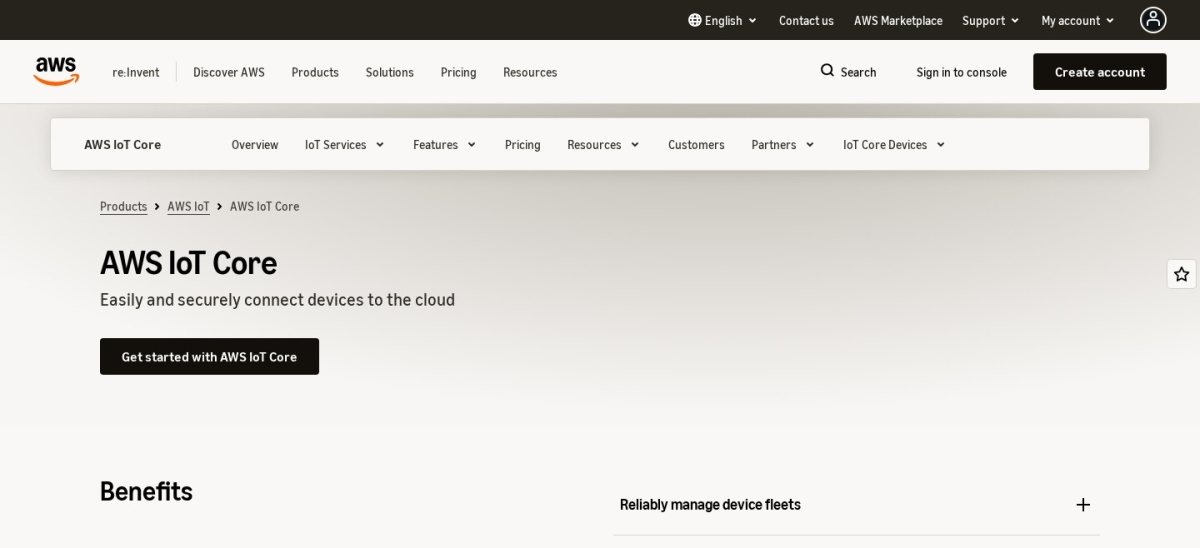
AWS IoT Core is the managed service that connects devices to AWS with MQTT, HTTP or WebSockets. It handles device registry, authentication, Device Shadow state and a rules engine that routes messages to other AWS services. The 12-month free tier covers 500,000 messages a month, and fleet tools add bulk updates and remote troubleshooting.
The trade off is cost control. Messaging costs $1 per million messages after the free tier, with separate charges for connection minutes, shadow operations and rules, so bills grow with traffic. It suits teams already running on AWS who want device data flowing straight into their cloud services.
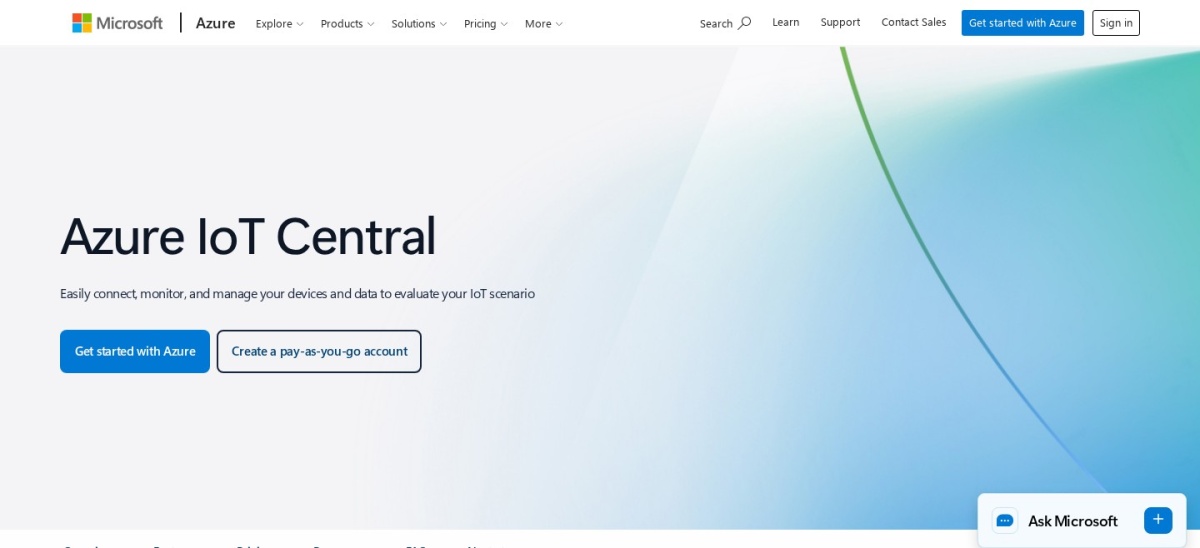
Azure IoT Central is Microsoft's ready-made IoT application platform, with device templates, dashboards and rules built in. Teams connect devices, watch live telemetry and set alerts without writing backend code. The first two devices are free, and Standard Tier 0 costs $0.08 per device a month with 400 messages included.
The trade off is depth. It hides the plumbing that IoT Hub exposes, so teams that need custom device protocols or edge modules will outgrow it. It suits teams that want a working IoT app fast, with Azure handling the infrastructure behind it.
Azure IoT Hub is the cloud service behind most Azure IoT fleets, with two-way messaging, per-device authentication and device twins that hold each device's state. Device Update handles over-the-air updates, and the Device Provisioning Service registers devices with no manual setup. The free tier allows 8,000 messages a day across 500 devices.
The trade off is complexity. Pricing is tiered by message volume, and the Basic tier leaves out cloud-to-device messaging, twins and jobs, which need Standard. It suits Microsoft shops that want full control of device connectivity, security and updates.
What we like
Two-way messaging with per-device identity
Zero-touch provisioning at scale
Device Update covers over-the-air updates
Largest Azure review base here, 44 G2 reviews
Watch out for
Basic tier omits twins, jobs and cloud-to-device messages
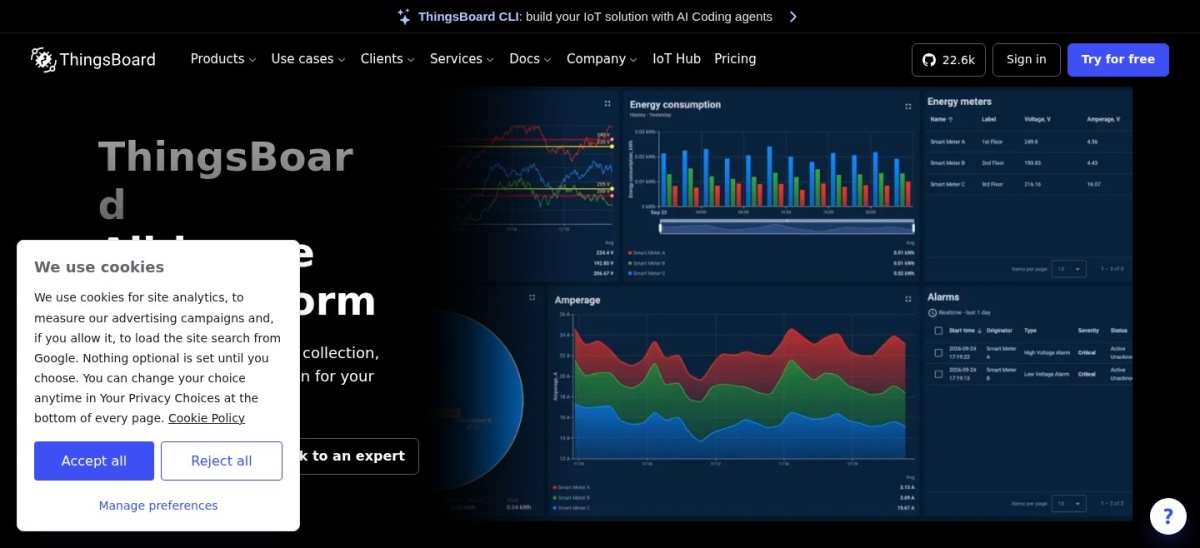
ThingsBoard is an open-source IoT platform for device management, data collection, processing and visualization. The free cloud plan covers 5 devices with 1 million data points a month, and the platform ships more than 600 dashboard widgets, a rule engine and alarms. It also runs self-hosted, including on air-gapped networks.
The trade off is setup effort. Its breadth means more to configure than a narrow monitoring tool, and advanced analytics come as paid add-ons. It suits industrial teams that want open dashboards, rule chains and over-the-air updates without a proprietary stack.
Ubidots is an industrial IoT platform for ingesting device data, building dashboards and triggering alerts without building the stack yourself. The Professional plan covers 50 devices with 10 million dots a month, 6 months of data retention and 5 end-user organizations. Extra devices cost $2 each, up to 1,000.
The trade off is the price jump. There is no permanent free plan, only a 30-day trial, so small projects move straight to $99 a month. It suits integrators and OEMs that need branded dashboards and alerts running in weeks.
What we like
Highest rating in this list, 4.9 on Capterra
Fast dashboard and alert setup
White-label apps on higher plans
Strong support ratings
Watch out for
No permanent free plan
$99 a month is steep for small projects
Extra devices and dots add metered charges
Industrial adds white-label apps and 24-month retentionVisit ubidots.com
07
Blynk
4.8/5on Capterra (1,062 reviews, checked Nov 2026)
Paid from$29/mo
Best for connected products with a mobile app
Free planYes, 5 devices
Starter plan$29/mo, 10 devices
Messages10M/mo on Starter
Data retention1 month on Starter
blynk.io
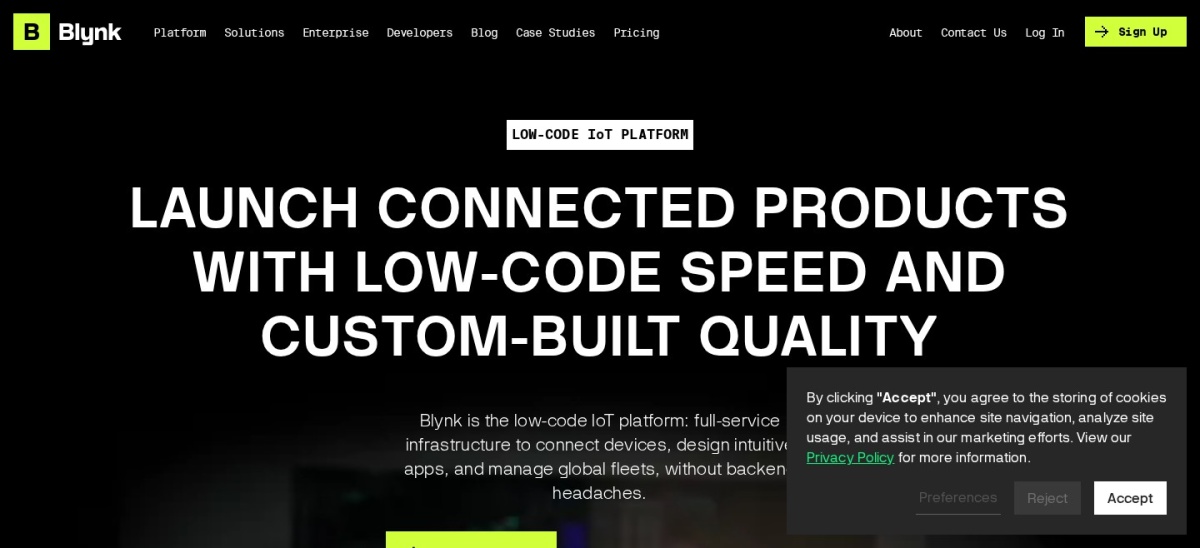
Blynk homepage, captured Nov 2026.
Blynk is a low-code IoT platform for connecting devices to the cloud, building mobile apps to control them and managing deployed products. The free plan covers 5 devices with 100,000 messages a month, and Starter at $29 a month adds 10 devices, 10 million messages and data import and export.
The trade off is the price cliff. The next step up, Prototype, costs $99 a month for 50 devices, with little in between for growing projects. It suits makers and product teams that want a polished mobile app beside their devices.
What we like
Best mobile app experience in this list
Free plan for 5 devices
Drag-and-drop dashboards and automations
1,062 Capterra ratings
Watch out for
Steep jump from Starter to Prototype
Free retention is only 1 week
White-label apps need Enterprise
Prototype adds 50 devices and unlimited messagesVisit blynk.io
08
Losant
4.5/5on G2 (5 reviews, checked Nov 2026)
PricingCustom/yr
Best for low-code industrial workflows
PricingCustom quote only
Workflow engineVisual, low-code
Edge agentPLC and cloud integrations
Multi-tenancyYes, with custom branding
losant.com
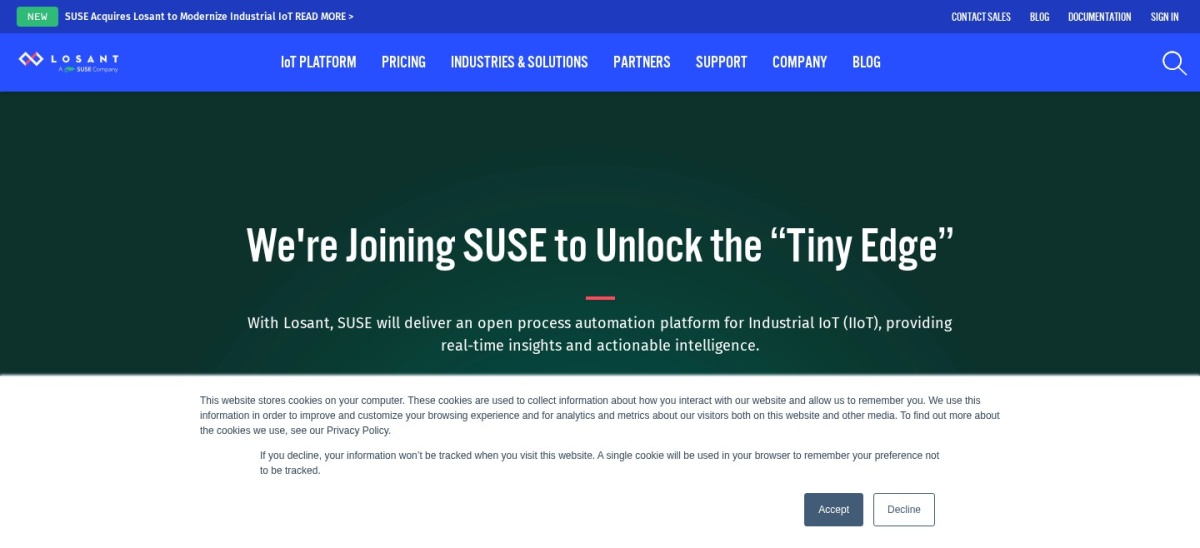
Losant homepage, captured Nov 2026.
Losant is an enterprise IoT platform built around a low-code workflow engine that collects, centralizes and connects device data. Its edge agent talks to PLCs, CRMs and Azure or AWS, and the platform supports digital twins, multi-tenancy and custom branding. It was named in the 2024 Gartner Magic Quadrant for global industrial IoT platforms.
The trade off is transparency. Losant publishes no prices, so every deal needs a conversation, and the company is joining SUSE, so buyers should confirm the roadmap before committing. It suits industrial teams that want to build connected products with visual workflows instead of code.
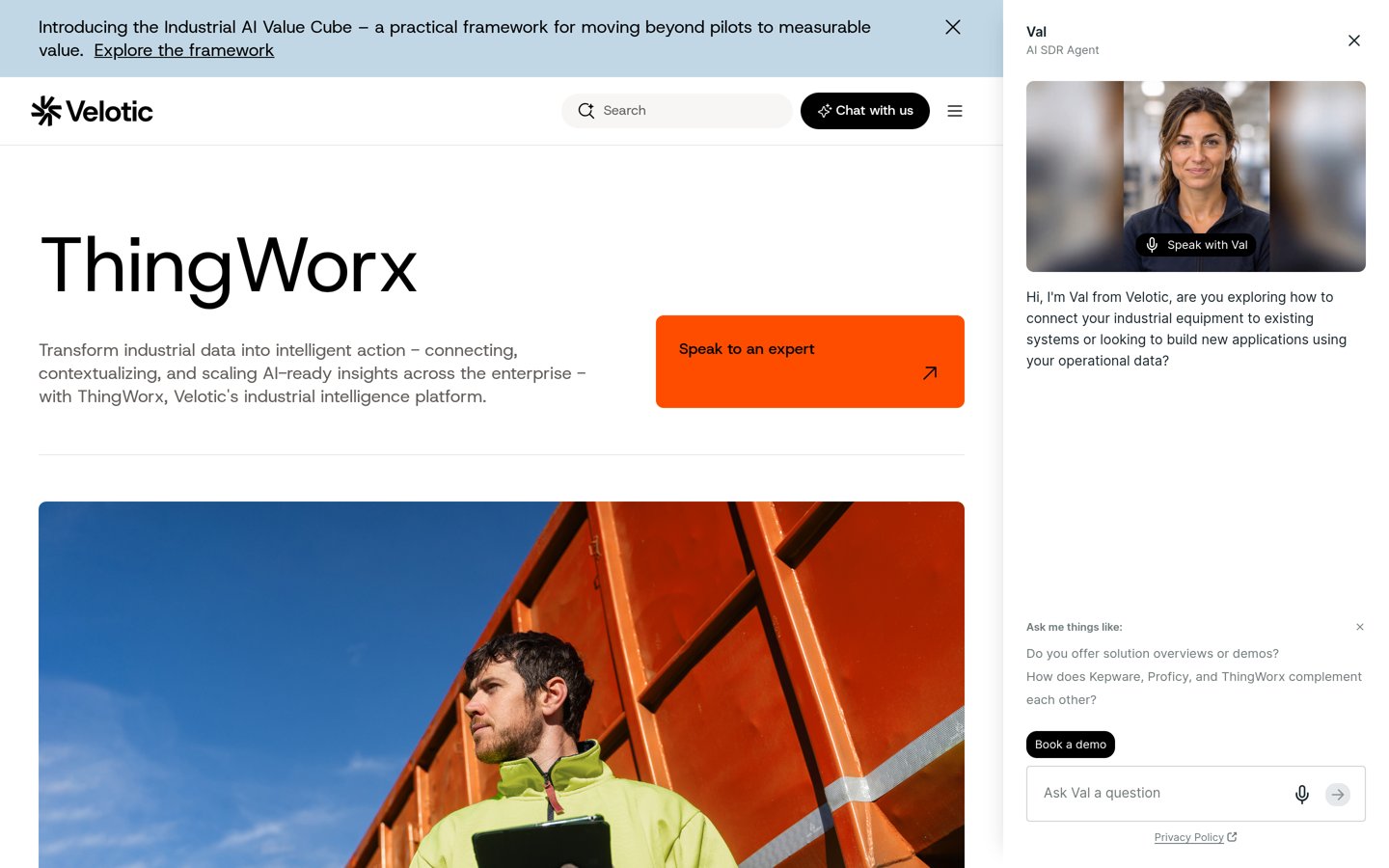
ThingWorx is PTC's industrial IoT platform for building connected-product apps, now presented under the Velotic brand. Its low-code Mashup Builder turns machine data into dashboards, and Kepware connectivity links factory equipment to the cloud. Real-time analytics track asset health and use across the fleet.
The trade off is cost and complexity. Pricing is quote-only, reviewers call it expensive, and it carries the lowest G2 rating in this list at 3.9. It suits large manufacturers that need industrial apps, asset monitoring and PTC ecosystem links in one platform.
AWS and Microsoft tools charge by message or device, and the bill follows traffic. They fit fleets already committed to that cloud.
Independent tools charge per device or per plan, which is easier to predict. ThingsBoard, Blynk and Ubidots publish fixed monthly prices.
Industrial platforms such as Losant and ThingWorx quote per deployment. They fit large fleets, but small teams should get the quote before building on them.
Pick the billing model you can forecast. A per-message bill can surprise a team whose devices report every few seconds.
How we chose
We started from the established IoT management platforms with public ratings on G2 or Capterra, then kept the nine with a clear management story: onboarding, monitoring, updates and alerts.
Prices come from each vendor's pricing page, checked on 25 November 2026. Ratings and review counts come from G2 or Capterra on the same day. Where a vendor shows no price, the list says so instead of repeating a third-party estimate.
We left out tools with no public rating, including Datacake and Balena, and tools that no longer sell as standalone platforms. No vendor paid for a place, and we do not claim to have used these tools ourselves.
How to choose an IoT management platform
Count your devices and messages first, then match the billing model to that count.
Count devices and messages before you compare prices. A fleet of 50 sensors reporting hourly costs little anywhere, while 5,000 devices reporting every minute makes per-message billing the deciding factor.
Match the platform to your cloud. Teams on AWS or Azure save integration work with that cloud's tools, while teams with their own hardware fit Particle, Blynk or ThingsBoard better.
Check the update story before you scale. Over-the-air updates, rollback and bandwidth use matter more than dashboards once devices are in the field. Test updates on a small pilot fleet first.
Try the free plan or trial with real devices. Connect a handful of devices, break one on purpose and watch how fast the platform flags it. Pay only when the fleet outgrows the free limits.
FAQ
What is the best IoT management platform?
Particle is the best pick for most teams. It covers hardware, connectivity and cloud in one platform, holds a 4.5 out of 5 G2 rating from 195 reviews and offers a free plan for 100 devices. AWS IoT Core suits AWS-based fleets, and Azure IoT Central suits no-code starts on Azure.
How much does an IoT management platform cost?
It depends on the billing model. Azure IoT Central starts at $0.08 per device a month, Blynk Starter costs $29 a month and ThingsBoard Prototype costs $49 a month. AWS IoT Core charges $1 per million messages, while Losant and ThingWorx publish no prices and quote per deployment.
Is there a free IoT management platform?
Yes. Particle, ThingsBoard and Blynk all offer free plans, and AWS IoT Core, Azure IoT Hub and Azure IoT Central all have free tiers with message or device limits. Ubidots offers a 30-day trial instead of a permanent free plan.
What is the difference between Azure IoT Hub and Azure IoT Central?
IoT Hub is the backend service for device connectivity, messaging and updates, priced per hub unit. IoT Central is a ready-made application built on top of it, with templates, dashboards and rules and per-device pricing. Central is faster to start; Hub gives more control.
Do I need an IoT platform if I only have a few devices?
Probably not a paid one. A free plan from Particle, ThingsBoard or Blynk covers a small fleet, and a simple dashboard may be enough until devices need remote updates, alerts or user management. Start free and pay only when the fleet grows.
Which IoT platform is best for industrial use?
ThingsBoard suits industrial dashboards and open deployments, Losant suits low-code workflows and edge data, and ThingWorx suits large manufacturers building industrial apps. All three handle device onboarding, monitoring and updates, but Losant and ThingWorx are quote-only.
Can I switch IoT platforms later?
Yes, but it takes work. Devices must be re-registered, credentials re-issued and dashboards rebuilt, and any code written against one platform's API must change. Pick a platform that supports standard protocols such as MQTT so the move stays possible.
SaaS SEO and WordPress specialist with about 8 years of experience. Rakib compares WordPress plugins, themes, hosting and software using public pricing, documentation and user reviews. See how we rank.