EMnify is the best IoT connectivity management software for most fleets, with a 4.9/5 G2 rating from 93 reviews and coverage across 540+ networks in 180+ countries. Pick 1NCE for low-data sensors at $10 per SIM for 10 years, or Particle if you also need hardware and a free tier.
How we make this list: we compare pricing pages, product documentation and public user reviews, then re-check every price before each update. No product paid for a place. Disclosure.
EMnify leads with a 4.9/5 G2 rating from 93 reviews, the largest review base among the top-rated tools here.
1NCE is the cheapest published price: $10 once per SIM for 10 years, 500 MB of data and 250 SMS.
Soracom and Hologram start at $1 a month per SIM, but data is charged on top, so model usage first.
Five of the nine tools publish no price at all, so budget on a sales quote, not a list price.
Particle is the only tool here with a free tier, covering up to 100 devices.
What IoT connectivity management software should cover
IoT connectivity management software connects, monitors and controls fleets of cellular devices from one place. It handles SIM activation, data limits, network switching and alerts, so a team does not manage a separate carrier contract per country.
Coverage and SIM technology matter most. Multi-carrier and multi-IMSI SIMs switch networks when one fails, and eUICC lets a profile change over the air instead of a SIM swap. Check how many networks and countries a vendor really reaches before you sign.
Pricing is the hardest part of this market. Only four of the nine tools here publish a price; the rest sell by quote, so the bill depends on fleet size, data use and coverage. Track usage from day one, and a pooled or flat plan often beats pay-per-MB at scale.
Ratings in this list come from G2 and Gartner, checked on 25 November 2026. Where a tool has few reviews, we say so, because a 4.9 from 10 reviews means less than a 4.9 from 93.
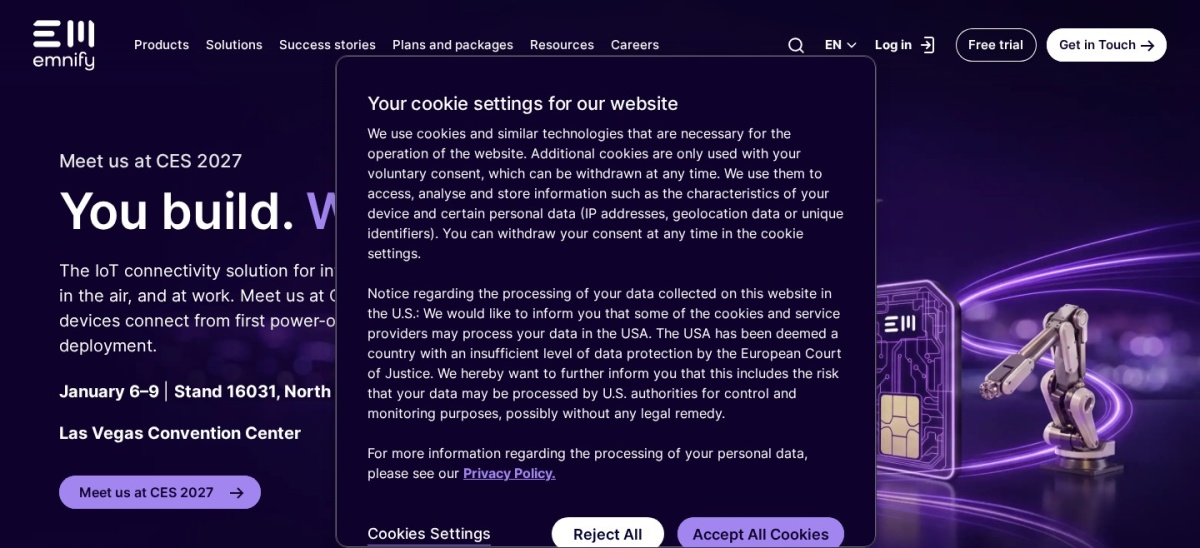
EMnify is a cloud-based IoT connectivity platform built around its multi-carrier SuperNetwork SIM, which reaches 540+ networks in 180+ countries. The platform covers SIM lifecycle, data limits, network blocking and automations through a portal and REST API, and a 60-day free trial includes three free SIMs.
The trade off is price. EMnify publishes no rates, so the monthly SIM fee and data price come only from a quote, and SIMs start from under EUR 2 each. It suits fleets that need broad multi-network coverage and API control and can run a sales process first.
Aeris is a cellular IoT connectivity platform aimed at large fleets in automotive, utilities, energy and healthcare. Its console manages SIMs, data usage and alerts across a global footprint, and its IoT Watchtower service adds threat monitoring for connected devices. Aeris reports 80 million devices under management.
The trade off is scale and price. Aeris publishes no price, so expect an enterprise quote, and its 4.9 rating rests on only 10 G2 reviews. It suits large teams that need managed connectivity with security monitoring rather than a self-serve SIM.
What we like
Joint highest rating in this list at 4.9 out of 5
IoT Watchtower threat monitoring built in
80 million devices under management
Watch out for
Only 10 G2 reviews, the thinnest base here
No published price; enterprise quote only
Paid plans are quoted per fleet; ask for a demo firstVisit aeris.com
03
1NCE
4.7/5on Gartner (25 reviews, checked Nov 2026)
Starts at$10/once
Best value for low-data sensors
Price$10 once, 10 years
Data included500 MB + 250 SMS
Coverage100+ countries
Gartner rating4.7/5, 25 reviews
1nce.com
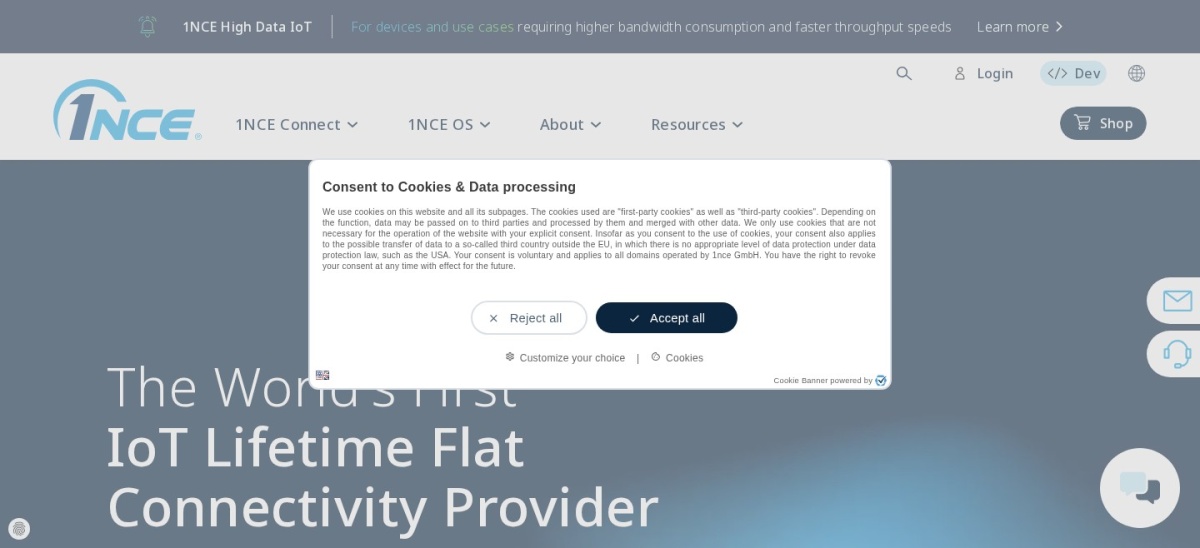
1NCE homepage, captured Nov 2026.
1NCE is a low-cost IoT carrier built for sensors and meters that send little data. The IoT Lifetime Flat costs $10 once per SIM and covers 10 years, 500 MB of data and 250 SMS in 100+ countries, with no monthly fee. Top-ups of another 500 MB cost $10, and the management platform is included.
The trade off is the cap. The 500 MB lifetime allowance fits trackers and meters, but a chatty device burns through it and top-ups cost more per MB than a pooled plan. It suits low-data fleets that want one fixed cost per device for a decade.
floLIVE is a cloud-native IoT connectivity platform for enterprises and MVNOs that need their own core network. It offers multi-IMSI SIMs, local packet gateways for low latency, eUICC with SGP.32 support, and a connectivity management platform with real-time network insight.
The trade off is opacity. floLIVE bills usage-based and publishes no per-MB rate, so the bill depends on a quote, and its 4.7 rating comes from only 7 G2 reviews. It suits teams that want local breakout and multi-network control at enterprise scale.
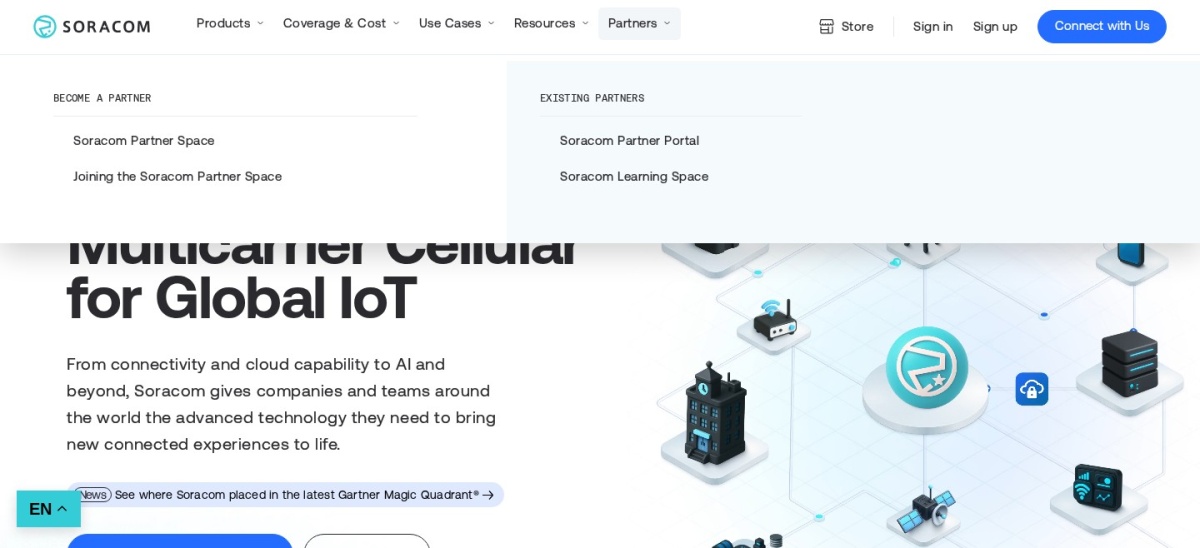
Soracom is a cloud-native IoT connectivity platform that runs its mobile core inside AWS and manages SIMs, data and private networking from one console. The entry planX3 plan costs $1 a month per SIM with 5 MB included, and the global plan01s plan covers 170+ countries. More than 150 APIs cover automation.
The trade off is complexity. Plan choice, speed class and country change the price, so budgeting a mixed fleet takes care, and production deployments usually move to a custom quote. It suits developers already on AWS who want programmable connectivity.
What we like
Published self-serve fee schedule
Mobile core runs inside AWS
150+ APIs for automation
Watch out for
Pricing is complex across plans and countries
Production deployments usually need a quote
plan01s charges $0.06 per active SIM per day plus dataVisit soracom.io
06
Hologram
4.5/5on G2 (63 reviews, checked Nov 2026)
Starts at$1/SIM/mo
Best self-serve start for developers
Monthly fee$1/SIM
Data$0.03/MB
SIM card$3
G2 rating4.5/5, 63 reviews
hologram.io
Hologram homepage, captured Nov 2026.
Hologram is a self-serve IoT connectivity platform for developers and small fleets. Its pay-as-you-go plan charges $1 per SIM a month plus $0.03 per MB, with the SIM card at $3, and free test data for trying it out. The Hyper eUICC SIM falls back across carriers, and a dashboard and REST API manage the fleet.
The trade off is data cost at scale. At $0.03 per MB, a fleet of chatty devices costs far more than a pooled or flat-rate plan, so larger teams should ask for a custom Scale quote. It suits prototypes and fleets that want to start in minutes.
Particle is an end-to-end IoT platform that pairs its own hardware with EtherSIM cellular connectivity, over-the-air updates and a cloud console. The free tier covers up to 100 devices and 100,000 data operations a month, so a small team can prototype without paying. It is rated 4.5 out of 5 from 195 reviews on G2.
The trade off is the step to paid. Basic costs $299 a month per block of 100 devices, and blocks auto-add when limits are exceeded, so costs can jump at launch. It suits teams building a connected product that want hardware, connectivity and cloud from one vendor.
What we like
Only free tier in this list, up to 100 devices
Largest G2 review base here at 195 reviews
Hardware, connectivity and cloud from one vendor
Watch out for
Paid blocks jump to $299 a month each
Blocks auto-add, so costs can rise fast
Plus costs $599 a month per block; Enterprise is quotedVisit particle.io
08
KORE Wireless
4.4/5on Gartner (91 reviews, checked Nov 2026)
PricingCustom/yr
Best for regulated and healthcare fleets
Connections20M+
Coverage200+ countries
Gartner rating4.4/5, 91 reviews
Paid planCustom quote
korewireless.com
KORE Wireless homepage, captured Nov 2026.
KORE Wireless is a global IoT MVNO with more than 20 million connections across 200+ countries. It pairs multi-carrier connectivity with managed services and a connectivity management platform, and it holds HIPAA, FDA and ISO certifications, the only platform here with all three. It suits regulated fleets such as healthcare.
The trade off is price and process. KORE publishes no price, so expect a quote and a sales-led rollout, and its Gartner rating of 4.4 comes from managed-service reviews rather than a self-serve product. It suits large fleets that need compliance and managed support.
What we like
Only platform here with HIPAA, FDA and ISO certifications
Eseye is a managed IoT connectivity provider built around its AnyNet+ multi-IMSI eUICC SIM, which reaches 800+ networks in 190+ countries. Its Infinity platform manages SIM provisioning, usage, alerts and billing in one place, and a free trial kit includes a SIM, prepaid data and platform access.
The trade off is price. Eseye publishes no rates, so costs come from a quote, and reviewers note the Infinity platform can feel slow at times. It suits global fleets that want near-complete coverage with localised profiles and managed support.
What we like
Widest network reach here at 800+ networks
Localised profiles for strict roaming rules
Free trial kit with SIM and data
Watch out for
No published price; quote only
Reviewers note the platform can feel slow
Paid plans are quoted per fleet; ask for a demo firstVisit eseye.com
Quote-only pricing: what to expect
Five of the nine tools in this list publish no price. That is normal for IoT connectivity, where the price depends on fleet size, data use, coverage and support.
A quote usually starts with a discovery call about device count, monthly data per device and the countries you deploy in. Vendors then price per SIM, per MB or as a pooled bundle, and add onboarding fees on top.
Go into a demo with your numbers ready: device count, data per device per month and the countries that matter. That is what turns a vague quote into a comparable one.
How we chose
We started from the best-known IoT connectivity platforms on G2 and Gartner, then kept nine with a public rating, an established user base and a clear connectivity management platform.
Prices and plan limits come from vendor pricing pages, fee schedules and listings checked on 25 November 2026. Ratings and review counts come from G2 and Gartner on the same day. Where a vendor shows no price, the list shows Custom rather than a guess.
We left out tools with no public rating and carrier-only offers with no management platform. No vendor paid for a place, and we do not claim to have used these tools ourselves.
How to choose IoT connectivity management software
Start with the devices you actually run, then match the tool to that job.
Count devices and data first. A tracker that sends a few kilobytes a month needs a different plan from a camera that streams video. Count devices and monthly data per device before you look at tools.
Match the SIM to the coverage. Multi-IMSI and eUICC SIMs matter when devices cross borders or one network fails. Check the networks and countries each vendor really reaches, not just the headline count.
Get the quote in writing. Five tools here publish no price, so get the quote in writing with onboarding fees included, then compare it against the published prices here. Our guide on monitoring a WordPress site shows why watching usage from day one matters.
Check the review base, not just the score. A 4.9 from 93 reviews means more than a 4.9 from 10. Ask shortlisted vendors for two reference customers in your size and use case.
FAQ
What is the best IoT connectivity management software?
EMnify is the best overall pick for most fleets, with a 4.9 out of 5 G2 rating from 93 reviews and coverage across 540+ networks in 180+ countries. Pick 1NCE for low-data sensors and Particle for connected products with hardware.
How much does IoT connectivity management software cost?
Published prices in this list start at $10 once per SIM for 10 years with 1NCE, and $1 a month per SIM with Soracom and Hologram, plus data charges. Five of the nine tools publish no price and sell by quote.
What is a multi-IMSI SIM?
A multi-IMSI SIM holds several operator profiles on one card and can switch between them. That keeps a device connected when one network fails and helps in countries with strict roaming rules, without a physical SIM swap.
Do I need eUICC for a global fleet?
It helps. eUICC lets you change the operator profile over the air, so a device can localise in a new country without a site visit. Single-profile SIMs work for one-country fleets but make global moves harder.
Is there free IoT connectivity management software?
Particle is the only tool here with a free tier, covering up to 100 devices and 100,000 data operations a month. EMnify, 1NCE and Eseye offer free trials or free SIMs, while Hologram gives free test data.
Which tool is best for low-data sensors?
1NCE is the best fit for low-data sensors. Its $10 lifetime flat covers 10 years, 500 MB of data and 250 SMS per SIM with no monthly fee, which suits trackers, meters and streetlights that send small readings.
SaaS SEO and WordPress specialist with about 8 years of experience. Rakib compares WordPress plugins, themes, hosting and software using public pricing, documentation and user reviews. See how we rank.