Fidelity is the best investing app for most investors, with $0 commission on online stock and ETF trades, fractional shares from $1 and IRAs, HSAs and zero-expense funds. Pick Robinhood for the simplest mobile app and Acorns for spare-change investing on autopilot.
How we make this list: we compare pricing pages, product documentation and public user reviews, then re-check every price before each update. No product paid for a place. Disclosure.
Fidelity charges $0 commission on online stock, ETF and options trades, with fractional shares from $1 across more than 7,000 stocks and ETFs.
Seven of the nine apps charge $0 commission on stocks and ETFs; only Acorns and M1 charge a monthly fee to use the app itself.
Robinhood Gold costs $5 a month ($50 a year) and Webull Premium costs $3.99 a month ($40 a year); both are optional.
Acorns raised its entry plan to $4 a month: Bronze is $4, Silver is $8 and Gold is $12, all checked on the live pricing page.
Trustpilot scores run from 1.1 to 4.4 here and mostly reflect support complaints, so this list is ordered by breadth, fees and features instead.
What to look for in an investing app
Most investing apps now charge $0 commission on stocks and ETFs, so the fee is no longer what separates them. What matters is what else you get: account types, fractional shares, research and support when something goes wrong.
Fractional shares matter if you start small. Fidelity lets you buy from $1, Robinhood from $1 and SoFi from $5, so a high share price is not a barrier.
Paid tiers are optional almost everywhere. Robinhood Gold, Webull Premium and SoFi Plus add perks such as IRA matches and better cash yields, but none of them is needed to buy a stock.
Read the Trustpilot scores in this list with care. Brokers score badly there because unhappy customers write most of the reviews, while the same apps score well above 4 in the app stores.
1.2/5on Trustpilot (1,195 reviews, checked Nov 2026)
PriceFree
Best investing app overall
Stock/ETF commission$0
Options contract$0.65
Fractional sharesFrom $1, 7,000+ stocks and ETFs
Account minimum$0
fidelity.com
Fidelity homepage, captured Nov 2026.
Fidelity is the largest full-service broker in this list, with $0 commission on online US stock, ETF and options trades and no account minimum. Fractional shares start at $1 across more than 7,000 stocks and ETFs, and its ZERO index funds carry a 0% expense ratio. It covers IRAs, HSAs, 401(k)s and bonds alongside strong research.
The trade off is the app itself, which packs in so many accounts and tools that new investors can find it busy. Options still cost $0.65 per contract, and broker-assisted trades cost extra. It suits investors who want one account for everything, from a first ETF to retirement.
What we like
$0 commission on online stock, ETF and options trades
Fractional shares from $1 on 7,000+ stocks and ETFs
1.5/5on Trustpilot (798 reviews, checked Nov 2026)
PriceFree
Best full-service broker
Stock/ETF commission$0
Options contract$0.65
Stock SlicesFrom $5, S&P 500 only
Free robo-advisor$5,000 minimum
schwab.com
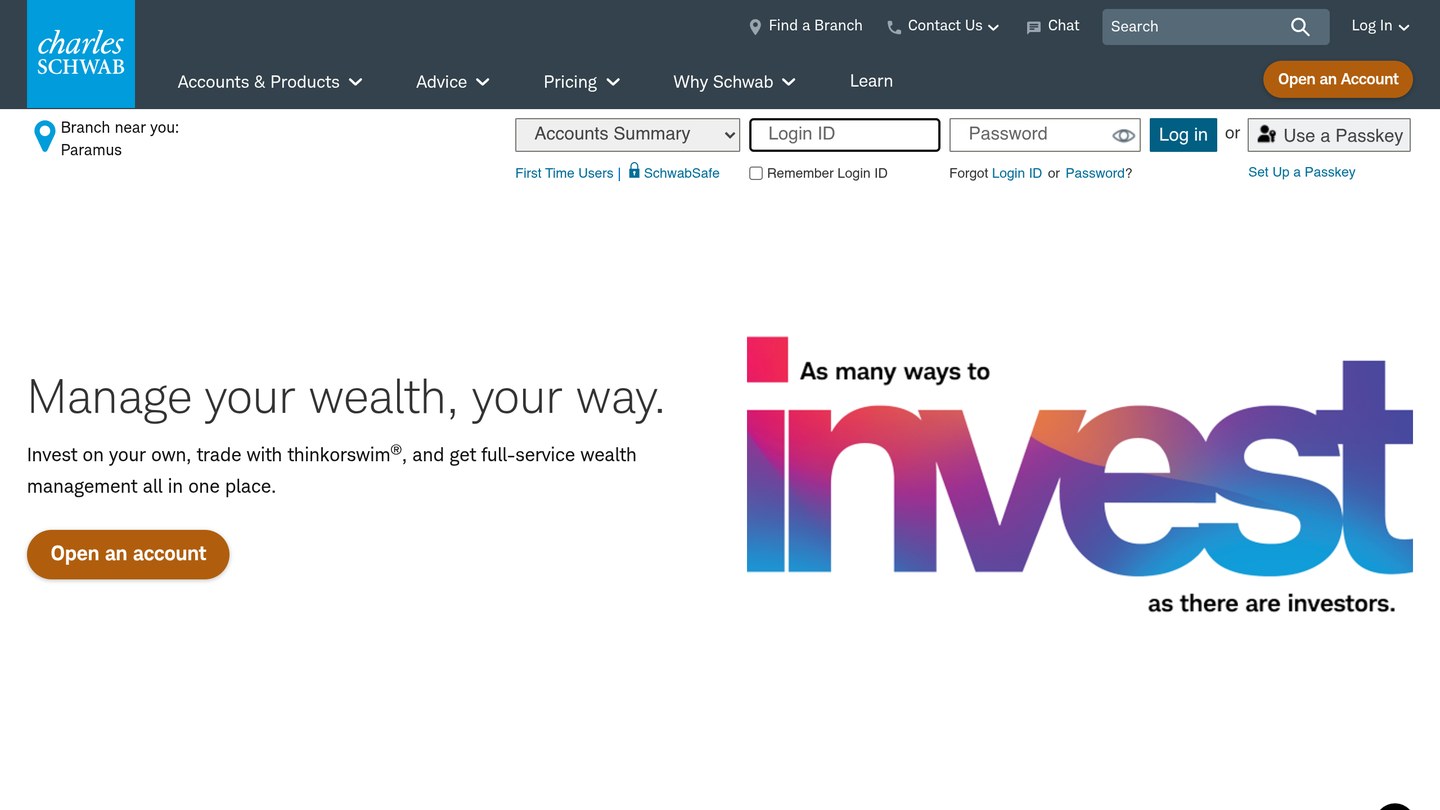
Charles Schwab homepage, captured Nov 2026.
Charles Schwab is a full-service broker with $0 online listed stock and ETF trades and no account minimum. Stock Slices lets you buy fractional shares of S&P 500 companies from $5, and the thinkorswim platform adds charting and paper trading for active investors. Its free robo-advisor, Schwab Intelligent Portfolios, needs a $5,000 minimum.
The trade off is range. Stock Slices covers S&P 500 stocks only, with no fractional ETFs, and options cost $0.65 per contract. Cash swept to the bank account earns a low rate unless you move it yourself. It suits investors who want a full-service broker with branches and a bank account.
What we like
$0 online stock and ETF trades
thinkorswim charting and paper trading included
Bank account and branches alongside brokerage
Free robo-advisor with no advisory fee
Watch out for
Stock Slices covers S&P 500 stocks only
Idle cash sweep pays a low rate
$0.65 per options contract
Schwab Intelligent Portfolios is free with a $5,000 minimumVisit schwab.com
03
Robinhood
3.8/5on Trustpilot (17,592 reviews, checked Nov 2026)
Paid from$5/mo
Best investing app for beginners
Stock/ETF commission$0
Options contract$0 on equity options
Fractional sharesFrom $1
Gold$5/mo or $50/yr
robinhood.com
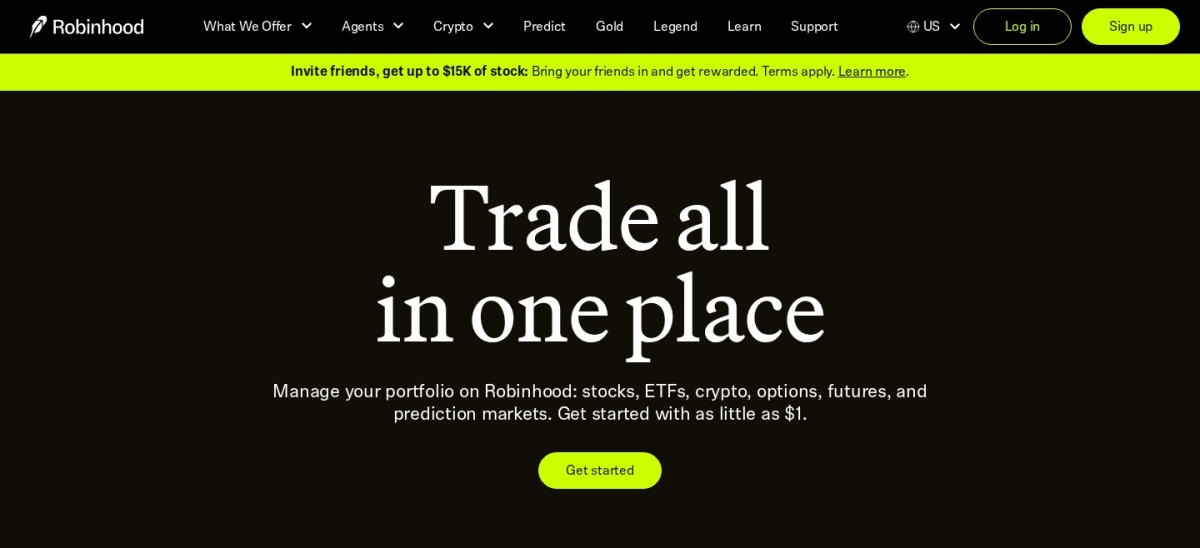
Robinhood homepage, captured Nov 2026.
Robinhood is the simplest investing app in this list, with $0 commission on stocks, ETFs and options and no per-contract fee on equity options. Fractional shares start at $1, and you can trade stocks, ETFs, options, crypto, futures and prediction markets in one app. It also offers IRAs and 24-hour trading on weekdays.
The trade off is depth. Robinhood offers no mutual funds, and its research tools are thinner than Fidelity or Schwab. The 3% IRA match needs Gold at $5 a month ($50 a year), while free accounts get 1%. It suits beginners who want the easiest way to buy a first stock or ETF.
What we like
Simplest app in this list
$0 options contract fees on equity options
Fractional shares from $1
24-hour trading on weekdays
Watch out for
No mutual funds
Thinner research than Fidelity or Schwab
Best IRA match needs the $5 a month Gold plan
Gold adds a 3% IRA match and a higher yield on uninvested cashVisit robinhood.com
04
Vanguard
1.3/5on Trustpilot (400 reviews, checked Nov 2026)
PriceFree
Best for low-cost index funds
Stock/ETF commission$0
Average fund expense0.07% in 2025
Account minimum$0
Digital Advisor0.20% a year
vanguard.com
Vanguard homepage, captured Nov 2026.
Vanguard is the low-cost index fund pioneer, with $0 online stock and ETF trades and no account minimum. Its fund costs averaged 0.07% in 2025, and it offers Traditional and Roth IRAs, 401(k) rollovers and 529 plans. The app is plain, but it is built for long-term investors who buy and hold.
The trade off is the experience. Vanguard's website and support draw heavy complaints, and fractional shares work only on its own ETFs. Its Digital Advisor costs 0.20% a year for managed portfolios. It suits patient investors who want low-cost funds and little else.
What we like
$0 online stock and ETF trades
Fund costs averaged 0.07% in 2025
Strong range of IRAs and 529 plans
Digital Advisor from 0.20% a year with tax-loss harvesting
1.1/5on Trustpilot (795 reviews, checked Nov 2026)
PriceFree
Best for active options traders
Stock/ETF commission$0
Options contract$0.65, $0.50 active
Futures$1.50 per contract
Account minimum$0
etrade.com
E*TRADE homepage, captured Nov 2026.
E*TRADE is one of the original online brokers, now part of Morgan Stanley, with $0 commission on stocks and ETFs and no account minimum. Options cost $0.65 per contract, dropping to $0.50 if you place 30 or more trades a quarter. The Power E*TRADE platform adds advanced charting for active traders.
The trade off is support. E*TRADE holds the lowest Trustpilot score in this list at 1.1 out of 5, with most complaints about locked accounts and slow transfers. Futures cost $1.50 per contract per side. It suits active options traders who want a deep platform and can live with the support.
What we like
$0 commission on stocks and ETFs
Options drop to $0.50 a contract for active traders
Power E*TRADE charting for active traders
Backed by Morgan Stanley since 2020
Watch out for
Lowest Trustpilot score in this list, 1.1 out of 5
Support complaints about locked accounts
Futures cost $1.50 per contract per side
Power E*TRADE is included; futures cost $1.50 per contract per sideVisit etrade.com
06
Webull
1.3/5on Trustpilot (427 reviews, checked Nov 2026)
Paid from$3.99/mo
Best for chart-focused traders
Stock/ETF commission$0
Options contract$0
Paper tradingFree
Premium$3.99/mo or $40/yr
webull.com
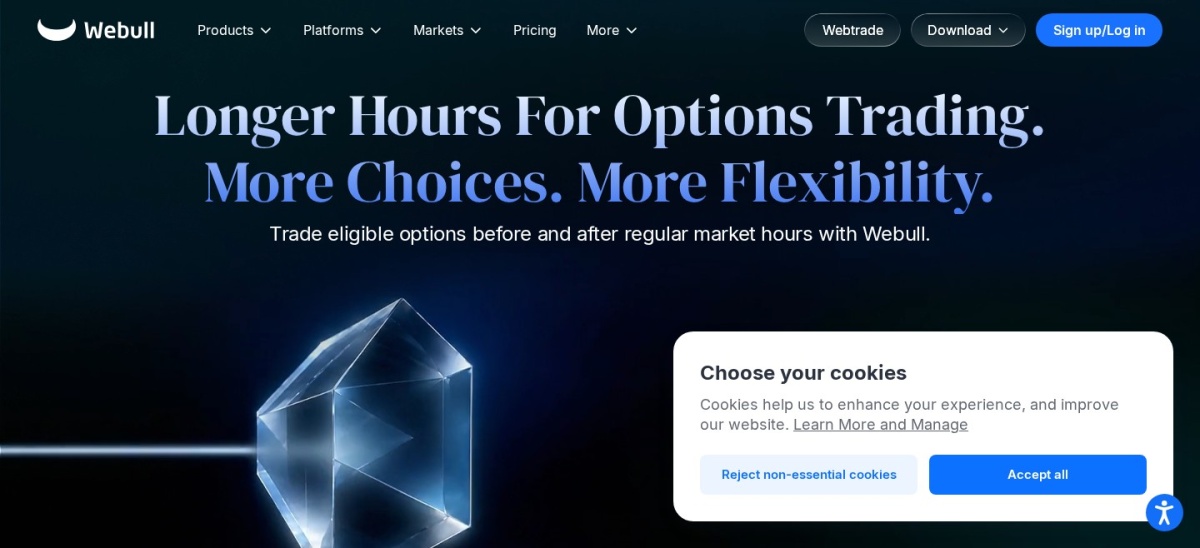
Webull homepage, captured Nov 2026.
Webull is a mobile-first broker with $0 commission on stocks, ETFs and options, and no per-contract fee on options. It adds free paper trading, advanced charts and extended-hours trading, which suits traders who want desktop-grade tools on a phone. Premium costs $3.99 a month or $40 a year.
The trade off is service. Webull scores 1.3 out of 5 on Trustpilot, with most complaints about transfers and reaching support. Its standard margin rate is 8.74%, and crypto carries a 1% spread per side. It suits chart-focused traders who rarely need help.
What we like
$0 commission on stocks, ETFs and options
Free paper trading and advanced charts
No per-contract options fee
Premium adds a 3.5% IRA match
Watch out for
Trustpilot 1.3 out of 5, mostly support complaints
Standard margin rate of 8.74% is high
Crypto carries a 1% spread per side
Premium adds lower margin rates, Level 2 data and a 3.5% IRA matchVisit webull.com
07
SoFi Invest
4.4/5on Trustpilot (15,147 reviews, checked Nov 2026)
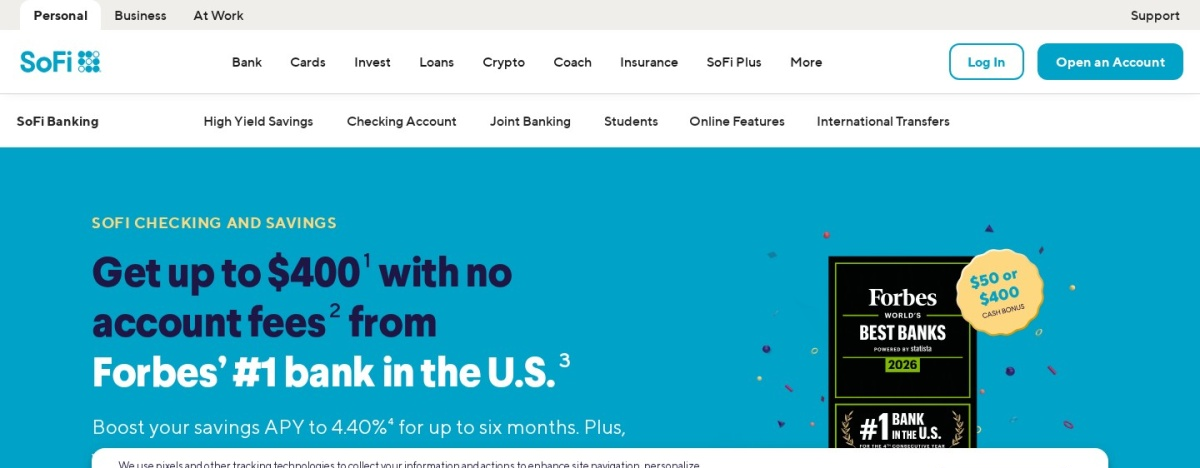
SoFi Invest is the investing arm of an all-in-one finance app, with $0 commission on stock, ETF and options trades and no account minimum. Fractional shares start at $5 across more than 4,000 stocks and ETFs, and it offers IPO access and Automated Investing portfolios. Banking, loans and cards sit in the same app.
The trade off is depth. SoFi has no advanced charting or screeners, and automated portfolios hold ETFs only, with no individual stocks inside them. SoFi Plus costs $10 a month for unlimited planner appointments. It suits beginners who want banking and investing in one place.
What we like
$0 commission on stock, ETF and options trades
Fractional shares from $5 on 4,000+ stocks and ETFs
IPO access at IPO prices
Trustpilot 4.4 out of 5, the best score in this list
Watch out for
No advanced charting or screeners
Automated portfolios are ETF-only
Crypto carries a 1.25% markup
Investing is free; Plus adds planner access and a 1% matchVisit sofi.com
08
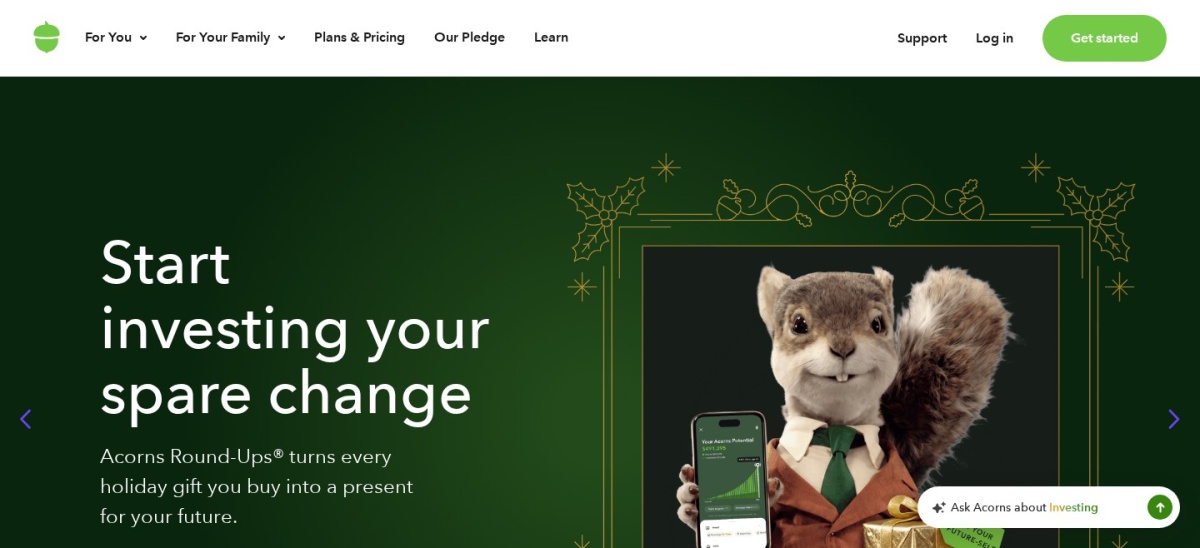
Acorns
4/5on Trustpilot (4,579 reviews, checked Nov 2026)
Starts at$4/mo
Best for spare-change investing
Round-UpsYes, spare change
Bronze$4/mo
Start investingFrom $5
IRAIncluded in Bronze
acorns.com
Acorns homepage, captured Nov 2026.
Acorns is a micro-investing app that turns spare change into diversified ETF portfolios through Round-Ups. Bronze costs $4 a month and includes an investment account, an IRA and a checking account. You can start investing once your round-ups reach $5, and more than 13 million people have invested with Acorns.
The trade off is price. A $4 monthly fee is $48 a year, which is a large share of a small balance, and you cannot pick individual stocks on the Bronze plan. Gold adds custom portfolios at $12 a month. It suits savers who want investing to happen on its own.
What we like
Round-Ups invest your spare change automatically
IRA and checking included in the $4 Bronze plan
Trustpilot 4.0 out of 5 from 4,579 reviews
Kids accounts on the Gold plan
Watch out for
$4 a month is steep on a small balance
No individual stocks on Bronze
No free plan
Silver adds an emergency fund and a 1% IRA match; Gold adds custom portfoliosVisit acorns.com
09
M1 Finance
1.4/5on Trustpilot (203 reviews, checked Nov 2026)
Starts at$3/mo
Best for automated portfolios
Stock/ETF commission$0
Platform fee$3/mo under $10k
Minimum to open$100
Cash account3.35% APY
m1.com
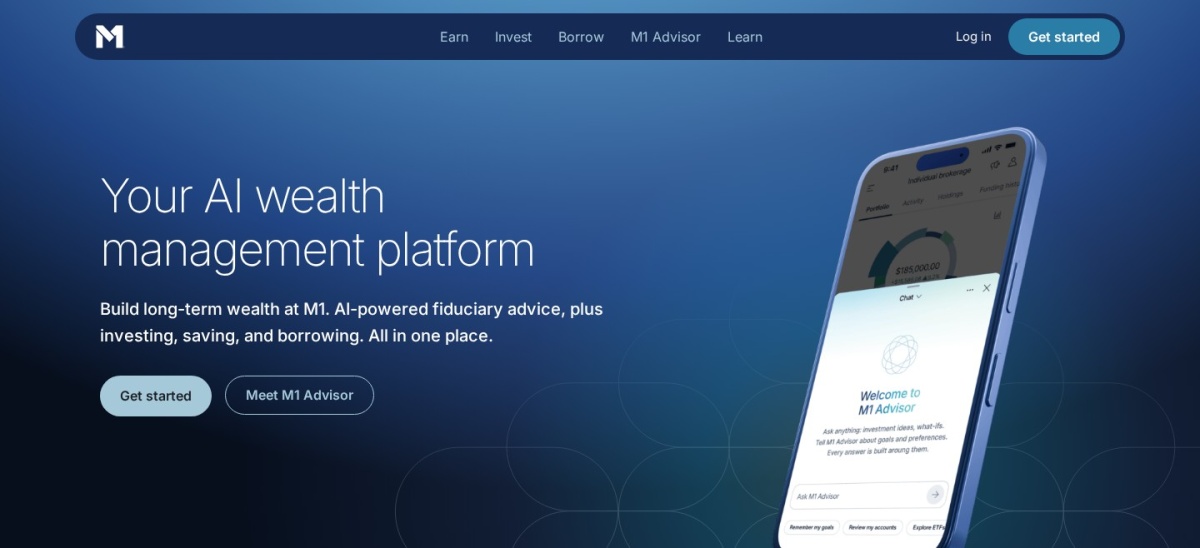
M1 Finance homepage, captured Nov 2026.
M1 Finance is a hybrid broker built around Pies, pie-chart portfolios where you set a target percentage for each holding. It invests new deposits automatically and rebalances toward your targets, with $0 commissions and no management fee. Its high-yield cash account pays 3.35% APY.
The trade off is the fee. M1 charges a $3 monthly platform fee until your total M1 assets reach $10,000, and leaving costs $100 per account. Trading happens in one or two windows a day, not all day. It suits patient investors who want their own portfolio on autopilot.
What we like
Pies automate deposits and rebalancing
$0 commissions and no management fee
High-yield cash account at 3.35% APY
Margin from 5.90%, below most big brokers
Watch out for
$3 monthly fee under $10,000
$100 to transfer an account out
Only one or two trading windows a day
The $3 fee disappears once your total M1 assets reach $10,000Visit m1.com
Why the Trustpilot scores look so low
Six of the nine apps score between 1.1 and 1.5 out of 5 on Trustpilot. That looks alarming next to the app stores, but the two scores measure different things.
Trustpilot reviews for brokers are mostly written after a problem: a locked account, a slow transfer or a long wait for support. Satisfied customers rarely visit Trustpilot, so complaints dominate.
App store reviews rate the app itself and run far higher. Robinhood holds 4.3 out of 5 from about 4.9 million App Store ratings, against 3.8 on Trustpilot.
We still show the Trustpilot score for every app, because support quality is part of the product. But we did not order this list by it.
Free vs paid: what the subscriptions add
You can invest for $0 at seven of the nine apps, and none of them requires a subscription to buy a stock or ETF.
The paid tiers buy perks, not access. Robinhood Gold adds a 3% IRA match, Webull Premium adds a 3.5% IRA match and lower margin rates, and SoFi Plus adds planner appointments.
Acorns and M1 are the exceptions. Acorns has no free plan: Bronze costs $4 a month. M1 charges a $3 monthly platform fee until your total assets reach $10,000.
Work out what a subscription costs against your balance. At $4 a month, Acorns costs $48 a year, which is a large share of a small account.
How we chose
We started from the investing apps most often recommended in 2026 broker comparisons, then kept the nine with a live app, $0 or low-cost stock trades and a public rating.
Prices come from each vendor's pricing page, checked on 25 November 2026. Ratings and review counts come from Trustpilot on the same day. Where a vendor shows a sale, the list shows the regular price.
Trustpilot scores for brokers mostly reflect support complaints, so the order here follows breadth, fees and features, not the Trustpilot score. No vendor paid for a place, and we do not claim to have used these tools ourselves.
How to choose an investing app
Start with how much you want to invest each month, then match the app to that habit.
Decide how much you will invest each month. A $5 or $10 monthly habit fits fractional shares and round-ups better than a full-service broker with fund minimums.
Pick full-service or simple. Fidelity, Schwab, Vanguard and E*TRADE cover IRAs, HSAs and bonds. Robinhood and Webull keep the app simpler and faster for stocks and ETFs.
Check the account types you need. Every app in this list offers an IRA, but the match and the fee differ, so compare those before you choose.
Leave the paid tier off at first. Start on the free plan, and only add Gold, Premium or Plus once the IRA match or cash yield is worth more than the monthly fee.
FAQ
What is the best investing app?
Fidelity is the best investing app for most investors. It charges $0 commission on online stock, ETF and options trades, offers fractional shares from $1 across more than 7,000 stocks and ETFs, and covers IRAs, HSAs and zero-expense index funds.
Are investing apps really free?
Mostly. Seven of the nine apps charge $0 commission on stocks and ETFs and no account fee. You still pay for extras such as options contract fees, margin interest and paid tiers like Robinhood Gold, and funds carry their own expense ratios.
Can I start investing with $5?
Yes. Fidelity and Robinhood let you buy fractional shares from $1, and SoFi from $5. Acorns starts investing once your round-ups reach $5. A small start is fine, but a $4 monthly fee takes a large share of a $5 balance.
Why are Trustpilot ratings so low for brokers?
Trustpilot reviews for brokers are mostly written after a problem, such as a locked account or a slow transfer, so complaints dominate the score. App store reviews rate the app itself and are far higher: Robinhood holds 4.3 out of 5 from about 4.9 million App Store ratings.
Is my money safe in an investing app?
The nine apps here are regulated broker-dealers, and securities in a brokerage account are covered by SIPC for up to $500,000 per account if the firm fails. That covers missing securities, not investment losses: if your stocks fall in value, that loss is yours.
Do I need a paid subscription to invest?
No. You can buy stocks and ETFs for $0 commission at seven of the nine apps without paying for Gold, Premium or Plus. Subscriptions only add perks such as IRA matches and higher cash yields. The exceptions are Acorns, which starts at $4 a month, and M1 below $10,000.
Which investing app is best for beginners?
Robinhood is the simplest app to learn, with $0 trades, fractional shares from $1 and a clean layout. Fidelity is the better long-term pick for most beginners, because it adds research, retirement accounts and zero-expense funds without charging more.
SaaS SEO and WordPress specialist with about 8 years of experience. Rakib compares WordPress plugins, themes, hosting and software using public pricing, documentation and user reviews. See how we rank.