QuickBooks Online is the best inventory accounting software for most product businesses, with inventory tracking in its $115-a-month Plus plan and a 4.0 out of 5 G2 rating from 3,912 reviews. Pick Xero for simpler books at $25 a month, or Zoho Inventory if you want a free plan and paid plans from $29 a month.
How we make this list: we compare pricing pages, product documentation and public user reviews, then re-check every price before each update. No product paid for a place. Disclosure.
QuickBooks Online is the only tool here that pairs full accounting with inventory tracking, but stock control needs the $115-a-month Plus plan.
Xero starts at $25 a month with unlimited users, though reviewers call its inventory tools basic next to dedicated stock systems.
Zoho Inventory is the cheapest serious option: a free plan for 50 orders a month and paid plans from $29 a month.
Cin7 Core, Katana and Fishbowl are built for sellers who make, warehouse or ship physical stock, and all three start above $200 a month.
Sortly is the simplest tracker here at $49 a month, but it has no accounting ledger, so it suits stock counts rather than books.
What inventory accounting software should cover
Inventory accounting ties stock to money. Every sale, purchase and write-off should change both the stock count and the ledger, so the cost of goods sold and the balance sheet stay in step.
The split in this list is between accounting tools with stock features and stock tools with accounting links. QuickBooks Online and Xero keep the books and track stock in one place, while Cin7 Core, Katana, Fishbowl and Unleashed manage stock in depth and sync the totals to QuickBooks or Xero.
Price gaps are wide. Entry plans run from $25 to $399 a month, and the cheapest plan is not always the one with inventory. Check which plan holds stock tracking before you compare prices, since some vendors put it two tiers up.
If you sell through WooCommerce, the accounting link matters as much as the stock features. Our guide on integrating WooCommerce with QuickBooks shows how orders, stock and the ledger connect.
QuickBooks Online is the most widely used small-business accounting software in this list, rated 4.0 out of 5 on G2 from 3,912 reviews. It handles invoicing, expenses, bank feeds and reports, and it connects to Shopify, Stripe and Square, so sales flow into the books without retyping.
The trade off is that inventory tracking sits in the Plus plan at $115 a month, not the $38 Simple Start plan. The price has also risen often, which G2 reviewers cite as the main drawback. It suits product businesses that want one system for books and stock.
What we like
Largest review base in this list, 3,912 G2 reviews
Full accounting plus inventory in one system
Widest set of app and sales-channel links
Most accountants already know it
Watch out for
Inventory tracking needs the $115-a-month Plus plan
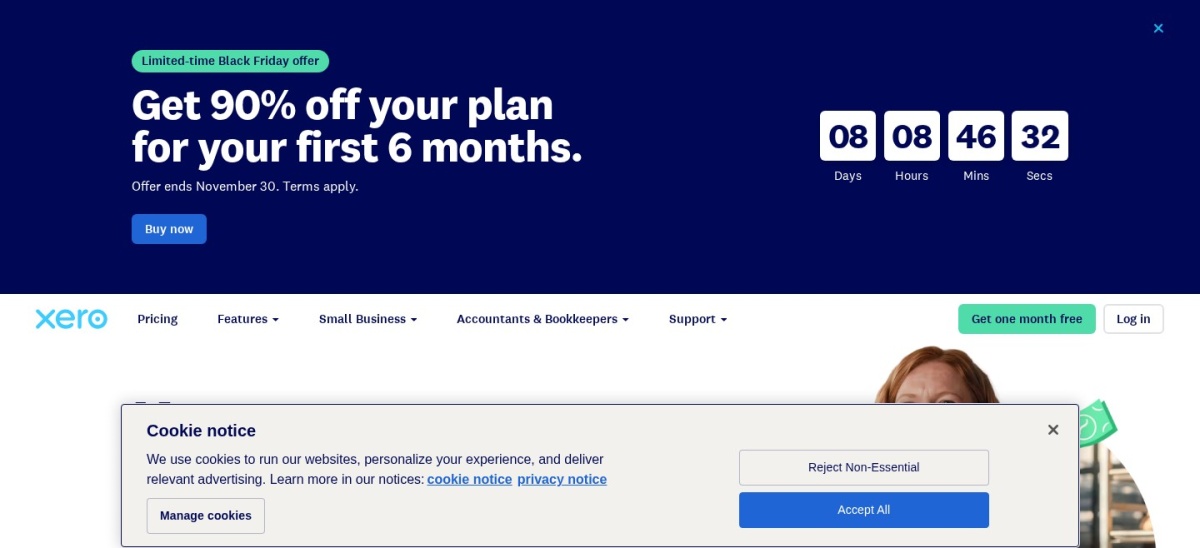
Xero is a cloud accounting platform rated 4.4 out of 5 on G2 from 1,739 reviews. It covers invoicing, bank reconciliation, expenses and inventory tracking, and every plan includes unlimited users, which keeps the bill flat as the team grows.
The trade off is depth. G2 reviewers describe its inventory tools as basic next to dedicated stock systems, and costs rise as you add features and users on higher plans. It suits small sellers who want tidy books with light stock tracking.
What we like
Lowest entry price in this list at $25 a month
Unlimited users on every plan
Strong bank reconciliation and automation
1,000-plus apps in its marketplace
Watch out for
Inventory tools are basic, per G2 reviewers
Costs rise with added features
Support is mostly email-based
Standard adds bill management and more invoicesVisit xero.com
03
Zoho Inventory
4.4/5on G2 (91 reviews, checked Nov 2026)
Paid from$29/mo
Best value for small sellers
Free plan50 orders/mo
Cheapest paidStandard, $29/mo
Users on Standard3
Warehouses on Standard2
zoho.com
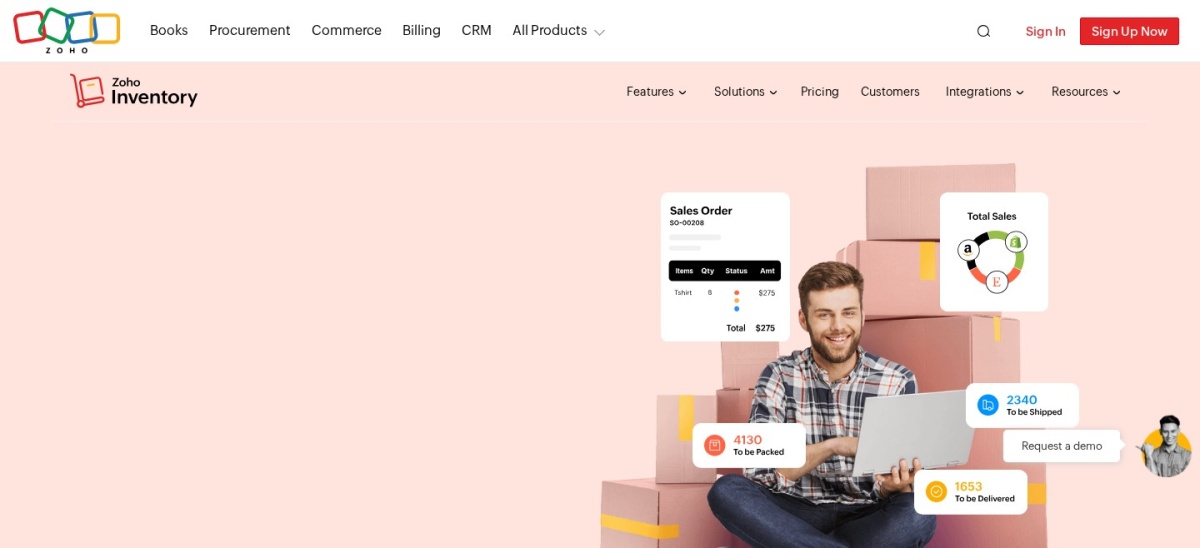
Zoho Inventory homepage, captured Nov 2026.
Zoho Inventory is an order and stock system rated 4.4 out of 5 on G2 from 91 reviews. The free plan covers 50 orders a month for one user at one warehouse, and Standard at $29 a month billed annually raises that to 500 orders, three users and two warehouses.
The trade off is tiering. Order volume, user count and warehouse count all rise with the plan, so a growing seller moves to Premium at $79 a month sooner than the headline price suggests. It suits small sellers who want the most stock control for the least money.
What we like
Only free plan in this list with real order handling
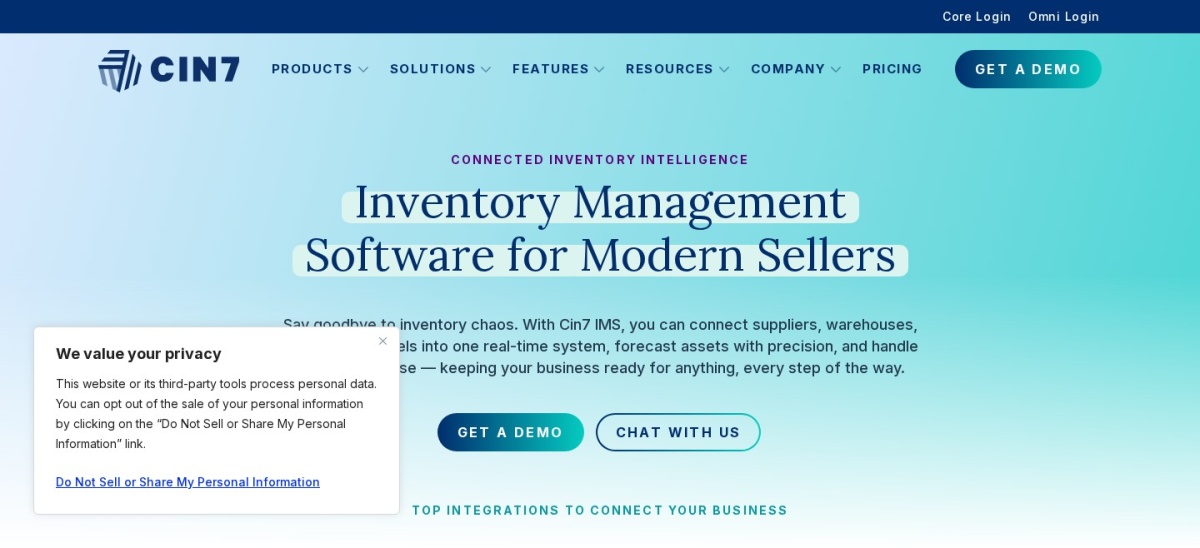
Cin7 Core is an inventory platform for sellers who trade across shops, marketplaces and warehouses, rated 4.3 out of 5 on G2 from 353 reviews. Standard at $349 a month covers three users, two ecommerce links, warehouse and manufacturing modules, and core reporting.
The trade off is cost. Extra users and links add to the bill, and G2 reviewers report annual price rises. It suits multichannel brands that need one stock record across every sales channel.
What we like
Strong multichannel and warehouse coverage
Syncs stock totals to QuickBooks and Xero
Manufacturing modules included from Standard
353 G2 reviews, the most of any stock-first tool here
Watch out for
Starts at $349 a month, far above the budget picks
inFlow Inventory is a stock and order system rated 4.4 out of 5 on G2 from 58 reviews. Lite at $99 a month covers inventory, sales orders and purchasing, and G2 reviewers rate its ease of use at 9.3 out of 10, the highest usability score in this list.
The trade off is price for what you get. Advanced features such as manufacturing sit in higher plans, and reviewers call the cost high for small businesses. It suits small teams that want stock software their staff learn fast.
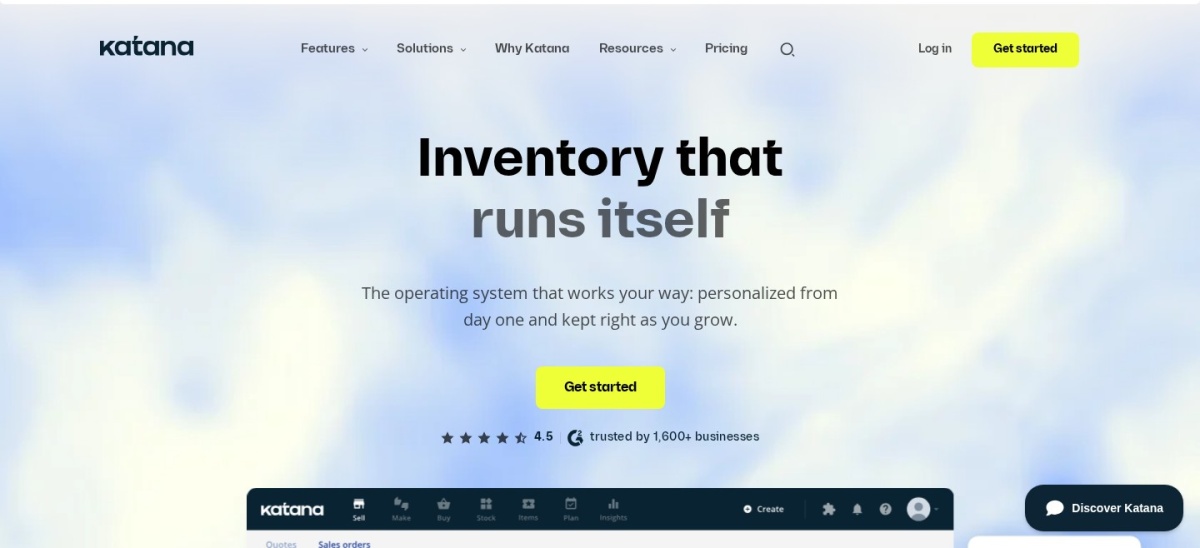
Katana is a cloud inventory system for businesses that make what they sell, rated 4.4 out of 5 on G2 from 122 reviews. It ties raw materials, bills of materials and production orders to live stock, and Core from $299 a month covers unlimited SKUs and users with one inventory location.
The trade off is that the $299 figure is a floor, not the full bill. Sales orders are billed by usage, extra locations cost more, and traceability and manufacturing are paid add-ons. It suits small manufacturers who plan production around real stock levels.
What we like
Production planning tied to live stock
Free plan for 30 SKUs with unlimited users
Syncs with QuickBooks, Xero and Shopify
Clear visual planning for makers
Watch out for
Usage billing makes the real monthly cost hard to pin down
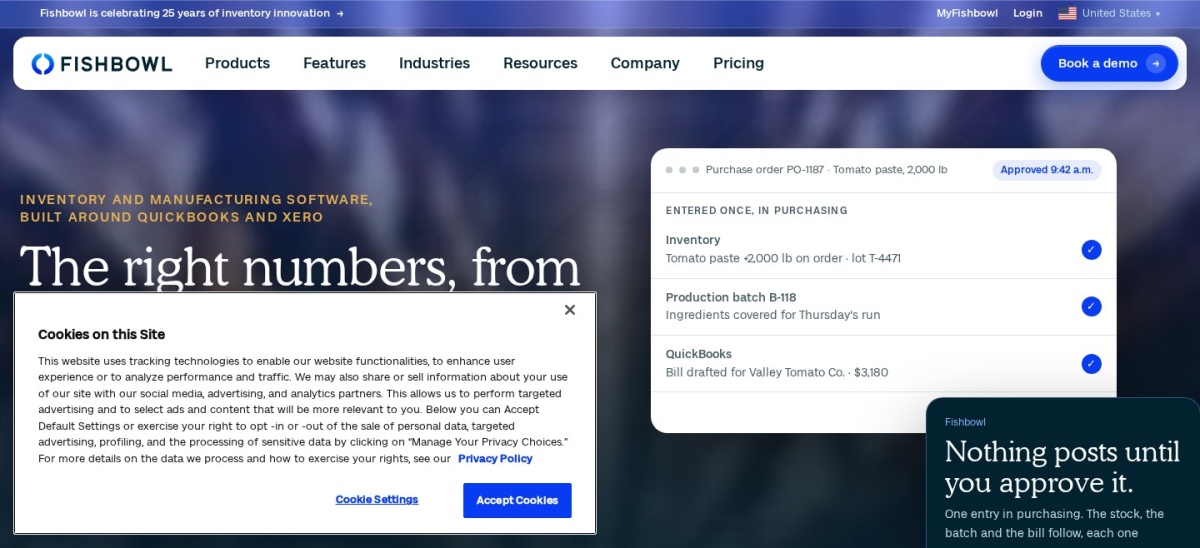
Fishbowl is an inventory and manufacturing system built around QuickBooks and Xero, rated 4.0 out of 5 on G2 from 283 reviews. Essentials at $229 a month covers two users with real-time stock tracking, reorder points and mobile barcode scanning.
The trade off is total cost. Modules, extra users and custom reports add to the bill, and G2 reviewers cite licensing costs as the main drawback. It suits QuickBooks users who have outgrown its built-in stock features.
Unleashed is a cloud inventory system for wholesalers, distributors and light manufacturers, rated 4.0 out of 5 on G2 from 36 reviews. Core at $399 a month covers three users, multi-warehouse stock, batch and serial tracking, and landed costs.
The trade off is the jump between plans. Core covers only 100 sales orders a month, and Pro at $729 a month is a steep step for the forecasting and production features. It suits wholesalers who need lot traceability and tight purchasing control.
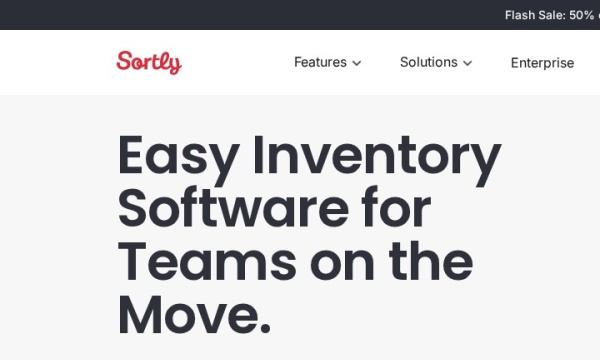
Sortly is a visual inventory tool rated 4.3 out of 5 on G2 from 27 reviews. The free plan covers 100 items for one user, and Advanced at $49 a month covers 500 items and two users with QR codes, barcode scanning and low-stock alerts.
The trade off is that it is tracking, not accounting. There is no ledger, no cost of goods sold and no ecommerce order sync, and the $24 price shown on its site is a first-year discount off the $49 regular price. It suits teams counting tools, equipment and supplies.
Inventory accounting vs inventory tracking: know which you need
Inventory accounting posts every stock move to the ledger. A sale lowers stock and records the cost of goods sold, so margins and tax figures come from the same numbers as the warehouse count.
Inventory tracking only counts. Sortly and similar tools tell you where items are and how many you have, but the books live elsewhere, so month-end means matching two systems by hand.
If you file taxes from your software or quote margins to a lender, pick an accounting-first tool such as QuickBooks Online or Xero, or a stock tool with a live accounting sync such as Cin7 Core or Katana.
How we chose
We started from the best-known inventory and accounting tools that publish a price and hold a public rating on G2, then kept nine that cover accounting-first, stock-first and simple tracking needs.
Prices come from each vendor's pricing page and G2 pricing data, checked on 25 November 2026. Ratings and review counts come from G2 on the same day. Where a vendor shows a sale price, the list shows the regular price: Sortly lists $24 a month for the first year against a $49 regular price, and Unleashed shows a first-three-months offer against its $399 Core price.
We left out tools with no published starting price, including NetSuite and Sage Intacct, and tools whose pricing had moved to custom quotes with no current paid tier. No vendor paid for a place, and we do not claim hands-on testing for this list.
How to choose inventory accounting software
Start with where your books live today, then match the stock depth to your operation.
Decide whether the books or the stock come first. If accounting leads, start with QuickBooks Online or Xero. If stock leads, start with a stock tool that syncs to your accounting software.
Check which plan holds inventory tracking. QuickBooks Online puts it in Plus at $115 a month, while Xero includes it from Starter. Never budget from the cheapest headline price alone.
Count users, locations and orders, not just SKUs. Caps on orders and warehouses push sellers up tiers fast. Zoho Inventory and Unleashed both cap monthly orders on their entry plans.
Run the free trial with real products. Import a sample of SKUs, raise a purchase order and sell one item, then check the ledger entry matches the stock move before you pay.
FAQ
What is the best inventory accounting software?
QuickBooks Online is the best pick for most product businesses. Its Plus plan at $115 a month pairs full accounting with inventory tracking, and it holds a 4.0 out of 5 G2 rating from 3,912 reviews.
Which inventory accounting software is cheapest?
Xero starts at $25 a month and Zoho Inventory has a free plan with paid plans from $29 a month. Both are far cheaper than Cin7 Core at $349 a month or Unleashed at $399 a month.
Does QuickBooks Online track inventory on every plan?
No. Inventory tracking is in the Plus plan at $115 a month and above. Simple Start at $38 a month and Essentials at $75 a month cover accounting only, so budget for Plus if stock matters.
Do I need separate inventory software if I use Xero?
Not always. Xero tracks stock on every plan, which covers simple sellers. Businesses with warehouses, batches or production usually add a stock tool such as Cin7 Core, Katana or Unleashed and sync it to Xero.
What is the difference between inventory accounting and inventory tracking?
Inventory accounting posts stock moves to the ledger, so cost of goods sold and margins update with every sale. Inventory tracking only counts items and locations, and the books must be updated separately.
Is there free inventory accounting software?
Zoho Inventory, Katana and Sortly all offer free plans, but each caps items or orders. None of them is a full free accounting system, so most businesses still pay for the books side.
SaaS SEO and WordPress specialist with about 8 years of experience. Rakib compares WordPress plugins, themes, hosting and software using public pricing, documentation and user reviews. See how we rank.