Navattic is the best interactive demo software for most teams, with HTML demos from its free plan and a 4.8 out of 5 G2 rating from 1,153 reviews. Pick Storylane for the largest demo library at $40 a month, or Supademo for the lowest entry price at $38 a creator a month.
How we make this list: we compare pricing pages, product documentation and public user reviews, then re-check every price before each update. No product paid for a place. Disclosure.
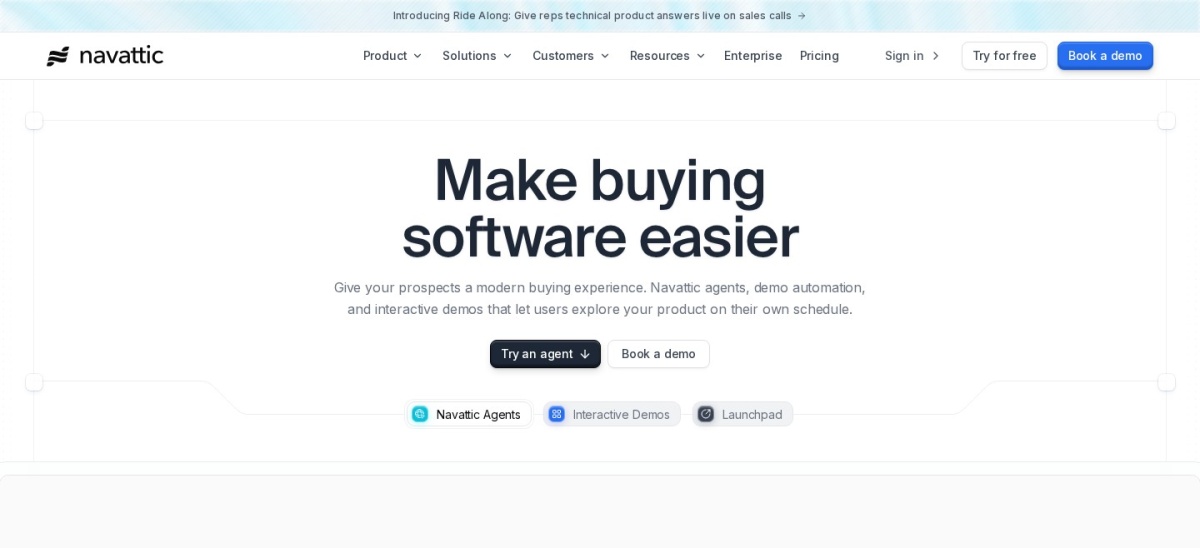
Navattic is the only tool here with HTML demos on a free plan: 1 demo, 1 seat, unlimited views.
Storylane has the largest review base at 4.8 out of 5 from 1,405 G2 reviews, but HTML demos start at $500 a month.
Supademo is the cheapest full-featured entry at $38 per creator a month, with a free plan of 5 demos.
Guideflow, Demoboost and HowdyGo score 4.9 to 5.0 on G2, but from small bases of 31 to 141 reviews.
Enterprise tools cost far more: Consensus starts at $600 a month and Walnut at $575, with no free plan on either.
What to look for in interactive demo software
An interactive demo lets a buyer click through your product before talking to sales. Instead of a recorded video, the visitor follows a guided tour, clicks buttons and sees the screens that matter to them.
The main split is format. Screenshot tours are quick to build and easy to keep fresh. HTML demos capture the real interface, so clicks, hovers and scrolling feel like the product, but they cost more and take longer to set up.
Price shapes the choice more than features do. Five tools here start free or under $50 a month, while Walnut, Consensus and Demoboost start at $375 to $600 a month. Our guide on creating a landing page in WordPress covers where most teams embed their first demo.
Check what each plan gates before you commit. HTML capture, sandbox demos, analytics and CRM integrations often sit two tiers above the entry price, so the plan you need may cost ten times the plan you first see.
Navattic is a demo automation platform that captures your product as working HTML, so visitors click through the real interface instead of watching a video. The free Starter plan includes 1 seat, 1 demo, unlimited views, basic analytics and AI Copilot. Paid plans add integrations with Salesforce and Marketo, sandbox demos and A/B testing.
The trade off is the jump from free to paid. There is no paid plan between the free Starter plan and Base at $500 a month billed yearly, or $600 billed monthly, so a team that outgrows one demo faces a steep step up. It suits marketing teams that want one polished HTML demo on their site without paying first.
What we like
HTML demos included on the free plan
Unlimited views on every plan
Salesforce and Marketo integrations on Base
Dedicated customer success manager on paid plans
Watch out for
No paid plan between free and $500 a month
Growth features such as SSO cost $1,000 a month
Base adds unlimited HTML demos, integrations and a dedicated CSMVisit navattic.com
02
Storylane
4.8/5on G2 (1,405 reviews, checked Nov 2026)
Paid from$40/mo
Best all-round demo platform
Free plan1 demo, 1 seat
Demo formatsScreenshot, HTML, video
Paid planStarter, $40/mo
Account RevealFrom Starter
storylane.io
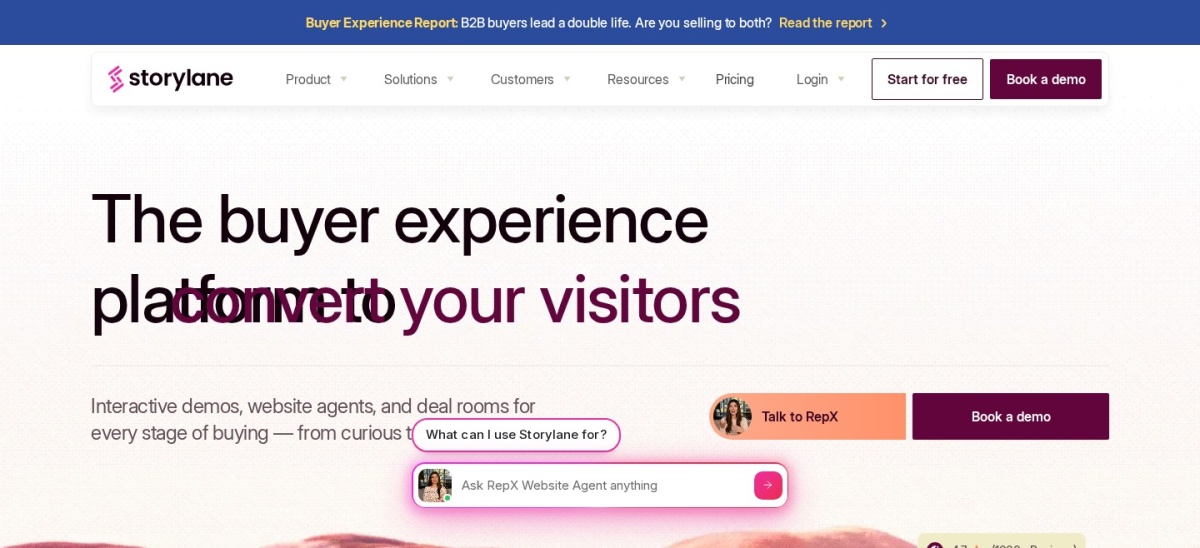
Storylane homepage, captured Nov 2026.
Storylane is a demo platform that builds screenshot, HTML and video demos in one library, with Hubs that bundle demos, videos and PDFs into a deal room for each buyer. The free plan includes 1 seat and 1 published demo. Starter at $40 a month billed yearly adds unlimited demos, AI voiceovers and account reveal.
The trade off is that HTML demos cost far more than the entry price. The HTML editor, personalization tokens and A/B testing start on Growth at $500 a month billed yearly, and Salesforce integration waits until Premium at $1,200 a month. It suits go-to-market teams that want one library for marketing, sales and presales.
What we like
Largest review base in this list
Free plan with unlimited demo views
Hubs bundle demos into buyer deal rooms
AI voiceovers in 25+ languages
Watch out for
HTML demos start at $500 a month
Salesforce integration needs the $1,200 Premium plan
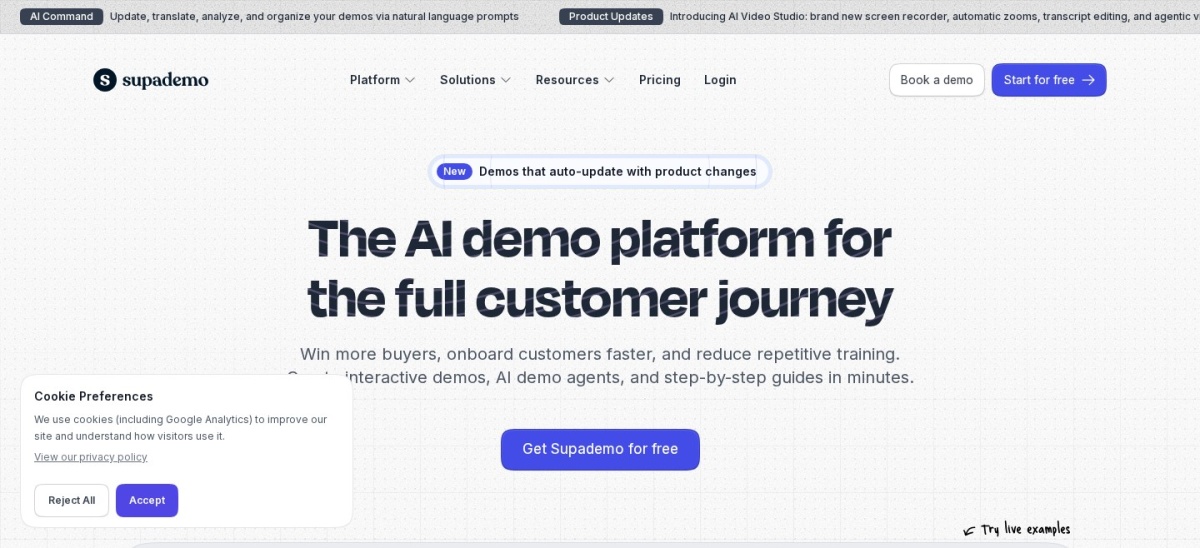
Supademo is a demo platform that records guided tours with a Chrome extension or desktop app, then publishes them as screenshot, HTML, sandbox or video demos from one workspace. The free plan covers 1 creator and 5 demos with unlimited views. Scale at $38 per creator a month billed yearly adds branching, variables, analytics and custom domains.
The trade off is that the deeper formats sit on higher tiers. Guided HTML demos start on Business at $199 a month, and sandbox demos wait until Growth at $350 a month for five creators. It suits teams that use demos across sales, marketing, onboarding and support and want one shared library.
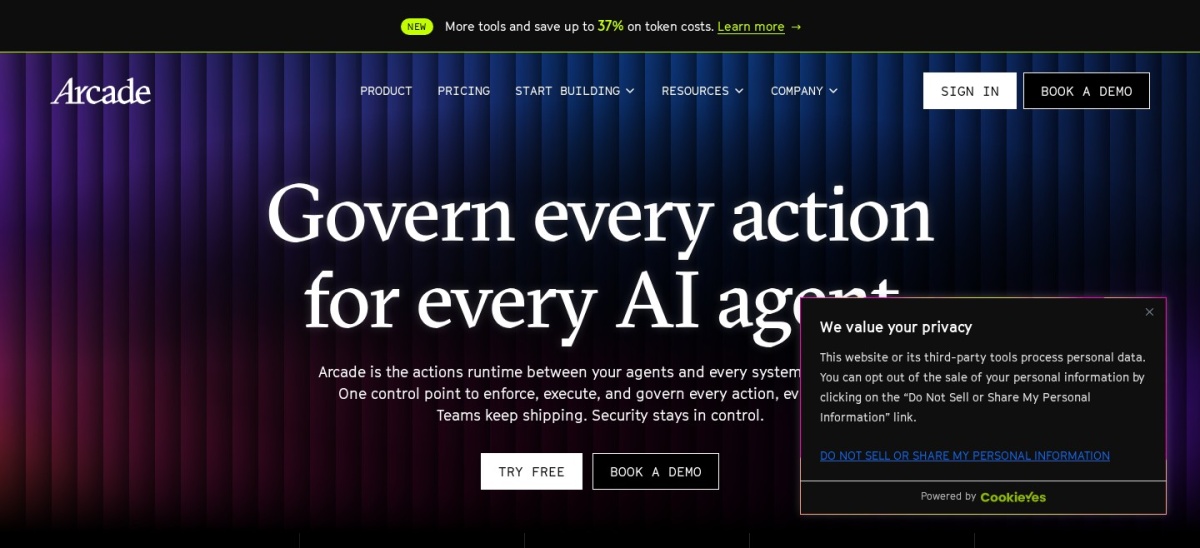
Arcade is a product storytelling platform that builds clickable interactive demos and AI-generated product videos for marketing teams. The free plan includes 1 published demo, 200 AI credits, a Chrome extension, a desktop app and a Figma plugin. Growth at $42.50 per seat a month billed yearly adds branching, forms and AI voiceover.
The trade off is that the two products are sold apart. Interactive demos run on Growth, while AI video is a separate Pro subscription at $49 a month billed yearly, and HTML capture is reserved for Enterprise contracts. It suits design-led marketing teams that want polished demos and short product videos.
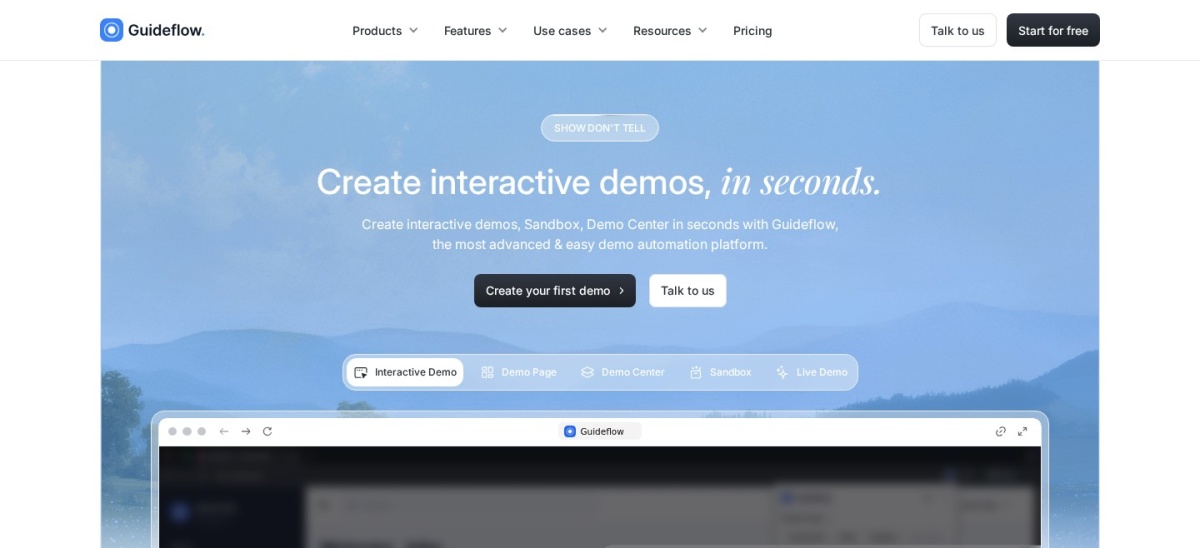
Guideflow is an AI-powered demo platform that runs interactive demos, demo pages, demo centers, sandboxes, live demos and mobile demos from one workspace. The free tier allows up to 5 guideflows, basic capture, unlimited views and 3 team members. Solo at $35 per user a month removes the demo limit and adds advanced analytics and HD export.
The trade off is that HTML capture sits far above the entry price. Solo covers screenshot capture only, while HTML capture and sandbox demos arrive on Growth at $499 a month. It suits revenue teams that need more than one demo format and want one governed library.
Consensus is a demo automation platform built around video demos and product tours that buyers watch on demand, with analytics that show who watched and what they cared about. Starter at $600 a month covers 5 users and includes video demos, product tours, marketing analytics and embeddable links. Pro at $1,250 a month adds personalized sales links and CRM integrations.
The trade off is price and entry. There is no free plan or free trial, and the $600 Starter plan is the floor for a platform aimed at sales teams with long buying cycles. It suits presales teams that send demos to buying committees and want to see stakeholder engagement before the next call.
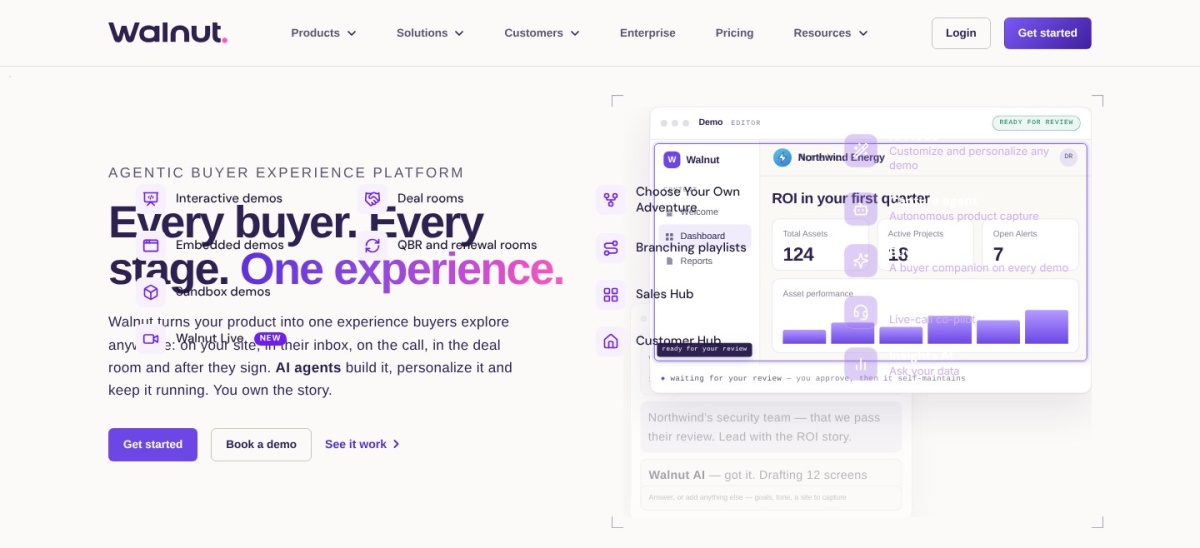
Walnut is an interactive demo platform for enterprise sales teams that tailor each demo to the prospect, with reusable building blocks, personalization and stakeholder-level tracking. Ignite at $575 a month billed yearly covers 3 editor and 3 presenter seats with 50,000 AI credits. Accelerate at $1,550 a month adds sandbox demos, video overlays and SSO.
The trade off is the entry price. Ignite is the highest starting price in this list, there is no free tier, and AI use is metered in credits on top of the plan fee. It suits large sales teams that personalize demos per deal and want one approved story across the team.
What we like
Deep per-deal personalization
Deal rooms for buying committees
Sandbox demos on Accelerate
Watch out for
Highest entry price in this list
No free tier
AI usage is metered in credits
Accelerate adds sandbox demos and a dedicated CSMVisit walnut.io
08
Demoboost
4.9/5on G2 (103 reviews, checked Nov 2026)
Starts at$375/mo
Best for presales demo governance
Free planNo
Demo formatsTours, video, sandbox, overlay
Paid planStart Up, $375/mo
Seats on Start Up2 seats
demoboost.com
Demoboost homepage, captured Nov 2026.
Demoboost is a demo automation platform for presales teams that runs HTML tours, screenshot demos, mobile demos and video demos with governance over the library. Start Up at $375 a month covers 2 seats and includes unlimited HTML, screenshot and video demos, demo analytics and AI Autopilot. Growth at $1,200 a month adds sandbox demos.
The trade off is that the formats buyers want most sit higher up. Sandbox demos arrive on Growth at $1,200 a month, live demo overlays are Enterprise-only, and there is no free plan or free trial. It suits presales-led teams that want demo engagement tied to pipeline qualification.
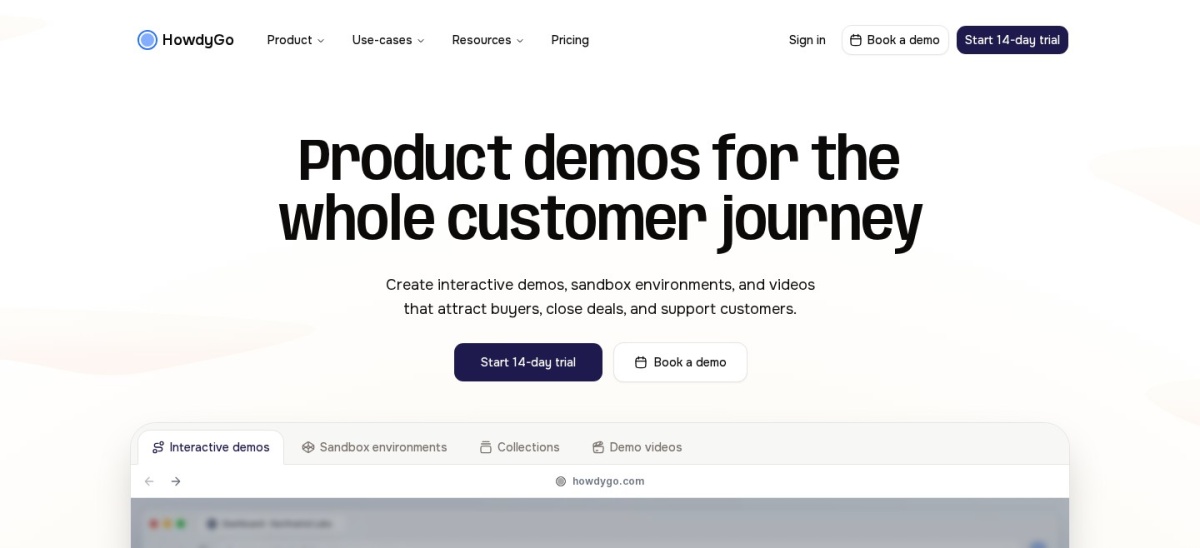
HowdyGo is an HTML demo platform that captures a product front end with a browser extension, keeping CSS and hover states, and builds self-serve demos, videos and GIFs. Starter at $159 a month covers unlimited users and unlimited HTML demos, with AI voiceovers, lead capture and embed options. One recording session exports a demo, a video and a GIF at once.
The trade off is analytics. Demo analytics, CRM integrations, custom domains and password protection wait until Pro at $399 a month, so Starter suits teams that need the demo itself more than the data behind it. It suits small teams that want HTML demos without per-seat pricing.
What we like
HTML capture from the $159 Starter plan
Unlimited users on every plan
One capture exports demo, video and GIF
Perfect 5.0 G2 rating
Watch out for
Only 31 G2 reviews, the smallest base here
Analytics need the $399 Pro plan
No free plan, only a 14-day trial
Pro adds analytics, CRM integrations and a custom domainVisit howdygo.com
Screenshot tours vs HTML demos: which format fits
Screenshot tours are built from still images of your product with hotspots and steps added on top. They are fast to record, easy to edit when a screen changes, and enough for most marketing pages.
HTML demos capture the live interface, so the demo responds to clicks and scrolling like the real product. They feel more convincing to technical buyers, but they break when your product changes and take longer to rebuild.
Start with screenshot tours if you need a demo this week. Move to HTML when buyers ask to explore freely, or when your sales team needs one demo that works for every deal without a live call.
Some tools mix the two. Storylane, Supademo and Guideflow sell screenshot tours at the entry price and reserve HTML demos for higher tiers, so check which format your plan includes.
How we chose
We started from the interactive demo tools with a public G2 profile and a published price, then kept the nine with the strongest review bases and the clearest pricing.
Prices come from each vendor's pricing page or its G2 pricing listing, checked on 25 November 2026. Ratings and review counts come from G2 on the same day. Where a vendor shows a monthly and an annual rate, the list shows the annual rate.
We left out quote-only enterprise tools such as Reprise and Demostack, which publish no price. No vendor paid for a place, and we do not claim to have used these tools ourselves.
How to choose interactive demo software
Start from the demo your buyers will see first, then work back to the plan that includes it.
Decide the format first. Screenshot tours are enough for a landing page. HTML demos suit buyers who want to explore, and sandbox demos suit technical evaluations.
Count the creators, not the viewers. Most tools charge per creator or seat, while viewers are free. A flat-rate plan such as HowdyGo can beat per-seat pricing once three or more people build demos.
Check where HTML and analytics sit. On Storylane, Supademo and Guideflow, the format or the analytics you want may sit two tiers above the entry price. Price the plan you need, not the cheapest one.
Embed one demo and watch the data. Put the demo on your highest-traffic page, track views and completions for a month, and only then expand the library or upgrade the plan.
FAQ
What is the best interactive demo software?
Navattic is the best pick for most teams. Its free plan includes a working HTML demo with unlimited views, and it holds a 4.8 out of 5 G2 rating from 1,153 reviews. Storylane is the best alternative for teams that want a larger demo library.
How much does interactive demo software cost?
Entry prices in this list run from $35 to $600 a month. Supademo, Storylane, Arcade and Guideflow start under $50 a month, while Walnut at $575 and Consensus at $600 a month target enterprise sales teams. Most tools also offer a free plan or trial.
What is the difference between screenshot and HTML demos?
Screenshot demos are guided tours built from still images of your product, with steps and hotspots added on top. HTML demos capture the live interface, so visitors click, hover and scroll as if they were using the product. HTML demos feel more real but cost more and take longer to build.
Do I need a free plan to try interactive demo software?
Not always. Navattic, Storylane, Supademo, Arcade and Guideflow all offer a free plan with at least one demo. Consensus, Walnut and Demoboost have no free plan, and HowdyGo offers a 14-day trial instead. Start free where you can, then pay once the demo proves its value.
Which interactive demo tool is best for small teams?
Supademo is the best value for small teams, with a free plan of 5 demos and Scale at $38 per creator a month. Guideflow is the cheapest paid start at $35 a user a month. HowdyGo suits small teams that want unlimited users, since every plan covers the whole team.
Can I embed an interactive demo on my website?
Yes, every tool in this list offers an embed option for landing pages and websites. Navattic, Storylane and Supademo include embedding on their free plans, so you can place a demo on your homepage before paying. Check that your plan includes lead capture forms if you want visitor details.
SaaS SEO and WordPress specialist with about 8 years of experience. Rakib compares WordPress plugins, themes, hosting and software using public pricing, documentation and user reviews. See how we rank.