Nanonets is the best intelligent document processing software for most teams, rated 4.7 out of 5 on G2 from 97 reviews, with $50 in free credits and Starter at $100 a month. Pick Docsumo for built-in review workflows, or Veryfi if you need a developer API for receipts and invoices.
How we make this list: we compare pricing pages, product documentation and public user reviews, then re-check every price before each update. No product paid for a place. Disclosure.
Nanonets leads the list: rated 4.7 out of 5 on G2 from 97 reviews, with $50 in free credits and Starter at $100 a month.
Only 3 of the 9 tools publish an entry price. Nanonets starts at $100 a month, Veryfi at $500 a month, and Rossum at $18,000 a year.
Rossum has the largest review base at 127 G2 reviews and the strongest invoice workflow, but its Starter floor rules out small teams.
ABBYY, Hyperscience and UiPath are enterprise platforms with quoted pricing and long setup times, not self-serve tools.
Veryfi and Amazon Textract are APIs with no review dashboard, so they fit teams with developers, not finance teams alone.
What intelligent document processing software should do
Intelligent document processing, or IDP, reads unstructured documents such as invoices, contracts, forms and receipts, and turns them into structured data your systems can use. OCR reads the text; IDP also understands what each field means.
Most documents still arrive as PDFs or scans. Our guide on adding a PDF to WordPress covers the file side, but the hard part is what happens after the file lands: classification, extraction, validation and export.
Check three things before you pay: accuracy on your own documents rather than a vendor demo, a review workflow for low-confidence fields, and an export path into your accounting or ERP system.
Pricing is the hardest part of this market. Six of the nine tools below are quote-only, and the rest bill per page, per document or per workflow step, so the monthly cost depends on volume as much as on the plan.
The 9 best intelligent document processing software tools
01
Nanonets
4.7/5on G2 (97 reviews, checked Nov 2026)
Paid from$100/mo
Best intelligent document processing software overall
Entry planStarter, $100/mo
Free start$50 in credits
Per-run pricing$0.02-$0.30
Users on StarterUp to 3
nanonets.com
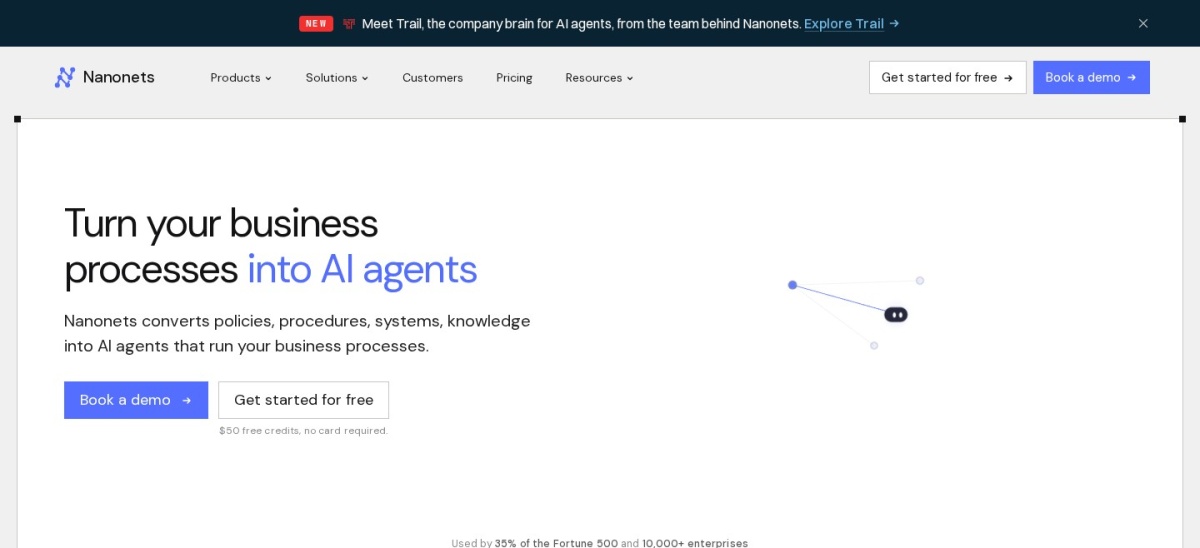
Nanonets homepage, captured Nov 2026.
Nanonets is a no-code document AI platform that reads invoices, receipts, purchase orders and claims, then routes the extracted data into accounting software. Every account starts with $50 in free credits and no card, and Starter costs $100 a month for 100 credits for up to 3 users.
The trade off is metered pricing. Each workflow step is a block run priced at $0.02 for simple steps, $0.10 for standard AI and $0.30 for complex extraction, so a typical invoice workflow lands under $2. It suits finance and operations teams that want to build their own extraction workflows without engineers.
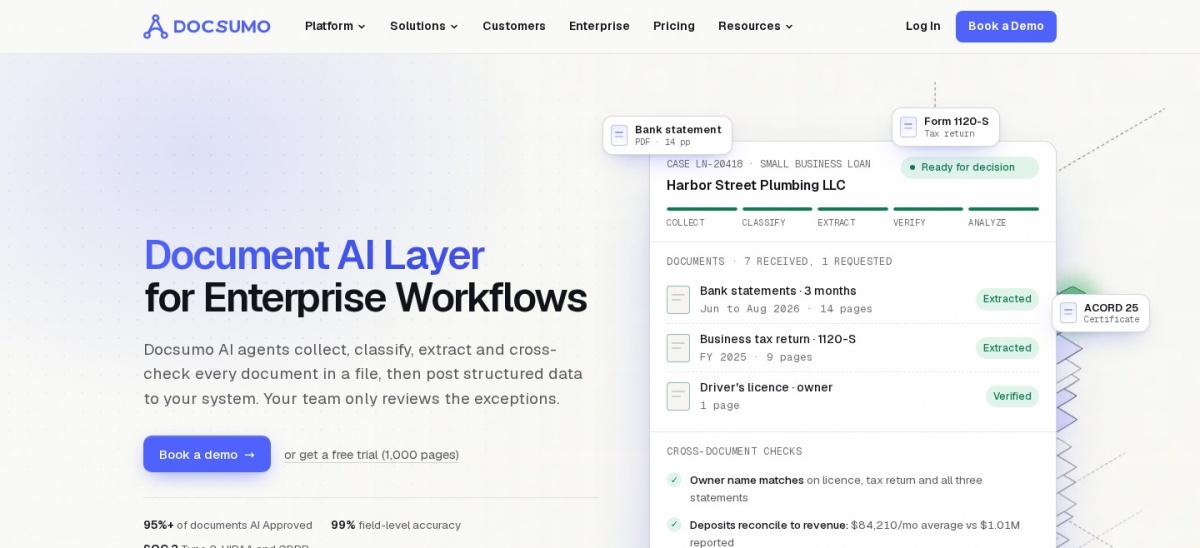
Docsumo is a no-code IDP platform for invoices, bank statements and forms, with a built-in review queue that sends only failed fields to a person. A 14-day trial covers up to 1,000 pages for 10 users, and the platform checks documents in a case against each other before data is posted.
The trade off is price transparency. Docsumo publishes no dollar prices for its paid plans, so budgeting needs a sales conversation, and per-page rates fall only as volume rises. It suits SMB and operations teams that want review and validation built in rather than added later.
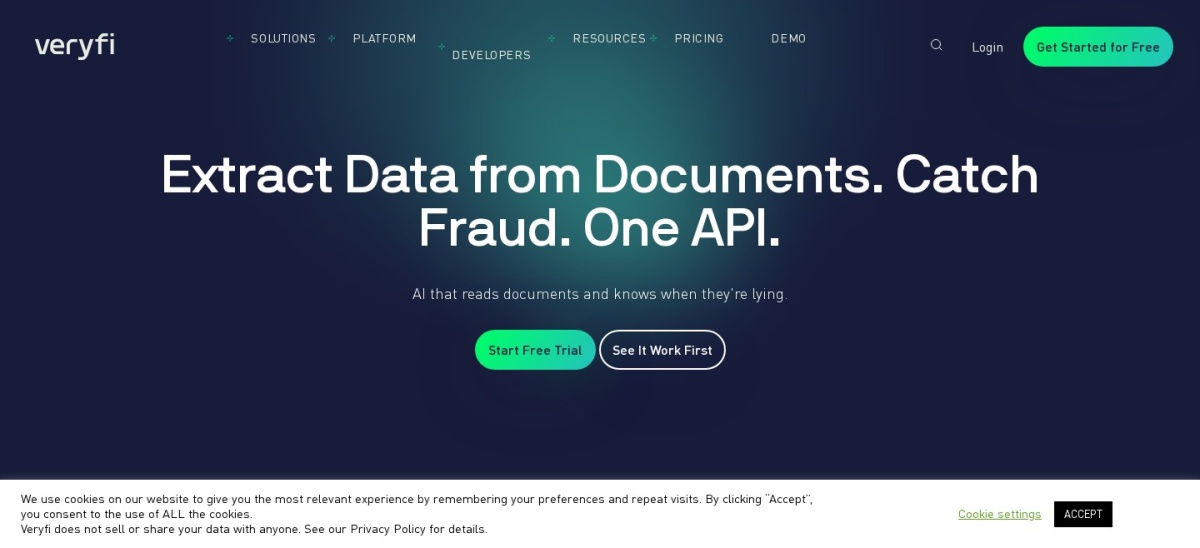
Veryfi is a developer-first document AI API that extracts data from receipts, invoices and bank statements in about 3 to 5 seconds. The free plan covers 100 documents a month, and Starter documents start at $0.08 for receipts and $0.16 for invoices, with a $500 monthly floor.
The trade off is that Veryfi is an API, not a finished app. There is no built-in dashboard for reviewers, so a team needs a developer to wire it into an expense or AP workflow. It suits product teams embedding capture into their own app.
What we like
Free plan covers 100 documents a month
Fast processing, about 3 to 5 seconds
Clear per-document prices
Watch out for
No dashboard for human review
$500 monthly floor is steep for small teams
Needs a developer to integrate
Growth adds fraud features and SSO on a custom quoteVisit veryfi.com
04
Hyperscience
4.6/5on G2 (54 reviews, checked Nov 2026)
PricingCustom/yr
Best for handwritten and structured forms
Cheapest paid planQuote only
Time to implementAbout 4 months
HandwritingYes
Document typesStructured, semi-structured
hyperscience.com
Hyperscience homepage, captured Nov 2026.
Hyperscience is an enterprise IDP platform built for structured and semi-structured documents, including handwritten forms, in insurance, finance and healthcare. G2 reviewers report about 4 months to implement and an 11-month payback, and rate it 4.6 out of 5 from 54 reviews.
The trade off is effort. Semi-structured documents can need more manual review, and reviewers describe the setup as expensive and time-consuming. It suits large teams with high volumes of similar documents and the staff to run it.
What we like
Strong accuracy on handwritten documents
Rated a Leader in the Gartner Magic Quadrant for IDP
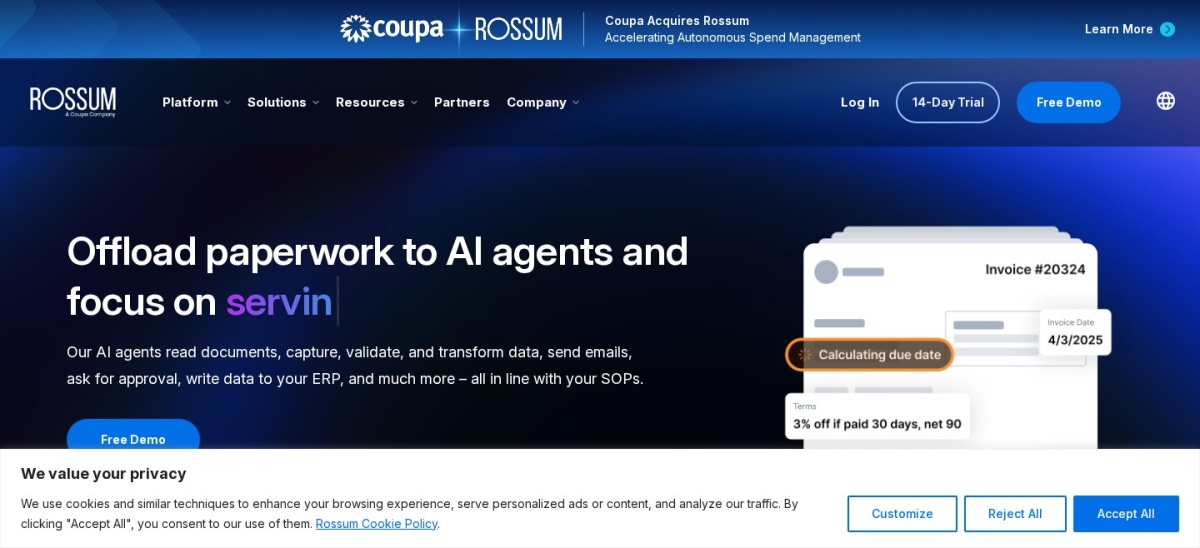
Rossum is a cloud IDP platform focused on accounts payable, with template-free extraction across 276 languages and a review interface reviewers praise. Its Starter plan floors at $18,000 a year, and a 14-day trial is available. Rossum was acquired by Coupa in 2026.
The trade off is price and scope. Rossum is built for invoice workflows first, so accuracy drops on other document types, and the Starter floor puts it out of reach for small teams. It suits finance teams processing high invoice volumes into an ERP.
What we like
Largest G2 review base in this list
Reviewers praise the validation interface
Learns from corrections over time
Watch out for
Starter floor of $18,000 a year
Focused on invoices, not general documents
Setup is described as slow by reviewers
Starter price is reported by third parties; vendor page is quote-onlyVisit rossum.ai
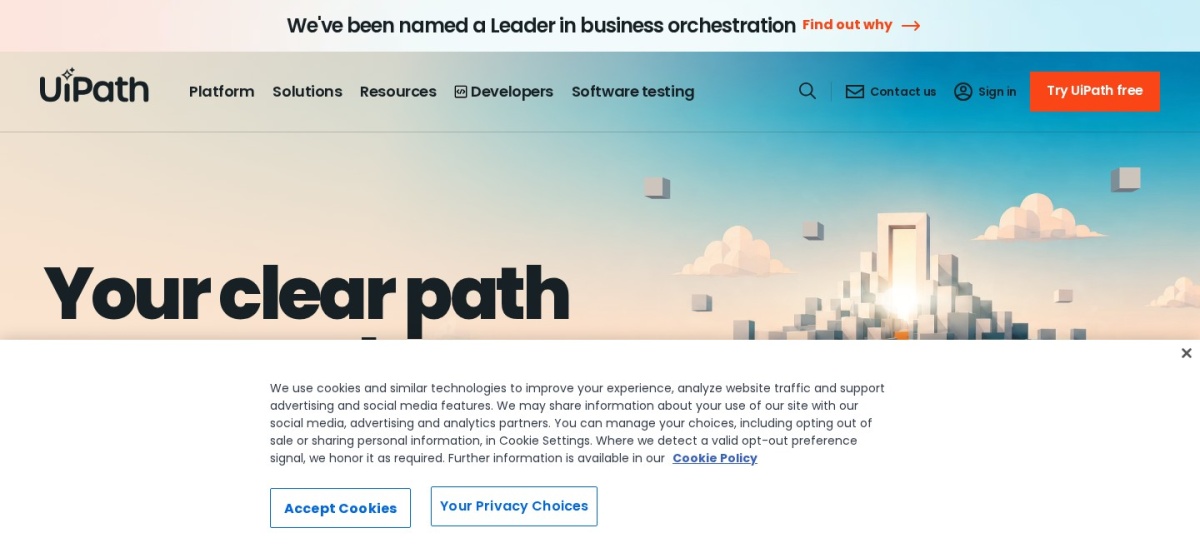
UiPath Document Understanding homepage, captured Nov 2026.
UiPath Document Understanding is the document AI layer inside the UiPath automation platform, combining OCR, machine learning and generative AI. It handles structured, semi-structured and unstructured documents, and non-experts can train models with active learning.
The trade off is dependence on the platform. It makes most sense inside a UiPath automation estate, pricing is quoted, and low-confidence fields still need human review. It suits teams already automating with UiPath that want documents in the same workflows.
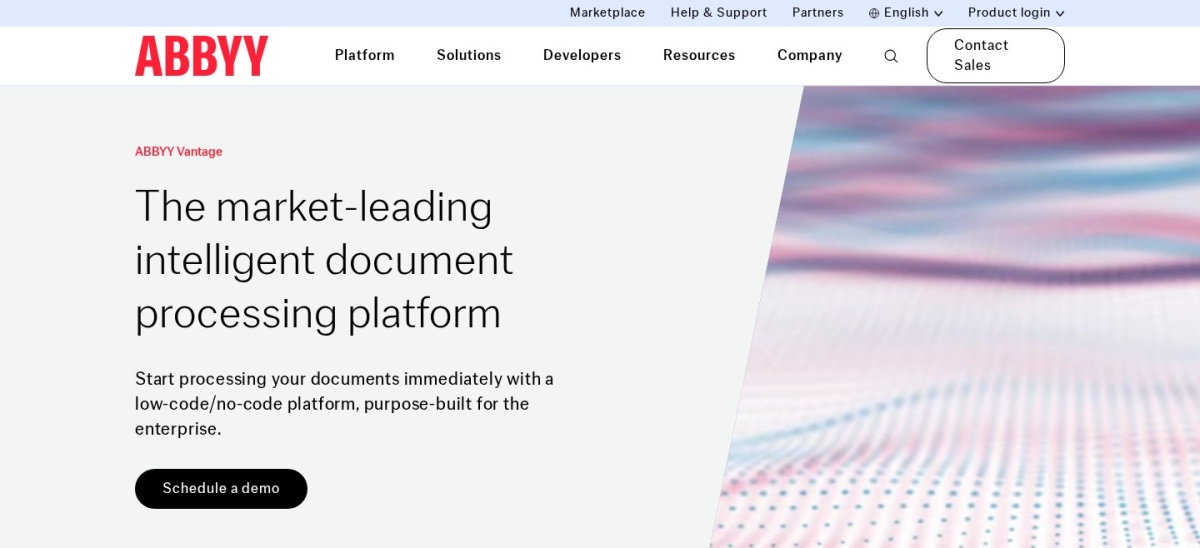
ABBYY Vantage is an enterprise IDP platform with prebuilt document skills from its marketplace and custom model training for unusual layouts. It covers invoices, contracts, forms and correspondence, and is rated 4.3 out of 5 on G2 from 92 reviews.
The trade off is complexity and cost. Reviewers report long setup times for complex document types, and pricing is quoted by volume with no public starting price. It suits large organisations with varied, high-volume documents and IT support.
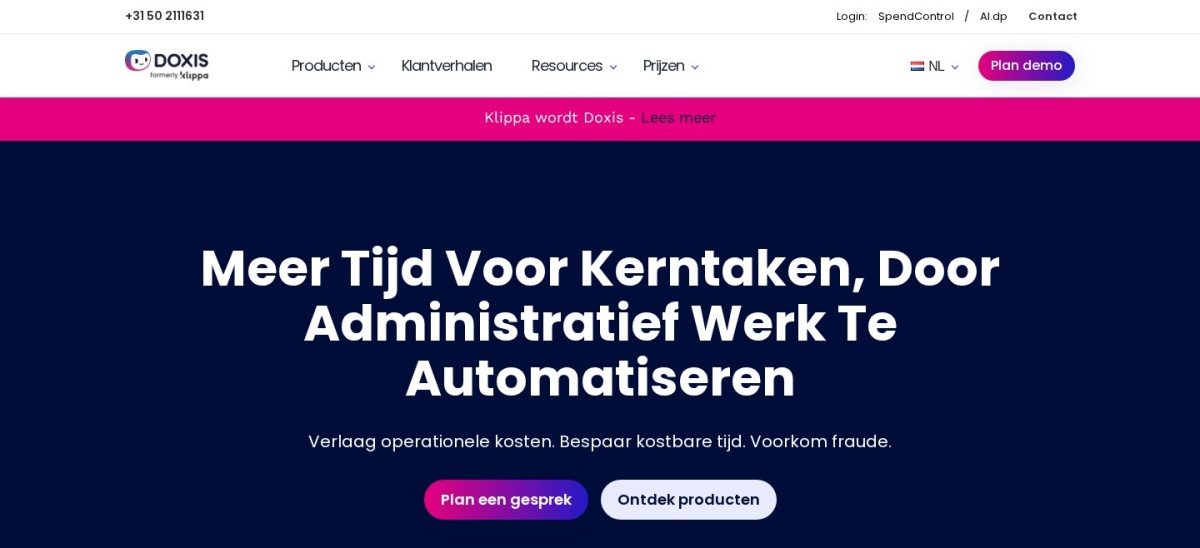
Klippa is a document AI platform for invoices, receipts and expenses, with strong EU VAT handling and mobile apps for capture on the go. It is rated 4.8 out of 5 on Capterra from 31 reviews, with pricing quoted by volume. Klippa rebranded to Doxis, and its site now carries the Doxis name.
The trade off is focus. Klippa is built for European AP and expense workflows first, so teams outside that scope get less from it, and there is no published starting price. It suits European finance teams that need VAT-ready invoice capture.
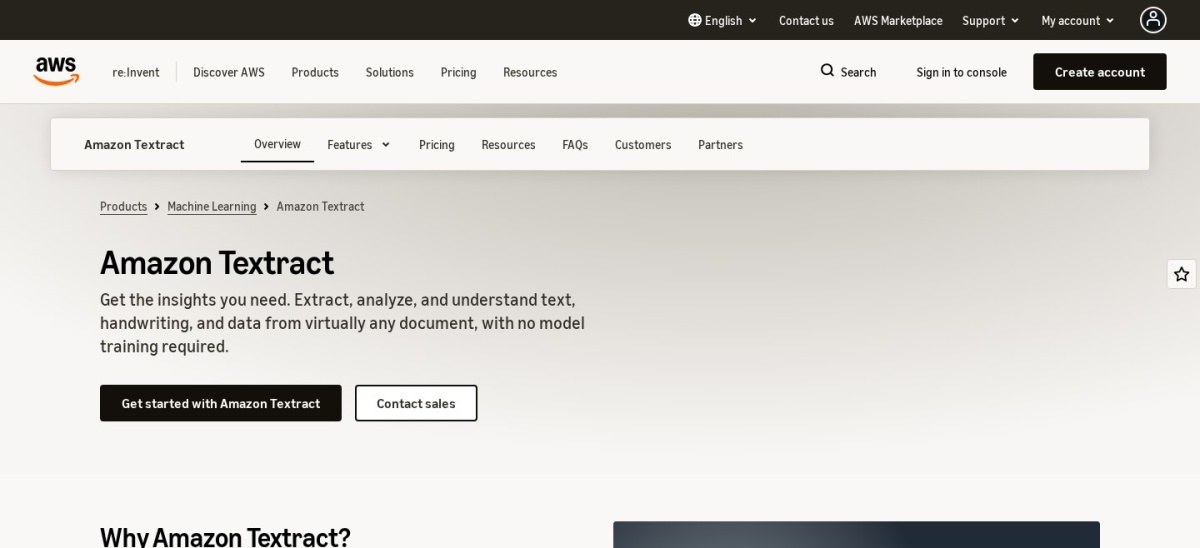
Amazon Textract is a machine learning API on AWS that reads text, tables and forms from scanned documents and PDFs. It is rated 4.3 out of 5 on G2 from 27 reviews, and billing is pay as you go by the page, with no annual subscription.
The trade off is that Textract is a building block, not a product. There is no review queue or dashboard, so a team must build validation, routing and storage around it. It suits AWS teams with developers who want raw extraction inside their own pipeline.
Free starts are real but narrow. Nanonets gives $50 in credits, Veryfi gives 100 documents a month, and Docsumo gives a 14-day trial with 1,000 pages. None of them is a free plan you can run a business on.
Paid plans mostly buy volume and review tooling. Nanonets charges per workflow block, Veryfi charges per document, and the enterprise tools charge by page or by annual volume, with the review queue and ERP connectors in the paid tier.
Watch the hidden costs. Training custom models, human review time and ERP integration work are rarely in the headline price, so count pages per month and review hours before you compare quotes.
How we chose
We started from the established IDP vendors that appear across G2, Capterra and independent comparisons, then kept the nine with a public numeric rating and review count on G2 or Capterra.
Prices come from each vendor's pricing page or, where the vendor publishes no price, from third-party reports of the entry tier, checked on 25 November 2026. Ratings and review counts come from G2 or Capterra on the same day. Where a vendor shows a sale, the list shows the regular price.
We left out tools with no public rating and niche single-purpose extractors. No vendor paid for a place, and we do not claim to have used these tools ourselves.
How to choose intelligent document processing software
Start with a pile of your own documents, then match the tool to the volume and the team that will run it.
Test on your own documents. Run 50 of your worst documents, not clean samples, through each trial. Faded scans, handwriting and odd layouts show the real accuracy gap.
Count the real monthly cost. Multiply your page or document volume by the per-page, per-document or per-block rate. A low headline price can still cost more than a quoted annual plan.
Check the review workflow. Your team will spend most of its time on exceptions. Open the review queue in a trial and see how fast a person can fix a wrong field.
Match the tool to your stack. Pick a no-code platform if finance will run it, an API if developers will build on it, and an enterprise platform if you already run that vendor's stack.
FAQ
What is the best intelligent document processing software?
Nanonets is the best pick for most teams. It is rated 4.7 out of 5 on G2 from 97 reviews, starts with $50 in free credits, and Starter costs $100 a month. Docsumo and Rossum are strong alternatives for review workflows and AP automation.
How much does intelligent document processing software cost?
Entry prices range from $100 a month for Nanonets Starter to $500 a month for Veryfi and $18,000 a year for Rossum Starter. Most enterprise tools, including ABBYY, Hyperscience and UiPath, are quote-only and priced by volume.
Is there free intelligent document processing software?
There is no full free plan in this list, but free starts exist. Nanonets gives $50 in credits, Veryfi processes 100 documents a month free, and Docsumo offers a 14-day trial with 1,000 pages. Enterprise tools offer demos, not free tiers.
What is the difference between OCR and IDP?
OCR reads text from an image or scan. IDP goes further: it classifies the document, understands what each field means, validates values against rules and routes the result to another system, with a human review step for low-confidence fields.
Do I need developers to use IDP software?
Not always. Nanonets, Docsumo, Rossum and Klippa are no-code platforms a finance or operations team can run. Veryfi and Amazon Textract are APIs, so they need a developer, while UiPath fits teams already building automations.
Which IDP tool is best for invoices?
Rossum is the strongest invoice pick, rated 4.5 out of 5 on G2 from 127 reviews, with a review interface built for AP. Docsumo and Nanonets are cheaper options for smaller invoice volumes, and Klippa fits European teams that need VAT handling.
SaaS SEO and WordPress specialist with about 8 years of experience. Rakib compares WordPress plugins, themes, hosting and software using public pricing, documentation and user reviews. See how we rank.