CreatorIQ is the best influencer CRM for most enterprise teams, with the highest G2 rating here and the largest review base. Pick Upfluence for ecommerce, or GRIN for transparent pricing with a free plan.
How we make this list: we compare pricing pages, product documentation and public user reviews, then re-check every price before each update. No product paid for a place. Disclosure.
CreatorIQ leads this list with a 4.6 out of 5 G2 rating from 582 reviews and the deepest enterprise measurement.
Upfluence is the best pick for ecommerce, with a 12-million-creator database tied to Shopify sales.
GRIN is the only platform here with published month-to-month pricing, from free to 200 dollars a month for Starter.
HypeAuditor is the vetting specialist, with fake-follower detection from 299 dollars a month and a free account.
Heepsy is the cheapest paid option at 69 dollars a month, but its G2 base is only 41 reviews.
What to look for in influencer CRM software
An influencer CRM is where a brand keeps its creator relationships: who they worked with, what they were paid, what content they made and how it performed.
Most enterprise platforms run on custom annual contracts with five-figure yearly commitments, while GRIN and Heepsy publish flat monthly prices a small team can actually budget.
Discovery is only half the job. Vetting matters as much as finding: HypeAuditor and Heepsy flag fake followers before a brand pays. Our guide on influencer databases compares the discovery side in depth.
Payments and gifting close the loop. GRIN runs gifting, affiliate and paid programs with escrow, while Upfluence ties creator work to Shopify sales.
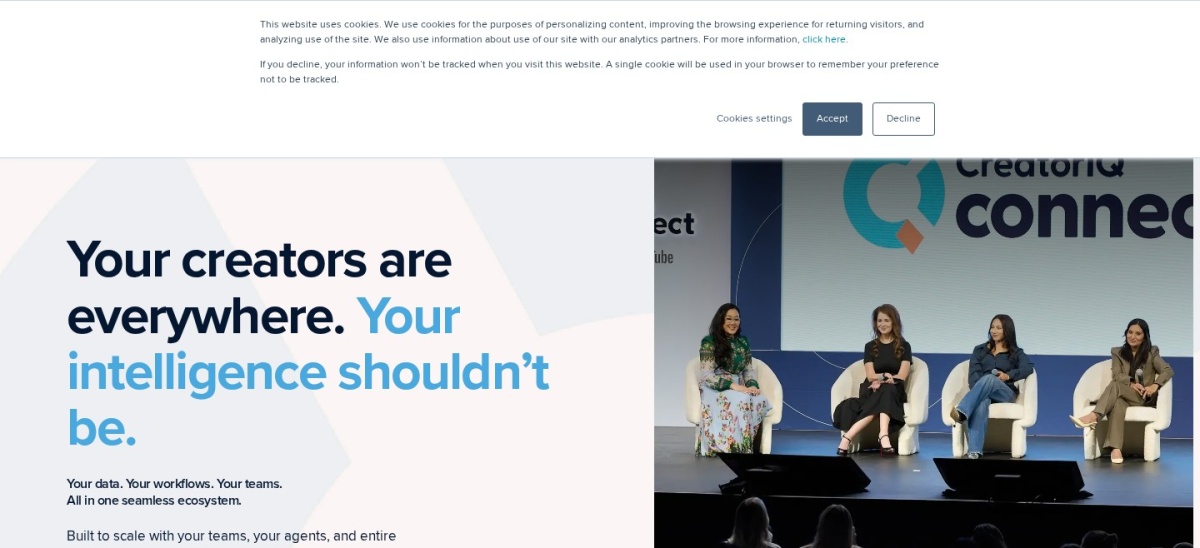
CreatorIQ is built for large brands that run creator programs across teams, markets and product lines, with discovery, brand safety and measurement in one platform. It holds a 4.6 out of 5 rating on G2 from 582 reviews, the largest base in this list.
The trade off is enterprise cost and process. Pricing is custom, contracts are annual, and onboarding involves data, workflow and governance setup. It suits multinational brands that need consistent measurement and scale.
Upfluence is an influencer platform that ties creator discovery directly to sales, with search filters, affiliate links, promo codes and payments in one system. It holds a 4.6 out of 5 rating on G2 from 140 reviews, and it can identify existing customers who are already creators.
The trade off is commercial. Upfluence sells custom annual contracts and publishes no price, so a small brand should get a written quote that lists exactly what is included. It suits Shopify brands with a growing creator program.
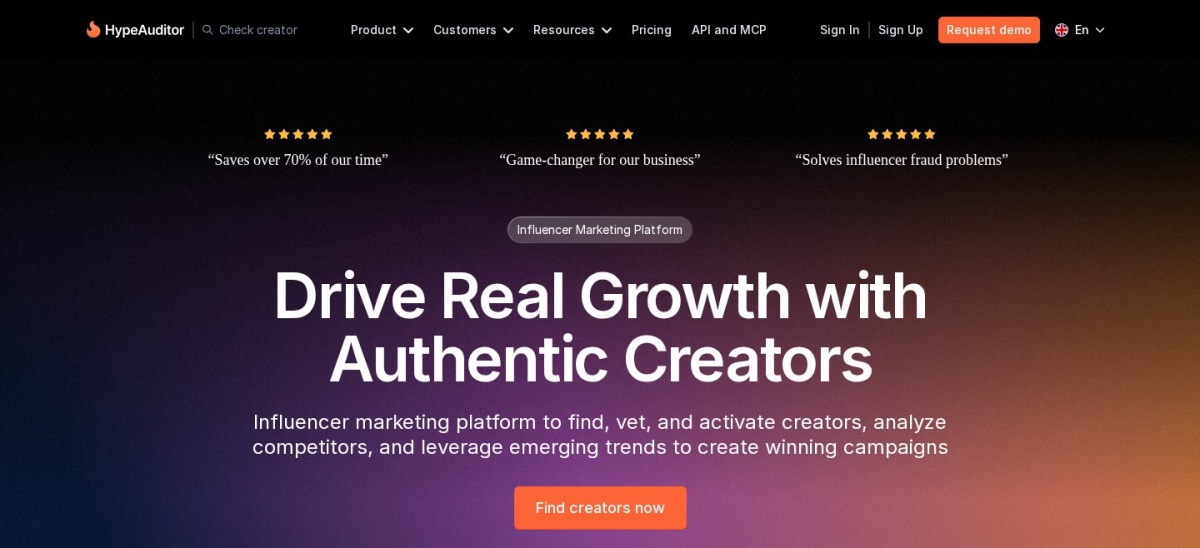
HypeAuditor is the audience quality specialist, with an Audience Quality Score, fake-follower detection and audience overlap reports across more than 227 million accounts. It holds a 4.6 out of 5 rating on G2 from 272 reviews, and a free account lets teams start.
The trade off is sales-led pricing. HypeAuditor does not publish prices on its pricing page, which is a demo form, and Basic runs from 299 dollars a month on annual billing. It suits teams that vet creators before paying them.
What we like
4.6 G2 rating from 272 reviews
Audience Quality Score and fake-follower detection
Aspire is a creator platform that combines two ways to find creators: search and AI discovery, plus a marketplace where creators apply to a brand. It holds a 4.6 out of 5 rating on G2 from 146 reviews, and campaign tools cover briefs, agreements, content approval and payments.
The trade off is custom pricing and niche depth. Aspire publishes no price, so a buyer should confirm creator limits, marketplace access and support level in the quote. It suits direct-to-consumer brands building a lasting creator community.
GRIN is a creator marketing platform for ecommerce brands, covering discovery, outreach, gifting, campaigns and payments in one creator CRM. It holds a 4.5 out of 5 rating on G2 from 483 reviews, and a free plan supports two live campaigns.
The trade off is the fee model. A management fee is charged when a brand funds its wallet, and it falls as the plan tier rises, so model total cost including fees. It suits ecommerce brands that want to start free and scale without an annual lock-in.
Influencity is an all-in-one influencer suite for agencies and larger brand teams, with discovery, relationship management, outreach, payments and reporting in one workspace. It holds a 4.5 out of 5 rating on G2 from 282 reviews, and its database covers hundreds of millions of profiles.
The trade off is the learning curve. The suite takes time to learn, and a team that only needs search may find social publishing and listening features unnecessary. It suits an agency managing several clients with separate workspaces.
Heepsy is the most accessible discovery tool in this list for a small or mid-size team, with search across Instagram, TikTok, YouTube and LinkedIn. It holds a 4.5 out of 5 rating on G2 from 41 reviews, and paid plans start at 69 dollars a month billed annually.
The trade off is depth. Its database and reporting are lighter than CreatorIQ or Traackr, and some niches will have fewer creators. It suits a team starting influencer marketing that wants the best balance of price and vetting.
Traackr is a data-led influencer platform for global programs, with creator data across many countries and benchmarks that compare performance across markets and competitors. It holds a 4.3 out of 5 rating on G2 from 386 reviews.
The trade off is enterprise process. Traackr is an enterprise platform with custom pricing and a sales-led onboarding process, and a small team will not use its full benchmarking depth. It suits global programs that need data discipline across several regions.
GRIN, Heepsy, Influencity and HypeAuditor publish prices, from 69 dollars a month at Heepsy to 299 dollars at HypeAuditor. A published price lets a small team budget before the first sales call.
CreatorIQ, Upfluence, Aspire and Traackr quote custom, with annual contracts and five-figure yearly commitments common. Get a written quote that lists creator limits, integrations and support level.
GRIN adds wallet management fees on top of its subscription, from 20 percent on the free plan down to 5 percent on Scale. Our influencer software guide shows the wider market.
How we chose
We started from the most reviewed influencer platforms on G2, then kept those with a verifiable G2 rating and real CRM features such as outreach, contracts and payments.
Prices come from each vendor's pricing page or third-party checks of it, read on 25 November 2026. Ratings and review counts come from G2 on the same day. Platforms that publish no price are shown as custom.
We left out tools with no scored G2 rating or no CRM features. No vendor paid for a place, and we do not claim hands-on testing for this list.
How to choose influencer CRM software
Start with what you manage, then check the pricing model before you book a demo.
Decide what you manage. Discovery-only tools find creators, while a CRM tracks relationships, contracts and payments over time.
Check the pricing model. Enterprise platforms quote custom annual contracts, while GRIN and Heepsy publish monthly prices.
Vet before you pay. Fake followers waste budget. Pick a tool with audience quality checks or pair discovery with HypeAuditor.
Confirm the integrations. Shopify, WooCommerce and payment tools should connect, or your team will track sales by hand.
FAQ
What is the best influencer CRM software?
CreatorIQ is the best influencer CRM for most enterprise teams, with a 4.6 out of 5 rating on G2 from 582 reviews. Upfluence is the best pick for ecommerce, and GRIN is the best for transparent pricing.
How much does influencer CRM software cost?
Published prices in this list run from 69 dollars a month at Heepsy to 299 dollars at HypeAuditor, on annual billing. Enterprise platforms quote custom, with five-figure yearly commitments common.
Is there a free influencer CRM?
Yes, GRIN and Heepsy both offer a free plan, and HypeAuditor offers a free account. GRIN's free plan supports two live campaigns, while Heepsy's lets a team run searches before paying.
What is the difference between an influencer database and an influencer CRM?
A database is a searchable index of creators with audience data. A CRM adds relationship management: outreach, contracts, gifting, payments and performance tracking for creators a brand already works with.
How do I check for fake followers?
HypeAuditor's Audience Quality Score and fake-follower detection are built for this, and Heepsy flags fake followers in its audience checks. Always vet a creator's audience before agreeing a fee.
Which influencer CRM is best for ecommerce?
Upfluence is the best influencer CRM for ecommerce, with a 12-million-creator database tied to Shopify sales and affiliate tracking. GRIN is the best-priced ecommerce option, with a free plan and Starter at 200 dollars a month.
SaaS SEO and WordPress specialist with about 8 years of experience. Rakib compares WordPress plugins, themes, hosting and software using public pricing, documentation and user reviews. See how we rank.