Measured is the best incrementality testing tool for most large brands, with geo and audience holdout tests feeding a test-calibrated MMM and a 4.9 out of 5 G2 rating from 11 reviews. SegmentStream suits teams that want weekly budget moves from test results, and Northbeam suits brands that already use its attribution.
How we make this list: we compare pricing pages, product documentation and public user reviews, then re-check every price before each update. No product paid for a place. Disclosure.
Measured scores 4.9 out of 5 on G2 from 11 reviews, the highest rating in this list, and runs geo and audience holdout tests across 70-plus media platforms.
Only Northbeam publishes a starting price in this list, at $1,500 a month for Starter, and incrementality is an add-on on its higher Professional plan.
Polar Analytics and Triple Whale are the only tools here with a free plan, but incrementality testing sits on paid or Enterprise tiers in both.
Haus is the dedicated geo-experiment specialist, yet it has no verified G2 rating; its 4.4 out of 5 comes from 5 reviews on Gartner Peer Insights.
Recast, INCRMNTAL, LiftLab and Sellforte are established names in this niche but have no usable public rating, so they are not in this list.
What incrementality testing actually measures
Incrementality testing answers one question: what would have happened without this spend? A geo test holds ads back in matched regions, keeps them running elsewhere, and compares the difference in sales or orders.
Most tools in this list pair those tests with a marketing mix model. The test result calibrates the model, so budget advice rests on measured lift rather than on correlation alone.
Review counts are small across this whole category. The highest count here is Triple Whale at 482 G2 reviews, while Measured leads on rating with 4.9 out of 5 from only 11 reviews, so treat every score as a snapshot.
Prices are mostly quoted against ad spend and scope. Only Northbeam publishes a starting price, so expect a sales conversation for the rest. Our guide on measuring blog traffic in WordPress covers the simpler end of measurement, where free analytics is enough.
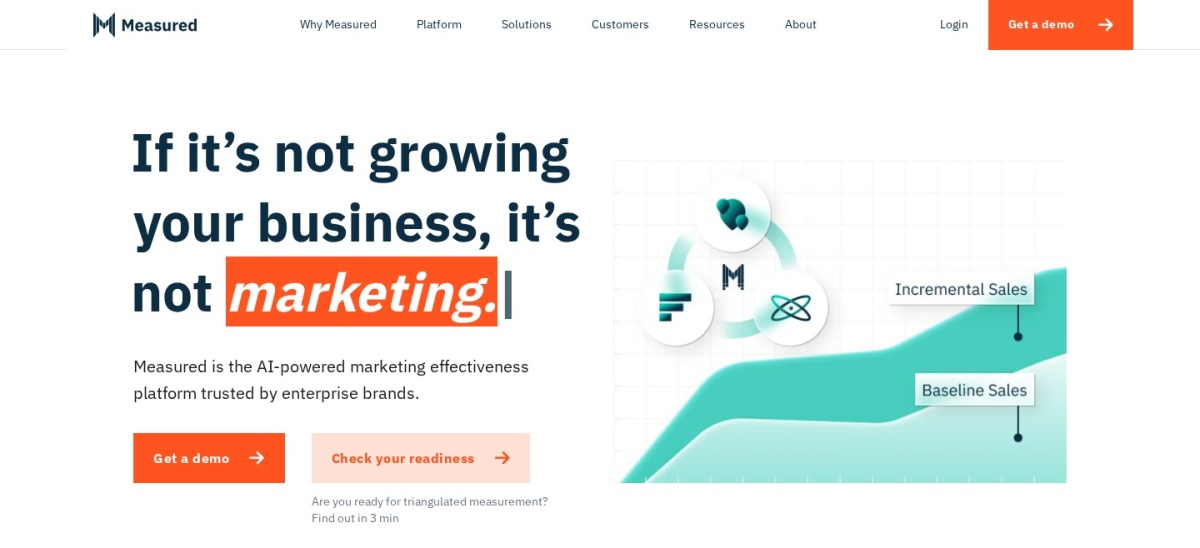
Measured is an enterprise measurement platform built around incrementality testing, with geo-matched tests and first-party audience split tests across more than 70 media platforms. Test results feed its Causal MMM as priors, and the platform lists more than 300 managed integrations for cross-channel reporting.
The trade off is price and weight. Measured publishes no prices, and enterprise programmes run to five figures a year with a managed onboarding. It suits large brands running ongoing experiment programmes rather than a single test.
What we like
Highest G2 rating in this list at 4.9 out of 5
Geo and audience holdouts in one platform
Test results calibrate the MMM directly
More than 300 managed integrations
Watch out for
No public pricing, quote only
Enterprise scale and onboarding effort
Only 11 G2 reviews, so the rating is thin
Paid plans add managed strategy and cross-channel reportingVisit measured.com
02
SegmentStream
4.7/5on G2 (26 reviews, checked Nov 2026)
PricingCustom/yr
Best for turning tests into weekly budget moves
Test typesGeo holdout experiments
AttributionCross-channel, in platform
Budget optimisationWeekly reallocation
Paid planCustom, quote only
segmentstream.com
SegmentStream homepage, captured Nov 2026.
SegmentStream is a measurement platform that combines cross-channel attribution, geo incrementality testing and automated budget optimisation. It uses synthetic controls for geo tests and is aimed at brands that want test results to change spend every week rather than sit in a report.
The trade off is that the same platform runs the test and acts on the result, so ask who validates a readout before it moves budget. It suits teams with a marketing scientist or a vendor relationship they can push back on.
What we like
Geo tests feed weekly budget decisions directly
4.7 out of 5 on G2 from 26 reviews
Attribution, testing and optimisation in one place
Polar Analytics is a Shopify-native analytics platform with attribution, profitability, cohort LTV and Causal Lift geo testing in one dashboard. Its Incrementality Testing product is run by a dedicated data scientist, with lift tests on Meta, Google, TikTok or TV and results across Shopify, Amazon or retail sales.
The trade off is that testing is not self-serve. Causal Lift sits on the Custom plan and is run as a service, and the pricing page shows no dollar figure, with plans priced by gross merchandise value. It suits mid-market Shopify brands with an analyst who will use the data.
Rockerbox is a unified measurement platform that stacks multi-touch attribution, a Bayesian MMM and incrementality testing. Its incrementality module runs holdout experiments at user level, and the platform also reads TV, direct mail and podcasts, which most dashboards in this list cannot see.
The trade off is cost and setup time. Rockerbox publishes no prices and is sold as an enterprise engagement with a multi-week rollout. It suits mid-market and enterprise consumer brands with diversified media mixes.
Northbeam is an attribution platform first, with deterministic view-through attribution, an MMM layer and an incrementality testing feature on the same first-party data. Starter starts at $1,500 a month for brands spending under $1.5 million a year on ads, with Professional from $3,500 a month.
The trade off is that Starter is attribution only. Incrementality is an optional addition on Professional, and the MMM sits on Enterprise, so a team that only wants experiments overpays for attribution it may not need. It suits brands already on Northbeam that want causal checks from the same vendor.
Triple Whale is a Shopify analytics suite with a first-party pixel, multi-touch attribution and an AI analyst. Its Enterprise plan adds Compass, which unifies attribution, MMM and incrementality testing, with holdouts and geo-lift tests in one place alongside retail data.
The trade off is that the testing job lives at the top of the ladder. Incrementality and MMM are Enterprise features, and paid prices are based on annual gross merchandise value with no dollar figure on the pricing page. It suits Shopify brands that already run Triple Whale and grow into Enterprise.
What we like
Largest review base here: 482 G2 reviews
Free plan to start, with 15-minute setup
Incrementality, MMM and attribution in Compass
65,000-plus brands use the platform
Watch out for
Incrementality testing needs Enterprise
No dollar price on the pricing page
Reviewers flag attribution gaps against Shopify data
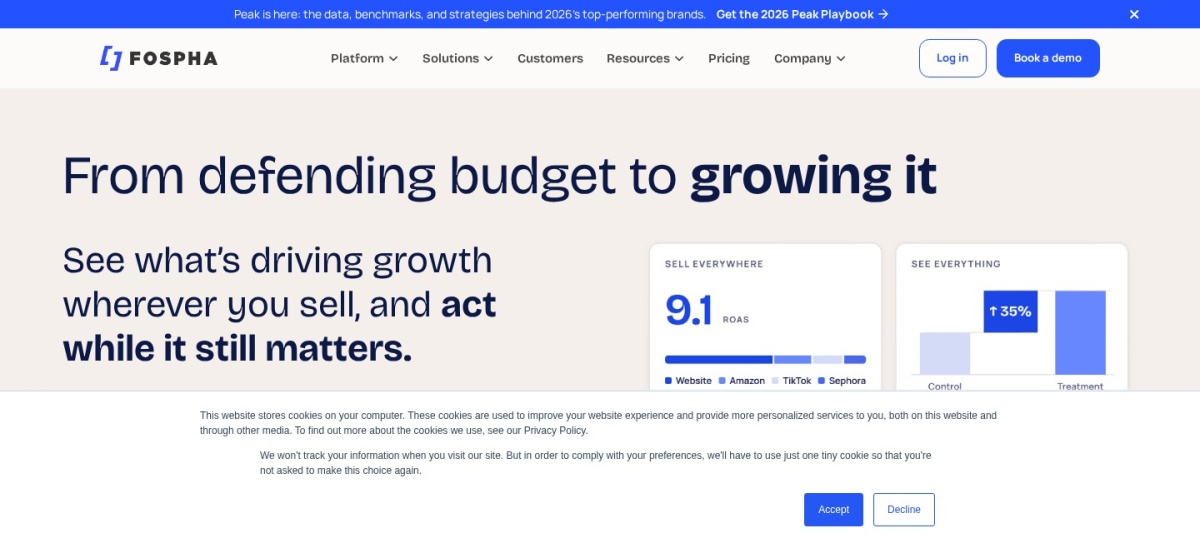
Fospha is a marketing measurement platform built around MMM and attribution, with causal explanation of channel and funnel impact. Reviewers on G2 praise its ease of use and customer support, and it holds 4.5 out of 5 from 51 reviews.
The trade off is that incrementality is a modelling job here rather than a standalone test product. Fospha publishes no prices, and G2 reports about two months to implement. It suits mid-market brands that want a measured model with strong support behind it.
4.4/5on Gartner Peer Insights (5 reviews, checked Nov 2026)
PricingCustom/yr
Best dedicated geo-experiment specialist
Test typesGeo, fixed-geo and time tests
ControlsSynthetic controls
MMMYes, Causal MMM
Paid planCustom, quote only
haus.io
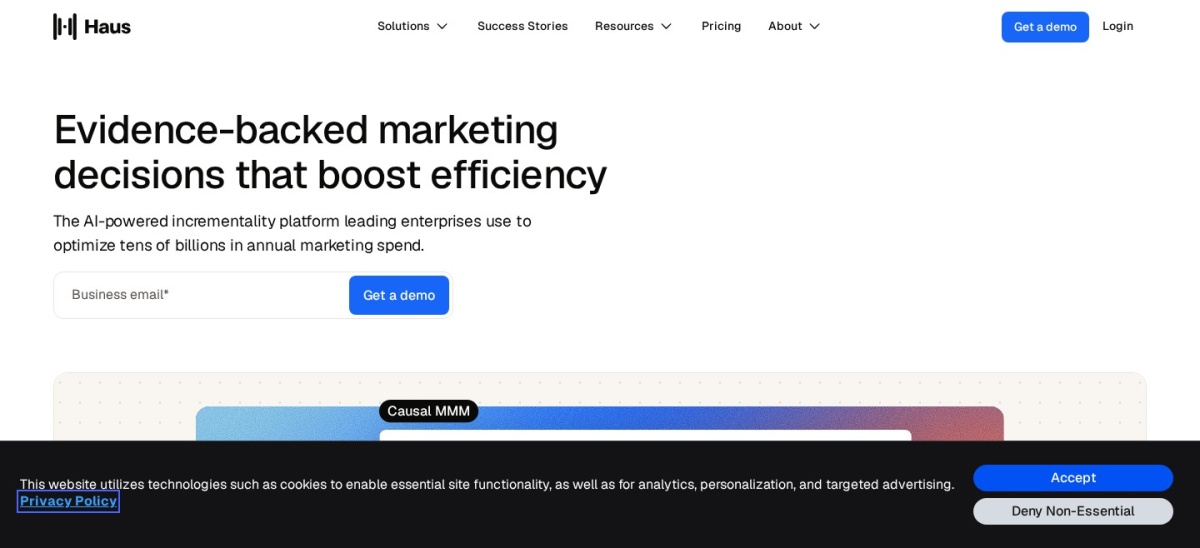
Haus homepage, captured Nov 2026.
Haus is a dedicated incrementality platform that runs geo experiments, conversion lift studies and a Causal MMM. It offers three test designs, including geo tests with stratified sampling and time tests for channels that cannot be split by geography, and it is used by brands such as Oura, AG1, FanDuel, Sonos and Wayfair.
The trade off is evidence. Haus has no verified G2 rating with a review count, and its 4.4 out of 5 rests on only 5 Gartner Peer Insights reviews, so the score is the thinnest in this list. It suits digital-first brands that want fast, self-serve geo tests without a data science team.
What we like
Widest range of experiment designs here
Synthetic controls and power analysis
Self-serve setup, faster than enterprise rivals
Strong roster of consumer brands
Watch out for
No verified G2 rating or review count
Only 5 Gartner reviews behind its rating
No public pricing, quote only
Higher plans add the MMM and data-science supportVisit haus.io
09
Lifesight
4.2/5on G2 (37 reviews, checked Nov 2026)
PricingCustom/yr
Best for the widest documented test designs
Test typesMatched, stepped-wedge, synthetic
Test lengthTypically 4 to 6 weeks
MMMYes, Precision plan and up
Paid planCustom, annual subscription
lifesight.io
Lifesight homepage, captured Nov 2026.
Lifesight is a measurement suite with geo testing, a causal MMM and causal attribution under one annual subscription. Its testing module documents more designs than any other tool here, including matched markets, stepped-wedge, central-control and synthetic control tests, with automated deployment to Meta and Google.
The trade off is packaging. Geo testing sits in the entry Performance plan, but the MMM that the tests calibrate starts at the Precision plan, and Lifesight publishes no prices. It suits mid-market to enterprise retail and DTC brands that want one suite.
Geo tests vs modelled scores: know which number you bought
A geo holdout is a controlled experiment. Ads go dark in some regions and keep running in matched regions, so the gap in sales is a causal estimate with a range around it.
A modelled score, such as an always-on incrementality estimate, is useful where a holdout cannot run, for example national campaigns or app marketing. It is an estimate from patterns in spend and outcome data, not a controlled result.
Ask every vendor which one you are buying, how wide the range is, and what would narrow it. A vendor that shows only a headline lift number is hiding the part that matters most.
How we chose
We started from the tools that appear in specialist incrementality roundups and measurement-suite comparisons, then kept only those with a real incrementality method and a public user rating with a review count.
Prices come from each vendor's pricing page, checked on 25 November 2026. Ratings and review counts come from G2 on the same day, except Haus, which uses Gartner Peer Insights. Where a vendor shows no price, the list shows Custom rather than borrowing a third-party figure.
We left out Recast, INCRMNTAL, LiftLab and Sellforte, which have no usable public rating, and Prescient AI, whose G2 rating rests on 2 reviews. No vendor paid for a place, and we do not claim to have used these tools ourselves.
How to choose an incrementality testing tool
Start with the test you can actually run, then pick the tool that fits it.
Check your volume first. A geo test needs enough conversions in the test window to detect a difference. Ask each vendor for a power calculation before you sign.
Decide between a test and a model. Pick a holdout tool such as Measured or Haus for a causal answer, or a modelled tool such as INCRMNTAL or Fospha where holdouts cannot run.
Ask who checks the result. Several vendors run the test and build the model that grades it. Ask what independent check exists before a result moves your budget.
Get the price in writing. Only Northbeam publishes a starting price here. For the rest, ask what a single-channel test costs before talking about an annual programme.
FAQ
What is the best incrementality testing tool?
Measured is the best pick for most large brands, with geo and audience holdout tests feeding a test-calibrated MMM and a 4.9 out of 5 G2 rating from 11 reviews. SegmentStream suits weekly budget moves, and Northbeam suits brands that already use its attribution.
How is incrementality testing different from attribution?
Attribution divides credit for conversions among the ads that touched the buyer, using correlation. Incrementality testing compares a group that saw ads with a matched group that did not, so the difference is a causal estimate of what the ads actually added.
How much does incrementality testing cost?
Most vendors quote against ad spend and scope, and enterprise programmes run to five figures a year. Northbeam is the only tool here with a published starting price, at $1,500 a month for Starter, while Polar and Triple Whale price by gross merchandise value.
How long does a geo test need to run?
Tests typically run two to six weeks, depending on the tool and the channel. The binding constraint is statistical power: low-volume channels and short windows produce wide ranges that cannot settle a budget argument.
Can a small brand run incrementality tests?
Yes, with the right channel. A focused geo test on one large channel through Polar Analytics or Triple Whale can work at modest budgets. Channels with thin conversion volume cannot be tested reliably at any price, and an honest vendor will say so first.
Is a modelled incrementality score as good as a holdout test?
No. Models estimate effect from patterns and are useful where experiments cannot run, but a controlled holdout is the stronger evidence. Best practice uses models for ongoing decisions and real tests to check them.
SaaS SEO and WordPress specialist with about 8 years of experience. Rakib compares WordPress plugins, themes, hosting and software using public pricing, documentation and user reviews. See how we rank.