Ramp is the best HR spend management platform for most teams. Its free plan covers unlimited cards, expenses and bill pay, and it is rated 4.8 out of 5 on G2. Pick Airbase if you run Paylocity HR, or Rippling Spend if payroll and spend should share one employee record.
How we make this list: we compare pricing pages, product documentation and public user reviews, then re-check every price before each update. No product paid for a place. Disclosure.
Ramp leads: free unlimited cards, expenses and bill pay, rated 4.8/5 on G2 from 2,514 reviews.
Brex matches Ramp on price with a $0 Essentials plan and wider card coverage in 120+ countries.
Airbase is the only pick sold inside an HR suite, as Paylocity for Finance, with payroll data built in.
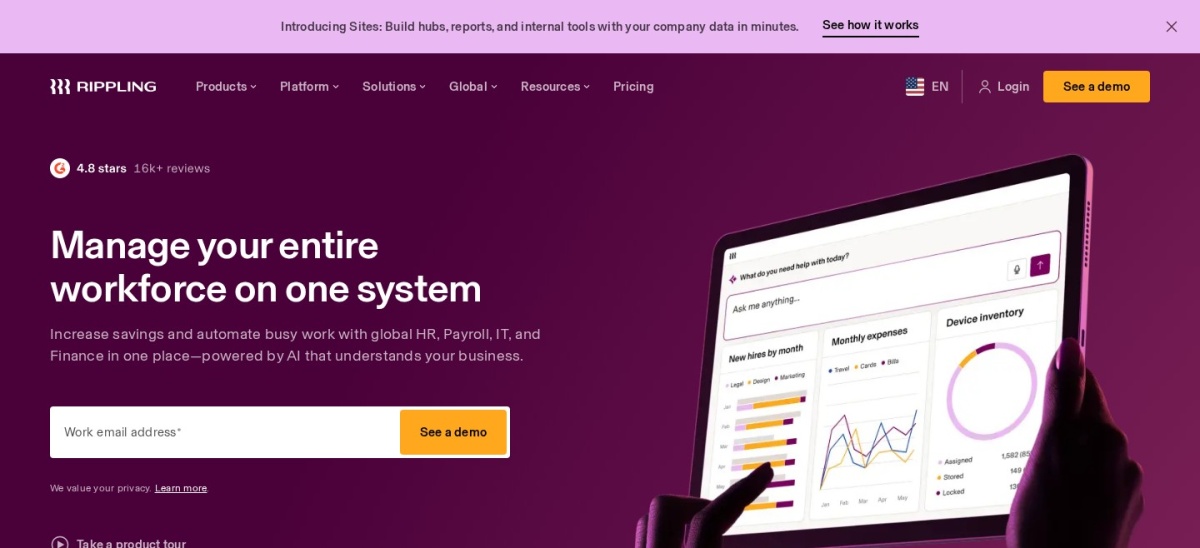
Rippling Spend ties every card and expense to the same employee record as payroll, HR and IT.
Three of the nine publish no prices at all: Airbase, Rippling Spend and Spendesk are all custom quotes.
Payhawk is the priciest entry point here: its Cards & Expenses module starts at $449 a month.
What HR spend management means
HR spend management ties company spending to people data. Cards, expenses and approvals follow the employee record, so limits change when a role, a team or a manager changes.
The core pieces are corporate cards with set limits, approval chains, receipt capture and a feed into accounting. The HR difference is the link to payroll and HRIS data: headcount plans, new starters and leavers.
Look for an HRIS integration first, then check how approvals work. A platform that reads roles and managers from your HR system saves manual updates every time someone joins, moves or leaves.
Free plans are real in this category. Ramp, Brex, Navan, Mesh and BILL all offer a $0 tier, though each one charges for the deeper controls.
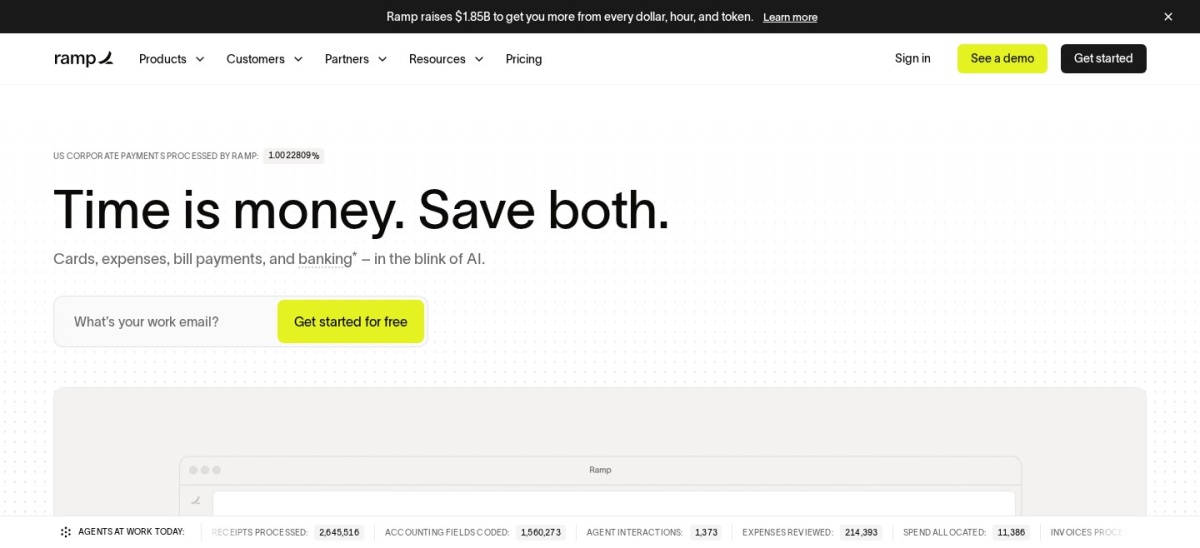
Ramp is a corporate card and spend platform that combines cards, expenses, bill pay, procurement and travel in one place. The free plan includes unlimited physical and virtual cards, expense management, bill pay and sync with QuickBooks and Xero.
The trade off is that the cheapest paid tier is not the whole price. Plus is $15 per user per month, but Ramp adds a platform fee based on team size and does not publish the amount, and procurement is a separate add-on. It suits teams that want strong automation on a free base and will pay for the extras.
What we like
Free plan covers cards, expenses and bill pay
Rated 4.8 out of 5 on G2
Automatic receipt matching and coding
QuickBooks, Xero and NetSuite sync
Watch out for
Plus platform fee is not published
Procurement is a paid add-on
Needs $25,000 in a linked bank account to qualify
Plus adds NetSuite, Sage Intacct and multi-entityVisit ramp.com
02
Brex
4.8/5on G2 (1,637 reviews, checked Nov 2026)
Paid from$12/mo
Best for global teams
Free plan$0, Essentials
Premium plan$12/user/mo
Card coverageAccepted in 120+ countries
HRIS linksERP and HRIS integrations on Premium
brex.com
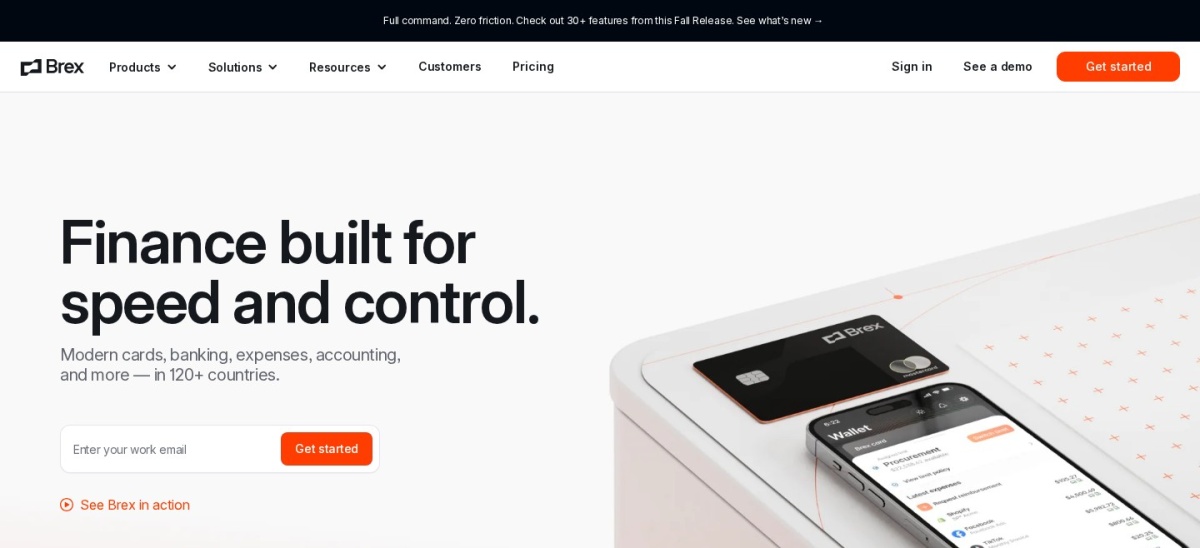
Brex homepage, captured Nov 2026.
Brex is a finance platform built around global corporate cards, expense management, bill pay, travel and a business account. The free Essentials plan covers cards in 120+ countries, bill pay, reimbursements and travel booking for up to two entities.
The trade off is that the deeper controls sit in Premium. Premium costs $12 per user per month and adds multiple expense policies, live budgets, multi-entity support and ERP and HRIS integrations. It suits startups and global teams that need cards that work across borders.
What we like
Free Essentials plan with global cards
Rated 4.8 out of 5 on G2
Business account and bill pay included
Travel booking with no added fee
Watch out for
Essentials covers only two entities
Premium needed for HRIS integrations
US-registered businesses only
Premium adds live budgets and multi-entity supportVisit brex.com
03
Airbase
4.7/5on G2 (1,800+ reviews, checked Nov 2026)
PricingCustom/yr
Best inside an HR suite
PricingCustom quote
HR linkSold as Paylocity for Finance
ModulesProcurement, AP, cards, expenses
Company sizeStandard to Enterprise tiers
airbase.com
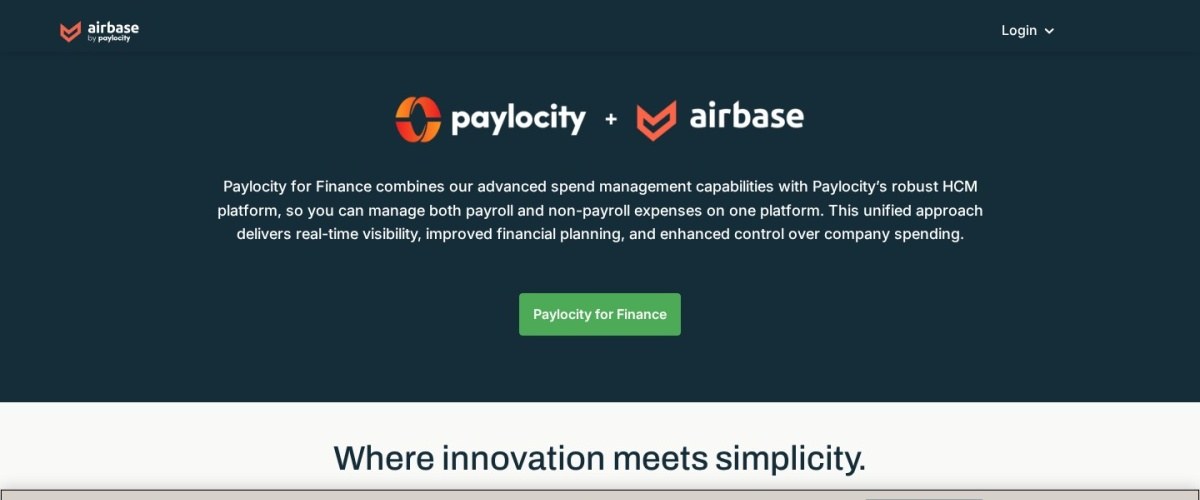
Airbase homepage, captured Nov 2026.
Airbase is a spend management platform that covers guided procurement, accounts payable, corporate cards and expenses. Paylocity bought it in October 2024 and now sells it as Paylocity for Finance, so spend controls sit beside payroll and HR data.
The trade off is price. Airbase publishes no plan prices, so every deployment is a custom quote, and the fit is strongest for teams already using Paylocity. It suits mid-size companies that want purchase requests, bills, cards and reimbursements in one system.
What we like
Spend controls beside Paylocity payroll and HR
Guided procurement with approvals and purchase orders
Rippling Spend is the spend module of Rippling, a platform that runs HR, payroll, benefits, IT and spend from one employee record. Cards, expenses, bills and travel inherit limits from the HR record, so a role change updates spend access at once.
The trade off is that Spend is an add-on with no published price. Rippling quotes each deployment, and the platform itself starts at $8 per user per month plus a monthly base fee. It suits companies already running Rippling that want spend tied to HR.
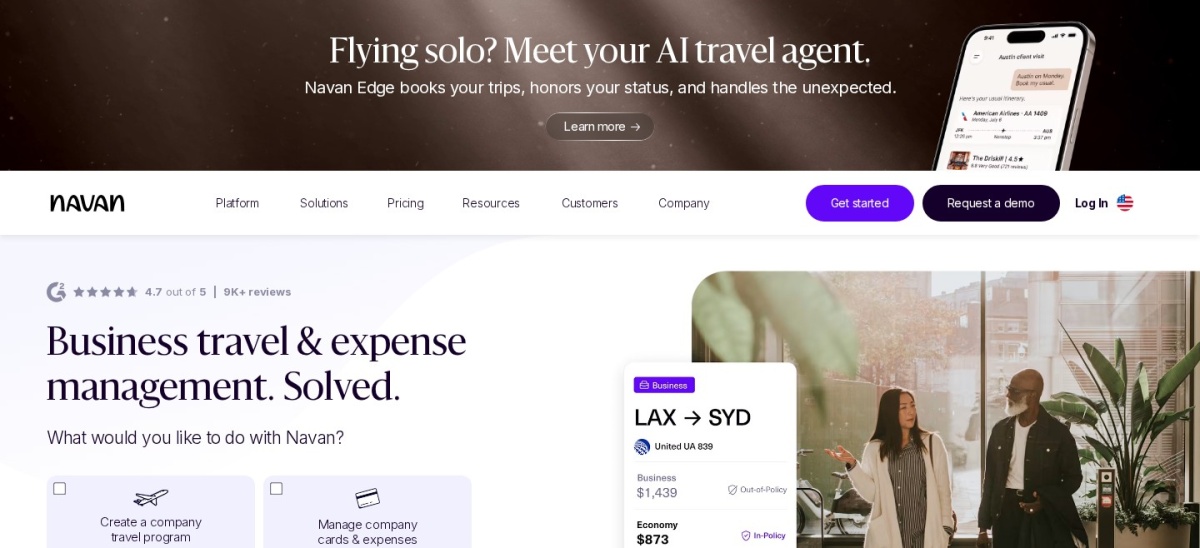
Navan is a travel and expense platform that pairs bookings with expense controls and corporate cards. Travel booking is free for companies with up to 300 employees, and expense is free for the first five monthly expensing users.
The trade off is that the free tier ends fast. Expense costs $15 per expensing user per month after the first five users, and larger companies pay an enterprise quote. It suits teams where travel is the biggest employee spend and policies must follow the trip.
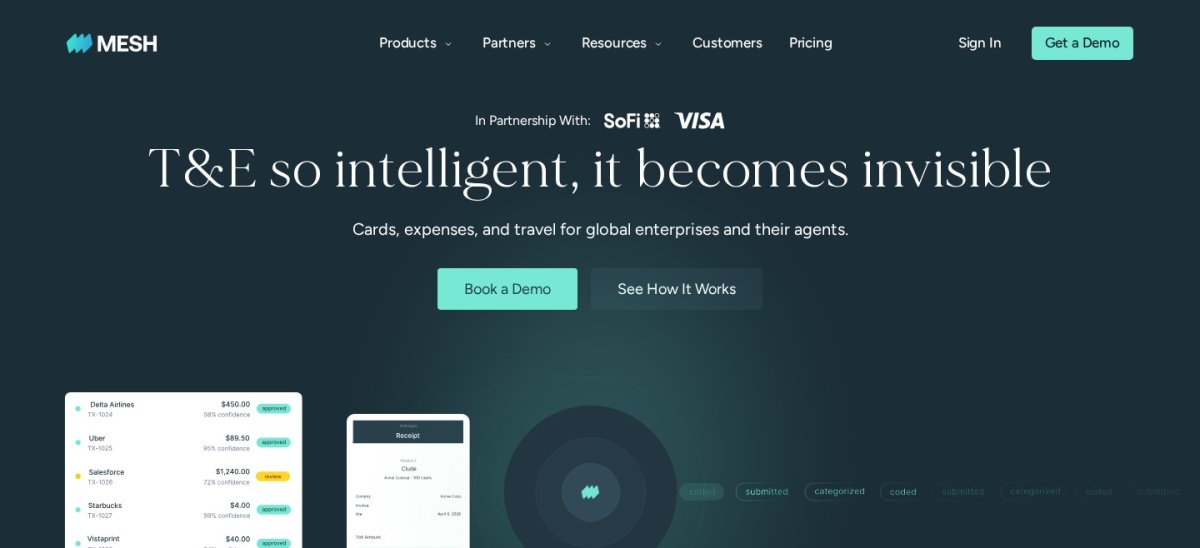
Mesh Payments is a spend platform built on corporate Visa cards, expenses, AP and travel. The free Pro plan covers up to three users, and Premium at $13 per user per month adds AI receipt capture, automatic coding and per-vendor limits.
The trade off is scale. Premium rose from $10 to $13 per user per month in June 2026, and cashback needs $50,000 in monthly card spend. It suits global teams that want local-currency cards with tight per-vendor controls.
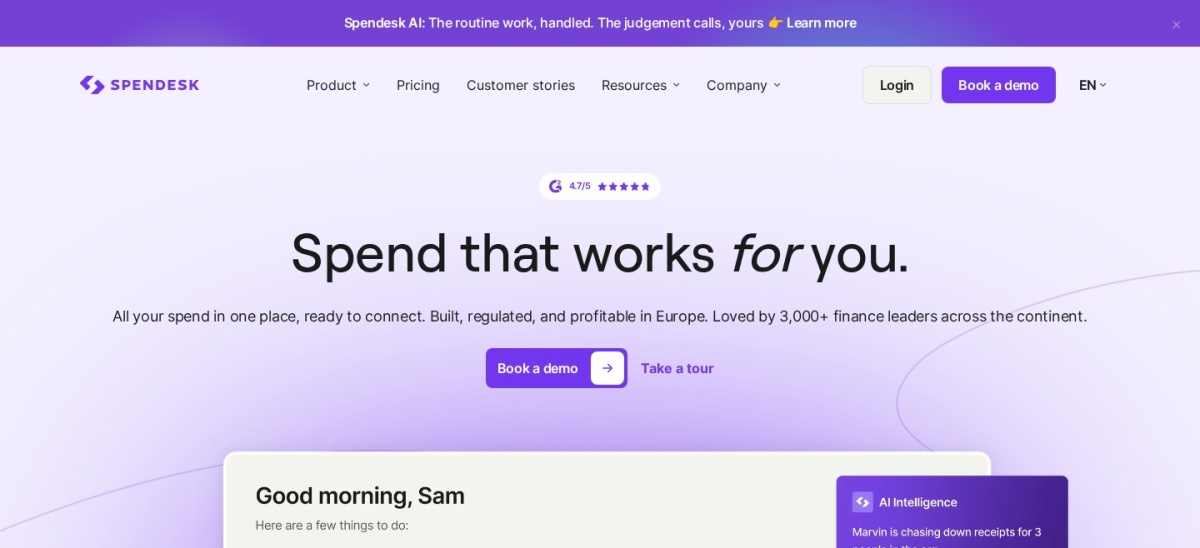
Spendesk is a spend management and procurement platform that unifies cards, expenses, approvals and supplier payments. Its homepage says it is used by more than 3,000 finance leaders, and it is built for teams that want real-time budgets per team and project.
The trade off is that nothing is published on price. Spendesk sells by quote, with a platform fee and per-transaction pricing, so every evaluation starts with a sales call. It suits mid-market teams that want procure-to-pay depth without per-seat fees.
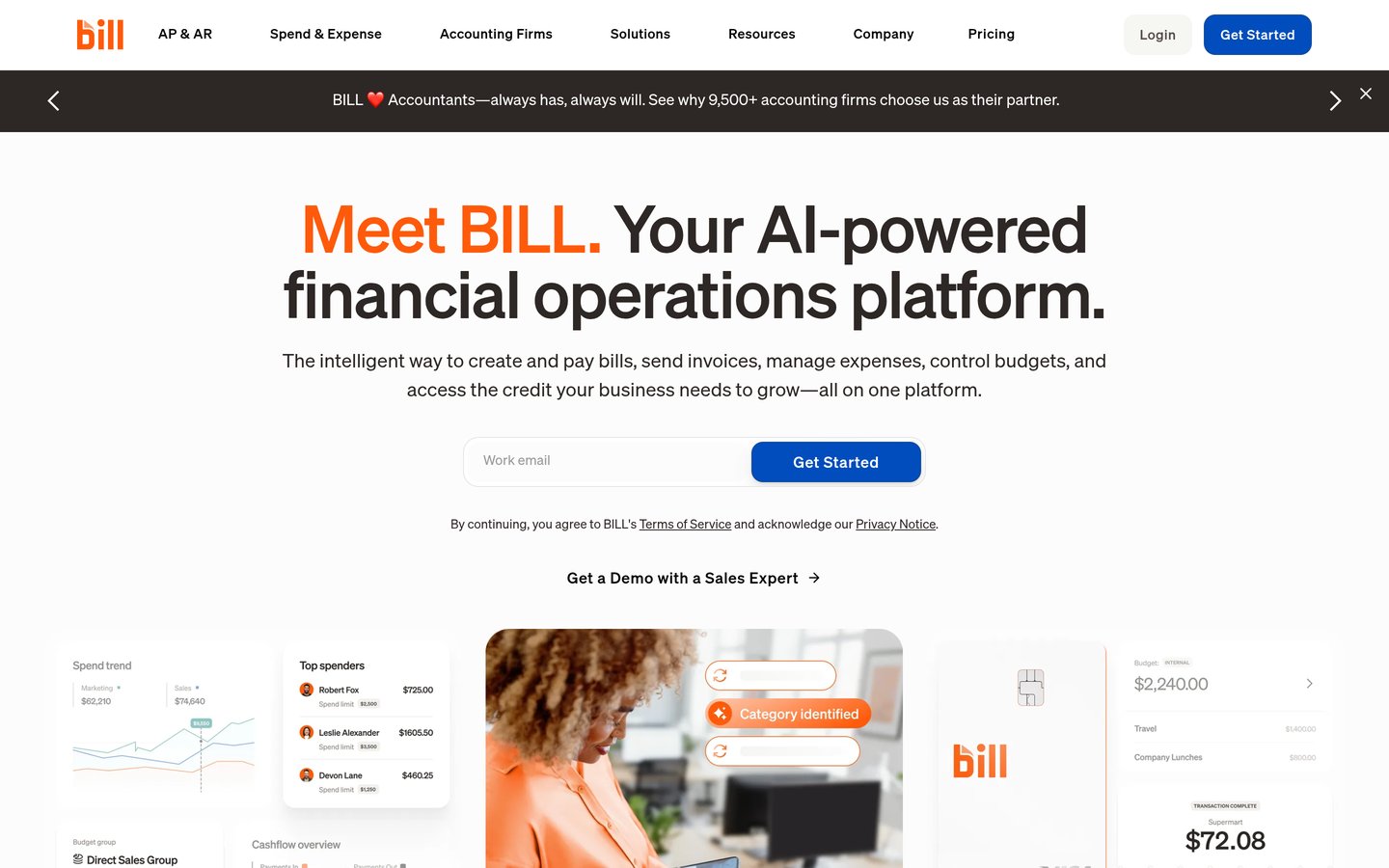
BILL Spend & Expense is a card and expense platform, formerly Divvy, that pairs free corporate cards with budgets, receipt capture and reimbursements. The card program costs $0 per user per month, and approved credit lines run from $1,000 to $5 million.
The trade off is that the free card program sits beside paid products. AP and AR automation start at $49 per user per month, so full finance coverage costs more. It suits small and mid-size companies that want free cards next to a mature AP tool.
Other modulesTravel $299, AP $349, Procurement $499
Integrations40+ ERP, accounting and HR
PricingComplete bundle is a custom quote
payhawk.com
Payhawk homepage, captured Nov 2026.
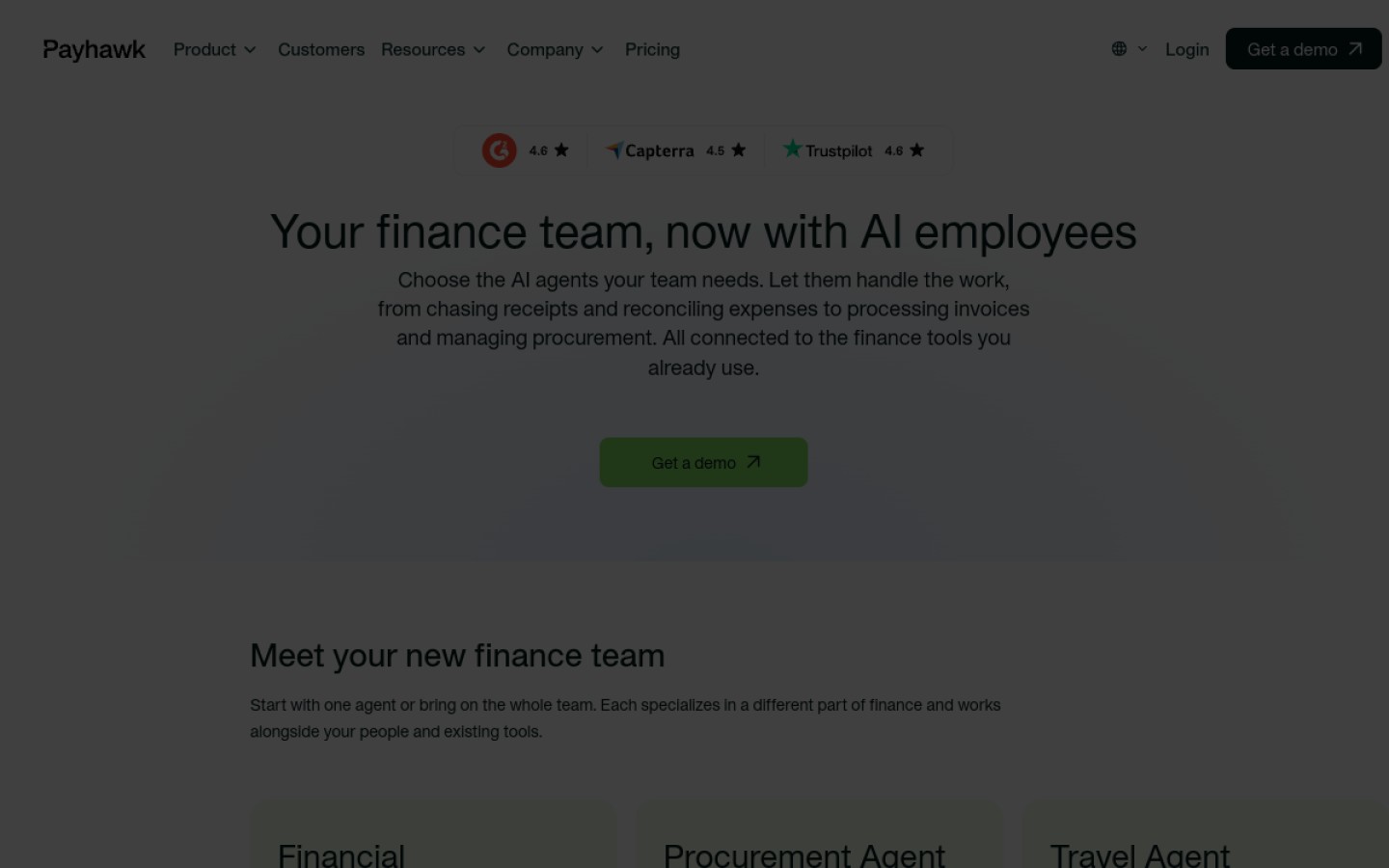
Payhawk is a spend platform sold by module: cards and expenses, accounts payable, procurement and travel. The Cards & Expenses module starts at $449 a month per company, and the Complete bundle is a custom quote.
The trade off is the entry price. At $449 a month for one module, Payhawk costs more than most free tiers here before any other module is added. It suits multi-entity companies that want to buy one module at a time.
What we like
Buy modules one at a time
Rated 4.5 out of 5 on G2
40+ ERP, accounting and HR integrations
Multi-entity and multi-currency support
Watch out for
$449 a month for a single module
Full suite needs several modules
Expensive floor for small teams
Cards & Expenses starts at $449/mo; other modules cost extraVisit payhawk.com
What to check before you buy
Ask which HR system the platform reads from. If it syncs with your HRIS, limits and approvals follow the employee record. If it does not, someone must update limits by hand when people join, move or leave.
Ask what the free plan leaves out. Most $0 tiers cover cards and expenses but charge for multi-entity support, HRIS links or advanced approvals.
Ask how the vendor charges beyond seats. Platform fees, per-transaction charges and module prices can matter more than the per-user rate, so get the full first-year cost in writing.
How we chose
We started from the spend platforms finance and HR teams shortlist most often, then kept nine with a real HR link: shared employee records, HRIS integrations or payroll data in the same system.
Prices come from each vendor pricing page and G2 listings, checked on 25 November 2026. Where a vendor shows a sale, the list shows the regular price. Rippling's G2 rating is for the Rippling platform as a whole, since G2 lists no separate Rippling Spend score.
We left out tools with no public rating and tools built only for travel or only for accounting. No vendor paid for a place, and we do not claim to have used these tools ourselves.
How to choose an HR spend management platform
Start with your HR system, then match the spend controls to how your teams actually spend.
Map spend to your HR record. List who approves what, and check the platform can read roles, teams and managers from your HRIS without manual updates.
Price the whole first year. Add platform fees, module prices and per-transaction charges to the per-user rate before you compare two vendors.
Run the free tier with one team. Put cards, approvals and receipt capture in front of a single department first, and check the accounting sync before a wider rollout.
Check the exit terms. Ask how data exports, card cancellation and contract renewal work before you move company spend onto a new platform.
FAQ
What is the best HR spend management platform?
Ramp is the best pick for most teams. Its free plan covers unlimited cards, expenses and bill pay, and it is rated 4.8 out of 5 on G2. Airbase fits Paylocity HR users, and Rippling Spend fits companies already running Rippling.
What does HR spend management software do?
It controls company spending through cards, approvals and budgets that follow the employee record. Limits, managers and cost centres update when someone joins, changes role or leaves, and spend data flows into payroll and accounting.
Is there a free HR spend management platform?
Yes. Ramp, Brex, Navan, Mesh and BILL all offer a free tier that covers cards and basic expenses. The free tiers usually leave out multi-entity support, HRIS links and advanced approvals, which sit in paid plans.
How much does spend management software cost?
Free tiers cost $0, and paid per-user plans in this list run from $12 to $15 a month. Airbase, Rippling Spend and Spendesk publish no prices, while Payhawk starts at $449 a month for one module.
Do I need HR software to use these tools?
No. Most of these platforms work on their own and sync with accounting tools such as QuickBooks and Xero. The HR link is a bonus: Rippling and Airbase share the employee record, while others connect to HRIS tools through integrations.
Which platform is best for global teams?
Brex is the strongest global pick here, with cards accepted in 120+ countries and support for multiple entities. Payhawk and Mesh also serve multi-entity companies, with local-currency cards and multi-currency expense handling.
SaaS SEO and WordPress specialist with about 8 years of experience. Rakib compares WordPress plugins, themes, hosting and software using public pricing, documentation and user reviews. See how we rank.