Alora is the best home healthcare software for most agencies. It starts at $295 a month, covers scheduling, billing, EVV and OASIS documentation, and holds a 4.5/5 Capterra rating from 160 reviews, while AxisCare fits personal care agencies and Axxess fits multi-line operations.
How we make this list: we compare pricing pages, product documentation and public user reviews, then re-check every price before each update. No product paid for a place. Disclosure.
Alora is the top pick: 4.5/5 on Capterra from 160 reviews, with a published $295-a-month flat price.
AxisCare has the highest rating here at 4.6/5 from 729 reviews, but it is built for personal care, not Medicare home health.
Five of the nine tools publish no price at all, so budget for demos and written quotes.
Careficient is the only other tool under $1,000 a month with a published price, at $995 a month.
Homecare Homebase scores lowest at 2.9/5 on Capterra, though it remains the enterprise pick for large agencies.
What home healthcare software should cover
Home healthcare software runs the agency behind the visit: scheduling, clinical notes, billing and compliance. Medicare-certified home health agencies need OASIS documentation and PDGM billing, while personal care agencies need EVV, scheduling and Medicaid billing.
Most vendors in this market sell by quote and demo, not by a price list. Only four of the nine tools here publish a starting price, so expect a sales process and get the full quote in writing before you sign.
Ratings in this list come from Capterra and G2, checked in November 2026. Our guide on whether WordPress is HIPAA compliant explains the privacy rules that apply when patient data sits in any system you choose.
The right pick depends on your service lines. A Medicare home health agency needs OASIS and PDGM billing, a personal care agency needs EVV and Medicaid billing, and a multi-line agency needs one system that covers both.
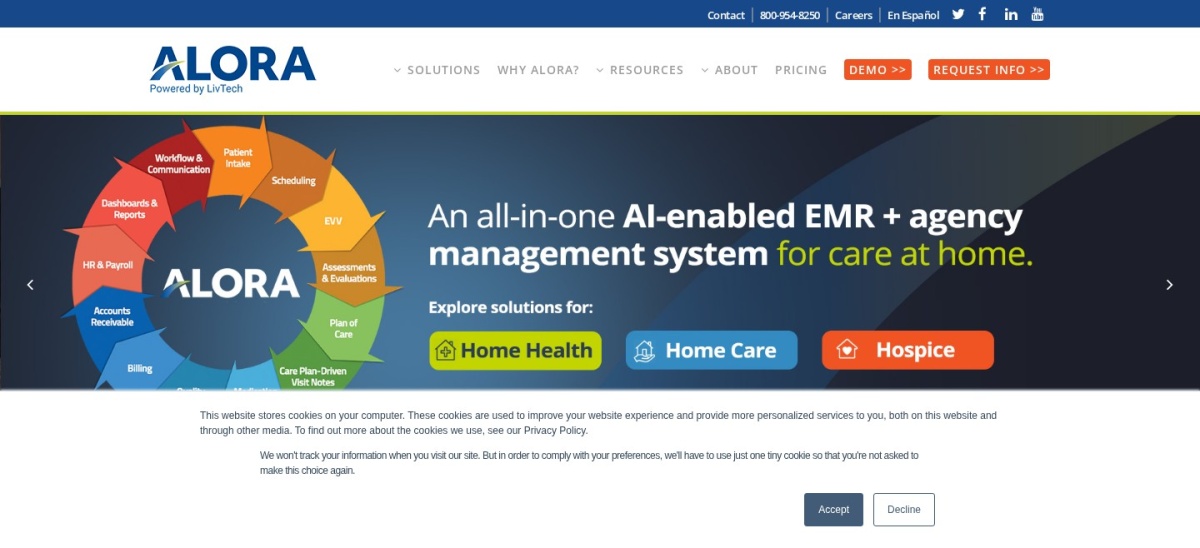
Alora is an all-in-one EMR and agency management system for home health, home care, hospice and pediatric agencies. It covers scheduling, EVV visit verification, clinical documentation with OASIS forms, and billing for all payers including Medicare and Medicaid, starting at $295 a month flat with a free trial.
The trade off is setup. One reviewer reports a $1,700 setup fee, and EVV exceptions can take staff time to clear, so get setup and training costs in writing before you sign. It suits small and mid-size agencies that want one system for clinical work, scheduling and billing.
What we like
Scheduling, EVV, billing and OASIS in one system
Published $295-a-month flat price with a free trial
AxisCare is a web-based scheduling and management system for non-medical personal care and Medicaid agencies. It covers real-time scheduling, a GPS mobile app with EVV, hospitalization tracking, medication reminders, payment processing and custom reporting, starting at $325 a month.
The trade off is price and scope. Plans are priced by agency size, smaller agencies call the cost steep, and add-ons such as texting cost extra, while clinical documentation is not its focus. It suits personal care agencies that bill Medicaid or VA and want strong scheduling and billing in one place.
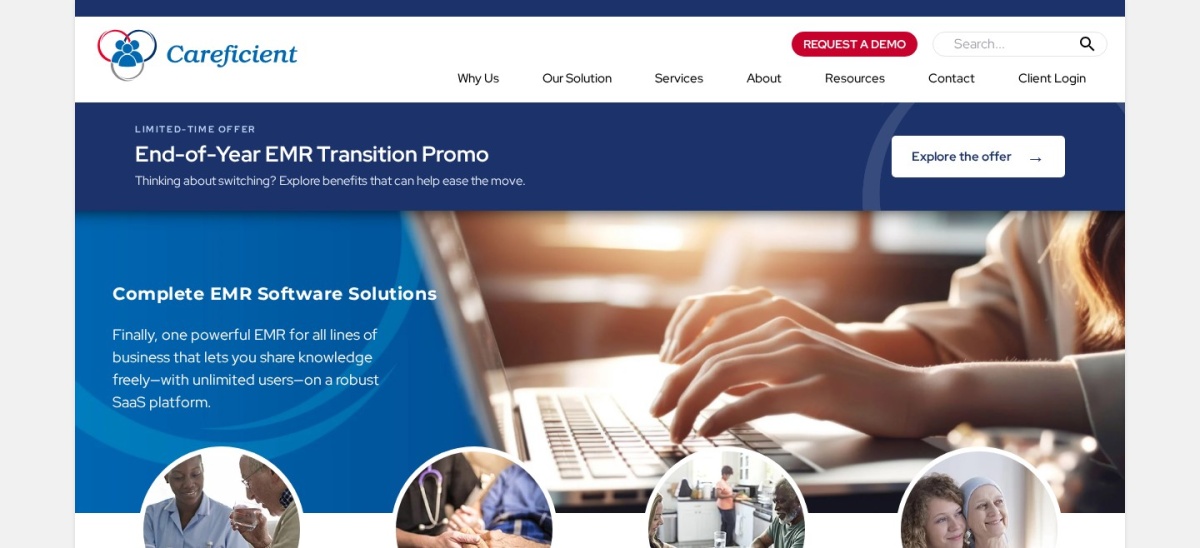
Careficient is a web-based EHR for hospice, home health, therapy and private duty agencies. It covers patient charting, scheduling, invoicing, payroll, EVV and OASIS forms in one system, with real-time eligibility checks, starting at $995 a month, and its homepage lists unlimited users.
The trade off is setup and reporting. Reviewers call setup cumbersome and report customization limited, and the app can lag, so budget time for onboarding. It suits agencies running hospice or home health that want charting, billing and payroll in one place.
Axxess is a cloud-based EMR used by more than 7,000 home health, hospice and personal care organizations. It covers documentation, scheduling, billing, payroll and GPS-based EVV under one login, with a mobile app that works offline, and pricing is by custom quote only.
The trade off is that breadth brings complexity. Smaller agencies report a learning curve, support waits can be long, and with no published price you cannot budget without a sales call. It suits growing agencies running more than one service line that want a single vendor.
What we like
One login for home health, hospice and personal care
More than 7,000 organizations use it
Offline-capable mobile app for field staff
40+ integrations
Watch out for
No published pricing
Learning curve for smaller agencies
Reviewers report slow support waits and price increases
AlayaCare is an end-to-end home care platform for mid-size and larger agencies. It covers scheduling, client records, documentation and configurable workflows in one system, with a Basic plan listed at $1,000 a month on G2.
The trade off is cost and reporting. Reviewers report subscription increases, and several describe data exploration as hard, so check the renewal terms and test reporting in the demo. It suits larger agencies that want configurable workflows across many teams and locations.
What we like
Configurable workflows across teams and locations
Centralized scheduling, client records and documentation
MatrixCare is a post-acute EHR for home health and hospice agencies. It covers point-of-care documentation, scheduling and billing in one system, with telehealth and remote monitoring through its HRS integration and claims scrubbing through Inovalon, priced by custom quote.
The trade off is customization and learning. Reviewers flag limited report customization and a documentation learning curve, and upgrade fees can appear as patient volume grows. It suits agencies that want strong interoperability with hospitals and outside clinical data.
What we like
All-in-one documentation, scheduling and billing
Telehealth and remote monitoring integrations
Strong interoperability with outside clinical data
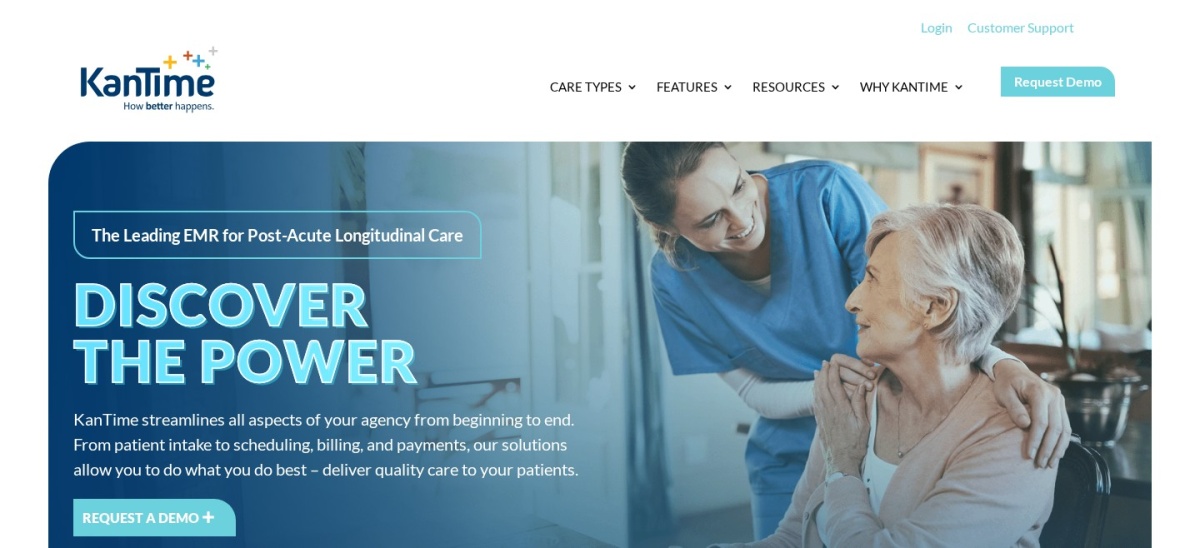
KanTime is a web-based EHR for home health, hospice and private duty agencies. It covers patient intake, scheduling with skill-based matching, licence expiry alerts, billing and payments, and holds HITRUST and SOC 2 security certifications, priced by custom quote.
The trade off is implementation. One reviewer reports a three-month rollout stretching past eight months, and the many configurable features make the first months dense. It suits growing mid-size agencies that want responsive support and strong scheduling automation.
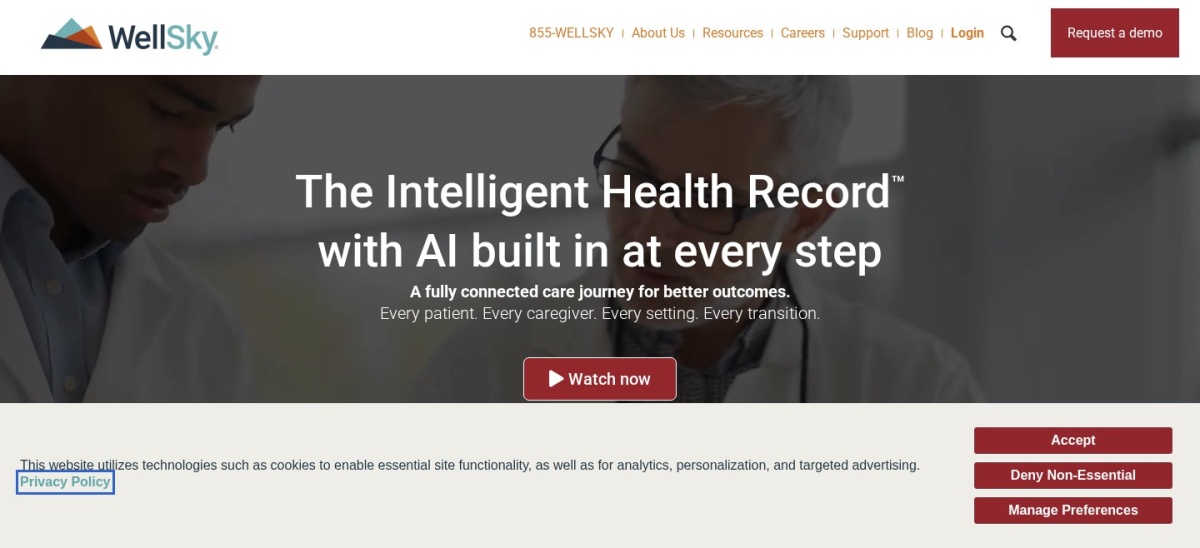
WellSky Home Health is a web-based EHR for home health agencies. It covers clinical documentation, scheduling, claims, reporting and analytics in one platform, including CareInsights hospitalization-risk prediction, and pricing is by custom quote only.
The trade off is support and value. Reviewers praise ease of use but report slow support responses, incomplete reporting and cost concerns for the features delivered. It suits agencies already using WellSky products that want one vendor across care settings.
What we like
CareInsights hospitalization-risk prediction
One vendor across home health and other care settings
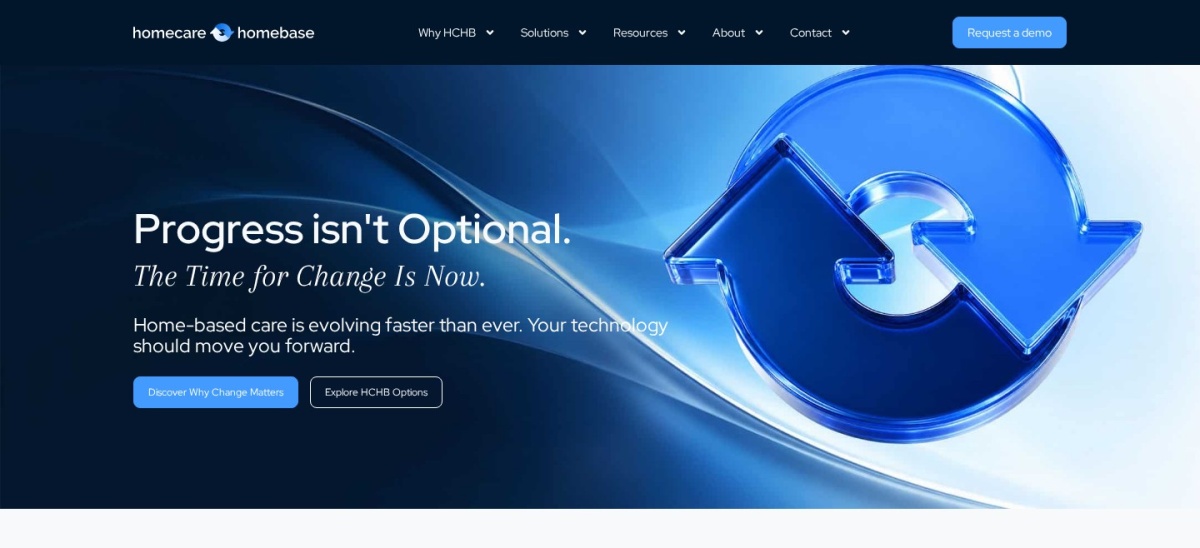
Homecare Homebase is an enterprise EHR for home health, hospice, personal care and private duty providers. It covers scheduling, documentation, billing and compliance reporting at large census, with implementations that run for months, and pricing is by custom quote only.
The trade off is the daily feel. Reviewers call the interface dated and report duplicated documentation entry, slow load times and a steep learning curve. It suits large agencies that need deep billing and compliance reporting and can fund a long rollout.
Ask every vendor for the same all-in monthly number, including add-ons, EVV, clearinghouse fees and support, so quotes compare like with like.
Check what happens when census grows. Several vendors charge tier-jump fees as patient volume rises, and reviewers report price increases at renewal.
Get implementation in writing too. Rollouts in this market run from weeks for small agencies to months for enterprise systems, and one KanTime reviewer reports a three-month plan stretching past eight months.
How we chose
We started from the home health and home care platforms with the most reviews on Capterra and G2, then kept the nine with a live product, a real user base and a rating we could verify.
Prices come from vendor listings on G2 and Capterra, checked on 25 November 2026. Ratings come from Capterra or G2 on the same day. Where a vendor publishes no price, the list shows a custom quote instead of a third-party estimate.
We left out tools with no public rating and tools built only for hospice. No vendor paid for a place, and we do not claim hands-on testing for this list.
How to choose home healthcare software
Start with the care you deliver, then match the software to it.
Match the tool to your service lines. Medicare home health needs OASIS and PDGM billing; personal care needs EVV and Medicaid billing. A tool built for one will not cover the other well.
Ask for the all-in monthly price in writing. Get setup, training, EVV, clearinghouse and support fees in one number, plus the price at 20% more census.
Check the rating sample, not just the score. A 4.6 from 729 reviews means more than a 4.5 from 60. Read the one-star reviews for support and billing complaints.
Run a demo with your own workflows. Bring a real referral, a real visit note and a real claim to the demo, and watch how many clicks each takes.
FAQ
What is the best home healthcare software?
Alora is the best pick for most agencies. It starts at $295 a month flat, covers scheduling, billing, EVV and OASIS documentation, and holds a 4.5/5 Capterra rating from 160 reviews.
How much does home healthcare software cost?
Published prices here run from $295 a month for Alora to $1,000 a month for AlayaCare. Five of the nine tools publish no price, so expect a custom quote based on census, service lines and add-ons.
Is there free home healthcare software?
No tool on this list has a free plan. Alora and AxisCare list a free trial, and every other tool sells by demo and custom quote, so plan for a paid subscription from the start.
What is the difference between home health and home care software?
Home health software handles Medicare-certified skilled care, with OASIS documentation and PDGM billing. Home care software covers non-medical personal care, with scheduling, EVV and Medicaid billing, and usually no clinical documentation.
Do I need EVV in home healthcare software?
Yes, if you bill Medicaid. Most states require electronic visit verification for personal care visits, and all nine tools here cover EVV in some form, so check that it works with your state's system before you buy.
How long does it take to switch home healthcare software?
Small agencies can onboard in weeks, while enterprise systems take months. KanTime reviewers report rollouts stretching past eight months, so ask for the implementation plan, training hours and data migration costs in writing.
SaaS SEO and WordPress specialist with about 8 years of experience. Rakib compares WordPress plugins, themes, hosting and software using public pricing, documentation and user reviews. See how we rank.