Monarch is the best home finance software for most households, with budgets, net worth and investments in one dashboard for $99.99 a year. Pick YNAB for strict zero-based budgeting, or Quicken Classic if you want desktop software with deep investment records.
How we make this list: we compare pricing pages, product documentation and public user reviews, then re-check every price before each update. No product paid for a place. Disclosure.
Monarch is the best all-round pick: budgets, net worth and investments in one dashboard for $99.99 a year.
YNAB is the strongest method, with zero-based budgeting at $109 a year and sharing for up to six people.
Quicken Classic Deluxe costs $83.88 a year at the regular rate and still leads for long histories and investment records.
Simplifi is the cheapest capable all-rounder at $83.88 a year regular, with a first-year price of $3.99 a month.
Three tools have a genuinely useful free plan: PocketSmith, EveryDollar and Rocket Money.
What home finance software should cover
Home finance software has one job: show where the money goes and what is left. The best tools link bank, card, loan and investment accounts, then sort each transaction into categories you can read at a glance.
Budgeting style matters more than feature count. Some tools assign every dollar a job before the month starts, while others track spending after the fact and show a forecast. Our guide on budgeting for a WordPress website covers the same habit of planning before spending, applied to a site budget.
Watch the price shape, not just the headline. Several tools in this list charge monthly but bill annually, and a few show a low first-year price that rises at renewal. This list shows the regular price in every case.
Ratings in this niche are thin. Most of these apps are consumer products, so G2 and Capterra hold only a handful of reviews each, and a few tools have no listing there at all. Treat a rating from three reviews as a hint, not a verdict.
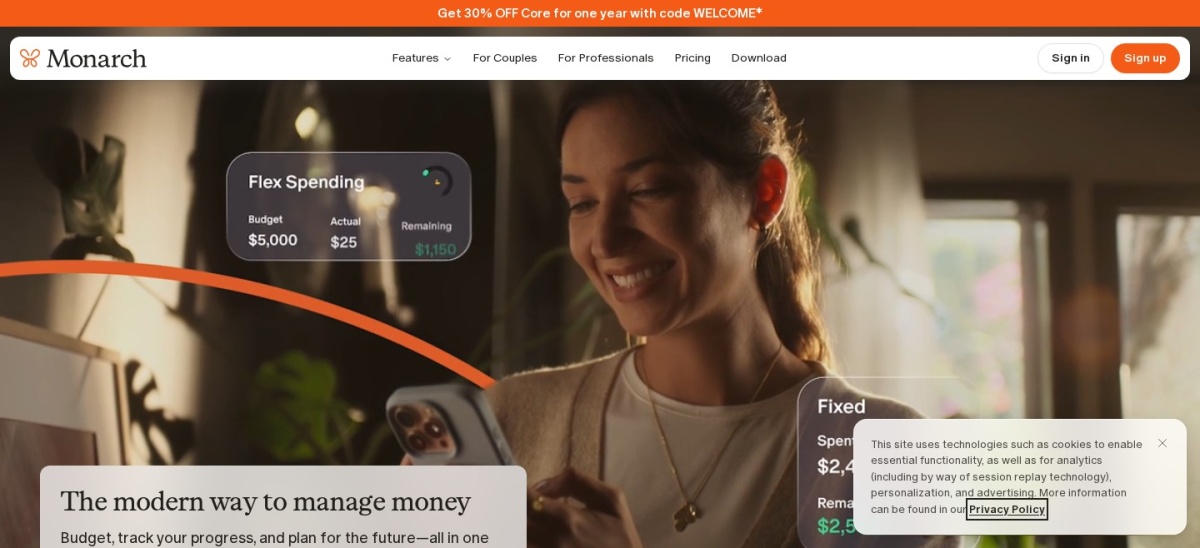
Monarch is a household dashboard that puts budgets, cash flow, net worth and investments in one place. Core costs $99.99 a year or $14.99 a month, with a 7-day trial, and one subscription covers both partners, each with their own login.
The trade off is price. Core is $99.99 a year, and Plus costs $199.99 a year for forecasting and business tracking that most households will not need. It suits couples and families who want one shared view of all their money.
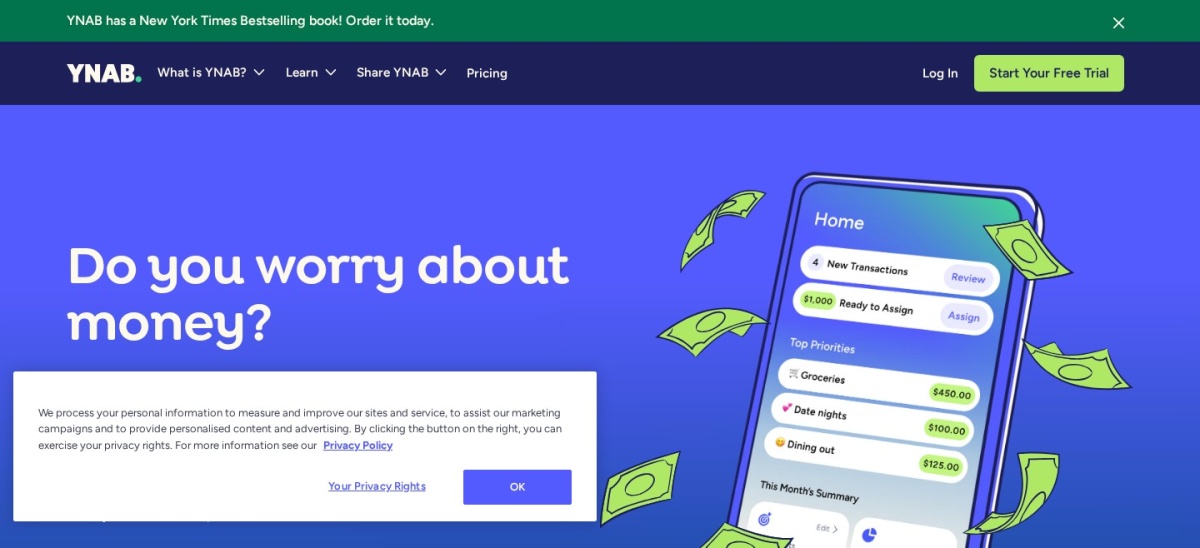
YNAB is a budgeting method with an app attached: give every dollar a job before you spend it, then move money between categories when plans change. It costs $109 a year or $14.99 a month, after a 34-day trial, and one subscription can be shared with up to six people.
The trade off is effort. The method needs a weekly check-in and has a real learning curve, and bank connections sometimes need reconnecting. It suits households that overspend or live paycheck to paycheck and are ready to plan each dollar.
What we like
Strongest budgeting method in this list
Targets and loan payoff planning included
One subscription covers up to six people
Watch out for
No free plan after the trial
Needs a weekly check-in to pay off
Learning curve in the first month
Monthly billing costs $14.99 a month instead of $109 a yearVisit ynab.com
03
Quicken Classic
4.3/5on G2 (76 reviews, checked Nov 2026)
Starts at$83.88/yr
Best for long histories and investments
PlatformWindows and Mac
Bank connections14,000+
Investment trackingYes, Deluxe
Money-back guarantee30 days
quicken.com
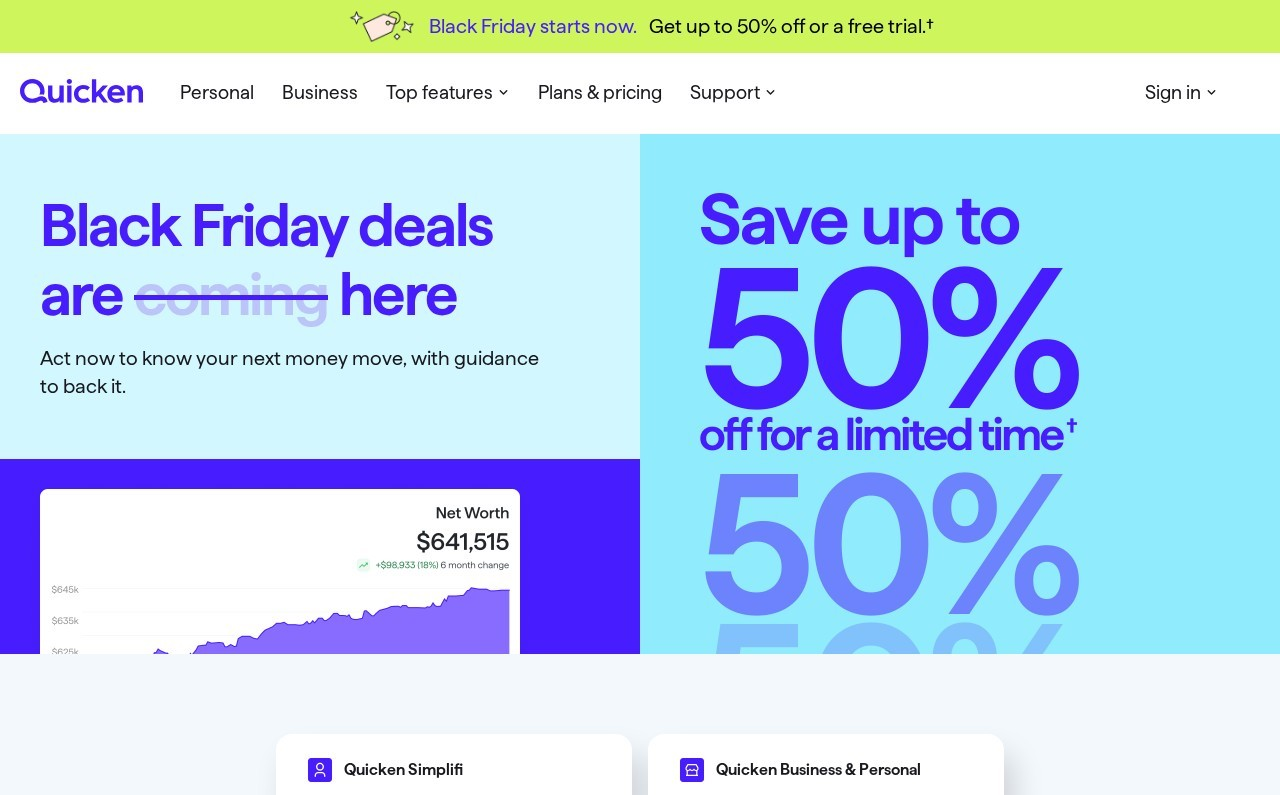
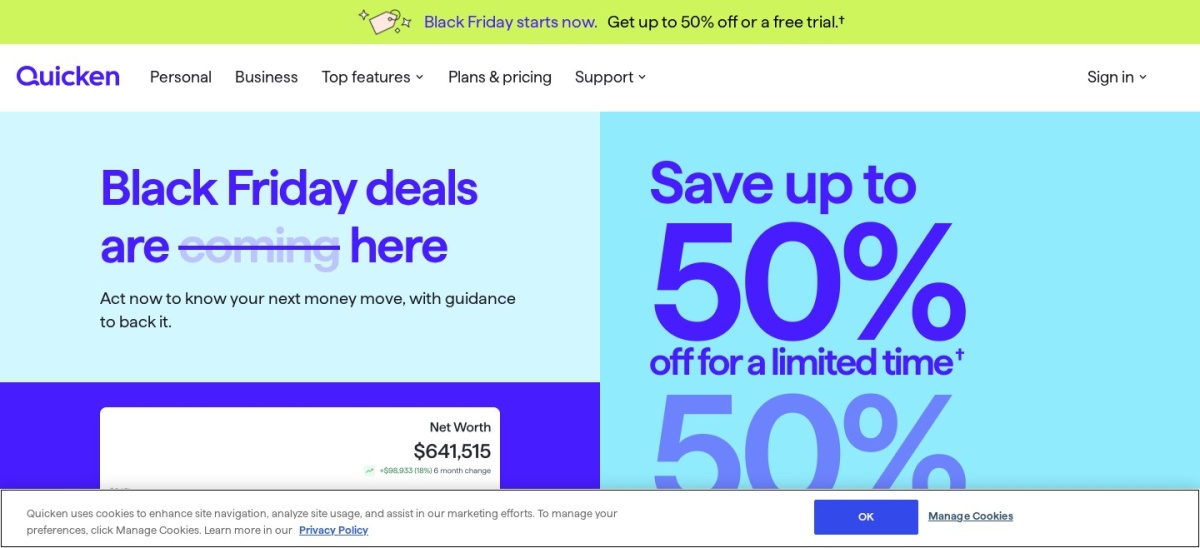
Quicken Classic homepage, captured Nov 2026.
Quicken Classic is desktop software for Windows and Mac that keeps your data file on your own computer. Deluxe costs $83.88 a year at the regular rate ($6.99 a month billed annually), with first-year promos lower, and adds investment tracking, debt tools and reports to the Starter plan.
The trade off is that it is a subscription now, not a one-time purchase, and the interface feels dated next to the cloud apps. It suits people with years of financial history, rental property or detailed investment records to keep.
4.5/5on App Store (11,811 reviews, checked Nov 2026)
Starts at$83.88/yr
Best value all-rounder
Spending PlanYes
Cash-flow forecast12 months
Bank connections14,000+
Free trial7 days
quicken.com
Simplifi by Quicken homepage, captured Nov 2026.
Simplifi by Quicken is Quicken's cloud app, built around a Spending Plan that subtracts bills, subscriptions and savings from your income, then shows what is safe to spend. The regular price is $6.99 a month billed annually ($83.88 a year), with the first year at $3.99 a month.
The trade off is that there is no free plan and billing is annual only, so you pay the full year up front. It suits hands-off budgeters who want a plan built for them, plus investment and subscription tracking in the same app.
What we like
Lowest regular price among the paid all-rounders
12-month cash-flow forecast included
Supports zero-based, envelope and 50-30-20 styles
Watch out for
No free plan, only a short trial
Annual billing only, no monthly option
Does not integrate with Quicken Classic
First year is $3.99 a month, then the regular $6.99 a monthVisit quicken.com
05
Copilot Money
4.5/5on Capterra (53 reviews, checked Nov 2026)
Starts at$109/yr
Best for Apple households
PlatformsiPhone, iPad, Mac, web
Bank connections16,000+
AI categorizationYes
Free trial1 month
copilot.money
Copilot Money homepage, captured Nov 2026.
Copilot Money is a design-led tracker for iPhone, iPad, Mac and the web, with machine learning that sorts transactions into categories and improves as you correct it. It costs $109 a year or $13 a month, after a one-month trial, and covers spending, budgets, investments and net worth.
The trade off is price and platform. The annual price rose from $95 to $109, there is no free tier, and there is no Android app. It suits Apple households that want automatic tracking with a clean interface.
What we like
Best transaction categorization in this list
Cleanest design, with Apple Design Award recognition
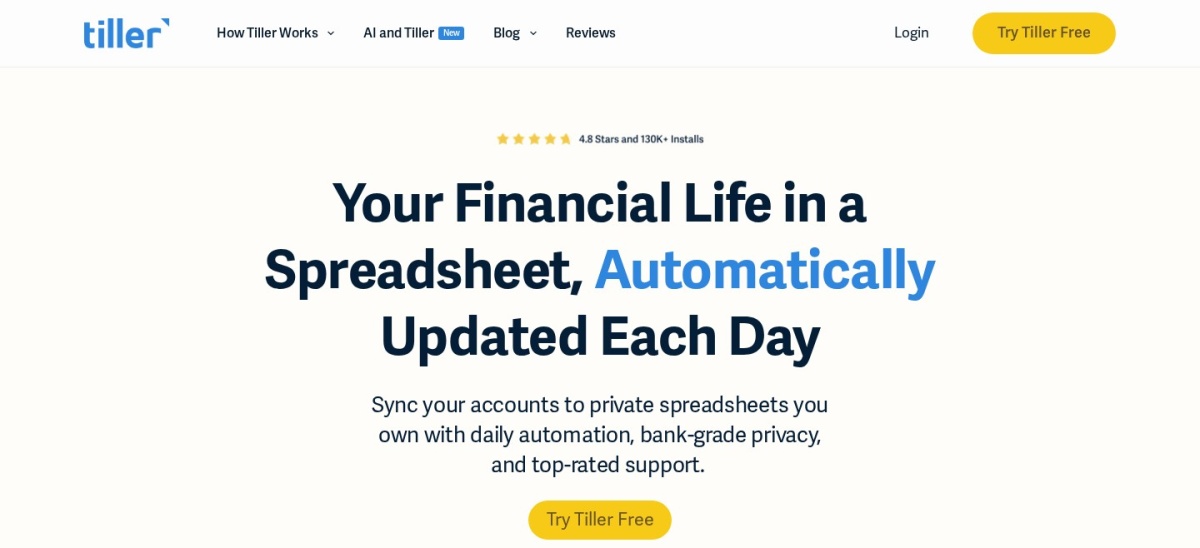
Tiller is a daily bank feed for spreadsheets: it writes new transactions and balances into your own Google Sheets or Excel file each day. It costs $99 a year after a 30-day trial, and includes the Foundation Template, AutoCat rules that categorize by your own rules, and up to five spreadsheets.
The trade off is that there is no mobile app, and setup takes longer than an app that works out of the box. It suits people who already budget in a spreadsheet and only hate typing transactions into it.
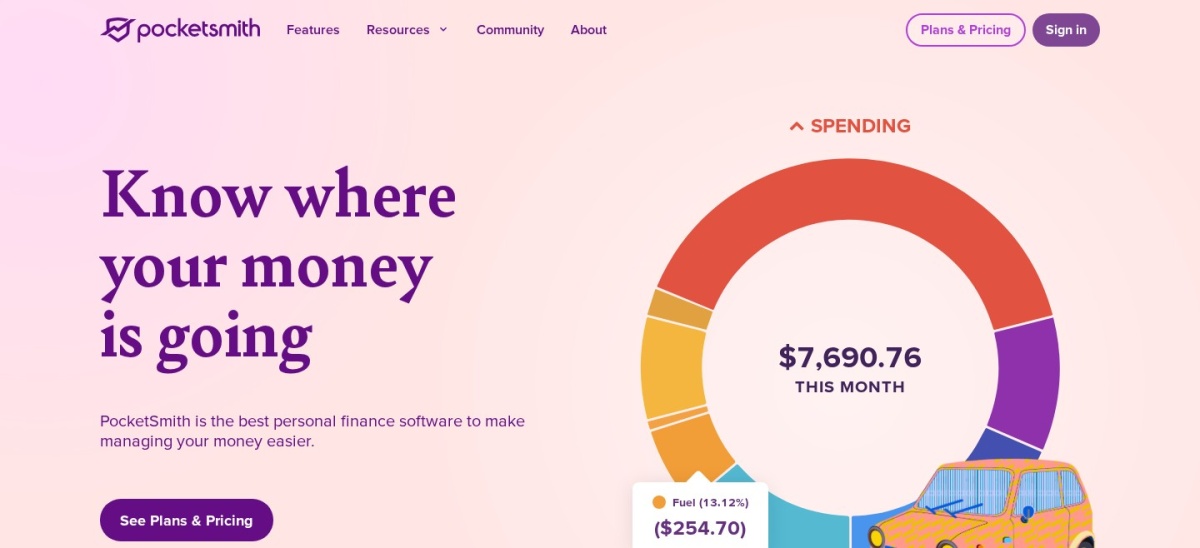
PocketSmith is built around a calendar: schedule paychecks, bills and events on their dates, and it projects your balances forward. The free plan covers two accounts and six months of projections, while Foundation costs $119.88 a year ($9.99 a month billed annually) with a 10-year forecast.
The trade off is cost at the top. Flourish and Fortune cost $199.92 and $319.92 a year, and the Trustpilot rating rests on only 15 reviews. It suits freelancers and planners with irregular income who think in paydays.
4.7/5on App Store (84,000 reviews, checked Nov 2026)
Paid from$79.99/yr
Best free zero-based budget
MethodZero-based
Free planYes, manual entry
Bank syncPremium
Premium price$79.99/yr
everydollar.com
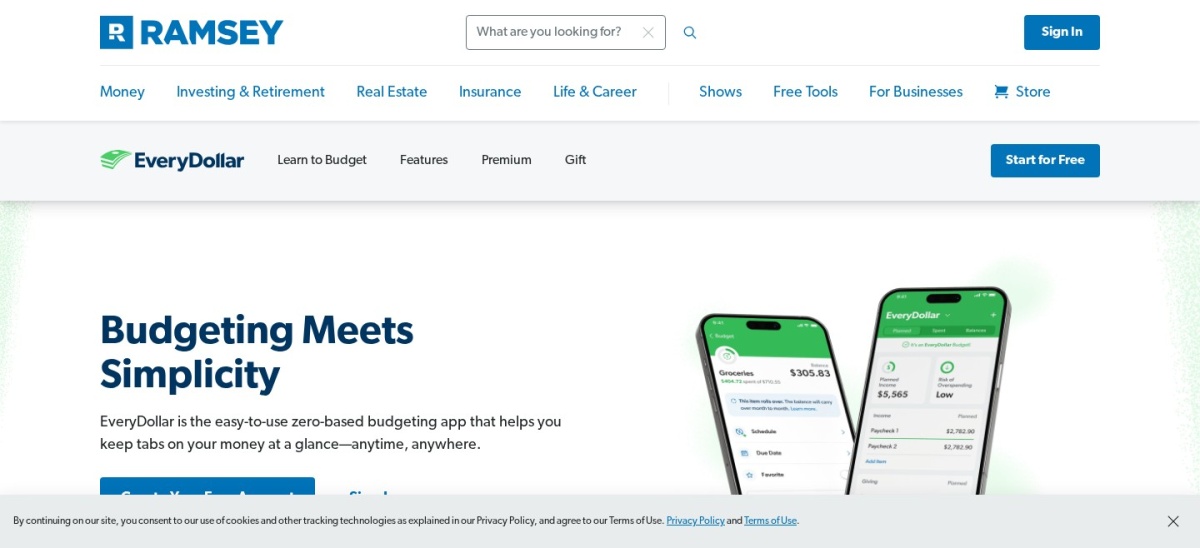
EveryDollar homepage, captured Nov 2026.
EveryDollar is Ramsey Solutions' budgeting app, built around zero-based planning and the Baby Steps debt payoff order. The free version lets you build a monthly budget, add unlimited categories, enter transactions by hand, and set up sinking funds for irregular costs.
The trade off is that bank sync sits in Premium, at $79.99 a year or $17.99 a month, along with paycheck planning, custom reports and coaching. It suits people who already follow the Ramsey approach and want a simple budget to match it.
3.9/5on Trustpilot (4,226 reviews, checked Nov 2026)
Paid from$7/mo
Best for cutting subscriptions
Free planYes
Premium$7–$14/mo, you choose
Bill negotiationPremium+ $15/mo
Trustpilot rating3.9/5
rocketmoney.com
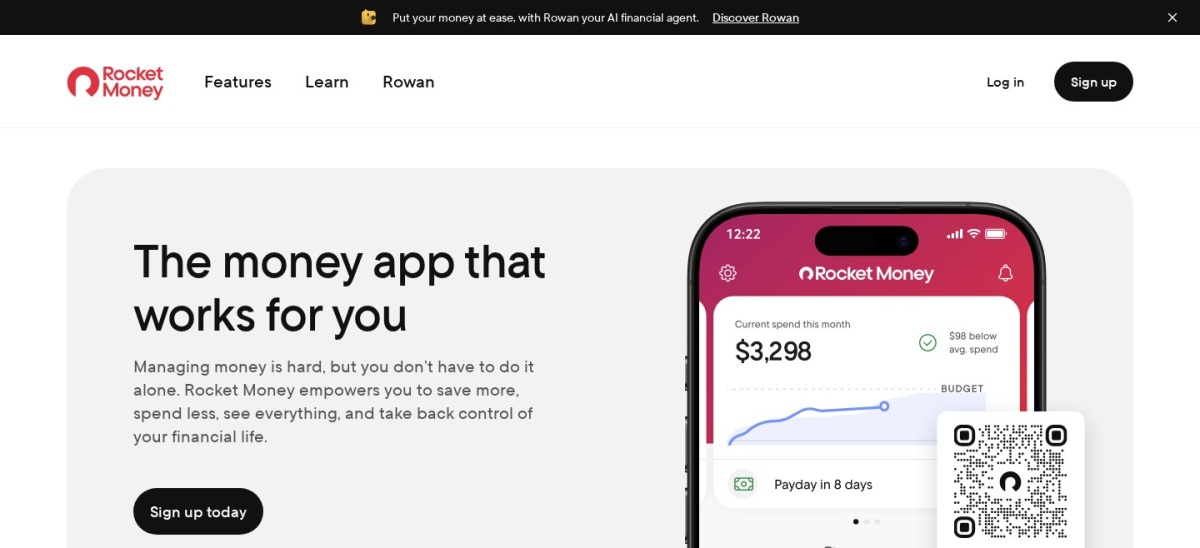
Rocket Money homepage, captured Nov 2026.
Rocket Money is a household finance app built around one habit: finding subscriptions you forgot about. The free plan links accounts, lists recurring charges, tracks spending and sends balance alerts, while Premium adds cancellation help, net worth tracking and unlimited budgets.
The trade off is that Premium has no fixed price: you choose between $7 and $14 a month, and bill negotiation now needs Premium+ at $15 a month. It suits anyone whose main leak is subscriptions and bills, not budgeting method.
Free plans in this list cover the basics well. EveryDollar gives you a full zero-based plan, PocketSmith gives you a calendar forecast, and Rocket Money finds your subscriptions, all without paying.
What free plans do not give you is automatic bank sync. On EveryDollar and PocketSmith, syncing sits in the paid plan, so free users type in each purchase by hand.
Paid plans mostly buy time and depth. You get automatic imports, longer forecasts, investment views and net worth tracking in one place, for $79.99 to $119.88 a year in most cases here.
How we chose
We started from the personal finance apps most often recommended for household budgeting in 2026, then kept the nine that are still sold, still supported, and fit home use rather than business accounting.
Prices come from each vendor's pricing page, checked on 25 November 2026. Monarch, YNAB, Simplifi and Copilot prices were read on their own pages that day; Quicken Classic, Tiller, PocketSmith, EveryDollar and Rocket Money prices come from vendor pages and pricing checks dated November 2026. Ratings come from G2, Capterra, Trustpilot or the App Store, and several rest on very few reviews, which we note in the text.
We left out Empower and Goodbudget because neither has a clean G2, Capterra or Trustpilot rating for the product itself. No vendor paid for a place, and we do not claim hands-on testing for this list.
How to choose home finance software
Start with how much work you will actually do each week, then match the tool to that habit.
Decide if you want a method or a dashboard. Pick YNAB or EveryDollar if you want rules that shape spending, or Monarch, Copilot or Simplifi if you want to see everything in one place.
Check the free plan first. EveryDollar, PocketSmith and Rocket Money all have a free tier. Use it for a full month before paying for bank sync.
Compare the annual price, not the monthly figure. Monthly prices hide the gap: Monarch and YNAB both show $14.99 a month, but their annual plans are $99.99 and $109.
Test your own bank connection during the trial. Link every account on day one. If a connection drops or needs constant re-login, the tool will not save you time.
FAQ
What is the best home finance software?
Monarch is the best all-round pick for most households. It covers budgets, net worth and investments in one dashboard for $99.99 a year, with a partner seat included at no extra cost.
What is the cheapest good home finance app?
Simplifi is the cheapest capable paid app at $83.88 a year at the regular rate, with the first year at $3.99 a month. EveryDollar and Rocket Money also have free plans that cover the basics.
Is YNAB worth $109 a year?
It is worth it if you follow the method. Zero-based budgeting assigns every dollar a job before the month starts, and sharing covers up to six people, but it needs a weekly check-in to work.
Do I need desktop software like Quicken Classic?
Only if you keep long histories or detailed investment records. Cloud apps cover budgeting and net worth for most households, while Classic leads for decades of transactions, rental property and tax reports.
Can I use a free plan instead of paying?
Yes, for simple budgets. EveryDollar gives you a full zero-based plan free, PocketSmith gives you a calendar forecast, and Rocket Money finds subscriptions, but all three charge for automatic bank sync.
Which app is best for couples?
Monarch is the best fit, since one subscription includes a partner seat with separate logins. YNAB also shares with up to six people, and Copilot is adding team access for up to three people.
SaaS SEO and WordPress specialist with about 8 years of experience. Rakib compares WordPress plugins, themes, hosting and software using public pricing, documentation and user reviews. See how we rank.