Hybrent is the best healthcare supply chain software for most facilities, rated 4.8 out of 5 on Capterra from 65 reviews, with purchasing, inventory and invoicing in one place from $475 a month. Pick Tecsys for hospital point-of-use inventory and SAP Ariba for large enterprise procurement.
How we make this list: we compare pricing pages, product documentation and public user reviews, then re-check every price before each update. No product paid for a place. Disclosure.
Hybrent is the only tool here with a published starting price, $475 a month on Capterra, and the highest rating at 4.8 out of 5 from 65 reviews.
Tecsys leads on clinical inventory, with lot and expiry tracking and point-of-use replenishment, rated 4.7 out of 5 on G2.
SAP Ariba has the most reviews in this list by far, 831 on G2 at 4.1 out of 5, but buyers should plan for a 6-month implementation.
Seven of the nine tools publish no price and sell on quote only, so budget for a sales-led process and a demo before shortlisting.
Workday, Oracle and Infor suit health systems that want supply chain inside a wider ERP, not a standalone tool.
What healthcare supply chain software should cover
Hospitals lose money when supplies run out, expire or sit unused. A supply chain platform tracks what is on the shelf, what each procedure uses and what needs ordering, so clinical teams stop hunting for stock.
The tools in this list fall into two groups. Healthcare-specific tools such as Hybrent, Tecsys and JumpStock focus on purchasing and point-of-use inventory, while ERP suites such as Workday, Oracle and Infor put supply chain beside finance and HR.
Price is the hardest part to compare. Only Hybrent publishes a starting price, at $475 a month. Our guide on managing inventory in WooCommerce covers the basics of stock control, but expect a sales-led process and a demo here.
Ratings are thin for this niche. Most tools here have fewer than 25 public reviews, and the notes under each tool say which product profile its rating comes from. Treat the scores as a starting point, not a verdict.
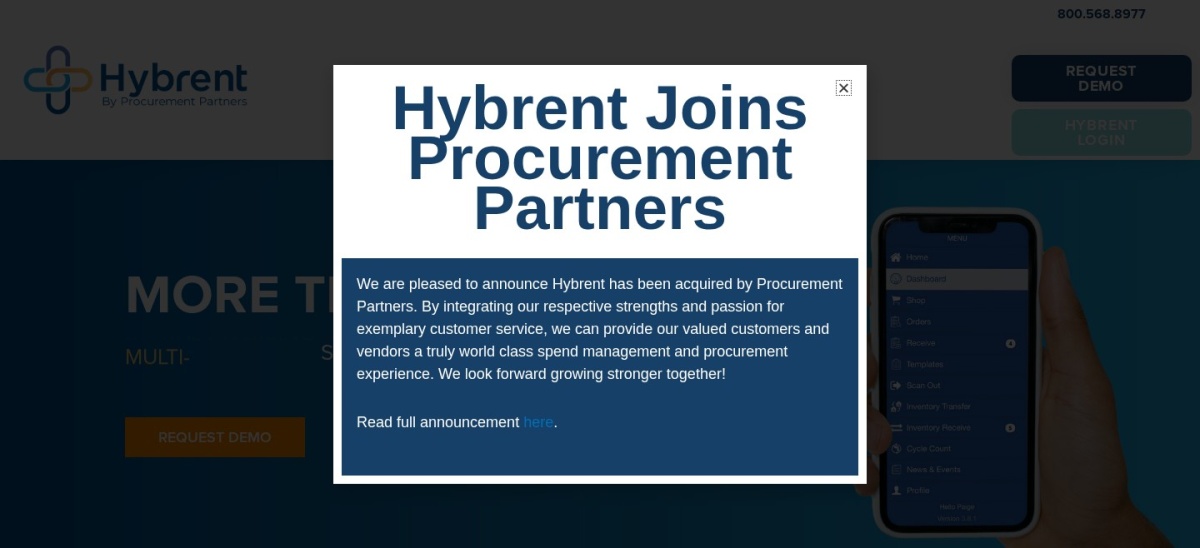
Hybrent is a cloud platform for healthcare purchasing, inventory management and invoicing, built for ambulatory surgery centers, physician offices and small hospitals. It lets teams shop all suppliers on one site, comparison shop, set min/max/par levels, track inventory by serial number, lot number and expiry date, and automate 3-way invoice matching.
The trade off is scale. Hybrent is aimed at non-acute and smaller facilities, and its $475 a month starting price is a list figure that can rise with facilities and volume. It suits ASCs, clinics and critical access hospitals that want one simple system instead of a full ERP.
What we like
Healthcare-only focus, not a generic ERP
Comparison shopping across suppliers in one place
Lot and expiry tracking with min/max/par levels
Automated 3-way invoice matching
Watch out for
Aimed at smaller facilities, not large health systems
Starting price can rise with facilities and volume
No published price for multi-facility groups
The $475 a month starting price covers the core platformVisit hybrent.com
02
Tecsys Elite Healthcare
4.7/5on G2 (3 reviews, checked Nov 2026)
PricingCustom/yr
Best for hospital point-of-use inventory
G2 rating4.7/5 from 3 reviews
Point-of-use inventoryYes
Lot and expiry trackingYes, with FEFO
PricingQuote only
tecsys.com
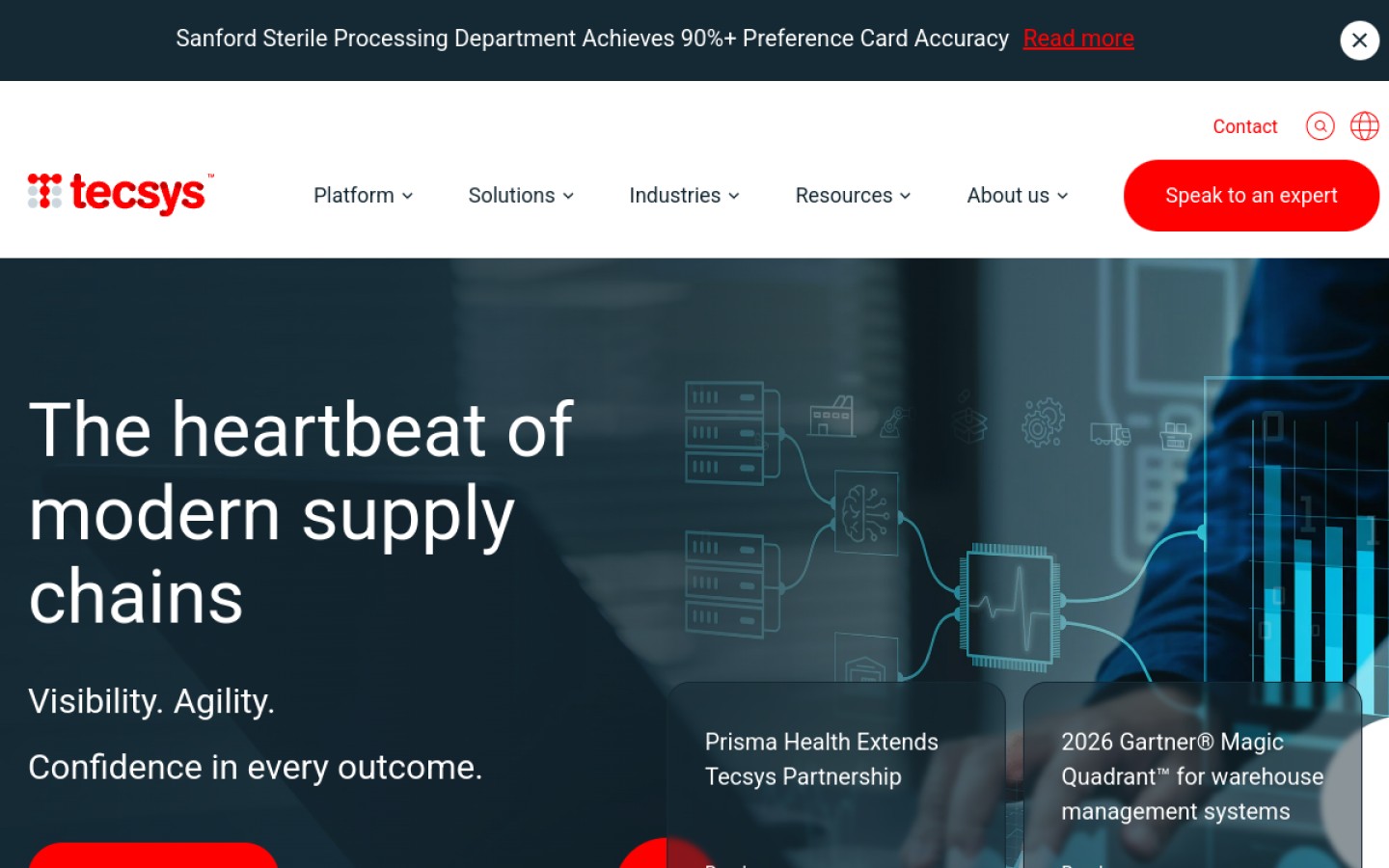
Tecsys Elite Healthcare homepage, captured Nov 2026.
Tecsys Elite Healthcare is a supply chain platform for hospitals and health systems, covering warehouse management, point-of-use inventory, procurement and distribution. It supports scan-based lot and expiry transactions, case costing and traceability from the warehouse to the procedure room, with serialized DSCSA support for drug compliance.
The trade off is evidence and effort. Only 3 G2 reviews sit behind the 4.7 rating, and Tecsys is an enterprise platform that needs a serious implementation project. It suits multi-site hospitals that need tight control of clinical inventory and expiry dates.
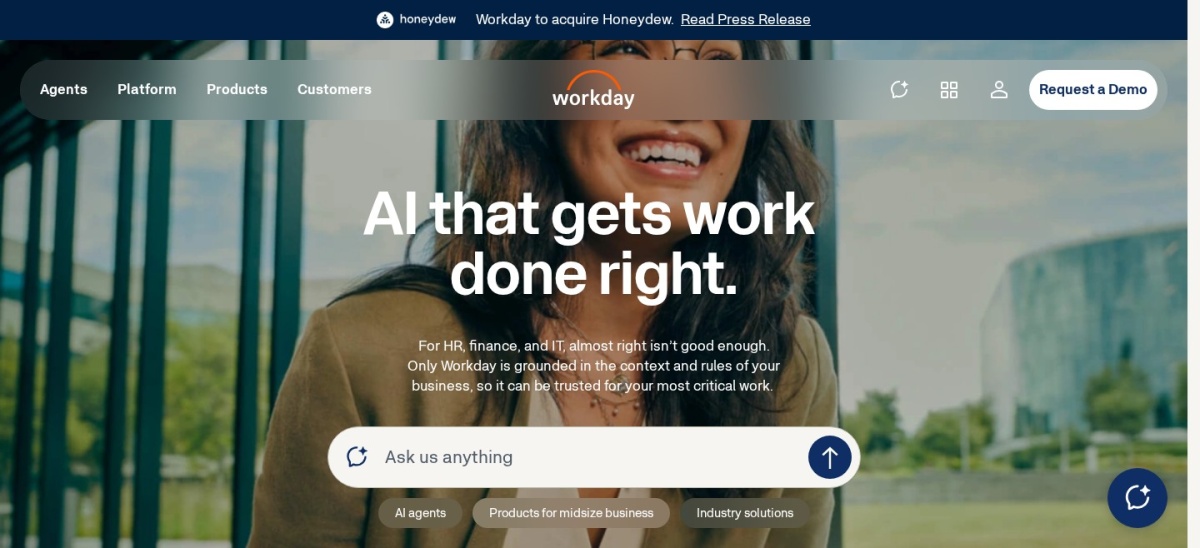
Workday Supply Chain Management homepage, captured Nov 2026.
Workday Supply Chain Management is the supply chain arm of Workday's cloud platform, covering sourcing, procurement, supplier management, contracts, inventory and analytics. It runs in the same system as Workday Finance and HR, so a health system can run purchasing, budgets and reporting without a separate ERP.
The trade off is scope. The 4.3 G2 rating covers Workday Spend Management from 19 reviews, and the platform fits best where Workday already runs finance. It suits large health systems consolidating supply chain and finance on one platform.
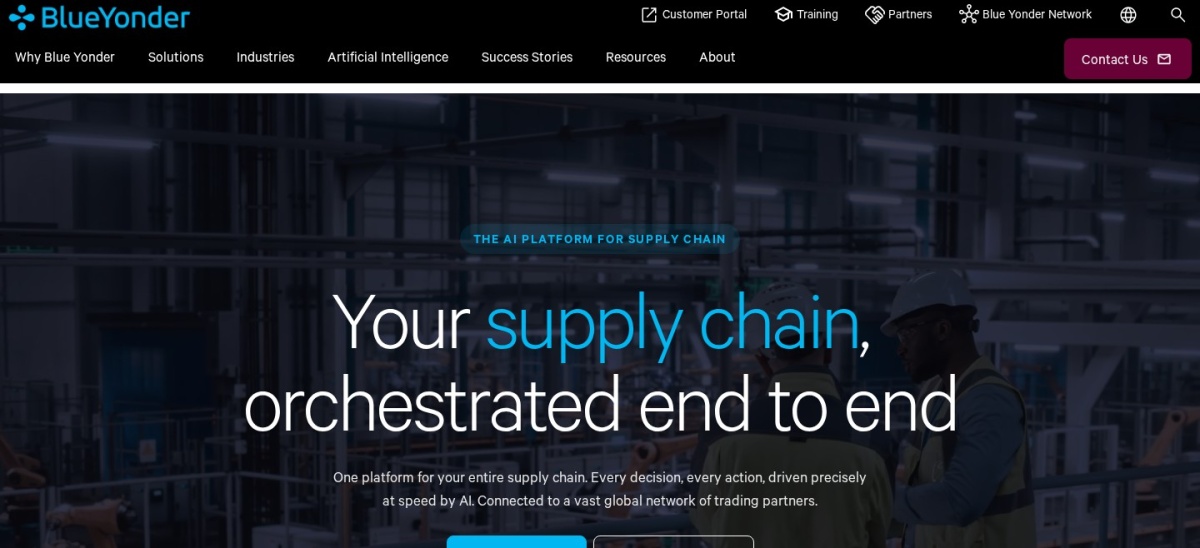
Blue Yonder Warehouse Management homepage, captured Nov 2026.
Blue Yonder Warehouse Management is a cloud-native warehouse platform used for inventory control, inbound and outbound operations and order fulfillment. It covers picking, packing and shipping with RF screens and workflow automation, and it plugs into wider supply chain planning for large distribution operations.
The trade off is focus. Blue Yonder is a warehouse system first, not a healthcare purchasing tool, and reviewers call the interface busy and customization hard. It suits health systems with large central warehouses and distribution centers.
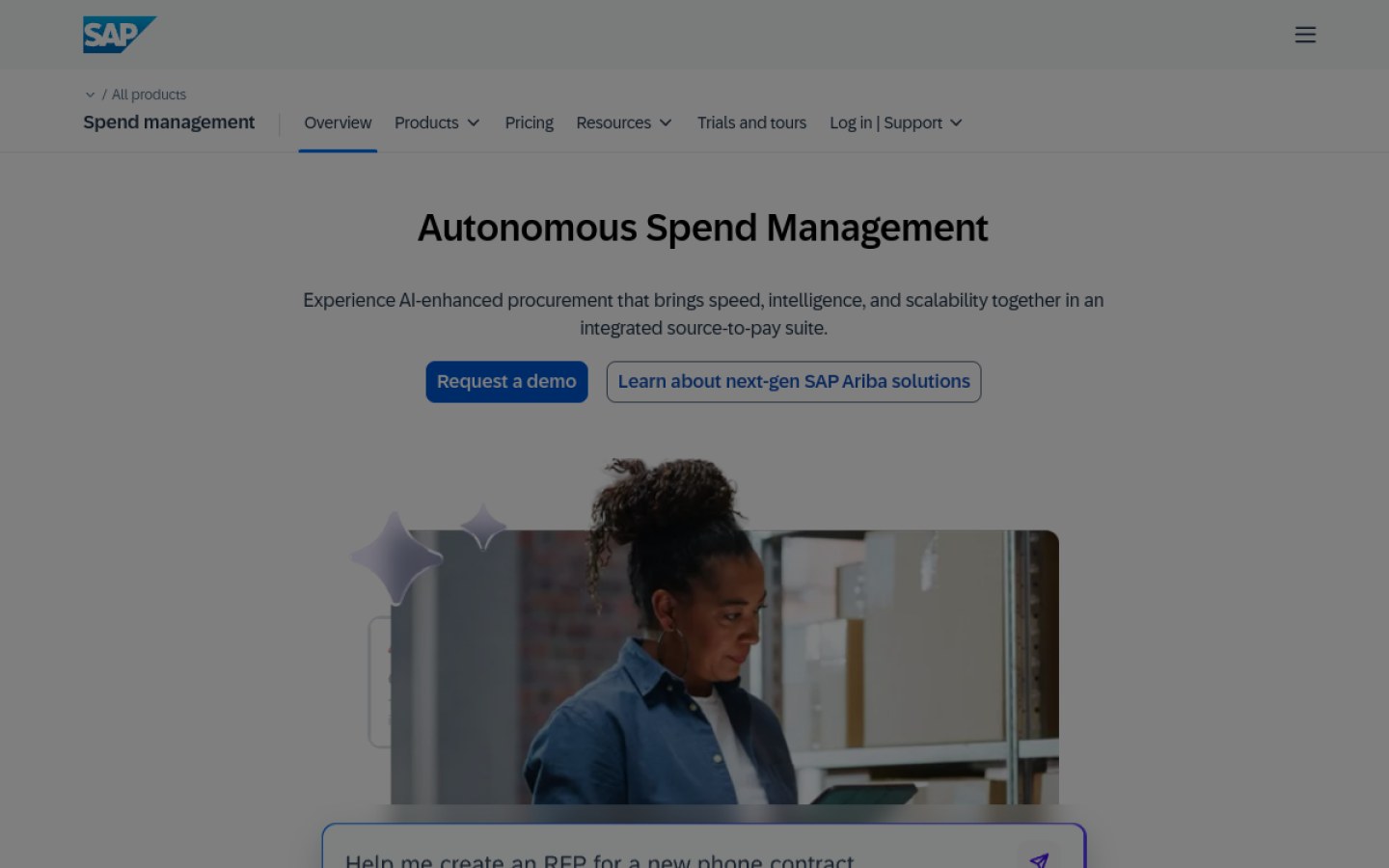
SAP Ariba is SAP's source-to-pay platform, covering sourcing, contracts, guided buying, purchase orders, invoicing and supplier management in one suite. It centralizes procurement for large organizations, with approval workflows, spend visibility and supplier collaboration, and it connects to SAP ERP systems.
The trade off is weight. G2 reviewers report a typical implementation of 6 months, and the interface can feel complex for new users. It suits large health systems that already run SAP and need governed, high-volume procurement.
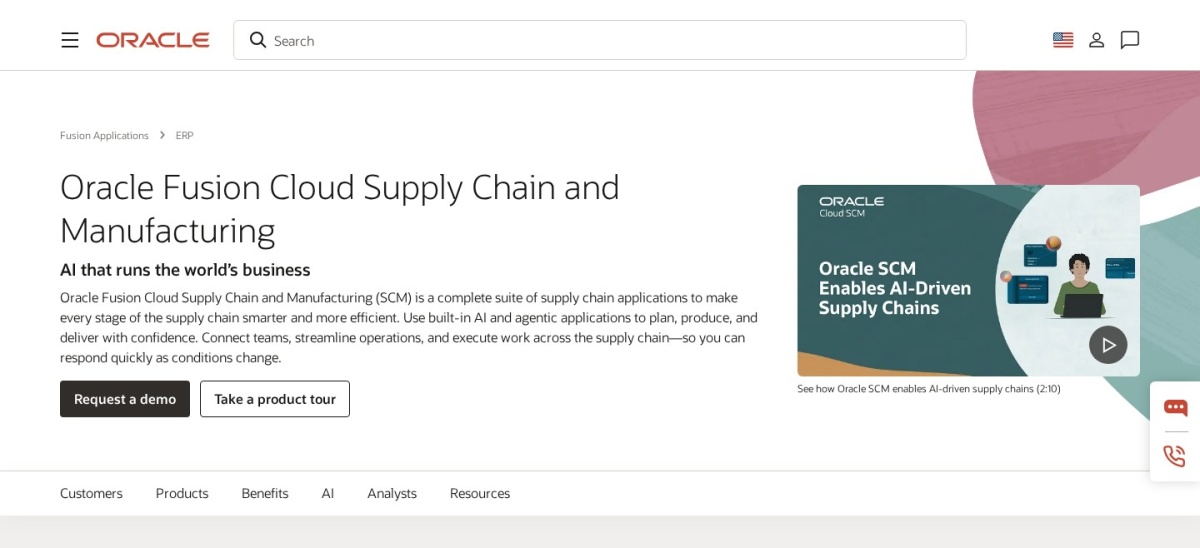
Oracle SCM Cloud is the SCM suite inside Oracle Fusion Cloud, covering planning, inventory, procurement, manufacturing and logistics. It adds built-in AI and agentic applications to plan, produce and deliver, and it shares data with Oracle's finance and HR modules in one cloud system.
The trade off is complexity. Oracle SCM is a broad enterprise suite, and reviewers note integrations can be hard to set up. It suits large health systems already on Oracle Fusion that want supply chain beside finance.
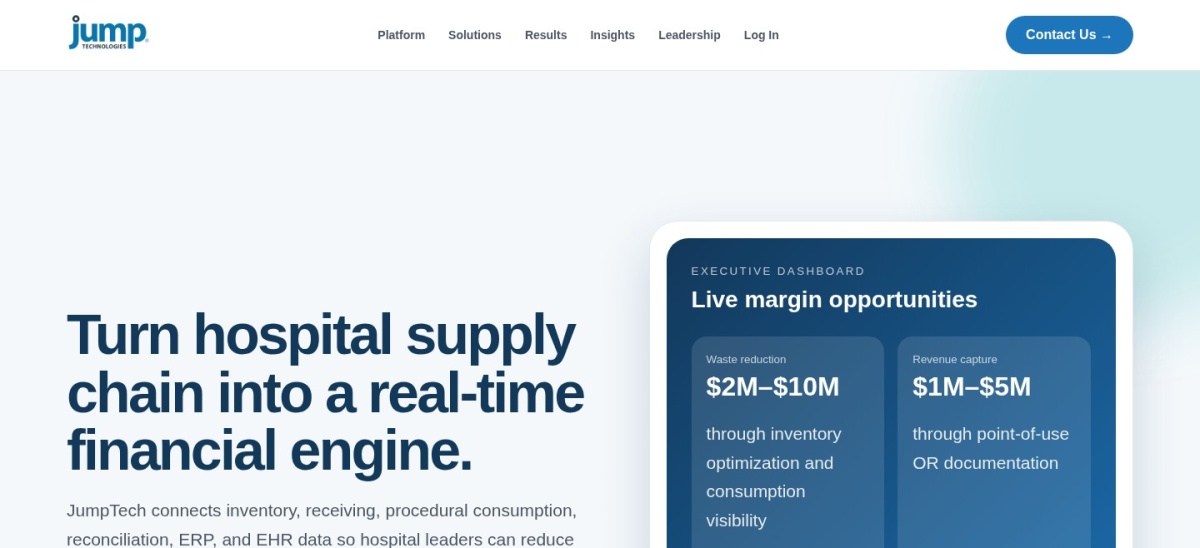
JumpStock is Jump Technologies' platform for hospital point-of-use inventory, connecting stock, receiving, procedural consumption, reconciliation, ERP and EHR data. It tracks supplies by barcode, automates reordering, and gives leaders a live view of what each procedure actually consumes.
The trade off is depth of proof. The G2 rating rests on 12 reviews, and JumpStock focuses on the point of use rather than full procurement. It suits hospitals that want to cut waste at the procedure level without replacing their ERP.
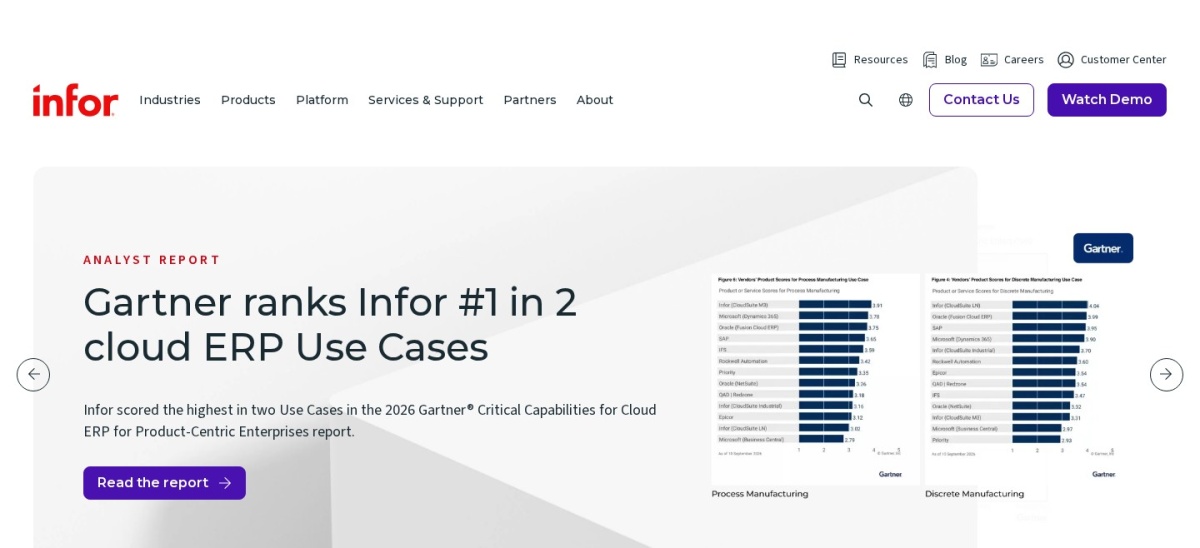
Infor CloudSuite Healthcare homepage, captured Nov 2026.
Infor CloudSuite Healthcare is an industry cloud suite for healthcare organizations, covering supply chain, finance and HR in one system. It is built on AWS with healthcare workflows and terminology already configured, and it links inventory and procurement to financials and workforce data.
The trade off is usability. The 3.8 G2 rating is the lowest in this list, and reviewers call reports hard to customize and setup specialist-heavy. It suits health systems already running Infor that want one healthcare ERP.
symplr Supply Chain Suite homepage, captured Nov 2026.
symplr Supply Chain Suite is a healthcare contract and value analysis platform, covering contract management, supplier performance and new product decisions. It sits beside symplr Access for vendor credentialing, so hospitals can manage who supplies them and on what terms in one place.
The trade off is narrow scope. symplr is about contracts and suppliers, not warehouse inventory, and its 3.7 G2 rating comes from 12 reviews of symplr Contract. It suits hospitals that need contract control and value analysis beside their main ERP.
Seven of the nine tools in this list publish no price. Enterprise supply chain software is almost always sold on quote, priced by facilities, users and modules.
Ask every vendor the same questions: what is included in the base price, what costs extra per facility, and what implementation and training cost. Get the answers in writing before you compare.
Hybrent is the exception, with a published starting price of $475 a month on Capterra. Use it as a floor for budgeting, not as a promise, since multi-site pricing is quoted.
How we chose
We started from the healthcare supply chain tools most often named for hospitals and health systems, then kept those with a public rating on G2 or Capterra and a live homepage.
Prices and ratings were checked on 25 November 2026. Hybrent's $475 a month starting price comes from Capterra, and every other tool in this list publishes no price, so we record it as quote only rather than guessing.
We left out GHX and McKesson SupplyManager, the two best-known names in this niche, because neither has a public rating on G2, Capterra or Trustpilot. No vendor paid for a place, and we do not claim hands-on testing for this list.
How to choose healthcare supply chain software
Start with the job you need done, not the vendor list, then match the tool to your size.
Decide whether you need purchasing or warehouse control. Healthcare-specific tools cover ordering and point-of-use stock. Warehouse platforms cover central stores and distribution. Pick the job first.
Check what your ERP already does. If you run Workday, Oracle or Infor, check its supply chain module first. Adding a second system means a second integration to maintain.
Ask for a quote from three vendors. Quote-only pricing means you cannot compare list prices. Ask for the same scope from each vendor, including implementation, training and per-facility costs.
Run a pilot on one unit first. Pick one ward or facility, run the tool for a full ordering cycle, and check expiry waste and stockouts before rolling it out wider.
FAQ
What is the best healthcare supply chain software?
Hybrent is the best pick for most facilities. It is rated 4.8 out of 5 on Capterra from 65 reviews, covers purchasing, inventory and invoicing in one place, and publishes a starting price of $475 a month.
Why do most healthcare supply chain tools hide their prices?
Most of these tools are enterprise software priced by facilities, users and modules, so vendors quote each deal. Only Hybrent publishes a starting price, at $475 a month. Expect a demo and a sales conversation before you get a number.
What is the difference between Hybrent and Tecsys?
Hybrent is a purchasing and invoicing platform for smaller facilities such as surgery centers and clinics, with a published price from $475 a month. Tecsys is an enterprise platform for hospitals, built around point-of-use inventory, lot tracking and case costing.
Do I need a separate tool if I already use Workday or Oracle?
Often not. Workday, Oracle and Infor all include supply chain modules that cover sourcing, procurement and inventory beside finance. A separate tool makes sense only when you need deep point-of-use tracking or healthcare-specific purchasing that the ERP does not cover.
What should a hospital check before buying supply chain software?
Check expiry and lot tracking, barcode scanning, ERP and EHR integrations, and how the tool handles recalls. Ask for reference customers of a similar size, and confirm implementation time, training and support costs in the quote.
Is GHX a good healthcare supply chain tool?
GHX is one of the best-known healthcare supply networks, but it has no public rating on G2, Capterra or Trustpilot, so we could not include it in a rated list. Ask GHX for customer references and a demo, and compare it against the rated tools here.
SaaS SEO and WordPress specialist with about 8 years of experience. Rakib compares WordPress plugins, themes, hosting and software using public pricing, documentation and user reviews. See how we rank.