WLWPLegible EditorsLast verified 23 Nov 2026How we rank13 min read
★ Short answer
HubSpot Marketing Hub is the best growth platform for most teams, with a free CRM for up to 2 users and Starter from $20 a month per seat, rated 4.4 out of 5 on G2. Pick ActiveCampaign for deep automation at $15 a month, or Klaviyo for ecommerce email and SMS.
How we make this list: we compare pricing pages, product documentation and public user reviews, then re-check every price before each update. No product paid for a place. Disclosure.
HubSpot Marketing Hub leads for most teams, rated 4.4/5 on G2 from 15,957 reviews, with a free CRM and Starter from $20 a month per seat.
ActiveCampaign is the value pick: Starter from $15 a month for 1,000 contacts, with the deepest automation builder under $20 a month.
Klaviyo is the top pick for stores, rated 4.6/5 on G2, with Email from $20 a month for 500 active profiles.
Brevo is the cheapest paid start at $9 a month, and its free plan sends 300 emails a day with up to 100,000 contacts stored.
Braze and Mixpanel sit at opposite ends: Braze is quoted only, while Mixpanel bills by events after 1 million free events a month.
What a growth platform should cover
A growth platform joins the tools that turn visitors into repeat customers: email, automation, analytics and customer data, in one account.
The cheapest plan is rarely the whole story. Most of these tools charge by contacts, profiles or events, so the bill grows with your audience. Price the tier you will reach in a year, not the one you start on.
Free plans matter here. HubSpot, Klaviyo, Brevo, Amplitude, Mixpanel and Segment all have a free tier, so a small team can start without a card. Our guide on growing an email list with WordPress covers the list-building side.
Analytics and messaging solve different problems. Amplitude and Mixpanel show what users do inside a product, while HubSpot, ActiveCampaign and Klaviyo send the messages that bring them back.
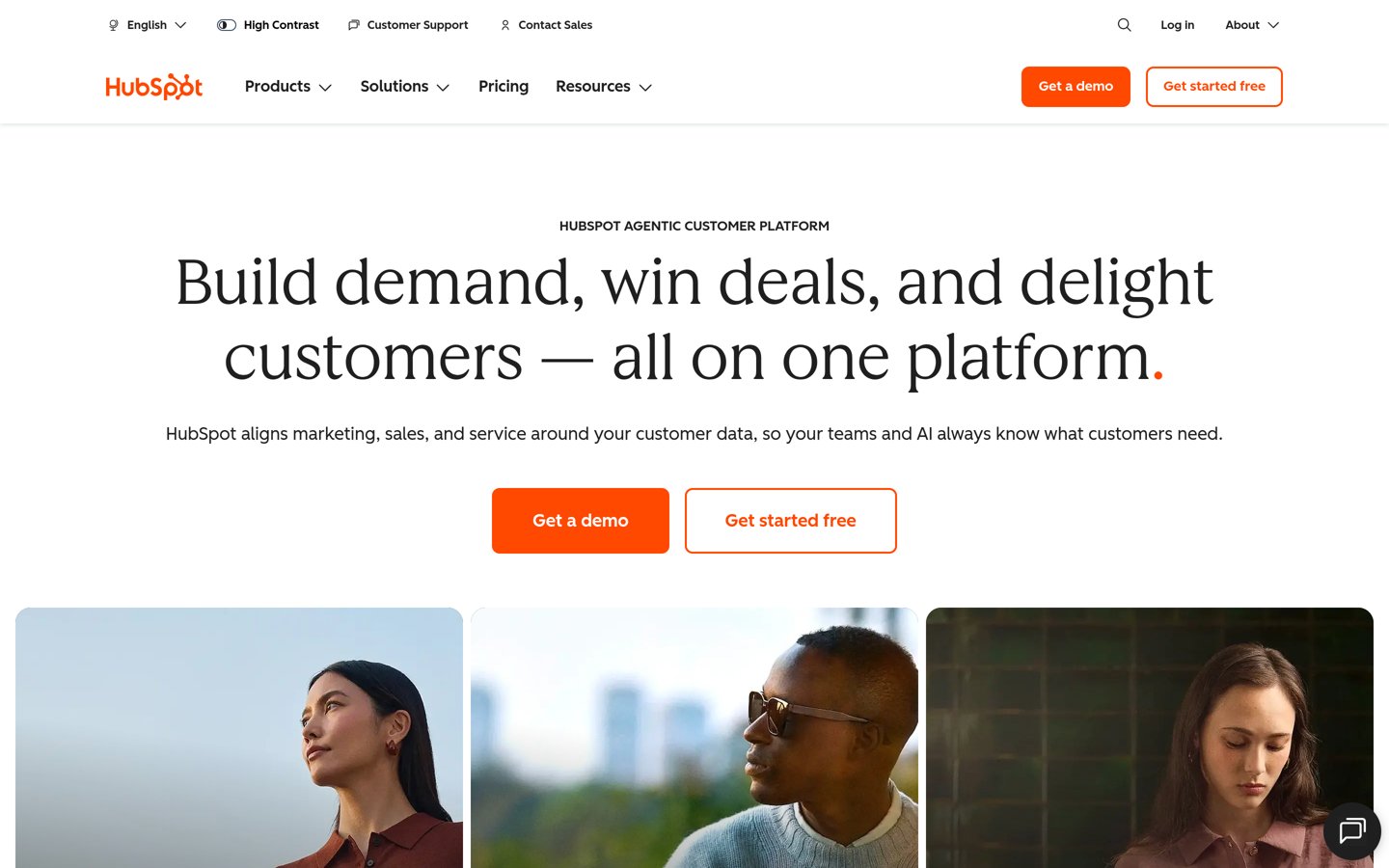
HubSpot Marketing Hub homepage, captured Nov 2026.
HubSpot Marketing Hub is a marketing platform built on HubSpot's free CRM, with email, landing pages, a visual workflow builder, lead scoring and attribution reporting in one place. The free tier covers up to 2 users, and Starter costs $20 a month per seat with 1,000 marketing contacts, or $15 a month per seat billed yearly.
The trade off is the jump to Professional. It costs $800 a month billed yearly, plus a $3,000 onboarding fee, and adds the A/B testing, advanced segmentation and attribution that growing teams need. It suits mid-market teams that want one CRM for marketing, sales and service.
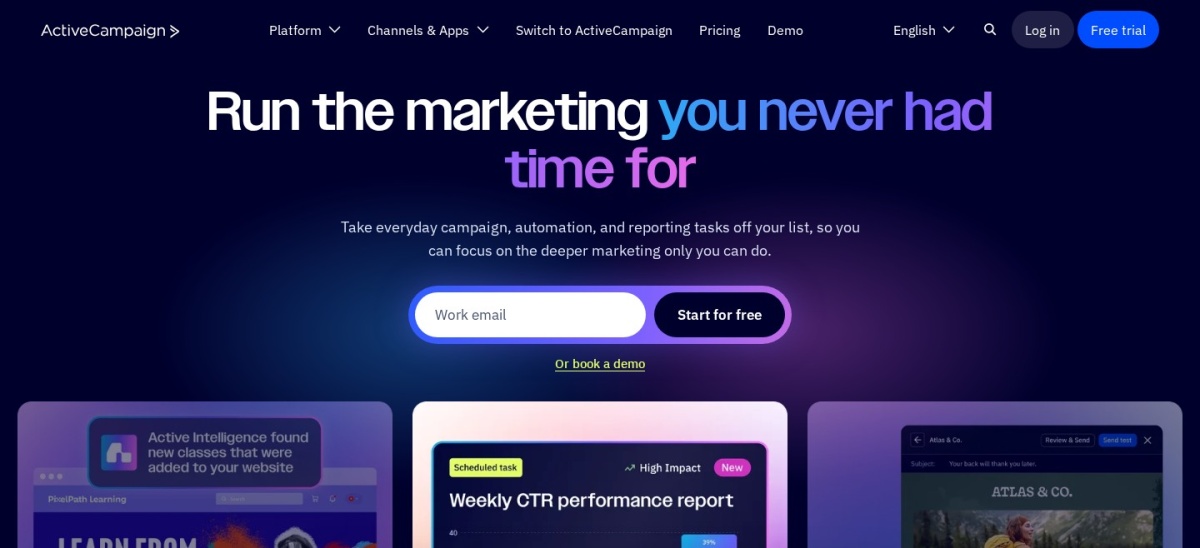
ActiveCampaign is an email-first marketing automation platform with a visual automation builder, segmentation, a built-in CRM and predictive sending. Starter costs $15 a month for 1,000 contacts billed yearly, or $19 month to month, and Plus is $49 and Pro is $79 a month at the same list size.
The trade off is the Starter limit. Each automation allows 5 actions, and the built-in CRM is lighter than HubSpot's, while the price rises with contact count. It suits small and mid-size teams that want deep automation without the HubSpot price.
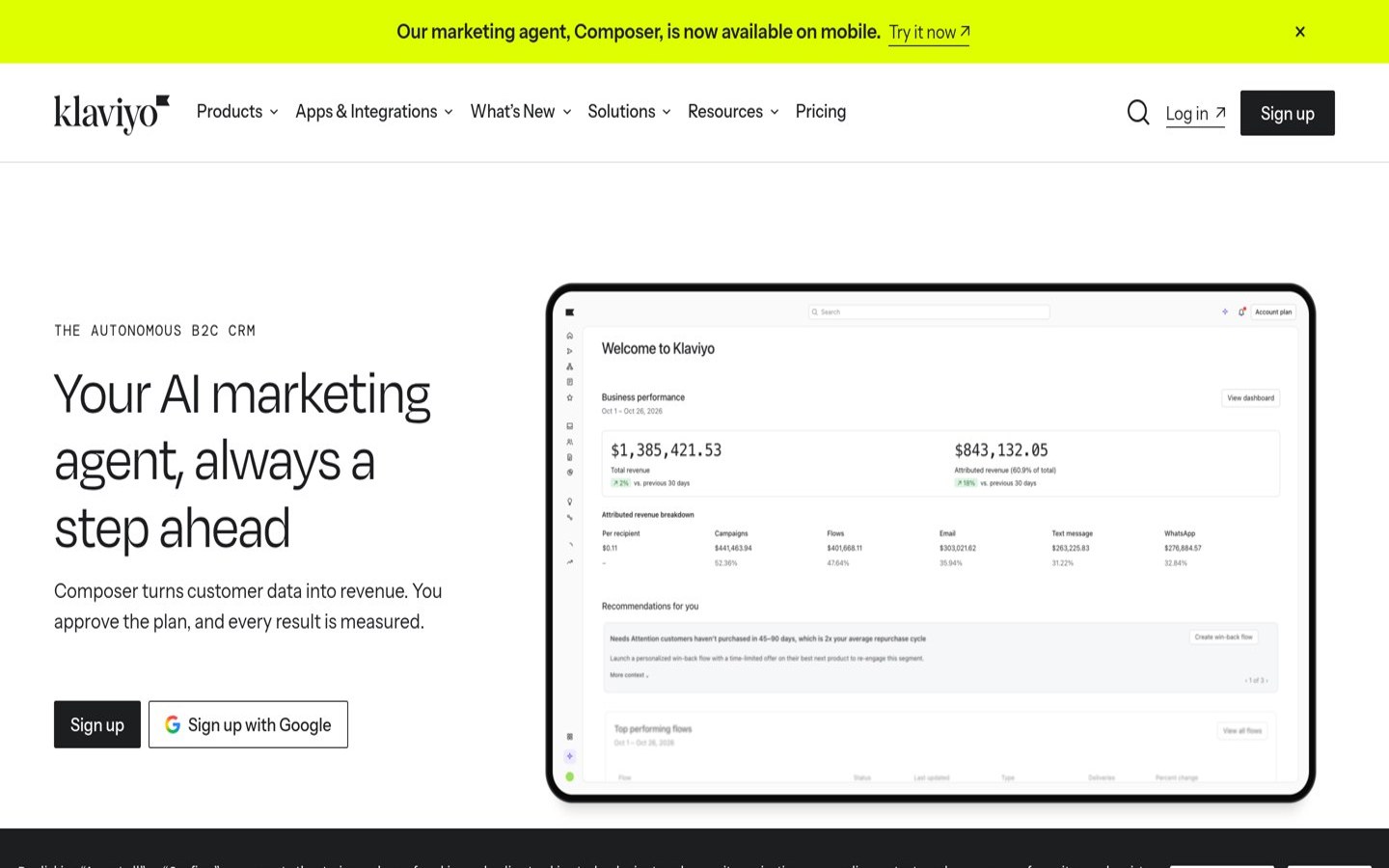
Klaviyo is an ecommerce marketing platform for email, SMS and push, built around store data such as orders, browsing and predicted lifetime value. The free plan covers 250 active profiles and 500 sends a month, and the Email plan starts at $20 a month for 500 active profiles with 5,000 sends.
The trade off is the bill. Klaviyo charges by active profile, so the price rises fast as a list grows, reaching $150 a month at 10,000 profiles. A $1 first-month offer was showing in November 2026, but the regular price is $20. It suits stores that sell on Shopify or WooCommerce.
Customer.io is a messaging platform for product-led teams, with a visual workflow builder, segmentation and email, push, SMS and in-app messages driven by product events. Essentials starts at $100 a month billed monthly for 5,000 profiles and 1 million emails a month, with extra profiles at $0.009 each.
The trade off is the entry price. There is no free plan, only a 14-day trial, and Premium starts at $1,000 a month billed yearly. It suits SaaS teams that trigger messages from what users do in the product, not from list fields alone.
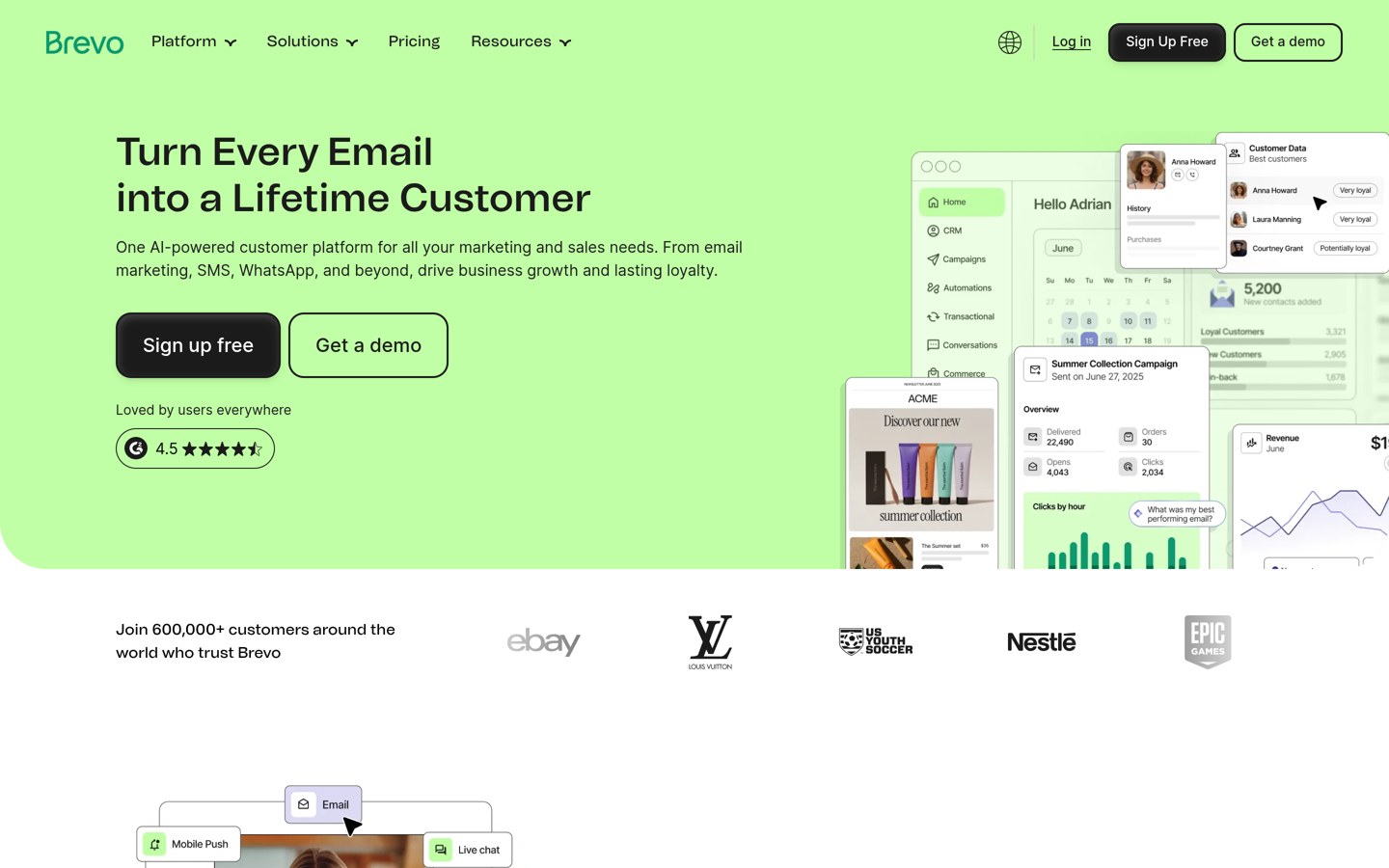
Brevo, formerly Sendinblue, is a budget all-rounder with email marketing, SMS, WhatsApp, live chat and a CRM under one roof. Starter costs $9 a month for 5,000 emails, or $8.08 a month billed yearly, and the free plan stores up to 100,000 contacts while sending 300 emails a day.
The trade off is automation. Starter has no marketing automation at all, which starts on Standard at $18 a month, and SMS credit is sold separately. It suits small businesses with a big list they email rarely, where paying by sends beats paying by contacts.
What we like
Cheapest paid plan in this list
Priced by sends, not contacts stored
Email, SMS, WhatsApp and CRM in one account
Watch out for
No automation on the $9 Starter plan
SMS credit sold separately
Black Friday 30% off annual plans was showing, so check the regular price
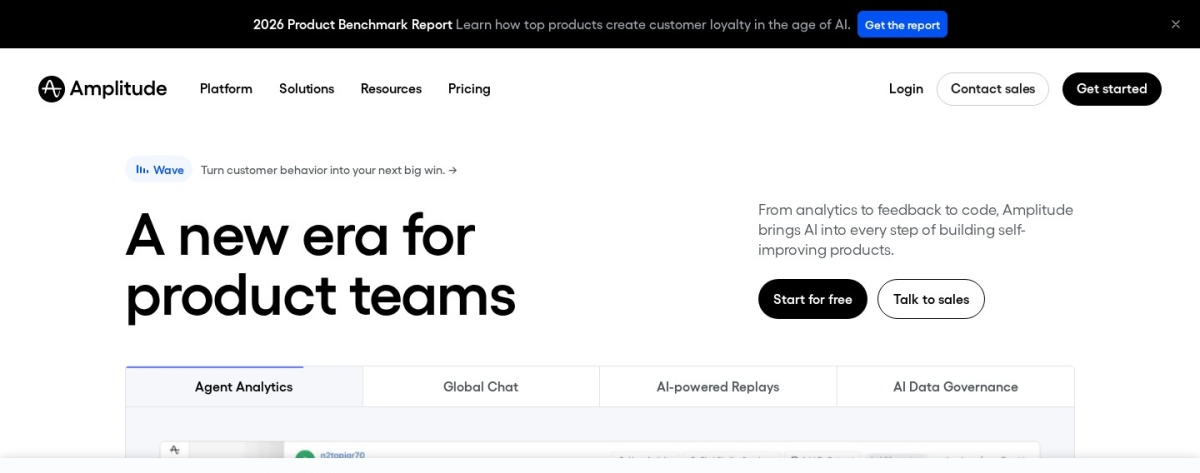
Amplitude is a product analytics platform that shows what users do inside a product, with funnels, retention curves, behavioral cohorts and session replay. The free Starter plan covers 50,000 monthly tracked users, and Plus starts at $49 a month billed yearly for up to 300,000 users or 25 million events.
The trade off is the billing unit. One user counts once no matter how active they are, which is predictable, but Growth and Enterprise are quoted and climb fast. It suits product teams where analytics quality drives what gets built next.
What we like
Deepest cohorts and retention analysis here
Generous free plan at 50,000 users
Session replay and experimentation in one platform
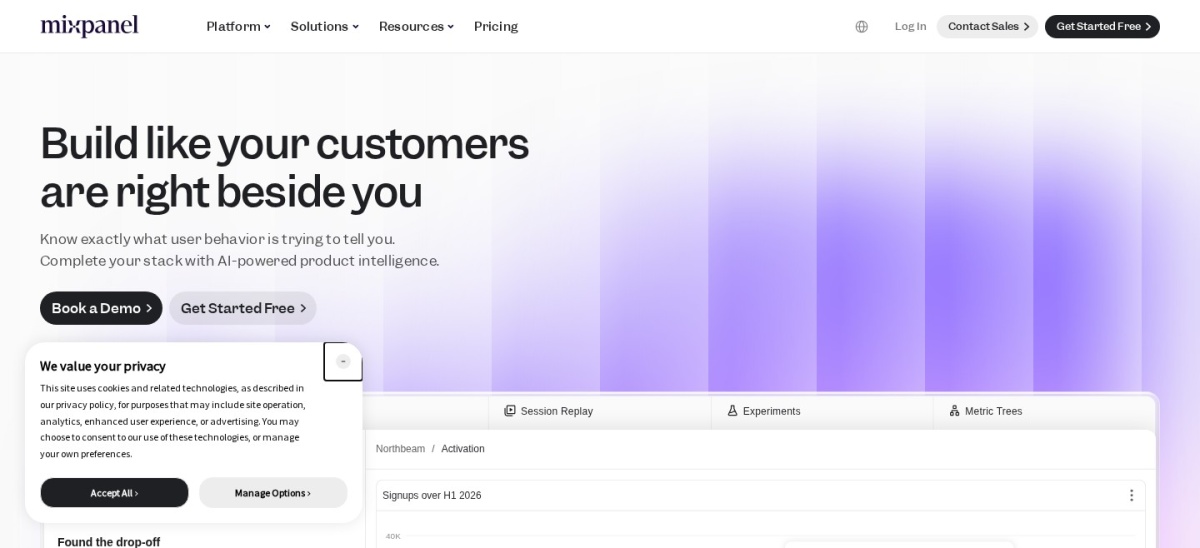
Mixpanel is a product analytics platform built on events, so every user action becomes a data point for funnels, retention and behavioral cohorts. The free plan covers 1 million events a month with unlimited seats and 10,000 session replays, and Growth keeps the first million free, then charges $0.00028 per event.
The trade off is the meter. A misfiring event can push the bill up fast, since every tracked action adds to it, and the old $20 a month Growth starting price no longer applies. It suits product teams that want fast, ad-hoc answers from event data.
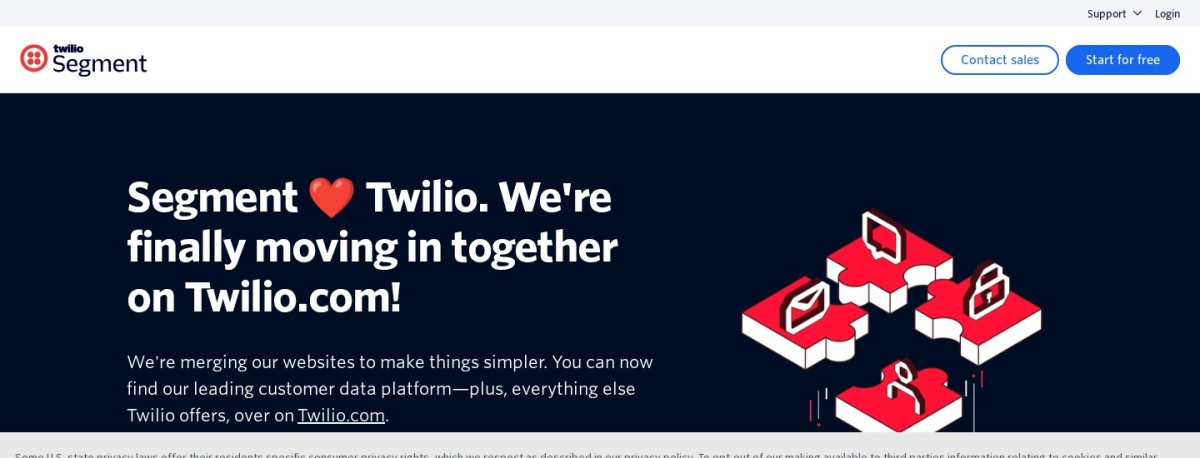
Segment, from Twilio, is a customer data platform that collects events once and routes them to analytics, advertising and messaging tools. The free plan covers 1,000 monthly tracked users with 2 sources, and Team costs $120 a month for 10,000 users with unlimited sources and a 14-day trial.
The trade off is scope. The full CDP, with profiles and audiences, is sold by quote, and the Segment site now points visitors to Twilio.com as the two sites merge. It suits teams that already feed many tools and want one clean event pipeline.
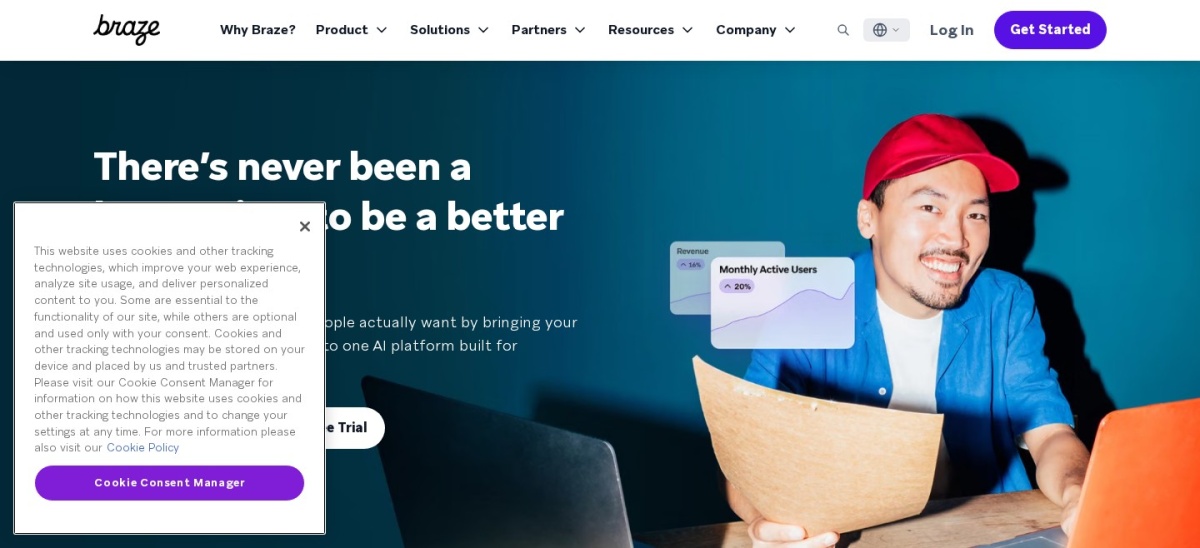
Braze is a customer engagement platform for consumer brands, with one profile driving email, push, SMS, WhatsApp and in-app messages from a single Canvas journey. It sells four editions, Go, Select, Pro and Enterprise, priced on monthly active users plus a shared pool of Action Credits across channels.
The trade off is access. Braze publishes no price and has no free plan, only a 14-day trial, and G2 reviewers put the average implementation at 3 months. It suits large consumer brands with apps and audiences in the hundreds of thousands.
Free plans cover the basics well. Most include core messaging or analytics, with limits on contacts, events or sends.
Paid plans mostly add volume and depth. You get more contacts or events, better segmentation and faster support.
If growth is the goal, watch the billing unit. Contact-based tools get dear as lists grow, event-based tools as usage grows, and seat-based tools as teams grow.
For a store or a product with real revenue, the first year of a paid plan often costs less than one month of lost sign-ups from a tool that caps out.
Common mistakes when picking a growth platform
Picking on the entry price alone is the usual error. The middle tier is where most teams land, and on HubSpot that jump is $20 to $800 a month.
A second mistake is buying messaging and analytics from vendors that never share data. Segment exists to fix that, but only if the rest of the stack connects to it.
A third is ignoring the free-plan cap. Brevo stores 100,000 contacts for free but sends only 300 emails a day, so a daily sender outgrows it fast.
How we chose
We started from the growth platforms most often named in 2026 comparisons, then kept 9 established products with published prices or a public review footprint on G2.
Prices come from each vendor's pricing page as reported in dated November 2026 checks, and ratings are G2 scores from the same month. Where a vendor shows a sale, the list shows the regular price.
We left out tools with no public review footprint and niche workflow apps. No vendor paid for a place, and we do not claim to have used these tools ourselves.
How to choose a growth platform
Start with what you need to grow first, then check the billing unit and the middle tier.
Name the job first. Pick a messaging tool such as HubSpot or Klaviyo to win customers back, or an analytics tool such as Amplitude or Mixpanel to learn why they leave.
Check the billing unit. HubSpot charges by seat, Klaviyo and ActiveCampaign by contacts, and Mixpanel by events. Model your size in a year, not today.
Price the middle tier, not the entry. Starter plans are cheap everywhere. The real cost is Professional at $800 on HubSpot or Premium at $1,000 on Customer.io.
Start on the free plan where one exists. Six of these nine tools have a free tier. Run a real campaign or a real funnel on it before you pay.
FAQ
What is the best growth platform?
HubSpot Marketing Hub is the best pick for most teams, rated 4.4 out of 5 on G2 from 15,957 reviews, with a free CRM and Starter from $20 a month per seat. ActiveCampaign is the best value for automation depth.
What is the cheapest growth platform?
Brevo is the cheapest paid start at $9 a month for 5,000 emails, with a free plan that sends 300 emails a day. ActiveCampaign Starter at $15 a month is next for automation depth.
Is HubSpot or ActiveCampaign better for small business?
ActiveCampaign is better for small teams that need deep automation cheaply: Starter is $15 a month and Pro is $79. HubSpot is better when you want one CRM for marketing, sales and service.
Which growth platform is best for ecommerce?
Klaviyo is the best pick for stores, rated 4.6 out of 5 on G2, with segments and flows built on order and browsing data. Email starts at $20 a month for 500 active profiles.
Do I need both analytics and messaging tools?
Often, yes. Amplitude or Mixpanel show what users do in your product, while HubSpot, ActiveCampaign or Klaviyo send the messages that bring them back. Segment connects the two sides.
Why does Braze not show a price?
Braze sells only through custom quotes, priced on monthly active users and Action Credits across its four editions. There is no published price and no free plan, only a 14-day trial.
What is the difference between Amplitude and Mixpanel?
Both are product analytics tools rated 4.5 out of 5 on G2. Amplitude bills by monthly tracked users, starting with a free 50,000-user tier, while Mixpanel bills by events, with the first 1 million events free each month.