SeisWare Geophysics is the best geology and seismic software for most teams, rated 4.8 out of 5 on G2 from 9 reviews. Pick OpendTect if you need a free open-source option, and Leapfrog Geo for fast 3D geological modelling from drillhole data.
How we make this list: we compare pricing pages, product documentation and public user reviews, then re-check every price before each update. No product paid for a place. Disclosure.
SeisWare Geophysics leads with a 4.8 out of 5 G2 rating from 9 reviews, the strongest reviewed seismic interpreter here.
OpendTect is the only free tool, with a 5.0 out of 5 G2 rating from 3 reviews and an open-source core.
Leapfrog Geo has the most reviews by far: 4.5 out of 5 from 92 G2 reviews.
Only three tools publish a starting price: LEASSV at $304, PLAXIS 2D at $4,450 and PLAXIS 3D at $11,675 a year.
PLAXIS 2D and 3D are geotechnical analysis tools, not seismic interpreters. Match the tool to the job, not the list order.
What geology and seismic software should cover
Geology and seismic software turns subsurface data into pictures and models teams can act on. Seismic surveys show rock layers and faults, boreholes add ground truth, and the software ties them together into horizons, cross sections and 3D volumes.
The tools split into three jobs. Seismic interpreters pick horizons and faults from survey data, geological modellers build 3D volumes from drillholes, and geotechnical packages test how ground behaves under load.
Prices are mostly hidden in this niche. Only three of the eight tools here publish a starting price, and enterprise seats commonly run into five figures a year once modules and support are added.
Back up the raw survey data before converting formats, with the same discipline as the 3-2-1 backup rule. A lost survey costs far more than the software that reads it.
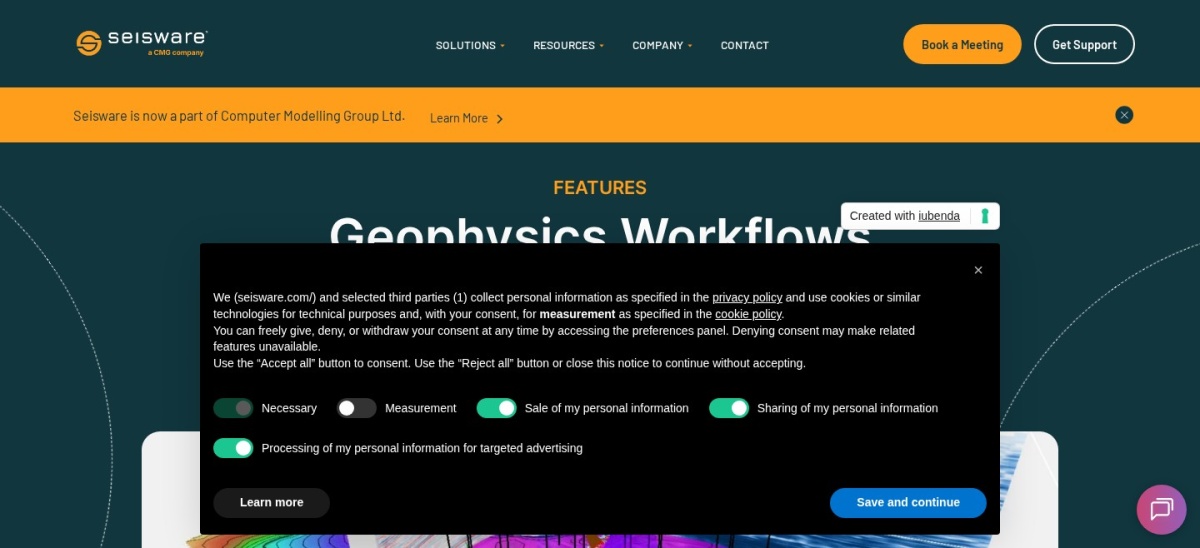
SeisWare Geophysics is a 2D and 3D seismic interpretation system for conventional and unconventional plays. It covers synthetics, mistie analysis, structural interpretation, velocity modelling, depth conversion and 3D visualisation in one 64-bit workspace, and it links to Geology by SeisWare for well data and mapping.
The trade off is price and scope. SeisWare publishes no prices, so every licence is quoted, and it has no built-in inversion or geobody creation, so some teams pair it with a specialist tool. It suits small and mid-size interpretation teams that want an easy-to-learn system with strong support.
What we like
Intuitive 2D and 3D seismic interpretation
Strong, responsive support praised by reviewers
Handles conventional and unconventional plays in one system
64-bit multi-user workflows
Watch out for
No published price; every licence is quoted
No built-in inversion or geobody creation
Fault mapping can struggle in complex settings
Paid licences are quoted; the Geoscience suite adds Geology by SeisWareVisit seisware.com
02
OpendTect
5/5on G2 (3 reviews, checked Nov 2026)
PriceFree
Best free seismic interpretation
Free planYes, open source
Seismic attributesExtensive library
PlatformsWindows, Linux, macOS
Paid planPro, quoted
dgbes.com
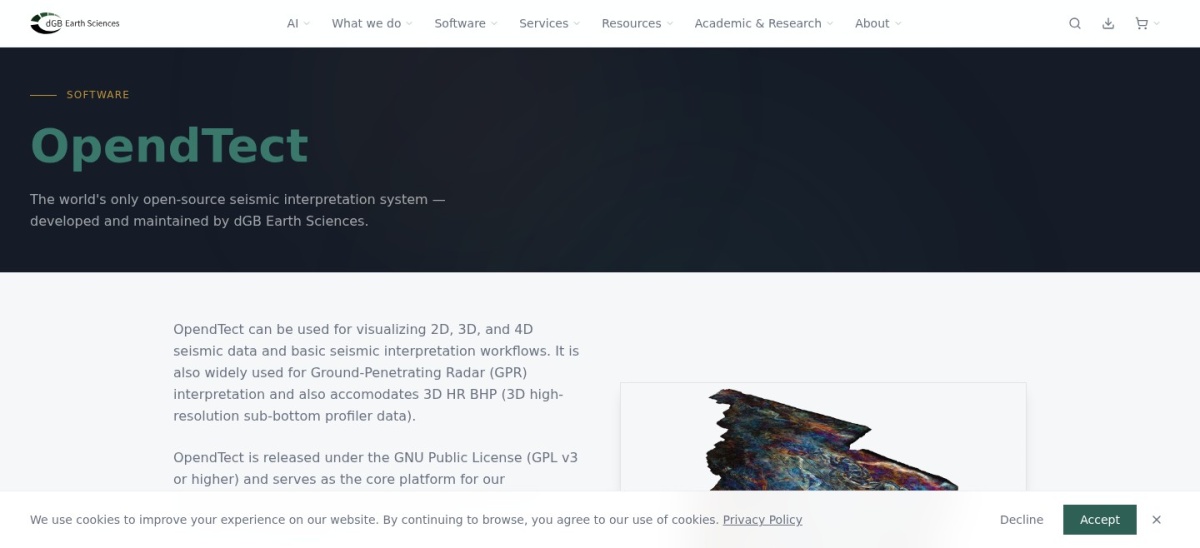
OpendTect homepage, captured Nov 2026.
OpendTect is the only major open-source seismic interpretation platform in this list, built by dGB Earth Sciences. The free version covers horizon and fault interpretation, seismic attributes, spectral decomposition, well ties and 3D visualisation on Windows, Linux and macOS, with a Python plugin system for custom workflows.
The trade off is polish and paid extras. The interface feels dated beside commercial tools, and HorizonCube stratigraphic interpretation and the machine learning package sit behind paid OpendTect Pro licences. It suits researchers, students and small teams with no licence budget.
What we like
Free open-source core with no licence cost
Wide seismic attribute library in the free version
Python plugin system for custom workflows
Runs on Windows, Linux and macOS
Watch out for
Pro features such as HorizonCube cost extra
Survey setup and data import feel convoluted
Interface looks dated beside commercial tools
Pro adds HorizonCube, machine learning and commercial pluginsVisit dgbes.com
03
Leapfrog Geo
4.5/5on G2 (92 reviews, checked Nov 2026)
PricingCustom/yr
Best for fast 3D geological modelling
ModellingImplicit 3D
Data sourceDrillhole assays
Free planNo
Paid planQuote only
seequent.com
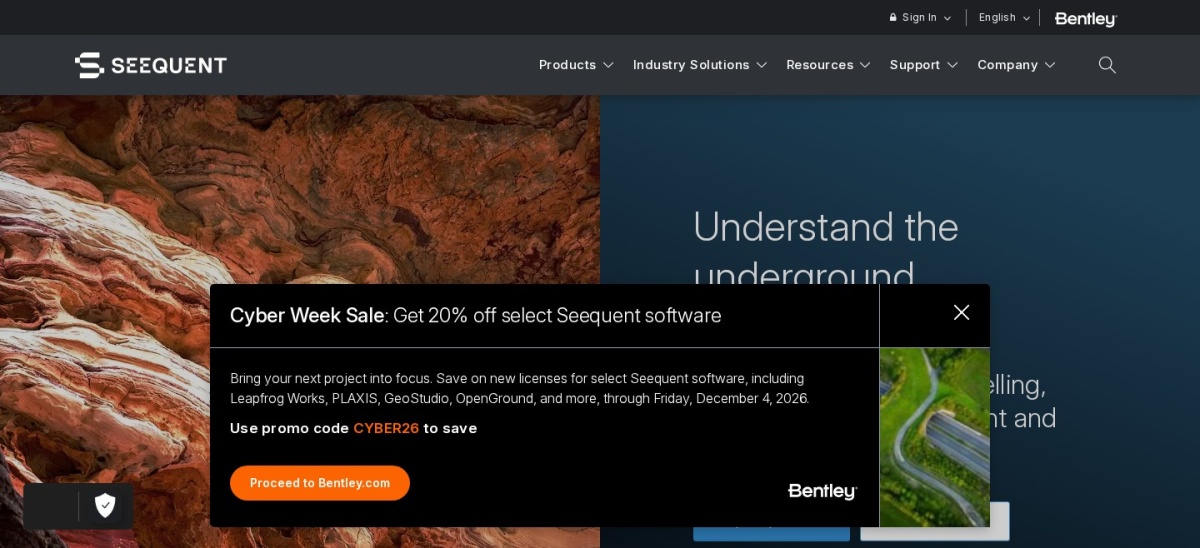
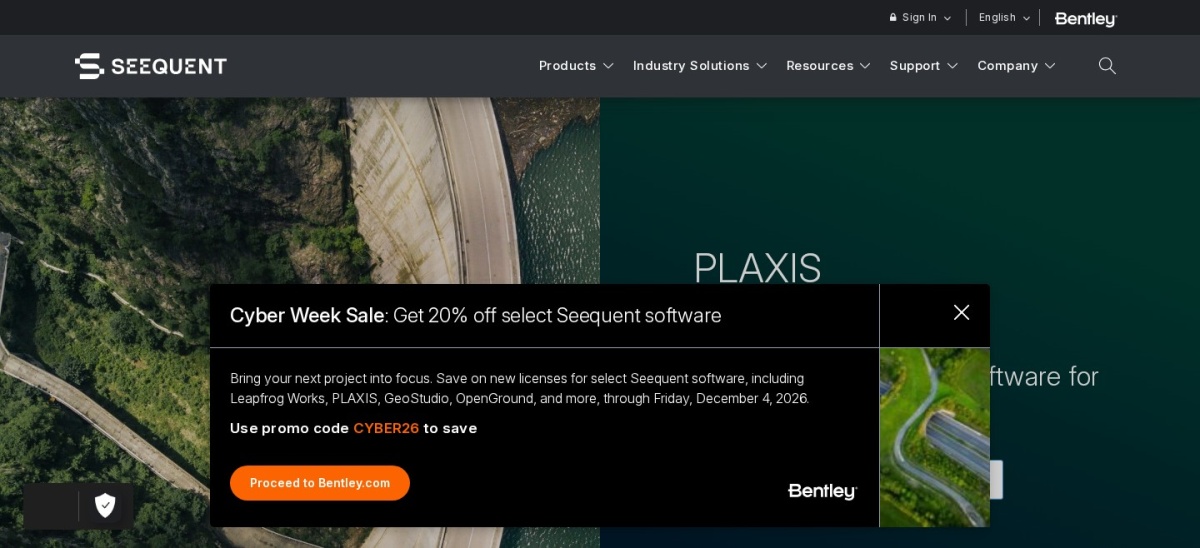
Leapfrog Geo homepage, captured Nov 2026.
Leapfrog Geo is a 3D geological modelling tool from Seequent that builds models from drillhole data with implicit modelling. It creates wireframes, fault networks and block models in seconds from loaded assays, updates them as new drilling data arrives, and handles resource estimation for mining and exploration teams.
The trade off is cost and licensing. Leapfrog Geo publishes no prices, and reviewers call the licensing complex, with a Leapfrog licence, a connector licence and a Central seat to manage. It suits exploration and mining teams that rebuild models often and need fast updates.
What we like
Fastest model updates in this list, from drillhole data
Implicit modelling with fault networks and block models
Rated 4.5 out of 5 from 92 G2 reviews
Watch out for
No published price; every licence is quoted
Licensing is complex, with connector and Central seats
Large block model files can be heavy to open
Paid licences are quoted; Central seats are licensed separatelyVisit seequent.com
04
PLAXIS 2D
4.8/5on G2 (6 reviews, checked Nov 2026)
Starts at$4,450/yr
Best for 2D geotechnical analysis
Analysis2D finite element
Soil modelsAdvanced
Free plan30-day evaluation
Paid planFrom $4,450/yr
seequent.com
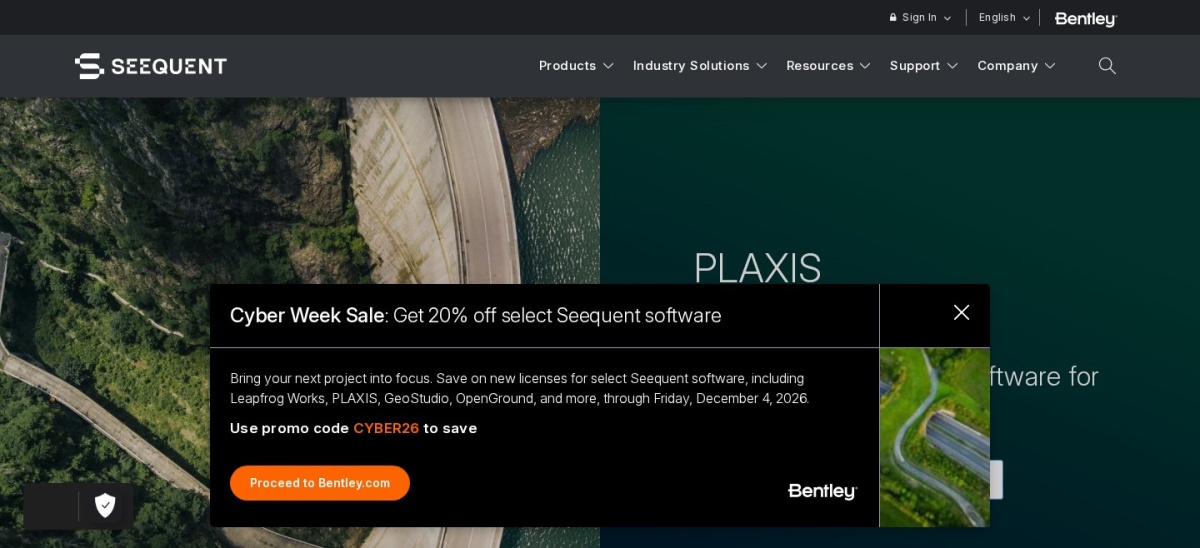
PLAXIS 2D homepage, captured Nov 2026.
PLAXIS 2D is a finite-element package from Seequent and Bentley for 2D analysis of deformation and stability in geotechnical engineering and rock mechanics. It models soil and rock behaviour, groundwater flow, staged construction and soil-structure interaction, with a CAD-like workspace and Python scripting.
The trade off is price and focus. PLAXIS 2D starts at $4,450, and it is a geotechnical analysis tool, not a seismic interpretation system, so it fits ground engineering rather than exploration. It suits geotechnical engineers modelling excavations, embankments, foundations and tunnels.
What we like
Purpose-built finite-element analysis for geotechnics
Advanced soil models and staged construction
30-day evaluation licence available
Watch out for
Starts at $4,450 with no lower tier
Geotechnical analysis only, not seismic interpretation
PLAXIS 3D is the full 3D version of the PLAXIS finite-element package for geotechnical analysis. It adds full 3D modelling of soil, rock, groundwater and structures to the 2D toolset, converts 2D models to 3D, and shares the same soil models, staged construction and Python scripting.
The trade off is cost. PLAXIS 3D starts at $11,675, more than twice the 2D starting price, and it needs a powerful workstation for large 3D meshes. It suits teams modelling tunnels, deep excavations and foundations where 2D sections cannot show the ground behaviour.
What we like
Full 3D finite-element modelling
Converts 2D models to 3D
Same soil models and Python scripting as 2D
Watch out for
Starts at $11,675, the highest published price here
Needs a powerful workstation for large meshes
Geotechnical analysis only, not seismic interpretation
Kingdom is a seismic interpretation and geological analysis system from SLB, built for exploration teams that need speed. It covers 2D and 3D interpretation, structural and stratigraphic analysis, well correlation and synthetics, and it runs on standard Windows workstations without specialist hardware.
The trade off is price and transition. Kingdom publishes no prices, so every licence is quoted, and SLB bought it from S&P Global in September 2026, so licensing and support channels are still settling. It suits independents and small teams that want fast interpretation with minimal training.
What we like
Known for speed and ease of use
Runs on standard Windows workstations
2D and 3D interpretation with well correlation
Rated 4.3 out of 5 from 19 G2 reviews
Watch out for
No published price; every licence is quoted
Ownership moved to SLB in 2026, channels in transition
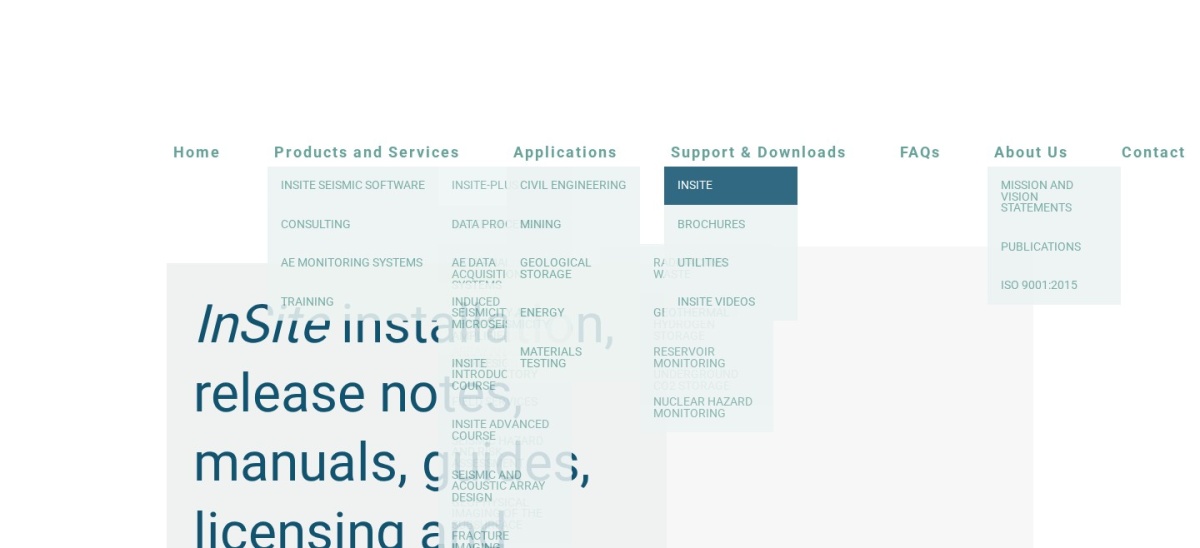
InSite Seismic Processor homepage, captured Nov 2026.
InSite Seismic Processor is an integrated system from Applied Seismology Consultants for seismic data acquisition, processing, management and visualisation. It locates microseismic events with manual and automated picking, runs traffic-light alarm systems, and works from lab acoustic emissions to regional earthquakes.
The trade off is reach and price. InSite publishes no prices and sells licences with an annual maintenance scheme, and it is a processing tool for induced and natural seismicity rather than a full exploration interpretation system. It suits mining, geothermal and monitoring teams tracking microseismic events.
What we like
Covers acquisition through processing to visualisation
Manual and automated event location
Traffic-light alarm systems for induced seismicity
Latest version released November 2025
Watch out for
No published price; licences plus annual maintenance
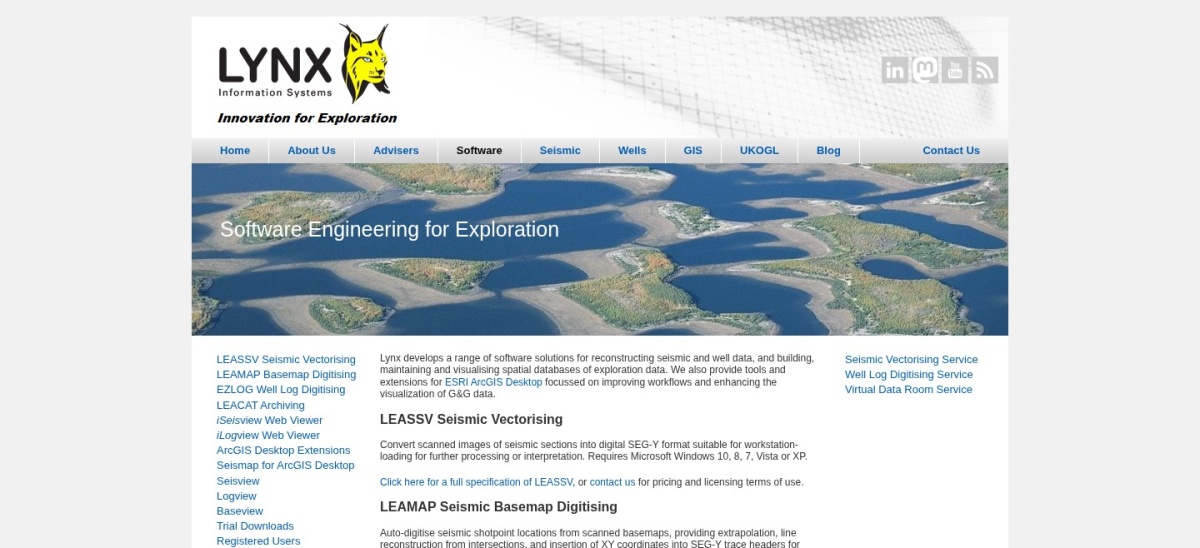
LEASSV is a narrow archival tool from Lynx Information Systems that converts scanned images of seismic sections into digital SEG-Y trace files. Its utilities prepare the output for loading to a seismic interpretation workstation, and the suite runs from the Lynx Launcher on Windows.
The trade off is scope and age. LEASSV only re-vectorises old paper sections, so it cannot interpret seismic data on its own, and its system requirements date from Windows 10 back to XP. It suits teams rescuing paper seismic archives for modern workstations.
What we like
Turns paper seismic sections into SEG-Y files
Output loads straight to interpretation workstations
Cheapest starting price among the paid tools here
Watch out for
Lowest G2 rating in this list at 2.5 from 1 review
Only OpendTect is free here, and its free version is a real interpretation system, not a viewer.
Paid plans mostly add depth: advanced modules, commercial plugins, support and maintenance.
Quote-only tools hide the real cost until you talk to sales. Budget for modules, training and hardware as well as the licence.
If you only need to rescue old paper sections, LEASSV at $304 a year costs less than a single day of a consultant.
How we chose
We started from the geology and seismic category on G2, then kept tools with a public G2 rating and a live vendor site, and checked each vendor homepage and pricing page.
Prices come from vendor pages checked on 25 November 2026, except LEASSV, whose $304 starting price comes from SourceForge and Slashdot listings because the vendor asks buyers to contact it for pricing. Ratings come from G2 on the same day; SeisWare, OpendTect and Leapfrog Geo were read live on G2, Kingdom comes from its G2 listing, and the other four ratings are G2 figures quoted by B2SaaS on 24 November 2026.
We left out tools with no public rating, including Petrel, MOVE and HampsonRussell. No vendor paid for a place, and we do not claim hands-on testing for this list.
How to choose geology and seismic software
Start with the job, not the brand: interpretation, modelling and ground analysis need different tools.
Name the job first. Seismic interpretation, 3D geological modelling and geotechnical analysis are different tasks. Pick the tool built for yours.
Check the data formats. Your surveys, well logs and borehole files must load without heavy conversion. OpendTect reads SEG-Y, and LEASSV rebuilds paper sections into SEG-Y.
Test the free option before you pay. OpendTect costs nothing, and PLAXIS offers a 30-day evaluation. Run your own data through it before signing a quote.
Budget beyond the licence. Modules, maintenance, training and workstation hardware add up fast. Ask what the first year costs in full, not just the starting price.
FAQ
What is the best geology and seismic software?
SeisWare Geophysics is the best pick for most teams, rated 4.8 out of 5 on G2 from 9 reviews. It covers 2D and 3D seismic interpretation in one system, with strong support. OpendTect is the best free option, and Leapfrog Geo leads for 3D geological modelling.
Is there free geology and seismic software?
Yes. OpendTect is free and open source, with horizon and fault interpretation, seismic attributes and 3D visualisation at no cost. Paid Pro licences add HorizonCube and machine learning. PLAXIS offers a 30-day evaluation licence.
How much does geology and seismic software cost?
It ranges from free to five figures a year. OpendTect costs nothing, LEASSV starts at $304 a year. PLAXIS 2D starts at $4,450 and PLAXIS 3D at $11,675, while SeisWare, Leapfrog Geo, Kingdom and InSite are quote-only.
What is the difference between seismic interpretation and geological modelling?
Seismic interpretation picks horizons and faults from survey data, which is what SeisWare and OpendTect do. Geological modelling builds 3D volumes from drillhole and surface data, which is Leapfrog Geo's job. Many teams use one of each.
Do I need Petrel for seismic interpretation?
No, but it is the most widely used commercial platform in oil and gas, and several tools here link to it. OpendTect has a two-way link to Petrel for SEG-Y data. Smaller teams often start with SeisWare or OpendTect instead.
Which tool is best for mining and exploration?
Leapfrog Geo is the best fit for mining and exploration, with fast implicit modelling from drillhole data and a 4.5 out of 5 G2 rating from 92 reviews. Kingdom suits independents that want fast interpretation with minimal training, and InSite covers microseismic monitoring around mines.
SaaS SEO and WordPress specialist with about 8 years of experience. Rakib compares WordPress plugins, themes, hosting and software using public pricing, documentation and user reviews. See how we rank.