WLWPLegible EditorsLast verified 23 Nov 2026How we rank13 min read
★ Short answer
OneTrust is the best GDPR software for large enterprises running a full privacy program. It covers consent, data mapping, subject requests, vendor risk and AI governance on one platform, and it is rated 4.3 out of 5 on G2 from 155 reviews. Mid-market teams should start with DataGrail, and small sites can start free with CookieYes.
How we make this list: we compare pricing pages, product documentation and public user reviews, then re-check every price before each update. No product paid for a place. Disclosure.
OneTrust is the enterprise default for full privacy programs, with the broadest module coverage here.
DataGrail is the best mid-market pick, with a 4.7 G2 rating from 208 reviews and a live data map across nearly 2,000 integrations.
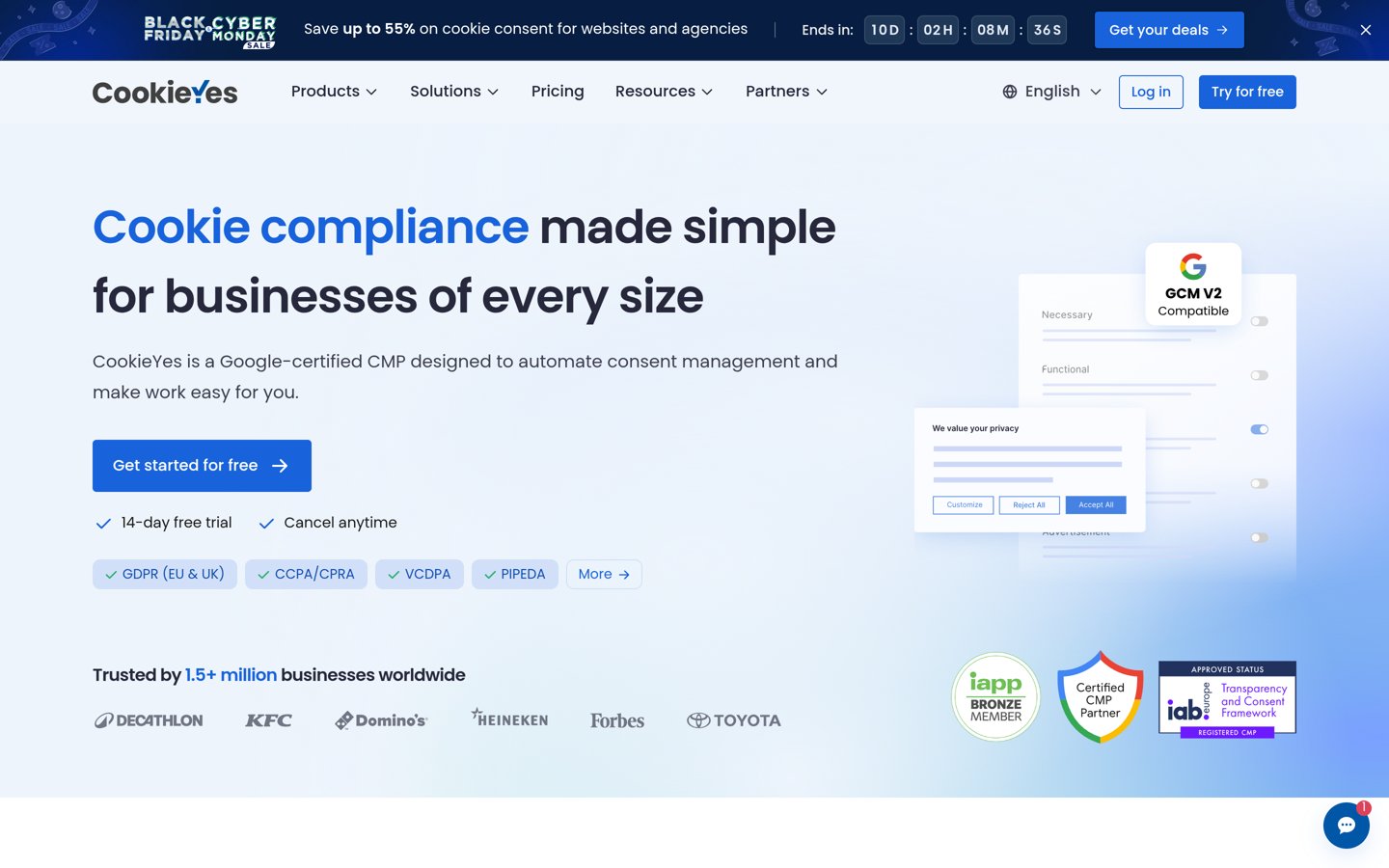
CookieYes is the best pick for small sites, rated 4.8 on G2 from 330 reviews, with a free plan and Basic at $10 a month per domain.
Osano is the approachable option, with a free tier, a $199 a month Plus plan and a contractual promise to cover regulatory fines.
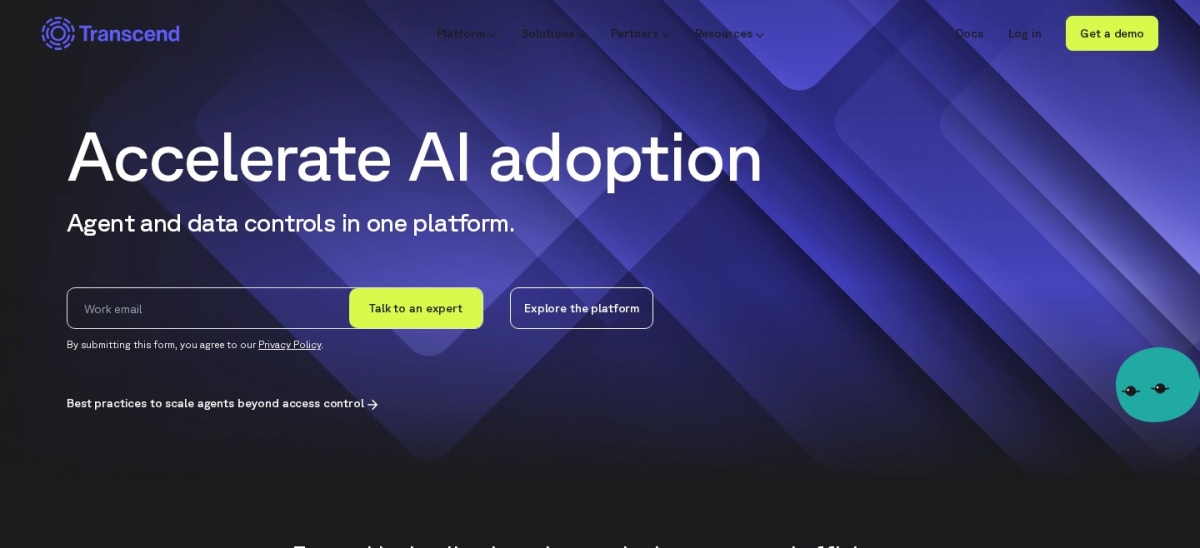
Transcend is the developer pick, fulfilling subject requests through APIs across 1,500-plus integrations.
Five of the nine vendors publish no price, so the real comparison happens in demos and written quotes.
What GDPR software should cover
GDPR compliance is more than a cookie banner. You need to know what personal data you hold, where it lives, who you share it with, and prove you can delete it on request. The software here automates that work: data mapping, consent records, subject requests and vendor tracking.
The market splits into three groups. Enterprise suites like OneTrust, TrustArc and Securiti run full privacy programs. Mid-market platforms like DataGrail, Osano and Transcend automate data maps and subject requests. Consent tools like CookieYes and Cookiebot handle banners for small sites.
Start from the job you actually have. A marketing site needs consent management. A SaaS company holding customer data needs mapping and subject-request automation. A global enterprise needs all of it plus assessments and AI governance. Our guide on what a security plugin is covers the website security side of the same job.
Prices are mostly quote-only at the top. OneTrust, DataGrail, Transcend, Securiti and TrustArc do not publish prices, so budget time for demos and written quotes. CookieYes, Ketch, Osano and Cookiebot publish prices, and three of them start free.
List prices in each vendor's currency, checked Nov 2026
OneTrustCustom
DataGrailCustom
TranscendCustom
SecuritiCustom
TrustArcCustom
CookiebotFREE€84
CookieYesFREE$120
KetchFREE$1,800
OsanoFREE$2,388
The 9 best GDPR software
01
OneTrust
4.3/5on G2 (155 reviews, checked Nov 2026)
PricingCustom/yr
Best GDPR software overall
ConsentYes, full CMP
Data mappingYes, survey-based
Subject requestsYes, DSAR automation
PricingQuote only
onetrust.com
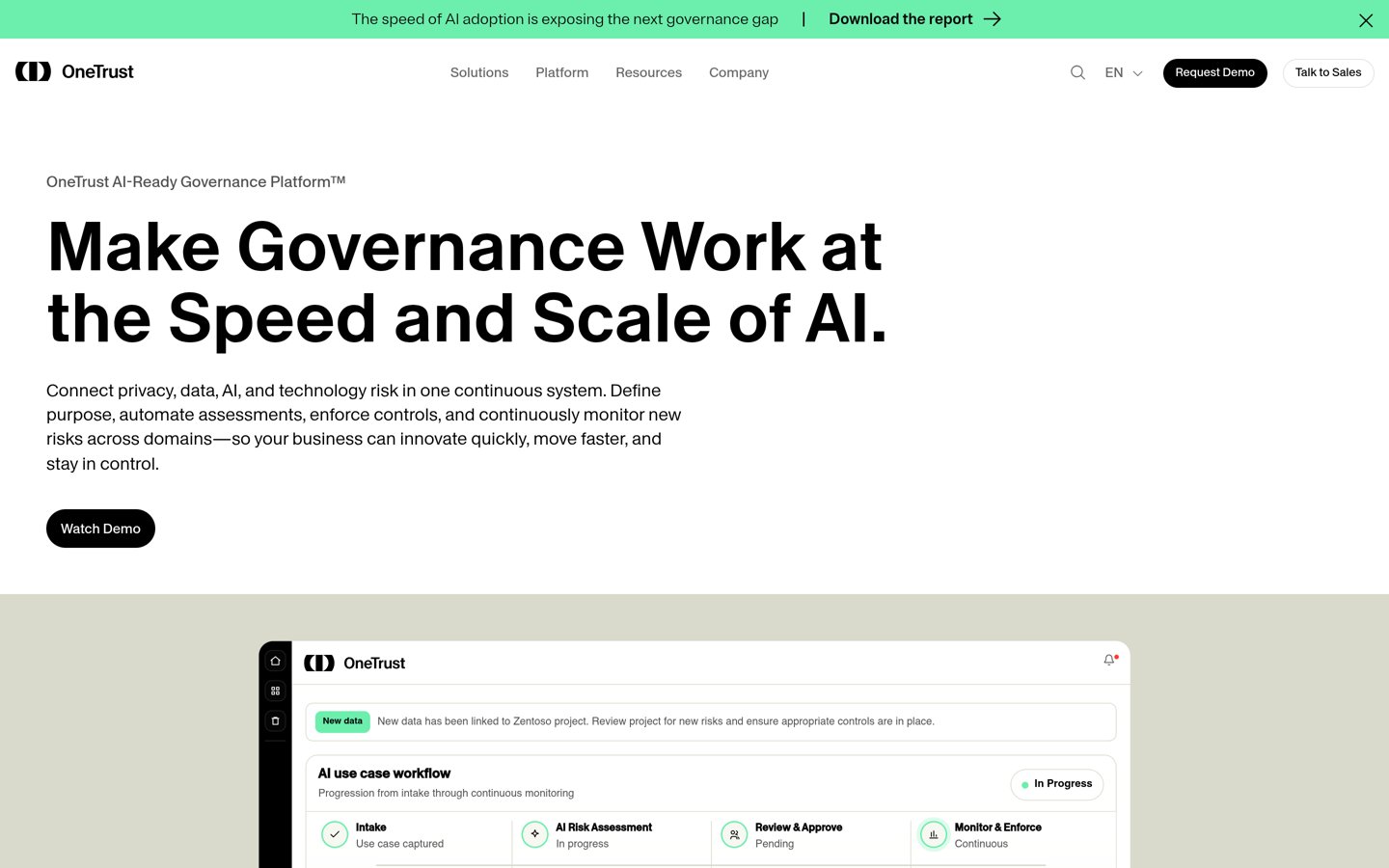
OneTrust homepage, captured Nov 2026.
OneTrust is the platform most enterprises buy when privacy becomes a board-level program. Its modules cover data mapping, assessments, consent and preferences, subject rights requests, vendor risk and incident response, now extending into AI governance. The DataGuidance regulatory content keeps legal teams current across jurisdictions.
The trade off is the price structure. Modules are priced separately, so the platform price grows with each capability you add, and implementations typically involve services. It suits large organizations that want one vendor for the entire privacy and governance program.
What we like
Broadest module coverage from consent to AI governance
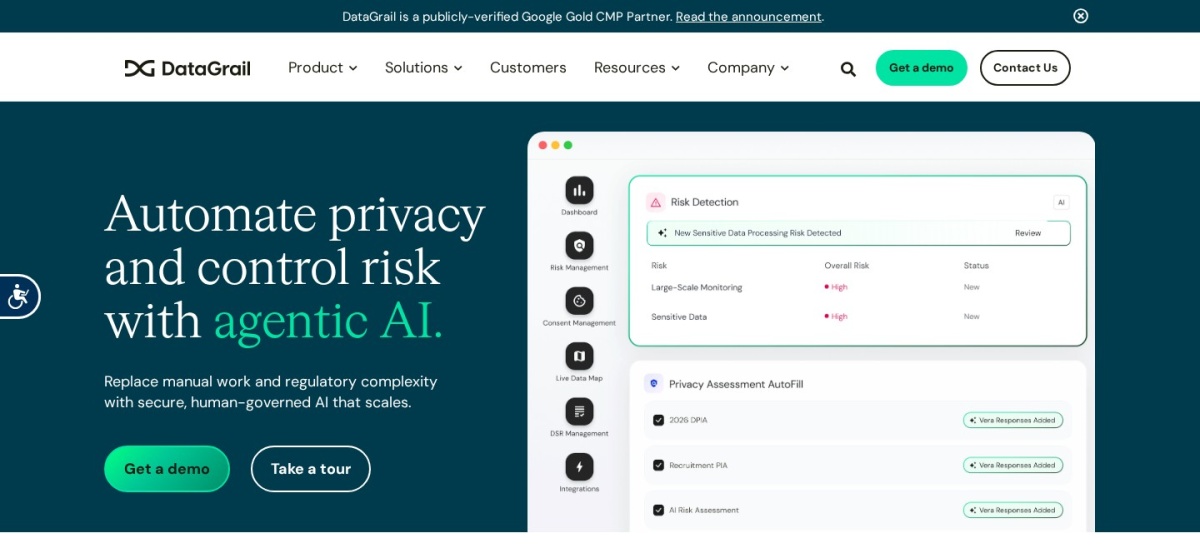
DataGrail focuses on the two jobs mid-market privacy teams dread: keeping the data map current and fulfilling subject requests. Its integration library connects to the SaaS apps where personal data actually lives, so the record of processing stays accurate without manual spreadsheets, and the request manager automates verification and fulfillment.
The trade off is the narrower scope. It is narrower than OneTrust by design, and pricing is quote-based with no public entry point. It suits growth-stage companies that need credible GDPR and CCPA operations quickly, with engineering-light deployment.
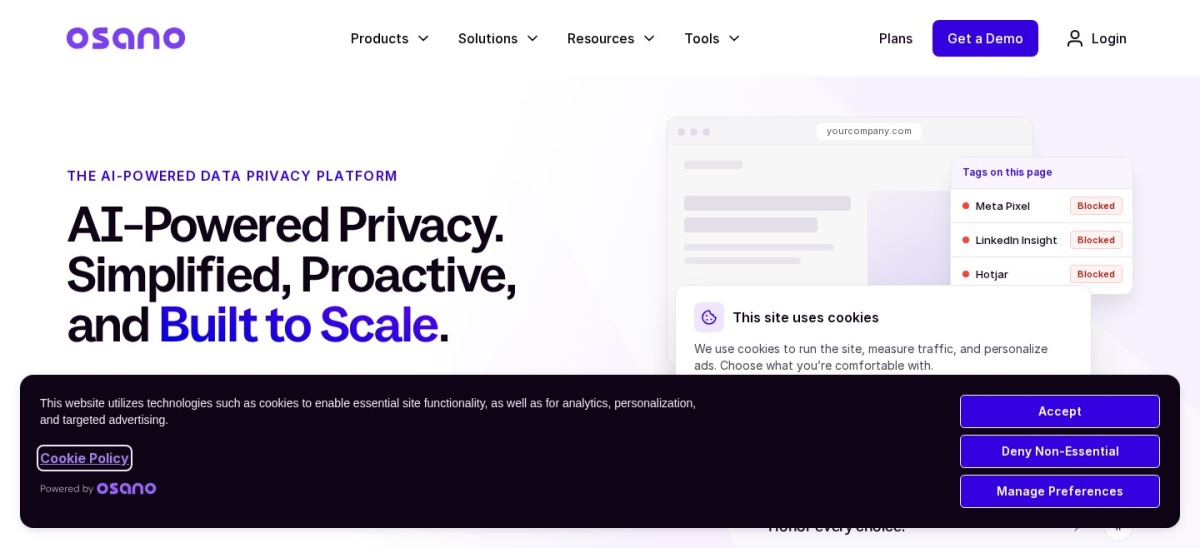
Osano grew from the world's most deployed cookie consent tool into a full privacy platform. It now covers consent management, vendor risk monitoring, data mapping and subject rights in one interface designed for teams without dedicated privacy engineers. The free tier handles basic consent needs, which makes starting frictionless.
The trade off is the depth. Large enterprises with complex data estates will find the discovery and governance depth lighter than the enterprise suites. It suits mid-size companies that want one approachable vendor for the whole privacy program.
Transcend treats privacy as infrastructure. Its platform fulfills access and deletion requests programmatically across your systems and vendors through APIs, rather than routing tickets to humans. The consent management and data inventory pieces follow the same philosophy: code-driven, automated, auditable.
The trade off is the engineering requirement. That design assumes engineers are in the loop, and privacy teams without development resources will move slower here than on a no-code platform. It suits tech companies with engineering capacity that want privacy operations embedded in systems rather than bolted on as process.
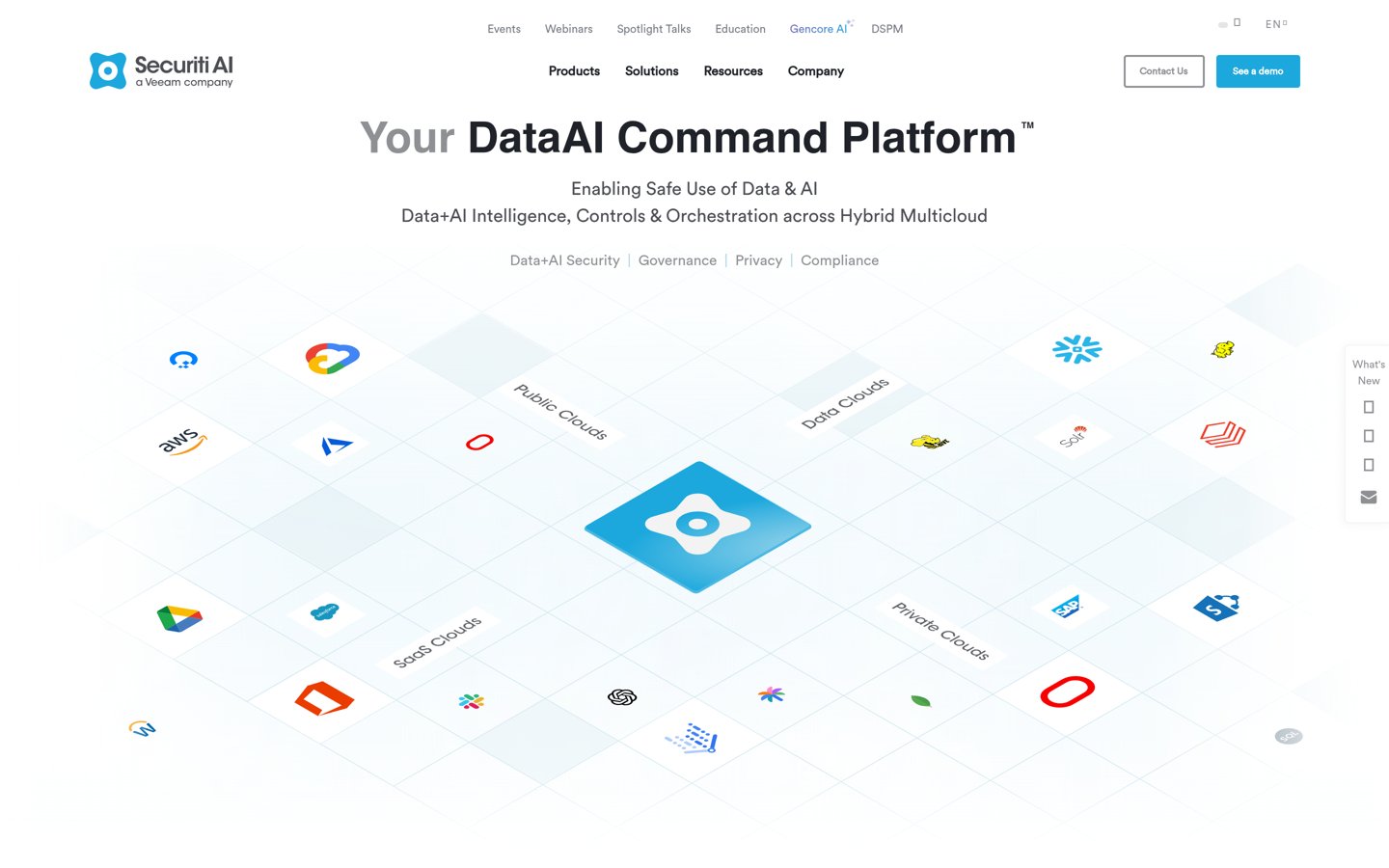
Securiti approaches privacy from the data side: discover and classify sensitive data across cloud and on-premises systems, then run privacy workflows on that foundation. The same intelligence powers data security posture management, making it attractive to CISOs and DPOs who want one data intelligence layer serving both security and compliance.
The trade off is the breadth. Evaluations take longer, implementations touch more systems, and pricing reflects the enterprise positioning. It suits large organizations where privacy, security and data governance are converging under one mandate.
What we like
Unifies data security posture with privacy operations
Deep discovery and classification
AI governance modules for new regulations
Rated 4.6 out of 5 from 116 G2 reviews
Watch out for
Platform breadth means longer evaluations
Enterprise pricing, high for smaller teams
Steep learning curve during setup
Data Command Center unifies DSPM, privacy and AI governanceVisit securiti.ai
06
TrustArc
4.2/5on G2 (349 reviews, checked Nov 2026)
PricingCustom/yr
Best for guided privacy programs
ConsentYes, cookie consent
Data mappingYes, data mapping
Subject requestsYes, DSR workflows
PricingQuote only
trustarc.com
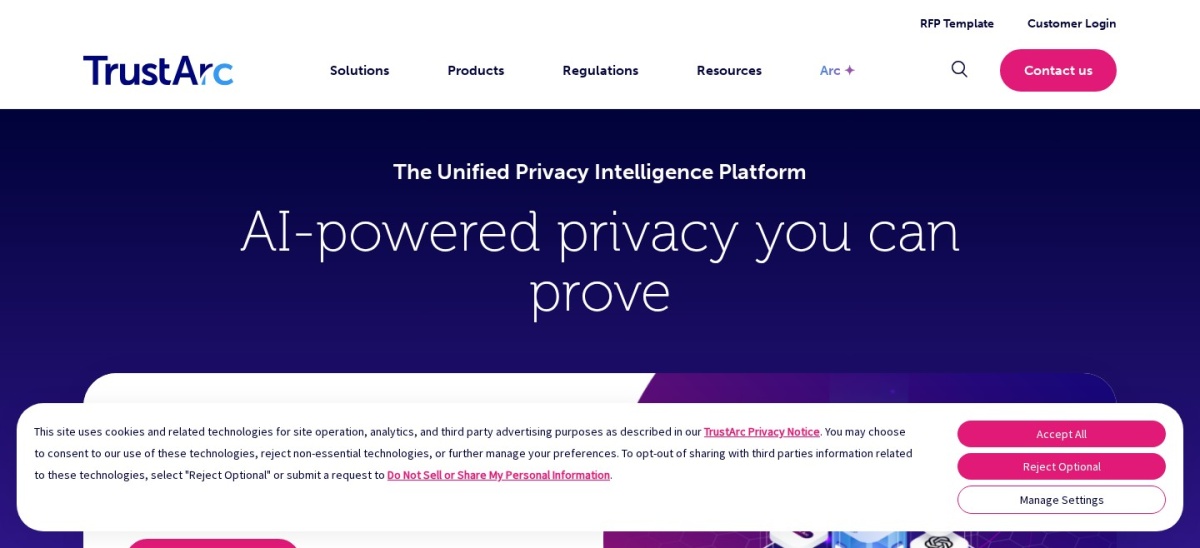
TrustArc homepage, captured Nov 2026.
TrustArc brings the longest history in the group, evolving from TRUSTe certifications into a full privacy management platform. Its strength is programmatic: assessments, cookie consent, data mapping and subject requests guided by methodology refined over decades. The certification heritage still carries weight with partners and customers doing diligence.
The trade off is the pace. Newer competitors move faster on automation and developer experience, and the interface trails newer API-first rivals. It suits organizations that value proven methodology and third-party certification signals, particularly those with long-standing privacy programs rather than greenfield builds.
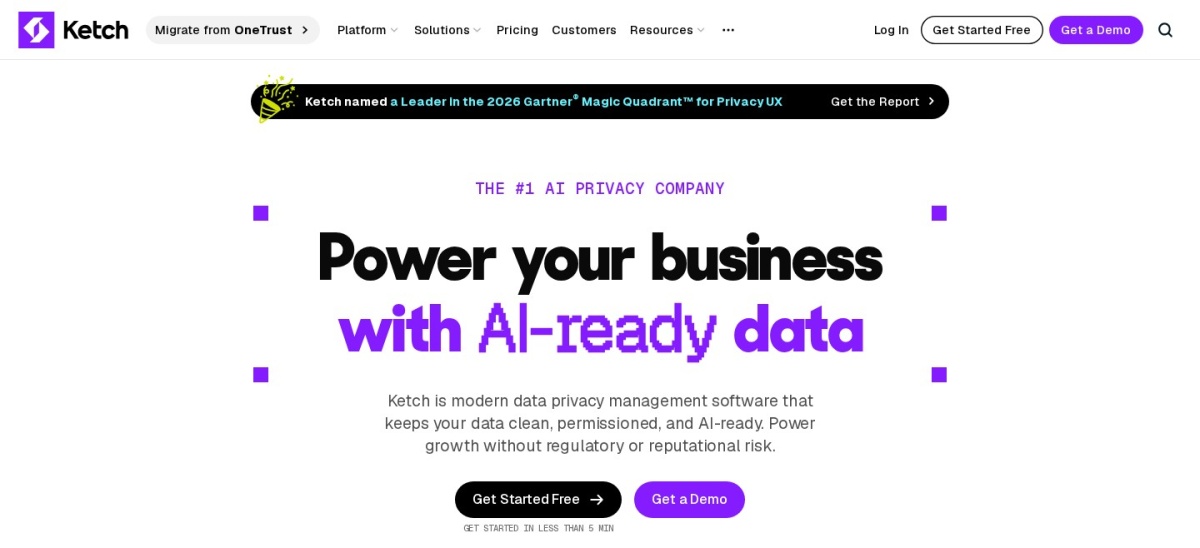
Ketch offers a full-feature consent platform at $0 a month, then grows into full privacy infrastructure. The free tier covers up to 5,000 visitors, and the Starter plan at $150 a month adds data mapping and subject-request automation with automatic cookie detection and multilingual consent management.
The trade off is the paid tier jump. Starter at $150 a month is a big step from free, and the pricing model bundles a fixed number of DSR integrations, so teams that need more pay more. It suits smaller teams that want to start free and grow into a full privacy platform without switching vendors.
What we like
Full-feature consent platform free to start
Data mapping and DSR automation built in
Automatic cookie detection
Rated 4.6 out of 5 from 229 G2 reviews
Watch out for
Starter at $150 a month is a big step from free
DSR integrations capped on lower plans
Pricing model is hard to follow without a sales call
CookieYes is the highest-rated consent tool here, and the cheapest way to start. Its free plan covers 100 pages per scan and 5,000 pageviews a month, and Basic costs $10 a month per domain with 600 pages per scan and 100,000 pageviews. It scans for cookies, sorts them into categories, shows visitors a banner with real choices, and keeps consent records.
The trade off is the scope. CookieYes handles consent and cookie policy generation, not data mapping or subject requests, and it is priced per domain, so multi-site owners pay per site. It suits small websites that need compliant cookie banners fast and cheap.
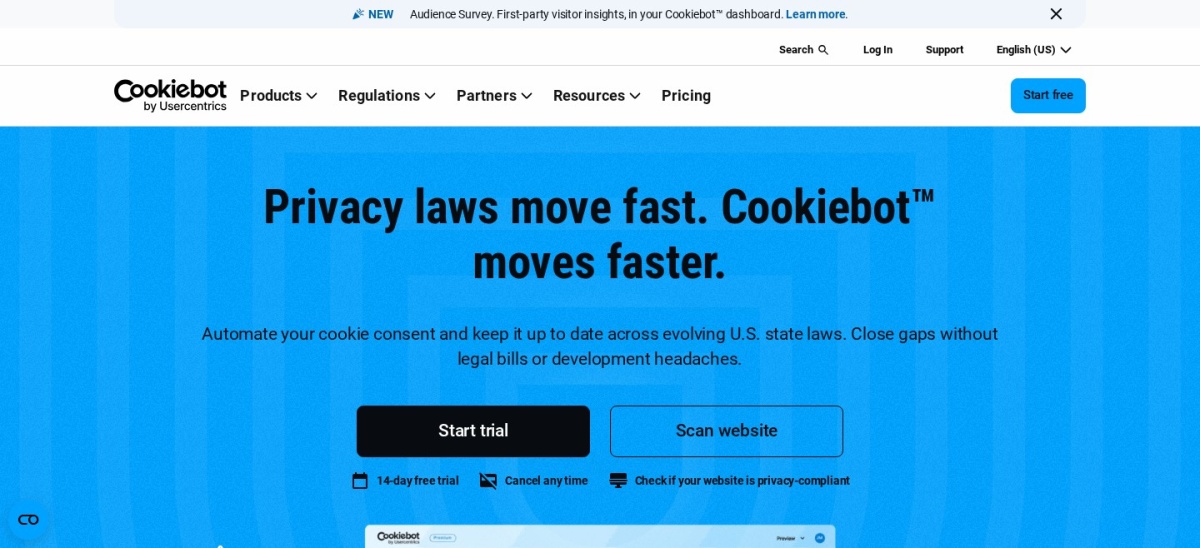
Cookiebot by Usercentrics scans a website for cookies and trackers, shows a consent banner and stores consent proof, with plans scaled by number of subpages. The free plan covers one domain and up to 50 subpages, and Premium Lite starts at €7 a month. It supports Google Consent Mode and IAB TCF 2.2, and it has been around long enough to have a well-tested scanner.
The trade off is the price curve. The entry plan is affordable for small sites, but costs rise fast as subpages grow, and the advanced Usercentrics platform is quoted on request. It suits larger sites that want a long-tested scanner and wide platform support.
Privacy platforms price on the size of your data estate, the number of systems they map, and the modules you buy. A flat list price would hide the real cost, so vendors quote after a demo.
OneTrust prices modules separately, so the platform price grows with each capability you add. Ask for the full modular quote in writing, with implementation and support included.
The published prices below are the real entry points for the tools that publish them: CookieYes from $10 a month per domain, Ketch from $150 a month, Osano Plus at $199 a month, and Cookiebot from €7 a month.
A free plan covers the banner only. Free tiers from CookieYes, Ketch, Osano and Cookiebot handle consent for a small site, but data mapping and subject-request automation start on paid plans.
How we chose
We started from every GDPR platform with a public rating on G2, then kept the ones that cover consent, data mapping or subject requests for real customer bases.
Prices come from each vendor's site and G2 pricing data, checked on 23 November 2026. Five vendors publish no price, so the list shows Custom pricing for them. Ratings and review counts come from G2 on the same day.
Osano's $199 a month Plus price is corroborated by three independent roundups, since the vendor's pricing page did not render prices on the day we checked. We left out tools with no public rating. No vendor paid for a place, and this list is based on pricing, docs and reviews, not on using the tools ourselves.
How to choose a GDPR software
Start with the job you actually have, then check whether you need consent only, a full privacy program, or developer-led automation.
S c
S h
C h
T e
G e
FAQ
What is the best GDPR software?
OneTrust is the best GDPR software for large enterprises running a full privacy program. It covers consent, data mapping, subject requests, vendor risk and AI governance, and it is rated 4.3 out of 5 on G2 from 155 reviews.
Is there a free GDPR software?
Yes. CookieYes, Ketch, Osano and Cookiebot all offer free plans that cover cookie consent for a small site. Full data mapping and subject-request automation start on paid plans.
How much does GDPR software cost?
Cookie consent tools start free, with paid plans from $10 a month per domain for CookieYes and €7 a month for Cookiebot. Mid-market privacy platforms are quote-based, and enterprise suites cost far more once modules stack.
Which GDPR software is best for mid-market teams?
DataGrail is the best pick for mid-market teams. It automates the live data map and subject requests across nearly 2,000 integrations, and it is rated 4.7 out of 5 on G2 from 208 reviews.
Which GDPR software is best for developers?
Transcend is the best pick for engineering-led teams. It fulfills access and deletion requests programmatically through APIs, and it is rated 4.6 out of 5 on G2 from 112 reviews.
Is a cookie banner enough for GDPR compliance?
No. Consent is one requirement among many. You also need records of processing, subject-request handling, vendor agreements, breach procedures and security measures. A banner without the program behind it is decoration.
What is the best GDPR software for small websites?
CookieYes is the best pick for small websites. It is rated 4.8 out of 5 on G2 from 330 reviews, its free plan covers 100 pages per scan, and Basic costs $10 a month per domain.