Upwork is the best freelancing platform for beginners, with the largest pool of posted jobs and a free Basic plan rated 4.5 out of 5 on G2 from 3,217 reviews. Pick Fiverr if you want buyers to find your gigs, or Freelancer.com if you want contests and low-cost bids to build a portfolio.
How we make this list: we compare pricing pages, product documentation and public user reviews, then re-check every price before each update. No product paid for a place. Disclosure.
Upwork has the widest choice of posted jobs and a free Basic plan, rated 4.5/5 on G2 from 3,217 reviews.
Fiverr is the easiest start if you can package your skill as a gig, but its flat 20% commission is the highest here.
Freelancer.com gives the cheapest paid upgrade at $9.99 a month, and contests help beginners build a portfolio.
FlexJobs is the only option with no free plan, but every listing is screened and the annual plan is $71.40 a year.
Toptal pays the best rates but accepts only the top 3% of applicants, so treat it as a goal, not a first step.
Seven of the nine platforms are free to join; the real cost is the commission, from 0% to 20% per job.
What to look for in a freelancing platform
Starting freelance work is mostly about getting the first few clients. A platform with many posted jobs and a free plan matters more than fancy features when you have no reviews yet.
Fees are where platforms differ most. Some charge a monthly subscription, most take a cut of each job, and a few do both. A 20% commission on a $100 job costs $20, so read the fee page before you price your work.
Profiles and reviews do the selling for you. Our guide on creating a portfolio site with WordPress shows how a simple portfolio page gives clients something to check before they hire you.
Avoid paying for several subscriptions at once. Start free on one or two platforms, win a few jobs, then pay for the plan that removes the limit you actually hit, such as bids or Connects.
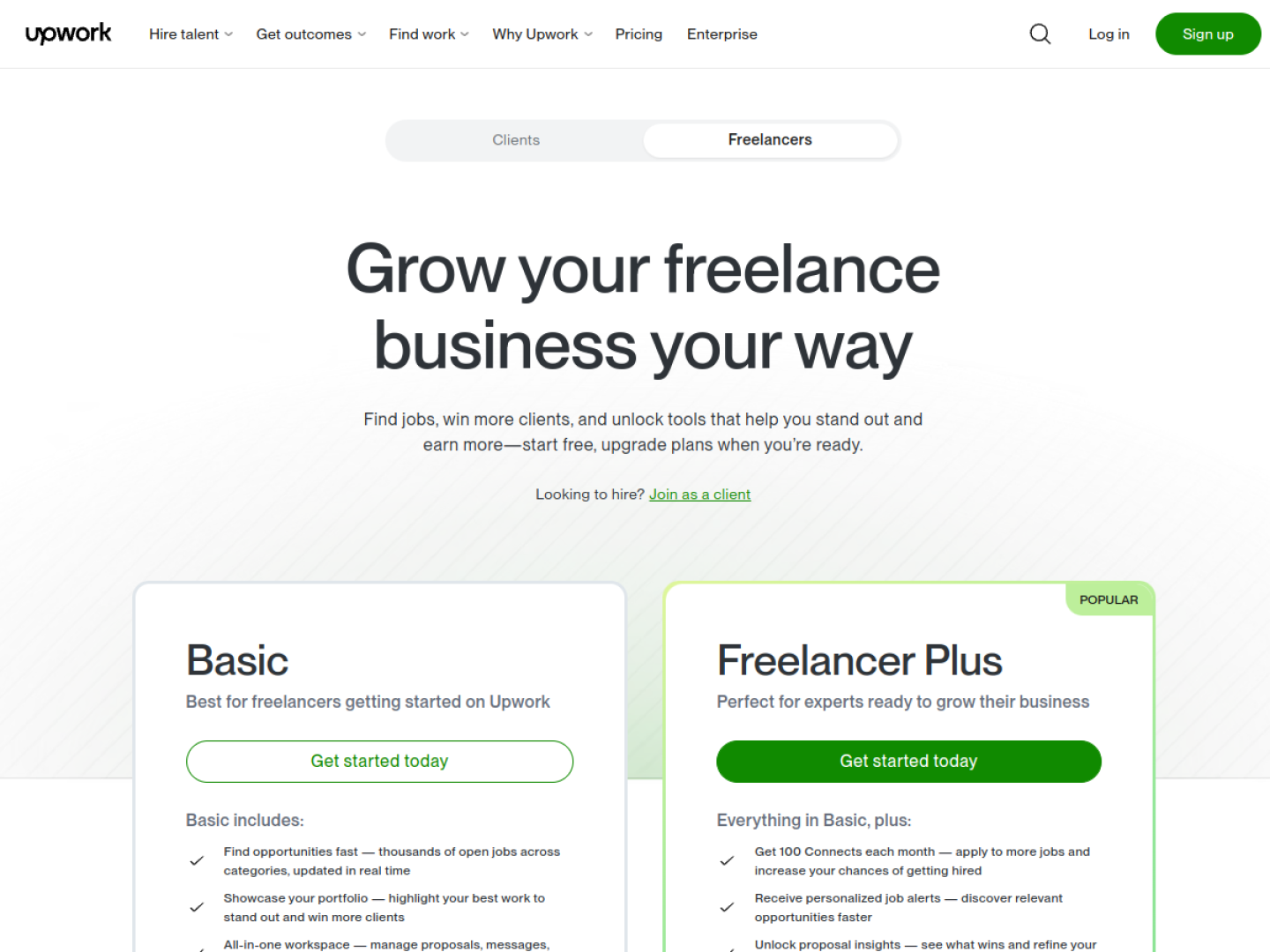
Upwork is the largest freelance marketplace in this list, with 18 million freelancers across 180 countries and thousands of jobs posted in writing, design, development and admin. A free Basic plan includes a full profile, 10 free Connects a month for proposals, and payment protection on every contract.
The trade off is cost. Upwork takes a service fee of 0% to 15% per contract, and extra Connects cost $0.15 each, so bidding widely adds up. Freelancer Plus costs $19.99 a month for 100 Connects and proposal insights. It suits beginners who want the widest choice of posted jobs and can afford to bid often.
What we like
Largest pool of posted jobs in this list
Free Basic plan with payment protection
Talent badges help strong profiles stand out
Watch out for
Service fee of up to 15% per contract
Proposals cost Connects, so bidding adds up
Freelancer Plus adds 100 Connects a month and proposal insightsVisit upwork.com
02
Fiverr
4.3/5on G2 (464 reviews, checked Nov 2026)
Paid from$19/mo
Best for selling packaged gigs
Free planYes, gigs free to list
Seller commission20% flat
How you get workBuyers find your gigs
Paid planSeller Plus, from $19/mo
fiverr.com
Fiverr homepage, captured Nov 2026.
Fiverr is a gig marketplace where buyers find you. You list fixed-price services, called gigs, in writing, design, video, marketing and more, and clients order without you bidding on jobs. Joining and listing gigs is free, and Fiverr reports 2.9 million annual active buyers.
The trade off is the 20% commission on every order, including tips and extras, which is the highest flat fee in this list. Seller Plus starts at $19 a month for faster payouts and analytics. It suits beginners with a clear, packageable skill who want work to come to them.
What we like
No bidding: buyers come to your gigs
Free to join and list services
Clear gig packages make pricing simple
Watch out for
Flat 20% commission on every order
New sellers start with no reviews and slow orders
Seller Plus adds faster payouts, analytics and buyer insightsVisit fiverr.com
03
Freelancer.com
4.2/5on G2 (226 reviews, checked Nov 2026)
Paid from$9.99/mo
Best for cheap bids and contests
Free planYes, 6 bids a month
Project fee10% or $5 minimum
Minimum balance$20 to bid
Paid planPlus, $9.99/mo
freelancer.com
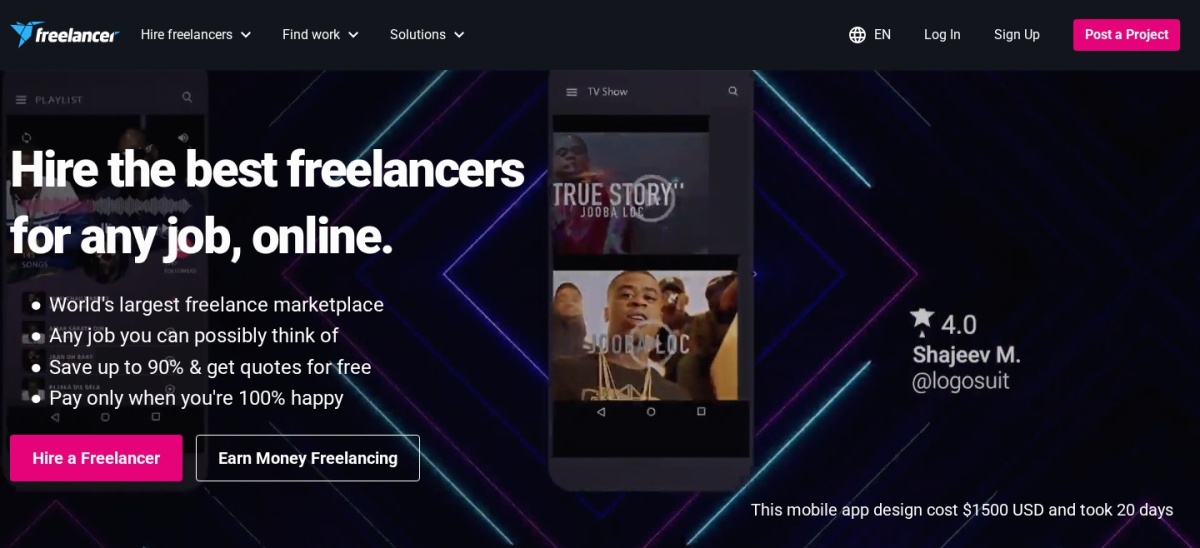
Freelancer.com homepage, captured Nov 2026.
Freelancer.com is one of the oldest freelance marketplaces, with jobs across software, writing, design and marketing, plus contests where you compete for a set prize. A free account includes 6 bids a month, and the platform requires a $20 balance before you place a bid.
The trade off is the 10% project fee, or $5 minimum, on fixed-price work, and contests pay only the winner, so unpaid entries are common. Plus membership costs $9.99 a month for 100 bids. It suits beginners who want cheap bids and are happy to enter contests to build a portfolio.
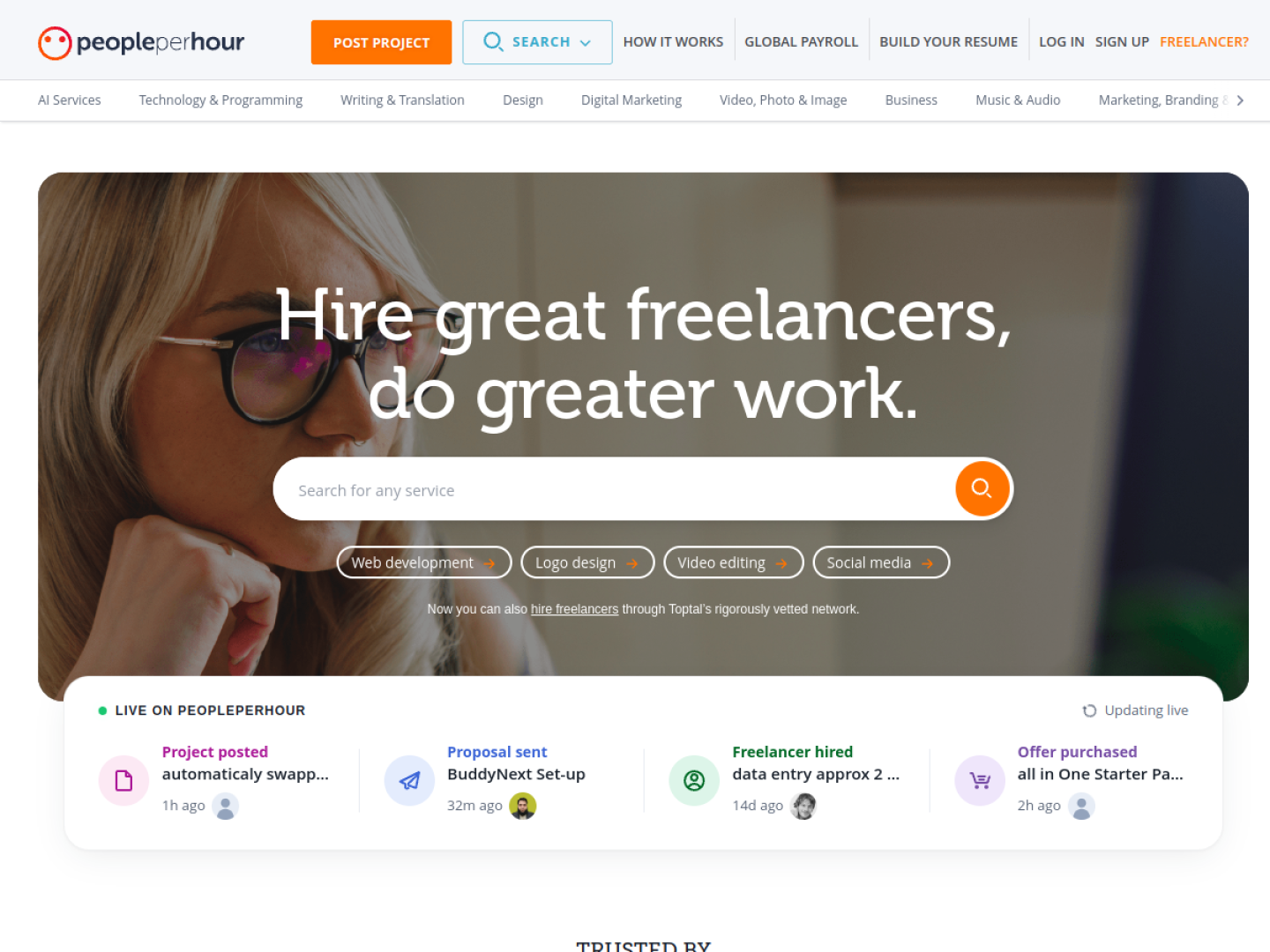
PeoplePerHour is a freelance marketplace built around fixed-price projects and hourly work in design, writing, tech and marketing. Freelancers post Offers for set services or send proposals to posted projects, and the platform holds client funds in escrow until work is approved.
The trade off is the service fee, which starts at 20% and falls to 3.5% as your lifetime billing with each buyer grows, so early jobs cost more. There is no paid subscription for freelancers. It suits beginners selling defined services who want escrow protection on every project.
4.1/5on Trustpilot (8,438 reviews, checked Nov 2026)
Starts at$5.95/mo
Best for scam-free remote job listings
Free planNo, trial $2.95
Cheapest plan$5.95/mo annual
ListingsScreened, scam-free
Money-back14 days
flexjobs.com
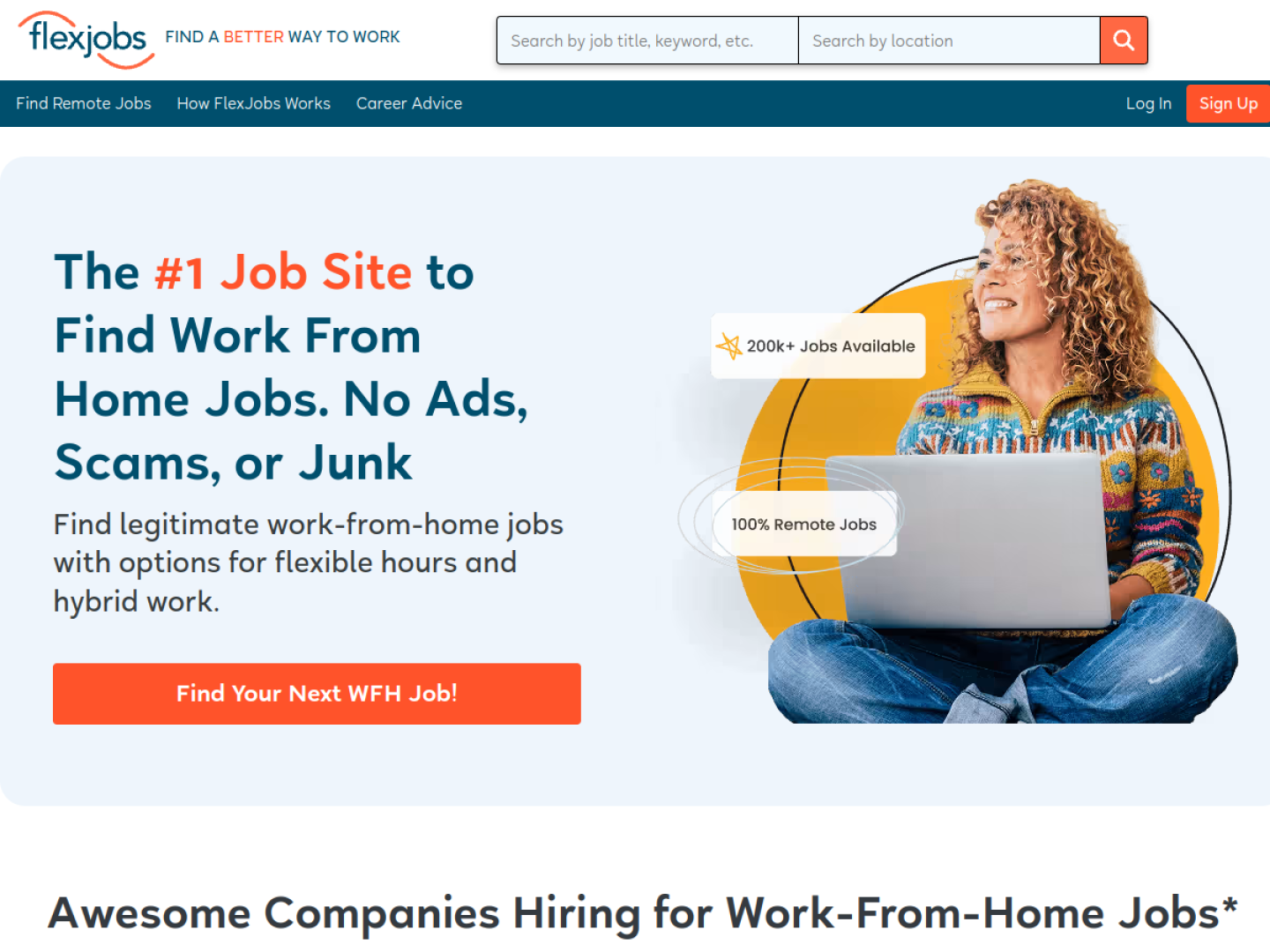
FlexJobs homepage, captured Nov 2026.
FlexJobs is a job board, not a bidding marketplace, listing remote and flexible jobs that staff screen for scams before they go live. Members get alerts, search filters and an auto-apply tool, and the site says it has served more than 10 million job seekers.
The trade off is that there is no free plan. A 14-day trial costs $2.95, then the annual plan works out at $5.95 a month, or $71.40 a year. It suits beginners who want scam-free listings and prefer applying for jobs over bidding against other freelancers.
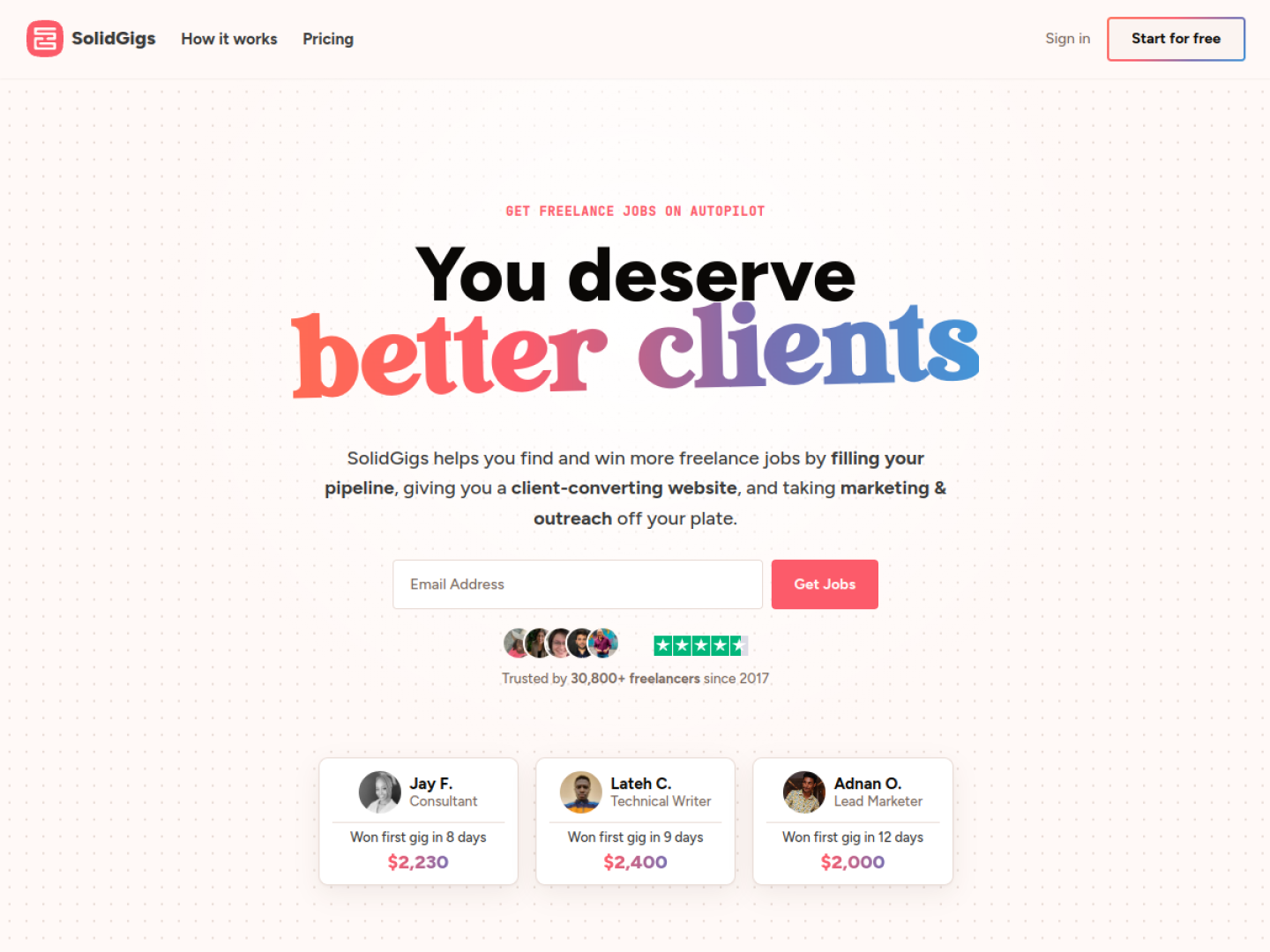
SolidGigs is a paid lead service that emails you curated freelance job leads matched to your skills, instead of a marketplace where you bid. It also includes tools for pitching and a client-converting website, and the site says it is trusted by more than 30,800 freelancers.
The trade off is price and patience. SolidGigs costs $35 a month, or $350 a year, and you still have to pitch and win each lead yourself. It suits beginners who hate bidding on marketplaces and want a daily shortlist of leads to work through.
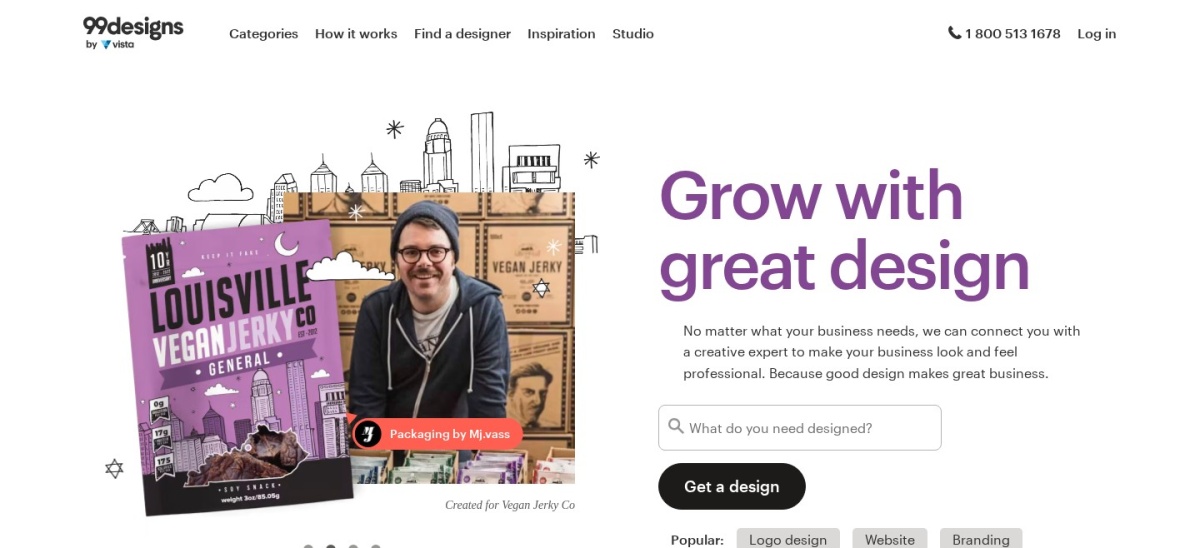
99designs is a design-only marketplace where clients run contests or hire designers directly for logos, branding, websites and packaging. Designers join free, enter contests to win the prize, and can build a public portfolio from contest work and direct hires.
The trade off is unpaid work. Most contest entries earn nothing, since only the winner is paid, and the platform takes a cut of contest prizes. It suits beginner designers who want to practise on real briefs and build a portfolio fast.
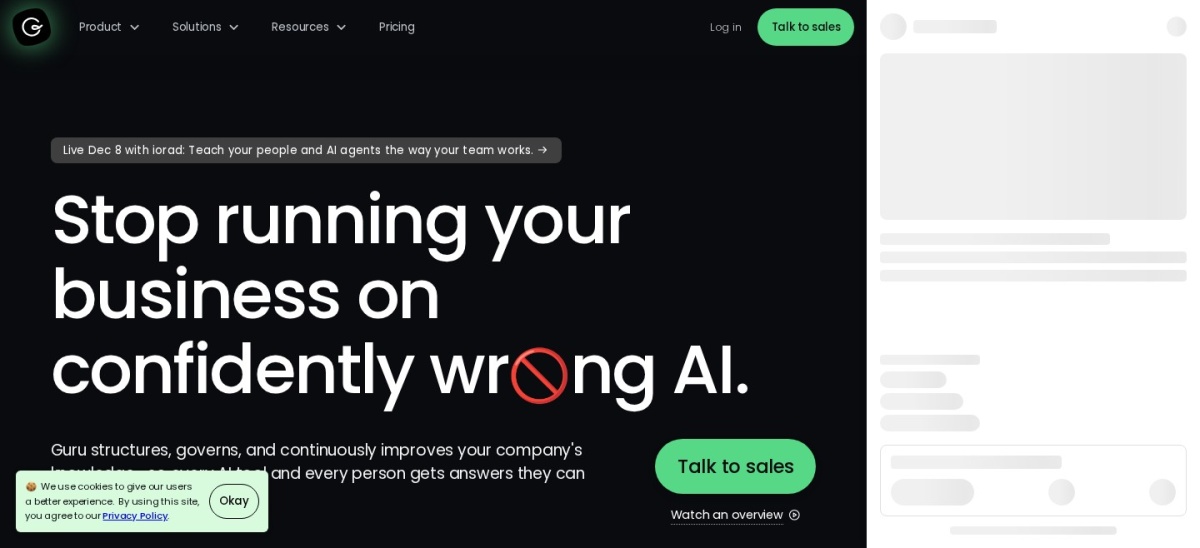
Guru is one of the oldest freelance marketplaces, founded in 2001, with jobs in programming, design, writing and admin. Its SafePay escrow holds client funds before work starts, and freelancers work in shared WorkRooms with invoices and time tracking built in.
The trade off is a thin review record and limited free bids. Guru scores 3.2 out of 5 on G2 from only 20 reviews, and the free Basic plan allows 10 bids a month with a 9% job fee. Basic+ costs $11.95 a month for 50 bids. It suits beginners who want escrow and structured, longer projects.
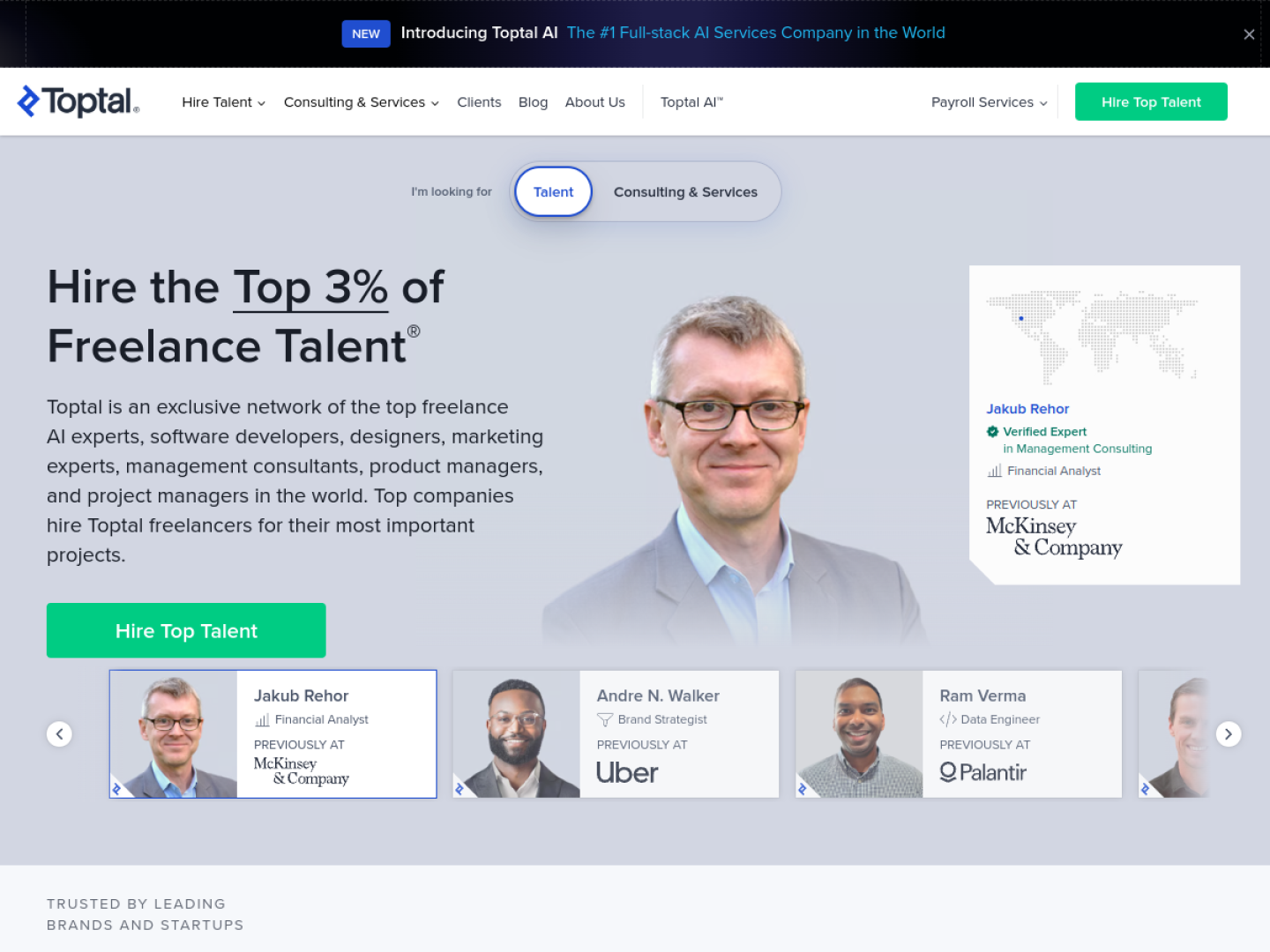
Toptal is an exclusive network of vetted freelance talent in software, design, finance and marketing, used by large companies for important projects. Freelancers who pass screening get matched to clients and paid market rates, with no bidding and no subscription fee.
The trade off is the screening. Toptal says it accepts only the top 3% of applicants, so most beginners will not pass on the first try. It suits experienced freelancers who want high-paying clients without bidding, and it is a goal to aim for later.
What we like
Highest G2 rating in this list at 4.7
Matched to clients, no bidding
Market rates with large-company clients
Watch out for
Accepts only the top 3% of applicants
Not a realistic first platform for beginners
No paid plan: Toptal takes its margin from client ratesVisit toptal.com
What the fees really cost
Most platforms in this list are free to join, so the fee you pay is a share of each job. Upwork takes 0% to 15% per contract, Fiverr takes a flat 20%, and Freelancer.com takes 10% or $5 minimum.
Subscriptions buy extra bids or Connects, not jobs. Upwork Freelancer Plus costs $19.99 a month for 100 Connects, while Freelancer.com Plus costs $9.99 a month for 100 bids.
Do the maths on your own rates before you upgrade. If you win one $200 job a month, a $19.99 subscription costs about 10% of that job before the platform fee.
FlexJobs and SolidGigs are the exceptions: they charge a subscription and no commission, at $71.40 a year and $350 a year.
How we chose
We started from the best-known freelance marketplaces and job boards, then kept the nine with a public rating on G2 or Trustpilot and a free or low-cost way in for beginners.
Prices come from each vendor's pricing page or fee page, checked on 25 November 2026. Ratings and review counts come from G2 and Trustpilot on the same day. Where a vendor shows a sale, the list shows the regular price.
We left out platforms with no public rating and those aimed only at agencies. No vendor paid for a place, and we do not claim hands-on testing for this list.
How to choose a freelancing platform as a beginner
Pick one platform, finish your profile, and win three small jobs before you pay for anything.
Match the platform to how clients find you. If you want buyers to find your gigs, start on Fiverr. If you want to bid on posted jobs, start on Upwork or Freelancer.com.
Check the fee on a typical job. Work out what a $100 job leaves you after commission. A 20% fee costs $20, while a 10% fee costs $10, and that gap grows with every job.
Start with the free plan. Free plans cover the basics on seven of these nine platforms. Pay only when you run out of bids or Connects, or when a paid plan removes a limit you keep hitting.
Build proof before you chase better platforms. Complete a few small jobs, collect reviews, and save your best work in a portfolio. That record is what gets you accepted on stricter networks such as Toptal later.
FAQ
What is the best freelancing platform for beginners?
Upwork is the best first platform for most beginners. It has the largest pool of posted jobs, a free Basic plan with 10 Connects a month, and a 4.5 out of 5 rating on G2 from 3,217 reviews.
Can I start freelancing with no money?
Yes. Seven of the nine platforms in this list are free to join, including Upwork, Fiverr and Freelancer.com. You only pay when you earn, through a commission on each job, so you can start without a subscription.
How much do freelancing platforms take from my earnings?
It varies from 0% to 20% per job. Fiverr takes a flat 20%, Freelancer.com takes 10% or $5 minimum, Guru takes 9% on its free plan, and Upwork takes 0% to 15% per contract. FlexJobs and SolidGigs charge a subscription instead.
Is Fiverr or Upwork better for beginners?
It depends on how you want to find work. Fiverr suits beginners with a clear service to package as a gig, since buyers come to you. Upwork suits beginners who want to bid on many posted jobs and build long-term client relationships.
Do I need experience to join a freelancing platform?
No. Most platforms let anyone create a profile, and beginners usually start with small, low-priced jobs to earn their first reviews. Toptal is the exception: it accepts only the top 3% of applicants, so it is better as a later goal.
Should I pay for a freelancing platform subscription?
Not at first. Start on a free plan and pay only when a limit blocks you, such as running out of bids or Connects. A subscription makes sense once you win work often enough that the extra bids pay for themselves.
SaaS SEO and WordPress specialist with about 8 years of experience. Rakib compares WordPress plugins, themes, hosting and software using public pricing, documentation and user reviews. See how we rank.