POINT is the best free volunteer management software for most nonprofits, with a free Core plan covering unlimited volunteers and admins, scheduling, hour tracking and reminders. Pick SignUpGenius for simple signup sheets and Timecounts for a modern free hub.
How we make this list: we compare pricing pages, product documentation and public user reviews, then re-check every price before each update. No product paid for a place. Disclosure.
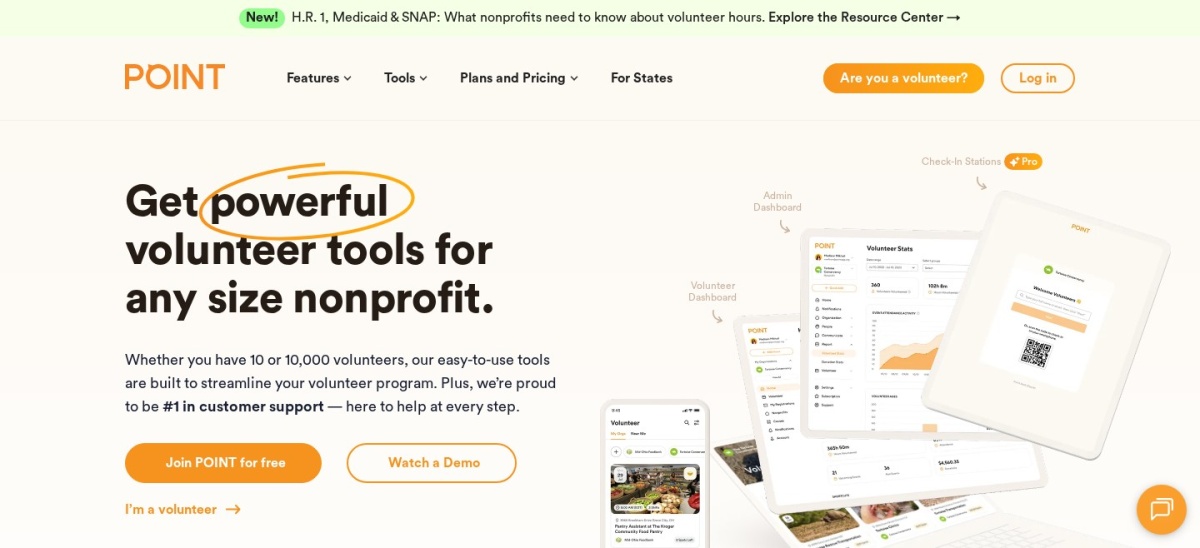
POINT's free Core plan covers unlimited volunteers and admins, scheduling, hour tracking and reminders at $0.
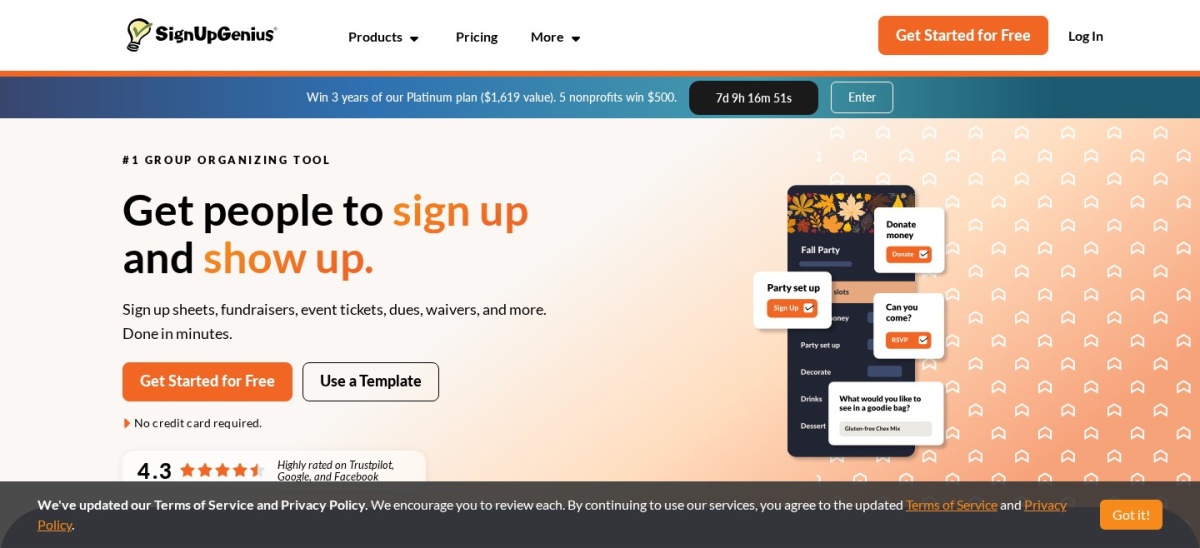
SignUpGenius is the best-known free option, rated 4.4 out of 5 on G2 from 136 reviews, but the free plan shows ads.
SignUp.com's Starter plan costs $99.99 a year and adds unlimited text reminders, while the free Basic plan covers one organizer.
VolunteerHub and Get Connected publish no free plan; both start with a trial or demo, and VolunteerHub's Plus starts at $143 a month.
Volgistics is the cheapest paid start at $9 a month for 50 volunteer records, with a 30-day trial.
What free volunteer software should cover
Volunteer software handles recruitment, scheduling, hour tracking and communication. For a nonprofit with no software budget, the free tier is the whole decision, so its limits matter as much as its features.
A useful free plan should cover the basics without a trial clock: volunteer signups, a shared schedule, hour tracking and reminders. If the free tier ends after 14 or 30 days, it is a trial, not a free plan.
Watch the volunteer and event caps. Some free plans cover unlimited volunteers, while others stop at 25 or limit you to a few active events. If your signup flow lives on your own site, a simple contact form can collect volunteer details before you move them into one of these tools.
Hour tracking is what turns volunteer time into grant reports. Check that the free tier exports hours before you commit your program to it.
POINT is a volunteer management platform built for nonprofits, with a free Core plan that covers unlimited volunteers and admins. The free plan includes signups, scheduling, event and group management, automated messaging and reminders, hour tracking and a volunteer portal with a mobile app.
The trade off is the free plan's event cap. Free covers a small number of active events, and application management, check-in kiosks, waivers and custom reports need Pro at $99 a month billed annually. It suits small nonprofits that want a real system at no cost and can grow into Pro later.
What we like
Free plan covers unlimited volunteers and admins
Scheduling, hour tracking and reminders included free
SignUpGenius is the signup sheet most volunteers already know. The free Basic plan covers unlimited signups with automatic reminders, and volunteers pick a slot without creating an account. Paid Silver starts at $11.99 a month and removes ads from one signup.
The trade off is depth. There is no volunteer profile database, no real hour tracking and no screening, so it cannot run an ongoing volunteer program on its own. It suits schools, churches and one-off events where signups are the whole job.
SignUp.com is a simple signup tool for groups, schools and nonprofits. The free Basic plan covers one organizer and one group page with unlimited participants, signups and emails, and volunteers sign up without a password. Starter costs $99.99 a year and adds unlimited text reminders and waitlists.
The trade off is ads. Paying for Starter does not remove them; ad removal is a separate upgrade, and waivers and check-in start on Plus at $249.99 a year. It suits PTAs, sports teams and churches that coordinate closed groups.
Timecounts is a volunteer platform built around a branded hub where supporters browse openings and sign up. The free plan includes unlimited volunteers, scheduling with self-signup, hour tracking, onboarding checklists and automated reminder emails. Pro costs $59 a month billed annually.
The trade off is polish over depth. There are fewer integrations than the older platforms, no mobile admin app, and the free plan is aimed at registered charities. It suits small nonprofits that want a clean, modern hub without paying.
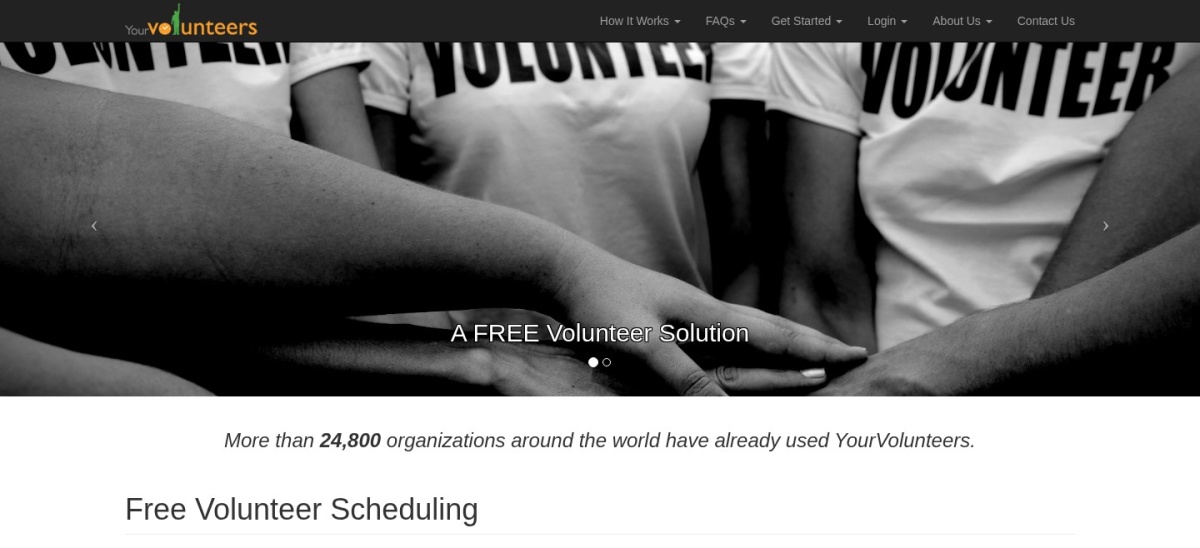
YourVolunteers is a free cloud tool for scheduling shifts and tracking hours. The free version supports up to 1,000 volunteers with ads, and volunteers can self-schedule or be assigned by a manager. It also tracks unscheduled hours and sends the team a weekly update.
The trade off is age. The interface looks dated next to POINT or Timecounts, the G2 rating rests on only 2 reviews, and premium costs $20 a month mainly to remove ads. It suits small nonprofits that want free scheduling without learning a big platform.
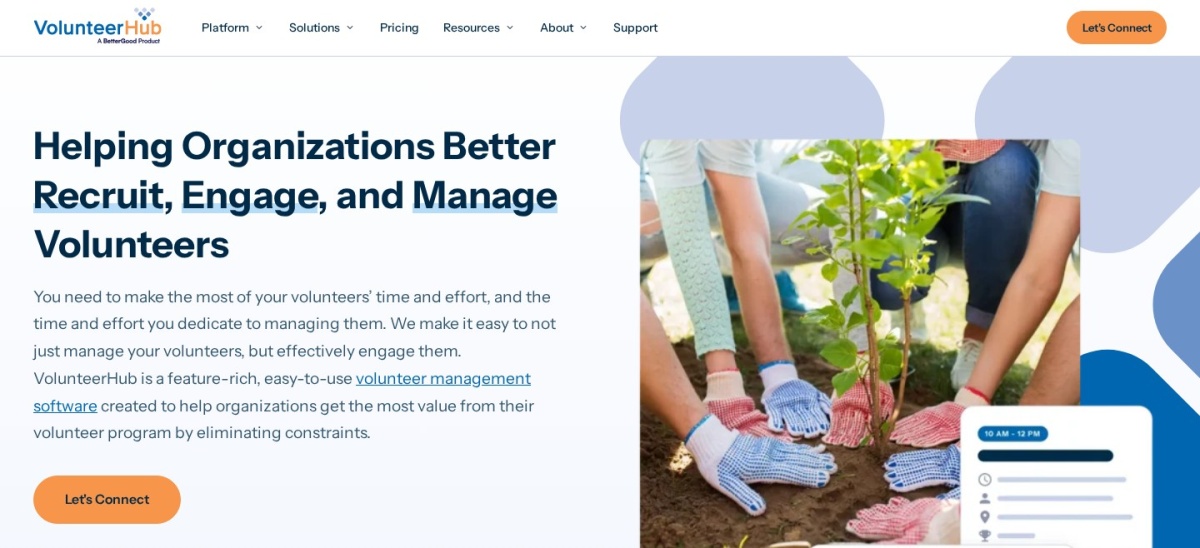
VolunteerHub is a full volunteer management platform for mid-size and large nonprofits. It covers branded event landing pages, registration, scheduling, hour tracking and communication, with native links to Salesforce and Blackbaud. Plus starts at $143 a month billed annually, plus a setup fee.
The trade off is cost and commitment. There is no free plan, the setup fee amount is not published, and CRM connectors are optional extras on every tier. It suits nonprofits whose donor data already lives in a major CRM and who run volunteer programs at scale.
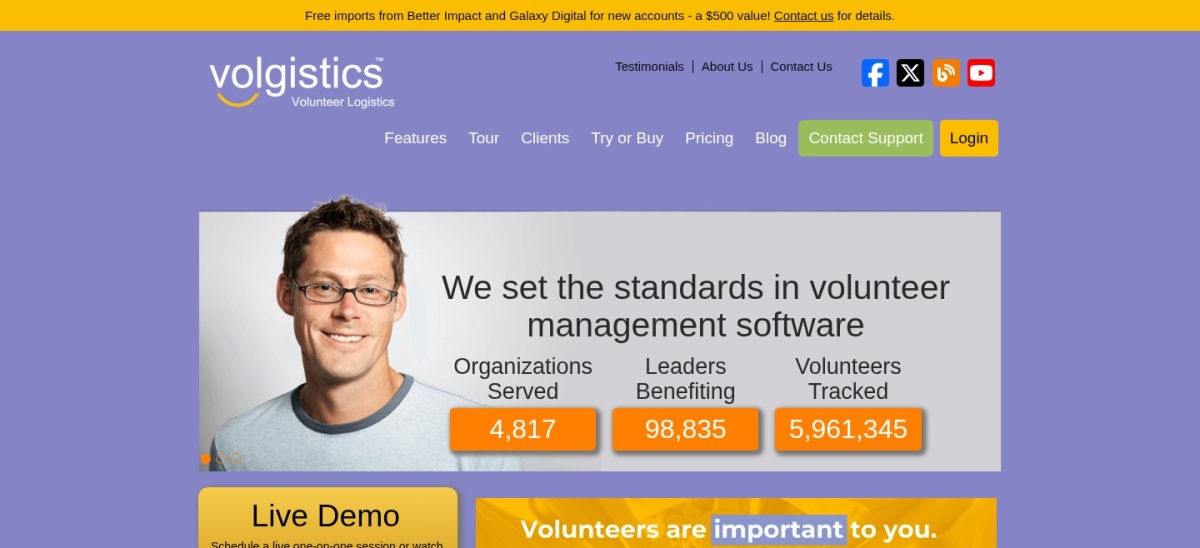
Volgistics is a long-running volunteer database for hospitals, museums and steady rosters. Pricing is by stored volunteer records, starting at $9 a month for 50, and the 30-day trial is a full account. Monthly billing lets you move tiers up or down as the roster changes.
The trade off is that the base price covers the database only. The VicNet volunteer portal, VicTouch time clock and VicDocs storage are separate modules from $3 a month each, and the interface looks dated. It suits programs that want a cheap, dependable roster.
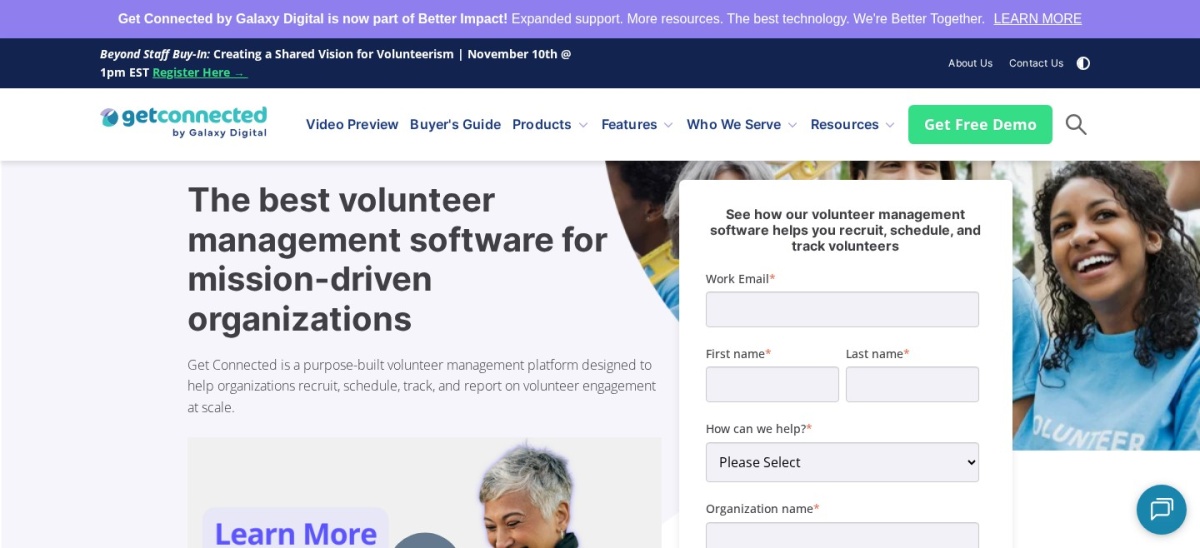
Get Connected is a community volunteer portal by Galaxy Digital, now part of Better Impact. A foundation, United Way or city runs one portal where many local nonprofits post opportunities and residents browse them all. Pricing is quote-only across its Shift, Sustain, Amplify, Center and Campus plans.
The trade off is scope. Setup is a project rather than an afternoon, there is no free plan, and a single nonprofit will find simpler and cheaper options. It suits organizations that broker volunteering for a whole community, not just one program.
GivePulse is a community engagement platform that mixes volunteering with fundraising and impact measurement. The free Basic plan gets a small organization started, and Give Joy costs $20 a month billed annually with unlimited volunteers, surveys, private events and waivers.
The trade off is focus and proof. GivePulse also sells to universities and corporate teams, so some of the interface reflects that, and its G2 rating rests on only 3 reviews. It suits organizations building community, not just schedules.
Free plans cover the basics well. POINT, Timecounts, SignUpGenius, SignUp.com, YourVolunteers and GivePulse all let you start without paying, usually with scheduling and hour tracking included.
Paid plans mostly add depth and polish. You get more admins, ad-free pages, background checks, kiosks and better reporting, and the caps on volunteers and events rise.
Watch the line between free and trial. VolunteerHub, Volgistics and Get Connected offer trials or demos, not permanent free plans, so budget for the paid tier from the start. Our guide on whether WordPress is free for nonprofits makes the same free-versus-trial distinction for a different tool.
For a small program, a free plan is often enough. For a program with hundreds of volunteers, screening needs or grant reporting, budget for the paid tier and the seats your team will need.
How we chose
We started from the volunteer tools that appear most often in nonprofit guides and review listings, then kept those with a real free plan or a free trial and a public rating.
Prices come from each vendor's pricing page, checked on 25 November 2026. Ratings and review counts come from G2 or Capterra on the same day. Where a vendor shows a sale, the list shows the regular price.
We left out tools with no public rating, such as Golden, and tools whose homepages would not render for a screenshot, such as Mobilize and Track It Forward. No vendor paid for a place, and we do not claim hands-on testing for this list.
How to choose free volunteer management software
Start with your volunteer count and your must-have features, then match the free tier to them.
Count your volunteers first. Free tiers cap volunteers, events or admins. A 500-volunteer program will blow past limits built for 25 or 50.
Separate free plans from trials. A free plan lasts; a trial ends. Match the model to whether your budget is zero forever or zero for now.
Check hour tracking and exports. If grants depend on verified hours, confirm the free tier logs hours and exports reports before you commit.
Test the volunteer side. Sign up for a shift the way a volunteer would. If the flow confuses you, it will confuse them too.
FAQ
What is the best free volunteer management software?
POINT is the best free option for most nonprofits. Its free Core plan covers unlimited volunteers and admins with scheduling, hour tracking, reminders and a volunteer app, and it is rated 4.7 out of 5 on G2 from 103 reviews.
Is there really free volunteer management software?
Yes. POINT, SignUpGenius, SignUp.com, Timecounts, YourVolunteers and GivePulse all offer free plans with no trial clock. Fuller platforms such as VolunteerHub and Volgistics offer free trials instead of permanent free plans.
What is the difference between signup tools and volunteer management software?
Signup tools collect names for slots. Management software adds volunteer profiles, hour tracking, background checks, communication and reporting, so it fits programs that track people across events and years.
How many volunteers can free plans handle?
It varies widely. POINT and Timecounts cover unlimited volunteers free, while YourVolunteers covers up to 1,000 and SignUp.com's free plan covers one organizer. Check the volunteer, event and admin limits on each free tier before you commit.
Do I need volunteer management software for a small nonprofit?
A spreadsheet works until about 30 active volunteers. Beyond that, scheduling conflicts and hour tracking make software worth it, and the free tools on this list remove the cost objection.
Can volunteers self-schedule?
Most tools on this list offer self-service signup and shift selection, which is the single biggest time-saver for coordinators. POINT, Timecounts and YourVolunteers all let volunteers pick their own shifts from a portal or hub.
SaaS SEO and WordPress specialist with about 8 years of experience. Rakib compares WordPress plugins, themes, hosting and software using public pricing, documentation and user reviews. See how we rank.