Best Fire Department Software in 2026: 9 Tools Compared
WLWPLegible EditorsLast verified 23 Nov 2026How we rank14 min read
★ Short answer
First Due is the best fire department software for most departments, combining NFIRS/NERIS reporting, scheduling, pre-plans and inspections in one cloud platform rated 4.6 out of 5 on Capterra. Pick ESO for data-heavy reporting, and Active911, at $14 per device per year, for dispatch alerting.
How we make this list: we compare pricing pages, product documentation and public user reviews, then re-check every price before each update. No product paid for a place. Disclosure.
First Due is the broadest platform here: records, ePCR, pre-plans, inspections, scheduling, assets and training in one cloud system.
ESO is the data heavyweight, but its G2 score is 3.6 out of 5 from 21 reviews, the lowest in this list, and most of those reviews cover the older Firehouse product.
EPR FireWorks is the highest-rated records system here at 4.6 out of 5 on Capterra from 74 reviews, with more than 300 built-in reports.
Eight of the nine tools publish no price and sell by quote. Only Active911 publishes a price, at $14 per device per year.
Scheduling and alerting are usually bought separately: Aladtec for shifts and Active911 for dispatch alerts sit beside a records system.
What fire department software actually covers
Fire department software is several products under one label: records management for incident reporting, scheduling and staffing, inspections and pre-incident planning, training and certifications, apparatus and inventory checks, and dispatch alerting.
Some vendors cover all of it. Most cover two or three pieces well, so departments usually run two to four systems: a records system at the centre, plus scheduling, training or alerting alongside it.
The national reporting standard is moving from NFIRS to NERIS, the National Emergency Response Information System. Any vendor you consider should explain its NERIS support, the migration path for your historical data, and whether the transition costs extra.
The buying discipline is the same as choosing any long-term platform: shortlist three, demo each with your own reports and rotations, and compare itemised quotes, as our guide on how to choose WordPress hosting explains for a different kind of platform.
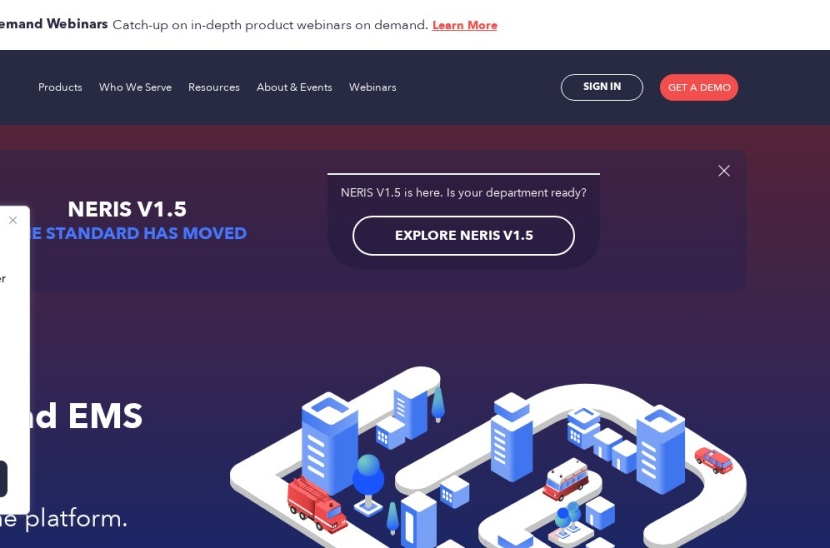
First Due is a cloud platform that covers incident reporting, ePCR, pre-incident planning, inspections, scheduling, assets, training and analytics in one system. It supports the move from NFIRS to NERIS reporting, and its mobile tools are built for crews working in the field. It is rated 4.6 out of 5 on Capterra from 58 reviews.
The trade off is scope. Rolling out every module at once is a large project, so most departments start with records and scheduling and add the rest in phases. Pricing is by quote, with no published price. It suits departments that want one login instead of five separate systems.
What we like
True all-in-one scope, from records to training
Modern interface built for tablets and field use
Strong momentum with large agencies and statewide deployments
Watch out for
All-in-one means a bigger implementation
Pricing is by quote, so costs are hard to compare upfront
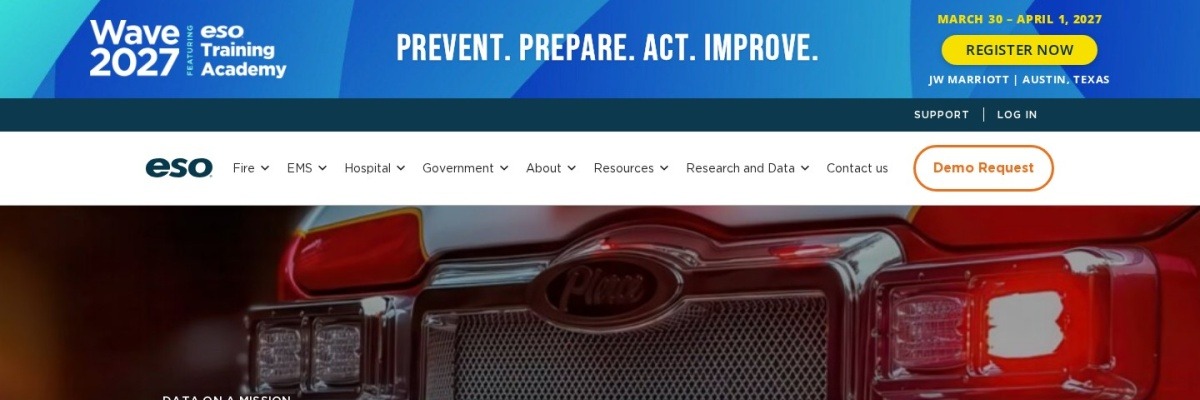
ESO Fire RMS is a records and analytics platform for fire and EMS agencies, with incident reporting, prevention, fleet readiness and personnel in one system. Its fire records connect to its EMS records, so a call that involves both is not documented twice. It is rated 3.6 out of 5 on G2 from 21 reviews.
The trade off is weight. The platform can feel large for a small volunteer department, and pricing is by quote with no published price. It suits agencies where reporting accuracy and state compliance decide funding, staffing and ISO ratings.
What we like
Deep records and analytics with a data-first approach
Fire and EMS records in one connected system
Guidance through the NFIRS to NERIS transition
Watch out for
Lowest G2 rating in this list, mostly from older Firehouse reviews
Can feel complex for small volunteer departments
Fire RMS, ePCR and analytics are priced by quoteVisit eso.com
03
EPR FireWorks
4.6/5on Capterra (74 reviews, checked Nov 2026)
PricingCustom/quote
Best-rated fire and EMS records system
Incident reportingNFIRS and NERIS
Built-in reports300+
ePCRIncluded
PricingQuote only
eprfireworks.com
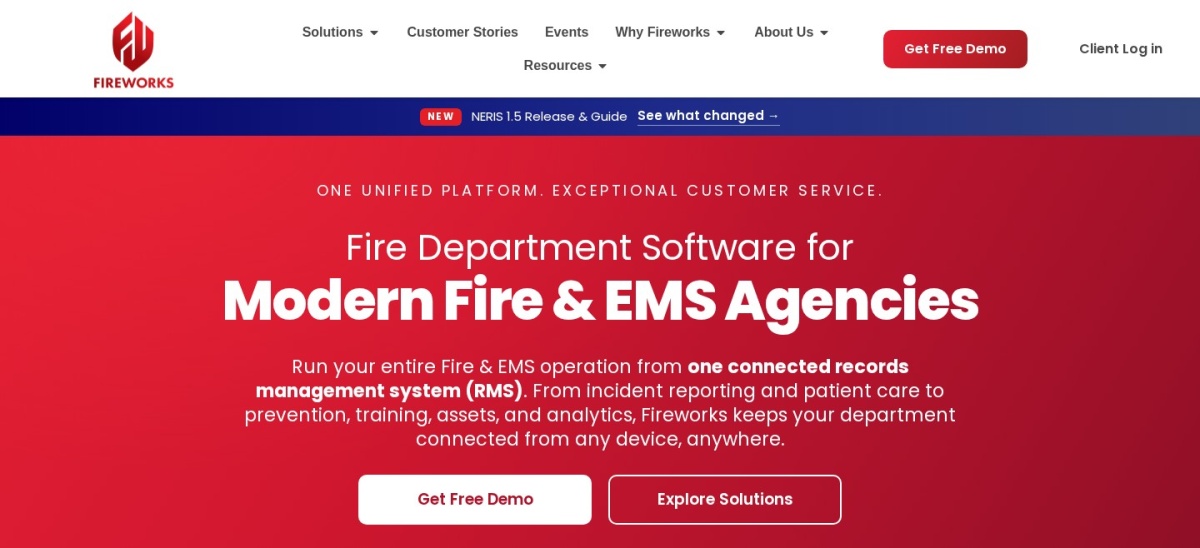
EPR FireWorks homepage, captured Nov 2026.
EPR FireWorks is an all-in-one fire and EMS records system with incident reporting, ePCR, inspections, training and billing. It lists more than 300 built-in reports, and its Capterra page shows a 4.6 out of 5 rating from 74 reviews. It is a common landing place for departments leaving Emergency Reporting.
The trade off is change. Moving records from another RMS takes planning, and reviewers note the back office can be hard to follow at first. Pricing is by quote, with no published price. It suits mid-size and combination departments that want one RMS for fire and EMS.
What we like
Highest-rated records system in this list
More than 300 built-in reports
One RMS for fire and EMS, including ePCR
Watch out for
No published price
Reviewers note a learning curve in the back office
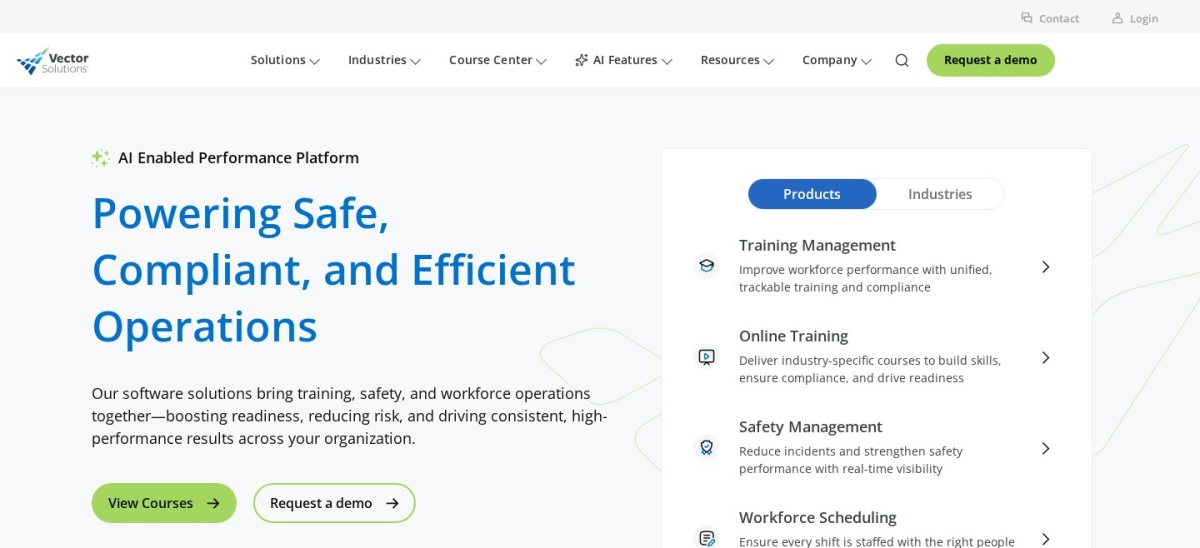
Vector Solutions covers the people side of a fire department through TargetSolutions training and Vector Scheduling. TargetSolutions offers online fire and EMS courses with credential tracking, and Vector Scheduling handles shift, callback and overtime rules. Its training product is rated 4.5 out of 5 on G2 from 12 reviews.
The trade off is scope. Vector is not a records system, so most departments pair it with an RMS such as ESO or First Due. Pricing is by quote, with no published price. It suits departments that want one vendor for training, scheduling and compliance.
What we like
More than 1,000 online courses for fire and EMS
Strong on certifications and credential tracking
One vendor for training, scheduling and policy
Watch out for
Not a records system, so it pairs with an RMS
G2 rating rests on only 12 reviews of TargetSolutions
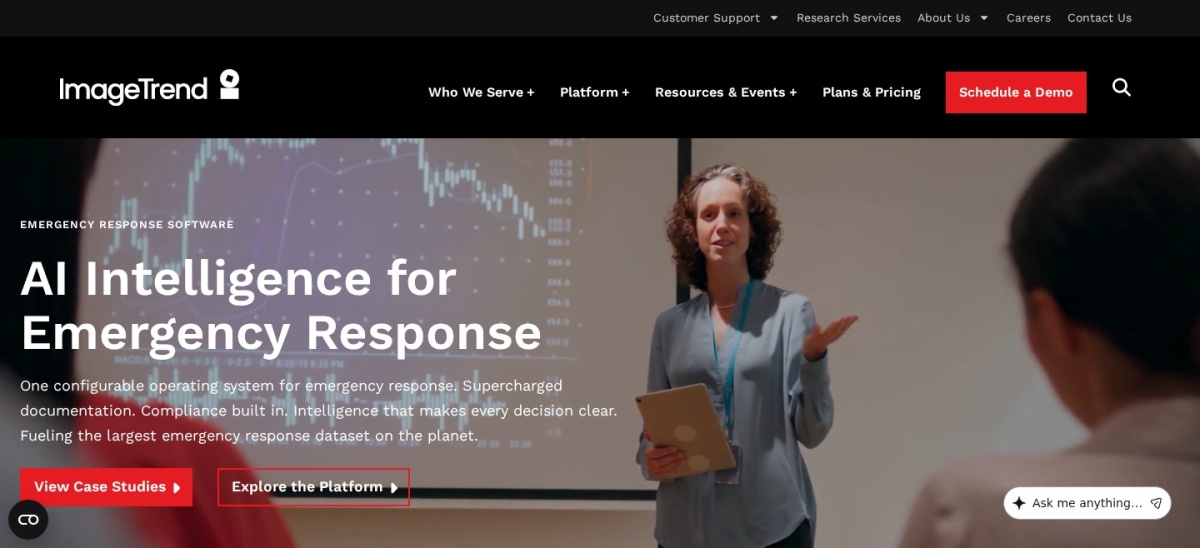
ImageTrend is a data platform for fire, EMS and state agencies, covering incident reporting, inspections, pre-plans, scheduling and billing. Its Elite Fire forms are configurable, and its analytics roll data up from departments to the state level. It is rated 4.2 out of 5 on G2 from 55 reviews.
The trade off is complexity. Configurable forms need a knowledgeable administrator, and pricing is by quote with no published price. It suits agencies and states with deep data needs, or departments whose state standardises on ImageTrend.
What we like
Powerful data platform used at agency and state level
Strong EMS and patient-care reporting beside fire records
Flexible configuration for complex reporting needs
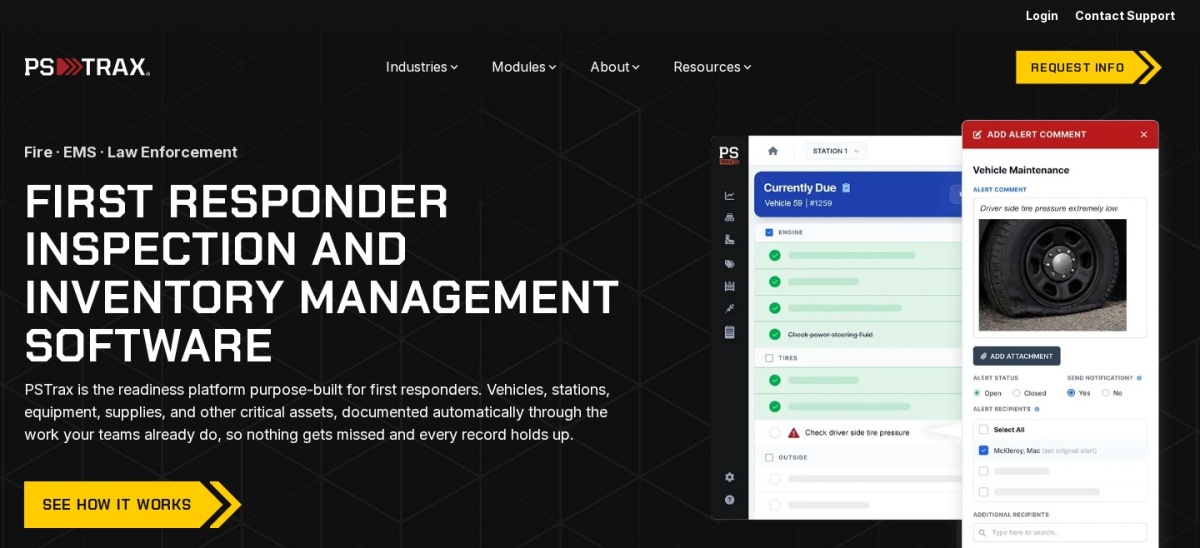
PSTrax covers the daily checks that keep a department running: apparatus checklists, SCBA and PPE inspections, station inventory, controlled-substance logs and maintenance tracking. The records are audit-ready, which helps with accreditation and ISO reviews. It is rated 5.0 out of 5 on Capterra from 20 reviews.
The trade off is narrow scope. PSTrax sits beside an RMS and a scheduling system rather than replacing either. Pricing is by quote, with no published price. It suits departments where lost paper checksheets have let equipment checks slip.
What we like
Purpose-built for daily operations checks
Audit-ready records for accreditation
Controlled-substance logs built for fire service rules
Watch out for
Narrow scope by design, so it pairs with an RMS
Perfect 5.0 rating rests on only 20 reviews
Checks, inventory and maintenance are priced by quoteVisit pstrax.com
07
Aladtec
4.5/5on G2 (116 reviews, checked Nov 2026)
PricingCustom/quote
Best for fire-service workforce scheduling
Shift patterns24/48 and Kelly
Overtime trackingYes
Payroll exportYes
PricingQuote only
aladtec.com
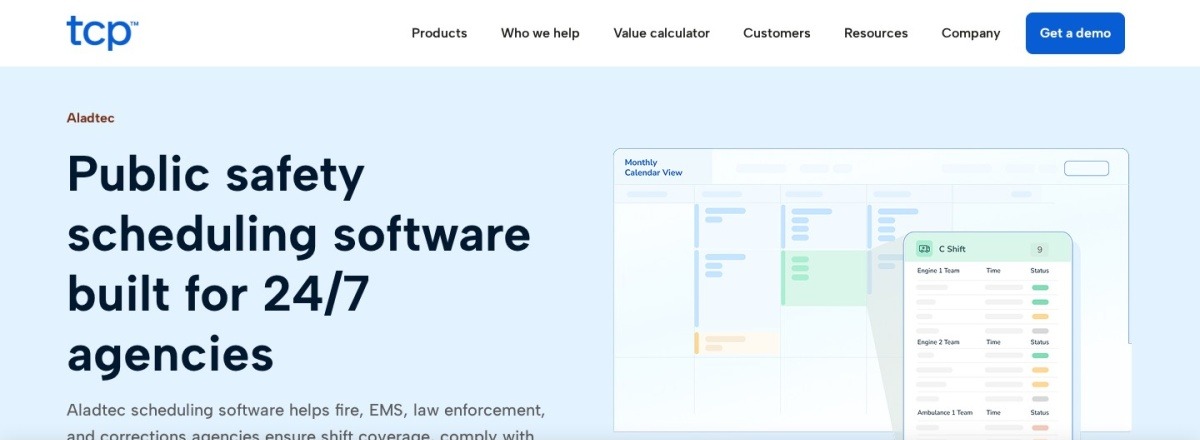
Aladtec homepage, captured Nov 2026.
Aladtec is scheduling software built for fire, EMS and dispatch shift patterns, including 24/48 rotations, Kelly days, minimum staffing rules and overtime equalisation. It handles time off, shift trades with approval chains, callback lists and payroll export. It is rated 4.5 out of 5 on G2 from 116 reviews.
The trade off is focus. Aladtec does not run incident reports or inspections, so it pairs with an RMS. Pricing is by quote, with no published price. It suits departments whose main pain is staffing: spreadsheets, phone trees and overtime disputes.
What we like
Scheduling built for public safety shift patterns
Largest review base in this list, 116 G2 reviews
Time off, overtime, trades and payroll export in one system
Watch out for
Scheduling only, not a full department platform
Now part of Vector Solutions, so check how it is sold with Vector Scheduling
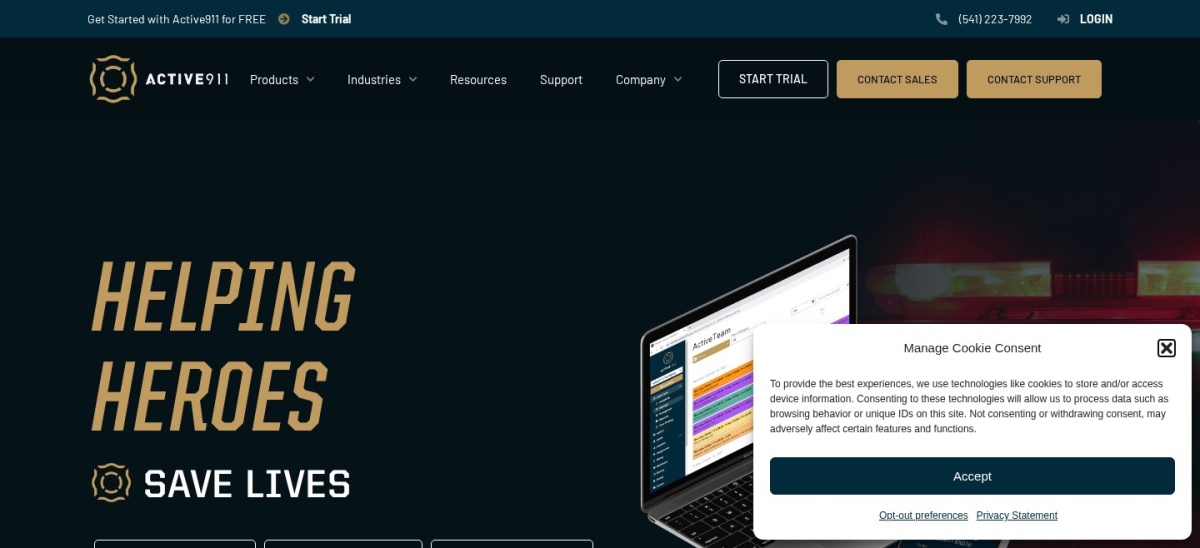
Active911 sends dispatch alerts to responders' phones with the call type, address, dispatch notes, maps, hydrant locations and pre-plan data. Crew members reply with their status, so officers can see who is responding before the truck rolls. It costs $14 per device per year.
The trade off is range. Active911 covers alerting and response only, so it runs beside an RMS and a scheduling tool. It suits volunteer and combination departments most, where responders come from home or work and a full crew is never certain.
What we like
Purpose-built alerting with maps on the responding device
Widely adopted by volunteer departments
Cheapest tool in this list by a wide margin
Watch out for
Alerting only, so it complements rather than replaces an RMS
Value depends on the quality of the CAD integration
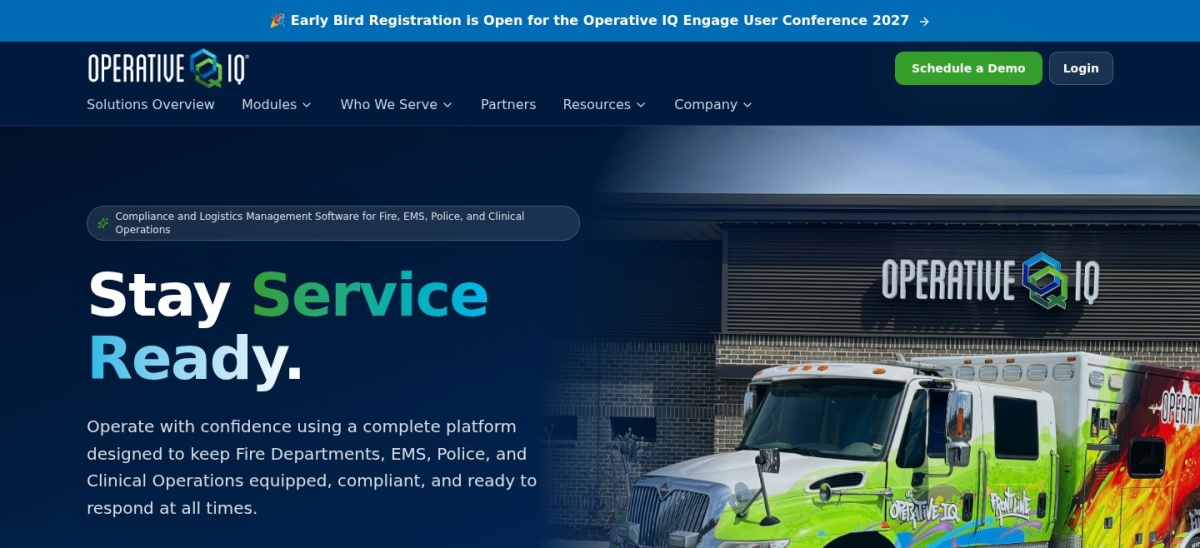
Operative IQ manages fleet, inventory and assets for fire and EMS operations, including vehicles, equipment, medical supplies and narcotics. It tracks maintenance schedules, par levels, asset assignments and controlled-substance chain of custody. It is rated 4.6 out of 5 on Capterra from 17 reviews.
The trade off is specialisation. It is one piece of a larger stack, and smaller departments may manage with the asset modules inside their RMS. Pricing is by quote, with no published price. It suits larger departments and EMS transport agencies where fleet and inventory scale makes spreadsheets risky.
What we like
Deep fleet and inventory management for fire and EMS
Narcotics tracking with chain of custody
Asset lifecycle and maintenance workflows
Watch out for
Specialised scope, so it joins a stack rather than anchoring one
The national incident reporting standard is moving from NFIRS to NERIS, and this affects every records purchase you make now. ESO and First Due have been the most vocal about their NERIS support, and both list it in their incident reporting.
Ask every vendor the same three questions: which modules are NERIS-compliant today, what the migration path looks like for your historical NFIRS data, and whether the transition costs extra.
A vendor with no clear NERIS story is a red flag, whatever the demo shows. Departments with years of messy NFIRS data should also ask how the migration handles incomplete or inconsistent records.
How we chose
We started from the searches fire service leaders actually run: fire department software, fire records management software, fire department scheduling software and NFIRS/NERIS reporting software. For each candidate we checked the vendor's own site for fire-service capability, then kept nine established tools that cover records, scheduling, training, checks and alerting.
Prices and ratings were checked on 23 November 2026. Eight of the nine tools publish no price and sell by quote, so the list says so instead of guessing a figure. Active911 is the exception, at $14 per device per year. Ratings come from G2 or Capterra, as noted on each tool.
We left out Emergency Reporting even though it was long the default cloud records system for small agencies. ESO acquired it in 2021, and reviewers report it is being phased out, so EPR FireWorks takes its place in this list. No vendor paid for a place, and we do not claim hands-on testing for this list.
How to choose fire department software
Start with the jobs your department actually needs covered, then shortlist three tools that cover them.
List the jobs before the vendors. Records, scheduling, inspections, training, apparatus checks and alerting are separate jobs. Buy the pieces you are missing instead of paying for a platform that duplicates what you already have.
Demo with your own reports and rotations. Load your state's incident reports and your actual shift pattern into the demo. Generic sample data hides the gaps that matter.
Get itemised quotes per module. Most of these tools are priced by quote, so ask for the cost of each module you need and the cost of the NERIS migration, in writing.
Check the mobile experience on a tablet. Incident reporting quality depends on field usability. If firefighters cannot complete reports on a tablet at the station, the data going in will be bad in any system.
FAQ
What is the best fire department software?
First Due is the best pick for most departments. It combines NFIRS/NERIS incident reporting, ePCR, pre-incident planning, inspections, scheduling and training in one cloud platform, rated 4.6 out of 5 on Capterra from 58 reviews.
How much does fire department software cost?
Most of it is priced by quote, and the price scales with department size, module count and user count. Eight of the nine tools here publish no price. Active911 is the exception at $14 per device per year, and small departments often spend modest four-figure annual amounts on a records system.
What is the difference between NFIRS and NERIS?
NFIRS is the long-standing National Fire Incident Reporting System. NERIS, the National Emergency Response Information System, is its modern replacement, designed for better data quality and analytics. Departments are transitioning now, so every records purchase should include the vendor's NERIS migration plan.
Should a small volunteer department buy an all-in-one platform?
Usually not at first. Volunteer departments get more value from simple best-of-breed pieces: a proven records system, a scheduling tool built for fire shifts, and an alerting app. All-in-one platforms make sense when the department has the staff to run the implementation.
What is a fire RMS?
A records management system is the software where incident reports, inspections, hydrant records, personnel files, training records and inventory live. It produces the state and national reports, NFIRS and NERIS, and the internal analytics on response times, call types and resource use.
Do I still need Active911 if I buy First Due or ESO?
Often yes. First Due and ESO cover records and scheduling, but Active911 is a dedicated dispatch alerting tool that puts the call, map and hydrant data on every responder's phone. At $14 per device per year it is cheap enough to run beside any records system.