Best Financial Statement Software in 2026: 9 Tools Compared
WLWPLegible EditorsLast verified 23 Nov 2026How we rank10 min read
★ Short answer
QuickBooks Online is the best financial statement software for most small businesses, with profit and loss, balance sheet and cash flow reports from $20 a month and a 4.0 out of 5 G2 rating. Pick Xero for unlimited users, or FloQast if your team runs a formal month-end close.
How we make this list: we compare pricing pages, product documentation and public user reviews, then re-check every price before each update. No product paid for a place. Disclosure.
QuickBooks Online is the top pick: standard statements from $20 a month, rated 4.0/5 on G2 from 3,870 reviews.
Xero costs $27 a month and includes unlimited users on every plan; Early caps at 20 invoices a month.
Wave and Zoho Books both have real free plans; Wave's Starter is free with no revenue limit.
FloQast has the highest G2 rating here at 4.6/5, but G2 lists its Basic plan at $999 a month.
Sage Intacct, BlackLine and NetSuite are quote-only; budget for an annual contract and implementation.
What financial statement software should cover
A financial statement is only as good as the ledger behind it. Profit and loss, balance sheet and cash flow reports all pull from the same transactions, so the choice is really about which ledger fits the business.
Small firms need a ledger first. QuickBooks Online, Xero, FreshBooks, Zoho Books and Wave all produce standard statements, and three of them have a free plan or a free trial.
Larger teams split the job. The ledger still holds the numbers, but tools such as FloQast and BlackLine run the month-end close on top of it. Our guide on budgeting for a WordPress website shows the same split: plan the spend, then pick the tool that fits it.
Price is the other split. Five tools in this list publish prices from $19 to $27 a month, while the enterprise tools quote only. Where a vendor shows a sale, this list shows the regular price.
QuickBooks Online is the most widely used small-business ledger in this list, and its reports cover profit and loss, balance sheet and cash flow without add-ons. The free plan handles 2 invoices a month and 1 bank connection, while Lite at $20 a month adds unlimited invoicing and 2 bank connections.
The trade off is price. Intuit raised Essentials, Plus and Advanced prices in August 2026, and the Lite plan has no accountant access, so growing firms move to Simple Start at $38 a month. It suits small businesses that want standard statements and the largest app and accountant ecosystem.
What we like
Standard P&L, balance sheet and cash flow reports in every plan
Free plan for the smallest side businesses
Largest network of accountants and app integrations
Watch out for
Prices rose in August 2026 and tend to rise yearly
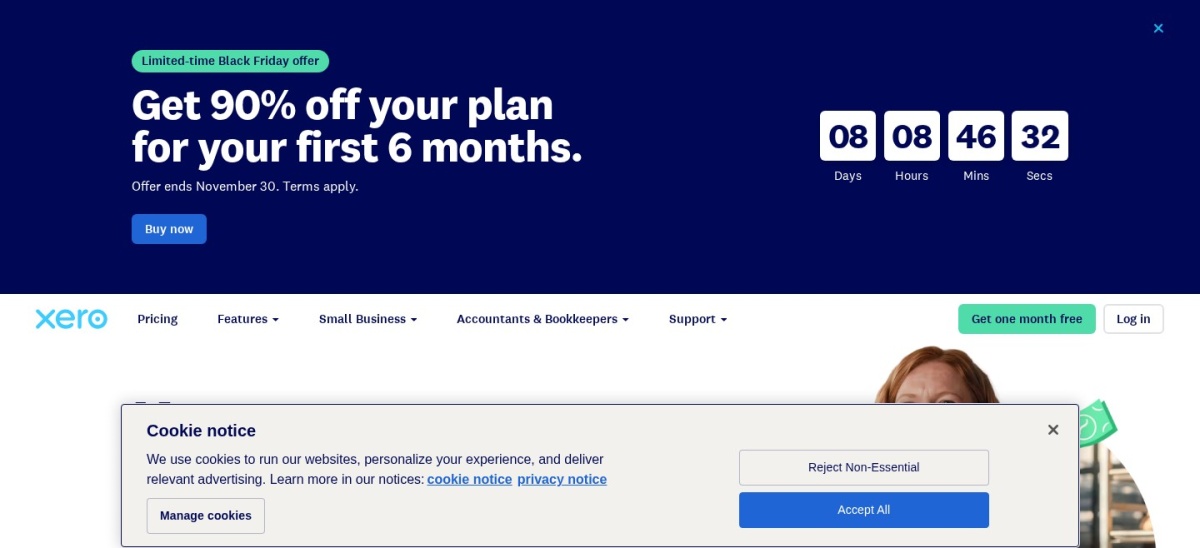
Xero is a cloud ledger with a clean layout and bank reconciliation that pulls transactions in automatically. The Early plan at $27 a month covers 20 invoices and 5 bills a month, plus Hubdoc receipt capture and short-term cash flow forecasts.
The trade off is the Early cap. Twenty invoices and 5 bills a month fit a freelancer, but most active firms need Growing at $59 a month for unlimited invoices and bills. It suits small teams that want every user in the ledger without paying per seat.
What we like
Unlimited users on every plan
Automatic bank reconciliation and Hubdoc capture
Clear pricing with no annual-billing lock-in
Watch out for
Early plan caps at 20 invoices and 5 bills a month
Multi-currency needs the $97 Established plan
Growing adds unlimited invoices at $59 a monthVisit xero.com
03
FreshBooks
4.5/5on G2 (981 reviews, checked Nov 2026)
Starts at$23/mo
Best for freelancers and client billing
Free planNo, 30-day trial
Cheapest paidLite, $23/mo
Billable clients5 on Lite
Team members$11/mo each
freshbooks.com
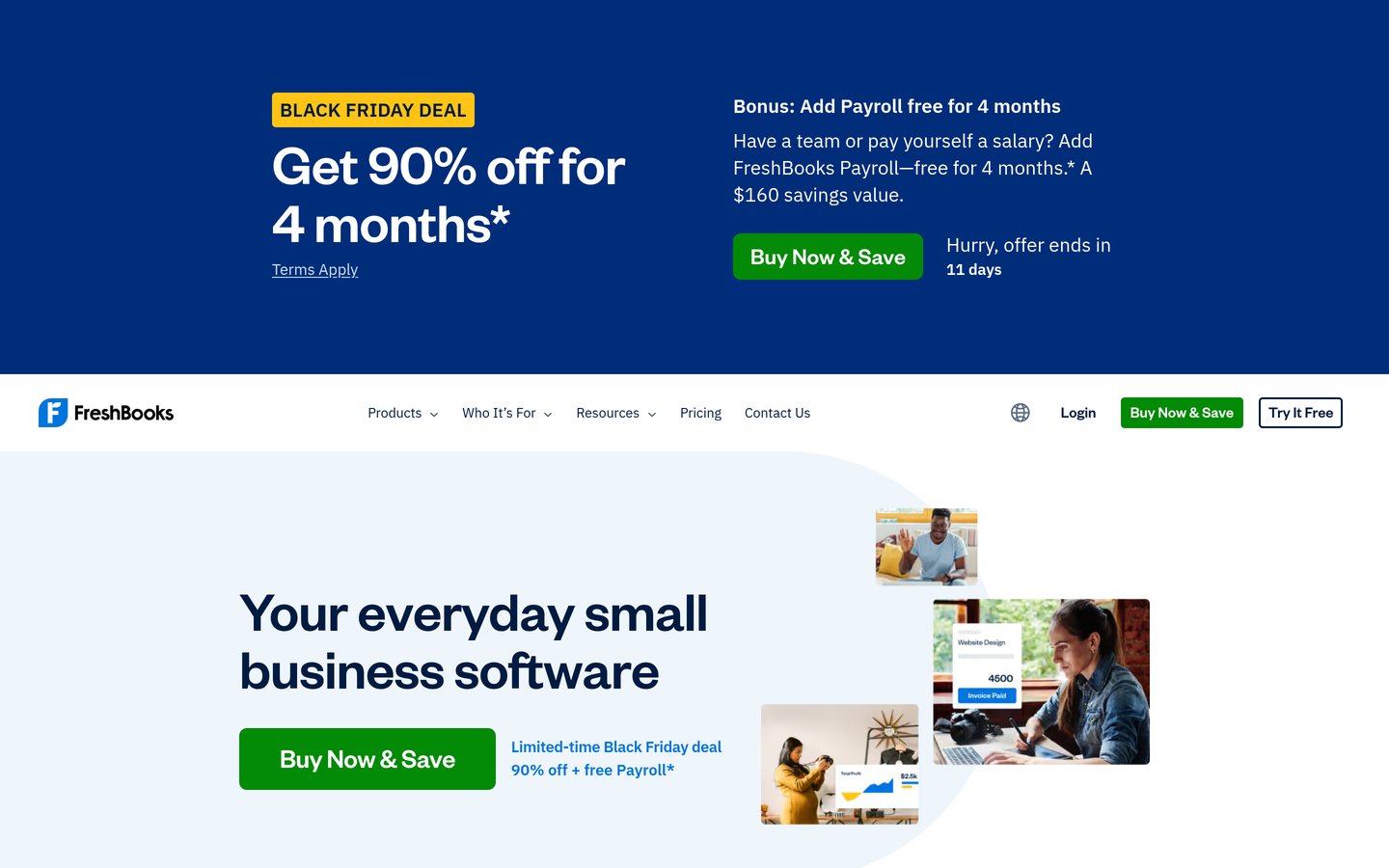
FreshBooks homepage, captured Nov 2026.
FreshBooks is an invoicing-first ledger built for freelancers and service firms that bill clients. The Lite plan at $23 a month covers 5 billable clients with unlimited invoices, expense tracking, estimates and tax-time reports.
The trade off is client caps. Lite fits five clients, Plus at $43 a month covers 50, and every extra team member costs $11 a month on any plan. It suits solo operators who invoice clients and want simple profit reports without a full accounting setup.
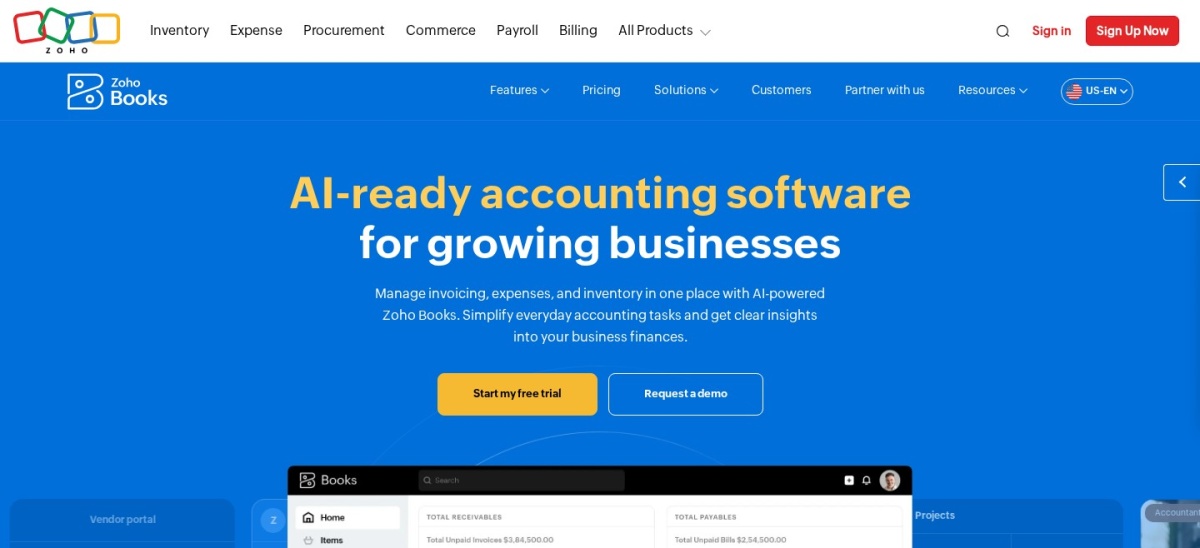
Zoho Books is a full double-entry ledger with a free plan for businesses under $50,000 in annual revenue. The free plan covers invoicing, expenses and basic reports, and Standard at $20 a month adds 3 users, 5,000 invoices a year and automatic bank feeds.
The trade off is the revenue ceiling. Cross $50,000 in annual revenue and the free plan no longer applies, and multi-currency waits for Professional at $50 a month. It suits small firms already using Zoho apps that want a low-cost ledger with room to grow.
What we like
Real free plan, not a trial
Lowest paid plan with 3 users included
Part of the wider Zoho suite
Watch out for
Free plan ends above $50,000 in revenue
Multi-currency needs the Professional plan
Professional adds multi-currency at $50 a monthVisit zoho.com
05
Wave
4.3/5on G2 (323 reviews, checked Nov 2026)
Paid from$19/mo
Best free accounting for solo owners
Free planYes, Starter
Cheapest paidPro, $19/mo
Bank importPro only
Receipt capture$8/mo add-on
waveapps.com
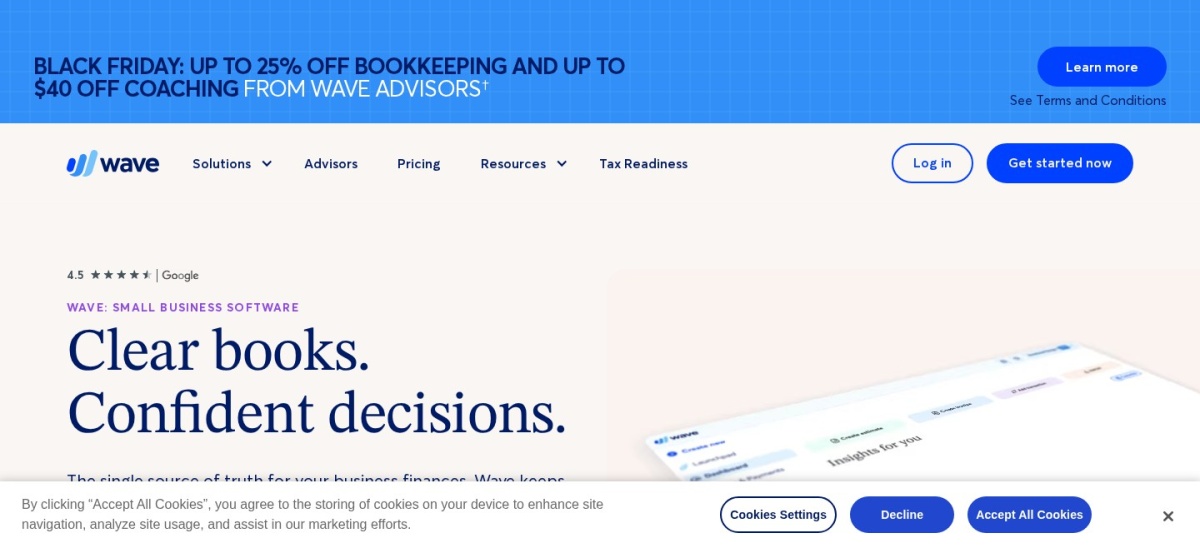
Wave homepage, captured Nov 2026.
Wave is a free double-entry ledger for freelancers and very small firms. The Starter plan costs nothing and covers unlimited invoices, bills and bookkeeping records, plus a mobile app and a cash flow dashboard.
The trade off is automation. Automatic bank import and receipt capture sit in Pro at $19 a month, and card payments cost 2.9% plus $0.60 per transaction on Starter. It suits solo owners with simple books who want real accounting at no subscription cost.
Sage Intacct is a cloud financial platform for mid-market teams that have outgrown entry-level ledgers. Core financials cover the general ledger, accounts payable and receivable and cash management, with dimensions that slice reports by department, project or location.
The trade off is cost and setup. Pricing is quote-only and billed annually, modules such as multi-entity and revenue recognition add cost, and implementation is partner-led. It suits finance teams running several entities or projects that need reporting depth QuickBooks cannot give.
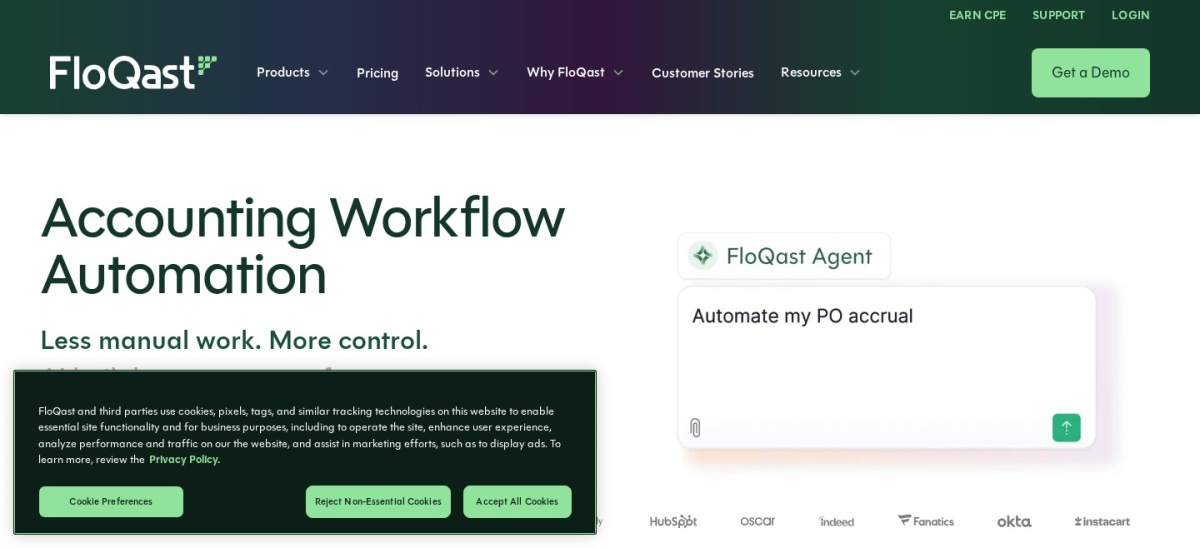
FloQast is a close management platform that sits on top of your ledger and organises the month-end close. It gives each close task an owner and a deadline, tracks reconciliations in one place, and keeps the audit trail beside the numbers.
The trade off is price and scope. FloQast does not publish pricing, G2 lists Basic at $999 a month, and advanced reconciliation tools are separate add-ons. It suits accounting teams whose close still lives in spreadsheets and needs structure more than a new ledger.
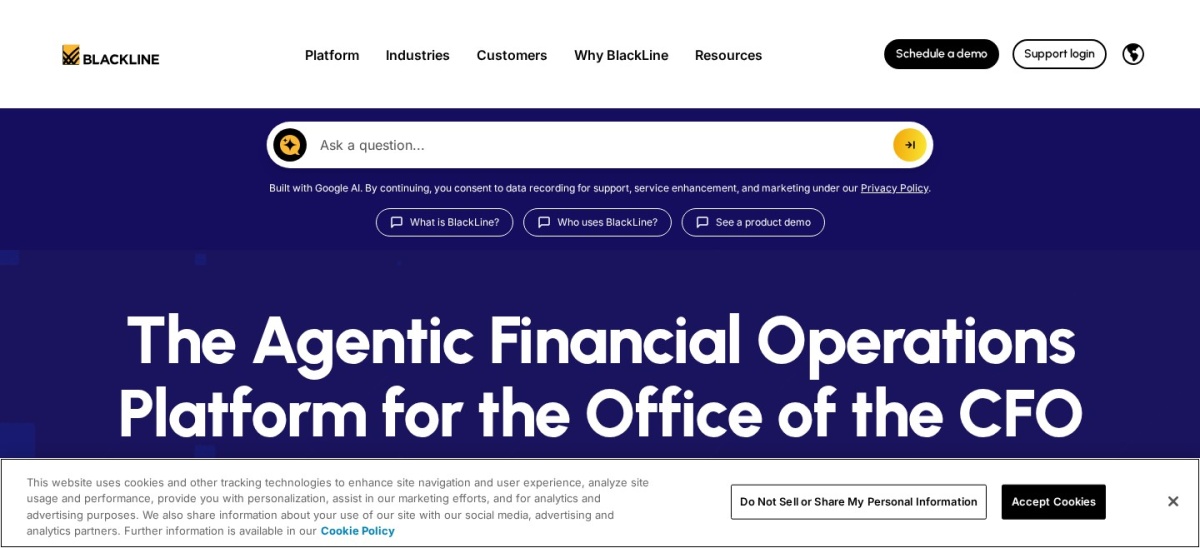
BlackLine is an enterprise close and reconciliation platform that automates account reconciliations, journal entries and close tasks across several ledgers. It reported 4,394 customers at the end of 2025, and its 2026 Studio360 layer ties the modules together.
The trade off is scale. Pricing is quote-only, third-party trackers put contracts in the tens of thousands a year, and teams report a steep learning curve before the platform pays back. It suits large finance teams standardising a multi-entity close with audit controls.
What we like
Deepest reconciliation automation in this list
Covers close, journals and intercompany in one family
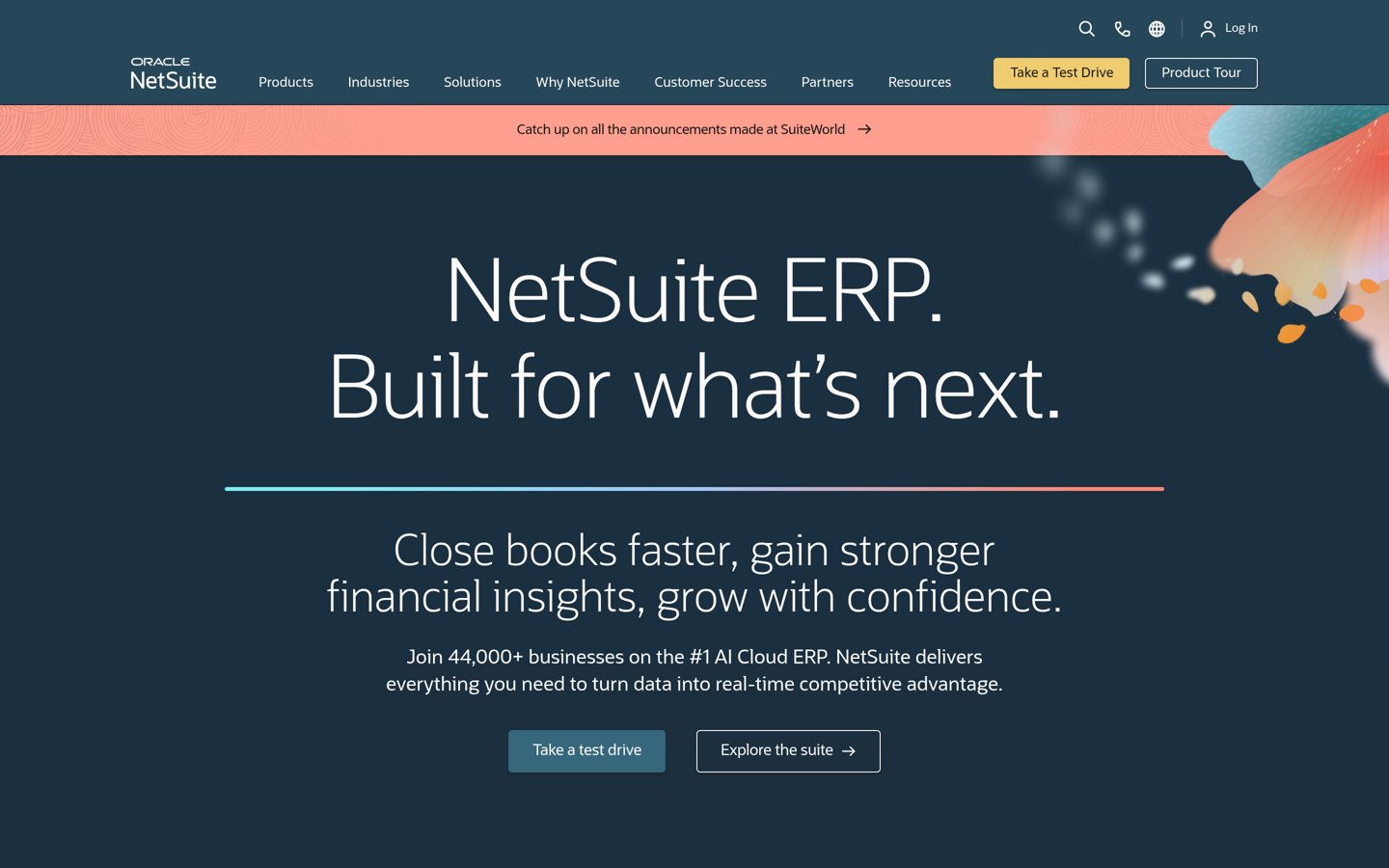
NetSuite is Oracle's cloud ERP, and its financials cover the general ledger, consolidation and reporting in the same system as orders and inventory. That single data model is the point: statements come from live transactions instead of a separate reporting tool.
The trade off is scope and cost. Pricing is quote-only, the system needs implementation help, and small firms pay for ERP breadth they will not use. It suits growing companies that need one system for accounting, orders and inventory with consolidated statements.
Close software vs ledger software: what is the difference
Ledger software records transactions and produces the statements. QuickBooks Online, Xero and the rest of the first five tools in this list are ledgers.
Close software organises the work around the statements: checklists, reconciliations, journal approvals and the audit trail. FloQast and BlackLine do this job and sit on top of a ledger.
Buy the ledger first. A close tool without a clean ledger only organises a mess, and most small firms never need one.
Add a close tool when the close has owners, deadlines and reviewers. That is usually the point where spreadsheets stop working.
How we chose
We started from the accounting and close tools with the most G2 reviews in their categories, then kept nine that cover both small-business ledgers and close platforms.
Prices come from each vendor's pricing page or, where the vendor publishes none, from G2's pricing data, checked on 23 November 2026. Ratings and review counts come from G2 on the same day. Where a vendor shows a sale, the list shows the regular price.
We left out tools with no public pricing record and no G2 presence. No vendor paid for a place, and we do not claim hands-on testing for this list.
How to choose financial statement software
Start with the size of the business, then match the tool to the close.
Count the transactions first. A freelancer with 20 invoices a month fits Xero Early or Wave Starter; a firm with hundreds needs a plan without caps.
Check the statements you actually file. Every tool here produces a profit and loss and balance sheet, but multi-entity consolidation needs Sage Intacct or NetSuite.
Price the second year, not the first. Introductory discounts expire after three to six months, so compare the regular monthly price times twelve.
Decide if you need close software. If the month-end close has owners and deadlines, add FloQast or BlackLine beside the ledger; otherwise a ledger alone is enough.
FAQ
What is the best financial statement software?
QuickBooks Online is the best pick for most small businesses. It produces profit and loss, balance sheet and cash flow reports from $20 a month, and it is rated 4.0 out of 5 on G2 from 3,870 reviews.
Is there free financial statement software?
Yes. Wave Starter is free with unlimited invoices and records, and Zoho Books has a free plan for businesses under $50,000 in annual revenue. QuickBooks Online also has a free plan for 2 invoices a month.
What is the cheapest paid plan in this list?
Wave Pro at $19 a month is the cheapest paid plan here, followed by QuickBooks Online Lite and Zoho Books Standard at $20 a month. All three produce standard financial statements.
Do I need close software as well as accounting software?
Most small firms do not. A ledger such as QuickBooks Online or Xero produces the statements. Close tools such as FloQast and BlackLine are for teams whose month-end close has owners, deadlines and reviewers.
Why do some tools have no price listed?
Sage Intacct, BlackLine and NetSuite sell by quote only, so the price depends on users, modules and entities. Expect an annual contract and implementation fees, and get a written quote before budgeting.
Which tool is best for a multi-entity business?
Sage Intacct and NetSuite are built for multi-entity reporting, with consolidation in the system. FloQast and BlackLine add close control on top of either ledger.