Monarch Money is the best financial software for personal use for most households, with budgeting, net worth and investment tracking for $99.99 a year. Pick YNAB if you want strict zero-based budgeting, or Empower if you want a free dashboard for net worth and investments.
How we make this list: we compare pricing pages, product documentation and public user reviews, then re-check every price before each update. No product paid for a place. Disclosure.
Monarch Money is the strongest all-round pick: budgeting, net worth and investments in one shared dashboard for $99.99 a year.
YNAB is the strictest budgeter at $109 a year, with a 34-day trial and one subscription covering up to six people.
Quicken Simplifi costs $47.88 in year one, then renews at the regular $83.88 a year, billed annually.
Empower Personal Dashboard is free and is the best no-cost way to see net worth, investments and retirement progress.
Moneydance is the only one-time purchase here at $65, though automatic bank sync costs $40 to $90 a year extra.
What personal finance software should cover
Good personal finance software should show where money goes, what is left to spend, and how savings and debts change over time. The best tools link bank, card, loan and investment accounts so the numbers stay current without manual entry.
Start with bank sync and budgeting. If an app cannot pull transactions in automatically, you will spend the saved time typing them in instead. A free plan with manual entry works only if you will keep it up every week.
Net worth and investments matter once the budget is steady. A dashboard that shows total assets against debts, plus a retirement outlook, answers questions a budget alone cannot. The same habit helps elsewhere: if you run a site, our guide on how to budget for a WordPress website applies the same planning to hosting and plugin costs.
Price is the last filter, not the first. A $79 yearly plan you use beats a free app you abandon, and a one-time license only saves money if you stay on it for years.
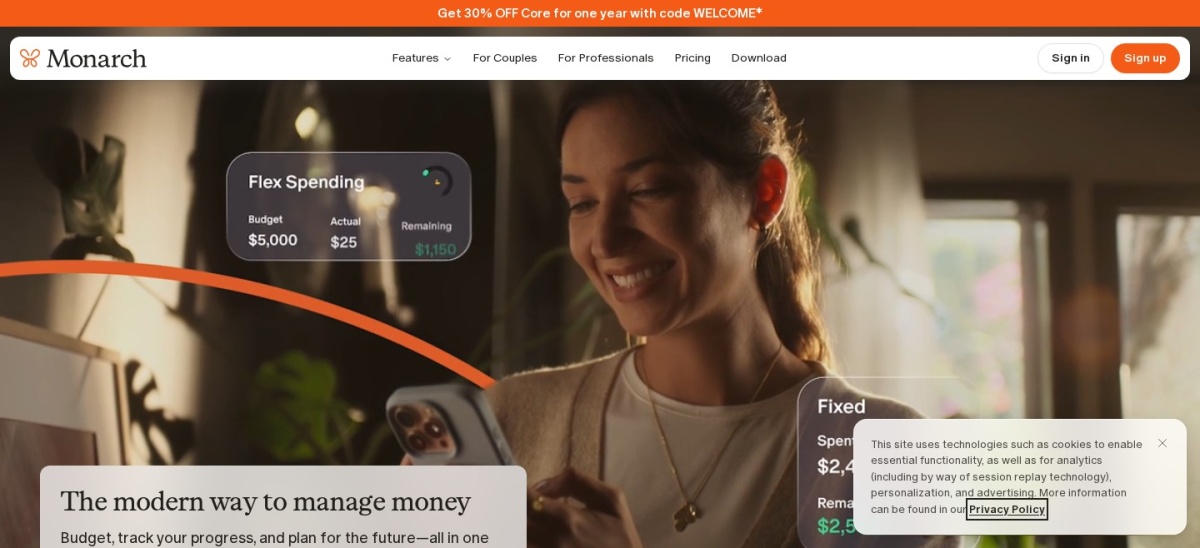
Monarch Money is a personal finance app that brings budgeting, net worth tracking and investment monitoring into one dashboard. The Core plan covers unlimited account syncing, custom budgets, savings and debt goals, cash flow views and a shared household view for couples, plus an AI assistant.
The trade off is price and the lack of a free plan. Core costs $99.99 a year after a 7-day trial, and the Plus tier for long-range forecasting costs $199.99 a year. It suits couples and households that want one shared view of spending, savings and investments.
What we like
One dashboard for budgets, net worth and investments
Partner sharing included on Core
Unlimited account syncing
Clear cash flow and goal views
Watch out for
No free plan, only a 7-day trial
Plus tier doubles the yearly cost
G2 rating rests on only 3 reviews
Plus adds forecasting and business tracking for $199.99 a yearVisit monarch.com
02
YNAB
4.5/5on G2 (30 reviews, checked Nov 2026)
Starts at$109/yr
Best for zero-based budgeting
Cheapest paid plan$109/yr
Free planNo, 34-day trial
Budgeting methodZero-based
Household sharingUp to 6 people
ynab.com
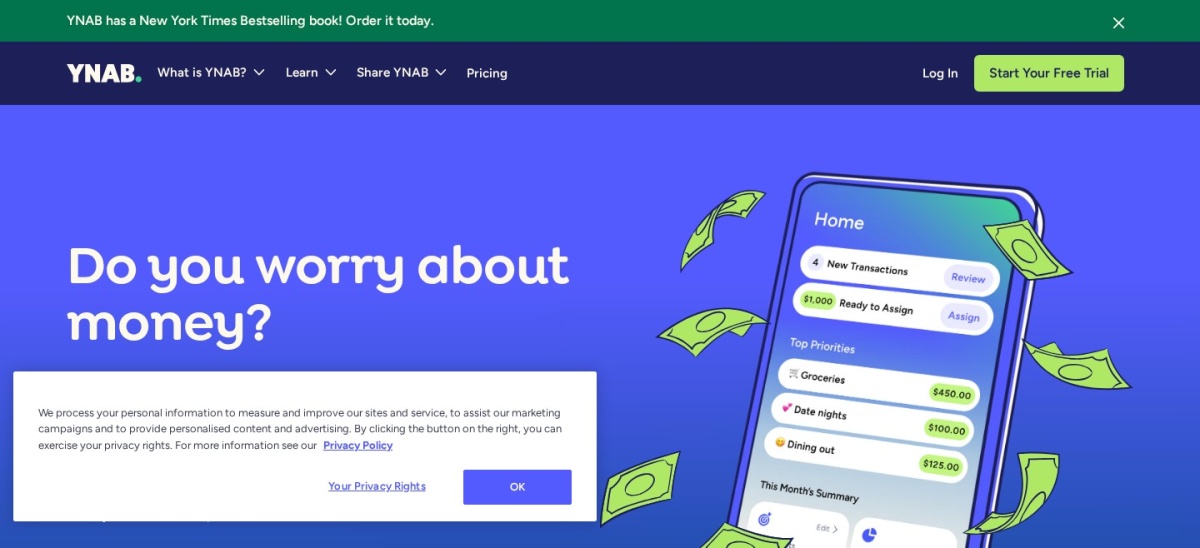
YNAB homepage, captured Nov 2026.
YNAB is a budgeting app built around zero-based budgeting, where every dollar of income gets a job before the month begins. One subscription covers up to six people, and the 34-day free trial needs no card. It includes bank syncing, goals, reports and loan planning tools.
The trade off is effort and price. The method takes time to learn, there is no free plan, and the $109 yearly cost is higher than most rivals. It suits people who want to change spending habits and will check the budget often.
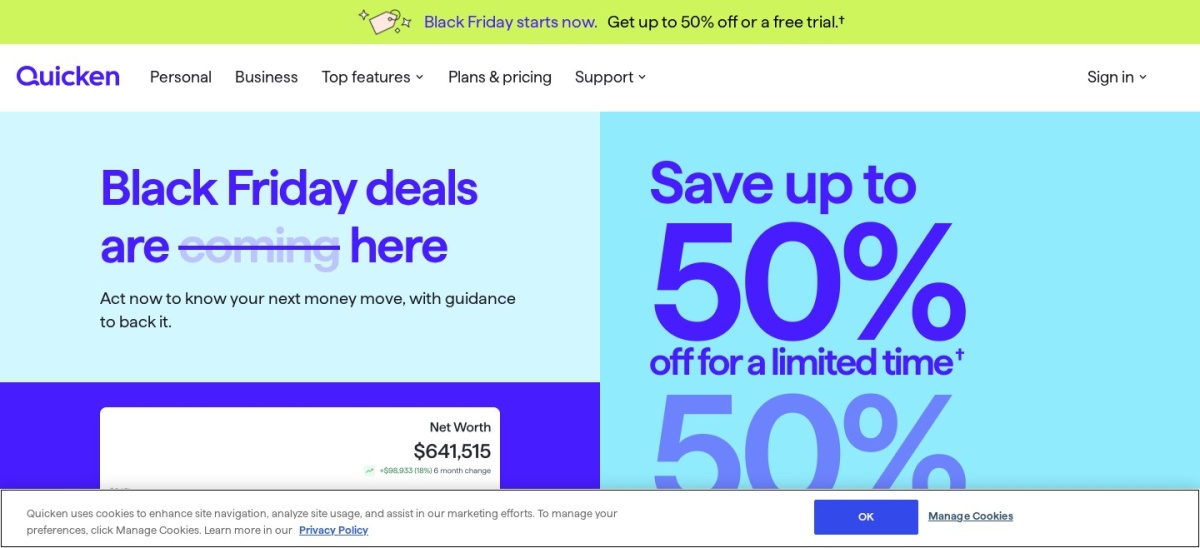
Quicken Simplifi is a budgeting app from Quicken that builds a personal spending plan from income, bills and subscriptions. It tracks spending, savings goals and investments in one place, and projects cash flow up to a year ahead with what-if views.
The trade off is the price after year one. The first year lists at $47.88, then it renews at the regular $83.88 a year, billed annually with no monthly option. It suits households that want a clear monthly plan without learning a strict budgeting method.
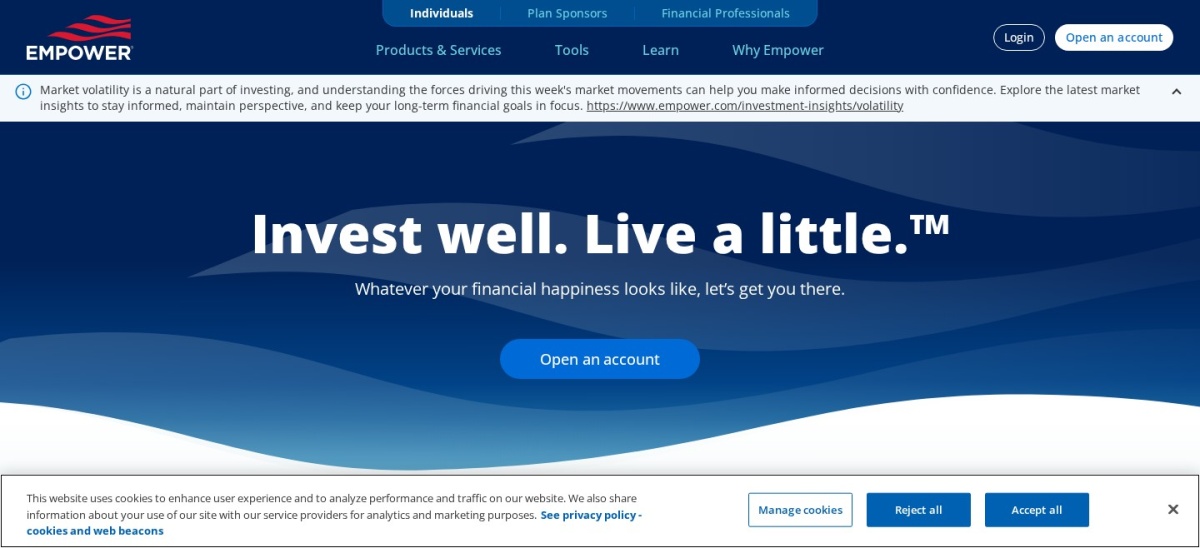
Empower Personal Dashboard homepage, captured Nov 2026.
Empower Personal Dashboard is a free dashboard, formerly Personal Capital, that links bank, card, loan, investment and retirement accounts into one view. It covers net worth tracking, cash flow, budgeting, portfolio analysis and a retirement planner at no cost.
The trade off is the sales pitch and basic budgeting. The dashboard is free because Empower sells paid wealth management, and its budgeting tools are simpler than a dedicated budget app. It suits investors who want a free, full view of net worth and retirement progress.
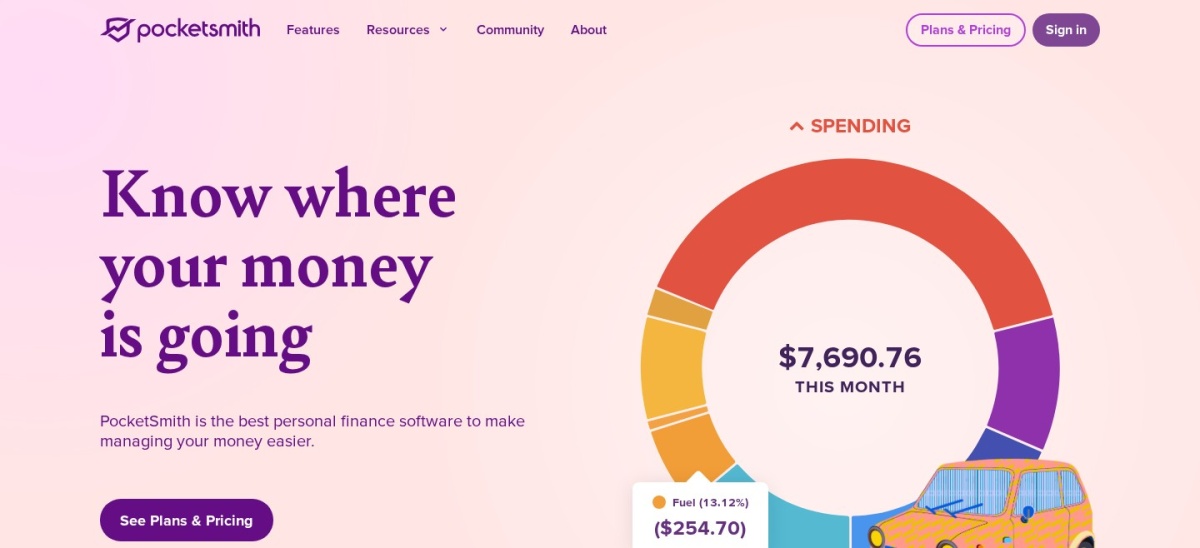
PocketSmith is a personal finance app built around forecasting, showing projected account balances on a calendar months and years ahead. The free plan tracks 2 accounts with manual imports, and Foundation adds automatic bank feeds, 6 bank connections and a 10-year projection.
The trade off is price and complexity. Foundation costs $119.88 a year billed annually, multi-country feeds need the higher Flourish tier, and the setup takes longer than simpler apps. It suits planners who want to see future balances before they commit money.
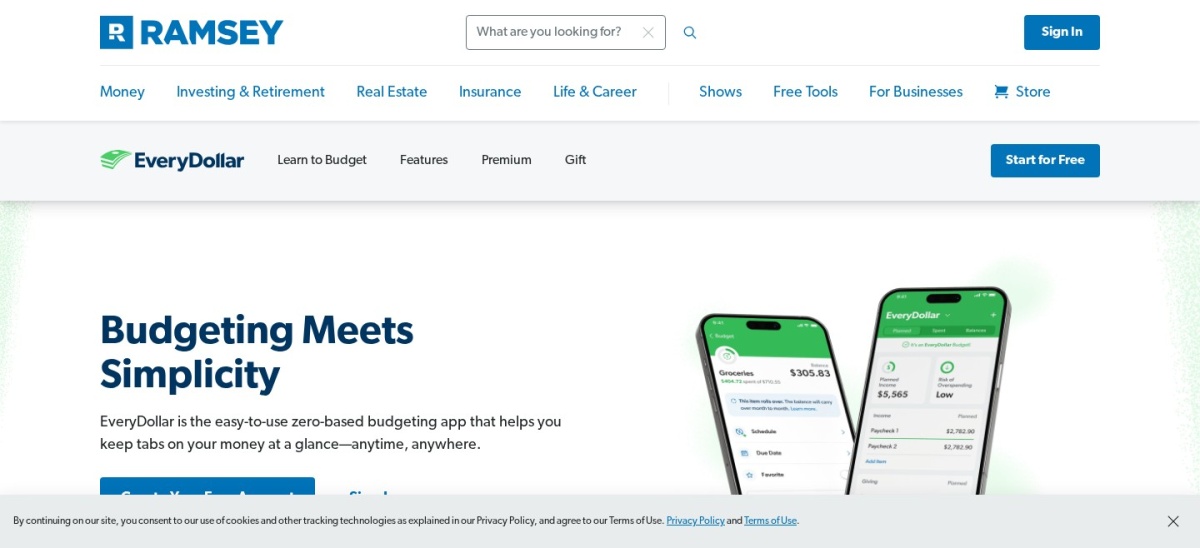
EveryDollar is Ramsey Solutions' zero-based budgeting app, built around the Baby Steps plan for paying off debt. The free version supports unlimited budgeting with manual transaction entry, and Premium adds bank sync, paycheck planning, reports and coaching.
The trade off is the free plan's manual work. Bank connection needs Premium at $79.99 a year, and monthly billing costs $17.99 a month. It suits people following the Ramsey plan who want the official app for it.
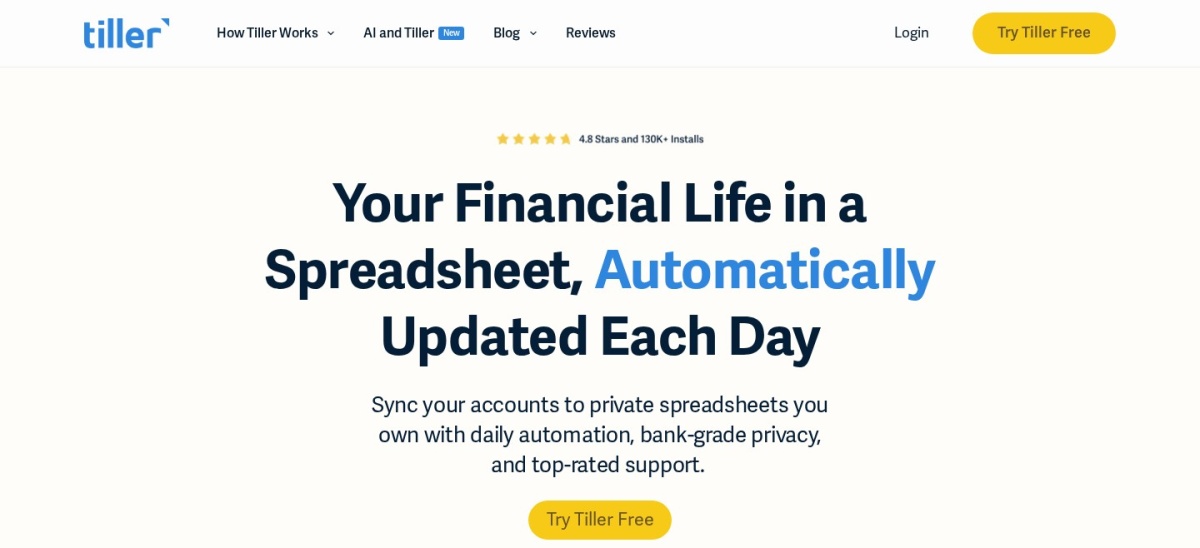
Tiller Money is a spreadsheet tool that feeds bank transactions and balances into Google Sheets or Excel every day. The Foundation template covers budgets, net worth, debt payoff and savings goals, and every sheet stays fully customisable because it is a spreadsheet you own.
The trade off is the lack of an app of its own. There is no native mobile app, and you maintain the spreadsheet yourself, so it needs comfort with formulas. It suits spreadsheet fans who want live bank data without giving up control.
Goodbudget is a digital envelope budgeting app that splits income into named envelopes before spending starts. The free plan covers 10 regular and 10 annual envelopes, 1 account and 2 devices, and Plus adds unlimited envelopes and accounts for $70 a year.
The trade off is bank sync, which needs Premium at $80 a year, and the plain design. The free and Plus plans need manual entry, which takes more time each week. It suits couples and families who like the envelope method and will enter spending by hand.
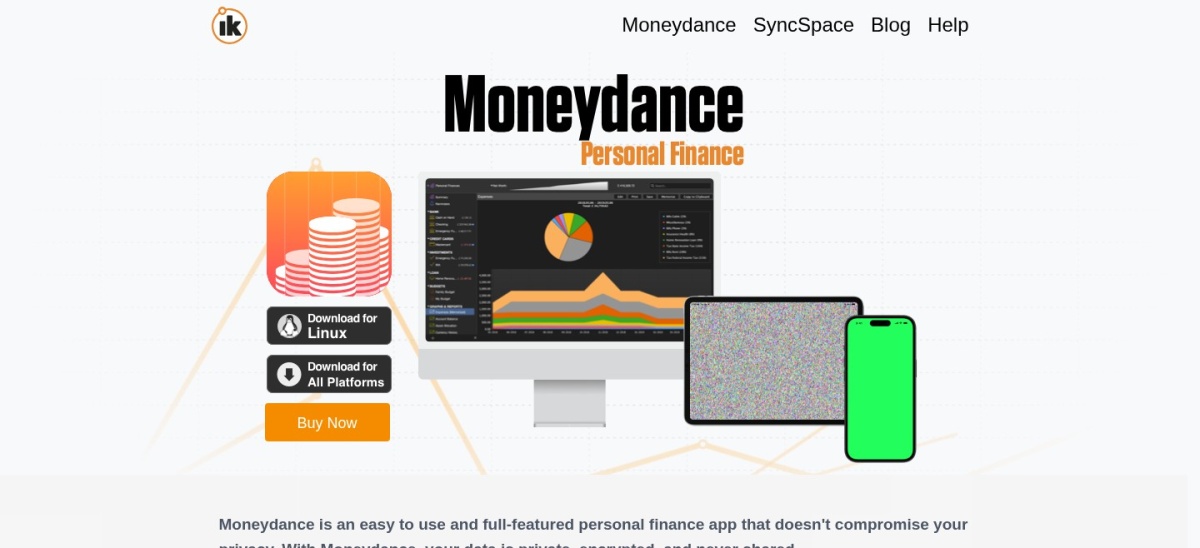
Moneydance is a desktop personal finance app from The Infinite Kind that runs on Mac, Windows and Linux. A $65 one-time license covers registers, budgeting, bill reminders, investment tracking, multi-currency accounts and reports, with your data file stored on your own computer.
The trade off is bank sync, which costs extra. Automatic downloads need Moneydance+, a $90 yearly subscription, or a $40 yearly add-on for license holders. It suits people who want to own their software and keep financial data off the cloud.
Free plans cover the basics well. Empower shows your whole net worth for free, and EveryDollar and Goodbudget both budget for free if you enter transactions by hand.
Paid plans mostly add automation and depth. Bank sync saves the weekly typing, and higher tiers add forecasting, investment analysis and household sharing.
If you only check money once a month, a free dashboard plus a free budget app is enough. If you check daily, paying $70 to $110 a year for sync and a shared view is usually worth it.
How we chose
We started from the best-known personal finance apps for households, then kept nine that cover budgeting, net worth, forecasting and spreadsheets.
Prices come from each vendor's pricing page or homepage, checked on 25 November 2026. Ratings come from G2, Capterra or Trustpilot on the same day. Where a vendor shows a sale, the list shows the regular price.
We left out Mint, which shut down in 2024, and apps with no published price. No vendor paid for a place, and we do not claim hands-on testing for this list.
How to choose financial software for personal use
Start with how you actually handle money, then pick the tool that fits that habit.
List every account first. Count your bank, card, loan, investment and retirement accounts. If the list is long, pick an app with unlimited syncing.
Decide how much work you will do each week. Manual entry suits people who check money daily. If you will not type transactions in, pay for bank sync.
Pick free or paid on sync, not on price alone. A free plan without sync costs time every week. Compare the yearly price against the hours it saves you.
Try one app for a full month. Use the trial to link every account and finish one budget cycle. Switch only if the trial shows a real gap.
FAQ
What is the best financial software for personal use?
Monarch Money is the best all-round pick for most households. Its Core plan covers budgeting, net worth and investment tracking for $99.99 a year, with partner sharing included and unlimited account syncing.
Is there free financial software for personal use?
Yes. Empower Personal Dashboard is free and covers net worth, investments and retirement planning. EveryDollar, Goodbudget and PocketSmith also have free plans, though bank sync usually needs a paid upgrade.
What is the cheapest paid option here?
Moneydance is cheapest overall at $65 once, though bank sync costs extra. Among yearly subscriptions, Goodbudget Plus is $70 a year, Tiller is $79 a year, and Quicken Simplifi is $47.88 in its first year.
Do I need bank sync?
Most people do. Without sync you must type every transaction in by hand, which takes time and gets skipped. If you only track a few accounts, manual entry on a free plan can work.
Is YNAB worth $109 a year?
It is worth it if you follow its method and check the budget often. The zero-based system plans every dollar before the month starts, and one subscription covers up to six people. If you want a lighter touch, Monarch or Simplifi cost less.
What happened to Mint?
Mint shut down in 2024. Former Mint users most often move to Monarch Money for a similar all-in-one dashboard, or to Empower Personal Dashboard for a free view of net worth and investments.
SaaS SEO and WordPress specialist with about 8 years of experience. Rakib compares WordPress plugins, themes, hosting and software using public pricing, documentation and user reviews. See how we rank.