FloQast is the best financial reconciliation software for most teams, rated 4.6 out of 5 on G2 from 1,414 reviews, with close checklists, AI matching and automated reconciliations. Pick Synder from $52 a month for sales and payout reconciliation, or Xero from $20 a month for bank reconciliation inside your ledger.
How we make this list: we compare pricing pages, product documentation and public user reviews, then re-check every price before each update. No product paid for a place. Disclosure.
FloQast leads for most teams: close checklists plus AI matching and automated reconciliations, rated 4.6/5 on G2 from 1,414 reviews.
Only two tools publish a starting price: Synder from $52 a month and Xero from $20 a month.
Numeric holds the highest rating at 4.8/5 on G2, but from only 65 reviews, and its pricing page now shows no prices.
Seven of the nine tools are quote-based, so budget for a sales conversation and for implementation on top.
HighRadius, AutoRek and ReconArt have the thinnest public feedback: 2, 1 and 5 G2 reviews each.
What financial reconciliation software should do
Financial reconciliation means proving that two sets of records agree: bank statements against the ledger, sales payouts against invoices, or one entity's books against another's. The software pulls in the data, matches what agrees, and leaves the exceptions for a person to review.
The tools in this list split into two groups. Close suites such as FloQast, BlackLine and Trintech manage the whole month-end close, while focused tools such as Synder and ReconArt match transactions and stop there. Teams that reconcile card payouts can compare the payment side in our WooPayments vs Stripe guide.
Matching quality matters more than the number of features. Ask how a tool handles partial matches, many-to-many matches and breaks, and whether it keeps an audit trail with sign-offs for every reconciliation.
Price is the hardest thing to compare here. Seven of the nine tools publish no prices at all, so the ladder below shows two published prices and seven custom quotes. Budget for implementation as well as the subscription.
The 9 best financial reconciliation software tools
01
FloQast
4.6/5on G2 (1,414 reviews, checked Nov 2026)
PricingCustom/yr
Best financial reconciliation software overall
AI matchingYes, Close AI
Automated reconciliationsYes, Close AI
ERP integrationsNetSuite, SAP, Workday
Entry packageClose Management, quote-based
floqast.com
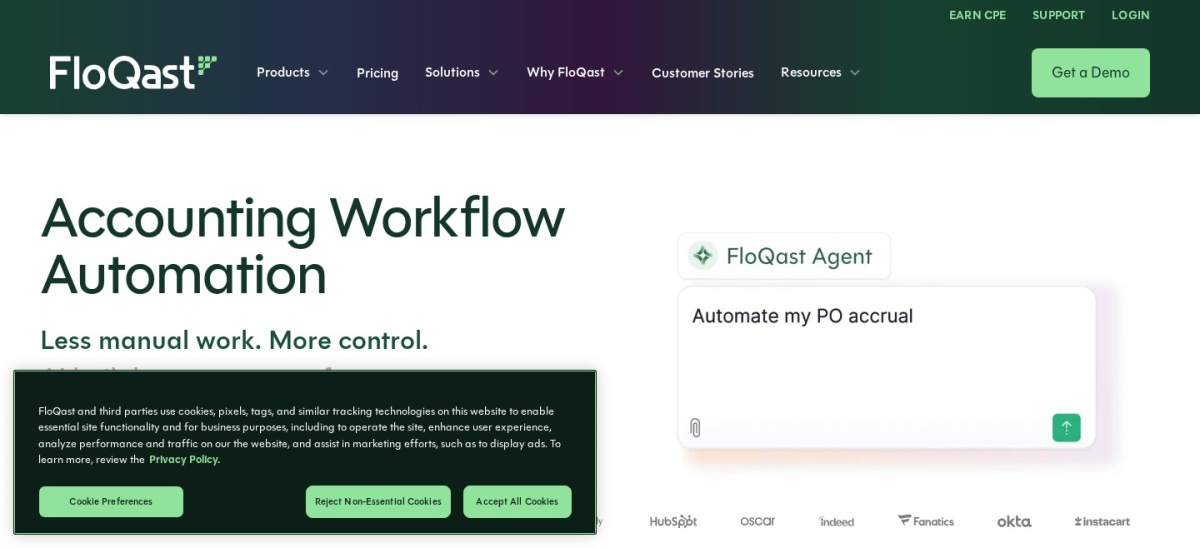
FloQast homepage, captured Nov 2026.
FloQast is a close management platform that puts every reconciliation, checklist task and sign-off in one place. Its Close Management package covers account reconciliations, close checklists and an AI assistant, and it connects to NetSuite, SAP, Workday and Sage Intacct. Close AI adds AI matching, automated reconciliations and automatic journal entry posting.
The trade off is price. FloQast publishes no prices and every package is quote-based, so budgeting means a sales conversation, and some features arrive as separate add-ons. It suits mid-market and enterprise teams whose main pain is close coordination rather than one matching job.
What we like
Largest review base in this list, 1,414 G2 reviews
AI matching and automated reconciliations on Close AI
No per-user fees
Works with major ERPs
Watch out for
No published prices, quote only
Some features sold as separate add-ons
Implementation typically takes 2 to 3 months
Close AI adds AI matching, automated reconciliations and journal postingVisit floqast.com
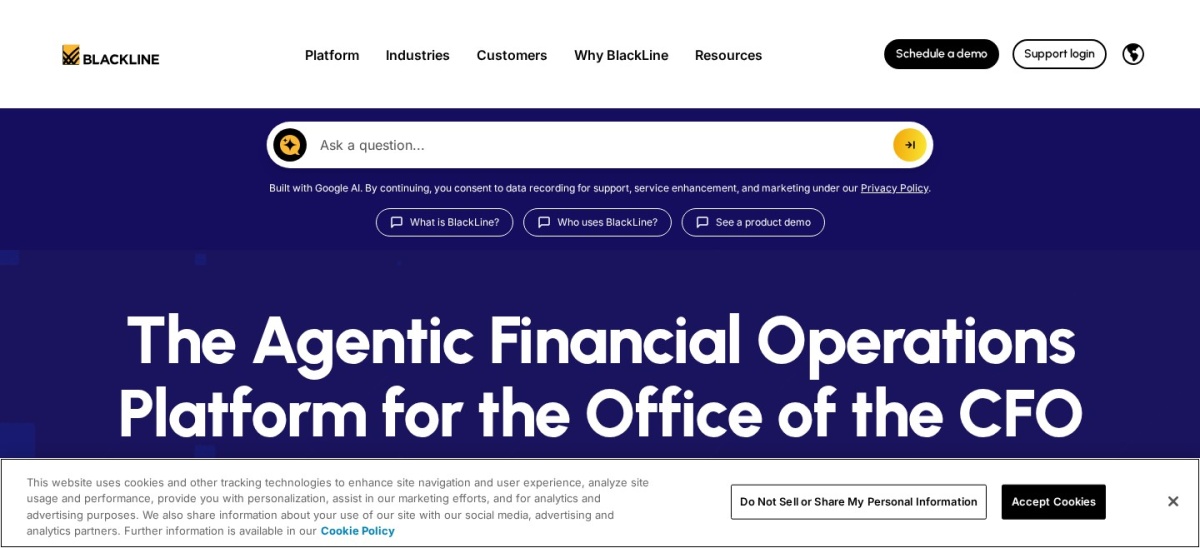
BlackLine is the enterprise standard for financial close automation, covering account reconciliations, transaction matching, journals and intercompany accounting. It matches bank, intercompany and PO-to-invoice transactions in one place and adds risk-based certification so low-risk accounts can auto-certify. It is built for large, multi-entity teams with audit-grade controls.
The trade off is cost and complexity. Pricing is quote-based with no published figures, and deployments are the heaviest in this list, so small teams pay for scale they do not need. It suits listed and multi-entity companies where auditors expect evidence, sign-offs and a full trail.
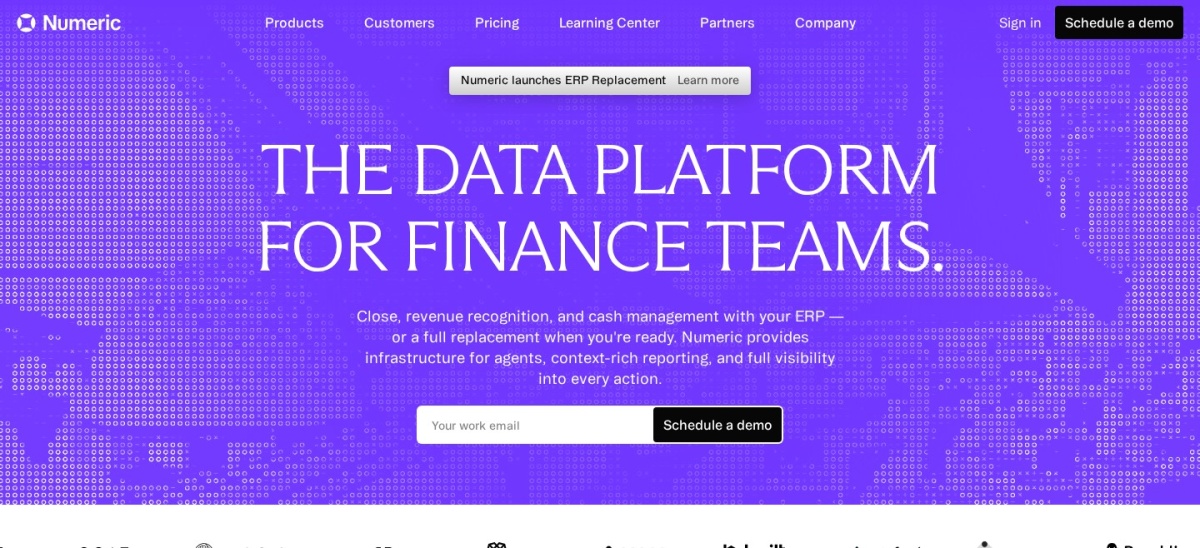
Numeric is an AI-native close platform that runs reconciliations, flux analysis and cash management on top of your ERP. Its Close Management module covers live ERP integrations, auto-reconciliations and transaction monitoring, and cash matching covers up to 95% of bank transactions. Its pricing page now lists modules and a quote form, with no prices shown.
The trade off is that the AI features that set Numeric apart sit on the Growth and Enterprise plans, which are custom-quoted, and the entry tier covers close management only. It suits lean, growing teams that want a fast start and a modern close, and can accept a quote-based price.
What we like
Highest G2 rating at 4.8/5
Cash matching covers up to 95% of bank transactions
Fast to start, live in under two weeks
AI flux analysis drafts variance explanations
Watch out for
No published prices on the pricing page
AI features need custom-quoted Growth or Enterprise
Small review base, 65 G2 reviews
Growth and Enterprise add AI features and cash managementVisit numeric.io
04
Trintech
4.5/5on G2 (658 reviews, checked Nov 2026)
PricingCustom/yr
Best mid-market close suite
ModulesBalancer, Matcher, Task Manager
ERP integrationsNetSuite, Dynamics, Workday
Auto-reconciliationThreshold-based
Entry packageQuote-based
trintech.com
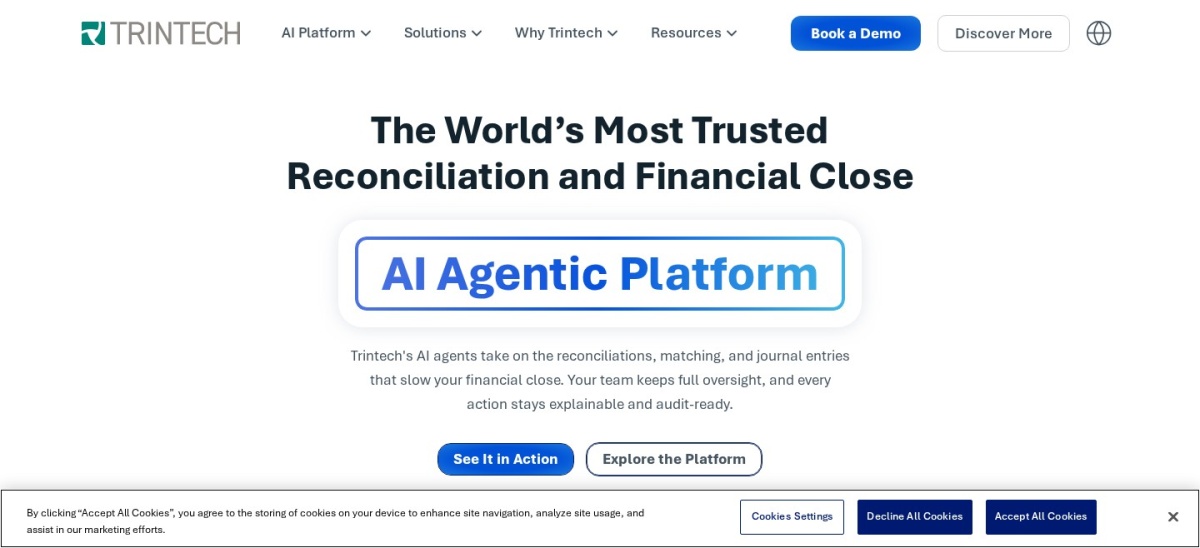
Trintech homepage, captured Nov 2026.
Trintech is a close suite sold as Adra, made of Adra Balancer for balance sheet reconciliations, Adra Matcher for transaction matching, plus task management and journal entries. It connects to NetSuite, Microsoft Dynamics and Workday, and works from uploaded spreadsheets where no connector exists. Thresholds auto-reconcile low-risk accounts so reviewers focus on exceptions.
The trade off is that Trintech publishes no prices, so every deal is a quote, and configuration changes can need Trintech support rather than being self-serve. It suits mid-market finance teams that want close automation without the weight of an enterprise platform.
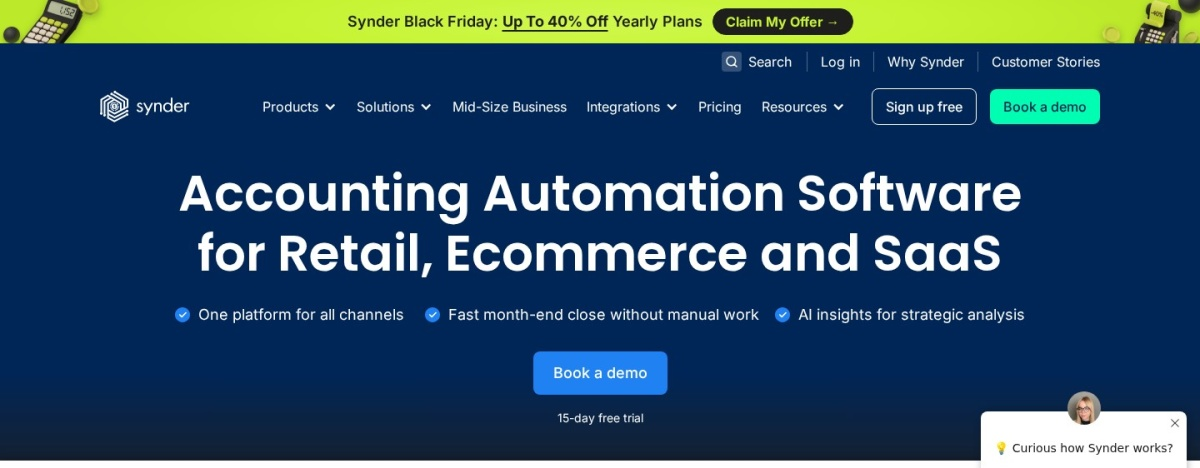
Synder is an accounting automation tool that syncs sales, fees and taxes from Stripe, Shopify, Amazon and 30-plus platforms into QuickBooks, Xero or NetSuite, then reconciles them. The Basic plan costs $52 a month, covers 500 transactions a month with 2 integration slots, and includes a 15-day free trial.
The trade off is volume. The $52 plan caps at 500 transactions a month, so busier sellers move to Essential from $92 or Pro from $220 a month. It suits multichannel sellers and Stripe-billed SaaS teams that reconcile payouts every day.
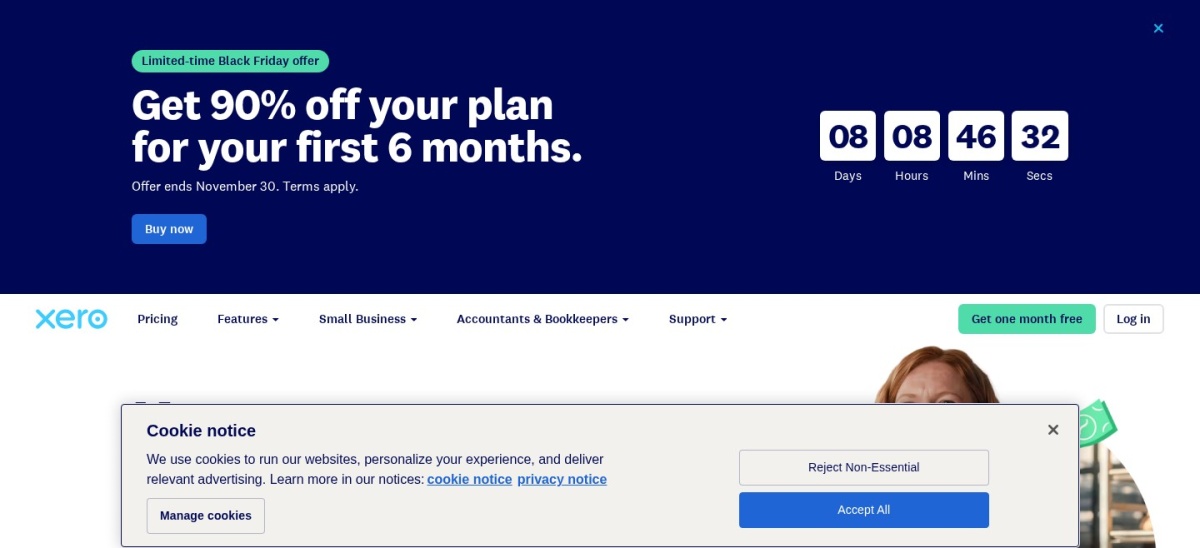
Xero is cloud accounting software for small businesses, with bank reconciliation built into every plan. Bank feeds import transactions automatically, the system suggests matches against invoices and bills, and bank rules learn how to categorise repeat transactions. The Early plan costs $20 a month and covers 20 invoices and 5 bills a month.
The trade off is scope. Xero reconciles bank transactions well, but it has no dedicated close checklist, no certification workflow and no high-volume matching engine. It suits small teams that want reconciliation inside the ledger they already use, not a second platform.
What we like
Cheapest published price in this list
Unlimited users on every plan
30-day free trial
Strong bank rules and auto-matching
Watch out for
Early plan caps at 20 invoices a month
No close checklist or certification
Not built for high-volume matching
Growing adds bulk reconciliation and unlimited invoicesVisit xero.com
07
HighRadius
4/5on G2 (2 reviews, checked Nov 2026)
PricingCustom/yr
Best for AI-led record-to-report
AI matchingYes, agent-led
ERP supportSAP, Oracle, NetSuite
Journal postingAutomatic to ERP
Entry packageRecord-to-report, quote-based
highradius.com
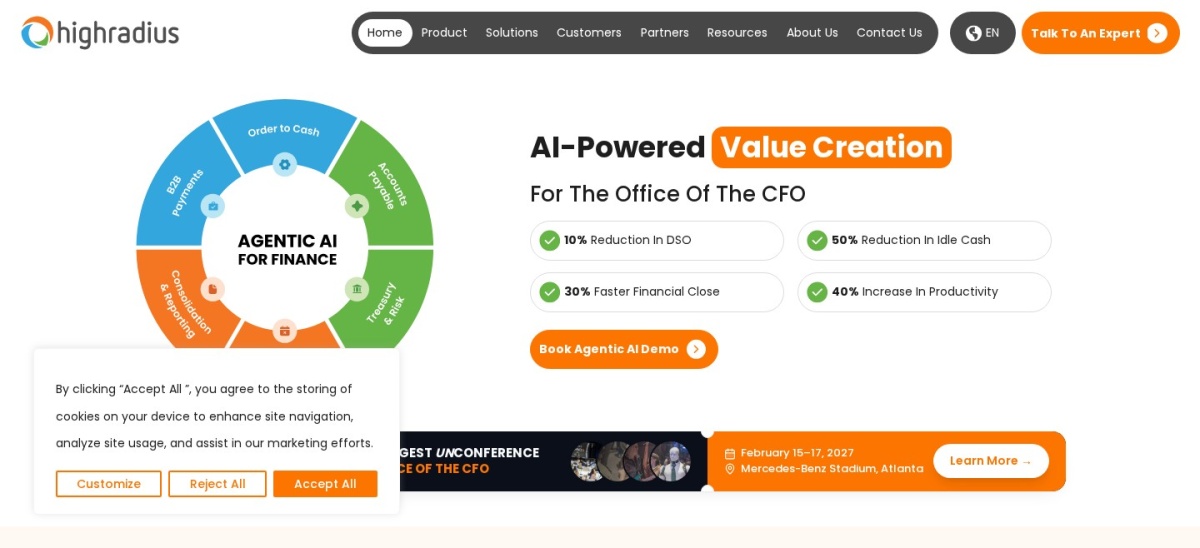
HighRadius homepage, captured Nov 2026.
HighRadius is a record-to-report suite that covers close checklists, balance sheet reconciliation, journal entries, intercompany work and reporting. Its AI agents prepare accruals, post journals and flag anomalies, and it connects to SAP, Oracle, NetSuite and Sage Intacct. The vendor says its agents auto-clear up to 90% of the volume.
The trade off is evidence. Its dedicated reconciliation listing on G2 has only 2 reviews, so public feedback is too thin to judge, and pricing is quote-based. It suits mid-market and enterprise teams on major ERPs that want AI to draft journals, not just match lines.
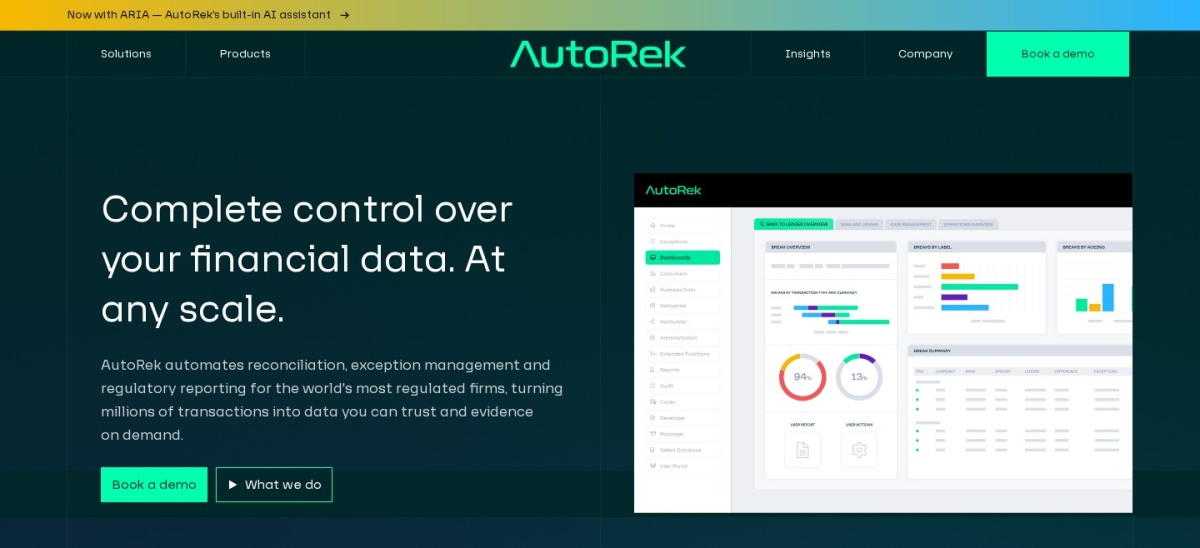
AutoRek is a reconciliation platform built for banks, insurers, asset managers and payment firms that process millions of transactions. It automates reconciliation, exception management and regulatory reporting, and its built-in AI assistant ARIA helps teams work through breaks. It handles non-standard data formats that generic tools struggle with.
The trade off is evidence. AutoRek has only 1 review on G2, so public user feedback is almost non-existent, and pricing is quote-based. It suits regulated financial services teams whose volume and compliance load rule out lighter tools.
What we like
Built for millions of transactions
Exception management and regulatory reporting included
Handles non-standard data formats
Built-in AI assistant ARIA
Watch out for
Only 1 G2 review
Quote-based pricing
Aimed at financial services, not general accounting
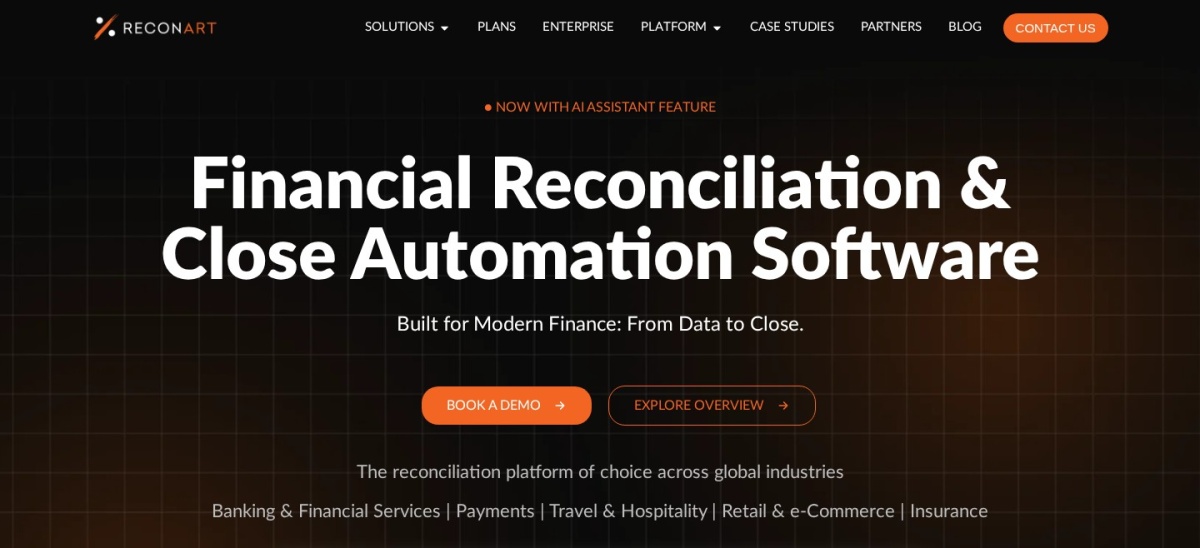
ReconArt is a standalone reconciliation and close automation platform used across banking, payments, travel, retail and insurance. It imports transactions automatically, applies configurable matching rules including 1-to-many and many-to-many matching, and certifies balance sheet accounts. A new AI assistant feature helps with routine reconciliation work.
The trade off is reputation. ReconArt holds the lowest rating in this list at 3.6 out of 5 from 5 G2 reviews, and pricing is quote-based. It suits teams that want one configurable matching engine across many reconciliation types rather than a close checklist suite.
Bring your own data to the demo. A vendor's sample file always matches cleanly, so ask them to run your messiest month instead.
Check the exception queue. Most of your team's time goes to breaks, so the queue, the reason codes and the re-match workflow matter more than the match rate.
Ask what happens at audit time. Sign-offs, attached evidence and a full history of who changed what are what auditors ask for first.
Confirm the ERP connection. Some tools sync live with NetSuite or SAP, while others work from uploaded spreadsheets, and that gap decides how much manual work remains.
How we chose
We started from the reconciliation and close platforms finance teams compare most often, then kept nine established tools that automate matching or reconciliation work rather than only organising checklists.
Prices come from each vendor's pricing page, checked on 25 November 2026. Seven vendors publish no prices, so those entries show a custom quote. Ratings come from G2, checked the same day. Where a vendor shows a sale, the list shows the regular price.
We left out general ledgers with no matching engine and tools with no reconciliation automation. No vendor paid for a place, and we do not claim hands-on testing for this list.
How to choose financial reconciliation software
Start with the volume and the messiest data you reconcile, then match the tool to that job.
Count what you reconcile each month. Volume decides the tool. A few hundred bank lines fit a focused matcher, while millions of transactions need a platform built for that load.
List the sources that must match. Bank feeds, payment processors, ERPs and spreadsheets all behave differently. Check each source connects live or uploads cleanly before you shortlist.
Ask for a demo on your own data. Sample data always matches. Run your messiest month through the tool and watch how the exception queue handles the breaks.
Get the full first-year cost in writing. Quotes rarely include implementation, and some features are add-ons. Ask what is included and what the renewal price is before you sign.
FAQ
What is the best financial reconciliation software?
FloQast is the best pick for most teams. Its Close AI package adds AI matching, automated reconciliations and automatic journal entry posting to its close checklists, and it is rated 4.6 out of 5 on G2 from more than 1,400 reviews.
How much does financial reconciliation software cost?
Published prices start at $20 a month for Xero and $52 a month for Synder, while the other seven tools are quote-based. Enterprise close suites usually cost tens of thousands a year, so get a written quote for your volume before budgeting.
Can reconciliation software replace accountants?
No. It matches routine transactions and flags exceptions, but people still review breaks, approve journals and sign off reconciliations. The gain is time: teams spend their hours on exceptions instead of ticking lines.
What is the difference between FloQast and BlackLine?
FloQast organises the close around checklists and reconciliations and suits mid-market teams, while BlackLine is a broader enterprise suite with intercompany accounting and risk-based certification. Both are quote-based, so the choice turns on team size and audit needs.
Do these tools work with QuickBooks or Xero?
Some do. Numeric, Synder and Trintech connect to QuickBooks or Xero, while FloQast and BlackLine focus on larger ERPs such as NetSuite, SAP and Workday. Check the integration list for your ledger before shortlisting.
Is there a free financial reconciliation tool?
No tool in this list has a free plan. Synder offers a 15-day free trial and Xero offers a 30-day free trial, and the others are paid from the start or quote-based. Small teams with low volume can often use the bank reconciliation built into their ledger instead.
SaaS SEO and WordPress specialist with about 8 years of experience. Rakib compares WordPress plugins, themes, hosting and software using public pricing, documentation and user reviews. See how we rank.