Best Financial Consolidation Software in 2026: 9 Tools Compared
WLWPLegible EditorsLast verified 23 Nov 2026How we rank12 min read
★ Short answer
OneStream is the best financial consolidation software for large multi-entity groups, with a 4.6/5 G2 rating and close, planning and consolidation on one platform. Pick Workiva for linked reporting and filings, or FloQast if the month-end close is the bigger pain.
How we make this list: we compare pricing pages, product documentation and public user reviews, then re-check every price before each update. No product paid for a place. Disclosure.
OneStream leads for large groups: close, planning and consolidation on one platform, rated 4.6/5 on G2.
Workiva is the pick for linked reporting and filings, with unlimited seats and 70+ connectors.
BlackLine is the enterprise close standard, used by 4,300+ companies, but pricing is quote-only.
FloQast is the fastest fix for a late month-end close; its vendor pricing page lists no prices.
LucaNet has the highest G2 rating here at 4.7/5, with implementation of about 2 months.
No tool in this list publishes a price. Every quote is custom, so budget for a sales cycle.
What financial consolidation software should cover
Financial consolidation software rolls up the accounts of many entities into one group view. It handles currency translation, intercompany eliminations, minority interest and ownership changes, then produces the statements auditors and boards rely on.
The tools in this list split into two kinds. Enterprise platforms such as OneStream and CCH Tagetik replace the spreadsheet layer entirely, while Excel-native tools such as Vena keep the spreadsheet and add a governed database behind it.
Pricing is the hardest part of this market. None of the nine tools publishes a price, so every figure is a custom quote. Third-party benchmarks exist, but they are medians from past deals, not list prices, so treat them as planning ranges.
Look for multi-currency handling, intercompany matching, a clear audit trail and an ERP connector for each system you run. If the close is the pain, weight close management; if the group structure is the pain, weight the consolidation engine.
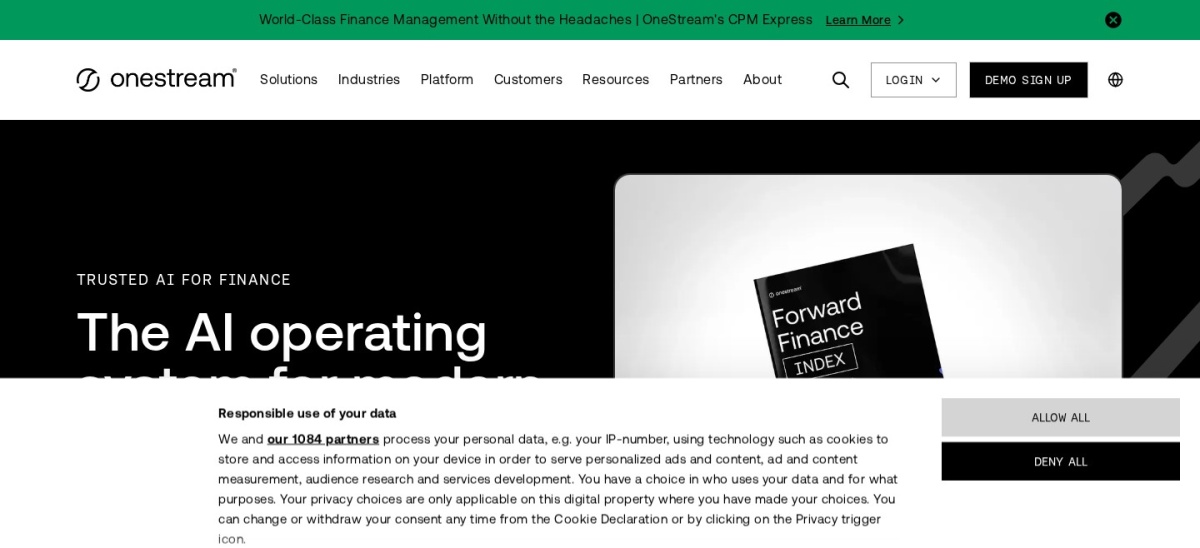
OneStream is a unified platform that runs financial consolidation, planning, close and reporting on one data model. It handles multi-entity, multi-currency groups with intercompany eliminations, currency translation and a full audit trail, and more than 1,900 companies use it, including 18% of the Fortune 500.
The trade off is scale and cost. Pricing is quote-only, implementation averages about 8 months on G2, and the platform is built for large finance teams. It suits global groups that want consolidation and planning in one system and can fund a long rollout.
What we like
Unified close, planning and consolidation
Strong multi-currency and intercompany handling
Named a Leader in Gartner close and consolidation research
Watch out for
Quote-only pricing with long sales cycles
Implementation is a major project
Overkill for small finance teams
Add-on modules extend the platform into ESG and workforce planningVisit onestream.com
02
Workiva
4.5/5on G2 (2,147 reviews, checked Nov 2026)
PricingCustom/yr
Best for linked reporting and filings
Linked reportingDocuments, sheets, slides
SEC filingsXBRL and ESEF
SeatsUnlimited
PricingQuote only
workiva.com
Workiva homepage, captured Nov 2026.
Workiva is a connected reporting platform that links numbers in documents, spreadsheets and presentations to one source, so a change flows everywhere at once. It covers financial reporting, SEC and XBRL filings, SOX controls and audit, with 70+ connectors and use in 180+ countries.
The trade off is that it is a reporting platform first, not a consolidation engine. Pricing is quote-only with good/better/best packaging, and smaller teams may find it broad for their needs. It suits listed companies that file often and need governed, linked reports.
What we like
Linked data across every report and filing
Unlimited seats on every offering
70+ connectors to ERP and finance systems
Watch out for
Quote-only pricing
Consolidation depth is lighter than OneStream
Broad scope can mean a long rollout
Paid plans add more solutions, from sustainability to riskVisit workiva.com
03
BlackLine
4.5/5on G2 (1,070 reviews, checked Nov 2026)
PricingCustom/yr
Best for enterprise close control
ReconciliationsAutomated, with certification
Journal entriesRouted with audit trail
IntercompanyMatching and elimination
Customers4,300+ companies
blackline.com
BlackLine homepage, captured Nov 2026.
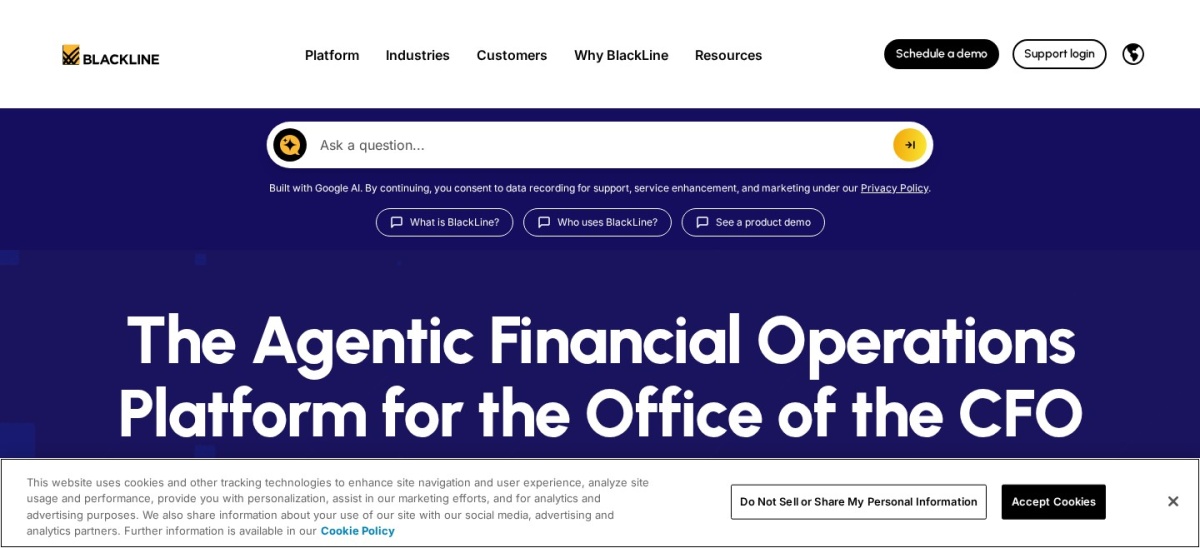
BlackLine is an enterprise financial close platform used by more than 4,300 companies. It automates account reconciliations, routes journal entries for approval, matches intercompany balances and keeps a full audit trail, with consolidation as part of its close and reporting flow.
The trade off is price and weight. Pricing is quote-only and module-based, and implementations commonly run for months with partner help. It suits large enterprises with complex multi-entity closes and auditors who want proof of every control.
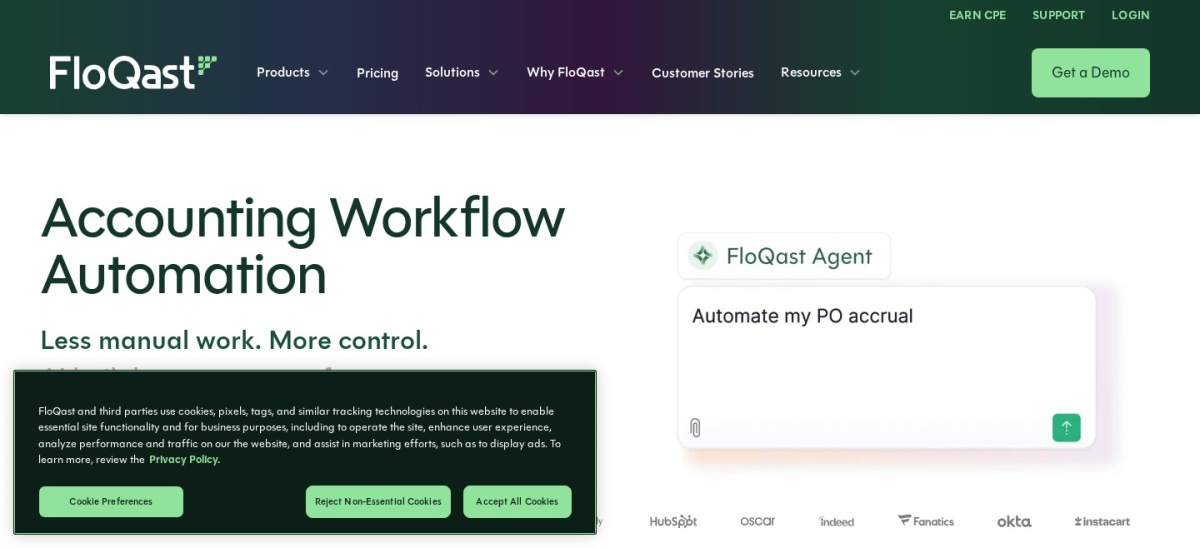
FloQast is a close management platform that organises the month-end close around one checklist. It covers close tasks, account reconciliations, accounting operations and ERP integration, and its pricing page lists three packages: Close Management, Close AI and Risk & Compliance.
The trade off is scope. FloQast manages the close rather than running a full consolidation engine, and its pricing page shows no prices, only a quote form. G2 lists a $999 a month starting figure. It suits mid-market teams whose close runs late every month.
What we like
Close checklist keeps every task visible
No per-user charge, per its pricing page
Rated 4.6/5 from 1,400+ G2 reviews
Watch out for
No published price on the vendor site
Lighter consolidation depth than OneStream
Advanced automation needs the Close AI package
Close AI adds AI matching and automated journal postingVisit floqast.com
Planful is a continuous planning platform with consolidation built in. It handles journal entries, eliminations, currency translation and intercompany reconciliation next to rolling forecasts, budgets and scenario planning, and serves more than 1,400 customers.
The trade off is buying friction. Pricing is quote-only with no trial and no published prices, and a multi-entity consolidation build typically takes 3 to 5 months. It suits upper mid-market teams that want close, consolidation and planning together.
What we like
Strong mid-market consolidation and close
Rolling forecasts next to actuals
Predict AI forecasting built in
Watch out for
No published pricing or trial
Consolidation builds take months
Costs rise with modules and users
Extra modules add workforce planning and marketing planningVisit planful.com
06
Prophix
4.4/5on G2 (234 reviews, checked Nov 2026)
PricingCustom/yr
Best for mid-market teams on Microsoft tools
ConsolidationFinancial Consolidation module
Integrations100+ ERP and source systems
Implementation (G2)About 4 months
PricingQuote only
prophix.com
Prophix homepage, captured Nov 2026.
Prophix One is a single platform for budgeting, forecasting, financial consolidation, close management and reporting. It keeps Excel in the workflow with a Microsoft 365 add-in, connects to more than 100 ERP and source systems, and adds intercompany management and lease accounting.
The trade off is transparency. Prophix publishes no prices and no plan names, and its pricing page is a buying guide rather than a rate card. It suits mid-market finance teams that want planning and consolidation from one vendor instead of two tools.
Vena is an Excel-native planning and consolidation platform. Finance teams keep working in their existing Excel templates while Vena stores the data in its central CubeFLEX database, adding workflow, audit trails, consolidation and Power BI reporting on top.
The trade off is performance at scale. Reviewers report slowdowns on very large templates, and pricing is quote-only with Professional and Complete packages. It suits Microsoft-centred mid-market teams that will not leave Excel.
LucaNet is a financial performance platform built around consolidation, planning and reporting. It handles group consolidation with intercompany eliminations and currency translation, plus budgeting, forecasting and disclosure, and reviewers praise its ease of use.
The trade off is reach. LucaNet publishes no prices, and its review base of about 320 G2 reviews is smaller than the enterprise leaders. It suits mid-market groups that want consolidation running in about 2 months rather than a year-long project.
CCH Tagetik is a corporate performance platform from Wolters Kluwer for the hardest consolidation problems. It covers layered ownership, joint ventures, multiple GAAPs, currency translation and regulatory disclosure in one flow, with budgeting and planning alongside.
The trade off is effort. Pricing is quote-only across three solution editions, and G2 reviewers report implementations of about 8 months. It suits large multinationals with heavy compliance needs and the budget for a long project.
Every tool in this list sells by quote. The vendor pricing page usually lists packages by name, such as FloQast's Close Management and Close AI, with a quote form instead of a number.
Third-party benchmarks exist, but they are medians from past deals, not list prices. G2 lists a $999 a month starting figure for FloQast. Use such figures to set a budget range, then confirm the quote.
Ask every vendor the same four questions: what the annual subscription covers, what implementation costs, what the renewal uplift is, and which modules are extra. The answers matter more than any starting figure.
How we chose
We started from the financial consolidation platforms buyers compare most often, then kept nine established tools with a real consolidation product and a public review base on G2.
Prices come from each vendor's pricing page, checked on 23 November 2026. None of the nine publishes a price, so every entry shows a custom quote. Ratings and review counts come from G2 on the same day.
We left out tools with no consolidation product and tools with too few public reviews to judge. No vendor paid for a place, and we do not claim hands-on testing for this list.
How to choose financial consolidation software
Start with the close, not the demo, then match the tool to your group structure.
Count your entities and currencies. A group with 5 entities in one currency needs far less than a group with 50 entities in 10 currencies. The consolidation engine matters most at scale.
Decide whether Excel stays or goes. If your team will not leave Excel, shortlist Vena and Prophix. If you want one governed platform, look at OneStream, Planful and CCH Tagetik.
Ask for the full first-year cost. Every quote here is custom, so get implementation, training and renewal uplift in writing before you compare two vendors.
Check the ERP connectors you need. Confirm a live connector for each ERP and accounting system you run, and ask who maintains it when the ERP updates.
FAQ
What is the best financial consolidation software?
OneStream is the best pick for large multi-entity groups, rated 4.6/5 on G2, with close, planning and consolidation on one platform. Workiva fits listed companies that file often, and LucaNet fits mid-market groups that want a faster rollout.
How much does financial consolidation software cost?
None of the nine tools in this list publishes a price, so every cost is a custom quote based on entities, users and modules. G2 lists a $999 a month starting figure for FloQast, but that is a third-party figure, not a vendor price.
Do I need to replace Excel to consolidate?
No. Vena and Prophix keep Excel as the working surface and add a governed database behind it. OneStream, Planful and CCH Tagetik replace the spreadsheet layer with a full platform instead.
What is the difference between consolidation and close software?
Consolidation rolls many entities into one group view with eliminations and currency translation. Close software organises the month-end tasks, reconciliations and approvals that produce the numbers to consolidate. Several tools in this list do both.
How long does implementation take?
It varies widely. G2 reviewers report about 2 months for LucaNet and about 4 months for Prophix, while OneStream and CCH Tagetik average about 8 months. Planful consolidation builds typically take 3 to 5 months.
Which tool is best for a mid-market finance team?
Planful and Prophix are the strongest mid-market picks, with planning and consolidation together. Vena fits teams that stay in Excel, and LucaNet fits groups that want consolidation live quickly.