Best Financial Close Software in 2026: 9 Tools Compared
WLWPLegible EditorsLast verified 23 Nov 2026How we rank11 min read
★ Short answer
FloQast is the best financial close software for most accounting teams, rated 4.6/5 on G2 from 1,410 reviews, with close checklists and reconciliations that keep Excel workbooks in place. Pick BlackLine for high-volume enterprise matching or Numeric for a fast AI-assisted close on NetSuite.
How we make this list: we compare pricing pages, product documentation and public user reviews, then re-check every price before each update. No product paid for a place. Disclosure.
FloQast leads with a 4.6 G2 rating from 1,410 reviews and no per-user fee, though every package is quote-only.
BlackLine is the enterprise matching engine, with 1,077 G2 reviews and a typical 6-month implementation.
Numeric has the highest G2 rating here at 4.8, but from only 65 reviews, and its pricing page shows no dollar.
Trintech fits high-volume matching: one customer story cites 200,000+ transactions in a normal month.
Only Datarails states a starting figure, a $2,000-a-month floor; the other 8 tools publish no price.
What financial close software actually does
Month-end close software sits on top of the general ledger. It assigns the checklist, stores reconciliation support, routes journal entries and records sign-offs.
The ledger already holds the transactions. The close is the proof that balances are complete, reviewed and tied to support an auditor can open.
Most tools in this list publish no price. Expect a quote based on entities, users or transaction volume, and ask for the module list in writing before you sign.
Fit depends on the ledger and the audit load. A NetSuite team with a short checklist needs a different tool from a public company closing across many entities, and an audit trail that names a preparer and a reviewer matters in both cases. Our guide on auditing user activity in WordPress explains what a good activity log records.
FloQast is close management software that organises the month-end checklist, balance-sheet reconciliations and journal entries around the Excel and Google Sheets workbooks teams already use. Its Close Optimization and Close Automation packages cover task tracking, AutoRec matching and flux analysis, and the pricing page states there is no per-user fee. FloQast says more than 3,500 companies use it.
The trade off is price. Every package is quote-only, so a small team cannot tell what the contract costs until sales writes it down, and SOX compliance is a separate package. It suits mid-market teams of roughly 5 to 50 close participants on NetSuite, Sage Intacct or Dynamics who want the close organised without leaving Excel.
What we like
Largest review base among close-first tools
No per-user fee on the pricing page
Keeps work in Excel and Google Sheets
Watch out for
No published price
SOX compliance costs extra
Some reviewers report slow loading at peak close
Paid packages add automation, reporting and compliance modulesVisit floqast.com
02
BlackLine
4.5/5on G2 (1,077 reviews, checked Nov 2026)
PricingCustom/yr
Best for enterprise matching at scale
Transaction matchingHigh-volume engine
Journal entriesYes, with controls
ConsolidationYes, as a module
Starting priceCustom, by module
blackline.com
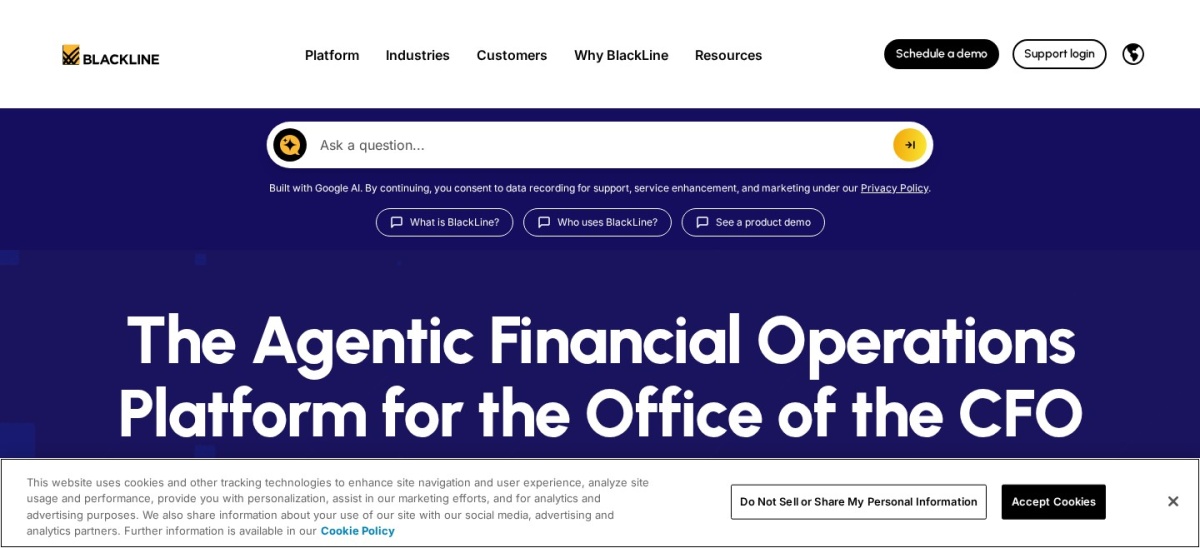
BlackLine homepage, captured Nov 2026.
BlackLine is an enterprise financial close platform sold as separate modules for account reconciliations, transaction matching, journal entries, task management and consolidation. It is built for high volumes: one reviewer reports matching around 90% of transactions in the background, and BlackLine counts more than 1,300 joint customers with SAP. It is rated 4.5 out of 5 on G2 from 1,077 reviews.
The trade off is time and cost. G2 data puts average implementation at 6 months, and licensing plus add-ons can raise the bill for smaller teams. It suits public companies and shared-service teams closing across many entities and ERPs, especially on SAP.
Trintech is record-to-report software with two products: Cadency for enterprise closes and Adra for the mid-market. Cadency covers reconciliations, journals, matching and risk-ranked review, and one customer story cites 93 entities, 29,000+ accounts and 4,400+ accounts auto-reconciled. It is rated 4.5 out of 5 on G2 from 542 reviews.
The trade off is that the proposal must name the product. Cadency and Adra are priced separately, and Trintech publishes no price for either, so a mid-market team should ask whether the quote is Adra or Cadency. It suits banks, insurers and retailers reconciling very high daily volumes.
Workiva is a reporting and compliance platform that ties the financial close to SOX testing and SEC filings in one login. Teams can research peer 10-Q and 10-K filings inside the platform, run control testing with evidence and remediation, and link close data to the reports it feeds. It is rated 4.5 out of 5 on G2 from 2,145 reviews, the largest review base in this list.
The trade off is scope. A private company that only needs a monthly checklist pays for a reporting suite built around filings it does not produce. It suits public companies that tie the close to SOX testing and 10-K or 10-Q reporting.
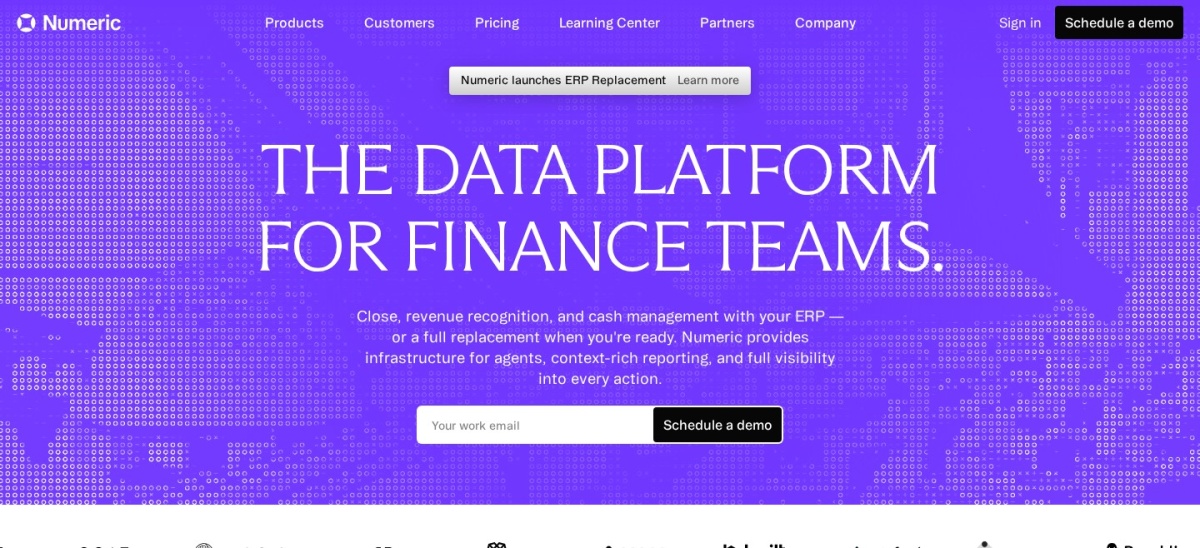
Numeric is an AI-assisted close platform that sits on NetSuite, QuickBooks, Xero or Sage Intacct and runs the checklist, reconciliations and flux analysis. Its agents draft flux explanations and do a first pass on balance-sheet matching, with a person still signing off, and it goes live in under two weeks. It is rated 4.8 out of 5 on G2 from 65 reviews.
The trade off is a small review base and no published price. The pricing page lists Close, Cash, Billing and ERP Replacement with no dollar on any of them, so the quote depends on seats and transaction volume. It suits lean, fast-growing teams that want AI to draft the first pass of close work.
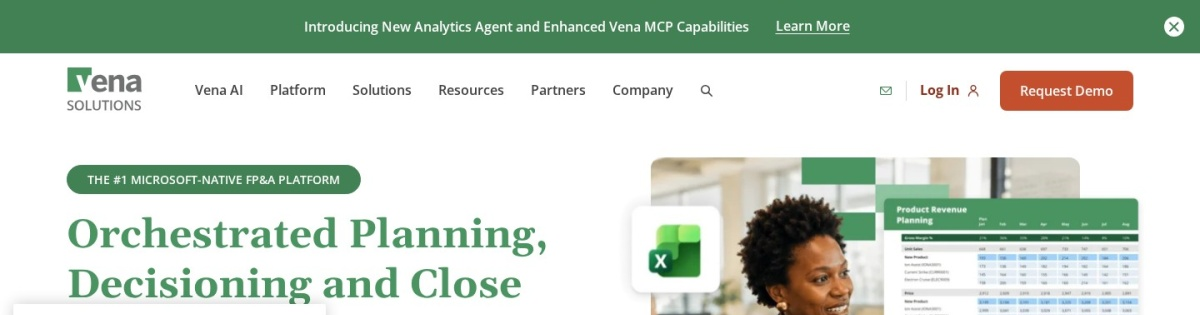
Vena is month-end close software with a 100% native Excel interface, so the checklist, reconciliations and consolidation stay inside workbooks. It ships 8 consolidation templates, 4 reconciliation templates and 1 journal entry template, and connects to NetSuite, Dynamics, QuickBooks, Sage Intacct and Oracle. It is rated 4.5 out of 5 on G2 from 482 reviews.
The trade off is that the ledger stays a separate bill. Vena sits on the ERP, so the team keeps paying for NetSuite or Dynamics after buying the close, and it publishes no list price. It suits controllers who will not leave Excel for the checklist, the reconciliations or the consolidation.
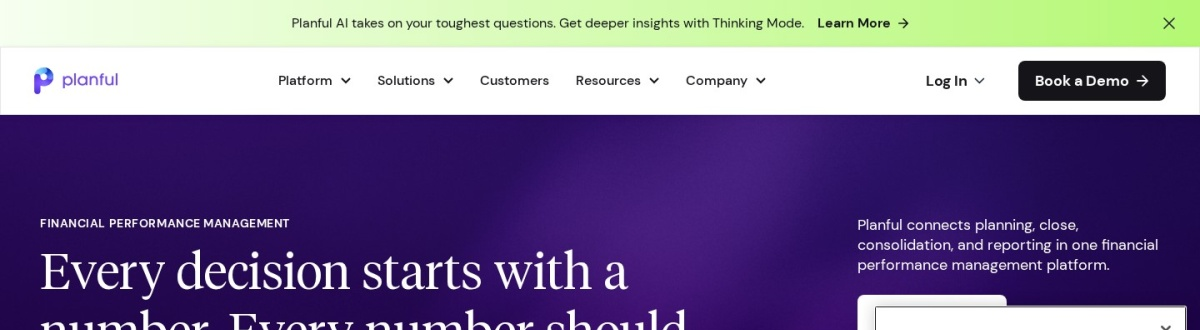
Planful is one platform for planning, close, consolidation and reporting, so the board deck comes from the same login as the books. Its consolidation covers intercompany eliminations, currency conversion and multi-entity structures, and Planful says more than 1,500 companies use it. It is rated 4.3 out of 5 on G2 from 509 reviews.
The trade off is paying for planning you may not use. A team that only needs a monthly checklist buys a performance-management platform, and Planful publishes no list price. It suits finance teams that want the close, the consolidation and the plan in one product.
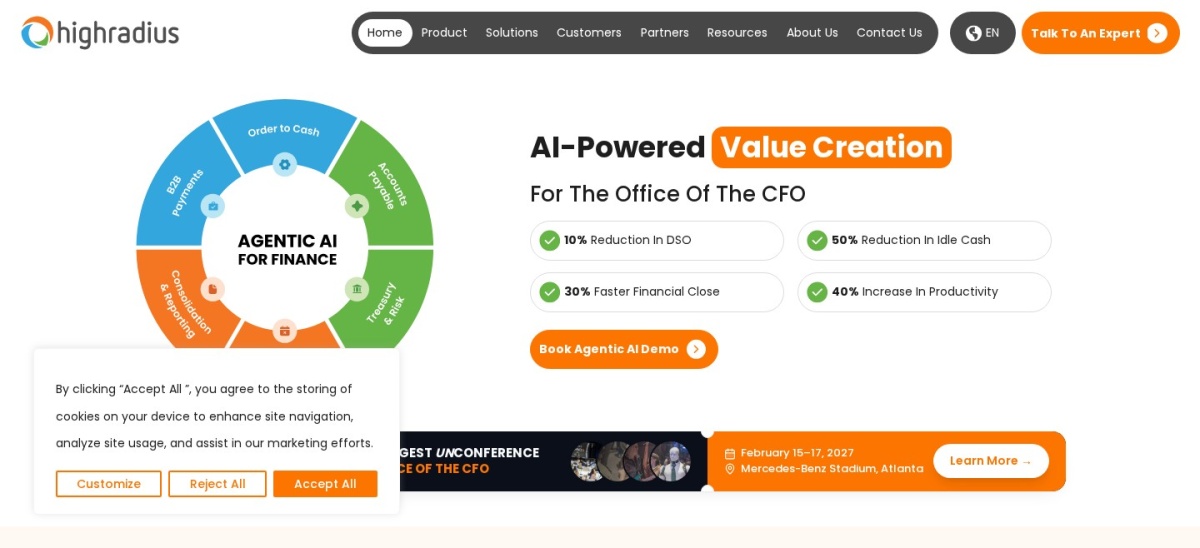
HighRadius is record-to-report software that builds AI agents from a team's spreadsheets: its close page says companies can upload 2,000+ Excel files and turn them into 200+ agents, one per close or consolidation use case. Those agents post accruals, amortisations, provisions and journals, and flag ledger anomalies. It is rated 4.3 out of 5 on G2 from 238 reviews.
The trade off is scale. This is an enterprise migration, not a starter checklist, and HighRadius publishes no close price, charging on an outcome basis with no upfront implementation fees. It suits record-to-report teams replacing a large stack of close spreadsheets with agents.
What we like
Agents post entries instead of only tracking tasks
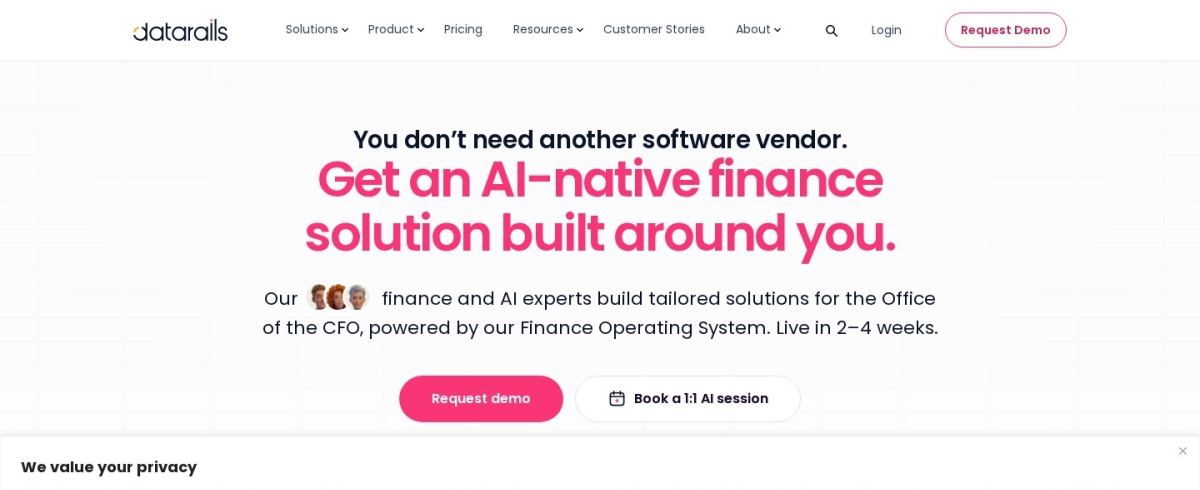
Datarails is FP&A software that keeps a team's own Excel models and adds reporting, budgeting and forecasting around them, which fits a close that still ends in a workbook the board trusts. Its 2026 roundup states a monthly floor of $2,000 beside 200+ integrations and a 2-week implementation. It is rated 4.6 out of 5 on G2 from 267 reviews.
The trade off is that the pricing page itself shows no dollar. It names three packages, FP&A Professional, Premium and Expert, and asks for a custom quote, so the $2,000 figure is a stated floor, not a checkout price. It suits teams whose close pain is the Excel report, not the reconciliation workflow.
Eight of the nine tools publish no price. That is normal in this category, and it means the first comparable number arrives only in a written quote.
Ask every vendor for the same scope: the modules included, the entity and user counts, and whether implementation is in the first-year figure. A quote that names Close Automation is not the same as one that names a compliance package.
Datarails is the exception, with a $2,000-a-month floor stated in its own roundup. Use it as a check on the other quotes, and keep the lower number only if a written quote matches it.
How we chose
We started from the financial close category on G2 and the month-end close guides that check vendor pricing pages, then kept nine established tools that cover the close itself rather than only the ledger underneath.
Prices and ratings were checked on 23 November 2026. Ratings and review counts come from G2 on that date; where a vendor publishes no price, the list says so, and the one stated figure is labelled as a floor from the vendor's own roundup.
We left out general ledgers and bookkeeping apps that cannot name a preparer and a reviewer for a reconciliation. No vendor paid for a place, and we do not claim hands-on testing for this list.
How to choose financial close software
Start with the ledger you already run, then match the tool to the audit load.
Name the ledger first. FloQast and Numeric sit on NetSuite, Sage Intacct, QuickBooks or Xero, while BlackLine fits SAP shops. A tool that cannot connect to your ledger is the wrong demo.
Count the reconciliations and entities. A single entity with a short checklist needs a different tool from a team certifying thousands of accounts across many entities.
Ask for the module list in writing. Close, consolidation, SOX and reporting are often separate lines. Get each one named with its fee before you compare quotes.
Check the audit trail before you sign. Every reconciliation should name a preparer and a reviewer, with the workbook or document attached, so an auditor can open it without asking the team.
FAQ
What is the best financial close software?
FloQast is the best pick for most accounting teams. It is rated 4.6 out of 5 on G2 from 1,410 reviews, organises the checklist and reconciliations around Excel workbooks, and charges no per-user fee, though every package is quote-only.
Why do most close tools publish no price?
Close software is sold by scope, not by seat. The quote depends on entities, users, transaction volume and modules, so vendors ask for a demo before naming a figure. Ask for the module list and the first-year total in writing.
Is FloQast or BlackLine better for a mid-market team?
FloQast fits most mid-market teams, with a 4.6 G2 rating, Excel-based work and no per-user fee. BlackLine fits larger teams with high matching volumes and many entities, but G2 data puts its average implementation at 6 months.
Can close software replace the general ledger?
No. These tools sit on top of NetSuite, Sage Intacct, SAP, QuickBooks or a similar ledger and run the checklist, reconciliations and sign-offs. The ledger still records the transactions, and the close tool proves the balances.
What does Numeric's AI actually do in the close?
Numeric's agents draft flux explanations and do a first pass on balance-sheet matching, with a person still signing off. It also offers cash matching and billing products, and it goes live in under two weeks.
Which tool is cheapest?
Only Datarails states a figure, a $2,000-a-month floor from its own roundup, and its pricing page shows no dollar. The other eight tools are quote-only, so the cheapest option depends on the scope in each written quote.