QuickBooks Online is the best financial accounting software for most businesses, with the widest accountant network and plans from $38 a month. Xero suits teams that want unlimited users from $27 a month, while Wave is the best free starting point for very small businesses.
How we make this list: we compare pricing pages, product documentation and public user reviews, then re-check every price before each update. No product paid for a place. Disclosure.
QuickBooks Online leads on accountant support, with Simple Start at $38 a month and Advanced at $340 a month.
Xero gives unlimited users on every plan, starting at $27 a month for Early, capped at 20 invoices a month.
Zoho Books and Wave both have free plans; Zoho Standard costs $20 a month and Wave Pro costs $19 a month.
Sage Intacct and NetSuite are quote-only, built for multi-entity finance teams that have outgrown small-business tools.
Patriot Accounting holds the highest G2 rating here at 4.8, and ZipBooks is the cheapest paid plan at $15 a month.
What financial accounting software should cover
Financial accounting software keeps the general ledger, invoices, bills and bank reconciliation in one place. The right pick depends on how many people touch the books and how much reporting the business needs.
Small businesses usually need invoicing, expense tracking and a profit and loss report. Larger teams need multi-entity consolidation, approval workflows and audit trails, which only the bigger platforms in this list provide.
Price is not the whole story. A $15-a-month plan with a client cap can cost more than a $38 plan once extra users and add-ons are counted, so check user limits before choosing.
Tax handling is part of the same picture. Our guide on setting up taxes in WooCommerce explains how sales tax fits into the books for online sellers.
QuickBooks Online is the cloud accounting tool most US accountants already know, with invoicing, expense tracking, bank feeds and reporting in every plan. Simple Start costs $38 a month for 1 user, Essentials costs $85 a month for 3 users, and Plus costs $140 a month for 5 users with inventory and project tracking. A limited free plan covers 2 invoices a month.
The trade off is price. Plus costs nearly four times Simple Start, payroll is a separate paid add-on, and a sixth user forces a jump to Advanced at $340 a month. It suits businesses that want the largest accountant network and the deepest reporting in this list.
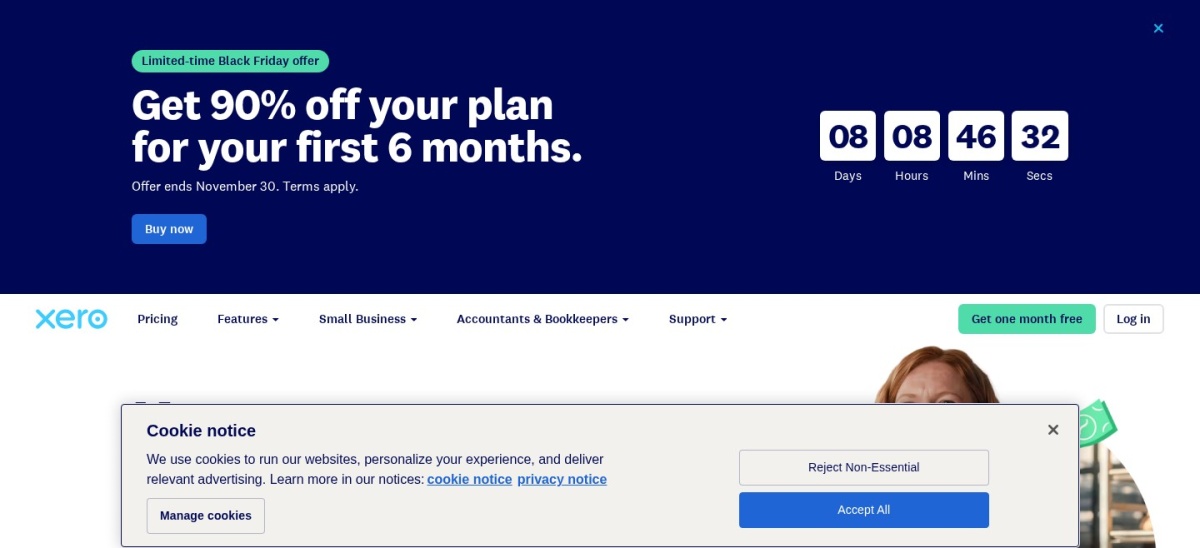
Xero is a cloud accounting platform with bank reconciliation, invoicing, bills, expenses and short-term cash flow in every plan. Early costs $27 a month and covers 20 invoices and 5 bills a month, while Growing costs $59 a month with unlimited invoices and bills. Every plan includes unlimited users, so the bill does not grow with the team.
The trade off is the Early cap. A business that sends more than 20 invoices a month must move to Growing at $59 a month, and multi-currency support waits for Established at $97 a month. It suits growing teams that want every staff member in the books without per-user fees.
What we like
Unlimited users on every plan
Strong bank reconciliation and cash flow tools
Hubdoc capture included for bills and receipts
Watch out for
Early caps at 20 invoices and 5 bills a month
Multi-currency only on Established at $97 a month
No free plan, only a 30-day trial
Growing adds unlimited invoices and bulk reconciliationVisit xero.com
03
Zoho Books
4.4/5on G2 (329 reviews, checked Nov 2026)
Paid from$20/mo
Best value with a usable free plan
Cheapest planStandard, $20/mo
Free planUnder $50K revenue
Users on Standard3
Free trial14 days
zoho.com
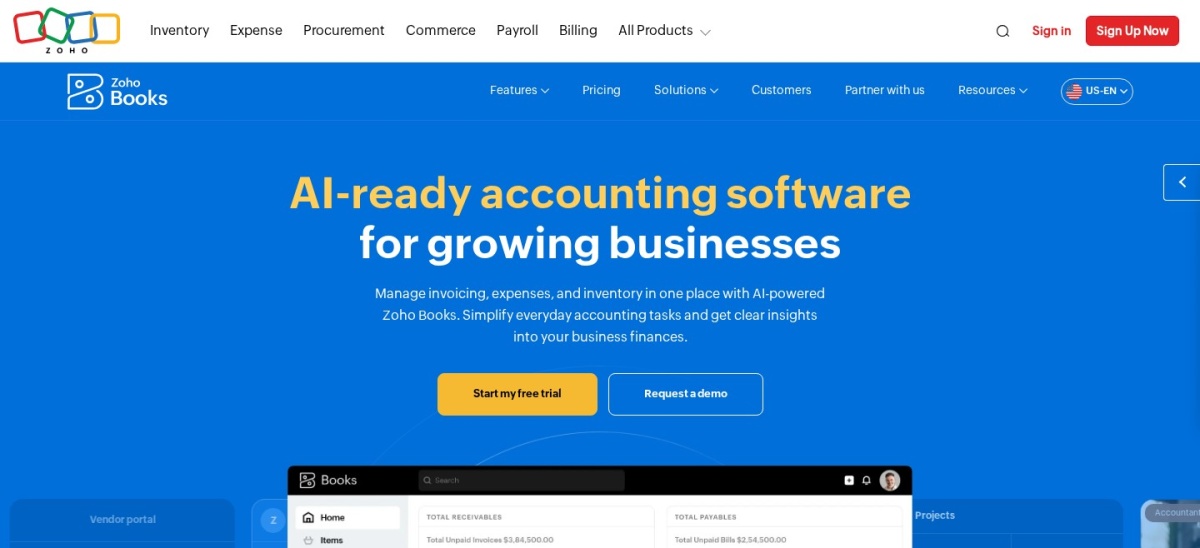
Zoho Books homepage, captured Nov 2026.
Zoho Books is a full cloud ledger with invoicing, expenses, bank reconciliation and more than 50 reports. The free plan covers 1 user plus 1 accountant for businesses under $50,000 in annual revenue, with up to 1,000 invoices a year. Standard costs $20 a month for 3 users and adds bank feeds, custom fields and API access.
The trade off is the revenue cap on the free plan and paid add-ons for payroll and vendor payments. Standard is $15 a month when billed yearly, so monthly billing costs more over a year. It suits small businesses that want low prices and already use other Zoho products.
What we like
Free plan covers core bookkeeping
Lowest paid tiers in this list after ZipBooks
Strong integration with other Zoho products
Watch out for
Free plan caps at $50,000 annual revenue
US payroll needs a paid add-on
Reporting is thinner than QuickBooks on higher tiers
Professional adds multi-currency at $50 a monthVisit zoho.com
04
FreshBooks
4.5/5on G2 (981 reviews, checked Nov 2026)
Starts at$23/mo
Best for service billing and time tracking
Cheapest planLite, $23/mo
Billable clients on Lite5
Time trackingUnlimited
Extra team member$11/mo
freshbooks.com
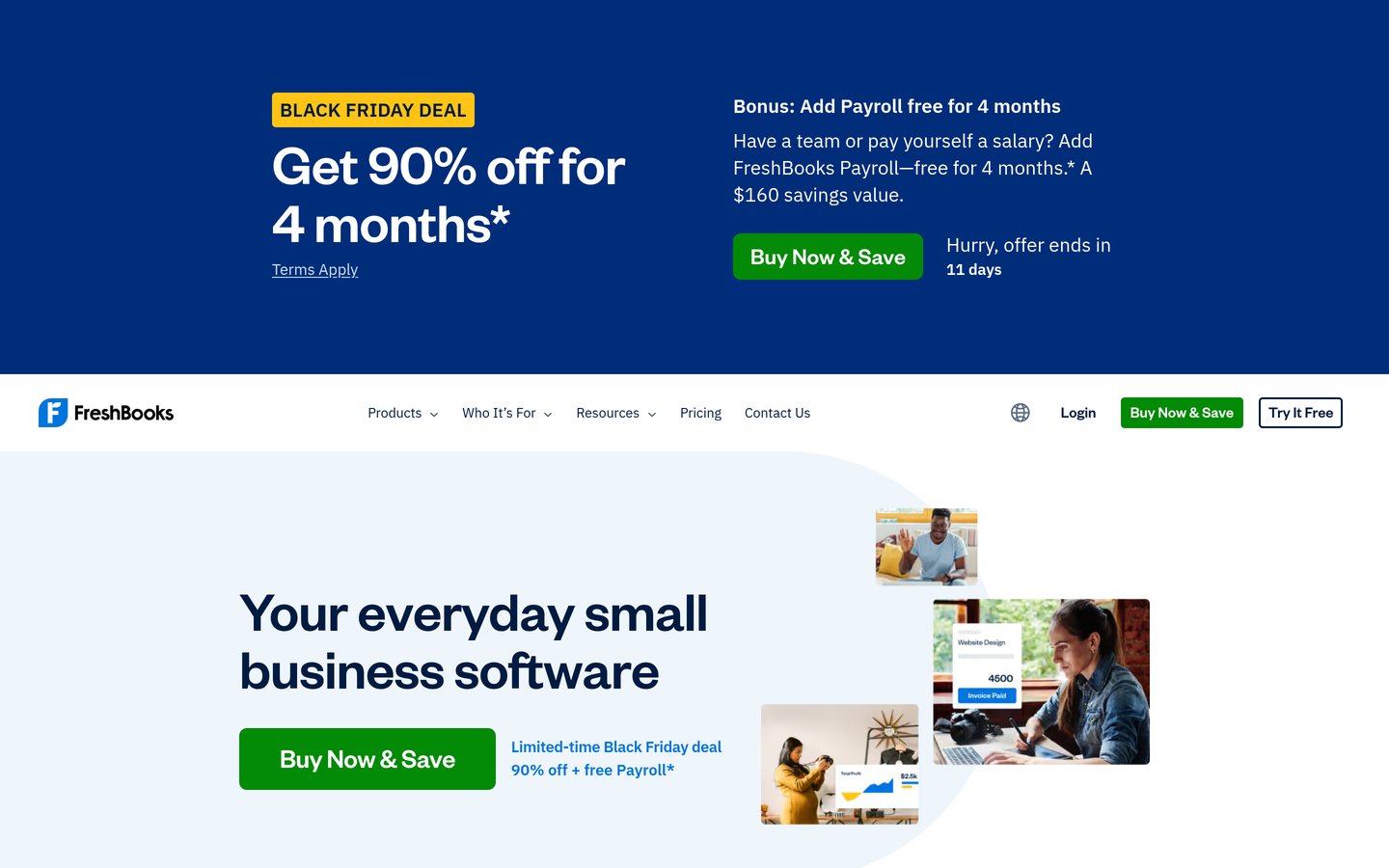
FreshBooks homepage, captured Nov 2026.
FreshBooks is cloud invoicing and accounting software built around service billing, estimates, expense tracking and time tracking. Lite lists at $23 a month and covers up to 5 billable clients with unlimited time tracking and invoicing. Online payments accept cards and bank transfers, and every plan includes double-entry accounting.
The trade off is the client cap. Lite covers only 5 billable clients, and each added team member costs $11 a month, so the bill grows with the client list. It suits freelancers and agencies that bill by the hour and want clean, client-ready invoices.
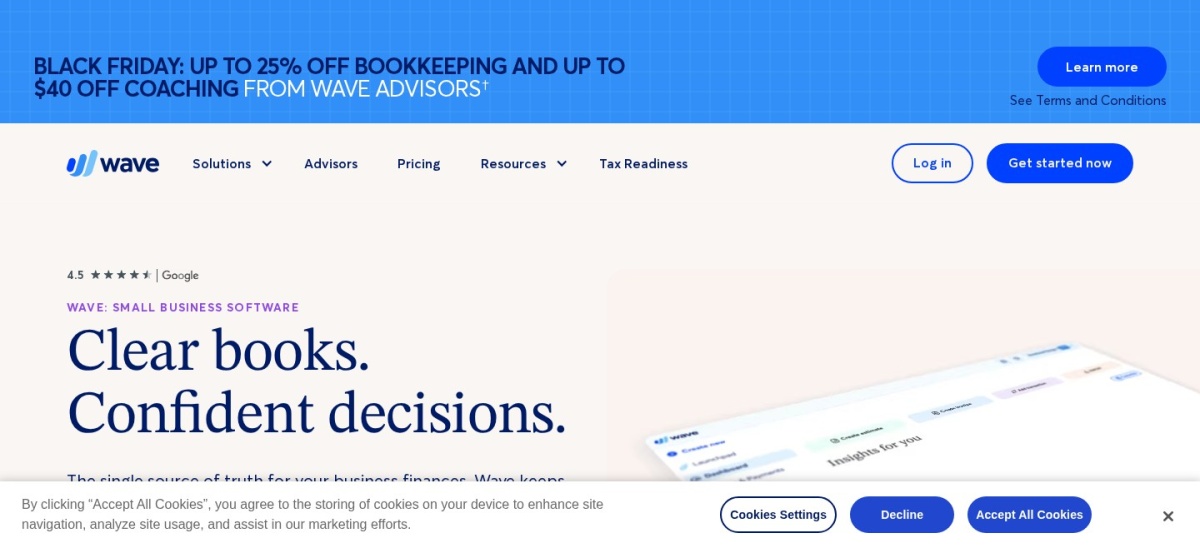
Wave is free accounting software for freelancers and micro-businesses, with unlimited invoices, bills and double-entry bookkeeping on its Starter plan. Pro costs $19 a month, or $190 a year, and adds automatic bank transaction imports, unlimited receipt capture and multi-user access. Payments and payroll are separate charges.
The trade off is depth. Wave has no inventory, project tracking or deep integrations, and bank auto-import needs the paid Pro plan. It suits very small businesses that need invoices and a profit and loss report at no cost.
Sage Intacct is a cloud financial management platform for mid-market businesses, with a general ledger, payables, receivables and dimensional reporting. It consolidates multiple entities with different currencies into one close and is the AICPA preferred financial management solution. Sage prices by quote, based on modules, entities and users.
The trade off is cost and setup. Every deal is a custom quote, implementation is a separate project, and third-party estimates put entry pricing near $400 a month. It suits finance teams with a controller or CFO that have outgrown small-business tools.
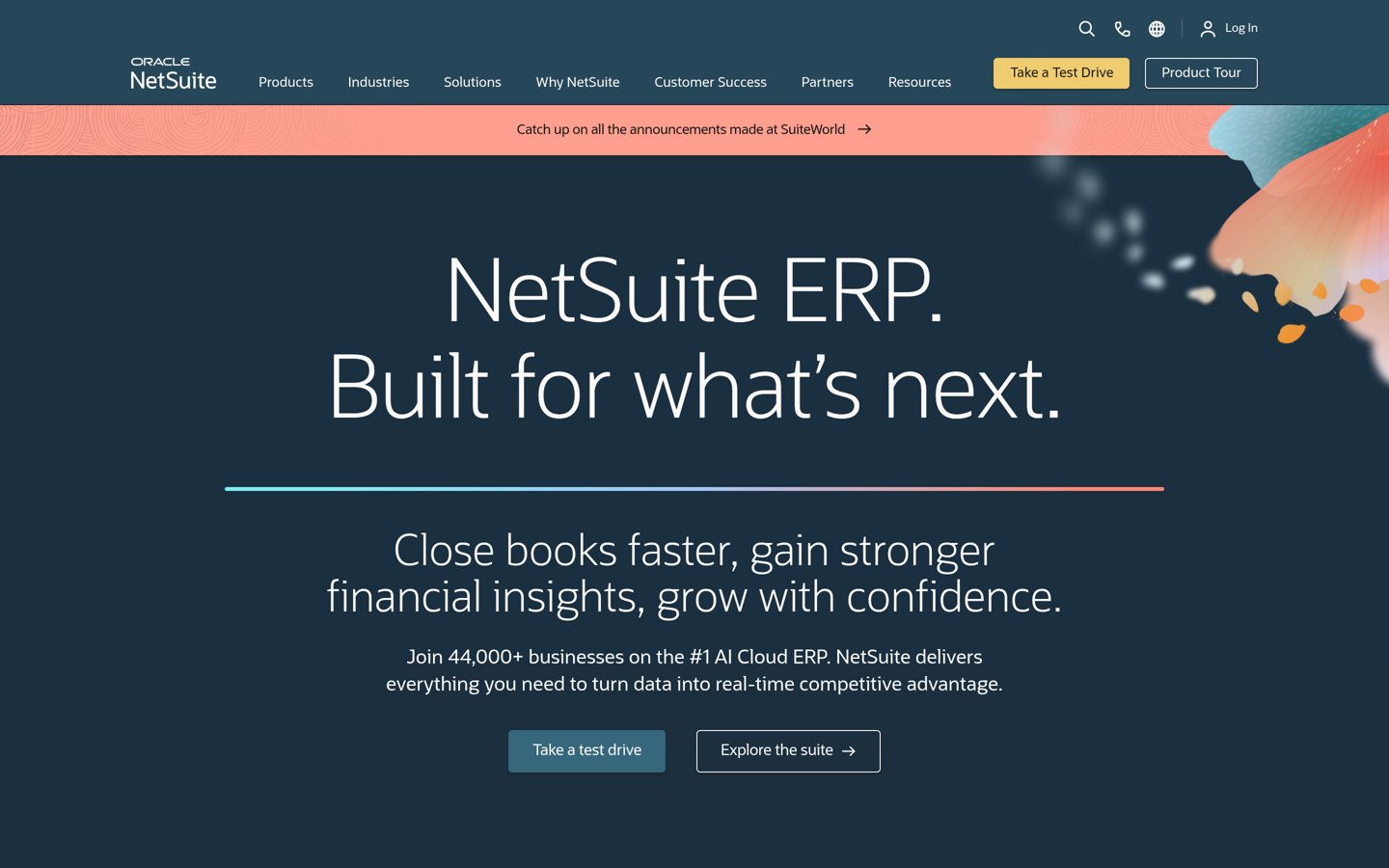
NetSuite is Oracle's cloud ERP, and its financials cover general ledger, payables, receivables, inventory and revenue recognition in one system. Oracle says more than 44,000 businesses run on NetSuite, and it consolidates multiple subsidiaries with different currencies into one close.
The trade off is price. Oracle publishes no NetSuite price, so every deal is a custom quote based on users, subsidiaries and modules, and third-party estimates put entry pricing near $999 a month. It suits businesses that have outgrown small-business tools and need real consolidation.
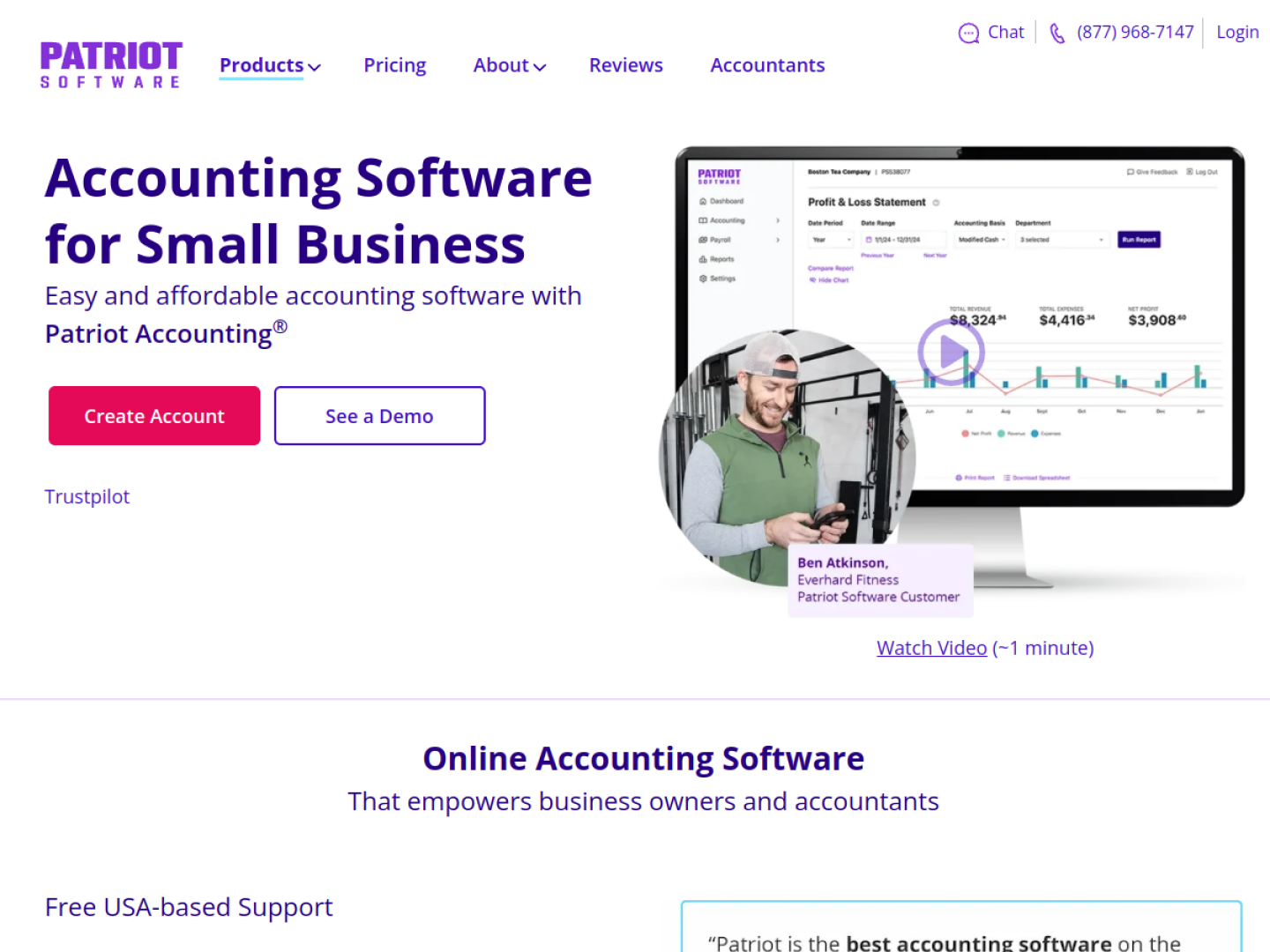
Patriot Accounting is a straightforward cloud ledger for small US businesses, with invoicing, expenses, bank reconciliation and reporting. Basic costs $20 a month and Premium costs $30 a month, with unlimited users on both plans, and Patriot Payroll starts at $17 a month from the same vendor.
The trade off is scope. Patriot has no multi-currency support and a narrower integration list than QuickBooks or Xero, and reporting is thinner. It suits small US businesses that want simple books and payroll from one vendor at a low price.
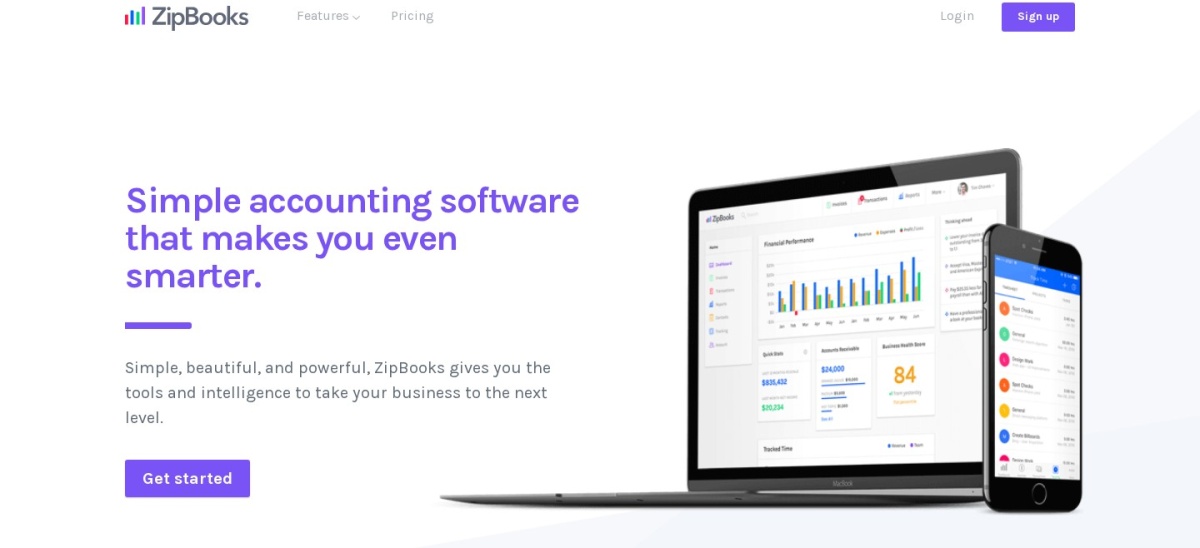
ZipBooks is a free-to-start cloud accounting platform for small businesses and freelancers, with invoicing, expense tracking and basic reporting. The Starter plan is free, Smarter costs $15 a month with recurring invoices, auto-bill and 5 team members, and Sophisticated costs $35 a month. A smart score highlights areas to improve financial health.
The trade off is scale. ZipBooks has limited integrations and thinner reporting than the bigger tools here, and only 86 G2 reviews back its 4.7 rating. It suits freelancers and small teams that want a free start and the cheapest paid plan in this list.
Free plans cover the basics well. Wave, Zoho Books and ZipBooks all let a very small business send invoices and keep books at no cost.
Paid plans mostly add automation and scale. You get bank auto-import, more users, multi-currency and deeper reports.
If the business bills more than a handful of clients a month, a free plan's caps arrive fast. Our guide on how much a WooCommerce store costs to run shows how those small monthly fees add up.
For a business that earns money every day, the first year of a paid plan often costs less than one missed invoice or one late tax filing.
How we chose
We started from the best-known cloud accounting tools for small and mid-market businesses, then kept those with published prices or a clear quote-only model and a public G2 rating.
Prices come from each vendor's pricing page, checked on 25 November 2026. Ratings and review counts come from G2 on the same day. Where a vendor shows a sale, the list shows the regular price.
We left out tools with no public rating and tools priced only in another currency. No vendor paid for a place, and we do not claim hands-on testing for this list.
How to choose financial accounting software
Start with how many people touch the books, then match the plan to the work.
Count the users and invoices. A solo owner fits a free plan. A team that sends dozens of invoices a month needs unlimited users or a higher tier.
Check the caps on the cheapest plan. Invoice limits, bill limits and user limits decide the real price. Xero Early caps at 20 invoices a month, and FreshBooks Lite caps at 5 billable clients.
List the add-ons you will actually buy. Payroll, payments and multi-currency are often separate charges. Add them to the monthly price before comparing plans.
Ask your accountant what they already use. A tool your accountant knows saves hours at year end. QuickBooks Online has the widest accountant network in this list.
FAQ
What is the best financial accounting software?
QuickBooks Online is the best pick for most businesses. It has the widest accountant network, plans from $38 a month, and the deepest reporting in this list, with a 4.0 rating across 3,870 G2 reviews.
Which accounting software is best for small businesses?
Xero is the best fit for growing small businesses that want unlimited users, starting at $27 a month. Zoho Books is the best value, with a free plan for businesses under $50,000 in revenue and Standard at $20 a month.
Is there really free accounting software?
Yes. Wave Starter, Zoho Books and ZipBooks Starter are all free for core bookkeeping and invoicing. Wave is the most generous, with unlimited invoices, while Zoho caps its free plan at $50,000 in annual revenue.
How much does accounting software cost per month?
Paid plans in this list run from $15 a month for ZipBooks Smarter to $38 a month for QuickBooks Online Simple Start. Sage Intacct and NetSuite are quote-only, so their prices depend on users, entities and modules.
Do I need payroll in my accounting software?
Not always. Patriot Accounting pairs books with native payroll from $17 a month, which suits small US businesses. QuickBooks, Xero and Zoho sell payroll as a separate add-on, so check that price before choosing.
What is the difference between QuickBooks Online and Xero?
QuickBooks Online has the larger accountant network and deeper reporting, starting at $38 a month for 1 user. Xero starts at $27 a month with unlimited users on every plan, but its Early plan caps at 20 invoices a month.
SaaS SEO and WordPress specialist with about 8 years of experience. Rakib compares WordPress plugins, themes, hosting and software using public pricing, documentation and user reviews. See how we rank.